- Matching (Score) |
- Our verdict |
- Competing TVs |
- TV appearance |
- Where to buy |
- Contrast and black detail |
- HDR effect quality |
- Factory color reproduction |
- Color reproduction after calibration |
- Smoothness of tonal transitions |
- Image scaling and smoothness of tonal transitions |
- Blur and motion smoothness |
- Console compatibility and gaming features |
- Input lag |
- Compatibility with PC |
- Viewing angles |
- Daytime performance |
- TV features |
- Apps |
- Playing files from USB |
- Sound |
- Panel details
Sony BRAVIA 6 (A65) Review
BRAVIA 6 / A65
Available screen sizes:
Complete the survey to find out the result
Panel type: WRGB OLED Refresh rate: 120Hz Brand: SONY Resolution: 3840x2160 System: Google TV Model year: 2026
This review is an English translation of the Polish original. Read the original on Wybierz.tv.
The Sony BRAVIA 6 is the brand's cheapest OLED in its 2026 range, and it debuted much later than the TVs from the True RGB series. It uses LG Display's new OLED SE panel, intended for more affordable models. Its launch comes at an interesting moment, as Sony announced major changes to its TV business this year and a partnership with TCL. But the surprises don't stop there. The 55-inch unit we received was manufactured in Poland by TP Vision, the company behind Philips TVs. A Japanese brand, a Korean panel and production in a Polish factory linked to Philips sounds like quite a mix. The question is what that combination delivers for buyers and whether the BRAVIA 6 has what makes Sony worth choosing. We checked!
SONY BRAVIA 6 - Our verdict
7.4
Overall rating
BRAVIA 6 can deliver a lot of viewing pleasure, especially in the evening when the advantages of the OLED panel are most visible. Deep blacks, good contrast and natural colours after calibration make it easy to appreciate its picture with the right material. It also performs well with consoles: it’s smooth and responds quickly to controller input. It’s nice to see four full HDMI 2.1 ports, a decision Sony has finally made. That makes connecting multiple devices less troublesome than even on some more expensive models from the brand. The whole package is rounded off by solid build quality and a pleasing design. But that’s not enough to stand out among competing OLEDs. We’ve typically paid extra for Sony TVs, among other things, for better image processing, and it’s hard to spot an advantage in that area with the BRAVIA 6. Lower-quality footage looks average, and in demanding HDR scenes details disappear in the bright parts of the picture. Dolby Vision helps a bit, but it doesn’t change the overall impression: you get a picture that can be enjoyable, but there’s no clear reason to pick Sony over another basic OLED. While the lack of such an advantage can be acceptable at a suitably low price, it’s much harder to overlook issues with everyday use. Google TV offers a large selection of apps, but during our tests using the TV too often ended with having to unplug it. It could even struggle to play a movie from a USB stick. It’s at moments like these that we felt there was little… Sony in this BRAVIA. It lacks the refinement that used to be one of the reasons to pay more for a Sony TV. Ultimately the BRAVIA 6 leaves a fair amount to be desired. The OLED panel gives it a good foundation, but viewing enjoyment too often gives way to frustration with the operation. For that reason, in its current state we find it hard to recommend, even though it’s one of the cheapest OLEDs on the market. An attractive price can compensate for some picture limitations, but it’s hard to see that as a sufficient argument when basic functions fail. So before we consider whether it’s worth buying the BRAVIA 6, Sony needs to provide the refinement we expect.
Advantages

Perfect blacks and the infinite contrast of an OLED panel
Natural colours after calibration, especially in SDR
120 Hz panel with almost instantaneous pixel response
Four full HDMI 2.1 inputs with 48 Gb/s bandwidth
Very low input lag, also in Dolby Vision at 120 Hz
Support for premium formats: Dolby Vision, Dolby Atmos and DTS
Google TV with a wide selection of apps
Wide viewing angles
Solid construction with adjustable stand height
Disadvantages

Quite a few system bugs
Low brightness and mediocre glare suppression, making daytime viewing difficult (OLED SE)
Average gradation and poor smoothing of tonal transitions
Limited calibration options
Missing several gaming features: HGIG, Game Bar and support for 120Hz at 1440p
 Movies and series in UHD quality
7.5
 Classic TV, YouTube
8.1
 Sports broadcasts (TV and apps)
8.1
 Gaming on console
8.5
 TV as a computer monitor
7.6
 Watching in bright light
4.6
 Utility functions
6.6
 Apps
Apps9.6
 Sound quality
7.0
Complete the survey to find out what fits your preferences
SONY BRAVIA 6 - Competing TVs in this price range
SONY BRAVIA 6 - TV appearance
HDMI inputs: 0 x HDMI 2.0, 4 x HDMI 2.1 (48Gbps) Outputs: Toslink (Optical audio), eARC (HDMI), ARC (HDMI) Network Interfaces: Wi-Fi 2.4GHz, Wi-Fi 5GHz, Ethernet (LAN) 100Mbps
Build quality: Good
Stand type: Legs
Bezel color: Graphite
Stand: Height adjustment
Flat design: No
Accessories: Stand
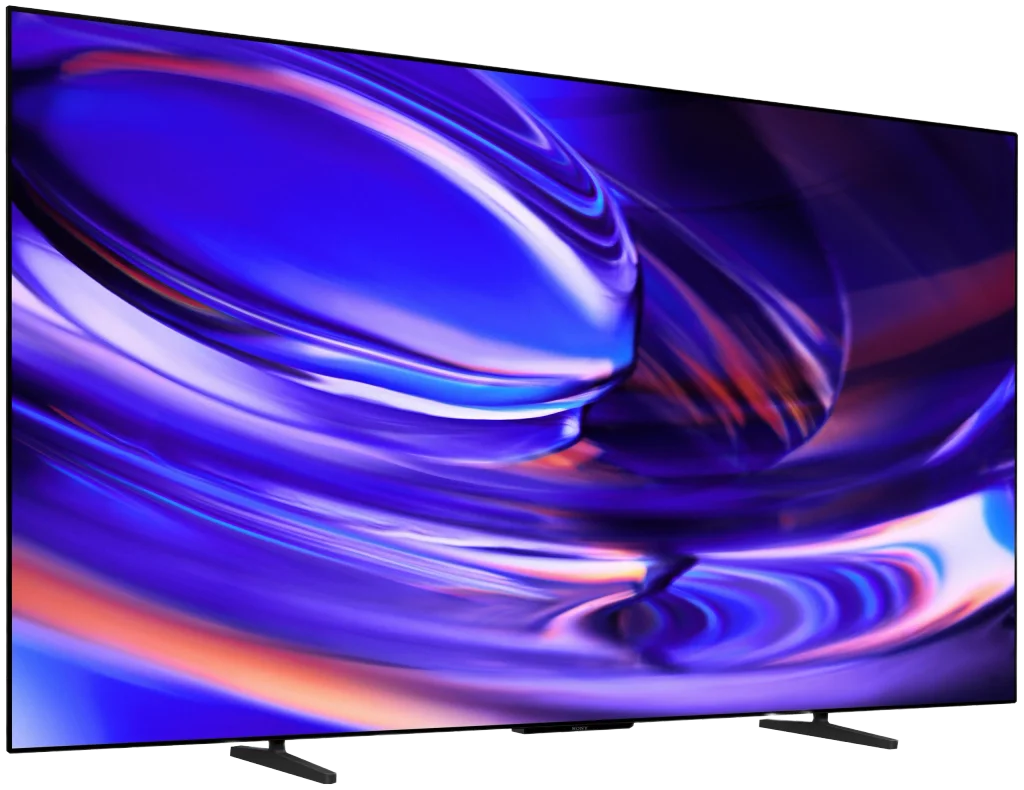
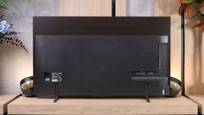
Although the BRAVIA 6 is one of the more affordable OLEDs, you wouldn't guess that from its looks. It's well built, and its minimalist casing makes a good impression, much like many of Sony's pricier TVs. Narrow black bezels run around the screen, and the whole set rests on two metal feet. You can adjust their height, which is handy if you want to place a soundbar under the screen.
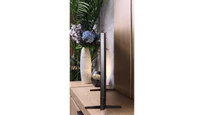
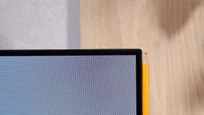
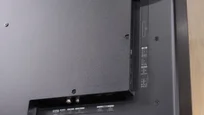
From the side the design looks familiar: the panel itself is only about 2 mm thick, but behind it sits a much thicker housing that contains the electronics and connectors. In the BRAVIA 6 this takes up a large portion of the rear, so the TV doesn't look quite as slim. You also can't hang it completely flush to the wall. That doesn't change the fact that it looks very good from the front, and the quality of materials and fit and finish don't show any major cost-cutting.
Buy at the best price
Select size:

SONY BRAVIA 6 - Contrast and black detail
10/10

Result
∞:1
Result
∞:1
Result
∞:1
Result
∞:1
Result
∞:1

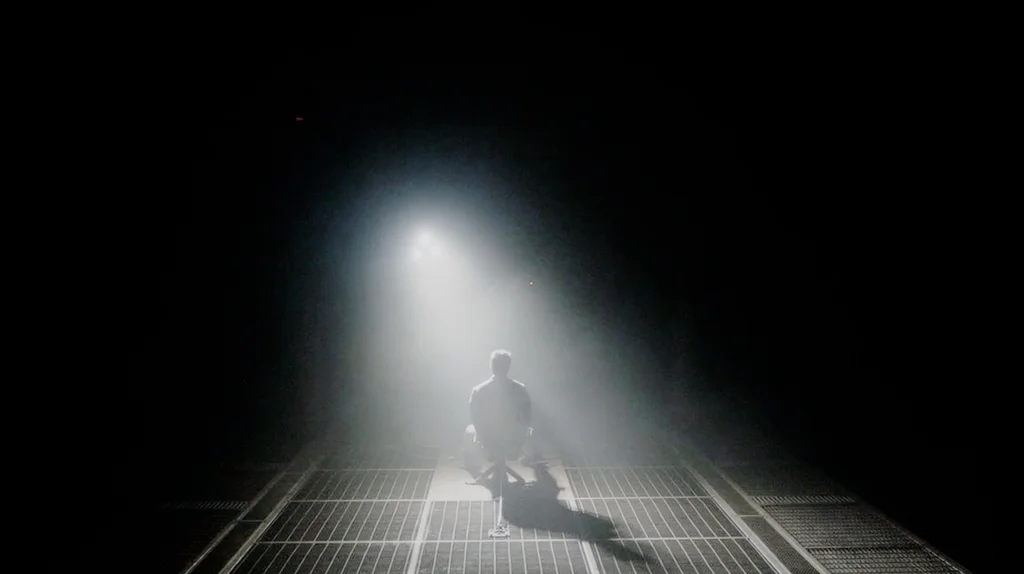
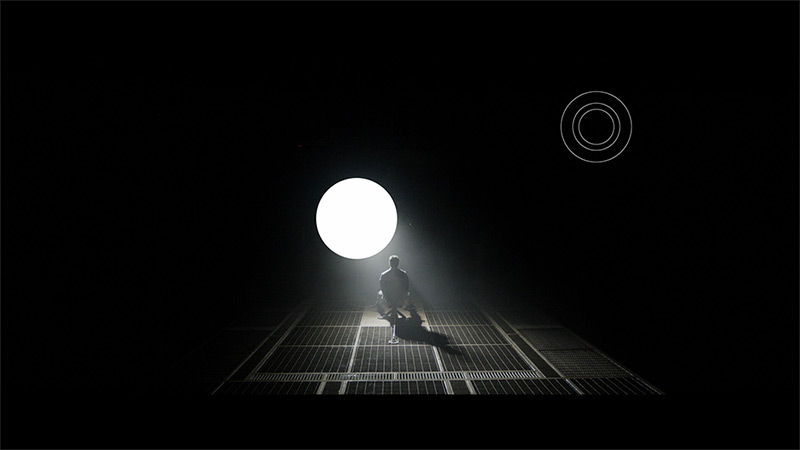
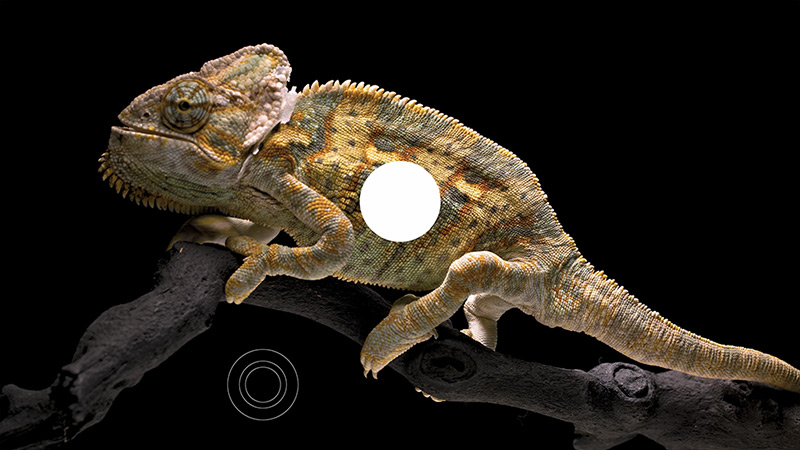
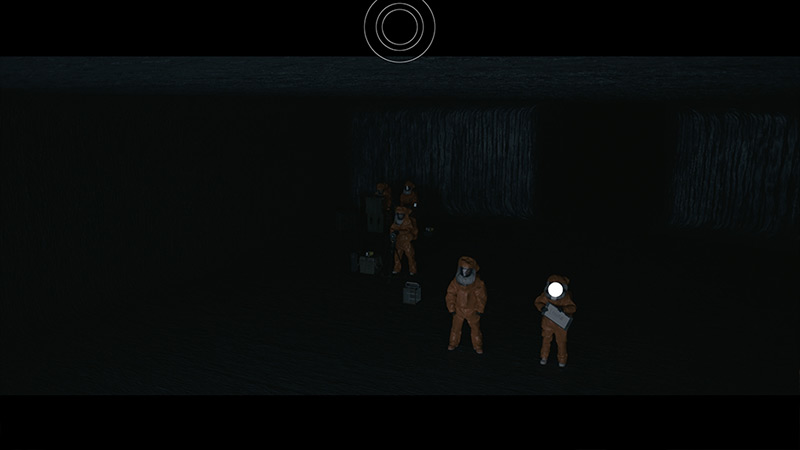
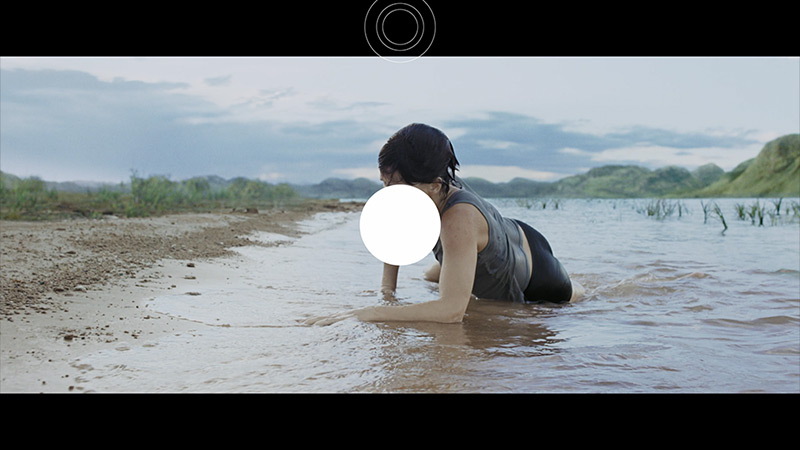
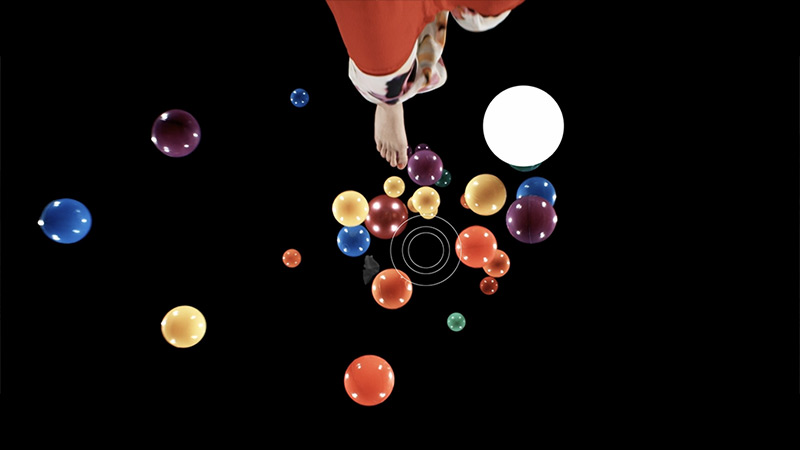
Sony BRAVIA 6, also known as the A65, uses an OLED panel, so when it comes to black levels and contrast it deserves top marks. In all test scenes blacks remained completely black, and the measured contrast was infinite. That's thanks to independent control of each pixel, which can be turned off completely, even with a very bright element right next to it. In that respect the BRAVIA 6 even outperforms the best Mini LEDs. A few thousand local-dimming zones still don't offer the precision of control over each of the more than 8 million pixels.
However, in the video below you can see that some dark parts of the image are slightly brightened. It's worth clarifying that this concerns the very darkest shades of grey, not true black. The BRAVIA 6 tends to show them brighter than it should, so details in deep shadow can be overly emphasised. This doesn't change the panel's ability to completely turn off black elements, so we don't lower the rating in this category. We'll return to this behaviour when assessing image reproduction and the effects of calibration.
Halo effect and black detail visibility:
SONY BRAVIA 6 - HDR effect quality
5.7/10
Supported formats: HDR10, Dolby Vision, HLG
Luminance measurements in HDR:

Result
483 nit
Result
616 nit
Result
697 nit
Result
680 nit

Result
276 nit
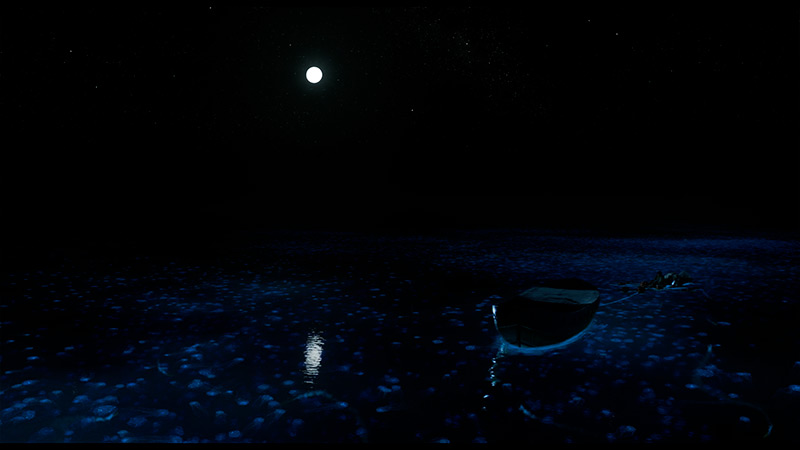
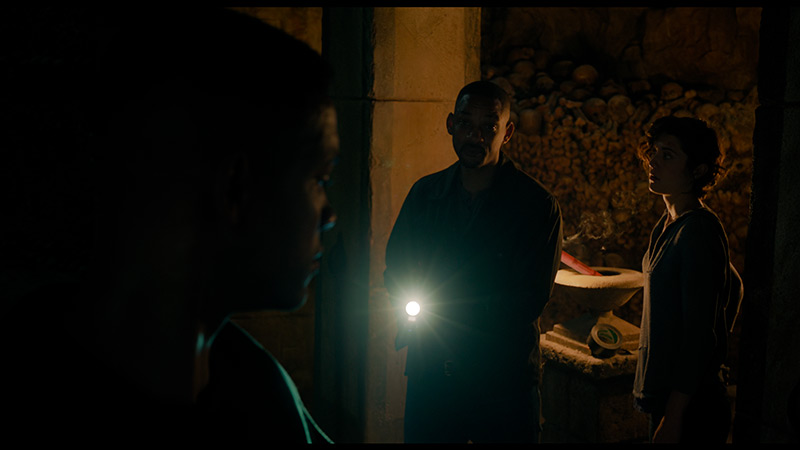
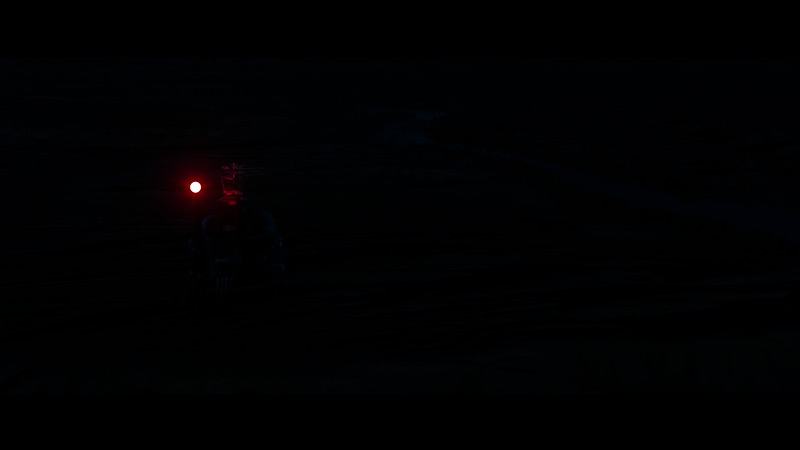
The Sony BRAVIA 6 is a moderately bright TV, and compared with today's OLEDs it can even be classed among the darker models. It peaks at around 700 nits, but you'll see those values mainly on small highlights surrounded by a dark background. In brighter, mixed scenes the result is closer to 500 nits — for example, a sunset shot from the film "Life of Pi", where we measured 483 nits. Combined with perfect blacks this gives a pleasant HDR effect, especially in the evening, although it's hard to call the brightness spectacular. Limitations become even more noticeable when bright elements occupy most of the screen. Then ABL kicks in, the mechanism that limits brightness when the OLED panel is heavily loaded. The BRAVIA 6 uses the panel's capabilities fairly conservatively, and in such shots brightness falls to around 250–280 nits. In the scene with the oil rig we got about 250 nits, so a bright sky no longer has the same punch as a single torch in darkness. It's in wide, sunny landscapes or large flares that it most noticeably lacks brightness headroom.
Colours
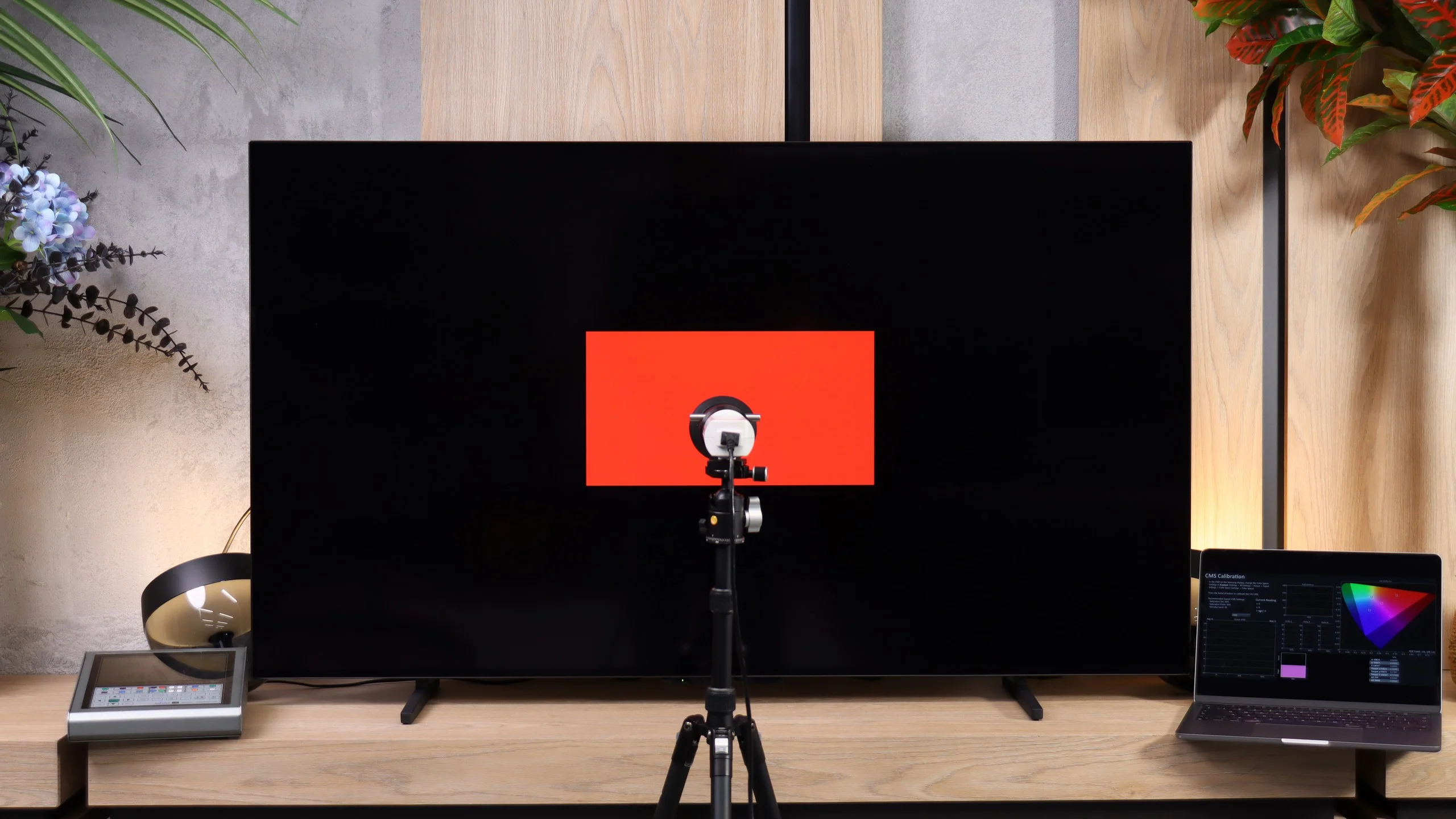
In terms of colours the BRAVIA 6 does quite well. It covers about 95–96% of the DCI-P3 gamut, so it can reproduce most of the colours used in HDR films and series with proper saturation. It still trails higher-end WOLED panels a bit, which approach full coverage of that gamut, but in everyday viewing it won't be a big difference. A larger gap separates it from QD-OLED screens when rendering the most intense colours from the wider BT.2020 gamut. Sony covers that at roughly 71–72%, so exceptionally saturated reds or greens won't look as impressive as on organic panels with quantum dots or on SQD Mini-LED displays. Moreover, gamut coverage alone doesn't mean the TV can show those colours at high brightness. On the BRAVIA 6 very bright, colourful highlights have less punch, which further tames the HDR impact. In typical films the colours still look good, with screen brightness remaining the bigger limitation.
BT.2020 color gamut coverage and primary color luminance
| Data set | BT.2020 | P3 | R | G | B |
|---|---|---|---|---|---|
| Synthetic patterns | 71.8% | 96.6% | 57% | 60% | 58% |
| Film measurements | 70.8% | 95.9% | 44% | 39% | 34% |
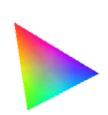 BT.2020
 BT.2020 and P3 – average color gamut coverage (percent of the target gamut).
R, G, B – average primary color luminance relative to target (percent).
Scene from the movie “Pan” (about 2800 nits)

Scene from the movie “Billy Lynn” (about 1100 nits)
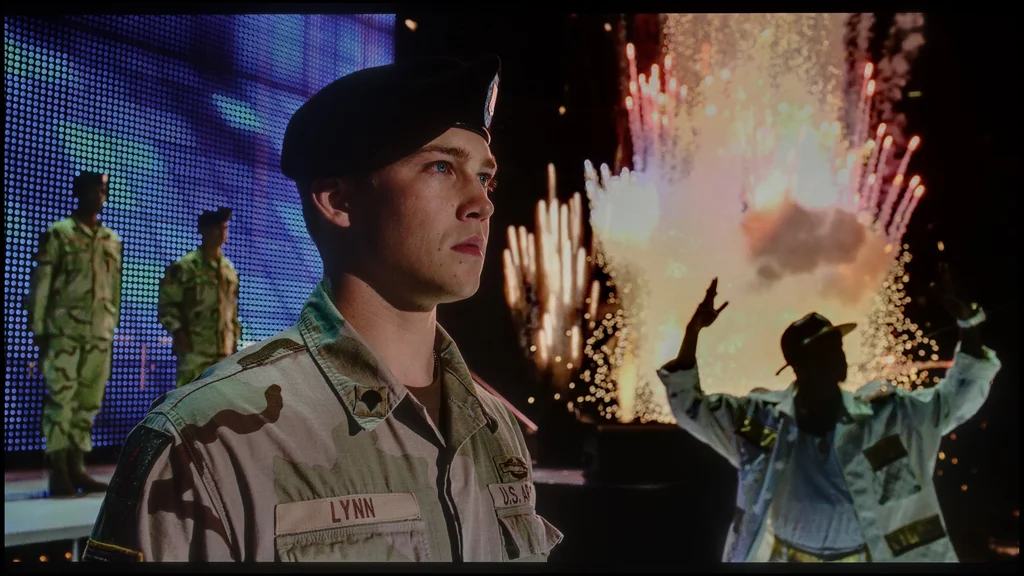
Sony has accustomed us to good tone mapping, that is, matching a film's brightness to the screen's capabilities. In the BRAVIA 6, however, it's clear we don't get the same level as in Sony's higher-end models. The biggest problems appear with demanding HDR content mastered for peak brightness up to 4,000 nits. The brightest shades merge together, so highlights lose detail and the image looks quite flat. Overall scene brightness remains close to the material's intent, but there's a lack of both punchy specular highlights and subtle gradations in the brightest areas. It doesn't look disastrous, but compared with other Sony models you could expect more from the BRAVIA 6. More common content mastered to around 1,000 nits fares much better. Here the TV has less to 'squeeze' within the panel's capabilities, so the image retains more depth and looks more convincing. It still happens that the brightest details merge into a uniform blob, but that no longer affects the perception of the whole scene as much. This is one of the first areas where the compromise of choosing Sony's cheaper OLED becomes obvious. Lower peak brightness is one thing, but better 'tonality' would allow you to get a lot more out of the picture.
HDR luminance chart:
That’s why Dolby Vision support matters a lot on the BRAVIA 6. In that format the previously described issues with bright details are much less noticeable, as the scene with the horses clearly shows. In HDR10 the snow and background blend into an almost uniform white, whereas in Dolby Vision you can see the texture of the ground, the vegetation and the trees in the distance. The TV receives extra information that helps tailor the image to the panel’s capabilities, and in this case it clearly makes use of it. Of course Dolby Vision doesn’t increase the panel’s brightness itself, but it lets you make better use of what the BRAVIA 6 has to offer. The difference won’t be as pronounced in every movie, because the shot shown is particularly demanding. However, if the same content is available in both formats, it’s worth choosing Dolby Vision, and it’s usually very easy to find on streaming services.
Static HDR10

Dynamic: Dolby Vision

Factory color reproduction
6.9/10
In Cinema mode the Sony BRAVIA 6 delivers a rather pleasant picture, although the factory settings give it a slightly too warm character. In SDR, that is when watching regular TV and older films, there’s a dominance of red and a shortage of blue. The image can therefore take on a creamy, slightly pinkish tint, and faces look more flushed than they should. It’s not a cast that completely alters the look of a film, but it’s noticeable with neutral colours. On top of that there’s a bit too much darkening in SDR. The gamma curve sits above the target value, which during viewing means darker areas of the scene. The scene may appear more contrasty, but subtle shadow detail becomes harder to distinguish.
In HDR the colours behave a little differently. The red dominance is reduced, but together with a slight excess of blue and a lack of green it gives a faint pink cast to bright, neutral surfaces. The luminance response remains close to the reference across much of the range, although you can see the previously mentioned lift of tones just above black. Because of this, in night scenes some parts of the background are more visible than the filmmakers intended. Some midtones are also slightly brightened. Overall cinema mode is a sensible starting point for viewing and is definitely the best mode among the options, but the white balance and the way brightness is rendered still need refining.


Color reproduction after calibration
8/10
BRAVIA 6 responds well to picture calibration, although many user options are unavailable from the TV’s menu. Apart from basic white balance and gamma adjustments in SDR, it’s hard to get the rest of the image under control. Fortunately, those adjustments alone allow a significant improvement. In SDR we were able to almost perfectly even out the white balance, which removed the excessive warm cast and stopped faces looking overly rosy. After correcting the gamma, darker areas are also better visible. For regular broadcast TV or YouTube content the result is noticeably better than the factory settings.
In HDR it was also possible to reduce the colour cast, but a bigger problem here is how the TV manages brightness. BRAVIA 6 unusually changes it depending on the scene: some tones are darkened, others brightened, and the available settings do not allow full correction. You can see this in measurements taken from films, where the brightness behaviour and the way the EOTF curve differs between shots are visible. That leads to the aforementioned emphasis of the darkest greys, which makes some night scenes too bright. Calibration therefore makes sense and especially in SDR allows a natural, well tuned image. In HDR the colour improvement is also noticeable, but it does not solve the issues with brightness and preserving the brightest details. It’s a shame, because with more control over what the TV does the panel’s capabilities could be put to better use.

SONY BRAVIA 6 - Smoothness of tonal transitions
6.7/10
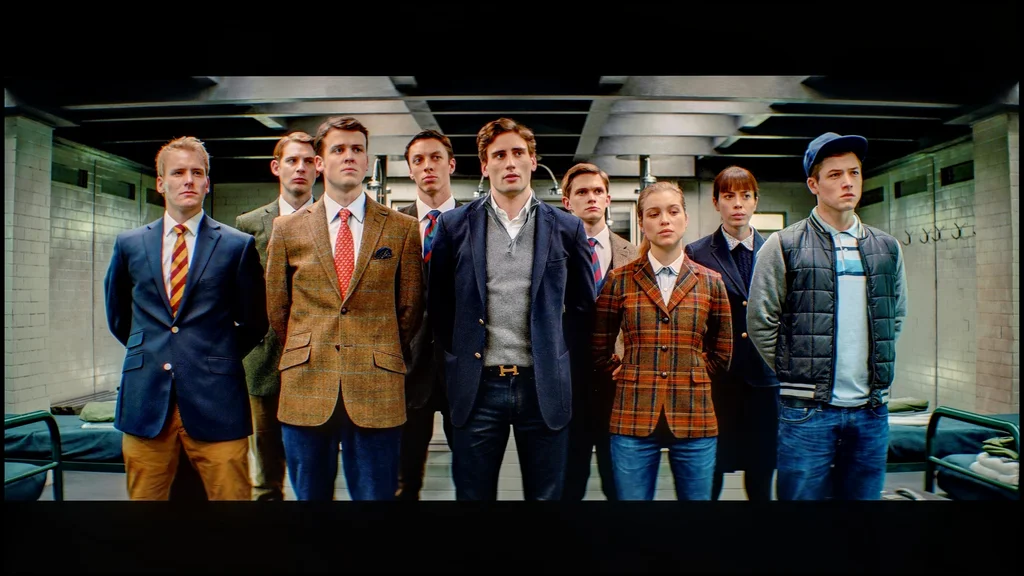
The smoothness of tonal transitions on the BRAVIA 6 is rather average. In every scene we checked you can spot small irregularities where one shade should blend into another. In bright shots they’re subtle and easy to miss, but darker tones cause more problems. On shaded backgrounds the boundaries between them are clearer, so instead of a smooth transition you see distinct bands. We observed similar imperfections in other TVs we tested with an OLED SE panel. Interestingly, when running the same scenes in Dolby Vision the tonal gradation gets a little worse. These aren’t issues that ruin an entire viewing session, but on uniform backgrounds and in darker shots they can draw more attention.
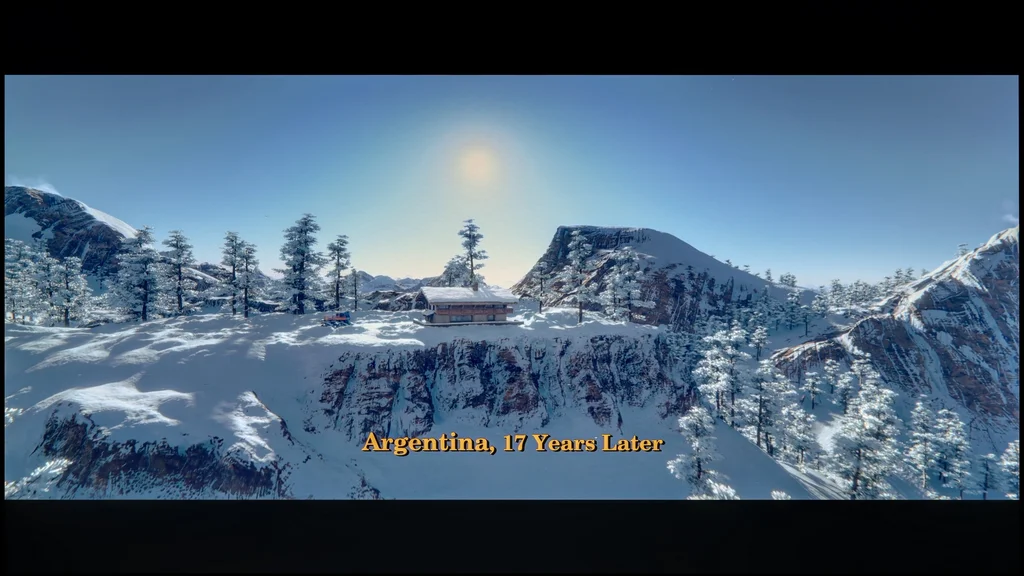
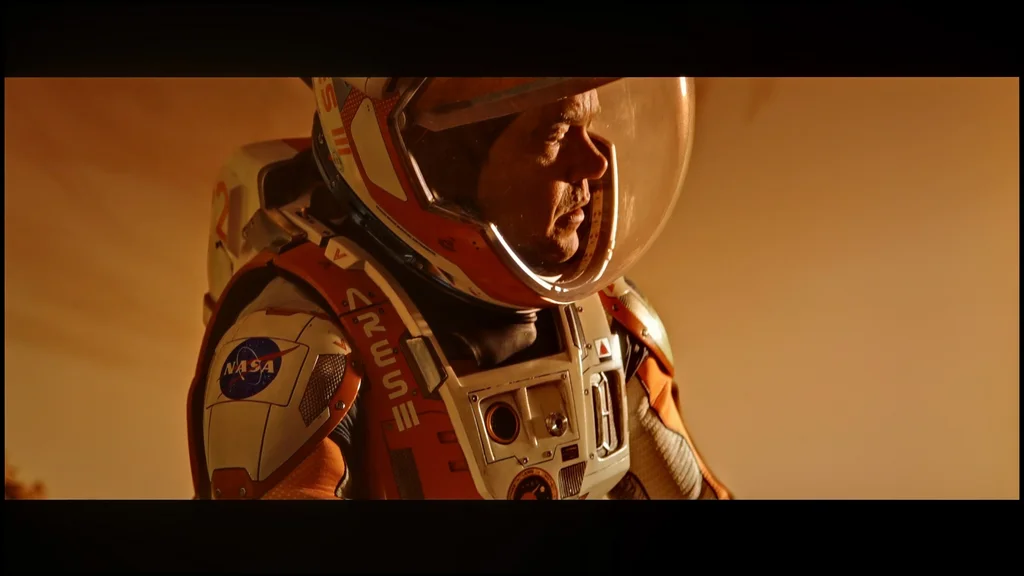
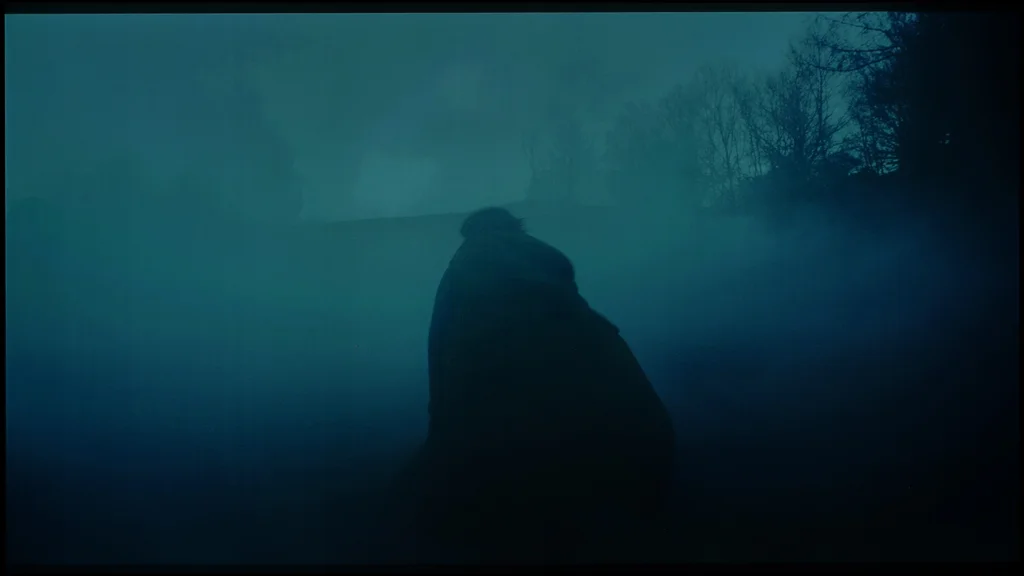
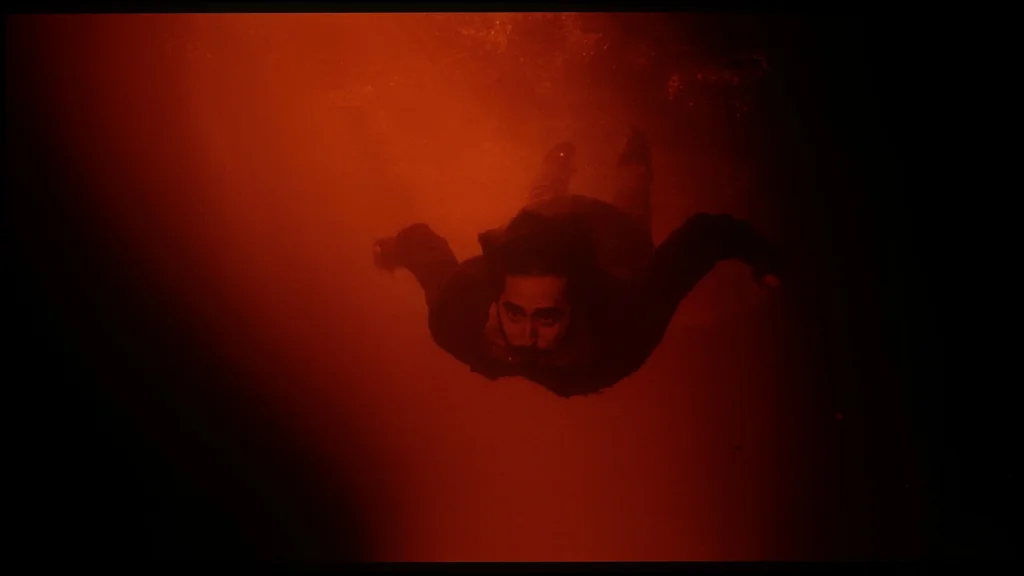
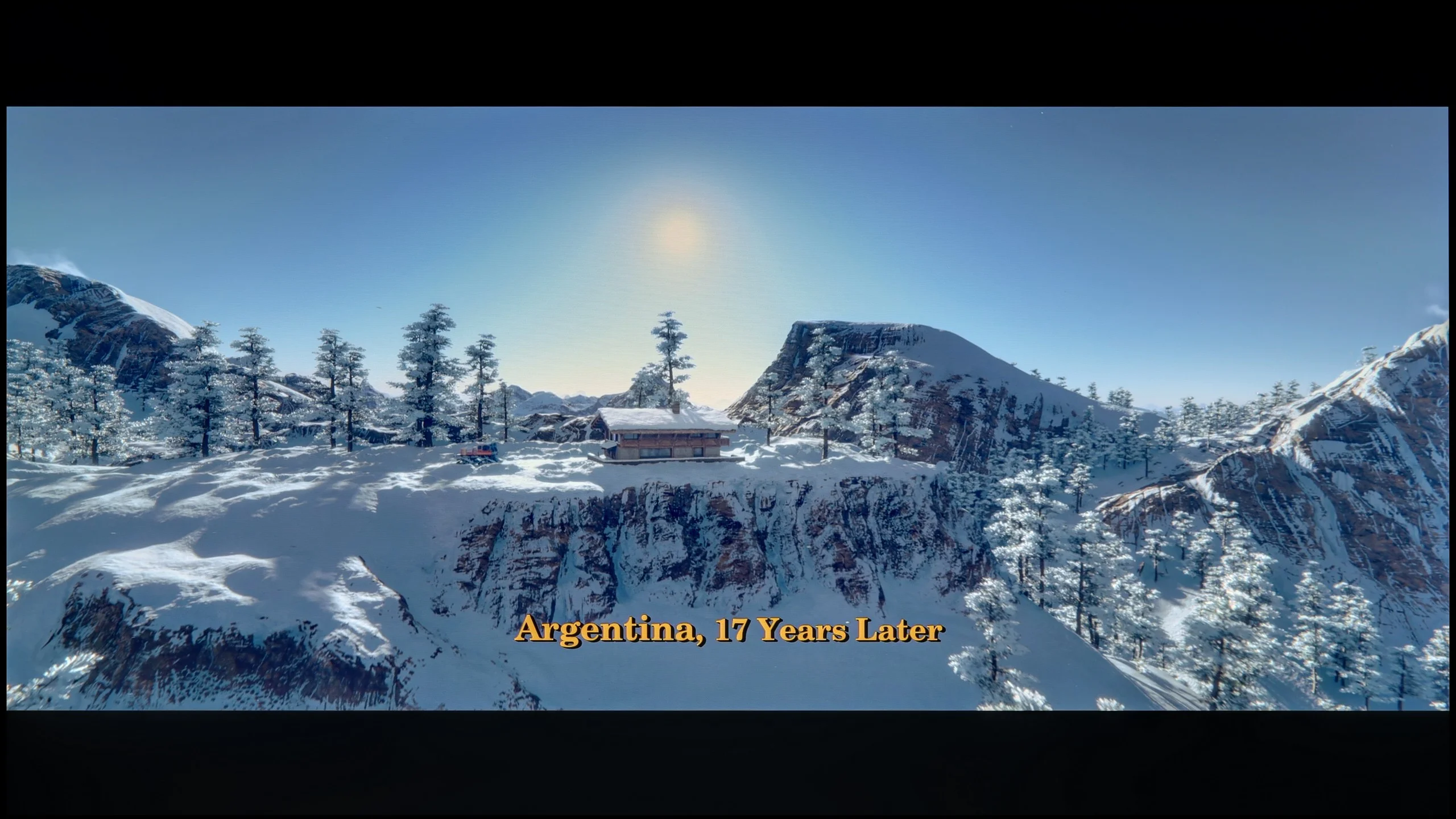
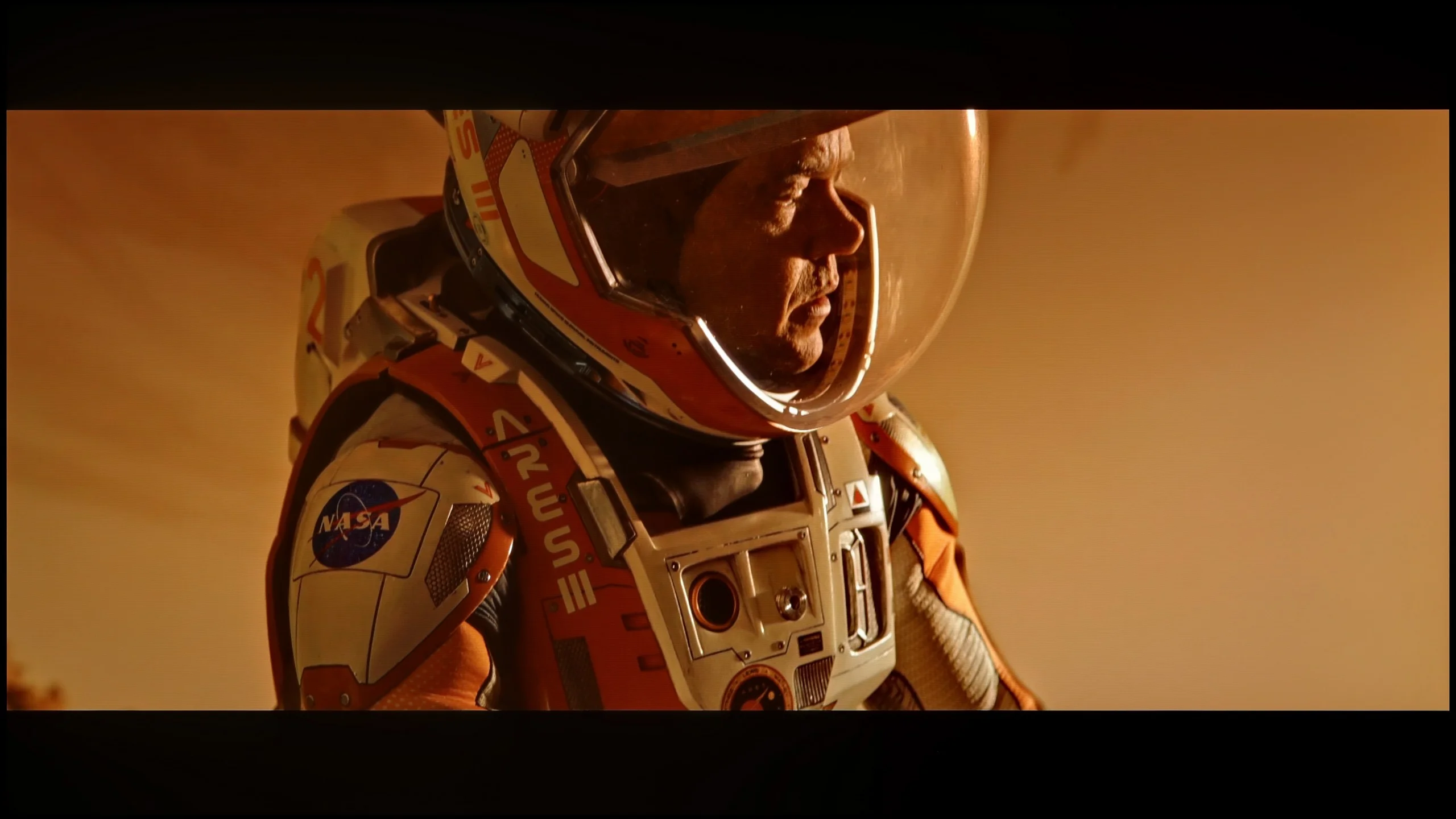
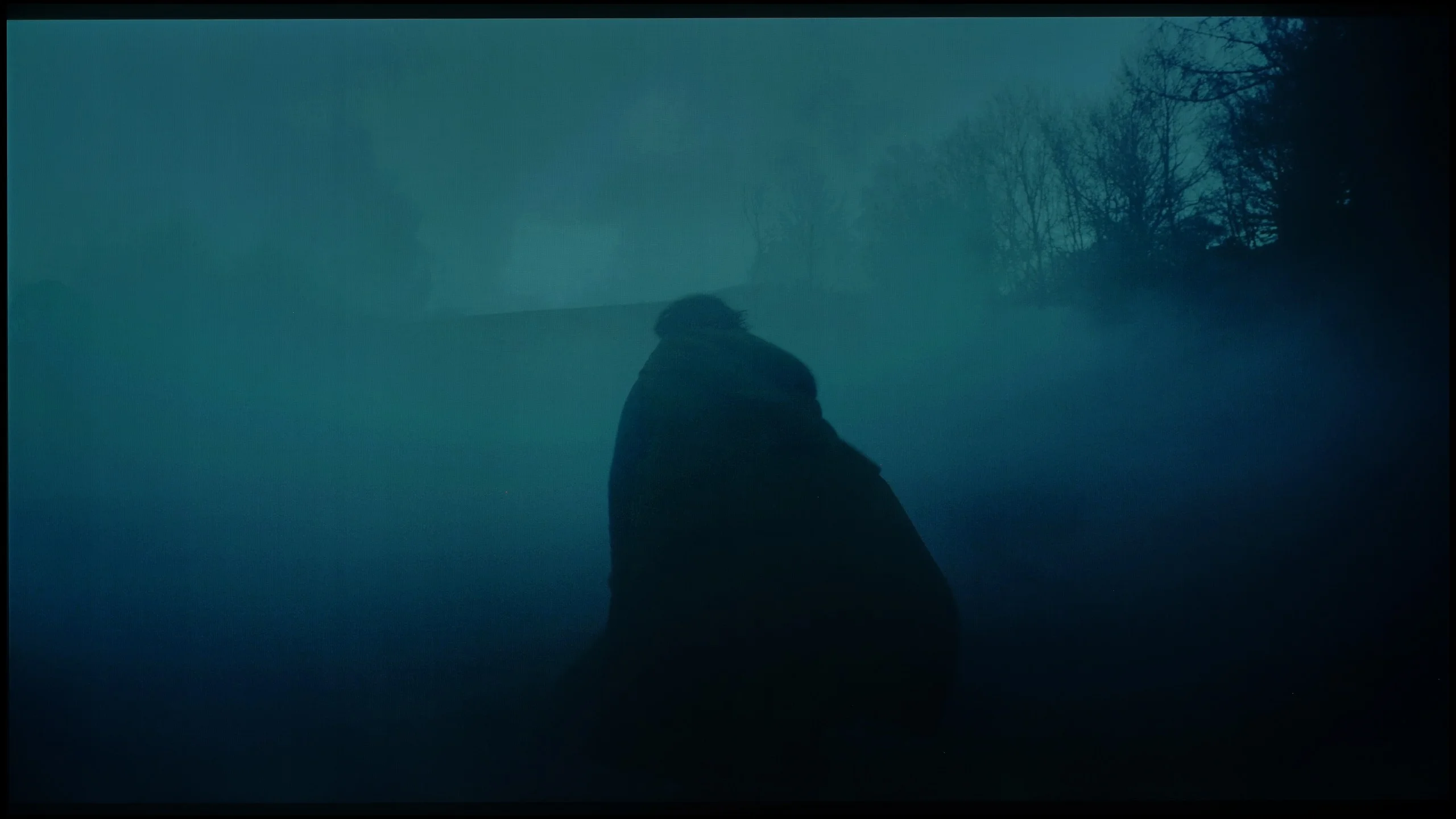
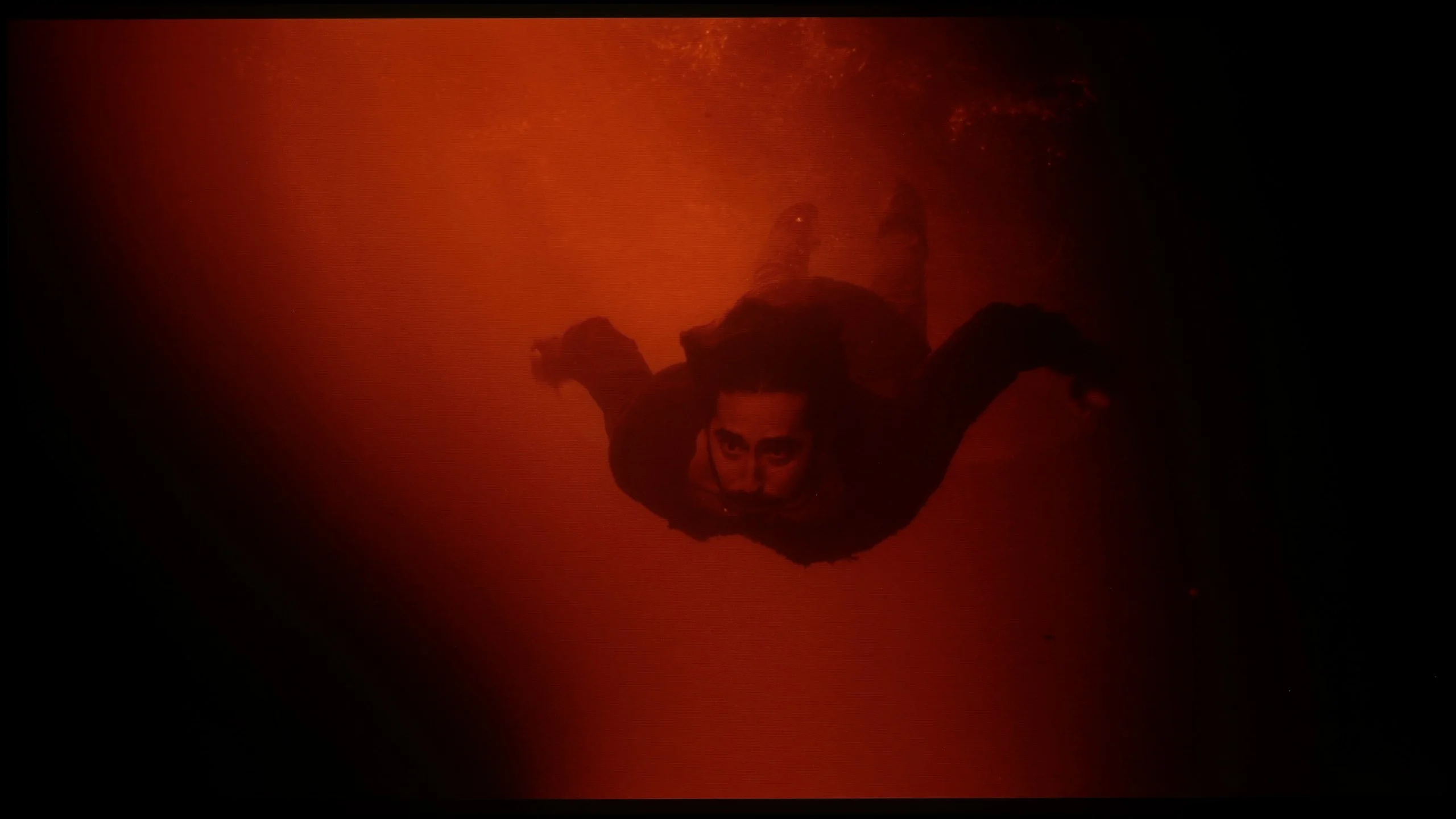
Image scaling and smoothness of tonal transitions
6/10
 Smooth transition function
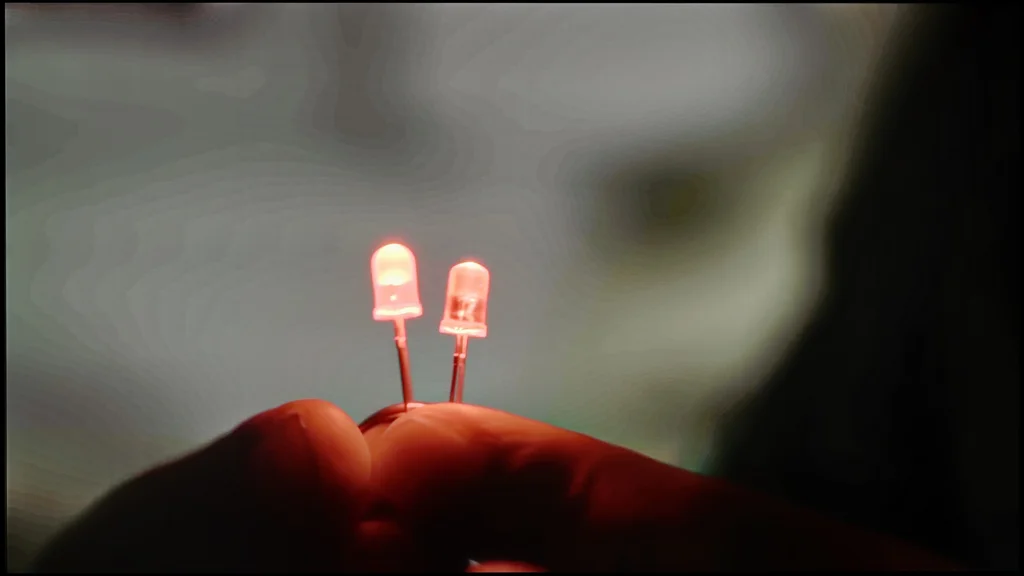
Image without overscan on the SD signal

The "magic" of Sony's image processing has been talked about for years, and we've repeatedly confirmed its effectiveness in higher-end models. BRAVIA 6 shows, however, that the Japanese manufacturer's logo alone doesn't guarantee equally good results. Despite using a MediaTek Pentonic 800 processor, the TV handles smoothing of banding between shades in heavily compressed footage only rather averagely. The available "De Contour" function set to medium helps a little, but some uneven transitions remain visible. On the plus side, we didn't notice any obvious blurring of detail or extra artefacts. So it's worth using on weaker recordings, though its effectiveness is far from what we've become used to from the manufacturer's TVs. Upscaling of lower-resolution material performs better. The image is a little soft, but most fine detail stays clearly visible. In the scene with the model you can make out both the tree's texture and thin branches in the background, so this gentler sharpening doesn't automatically mean a loss of detail. There's also no issue with overscan: the TV shows the entire frame, without cropping the edges even with an SD signal.
SONY BRAVIA 6 - Blur and motion smoothness
8.5/10
Maximum refresh rate of the panel: 120Hz
Film motion smoothing option: Yes
Blur reduction option: Yes
BFI function 60Hz: No
BFI function 120Hz: No
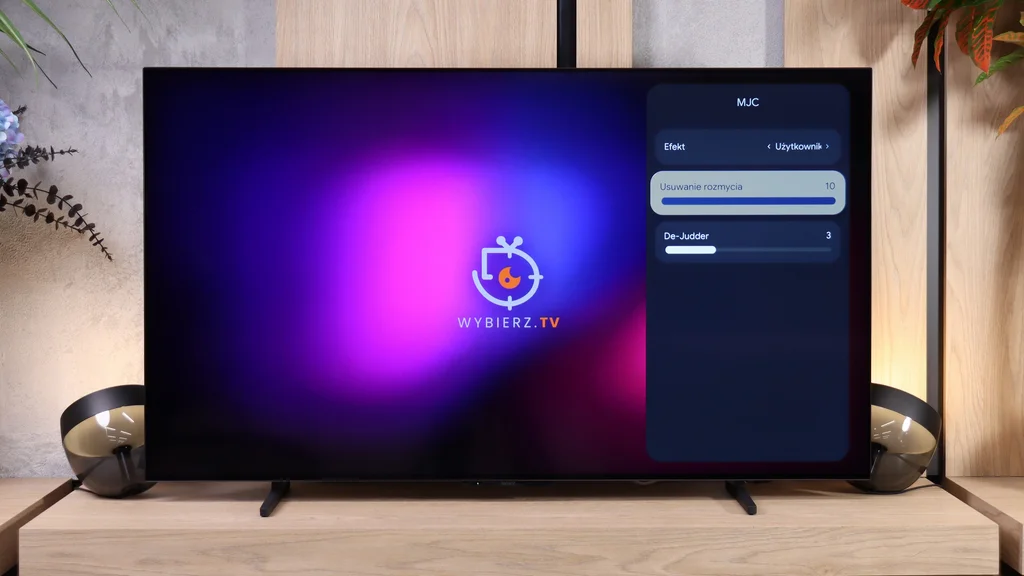
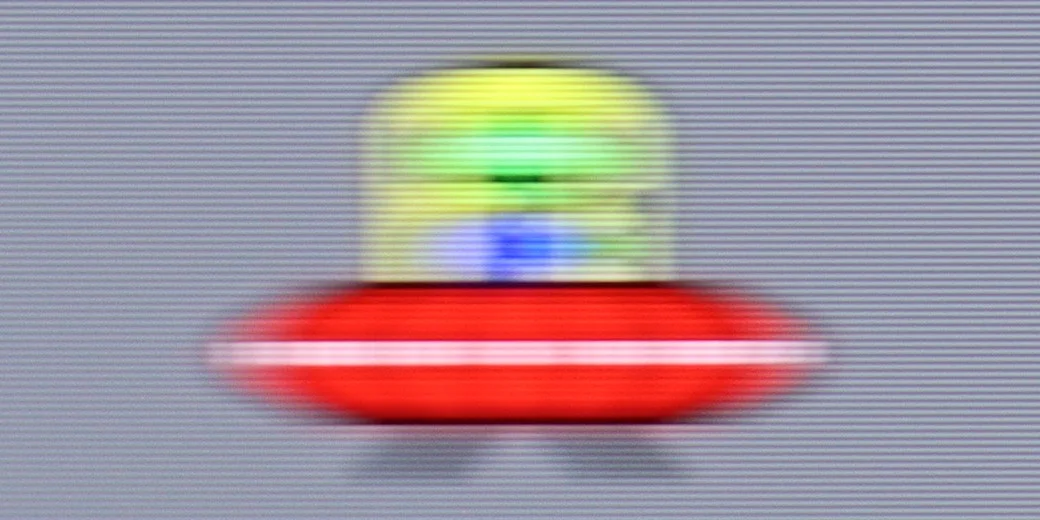
In dynamic scenes the BRAVIA 6 performs very well. The OLED panel responds almost instantly, so moving objects show virtually no smearing, even on dark backgrounds. Combined with a 120 Hz refresh rate, this delivers a sharp picture for watching sport and gaming. In that respect the TV offers exactly what we'd expect from an OLED.
The motion settings menu is much less typical for Sony. Instead of the familiar Motionflow system there's a feature called "MJC", which in both appearance and naming more closely resembles solutions found on budget TVs from other brands. You get two sliders: "Blur Reduction", which here is equivalent to the "Smoothness (Film)" setting, and "De-Judder", which corresponds to the "Smoothness (Camera)" control on other Sony models. The motion smoothing itself works well and lets you adjust motion to your preferences, though users switching from another BRAVIA will be surprised by the new menu on the TV.
Blur (native resolution, maximum refresh rate):



Blur (4K@60Hz):


What was missing, however, was the third slider, "Clarity", which on other Sony TVs lets you gradually adjust BFI (black frame insertion). This feature improves motion clarity by inserting black frames, at the expense of image brightness. The BRAVIA 6 doesn't offer it, so the adjustment options are more limited.
SONY BRAVIA 6 - Console compatibility and gaming features
7.5/10
- ALLM:
Yes
- VRR:
Yes
- VRR range:
48 - 120Hz
- Dolby Vision Game Mode:
Yes
 Correct implementation of HGIG:
No
Correct implementation of HGIG:
No - 1080p@120Hz:
Yes
- 1440p@120Hz:
No
- 4K@120Hz:
Yes
- Game bar:
No
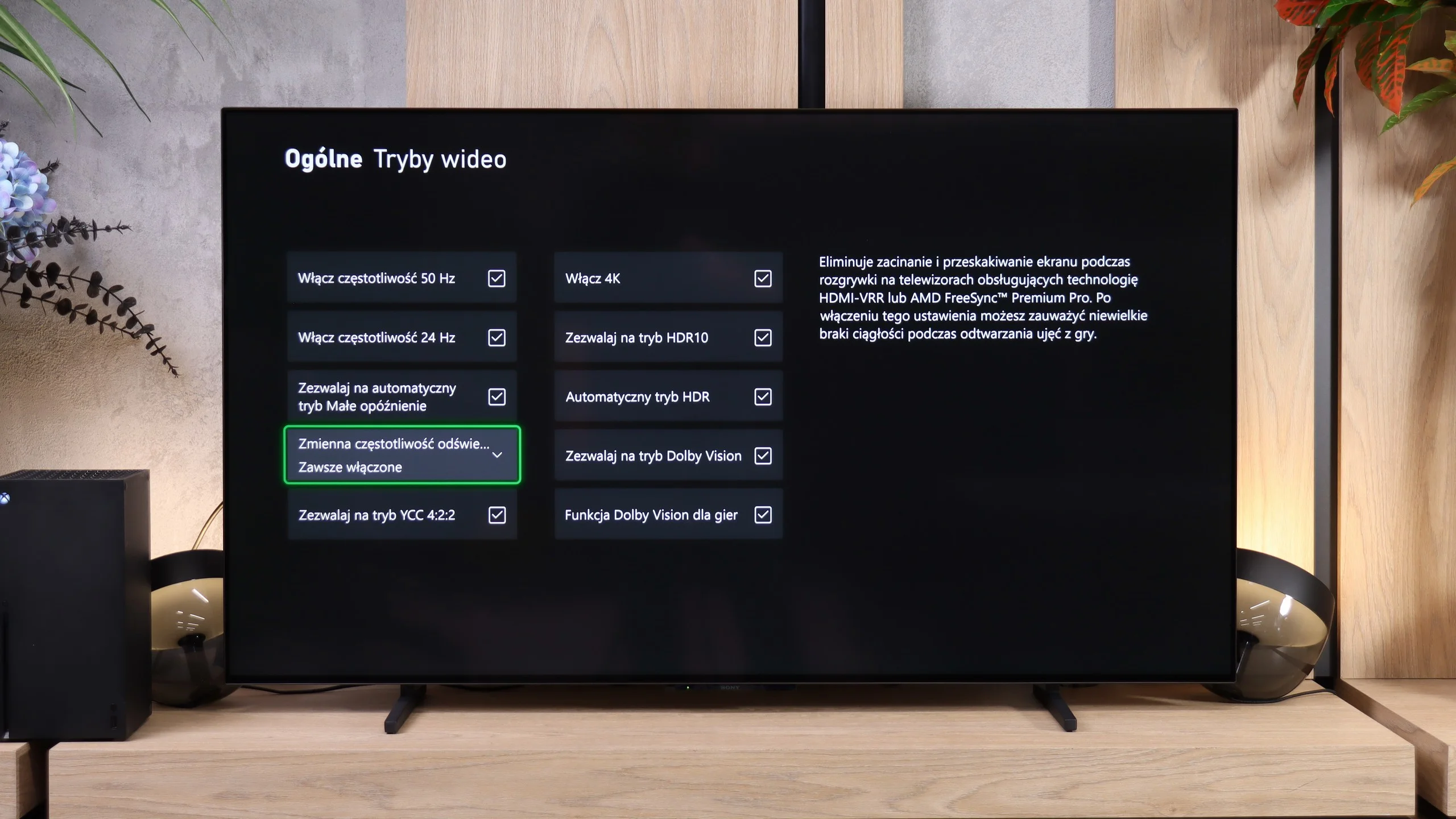
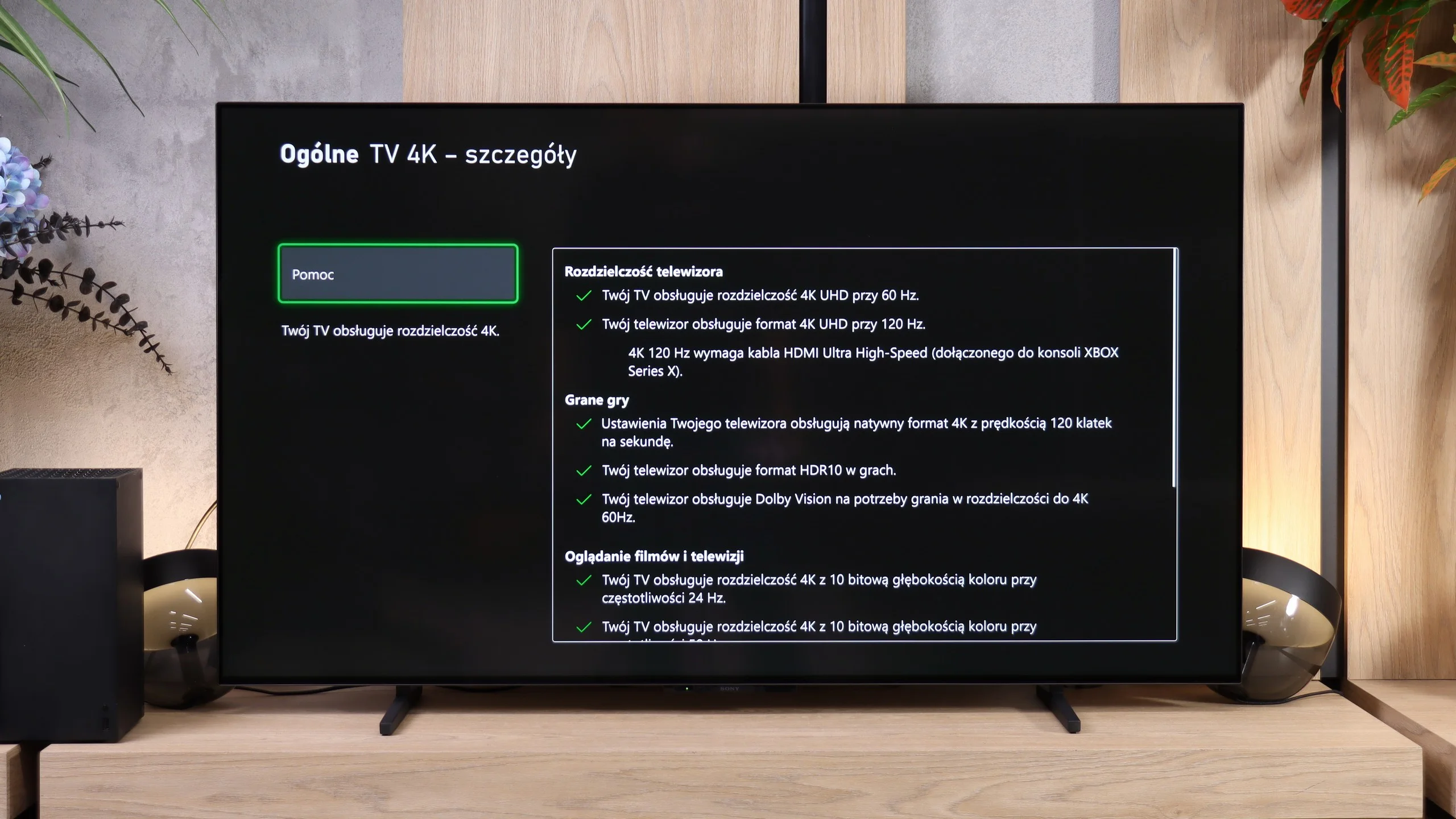
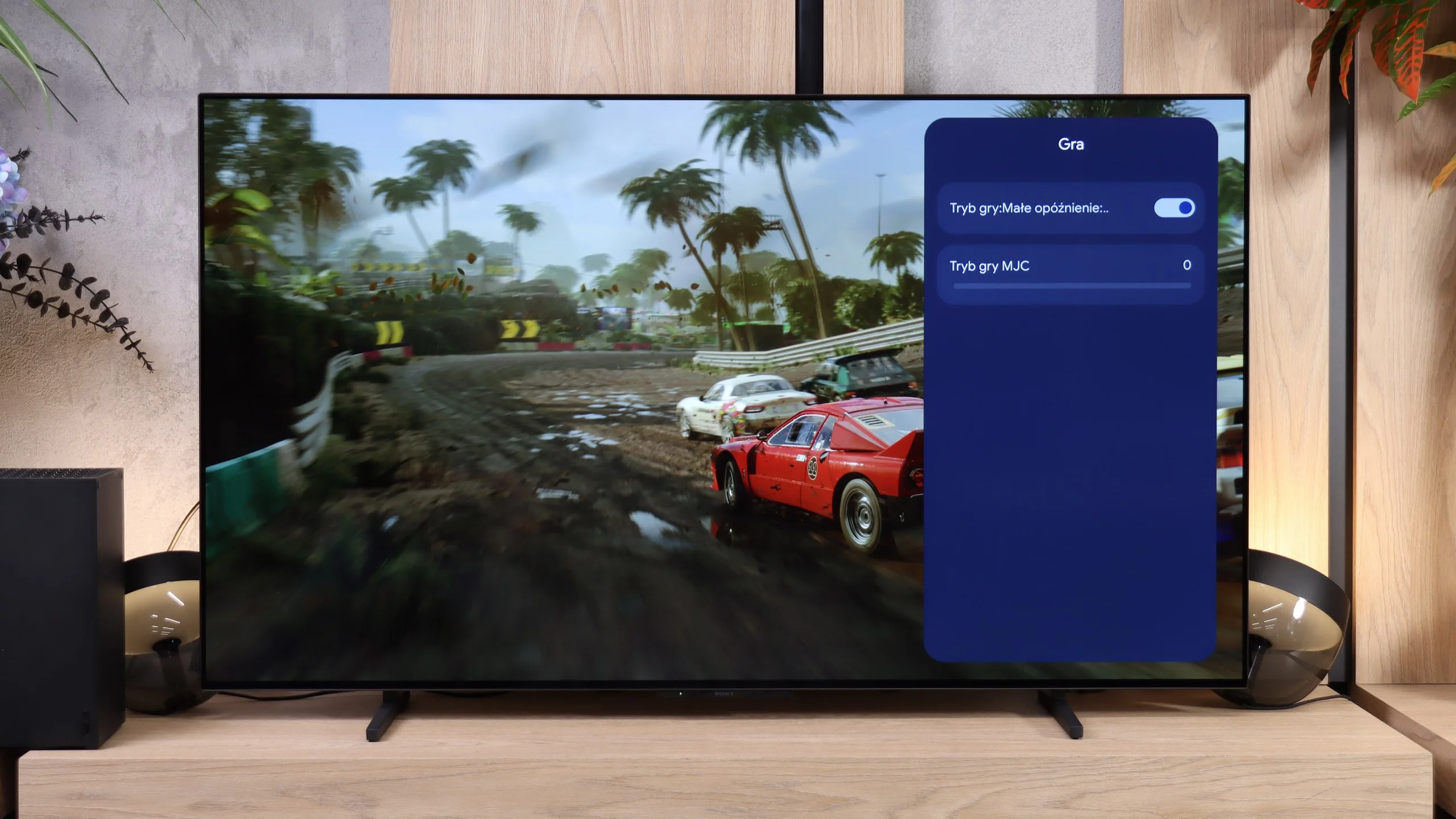
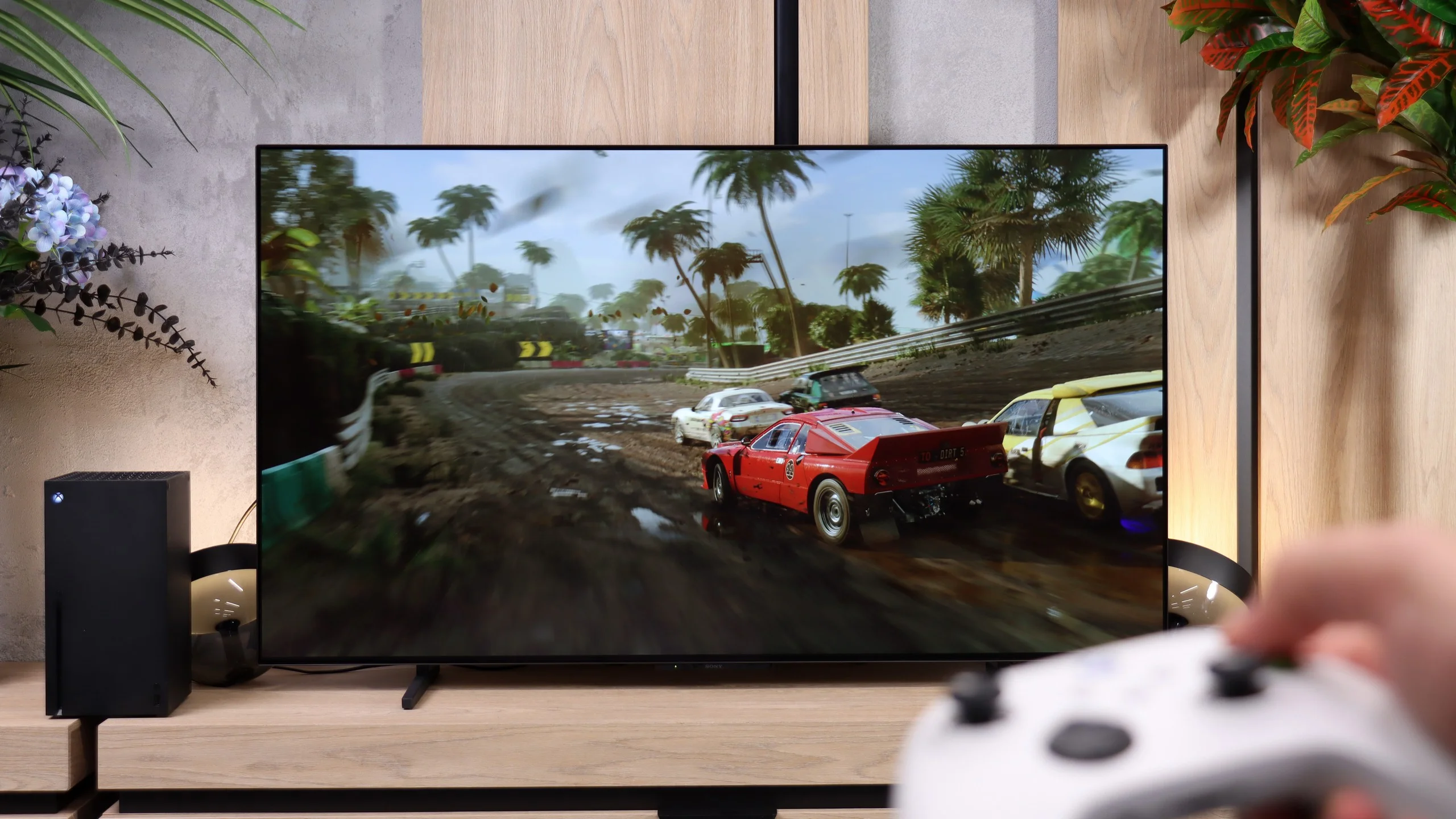
The Sony BRAVIA 6 is very good for gaming. Solid picture quality, fast OLED panel response and support for 4K at 120 Hz mean the TV handles fast-paced titles well. Players who expect more than just smooth gameplay will, however, quickly notice a few unusual omissions and shortcomings.
Start with the biggest change versus other Sony models: the BRAVIA 6 has four full-spec HDMI 2.1 inputs with 48 Gb/s bandwidth, thanks to the new MediaTek Pentonic 800 platform. That means you can connect several gaming devices and a soundbar without giving up a high refresh rate on any source. Each port supports ALLM, which automatically switches to low-latency mode, and VRR from 48 to 120 Hz, which synchronises the screen refresh with the game's frame rate. Dolby Vision at 120 Hz also works, with low input lag.
HDR setup is more problematic. There’s no correctly working HGiG, and the test checkerboard used for console calibration only disappears at around 1000 nits, even though the panel does not reach that brightness. Relying solely on that pattern can therefore lead to a loss of detail in the brightest parts of a game. In the settings that let you enter brightness in nits it’s better to choose roughly 700 nits, a value closer to the screen’s capabilities. We also couldn’t find a Game Bar, although retail materials suggest a basic version is included. The review unit only offered a sparse game settings menu. On top of that, there’s the familiar Sony limitation of no 1440p at 120 Hz. That won’t be a problem when playing on a console in 4K, but PC gamers may feel the restriction if they want 1440p to get more frames than 4K while retaining higher detail than Full HD.

SONY BRAVIA 6 - Input lag
10/10
Input lag on the BRAVIA 6 is very low. At 60 Hz we measured 13–14 ms, and switching to 120 Hz drops it to just 5 ms. That means the TV responds quickly to controller inputs and doesn't get in the way when gaming.
| SDR | HDR | Dolby Vision |
|---|---|---|
| 1080p60: 14 ms | 2160p60: 14 ms | 2160p60 DV: 13 ms |
| 1080p120: 5 ms | 2160p120: 5 ms | 2160p120 DV: 5 ms |
| 2160p60: 14 ms | ||
| 2160p120: 5 ms |

SONY BRAVIA 6 - Compatibility with PC
7.6/10
Chroma 444 (max. resolution and refresh rate): Yes
Font clarity: Good
Readability of dark text and shapes: Very Good
Input lag in PC mode (4K, max. refresh rate): 5ms
Matrix subpixel arrangement: RGWB
Max refresh rate: 120Hz
G-Sync: Yes
The BRAVIA 6 works well as a large screen for PC gaming. It supports 4K at 120 Hz, works with G-Sync, and input lag is just 5 ms. Combined with the panel's fast response, that makes for very enjoyable gameplay without noticeable smearing. The only thing missing is a higher refresh rate for people who want to use a powerful PC to play at more than 120 frames per second. As we mentioned earlier, you also can't use 1440p at 120 Hz.
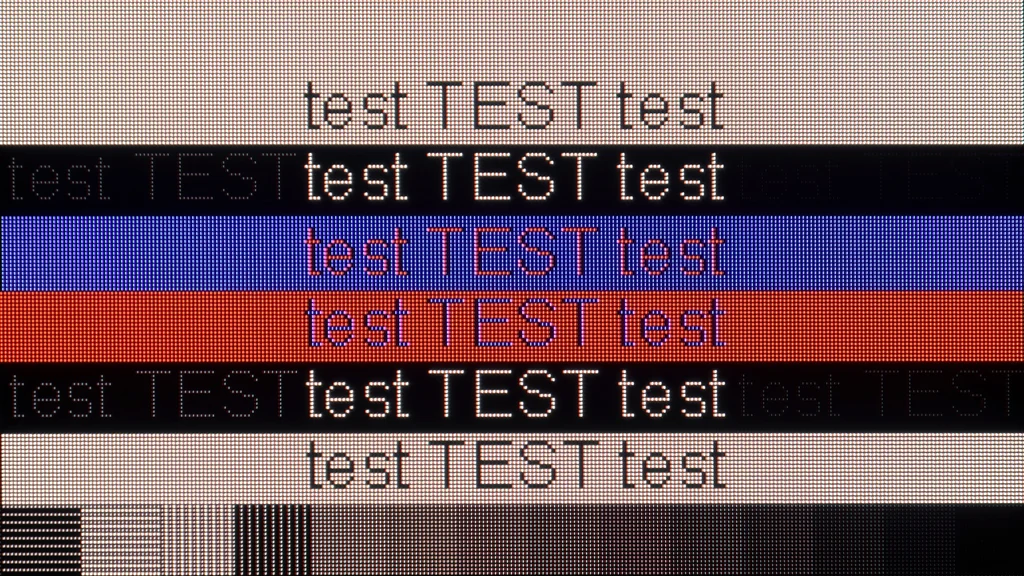
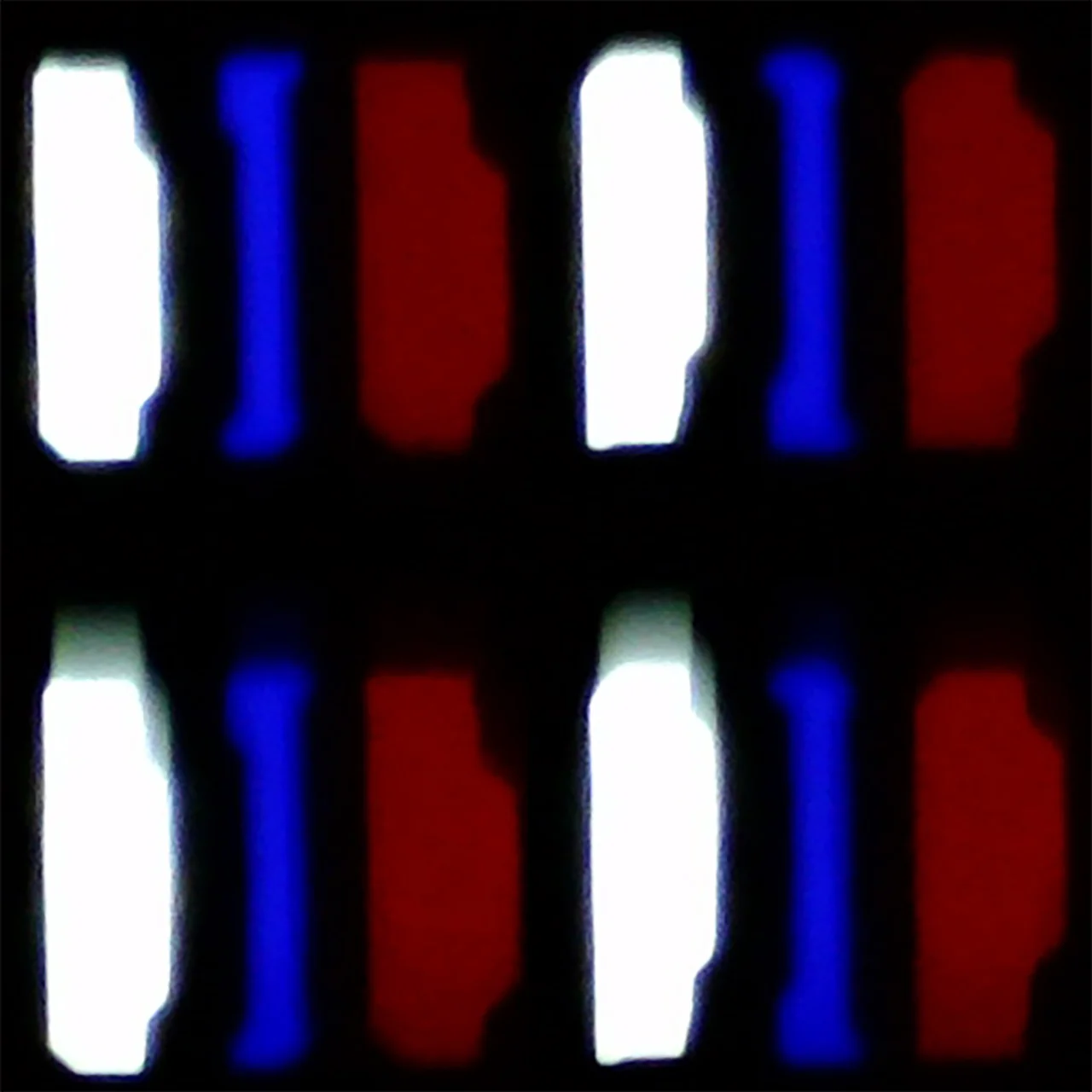
For text work it's good, though not perfect. The TV correctly handles 4:4:4 chroma subsampling even in 4K at the maximum refresh rate, so small letters remain legible and dark text doesn't lose parts of its outlines. Up close you can, however, see slight coloured fringing caused by the RGWB subpixel layout. That shouldn't be a major issue for web browsing or occasional work, but if you plan to read documents for hours from close up, fonts won't look as clean as on a typical RGB-layout monitor.
SONY BRAVIA 6 - Viewing angles
7.5/10
Brightness drop at an angle of 45 degrees: 31%
The BRAVIA 6 can be comfortably watched from the side too. Blacks stay deep and colours don't lose saturation as quickly as on LCD TVs with VA panels. At a 45-degree angle we measured a 31% drop in brightness, so the picture is a bit dimmer than head-on but still looks good. With a wide sofa or when watching in a larger group you don't have to fight for a spot opposite the screen. 😉 In that respect, the only better technology is QD-OLED screens.
SONY BRAVIA 6 - Daytime performance
4.6/10
Panel finish: Satin
Reflection suppression: Average
Black levels during daytime: Very Good
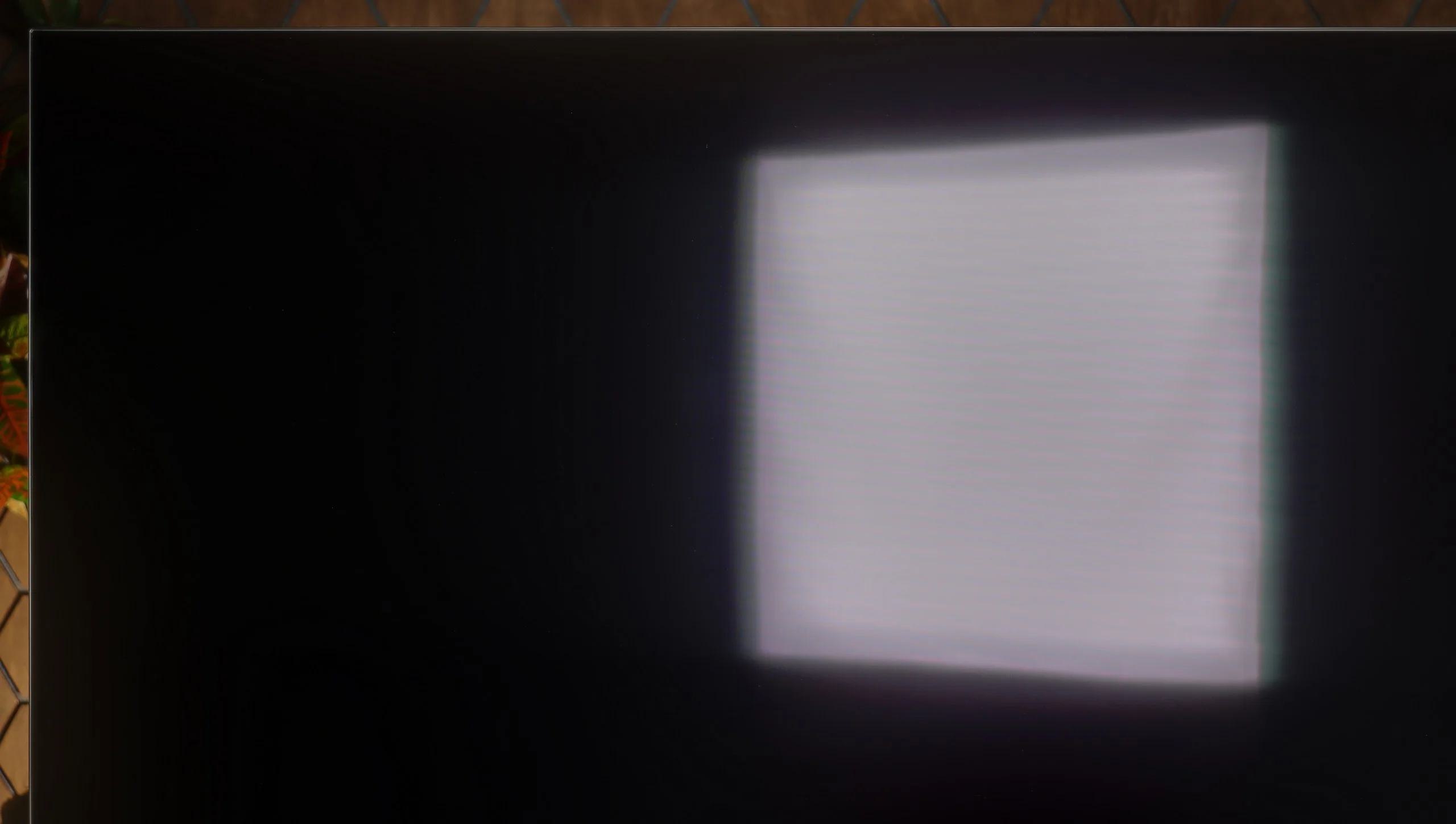
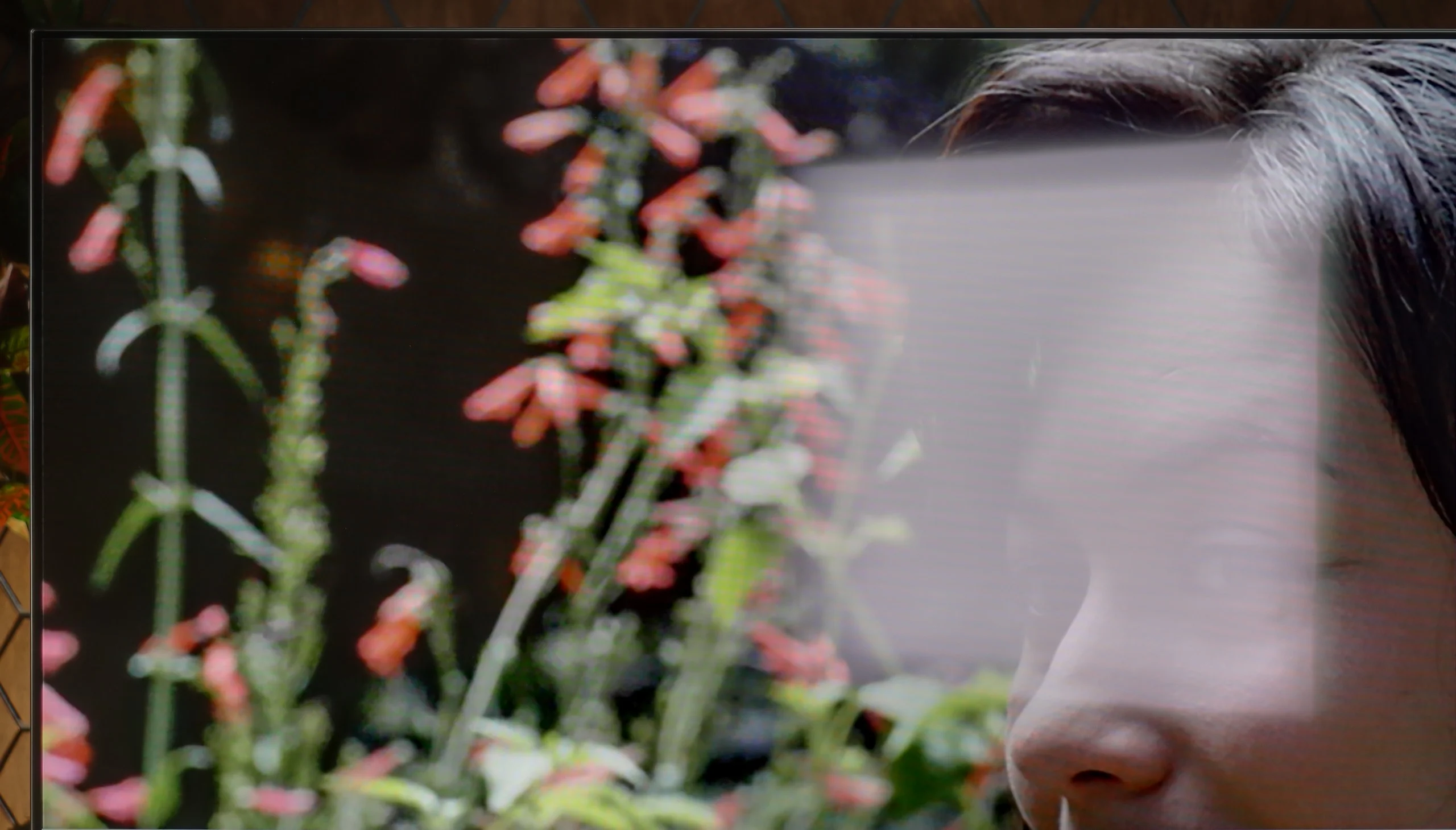
Watching in a bright room is one of the BRAVIA 6’s biggest weaknesses. Average SDR brightness is just 266 nits, and with a lot of white on screen it drops even lower. In a sunny living room the picture simply lacks the punch to cut through ambient light. For darker films, you may find it hard to watch comfortably unless you close the curtains.
The OLED SE panel used here, which lacks a conventional polariser, doesn't help. Its satin coating only moderately suppresses direct reflections, so a window or lamp opposite the TV remain clearly visible even with an image on screen. Blacks themselves hold up very well in a lit room, but the combination of poor reflection suppression and low peak brightness severely limits viewing in bright environments. The BRAVIA 6 will therefore perform best in a room where you can control the light, or simply for evening viewing sessions.
Panel brightness
Sony BRAVIA 6 (A65): 266 cd/m2
SONY BRAVIA 6 - TV features
6.6/10
System: Google TV
System performance: Average
- HDMI inputs: 0 x HDMI 2.0, 4 x HDMI 2.1 48Gbps
- Outputs: Toslink (Optical audio), eARC (HDMI), ARC (HDMI)
- Network Interfaces: Wi-Fi 2.4GHz, Wi-Fi 5GHz, Ethernet (LAN) 100Mbps
- TV reception: DVB-T, DVB-T2, DVB-S, DVB-S2, DVB-C
Classic features:
- Recording to USB (terrestrial TV): No
- Recording programming: No
- Picture in Picture (PiP): No
- RF remote control (no need to aim): RF
- Backlit remote control: No
- Teletext: Yes
- Audio only mode: Yes
- Bluetooth headphones support: Yes
- Simultaneous Bluetooth headphones & TV audio: Yes
Smart features:
- AirPlay: No
- Screen mirroring (Windows Miracast): Yes
- Voice search: Yes
- Voice search in native language: Yes
- Ability to connect a keyboard and mouse: Yes
Google TV
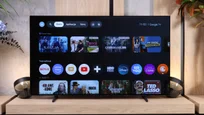
BRAVIA 6 is currently the most affordable OLED with Google TV. That's a big plus, because there are plenty of apps and the system lets you install additional apps and search for content by voice in Polish. The only omission is AirPlay, which may be a problem for iPhone users.
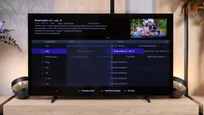
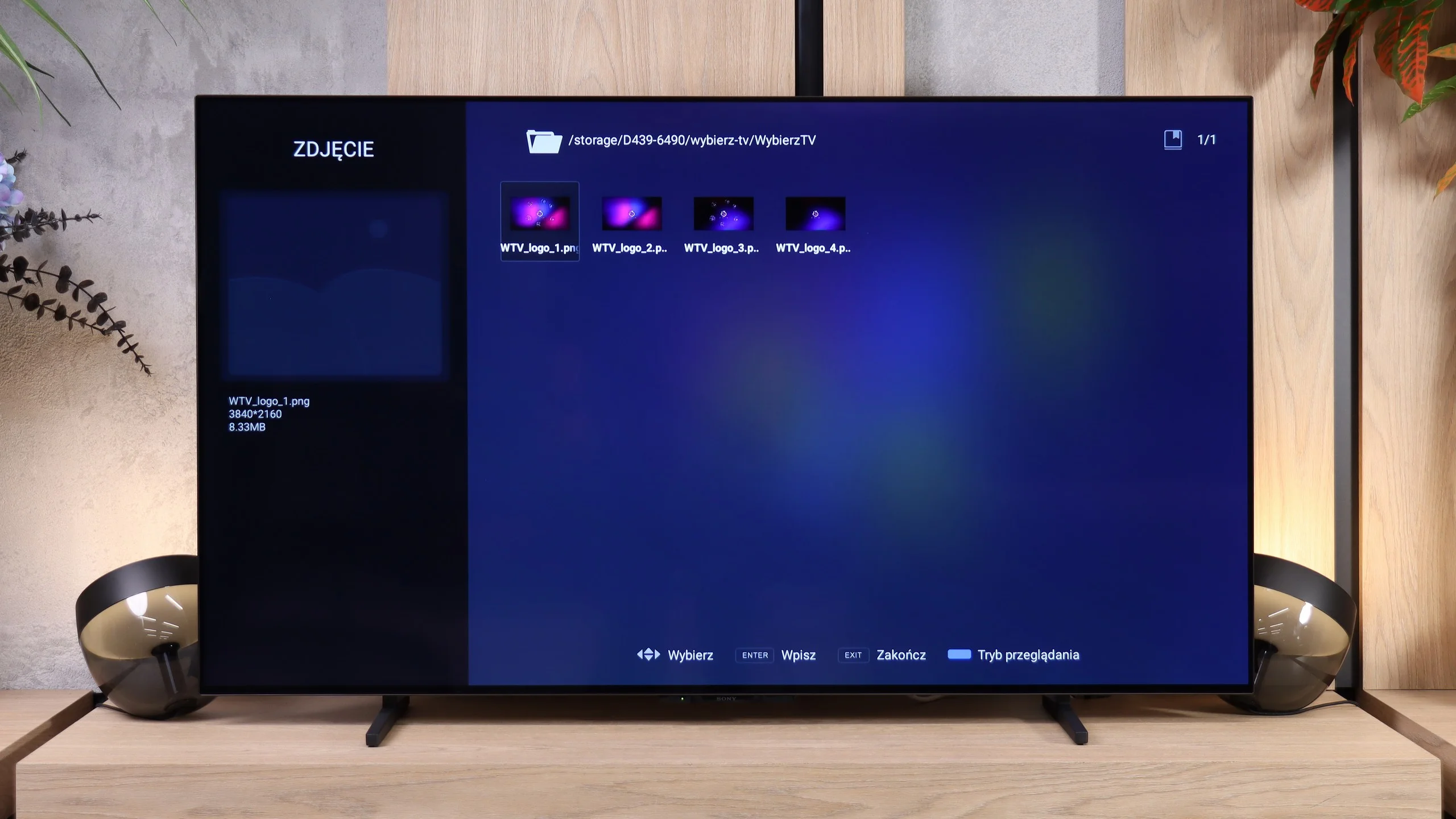
Unfortunately, during testing the system caused quite a few problems. Navigating the menu itself was fast, but we encountered translation errors and frequent TV freezes. Some settings didn't save first time. We had to change them several times, and sometimes only unplugging the TV from the mains helped. To play videos and photos from a USB stick, we had to unplug the TV from the mains four times. The software under test simply looked unfinished. That's hard to accept in this class of kit...
Remote and classic features
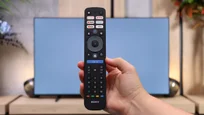
The package includes a completely new remote with a large number of buttons and a full numeric keypad. It's a convenient solution for people watching regular TV, especially older viewers. The star button can be programmed. The remote doesn't require aiming at the screen, but it isn't backlit. Build quality is fairly average, and the rubber buttons don't feel particularly solid.
The TV features are basic. There's a clear EPG programme guide and teletext, but no USB recording or picture-in-picture. You can, however, use Bluetooth headphones and the TV speakers at the same time. So the feature set is OK, but the system problems seriously spoil everyday use.
Sound connection options
HDMI audio:
Other audio outputs:
- Toslink: Yes
Wireless audio:
- Bluetooth: Yes
Supported audio formats (external HDMI eARC audio):
- Dolby Digital Plus 7.1: Yes
- Dolby True HD 7.1: Yes
- Dolby Atmos in Dolby Digital Plus (JOC): Yes
- Dolby Atmos in Dolby True HD: Yes
- DTS:X in DTS-HD MA: Yes
- DTS-HD Master Audio: Yes
Senior accessibility
- Numeric keyboard on TV: Yes
- Font size adjustment: Yes
- Audio description: Yes
SONY BRAVIA 6 - Apps
9.6/10






















SONY BRAVIA 6 - Playing files from USB
9.5/10
| Maximum photo resolution: | Supported photo formats: |
|---|---|
| 4 Mpix | JPEG |
| 6 Mpix | HEIC |
| 8 Mpix | PNG |
| 10 Mpix | GIF |
| 12 Mpix | WebP |
| 16 Mpix | TIFF |
| 20 Mpix | BMP |
| 24 Mpix | SVG |
| 28 Mpix | |
| 32 Mpix |
BRAVIA 6 supports many popular video, music and photo formats. It also handled photographs with resolutions up to 32 megapixels, so in terms of file compatibility it performs very well. Unfortunately there’s a big 'but' here, which we mentioned in the system description. Before the media player started correctly recognising videos and photos from a USB flash drive, we had to unplug the TV from the mains several times. In the end we managed to open most of the files, but it’s hard to call that a convenient user experience. The high rating in this category is due solely to the number of supported formats.
SONY BRAVIA 6 - Sound
7/10
94dB
Maximum volume

Supported codecs (TV speakers)
Dolby Digital Plus 7.1
Dolby True HD 7.1
Dolby Atmos in Dolby Digital Plus (JOC)
Dolby Atmos in Dolby True HD
DTS:X in DTS-HD MA
DTS-HD Master Audio
Despite its modest 2.0 speaker setup with a total power of 20 W, the BRAVIA 6 sounds quite pleasant. The sound is fairly balanced, dialogue is clear, and for regular viewing there's no need to immediately reach for extra audio. The TV can also get loud, as confirmed by a 94 dB measurement. However, the familiar issue with other TVs remains: a lack of deep bass. In quieter scenes this isn't particularly bothersome, but in action films and music you can hear the sound lacks a bit of 'weight'. Explosions don't have a strong punch, and the low end is more hinted at than felt. For series and everyday programmes that setup is sufficient, whereas a soundbar with a subwoofer will give movie sessions more punch and a more immersive sound. Especially since the TV supports Dolby Atmos and DTS:X.
Sound Quality Test:
Acoustic Measurements
94dBC (Max)
75dBC
SONY BRAVIA 6 - Panel details
Software version during testing: 15955656
Image processor: Pentonic 800
Subpixel Structure:
Panel uniformity and thermal imaging:

Backlight Type: WRGB OLED

Founder and originator of the "ChooseTV" portal

Journalist, reviewer, and columnist for the "ChooseTV" portal

michal-woloszyn-title
Reader comments
Comments are provided by the external service Disqus (Zeta Global). Once loaded, Disqus may set cookies and process data about your activity.
We will remember your choice on this device. Provider's privacy policy
See articles related to Sony BRAVIA 6 (A65):
Our YouTube channel
Is this the best MiniLED TV? Sony Bravia 9 review! 8/23/2024