- Matching (Score) |
- Our verdict |
- Competing TVs |
- TV appearance |
- Where to buy |
- Contrast and black detail |
- HDR effect quality |
- Factory color reproduction |
- Color reproduction after calibration |
- Smoothness of tonal transitions |
- Image scaling and smoothness of tonal transitions |
- Blur and motion smoothness |
- Console compatibility and gaming features |
- Input lag |
- Compatibility with PC |
- Viewing angles |
- Daytime performance |
- TV features |
- Apps |
- Playing files from USB |
- Sound |
- Panel details
Samsung The Frame 2026 (LS03H) Review
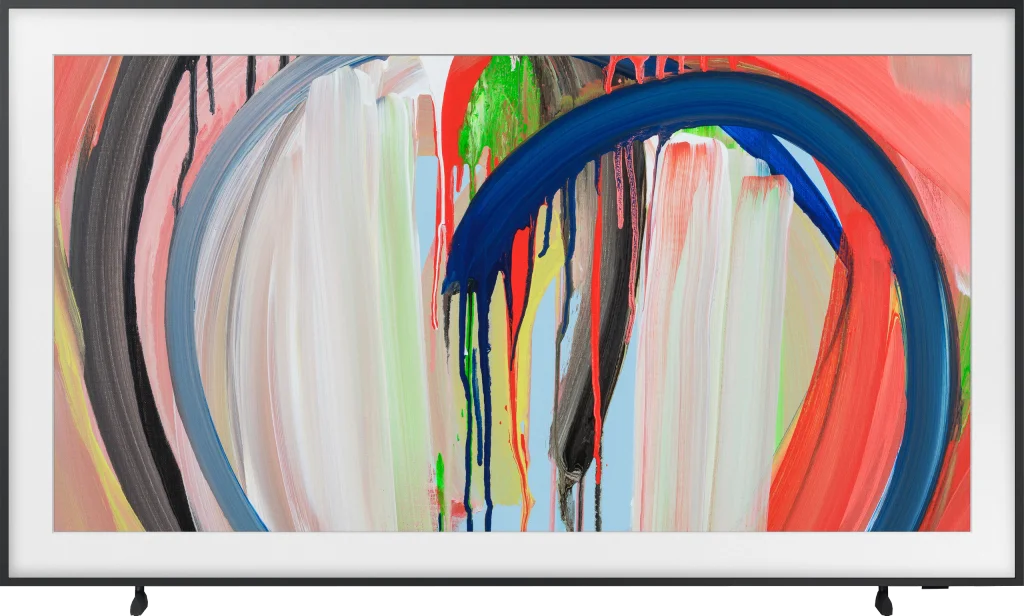
The Frame / LS03HAU

Available screen sizes:
Complete the survey to find out the result
Panel type: LCD VA Refresh rate: 144Hz Brand: SAMSUNG Resolution: 3840x2160 System: Tizen Model year: 2026
This review is an English translation of the Polish original. Read the original on Wybierz.tv.
The Frame is one of Samsung's most recognisable ranges and has been with us for nearly 10 years. As it does each year, the maker has refreshed its lifestyle model, and we've once again taken a look at what's changed. So how does the Samsung The Frame 2026 stack up, and does it still make sense as a living room TV? Let's find out!
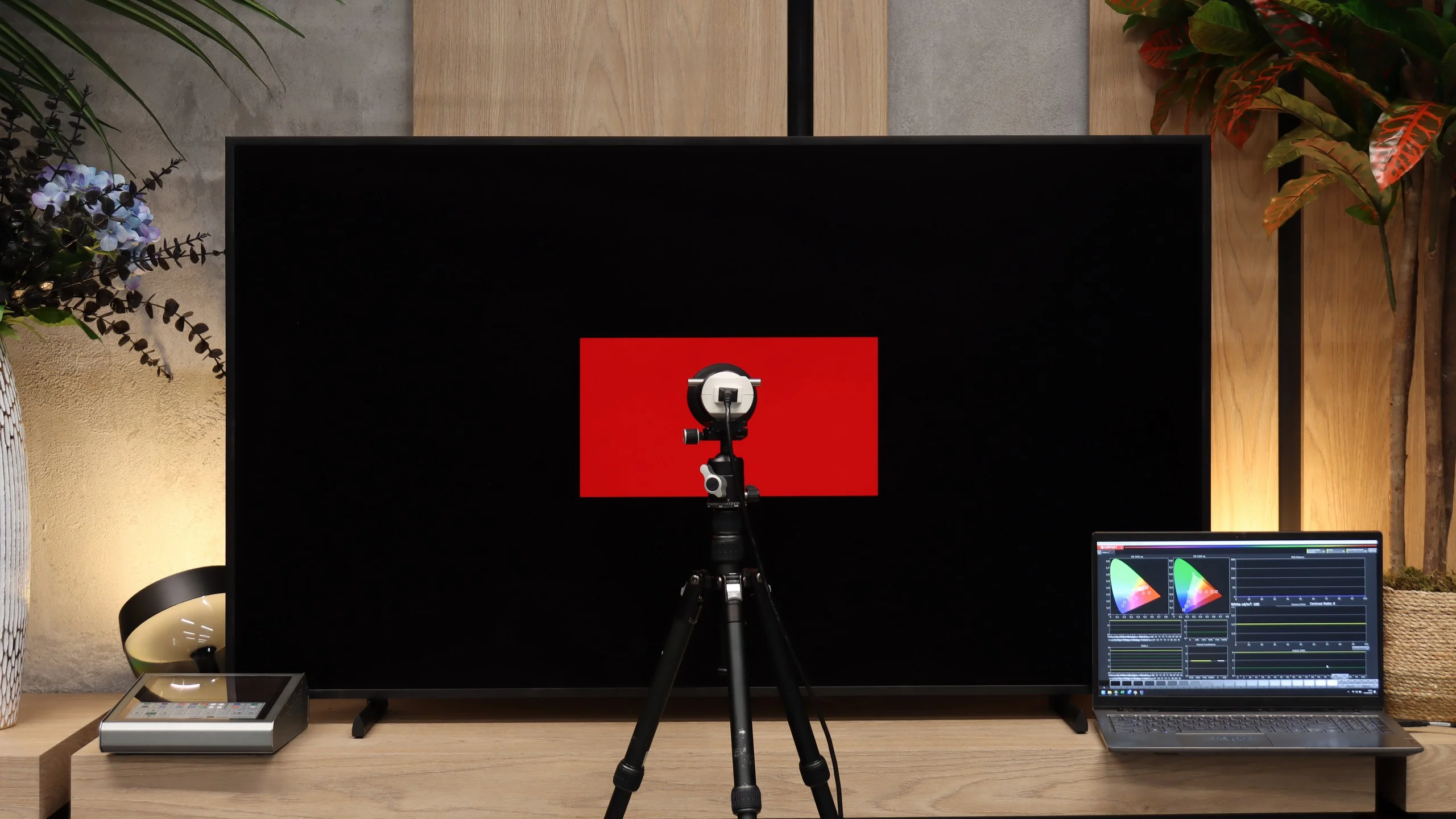
SAMSUNG LS03HA - Our verdict
7.1
Overall rating
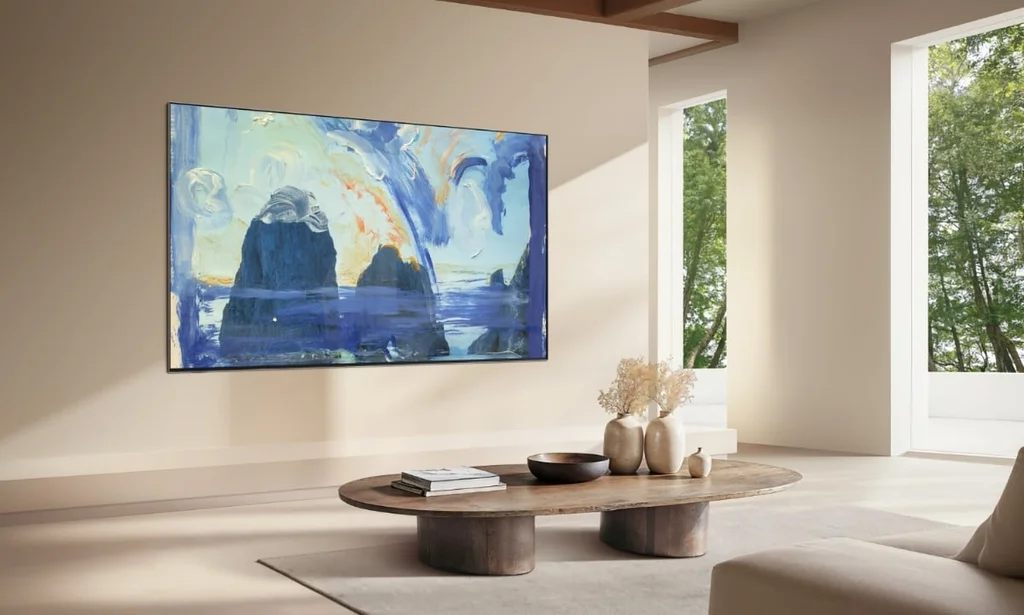
Samsung The Frame 2026 is still a TV aimed at a fairly specific type of buyer. If your main priority is having a screen that looks good in your interior, hangs almost flush against the wall, and doesn’t simply turn into a large black rectangle when switched off, there are very few TVs on the market that execute this idea quite as well. The matte screen, interchangeable bezels, external One Connect box, and extensive Art Mode allow The Frame to genuinely become part of the room rather than just another TV sitting in the living room. And that’s exactly where we see its biggest appeal.
Importantly, though, that doesn’t mean design is all you’re getting. The Frame performs really well in bright rooms. Its matte coating is very effective at reducing reflections, brightness reaching around 650 nits is enough for comfortable daytime viewing, and the wide colour gamut means colourful content, animation, and brighter HDR scenes can look very impressive. On top of that, there’s 144Hz support at 4K and, for the first time, up to 240Hz at Full HD. VRR, ALLM, FreeSync, G-Sync, HGiG, low input lag, and an extensive Game Bar make The Frame a much more capable gaming TV than its “artistic” character might suggest.
The biggest compromises become apparent when you look at it as a TV primarily intended for home cinema. The Frame has no local dimming, so blacks become noticeably raised in dark scenes, and this is where the difference compared with good Mini LED and OLED TVs is most obvious. HDR therefore looks best with bright and colourful content, while evening movie sessions in a dark room are definitely not its strongest suit. There is also noticeable motion blur and only one full-bandwidth HDMI 2.1 port on the One Connect box, which may be frustrating for some users, especially gamers.
The Frame 2026, then, isn’t a TV for someone looking for the absolute best picture quality in its price range. There are models that offer deeper blacks or a more impactful HDR experience. But if the TV is meant to become part of a well-designed living room, is often used during the day, displays artwork, and at the same time needs to perform well with a wide variety of content, The Frame still makes a lot of sense. Samsung has barely changed its formula here, but it’s easy to see why — the “picture on the wall” concept is still executed extremely well. Owners of the previous model have little reason to upgrade, but for new buyers looking for this particular combination of design and TV functionality, it remains one of the most interesting options on the market.
Advantages

Matte screen finish – performs well in a bright living room
Unique art-on-the-wall design
One Connect module makes connecting devices easier
Wall mount included
Art mode with motion sensor
Changeable bezel colours
High brightness, about 650 nits
Rich colours, QLED
High refresh rates: 144 Hz at 4K and 240 Hz at Full HD
Extensive gaming features: VRR, ALLM, HGiG, FreeSync, G‑Sync and low input lag
Tizen with a large selection of apps, AirPlay and SmartThings
Disadvantages

No local dimming, average black levels and contrast
Smearing on the VA panel, especially in dark scenes
Only one HDMI 2.1 port
Full access to the Art Store requires an additional subscription
Average, fairly flat sound
 Movies and series in UHD quality
6.7
 Classic TV, YouTube
6.4
 Sports broadcasts (TV and apps)
6.3
 Gaming on console
8.8
 TV as a computer monitor
8.0
 Watching in bright light
6.7
 Utility functions
7.7
 Apps
Apps9.3
 Sound quality
6.0
Complete the survey to find out what fits your preferences
SAMSUNG LS03HA - Competing TVs in this price range
SAMSUNG LS03HA - TV appearance
HDMI inputs: 3 x HDMI 2.0, 1 x HDMI 2.1 (40Gbps) Other inputs: USB-C Outputs: Toslink (Optical audio), eARC (HDMI), ARC (HDMI) Network Interfaces: Wi-Fi 2.4GHz, Wi-Fi 5GHz, Ethernet (LAN) 100Mbps
Build quality: Premium
Stand type: Legs
Bezel color: Changeable Frame

Stand: Height adjustment
Flat design: Yes
Accessories: Stand, Wall bracket, One Connect Box
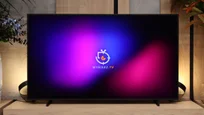
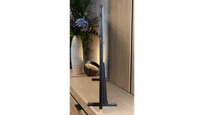
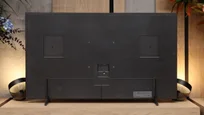
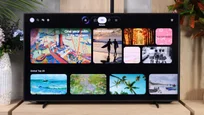
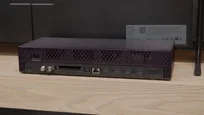
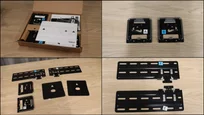
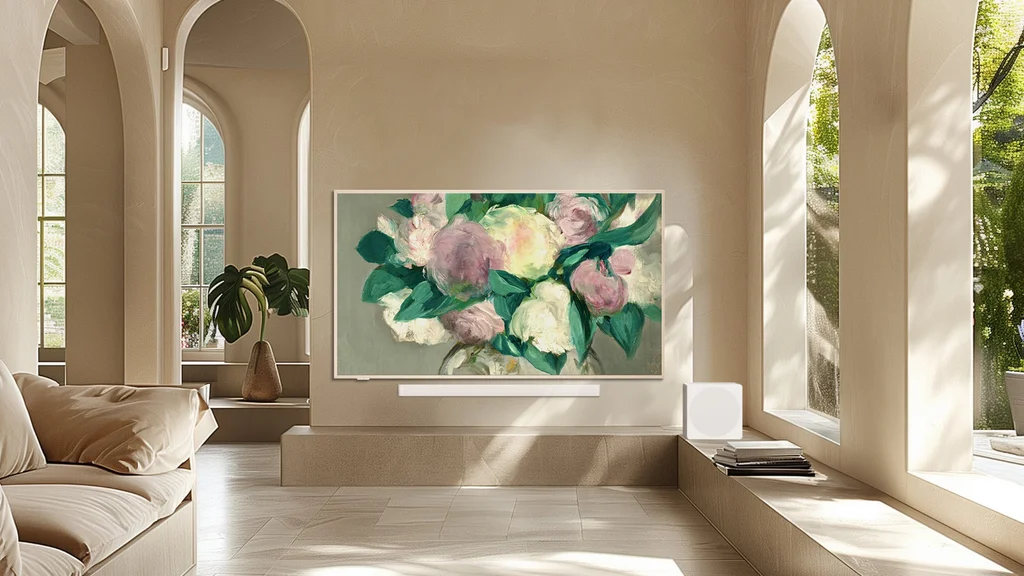
The new The Frame doesn't bring major changes, and really it was hard to expect any. Samsung sticks to the same concept and it's still one of the most distinctive TVs on the market. Included in the box, alongside the legs and the remote, is a special wall mount that lets you hang the TV virtually flush so it closely resembles a work of art. All the ports have been moved to an external One Connect module. The module connects to the TV with a single cable. That means once the TV is mounted you don't have to take it off the wall every time you want to hook up a device. The screen itself is fairly slim, and its bezels are deliberately a little thicker than on typical TVs. They're simply meant to evoke a classic picture frame. It's a pity they aren't included as standard and you have to pay extra for them.
Buy at the best price
Select size:

SAMSUNG LS03HA - Contrast and black detail
6/10
Local dimming function: No


Result
6,300:1

Result
6,800:1

Result
5,500:1

Result
5,950:1

Result
4,050:1

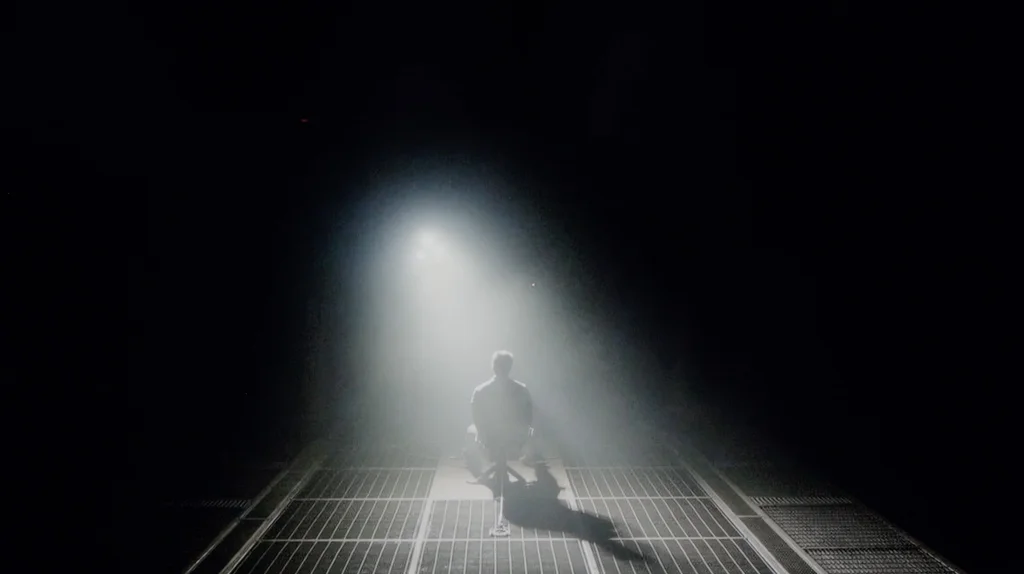
Samsung The Frame 2026 uses a VA panel but doesn't have local dimming. That means the TV can't dim selected parts of the screen. The backlight therefore works fairly evenly across the whole panel. The VA panel itself gives some advantage over IPS or ADS screens. Blacks are noticeably better, and the picture doesn't look as washed out when watching in the evening. That doesn't change the fact that, in terms of contrast, The Frame performs fairly averagely. You can see this most clearly in dark scenes. If a bright object appears on a black background, the TV can't dim the area around it. The black then takes on a more navy tone and the image loses depth. It's similar with films that have black bars. With the lights off it's quite easy to notice that the bars aren't truly black. In simpler, brighter scenes the issue is much less noticeable. So during regular TV, sport or daytime viewing, contrast is unlikely to be a major problem. It looks worse for evening viewing sessions, especially if you've previously been using an OLED or a good Mini-LED. The difference in black levels to The Frame's disadvantage is then very noticeable.
Halo effect and black detail visibility:
SAMSUNG LS03HA - HDR effect quality
6.1/10
Supported formats: HDR10, HDR10+, HLG
Luminance measurements in HDR:

Result
587 nit

Result
609 nit

Result
599 nit

Result
648 nit

Result
663 nit
The Frame 2026 is a genuinely bright TV. Its peak brightness reaches around 650 nits and, importantly, it maintains similar levels regardless of the type of scene being displayed. It doesn’t really matter whether we’re watching a very bright full-screen image or just a small highlight occupying part of the screen. The backlight remains powerful, allowing bright parts of the image to stand out clearly.
This gives The Frame a solid foundation for HDR. Bright highlights can look impactful, and the picture doesn’t appear flat or overly dim. Unfortunately, there is a compromise. Without local dimming, the TV cannot darken the black areas surrounding very bright objects.
This is clearly visible in scenes 2 and 4 of our test procedure. Bright elements look impressive, but at the same time, the blacks around them become noticeably raised. As a result, the image loses some of its depth, especially when watching in a dark room. This is why The Frame performs best with HDR in bright and moderately bright scenes, where its high brightness works to its advantage. In darker scenes, the situation is quite the opposite.
Colours
The Frame also performs well when it comes to colour reproduction. As a QLED TV, it can display a wide colour gamut and produce rich, saturated colours. DCI-P3 coverage reaches around 94%, while BT.2020 comes in at around 72%. These are good results, and you can see the difference in actual content.
Colours look vivid without appearing washed out, particularly in bright and colourful scenes. Animations and other content with plenty of saturated colours can look really good on The Frame. With this type of material, the TV shows one of its stronger sides.
BT.2020 color gamut coverage and primary color luminance
| Data set | BT.2020 | P3 | R | G | B |
|---|---|---|---|---|---|
| Synthetic patterns | 72.3% | 93.8% | 63% | 71% | 42% |
| Film measurements | 72.3% | 93.8% | 63% | 71% | 49% |
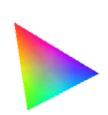 BT.2020
 BT.2020 and P3 – average color gamut coverage (percent of the target gamut).
R, G, B – average primary color luminance relative to target (percent).
Scene from the movie “Pan” (about 2800 nits)

Scene from the movie “Billy Lynn” (about 1100 nits)

When we compare The Frame with the best displays and assess the image it can offer, you can look at it two ways. It handles films and series on popular streaming platforms best. A good example is the scene from the film Billy Lynn shown in the second photo. The TV shows details well, it's bright, colours are suitably saturated and it doesn't interfere too much with the picture itself. The only gripe is that some details in the blacks are more emphasised than they should be. That, however, largely comes down to limited backlight control.
It's different with more demanding films, mastered for top displays. In those titles you can already see that The Frame isn't able to show all details equally well. The brightest parts can sometimes merge a little, and the darkest are slightly lifted. In such cases you can use dynamic tone mapping and set it to the Active option. It can recover a good portion of detail from the brightest areas that previously blended together. We wouldn't recommend leaving this setting on permanently, though. This kind of material is relatively rare, and most of the time viewers are watching streaming content anyway. So for everyday use it's better to leave tone mapping on Static, because in the most popular HDR titles it gives a more natural, less overblown picture.
HDR luminance chart:
And although in many very bright shots The Frame tends to significantly brighten the image and blow out some details, dynamic metadata in the HDR10+ format helps it a lot. Thanks to that, the TV can show the same scene with much better visibility of details in the brightest areas. A clear omission is, of course, Dolby Vision, mainly because it is more widely adopted. Fortunately, HDR10+ is much more common today than it was two years ago, when it was often treated more as a curiosity than a format that could genuinely help Samsung TVs.
Static HDR10

Dynamic: HDR10+

Factory color reproduction
7.1/10
For assessing the factory colour setup we chose the Filmmaker Mode. If you’re encountering it for the first time, it’s a mode designed to reproduce films and TV shows as faithfully as possible. The TV then turns off most additional image enhancers, and the colours and luminance response are intended to be as close as possible to what the creators intended. And it must be said that The Frame 2026 performs quite well in this respect straight out of the box. The biggest deviation is seen in the white balance. As brightness increases, blue starts to fall short and there’s a slight increase in green. As a result, the image shifts towards warmer tones. So white isn’t perfectly neutral, and in some scenes you can notice a subtly warmer cast.
The luminance response, both gamma and EOTF, looks pretty good. Through most of the range they stay fairly close to the target, although larger deviations are visible in the darkest parts of the image. In practice, some shadow details emerging from black may therefore be a bit more pronounced. However, it’s not an error that jumps out during normal viewing. Overall, Filmmaker Mode is a good starting point here. However, the factory picture is a bit too warm and not all hues land exactly where they should.


Color reproduction after calibration
8/10
After calibration we mainly managed to remove that warmer tint and better even out the white balance. We also smoothed the brightness response a bit, which made the picture more neutral and predictable. There are, however, things calibration won't fix. It's mainly the black performance, which comes from the backlight design and the lack of local dimming. In some scenes the blacks will therefore still be slightly lifted, and you just have to accept that. It's more a characteristic of this model than something you can fix with the settings. HDR is also somewhat limited. Samsung doesn't give full freedom to work across the widest colour gamut here, so not all colours can be reproduced perfectly. In normal viewing it will probably be hard to notice, but it's worth being aware of.


SAMSUNG LS03HA - Smoothness of tonal transitions
8.5/10
Gradation in The Frame 2026 performs well, though not perfectly. In bright tonal transitions you can notice slight issues and occasional mild banding. These aren't faults that seriously affect normal viewing, but they can be picked up on our test patterns and in more demanding scenes. We'd rate the bright-tone gradation at roughly 7.5-8 out of 10.
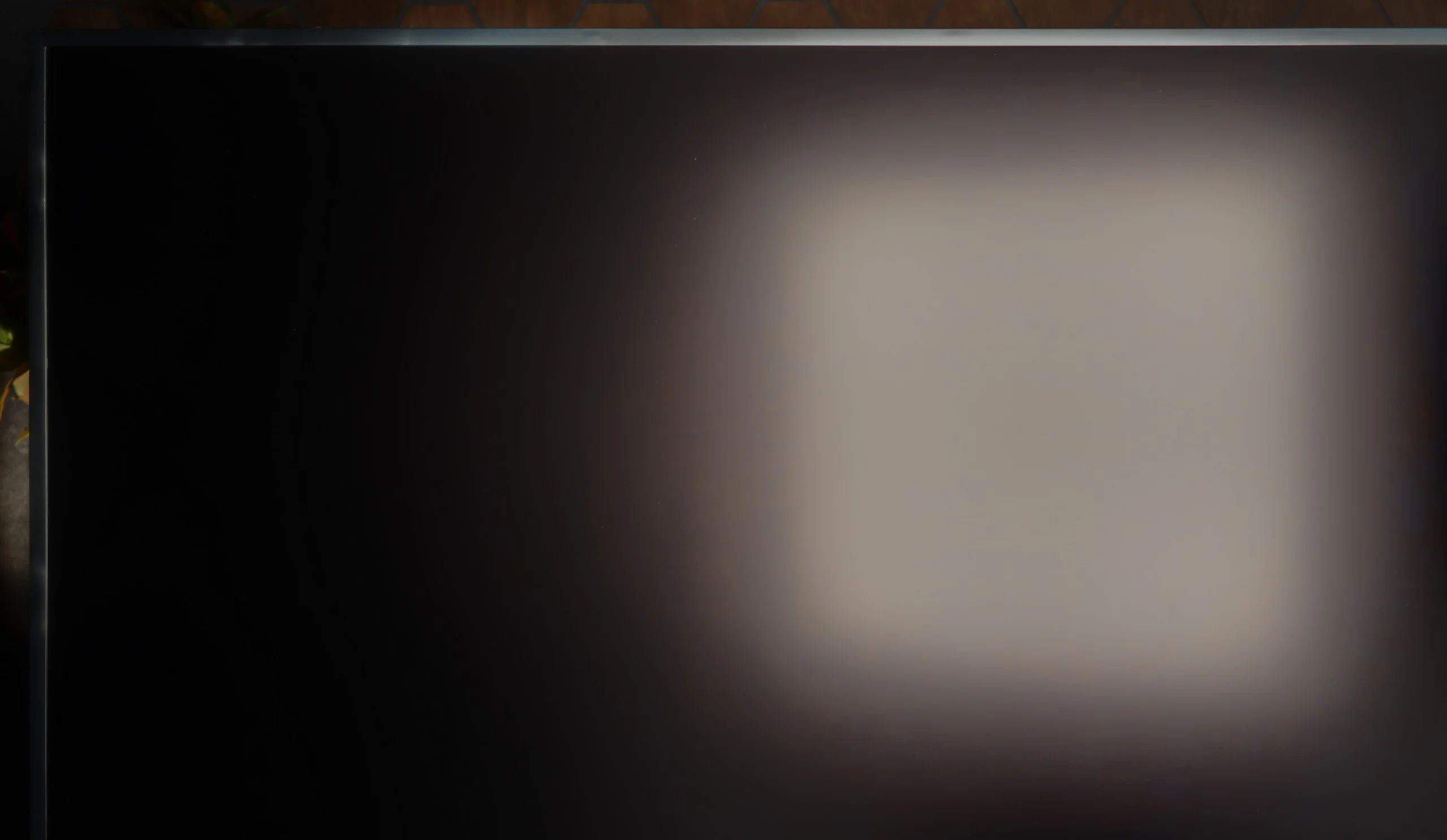
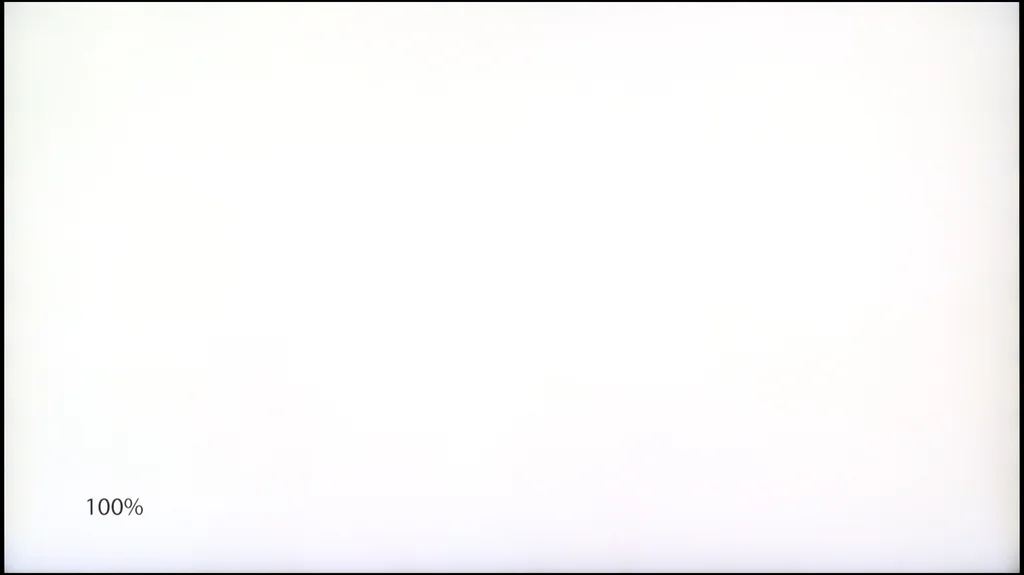
Interestingly, gradation looks much better in the dark parts of the image. Here the transitions are very smooth and it's hard to find clear signs of posterization. That's the opposite of many LCD TVs, where the near-black areas usually cause more problems. In photos of dark scenes you can, however, spot some image irregularities. They don't come from the gradation itself but from panel uniformity and the backlight. Unfortunately, in that respect our sample of The Frame wasn't perfect, so in very dark shots you could see brighter and darker patches from the backlight.




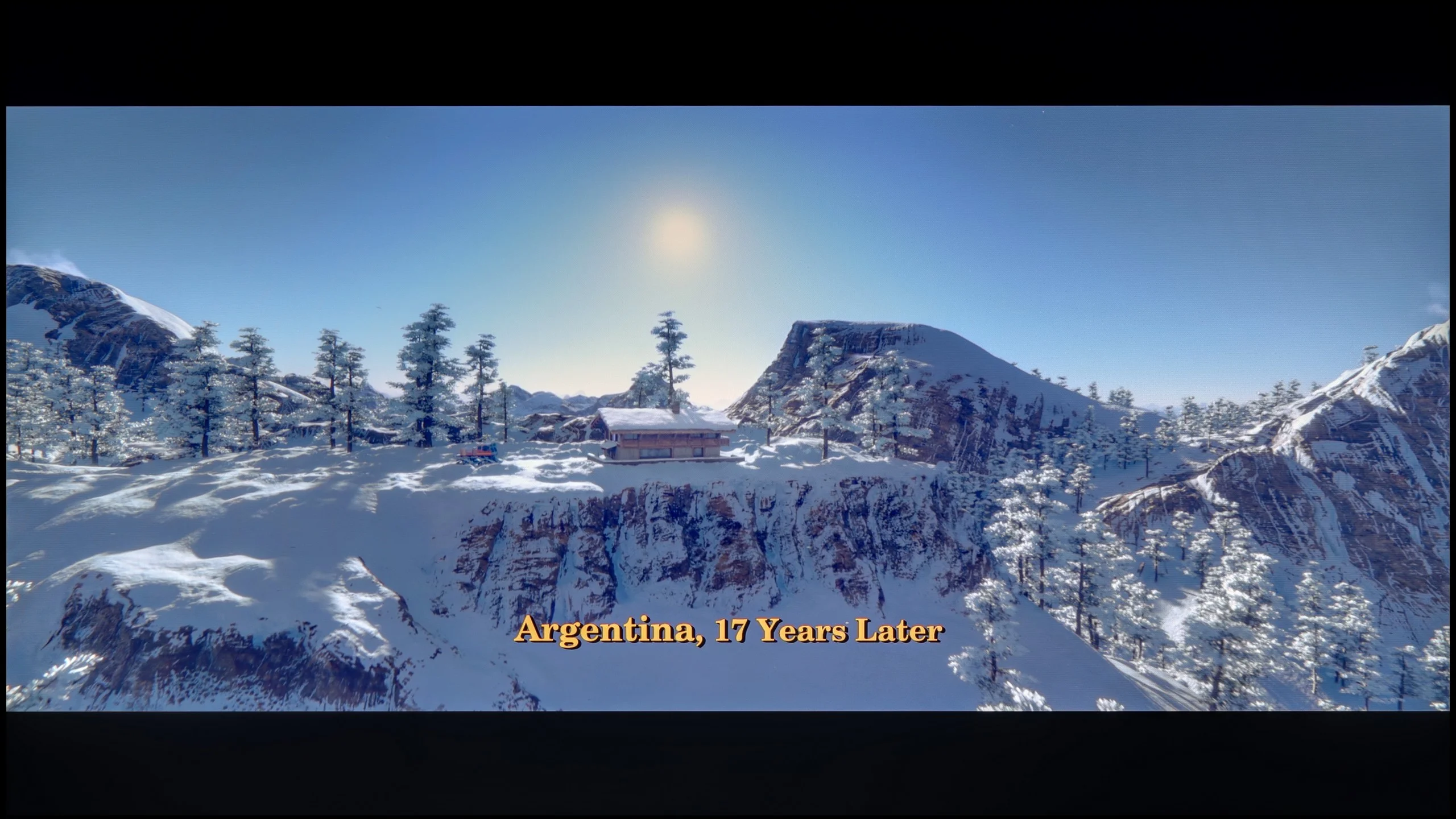

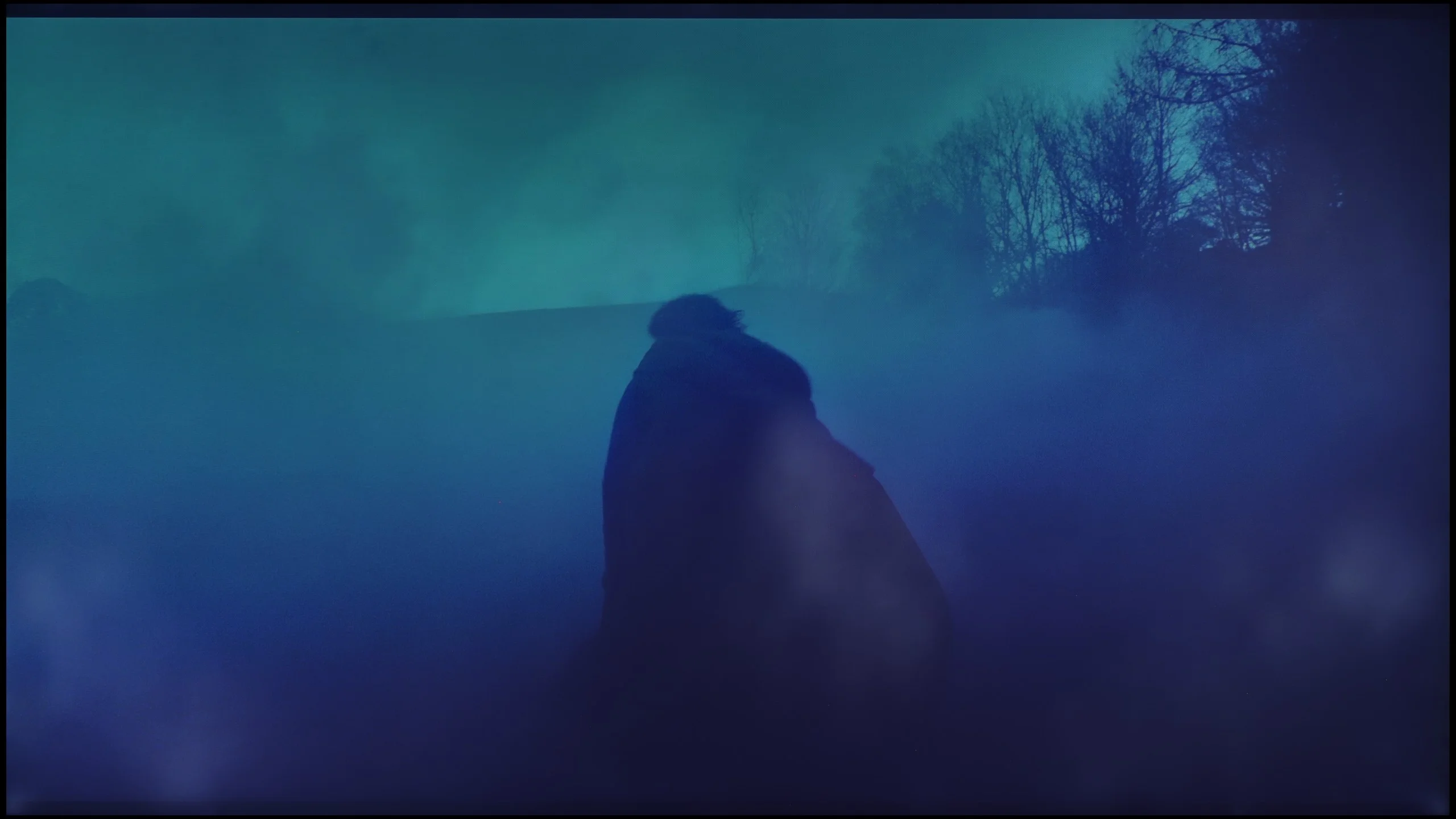

Image scaling and smoothness of tonal transitions
7/10
 Smooth transition function
 Image without overscan on the SD signal

As with many of Samsung’s newer TVs, this one also uses the NQ4 AI processor, albeit the older, second-generation version. I must admit it handles digital image processing quite well. Lower-resolution material is sharpened effectively, and when upscaled to 4K it still looks natural. The TV can also tidy up weaker sources a bit, such as older recordings or lower-quality broadcasts. That doesn’t, of course, mean it will suddenly turn poor footage into true 4K, but at close viewing distances the difference compared with simpler models with weaker processors is easy to spot. Edges are clearer and fine details aren’t lost as much to signal compression.
Samsung also provides a few extra picture-enhancing features, but as usual it’s best to use them sparingly. At stronger settings, noise reduction can very effectively reduce posterisation, but it also noticeably interferes with the image. The picture then starts to look quite artificial, for example by heavily smoothing faces. So these features make most sense with really poor sources when all the noise is very distracting.
SAMSUNG LS03HA - Blur and motion smoothness
6.8/10
Maximum refresh rate of the panel: 144Hz
Film motion smoothing option: Yes
Blur reduction option: Yes
BFI function 60Hz: Yes, 60Hz (image flickers)
BFI function 120Hz: No
Brightness drop with BFI: 41%
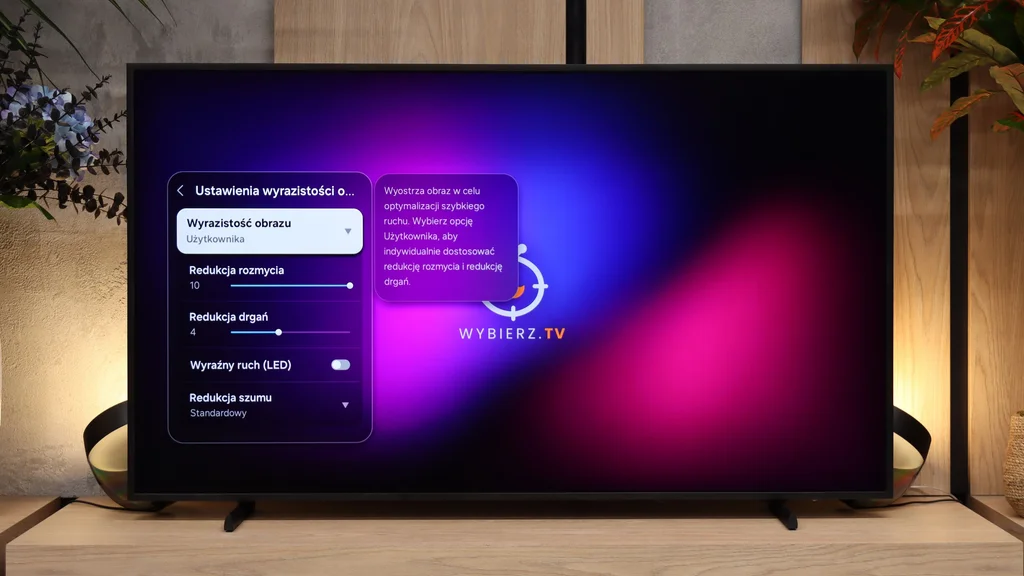
Samsung again used a panel here with a maximum refresh rate of 144 Hz. Refresh rates up to 120 Hz mainly offer greater flexibility with high-motion content. The TV can use additional motion smoothing systems that can improve smoothness in sports and other fast-paced content. However, a high refresh rate alone does not solve everything. The Frame still uses a VA panel, which has a fairly slow response time, resulting in quite pronounced motion blur. With fast-moving objects, especially against dark backgrounds, the trails are easy to notice. There's also a slight double-imaging of edges, which can be visible even after turning off additional motion enhancement systems. We already saw similar behaviour in last year's The Frame 2025, and it's a shame Samsung hasn't fixed this. The 144 Hz itself provides a good foundation, but the panel's response time still limits this TV.
Blur (native resolution, maximum refresh rate):



Blur (BFI function enabled):
Image flickers in this mode



Blur (1080p@240Hz):



Interestingly, The Frame has, for the first time, gained a dedicated PC gaming mode with a 240 Hz at Full HD resolution. This can make motion look clearer, especially in very fast-paced games. It should be noted, however, that the higher refresh rate does not solve the panel's response time issue. Motion blur is still visible, as shown clearly by the test with the fast-moving UFO. A distinct trail remains behind the object, so 240 Hz improves motion clarity but does not remove the panel's inherent limitations.
SAMSUNG LS03HA - Console compatibility and gaming features
9.6/10
- ALLM:
Yes
- VRR:
Yes
- VRR range:
48 - 240Hz
- Dolby Vision Game Mode:
No
- Correct implementation of HGIG:
Yes
- 1080p@120Hz:
Yes
- 1440p@120Hz:
Yes
- 4K@120Hz:
Yes
- Game bar:
Yes
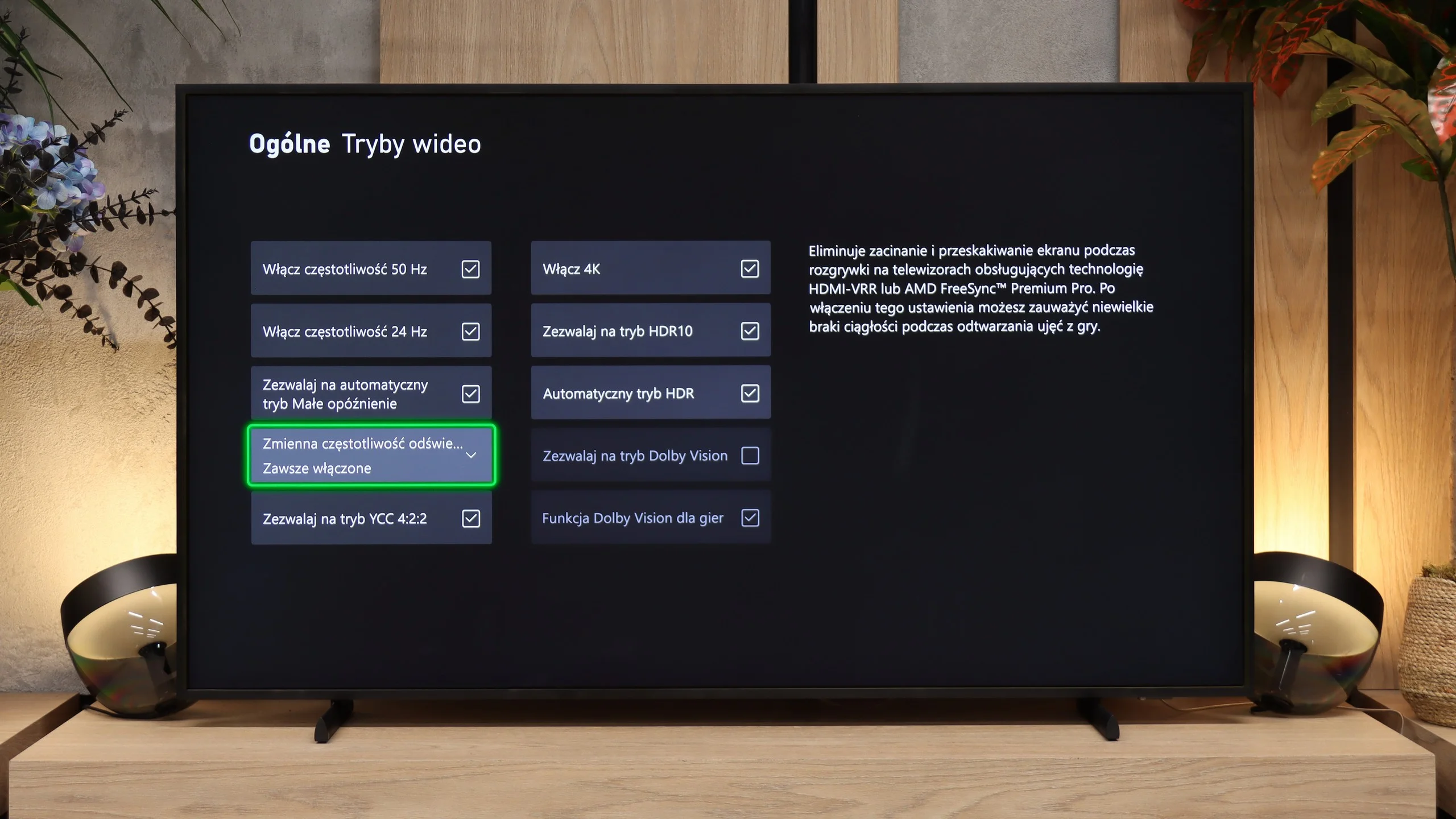
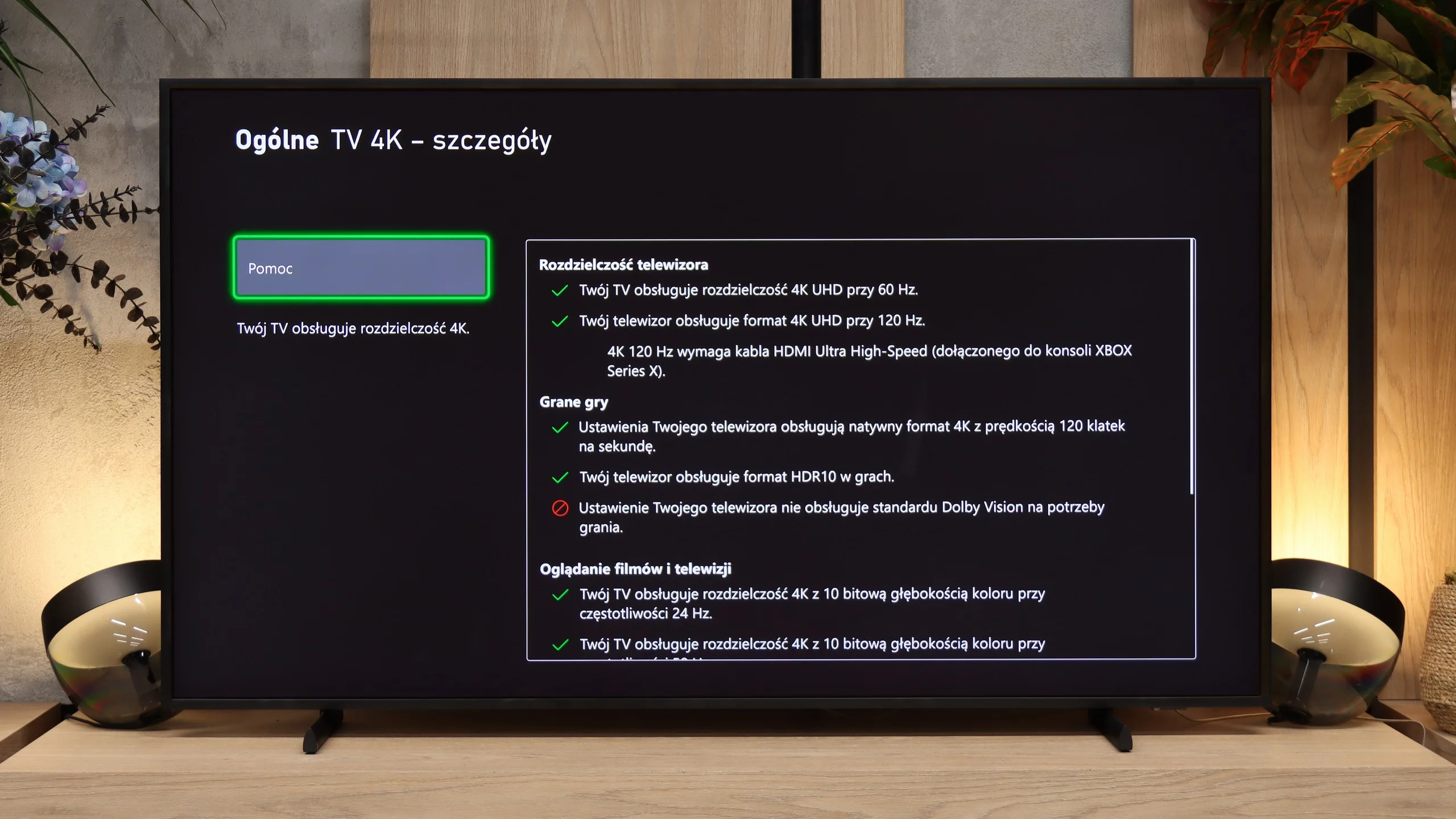
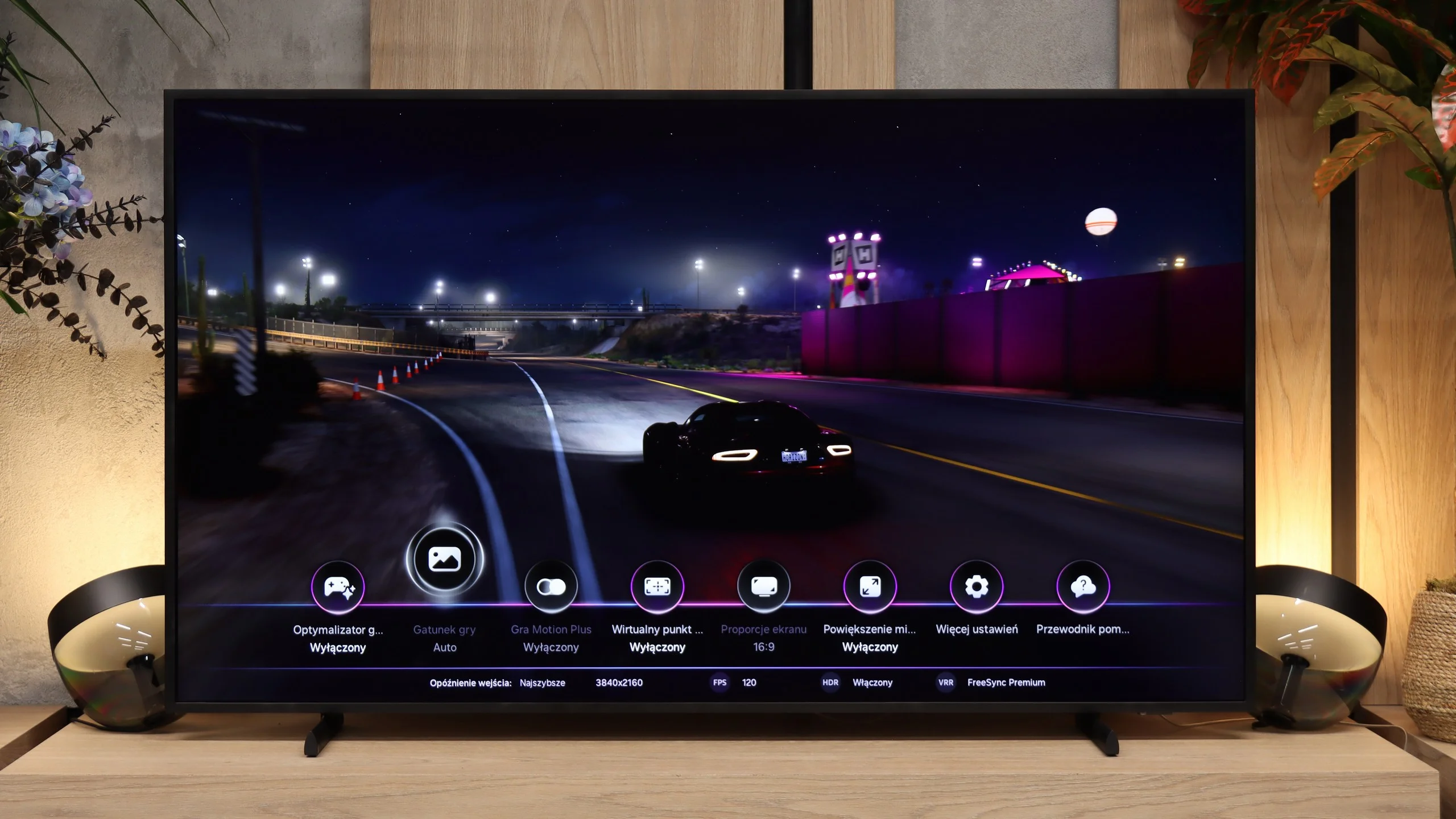
When it comes to gaming features, The Frame is practically on par with Samsung’s flagship TVs. Once a console is connected, the TV automatically switches to Game Mode thanks to ALLM, so there’s no need to change the settings manually every time. There’s also VRR, which matches the screen’s refresh rate to the frame rate generated by the console or PC. When the frame rate drops, this helps prevent the characteristic screen tearing that can otherwise occur.
The Frame naturally supports 4K at 120Hz, allowing you to take advantage of higher frame rates on the PlayStation 5 and Xbox Series X. HGiG also works correctly. Once HDR has been properly calibrated on the console, the TV doesn’t try to additionally brighten the image on its own, so bright highlights in games are displayed as they should be.
Samsung also includes its Game Bar. This quick-access menu can be opened without leaving the game and lets you check things like VRR operation or the current frame rate, while also giving you quick access to the most important gaming settings. PC users get even more flexibility, as the Full HD mode mentioned earlier allows the refresh rate to be increased all the way up to 240Hz.
There is really only one feature missing, and by now it’s something we’ve come to expect from Samsung TVs: Dolby Vision Gaming. Xbox owners will notice this the most, as Xbox consoles can actually use Dolby Vision in supported games.
There is one more limitation worth mentioning that applies specifically to this model. The One Connect box has only one HDMI 2.1 port, so this is the only input you can use for a console or PC if you want to play at 4K 120Hz. Fortunately, Samsung hasn’t combined this port with eARC. This means you can connect a soundbar separately to HDMI 3 and still keep the full-bandwidth HDMI 2.1 port available for your console.

SAMSUNG LS03HA - Input lag
9.9/10
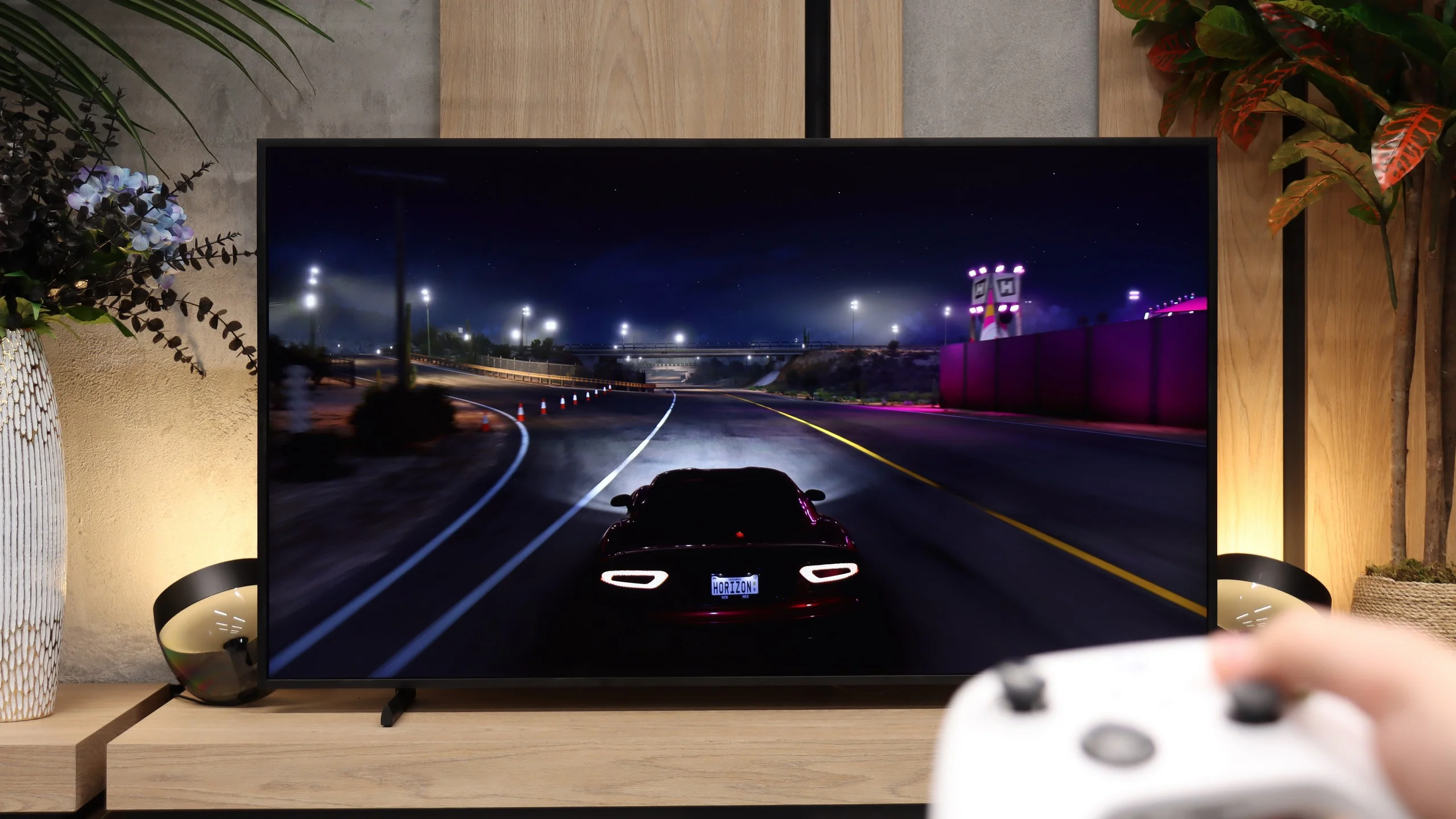
Those who worried that the additional One Connect module might cause greater delay between our action on the controller and what happens on screen can rest easy. The input lag we measured is as low as in other Samsung TVs.
At a 60 Hz signal it's about 15 ms, and when switching to 120 Hz it drops to around 8 ms. Those are very good results, so the delay is hard to notice in practice, even in fast-paced games. The One Connect module itself doesn't introduce any noticeable issue.
| SDR | HDR | Dolby Vision |
|---|---|---|
| 1080p60: 14 ms | 2160p60: 14 ms | |
| 1080p120: 8 ms | 2160p120: 8 ms | |
| 2160p60: 14 ms | ||
| 2160p120: 8 ms |

SAMSUNG LS03HA - Compatibility with PC
8/10
Chroma 444 (max. resolution and refresh rate): Yes
Font clarity: Average
Readability of dark text and shapes: Good
Input lag in PC mode (4K, max. refresh rate): 8ms
Matrix subpixel arrangement: BGR
Max refresh rate: 144Hz
G-Sync: Yes
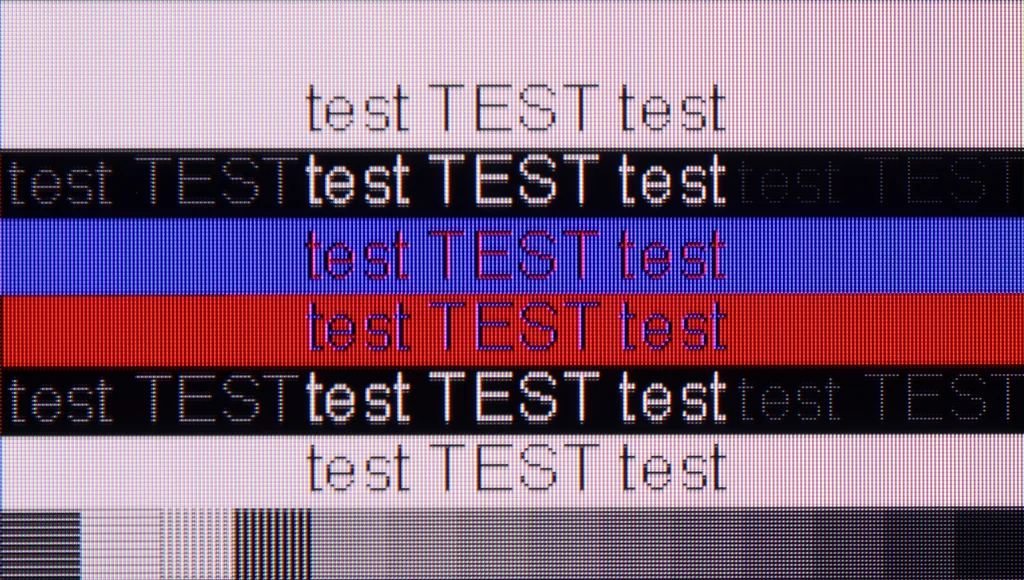
In this category you could jokingly say the new The Frame gives with one hand and takes with the other. If we look purely at PC gaming, it performs really well. It offers 144 Hz at 4K or even 240 Hz in Full HD, plus support for G-Sync and FreeSync and very low input lag. The Frame can easily serve as a large gaming monitor and there’s little to complain about. On the other hand, we got the impression that font readability in the new model has slightly worsened. When you look at text up close you can notice extra fringing along the bottom edges of letters caused by the behaviour of individual subpixels. This gives a slight impression of softened text. Of course this is mainly an issue for people who would actually want to use The Frame as a desktop monitor, for example for working with text. At a typical viewing distance the problem is practically impossible to notice. And let’s be honest, it’s hard to imagine anyone putting a 55- or 65-inch The Frame on their desk.
SAMSUNG LS03HA - Viewing angles
3.1/10
Brightness drop at an angle of 45 degrees: 72%
Viewing angles are not a strong point of this model. Compared with LCD TVs with IPS panels, and even more so with OLEDs, the picture degrades fairly quickly when viewed at an angle.
SAMSUNG LS03HA - Daytime performance
6.7/10
Panel finish: Matte
Reflection suppression: Very Good
Black levels during daytime: Average
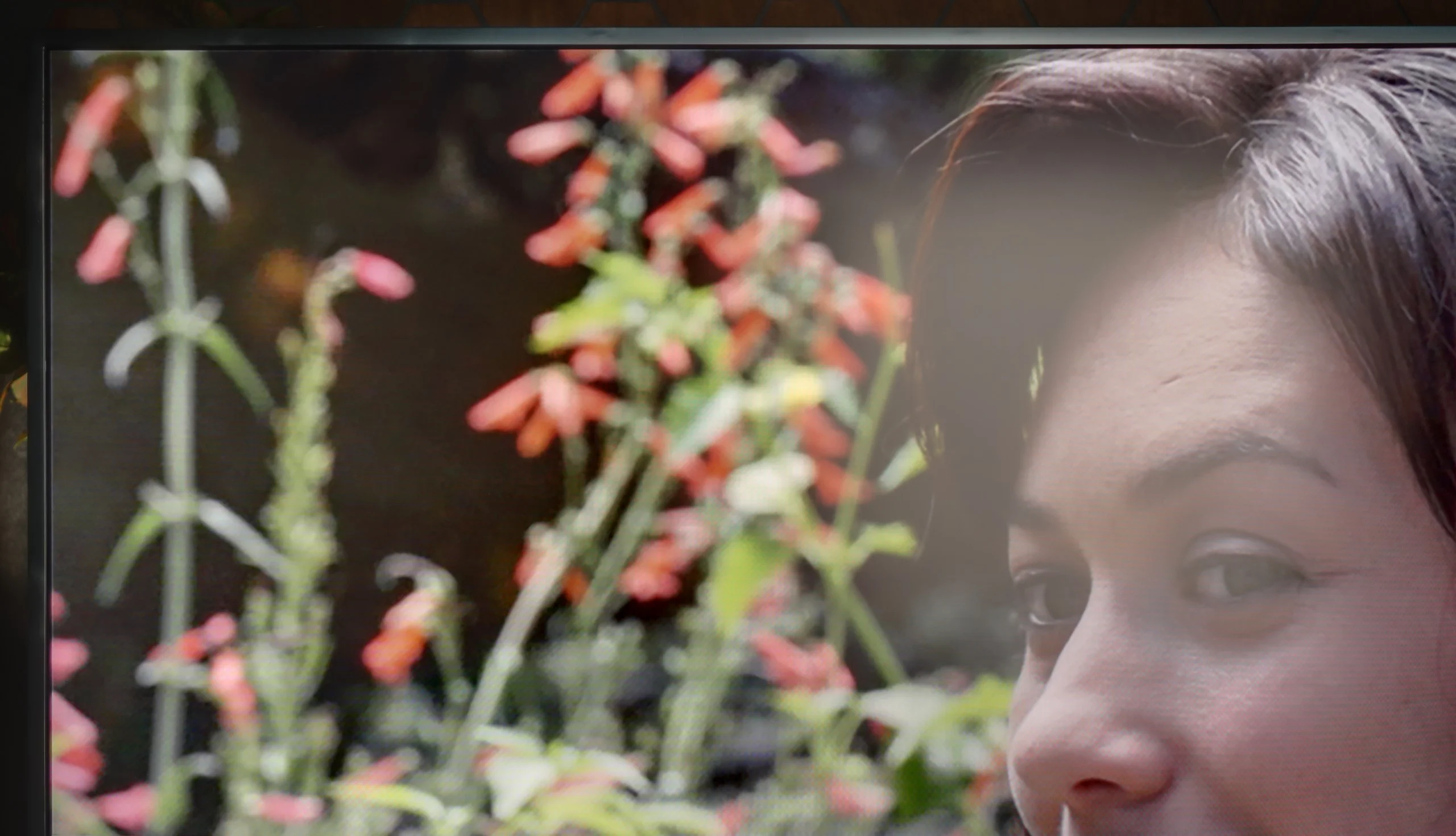
The Frame is, by design, a TV that will often be used in a bright living room, and its matte finish suits that very well. The screen effectively diffuses reflections, so a window or a lit lamp doesn't turn into a clear mirror. In that respect it's really good and it's one of this model's stronger points. The matte finish does have a downside. Strong light falling directly on the screen scatters over a larger area and slightly raises the black level. During the day blacks therefore don't look as "deep" as at night, especially when the room is very bright. But we think that's a fair compromise. Working in The Frame's favour is its high brightness. The TV has enough brightness so the image doesn't wash out and remains clearly visible during the day. Overall, it's a good TV for a bright living room, especially if reflections bother you more.
Panel brightness
Samsung The Frame 2026 (LS03H): 617 cd/m2
SAMSUNG LS03HA - TV features
7.7/10
System: Tizen
System performance: Good
- HDMI inputs: 3 x HDMI 2.0, 1 x HDMI 2.1 40Gbps
- Other inputs: USB-C
- Outputs: Toslink (Optical audio), eARC (HDMI), ARC (HDMI)
- Network Interfaces: Wi-Fi 2.4GHz, Wi-Fi 5GHz, Ethernet (LAN) 100Mbps
- TV reception: DVB-T, DVB-T2, DVB-S, DVB-S2, DVB-C
Classic features:
- Recording to USB (terrestrial TV): No
- Recording programming: No
- Picture in Picture (PiP): No
- RF remote control (no need to aim): RF
- Backlit remote control: No
- Teletext: Yes
- Audio only mode: Yes
- Bluetooth headphones support: Yes
- Simultaneous Bluetooth headphones & TV audio: Yes
Smart features:
- AirPlay: Yes
- Screen mirroring (Windows Miracast): Yes
- Voice search: Yes
- Voice search in native language: Yes
- Ability to connect a keyboard and mouse: Yes
Operating System: Tizen
Samsung The Frame 2026 runs on the familiar Tizen operating system, so when it comes to Smart TV features, you get pretty much everything you would expect from a modern TV. There is a wide selection of streaming apps, AirPlay, SmartThings, and the ability to cast content from a smartphone. The system itself is fast and responsive, while the menu layout is very similar to what you’ll find on other Samsung TVs.
When it comes to traditional TV features, things are a little more basic. The Frame doesn’t really stand out in this area, focusing primarily on its online features and lifestyle-oriented functionality.
Art Mode
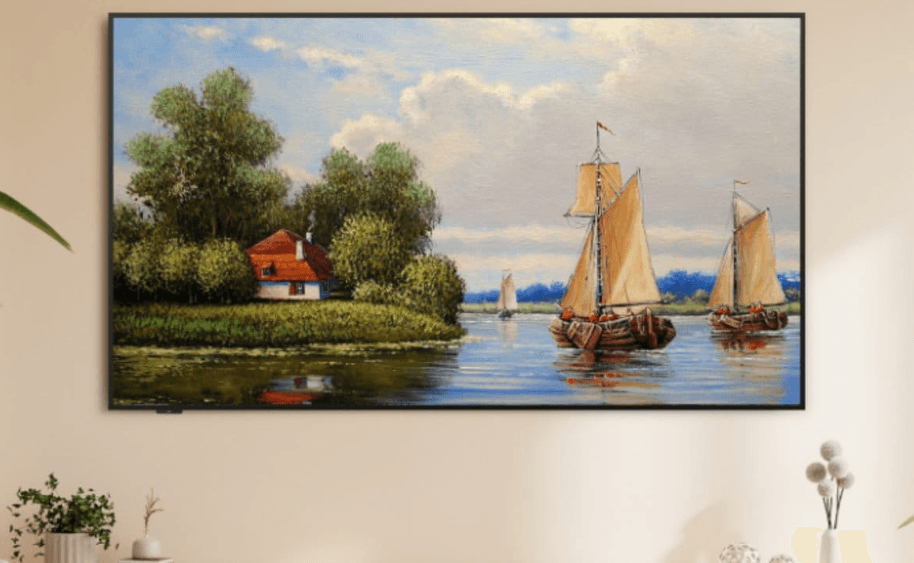
The key feature, of course, remains Art Mode. It allows The Frame to display artwork or your own photos when you’re not watching TV, effectively turning the screen into part of your interior. The matte screen coating plays an important role here, as it helps the displayed artwork look less like an image shown on a glowing TV screen.
Another interesting addition is the motion sensor, something you won’t normally find on other TVs. It’s worth pointing out that this is not the same thing as the ambient light sensor. The latter adjusts the screen brightness to match the conditions in the room, while the motion sensor detects whether someone is nearby. If the room is empty, the TV can automatically turn Art Mode off and then switch it back on when you return. This means the screen doesn’t have to stay on all the time.
Another feature that works particularly well with this model is One Connect. In our opinion, it makes a lot of sense on a TV like The Frame, which is designed to sit as close to the wall as possible. All the main cables are connected to a separate box, while only a single cable runs to the screen itself. It’s simply a very convenient solution.
It’s also worth mentioning that Samsung includes a dedicated wall mount in the box. That might sound obvious, but it really isn’t. With the flagship S99H, for example, which also puts a strong emphasis on flush wall mounting and blending into the interior, the appropriate wall mount has to be purchased separately. With The Frame, it’s included, so you can save yourself a bit of extra money right from the start.
*The Art Mode photo was taken on The Frame Pro 2026. It looks identical on the standard The Frame — we have to admit that we simply forgot to take a photo of it during testing. 😉
Sound connection options
HDMI audio:
Other audio outputs:
- Toslink: Yes
Wireless audio:
- Bluetooth: Yes
- Samsung Q-Symphony (Speaker extension): Yes
Supported audio formats (external HDMI eARC audio):
- Dolby Digital Plus 7.1: Yes
- Dolby True HD 7.1: Yes
- Dolby Atmos in Dolby Digital Plus (JOC): Yes
- Dolby Atmos in Dolby True HD: Yes
- DTS:X in DTS-HD MA: No
- DTS-HD Master Audio: No
Senior accessibility
- Numeric keyboard on TV: No
- Font size adjustment: Yes
- Audio description: Yes
SAMSUNG LS03HA - Apps
9.3/10






















SAMSUNG LS03HA - Playing files from USB
9.1/10
| Maximum photo resolution: | Supported photo formats: |
|---|---|
| 4 Mpix | JPEG |
| 6 Mpix | HEIC |
| 8 Mpix | PNG |
| 10 Mpix | GIF |
| 12 Mpix | WebP |
| 16 Mpix | TIFF |
| 20 Mpix | BMP |
| 24 Mpix | SVG |
| 28 Mpix | |
| 32 Mpix |
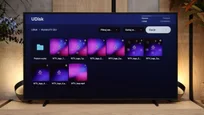
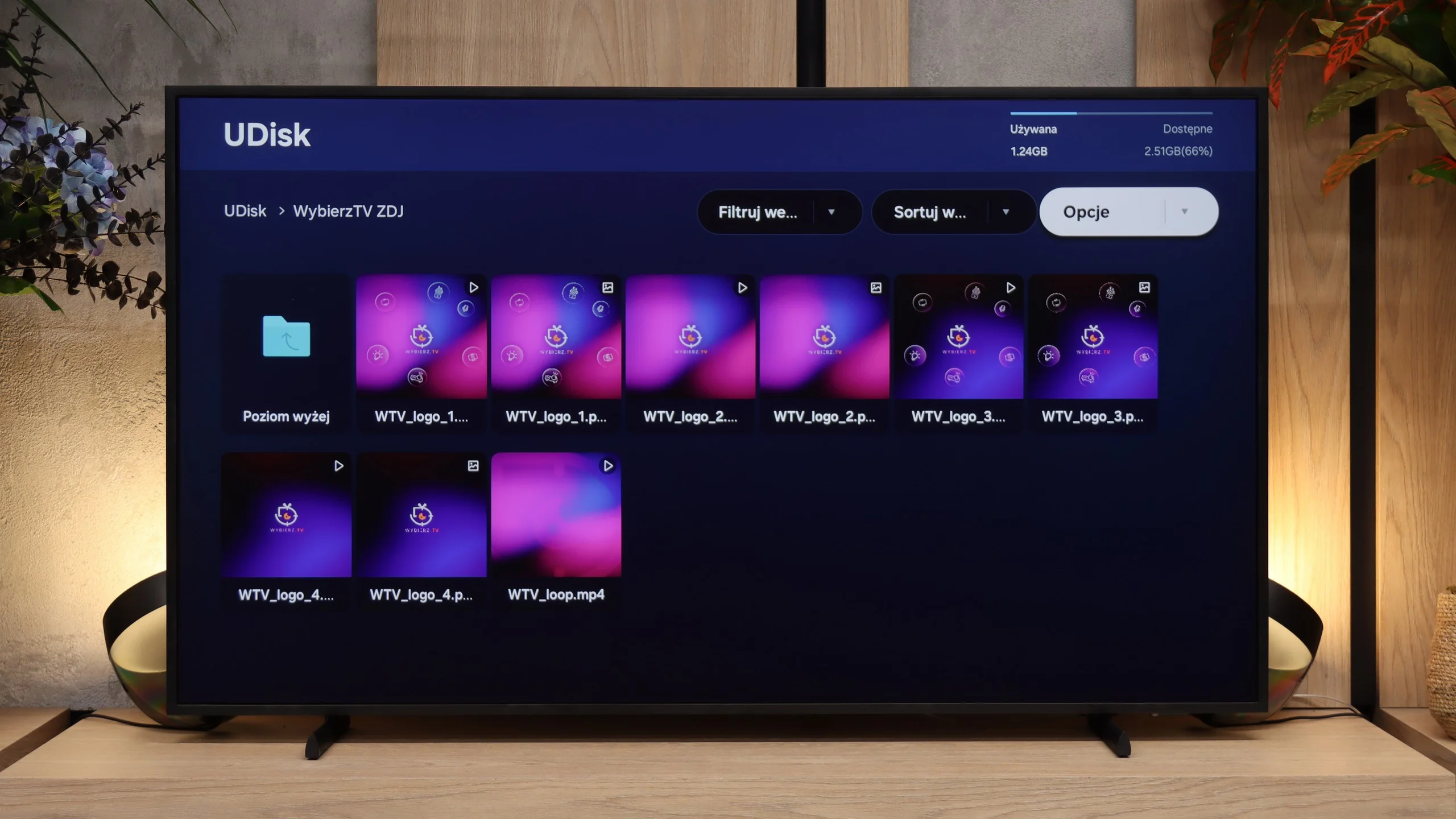
When it comes to playing files from USB, The Frame performs adequately. The TV handles the main video, photo and audio formats with no trouble, so in everyday use there shouldn't be many surprises. However, we again ran into problems with the HEIC format, which is common on Apple devices. Photos saved in that format couldn't be opened correctly, which can be annoying if you often transfer photos directly from an iPhone. Apart from that, the media player operated without any major issues.
SAMSUNG LS03HA - Sound
6/10
90dB
Maximum volume

Supported codecs (TV speakers)
Dolby Digital Plus 7.1
Dolby True HD 7.1
Dolby Atmos in Dolby Digital Plus (JOC)
Dolby Atmos in Dolby True HD
DTS:X in DTS-HD MA
DTS-HD Master Audio
Despite using a 40W 2.0.2 speaker system, which on paper is slightly better than what you’ll find in many standard TVs, the sound quality is fairly average. Our biggest issue is that it simply sounds flat. As with most very slim TVs, there isn’t much bass or depth.
Fortunately, the midrange and treble are reproduced well enough. Dialogue is clear, and at normal listening volumes there are no major distortions. For watching the news or regular TV, the built-in speakers are perfectly adequate. With movies, music, or games, however, you’ll quickly start to miss a fuller and more powerful sound.
For that reason, we would definitely recommend pairing The Frame with a soundbar or external speakers. Samsung also offers an increasing number of audio products designed specifically with lifestyle TVs in mind, including the slim S800 series, as well as Music Frame and Music Studio speakers, which visually complement The Frame particularly well.
Sound Quality Test:
Acoustic Measurements
90dBC (Max)
75dBC
SAMSUNG LS03HA - Panel details
Software version during testing: 1204
Panel uniformity and thermal imaging:
Backlight Type: QLED

Founder and originator of the "ChooseTV" portal

Journalist, reviewer, and columnist for the "ChooseTV" portal

michal-woloszyn-title
Reader comments
Comments are provided by the external service Disqus (Zeta Global). Once loaded, Disqus may set cookies and process data about your activity.
We will remember your choice on this device. Provider's privacy policy
See articles related to Samsung The Frame 2026 (LS03H):

Shopping Reviews
The best Samsung TVs 2024 / 2025! Which Samsung television t... 4/30/2025