 Redakcja Choose TV
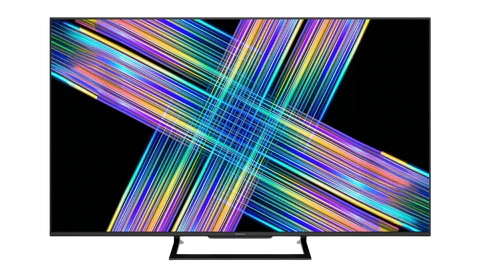
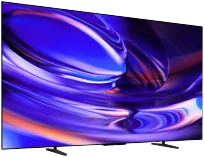
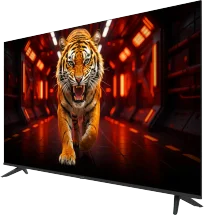
RGB LED is a new form of backlighting for LCD TVs that is increasingly appearing in the ranges of the biggest manufacturers. The technology uses separate red, green and blue LEDs instead of the classic backlight based mainly on blue LEDs. This allows TVs to achieve a wider colour gamut and better colour reproduction, especially when displaying HDR content. RGB LED is not, however, a completely new type of panel and it is still an LCD TV. It is also worth knowing that the mere presence of RGB LED does not automatically guarantee better picture quality than every Mini LED TV.
How RGB LED works and why it improves colours
In traditional LCD TVs, light is produced by a backlight positioned behind the panel, because the LCD pixels themselves do not emit light. With RGB LED the manufacturer uses red, green and blue diodes that can be controlled independently. This solution allows colours closer to the BT.2020 colour space, which forms the basis of modern HDR standards. In practice this can mean more natural reds, more accurate shades of sky blue and more realistic greens. The differences are particularly noticeable when watching movies, series, sports broadcasts and playing HDR games. RGB LED can also potentially reduce power consumption, since the individual colour channels can be controlled independently depending on the scene being shown. However, it is important to remember that RGB LED still requires an LCD panel that sits in front of the backlight. The diodes therefore do not create the image by themselves, as is the case with Micro LED technology. The number of local dimming zones also plays an important role, because they are responsible for controlling the light in different parts of the screen. A higher number of zones usually allows for more precise backlight control and better contrast. Therefore the number of dimming zones can matter more for picture quality than the use of RGB LED alone. Combining a high number of zones with coloured backlighting can, however, deliver very good results.
RGB LED ma również ograniczenia. Te telewizory wykorzystują tę technologię
RGB LED nie jest pozbawione wad i obecnie pozostaje rozwiązaniem droższym od klasycznego Mini LED. Jednym z potencjalnych problemów jest tak zwany colour crosstalk, czyli przenikanie światła pomiędzy sąsiednimi kolorami. Niezależne sterowanie czerwonymi, zielonymi i niebieskimi diodami może również powodować zmiany nasycenia barw w zależności od zawartości konkretnej sceny. Dodatkowym ograniczeniem jest trudniejsza możliwość zwiększania liczby stref wygaszania w porównaniu z Mini LED. Co więcej, RGB LED nie musi wcale korzystać z lokalnego wygaszania. Producent może zastosować podświetlenie krawędziowe, w którym diody znajdują się na krawędziach ekranu. Takie rozwiązanie nie zapewnia poziomu jakości obrazu kojarzonego z najlepszymi telewizorami LCD, ponieważ kontrast jest wtedy w dużej mierze ograniczony możliwościami samej matrycy. RGB LED nie zmienia również podstawowych cech panelu LCD, takich jak kąty widzenia czy czas reakcji pikseli. Nie należy także mylić RGB LED z Micro LED, ponieważ są to dwie zupełnie różne technologie. W Micro LED poszczególne czerwone, zielone i niebieskie diody działają jak niezależne piksele, podczas gdy RGB LED pełni funkcję podświetlenia matrycy LCD. W 2026 roku rozwiązanie RGB LED stosują już między innymi Sony, Samsung, LG, TCL, Philips i Hisense. Wśród modeli można znaleźć między innymi Sony Bravia 9 II i Bravia 7 II, TCL RM9L i RM7L, Samsung R95H i R85H, LG MRGB95B, MRGB9M i MRGB85B oraz Hisense UR9S i UR8S. Technologia jest więc coraz szerzej dostępna, ale przed zakupem warto sprawdzić nie tylko rodzaj podświetlenia, lecz również liczbę stref wygaszania i konkretną matrycę zastosowaną w telewizorze.
RGB LED is an evolution of LCD backlighting technology, not a competing method for creating images with LCDs. The biggest advantage is the ability to achieve a wider colour palette and more natural colours thanks to independent red, green and blue diodes. However, that does not mean every RGB LED TV will be better than a good Mini LED. The number of local dimming zones, the panel type and the quality of image processing also remain key.
source: flatpanelshd