- Matching (Score) |
- Our verdict |
- Competing TVs |
- TV appearance |
- Where to buy |
- Contrast and black detail |
- HDR effect quality |
- Factory color reproduction |
- Color reproduction after calibration |
- Smoothness of tonal transitions |
- Image scaling and smoothness of tonal transitions |
- Blur and motion smoothness |
- Console compatibility and gaming features |
- Input lag |
- Compatibility with PC |
- Viewing angles |
- Daytime performance |
- TV features |
- Apps |
- Playing files from USB |
- Sound |
- Panel details
Philips OLED811 Review
OLED801 / OLED811

Available screen sizes:
Complete the survey to find out the result
Panel type: WRGB OLED Refresh rate: 165Hz Brand: PHILIPS Resolution: 3840x2160 System: Titan OS Model year: 2026
This review is an English translation of the Polish original. Read the original on Wybierz.tv.
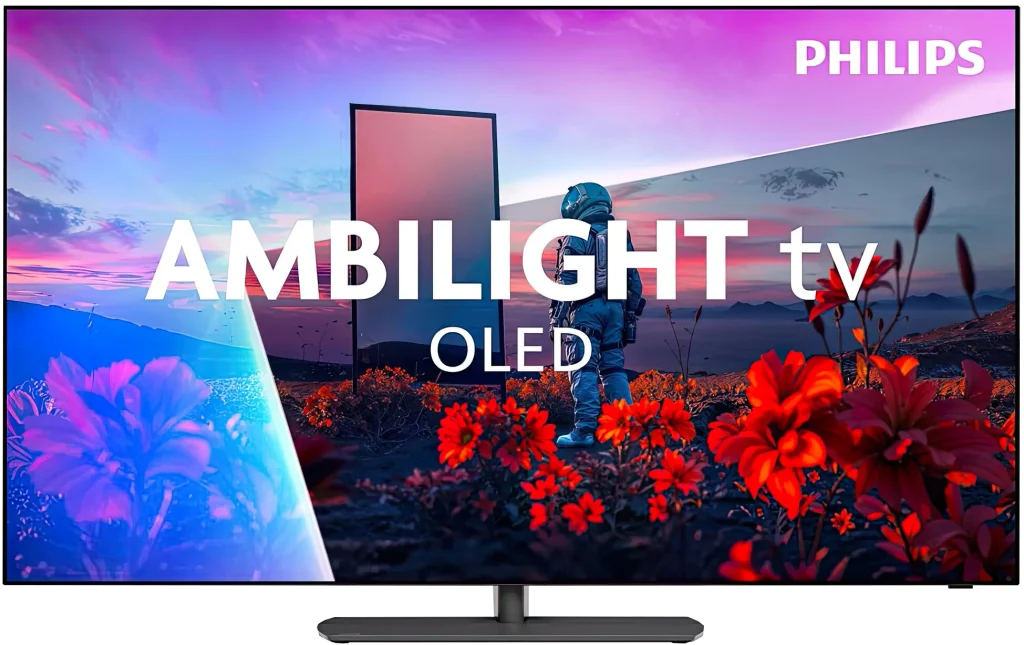
The Philips OLED811 is a high-end model in the Dutch manufacturer's OLED TV range. The 8 series has been popular for years, mainly thanks to superior panels compared with the 7 series and the inclusion of Google TV. This year, however, quite a lot has changed, primarily in terms of the Smart TV system. Philips has opted for its own Titan OS, which replaces the Google platform in the OLED811. Has this system developed enough over the past year to meet expectations for a TV in this class? And how does the picture quality itself perform in light of these changes? We put it to the test!
PHILIPS OLED811 - Our verdict
8.1
Overall rating
Philips OLED811 is a mid-range OLED for 2026 that stands out from its biggest rivals mainly for one thing: Ambilight. The light that follows the picture and spreads across the wall can change the atmosphere of an entire viewing session. In the evening the screen seems to extend beyond its borders and watching simply gains extra charm. For some it will be a pleasant extra, for others a sufficient reason to choose Philips again. The picture itself is very comparable to what models such as the LG C6 or Samsung S90H offer when using the same type of panel. So you get deep, perfect blacks on which bright elements make a strong impression. The OLED811 can deliver powerful HDR and, importantly, after calibration the picture itself is close to the reference. There is no big advantage over the competition, but there is also no feeling that by choosing Philips for Ambilight you are sacrificing image quality.
There are also a few good changes for gamers compared with last year’s model. Thanks to the MediaTek Pentonic 800 chipset we finally have four HDMI 2.1 ports, so connecting several devices, for example consoles, a PC and a soundbar, no longer requires choosing which device will get the full capabilities of the port. Gaming itself is very enjoyable — the television responds quickly, supports variable refresh rates, and from a PC allows gaming in 4K at 165 Hz. It’s a pity that the new processor’s capabilities were not put to equally good use when processing lower-quality sources. The biggest concern, however, is the operating system. Titan OS replaced the popular Google TV and although it has clearly developed over the past year, it is still hard to call the change a positive one. The system runs more smoothly, has more useful features, and the app library already contains most popular streaming services. Nevertheless, the selection of apps is still much smaller than with Google or the competition, and in our view that remains the OLED811’s biggest drawback. People who use less popular services may particularly feel this difference.
Is it worth buying? Yes, if Titan OS meets your needs. In terms of picture and gaming capabilities the OLED811 has as much to offer as its rivals, but Ambilight gives it something others do not. So Philips both gives and takes. It adds a unique viewing atmosphere but limits freedom of app choice. If the apps you use are available, that compromise may be worth making.
Advantages

Three-sided Ambilight that creates a great atmosphere for viewing
Perfect blacks and excellent contrast from the OLED panel
Powerful HDR effect. Brightness around 1500 nits
Very good viewing angles
Excellent motion clarity (no smearing)
Supports 4K at 165 Hz
Four HDMI 2.1 ports
Extensive gaming features
Support for multiple audio/video formats: (Dolby Vision, Dolby Atmos, HDR10+, DTS)
Disadvantages

Smaller app library on Titan OS than on Google TV or most competitors
Infrared remote that needs to be pointed at the TV (sometimes responds slowly)
Very high input lag in games with Dolby Vision
Visible posterization (mainly in bright scenes)
Underused image-processing capabilities of the Pentonic 800
 Movies and series in UHD quality
8.5
 Classic TV, YouTube
8.7
 Sports broadcasts (TV and apps)
8.5
 Gaming on console
8.9
 TV as a computer monitor
8.6
 Watching in bright light
6.0
 Utility functions
7.9
 Apps
Apps7.7
 Sound quality
7.6
Complete the survey to find out what fits your preferences
PHILIPS OLED811 - Competing TVs in this price range
PHILIPS OLED811 - TV appearance
HDMI inputs: 0 x HDMI 2.0, 4 x HDMI 2.1 (48Gbps) Outputs: Toslink (Optical audio), eARC (HDMI), ARC (HDMI), Mini-Jack (Headphones) Network Interfaces: Wi-Fi 2.4GHz, Wi-Fi 5GHz, Ethernet (LAN) 100Mbps
Build quality: Good
Stand type: Central
Bezel color: Graphite
Stand: Swivel
Flat design: No
Accessories: Stand
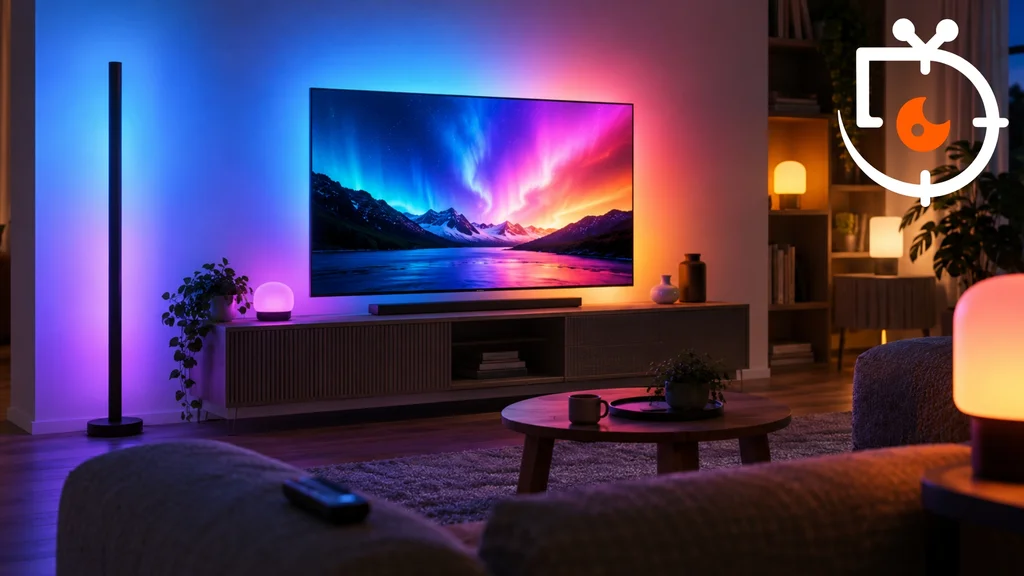
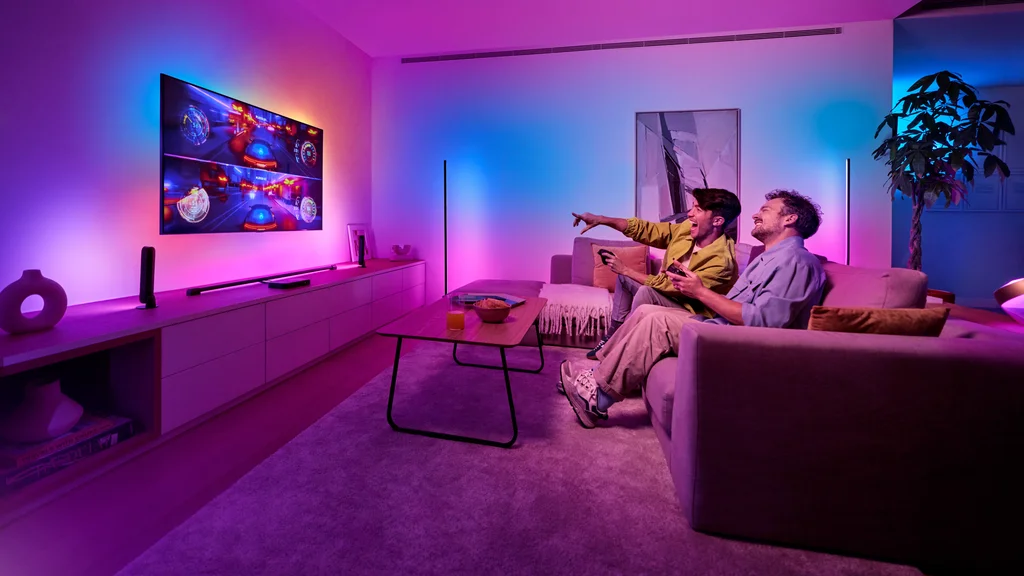
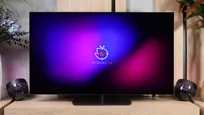
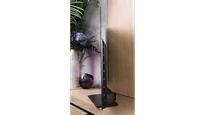
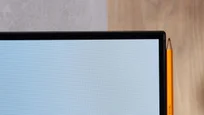
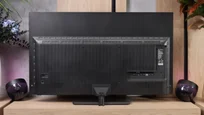
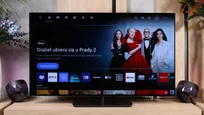
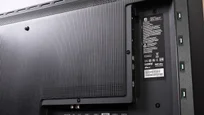
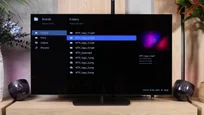
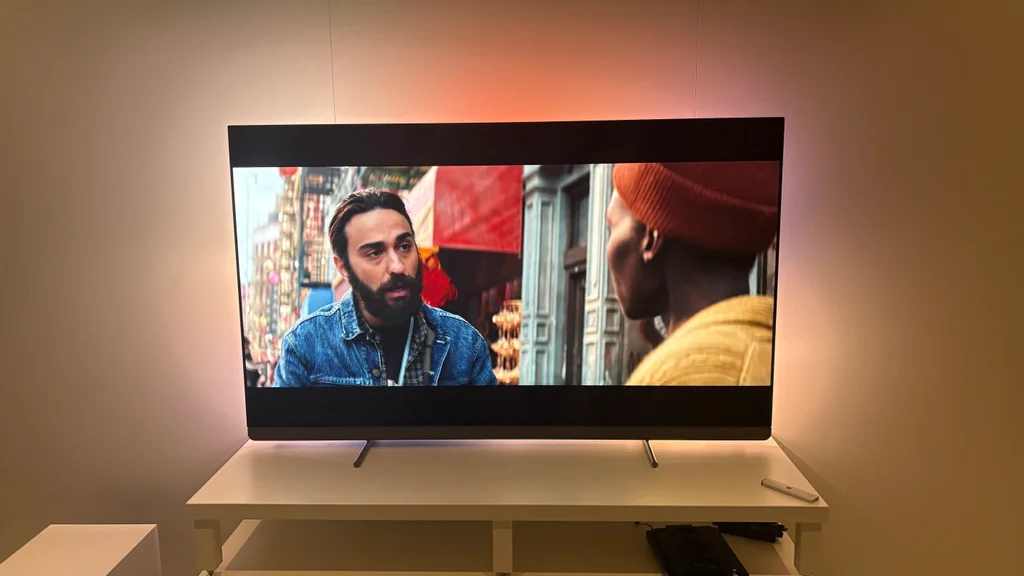
In terms of appearance the Series 8 hasn't changed much, but you can't really complain. The Philips OLED811 still looks very good. Narrow bezels and a slim panel give it a lightness, and the simple dark styling suits a variety of interiors. Viewed from the side the protruding rear section of the chassis is clearly visible. The screen itself is extremely thin, but the rear still takes up more space. However, the real magic happens at the back, namely the three-sided Ambilight. LEDs placed along the top and side edges cast light onto the wall that is matched to the picture, visually extending it beyond the screen's borders. In the evening this can completely change a room's atmosphere and add extra charm to the viewing experience. It remains one of the most distinctive features of Philips TVs. The central swivel stand is another plus. It looks decent despite being plastic, doesn't require as wide a piece of furniture as separate side legs, and lets you angle the screen comfortably towards your viewing position. The quality of the plastics on the rear of the chassis is somewhat disappointing. For a premium TV you would expect a slightly better finish.
Buy at the best price
Select size:

PHILIPS OLED811 - Contrast and black detail
10/10


Result
∞:1

Result
∞:1

Result
∞:1

Result
∞:1

Result
∞:1

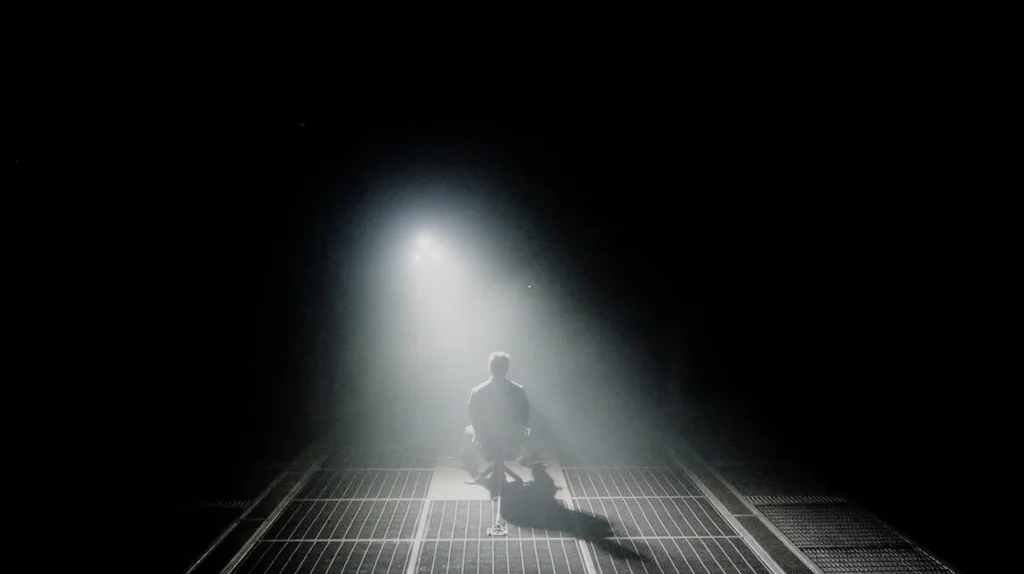
Black and contrast are categories where the Philips OLED811 showcases all the benefits of OLED technology. Each pixel lights independently and can be switched off completely, so black is simply black. There’s no grey glow or haloing around bright objects. During evening viewings this produces a great effect: stars in the night sky, city lights and text on dark backgrounds remain clearly separated from a perfectly black surround.
It’s therefore hard to expect any improvement here over other OLEDs, because in terms of black depth and contrast the result is already exemplary. The OLED811 doesn’t need local dimming or a compromise between the brightness of a small object and the black around it. Even a single bright point can sit next to a completely switched-off pixel, giving the image outstanding depth.
It’s in scenes with extensive black that the advantage over Mini LED TVs becomes clear. Even the most sophisticated local-dimming systems control larger areas of the image, so in demanding shots they can create a glow around bright elements or dim them to preserve a dark background. The Philips OLED811 doesn’t suffer from this problem.
Halo effect and black detail visibility:
PHILIPS OLED811 - HDR effect quality
7.6/10
Supported formats: HDR10, HDR10+, Dolby Vision, HLG
Luminance measurements in HDR:

Result
1225 nit

Result
1310 nit

Result
1443 nit

Result
1368 nit

Result
626 nit
Philips OLED811 uses a new generation of WOLED EX panels, also found in models such as the LG C6 and Samsung S90H. After calibration we measured around 1500 nits, which is a very good result for an OLED TV. You can see this clearly in films and series. All kinds of bright flashes have the right intensity, especially when they appear against a dark background. In such scenes the OLED811 can deliver truly impressive HDR. Of course, that does not mean you will see that level of brightness in every shot. When the screen is filled with a large amount of white or a wide explosion, brightness falls to around 600 nits. That is still a good result, but those scenes no longer have the same punch as small, bright elements on a dark background. This is a known limitation of OLEDs and the OLED811 is no exception.
Colours
Aside from HDR brightness, colours also matter and here Philips performs very well. It covers almost the entire DCI-P3 gamut, which contains most of the colours used in HDR films and series. You get saturated reds and lush greens, and when watching it’s hard to find major faults in that respect. It looks a little worse with the much wider BT.2020 gamut, whose most saturated shades are already out of reach for this panel. There is also the issue of the white subpixel that the WOLED panel uses to boost brightness. With very bright colours you can see a certain washout: the colour is bright but loses some of its intensity. It is precisely in such situations that QD-OLED panels from Samsung Display have the advantage. However, in most films and series this is not something that will immediately stand out.
BT.2020 color gamut coverage and primary color luminance
| Data set | BT.2020 | P3 | R | G | B |
|---|---|---|---|---|---|
| Synthetic patterns | 75.0% | 99.3% | 60% | 60% | 70% |
| Film measurements | 74.9% | 99.3% | 59% | 60% | 71% |
 BT.2020
 BT.2020 and P3 – average color gamut coverage (percent of the target gamut).
R, G, B – average primary color luminance relative to target (percent).
Scene from the movie “Pan” (about 2800 nits)

Scene from the movie “Billy Lynn” (about 1100 nits)

In film scenes the OLED811 performs very well and in most cases delivers an image close to what we see on the reference monitor. This applies both to Billy Lynn, where brightness peaks at around 1,100 nits, and to a much more demanding scene with brightness of roughly 2,800 nits. Philips handles not only typical HDR material but also content mastered for much higher brightness levels. Sometimes the only shortcoming is a lack of detail in the very brightest whites. The TV does not always manage to resolve them and, instead of subtle gradations, we see a uniform bright patch. However, that depends on the scene, because in other shots details remain clearly visible. Overall there is little to criticise here.
HDR luminance chart:
Where tone mapping in HDR10 doesn't quite manage, Dolby Vision helps. We mentioned earlier losing some detail in the brightest whites; in the same scene rendered in Dolby Vision that problem no longer occurs. It's clearly visible in the shot with the horses: the snow regains its texture and the trees in the background are sharper and don't blend into the bright sky. The additional image metadata helps the TV better adjust the scene brightness to the panel's capabilities.
Static HDR10

Dynamic: Dolby Vision

Factory color reproduction
7.8/10
Film mode on the Philips OLED811 is sensibly set up straight out of the box. Most colour errors remain small, both in SDR and HDR, so you can sit down to watch without adjusting the settings first. There are no major inaccuracies that would immediately distract from the film. It falls a little short of perfection, though. The white balance shows a slight lack of red compared with green, so whites and greys can have a faint greenish tint. It is not a strong colour cast, but measurements clearly show it. There are also minor brightness deviations in SDR: some parts of the image are slightly brightened, and the darkest shades are not always reproduced evenly. In HDR the TV sticks much closer to the reference, although in places it gently lifts detail from the shadows. These are generally areas that could be improved. The factory film mode provides a good starting point, and calibration will reveal how much more can be gained from it.


Color reproduction after calibration
9.3/10
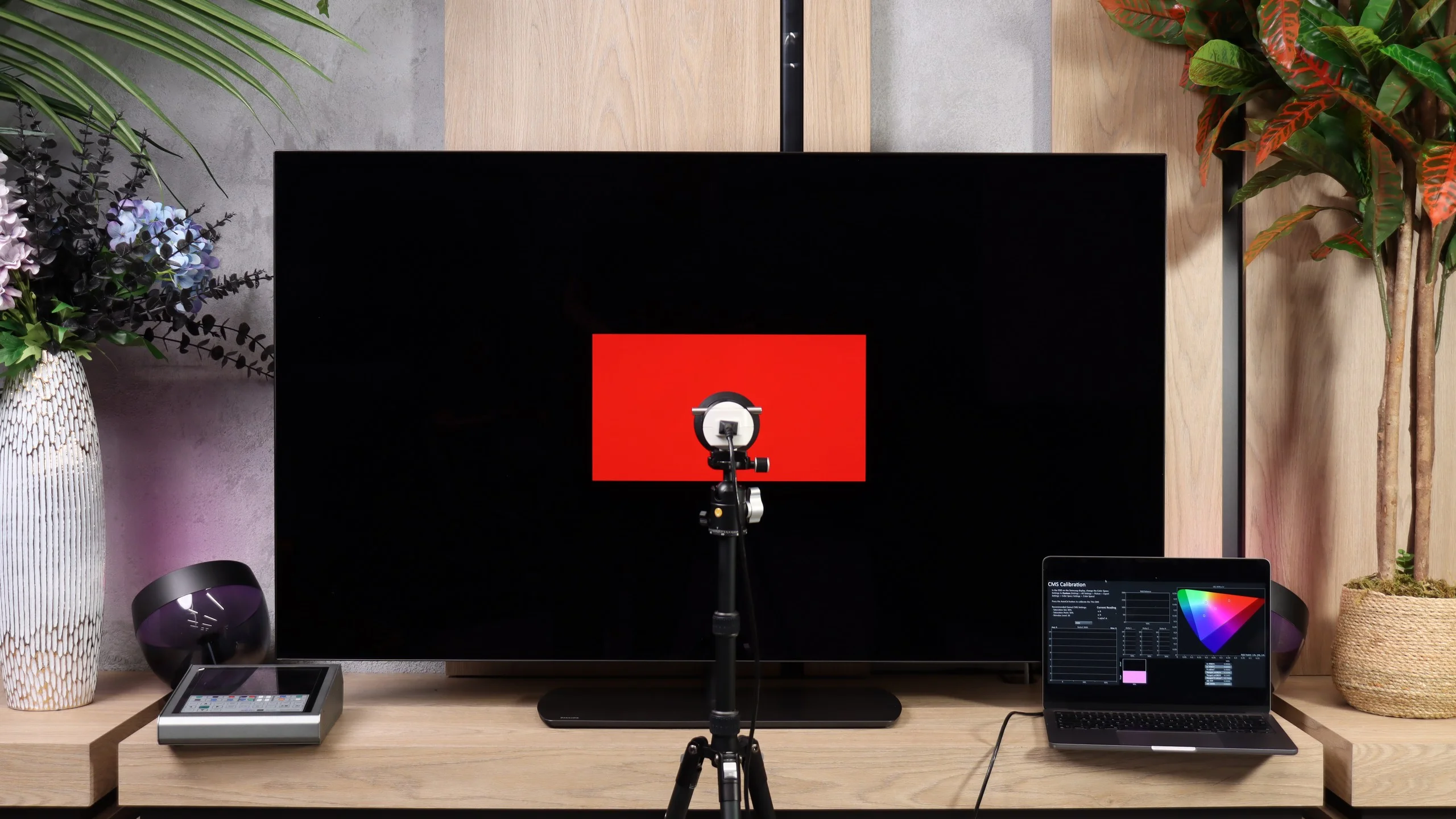
After calibration the Philips OLED811 produces an image very close to the reference. We managed to correct the white balance and eliminate the slight tint visible in the factory settings. Errors in the Color Checker measurements for SDR and HDR fell to around 1 to 2, and many samples are even below 1. That's a level at which differences from the reference image are hard to spot with the naked eye. We also improved the gamma, and only in the brightest whites is there a slight brightening remaining. In HDR the EOTF curve also tracks the reference closely, although the TV still tends to gently boost the brightness of small elements, such as stars or on-screen text. This gives the picture a little extra sparkle that shouldn't be there, but otherwise there's little to fault. It was already good out of the box, and after calibration we managed to refine most of the remaining shortcomings.


PHILIPS OLED811 - Smoothness of tonal transitions
7.5/10
Compared with Philips' previous OLEDs the smoothness of tonal transitions has clearly improved. The biggest difference is visible in dark parts of the picture, which can cause WOLED panels a lot of trouble. On the OLED811 they have been smoothed very well, with tones transitioning smoothly from one to another without visible banding or contouring. That's a big plus, especially when viewing dark scenes.
Unfortunately, it's not as good in brighter scenes. That's where we have the biggest reservations: instead of a gentle transition between tones, in places you can see distinct boundaries, known as posterisation. It can be quite noticeable, and it's a shame that the improvement seen in dark scenes did not extend to the brighter parts of the image to a similar degree.







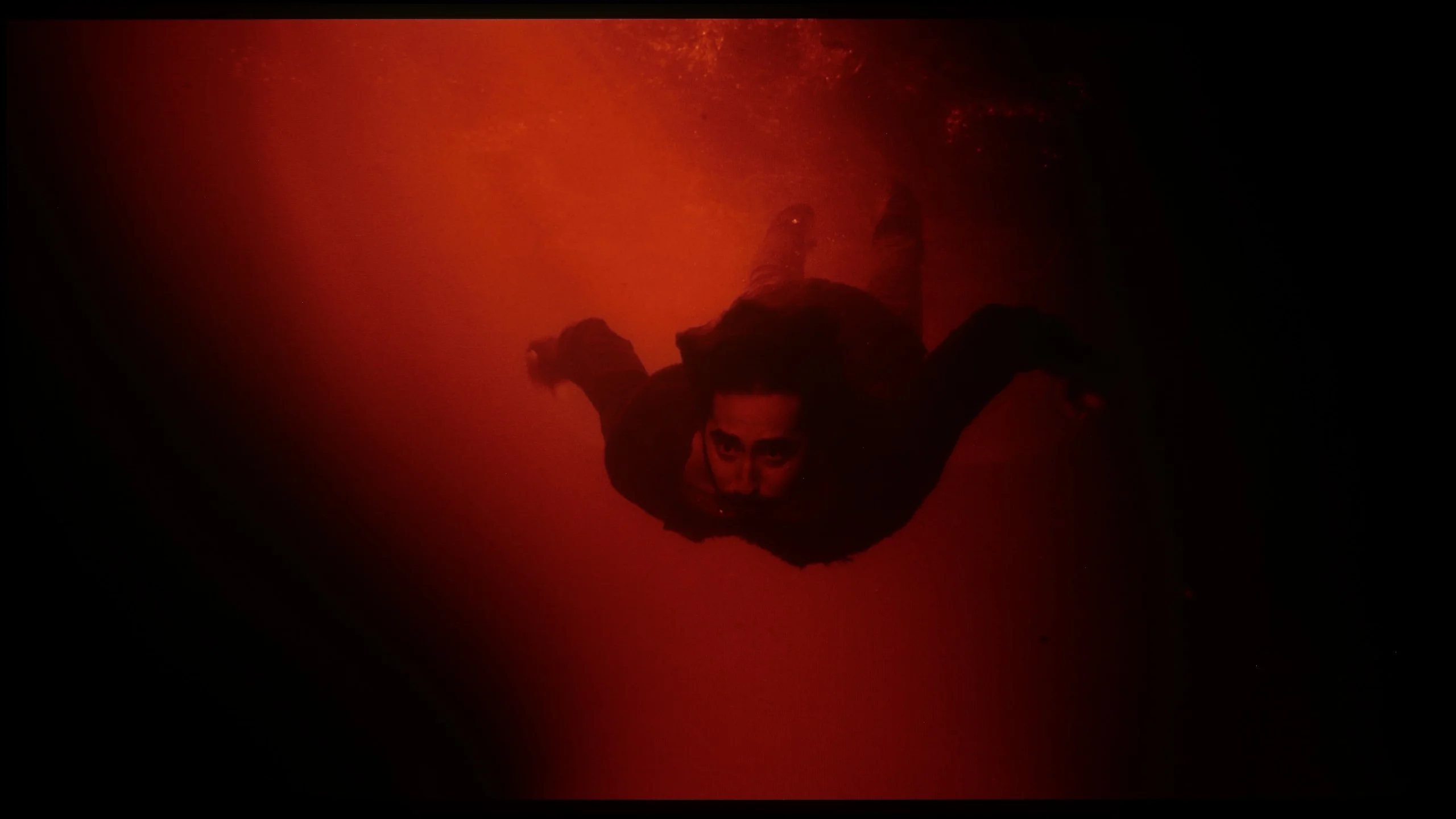
Image scaling and smoothness of tonal transitions
6.8/10
 Smooth transition function
Image without overscan on the SD signal

OLED811 handles lower-quality material reasonably well, though it falls well short of perfection. The "Banding reduction" function helps to smooth tonal transitions and on the low setting gives a fairly good result. It does not remove bands between shades as effectively as similar solutions from some competitors, but at least it does not introduce new artefacts in the process. This is a sensible setting for everyday viewing. There is still some dissatisfaction, however, because the MediaTek Pentonic 800 chipset used here can, in other manufacturers' implementations, cope with the effects of heavy compression more effectively even at similarly low settings. Much therefore depends on how a given manufacturer makes use of its capabilities. We have a few more comments about the upscaling to 4K. There is a lot of detail, but the overall image looks rather soft. Edges are heavily smoothed, which robs the picture of a bit of sharpness and clarity. This can be partly corrected with the sharpness slider in the menu, though that will merely accentuate outlines rather than recover detail. On the plus side, there is no overscan; even with an SD signal the TV does not crop the edges of the picture.
PHILIPS OLED811 - Blur and motion smoothness
8.5/10
Maximum refresh rate of the panel: 165Hz
Film motion smoothing option: Yes
Blur reduction option: Yes
BFI function 60Hz: No
BFI function 120Hz: No
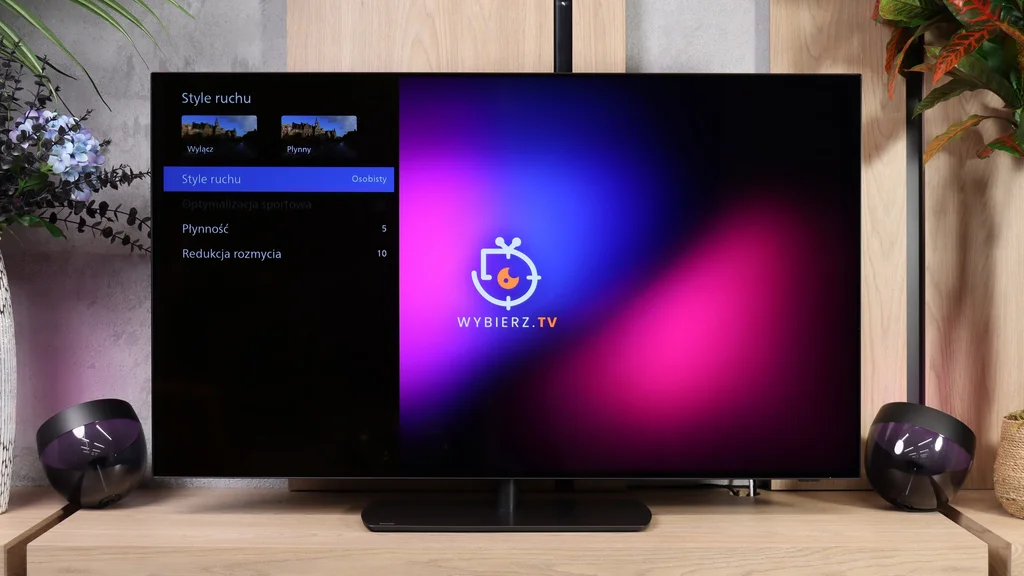
In terms of motion handling the OLED811 performs excellently. At 120 Hz, which is useful for console gaming and watching sport, the picture stays clear and moving objects do not leave noticeable smears. The fast response of OLED pixels helps here; this is clear in the UFO test, even on dark backgrounds. There are also motion smoothing controls. For films you can adjust the level of smoothing to suit your taste, ranging from preserving a cinematic character to much smoother motion. A separate blur reduction setting is useful for fast-paced material such as sports broadcasts.
Blur (native resolution, maximum refresh rate):



Blur (4K@165Hz ):



With a computer connected you can go even further. The new panel can reach up to 165 Hz at 4K, which will be especially appreciated by players of fast-paced shooters and racing games. Of course the computer still has to generate the required frame rate, but the TV itself is capable of it.
PHILIPS OLED811 - Console compatibility and gaming features
9.5/10
- ALLM:
Yes
- VRR:
Yes
- VRR range:
48 - 165Hz
 Dolby Vision Game Mode:
Yes, high input lag
Dolby Vision Game Mode:
Yes, high input lag - Correct implementation of HGIG:
Yes
- 1080p@120Hz:
Yes
- 1440p@120Hz:
Yes
- 4K@120Hz:
Yes
- Game bar:
Yes
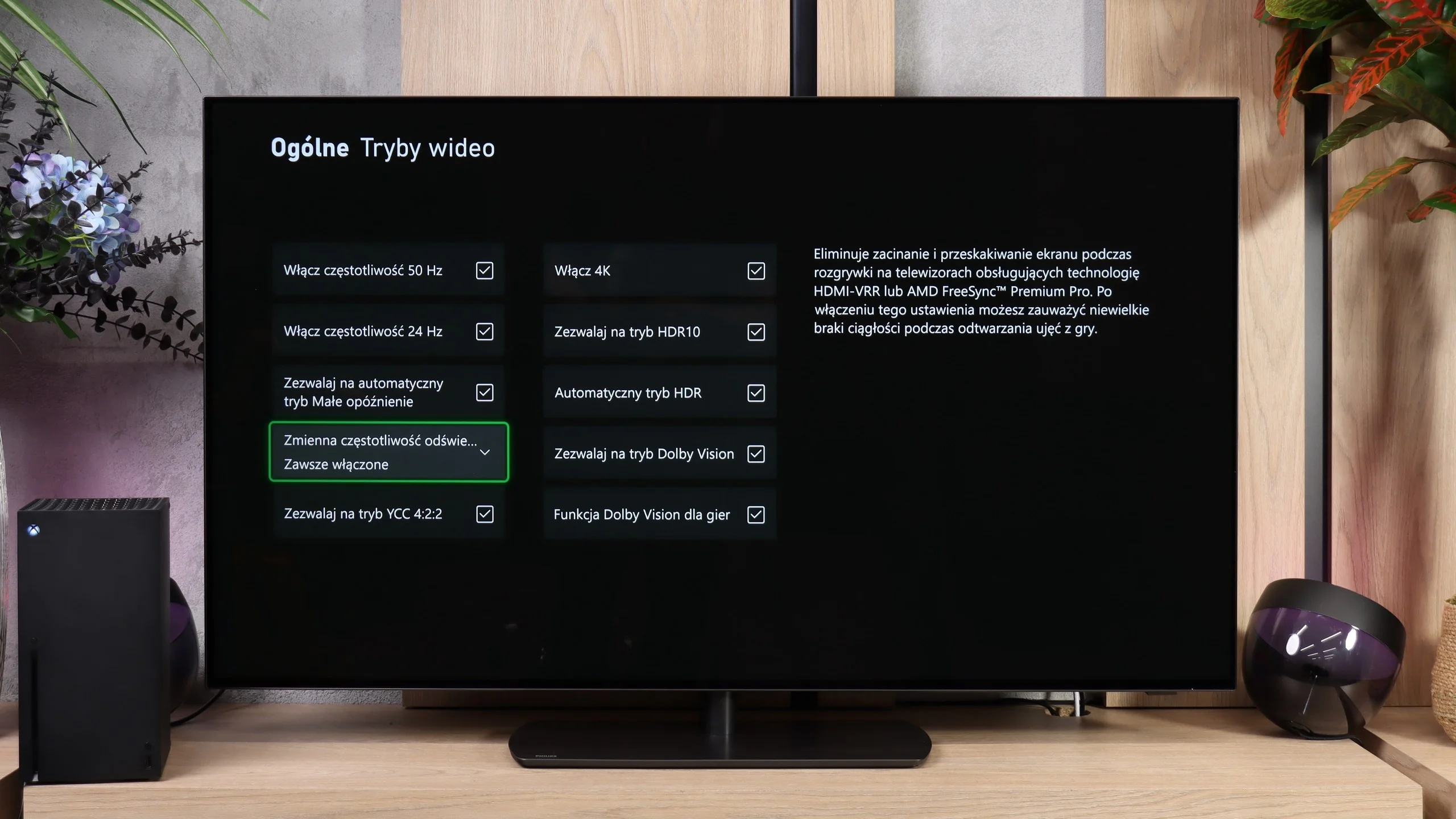
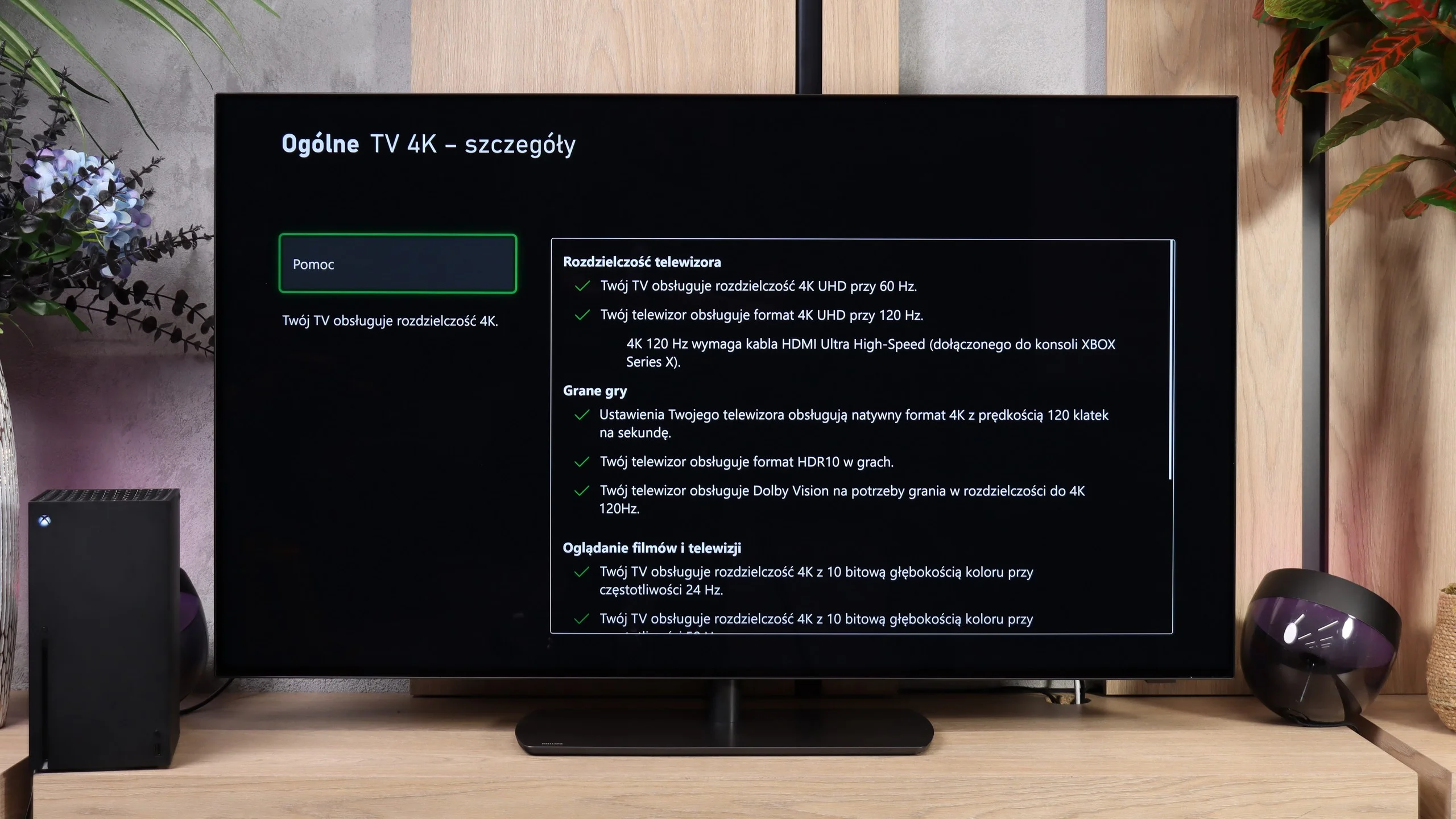
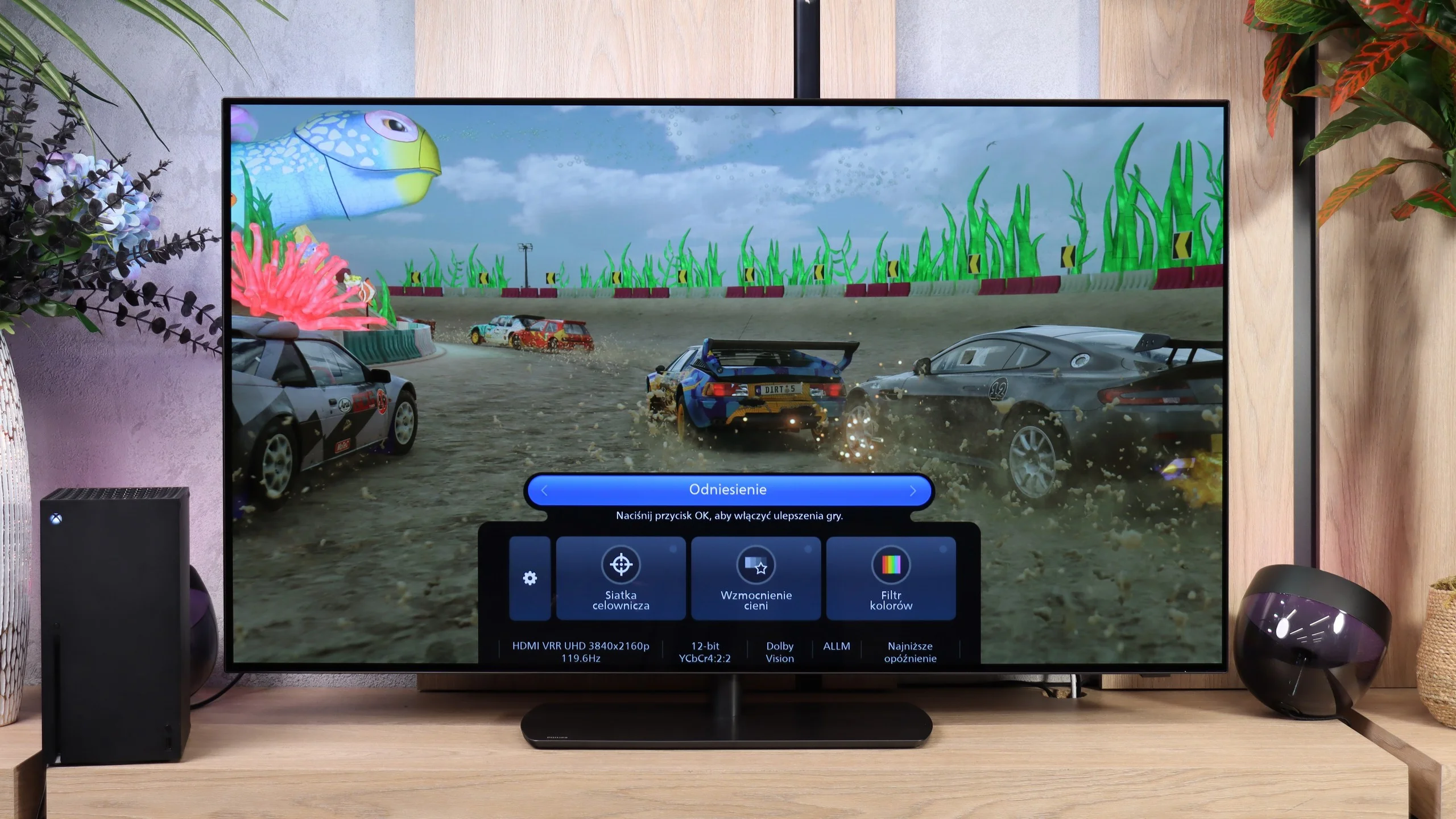
OLED811 has almost everything you could expect from a TV for gaming. It supports 120 Hz at Full HD, 1440p and 4K, and when connected to a PC it can reach 165 Hz. It also has VRR, which helps prevent screen tearing when frame rates fluctuate, and ALLM, which automatically switches to game mode. So you don't have to dig into the settings every time you power up your console.
Another plus is that HGiG works correctly, so once HDR is set on the console the TV doesn't apply its own changes to image brightness. There's also a Game Bar to check signal parameters and quickly change settings useful while gaming. The list even includes Dolby Vision for gaming, but there is a significant catch, which you can read about below.

PHILIPS OLED811 - Input lag
8.8/10
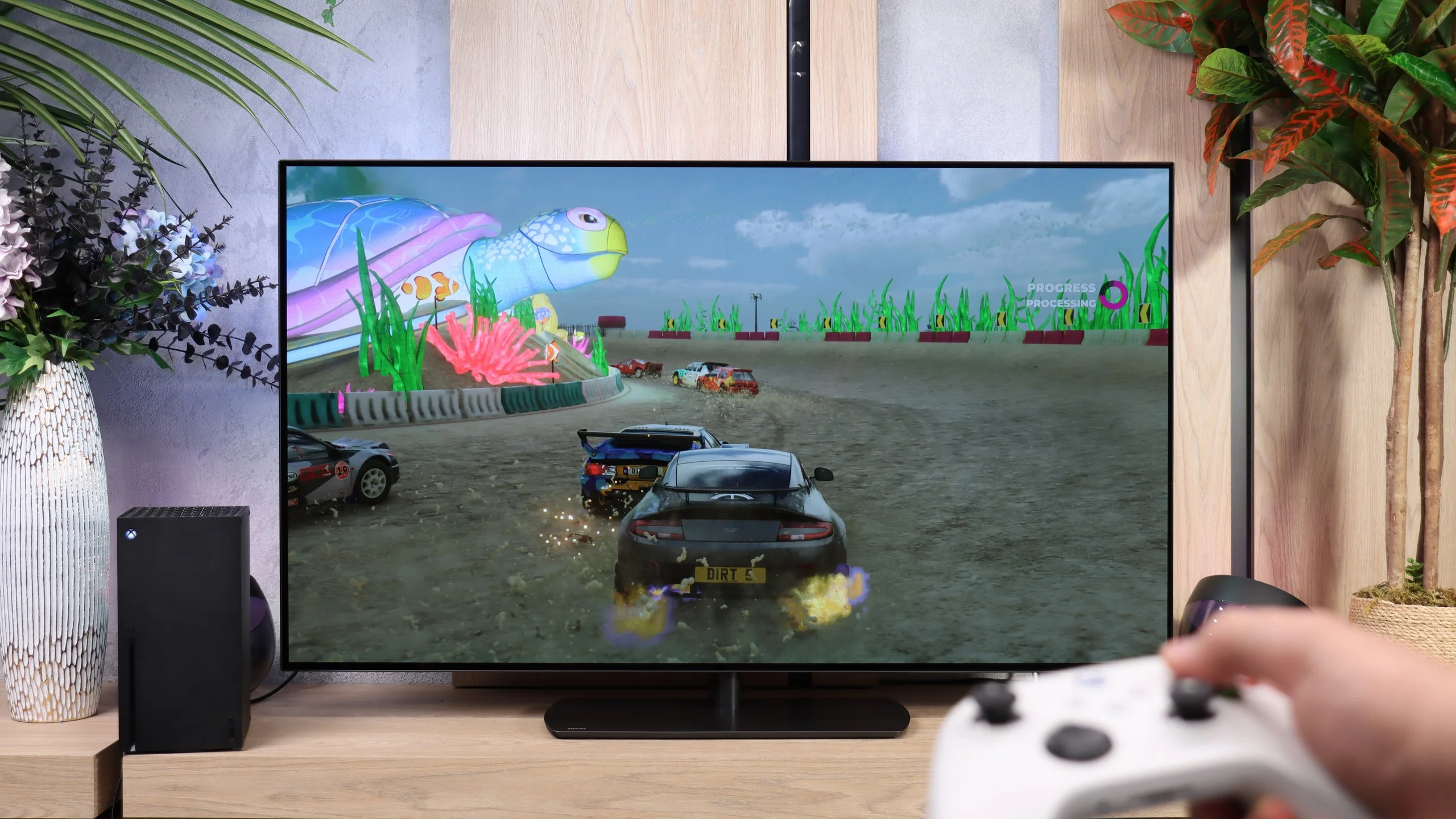
The OLED811 responds instantly. We measured 14 ms at 60 Hz and just 5 ms at 120 Hz, both in Full HD and 4K. Those are excellent results that let you comfortably play even fast online titles. Unfortunately, when Dolby Vision is enabled the situation changes dramatically: at 60 Hz latency rises to 157 ms, and at 120 Hz it is 57 ms. The first figure in particular already means a clearly noticeable delay between input on the controller and the on-screen response. For gaming, it’s definitely better to stick with HDR10.
| SDR | HDR | Dolby Vision |
|---|---|---|
| 1080p60: 14 ms | 2160p60: 14 ms | 2160p60 DV: 157 ms |
| 1080p120: 5 ms | 2160p120: 5 ms | 2160p120 DV: 57 ms |
| 2160p60: 14 ms | ||
| 2160p120: 5 ms |

PHILIPS OLED811 - Compatibility with PC
8.6/10
Chroma 444 (max. resolution and refresh rate): Yes
Font clarity: Good
Readability of dark text and shapes: Very Good
Input lag in PC mode (4K, max. refresh rate): 5ms
Matrix subpixel arrangement: RGWB
Max refresh rate: 165Hz
G-Sync: Yes
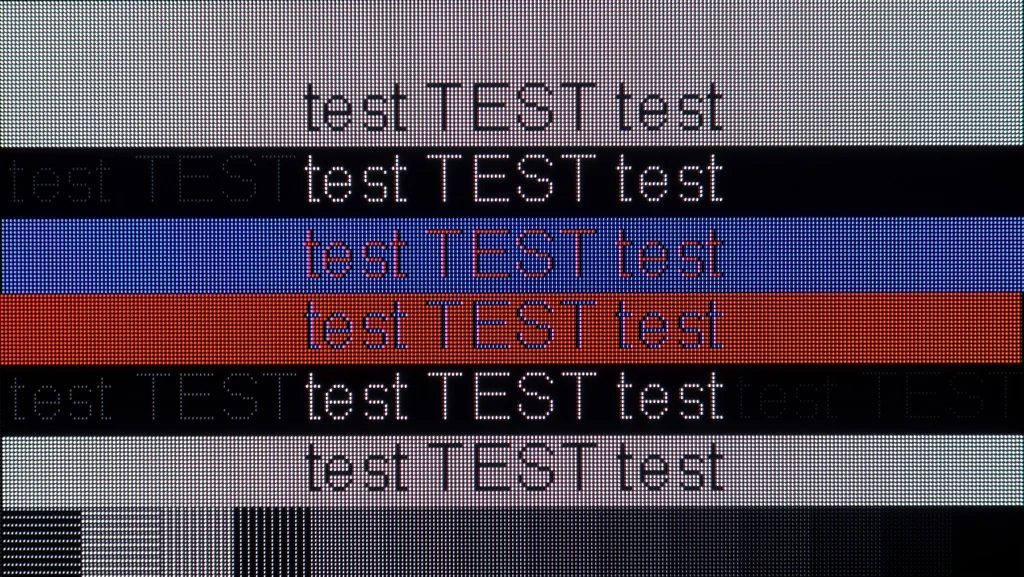
The Philips OLED811 works very well with a PC. The manufacturer has finally managed to implement 4:4:4 chroma correctly, even at maximum resolution and refresh rate. As a result, small text and coloured edges are legible, without blurring or rainbow artefacts caused by loss of colour information. Dark text on dark backgrounds also performs well, which is something TVs can struggle with. There are still minor imperfections related to the RGWB subpixel layout. Fonts are not as sharp as on a conventional RGB monitor, and white letters can show faint red outlines up close. From a normal viewing distance you hardly notice it, though sitting close to the screen at a desk makes it easier to spot.
The most fun, however, comes from gaming on a PC. The combination of 4K at 165 Hz, functional G-Sync and input lag of around 5 ms makes the OLED811 excellent for that. If you have a PC that can take advantage of such a refresh rate, it’s definitely worth connecting it to the Philips.
PHILIPS OLED811 - Viewing angles
7.8/10
Brightness drop at an angle of 45 degrees: 32%
The viewing angles on the OLED811 are excellent and among the best on the market. Even sitting well off to the side, you still see an image with deep blacks and well-saturated colours. This is a big advantage over LCD screens, as you don't have to sit directly in front to enjoy good picture quality.
QD-OLED panels do even better, keeping colours truer at angles. On the Philips, at greater off‑axis angles white shifts slightly towards greenish hues, but the effect is so small that it is hard to find it bothersome during viewing. We'd even say that, in this respect, we've come across the best WOLED panel unit we've tested so far.
PHILIPS OLED811 - Daytime performance
6/10
Panel finish: Glare
Reflection suppression: Decent
Black levels during daytime: Very Good
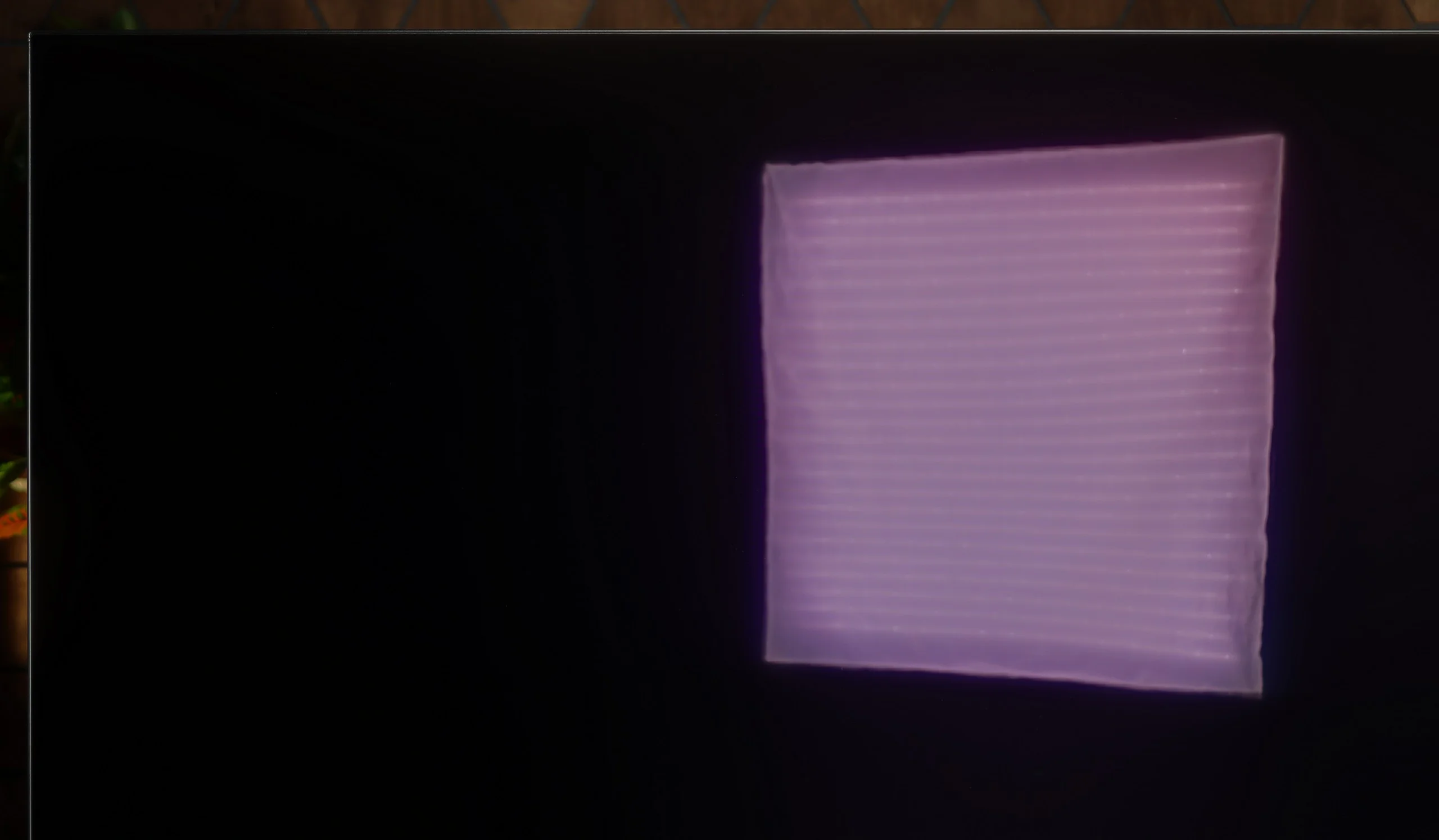
OLED811 copes with daytime viewing, though in a very bright living room it has its limitations. Maximum SDR brightness reaches around 600 nits, comparable to the LG C6 or the Samsung S90H, which use the same panel. That’s noticeably more than entry-level OLEDs and will be more than enough for most people. However, bear in mind this brightness is not sustained across the whole screen; it falls with large areas of white, and our average measurement was about 392 nits.
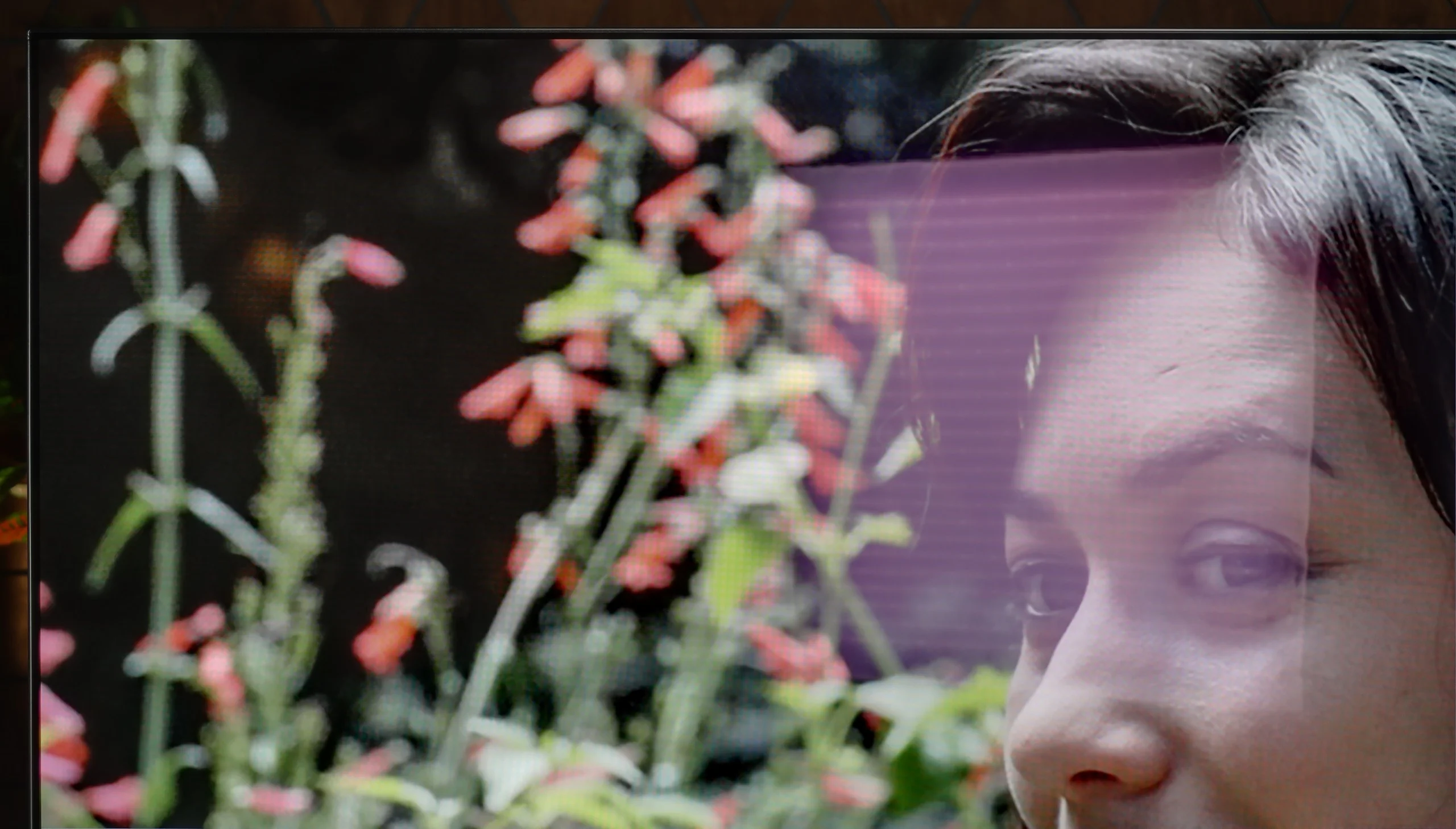
A bigger problem can be direct reflections from windows or lamps. The glossy coating suppresses them reasonably well, but they are still clearly visible on the screen, especially in dark scenes. It doesn’t diffuse them as effectively as matte screens, so placing the TV opposite a large window is not the best idea. On the plus side, blacks remain very good even during the day. In a typical living room the Philips will cope without major issues, but with strong sunlight falling directly on the screen you will want blinds.
Panel brightness
Philips OLED811: 392 cd/m2
PHILIPS OLED811 - TV features
7.9/10
System: Titan OS
System performance: Good
- HDMI inputs: 0 x HDMI 2.0, 4 x HDMI 2.1 48Gbps
- Outputs: Toslink (Optical audio), eARC (HDMI), ARC (HDMI), Mini-Jack (Headphones)
- Network Interfaces: Wi-Fi 2.4GHz, Wi-Fi 5GHz, Ethernet (LAN) 100Mbps
- TV reception: DVB-T, DVB-T2, DVB-S, DVB-S2, DVB-C
Classic features:
 Recording to USB (terrestrial TV): No
 - Recording programming: No
- Picture in Picture (PiP): No
- RF remote control (no need to aim): Infrared
- Backlit remote control: Yes
- Teletext: Yes
- Audio only mode: Yes
- Bluetooth headphones support: Yes
- Simultaneous Bluetooth headphones & TV audio: Yes
Smart features:
- AirPlay: Yes
- Screen mirroring (Windows Miracast): Yes
- Voice search: Yes
- Voice search in native language: Yes
- Ability to connect a keyboard and mouse: Yes
Smart features: Titan OS
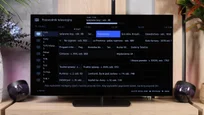
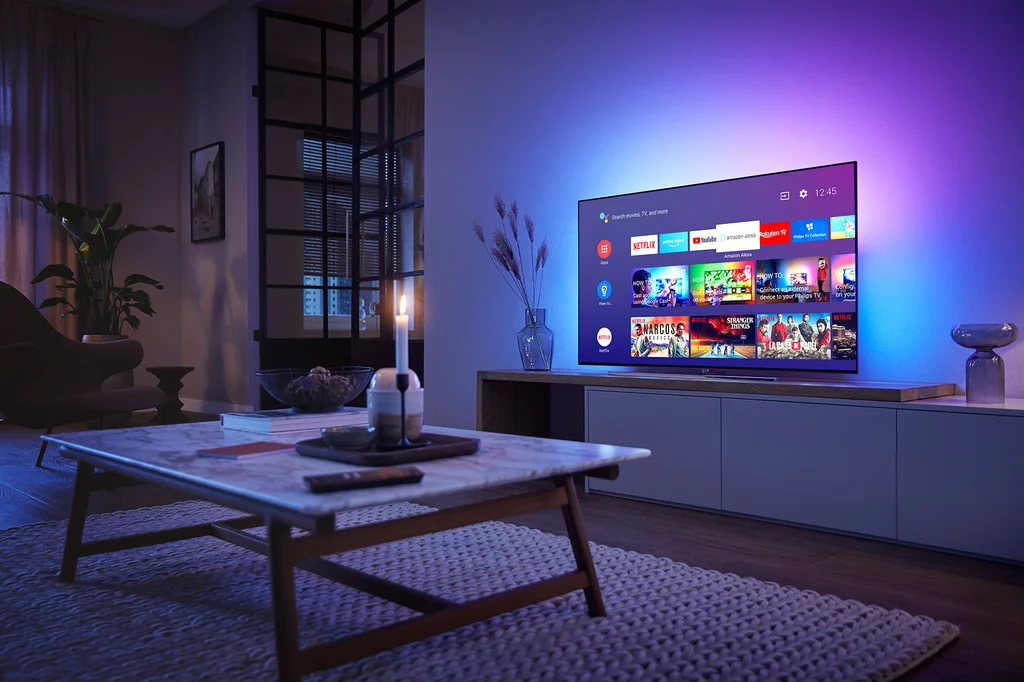
It's the Smart TV system that is the most controversial change in the OLED811. Philips dropped the user-favorite Google TV in favor of its own Titan OS. For many people this may be hard to accept, although Titan has been getting better every year and runs noticeably smoother. We have working AirPlay, screen mirroring from a computer, and voice search in Polish. System responsiveness has improved too, though minor delays still occur when navigating menus. We suspect the infrared remote is partly to blame, as it doesn't always register commands immediately. The biggest limitation compared with Google TV remains a smaller app selection. That doesn't mean it's empty — you'll find Netflix, Prime Video, Disney+, CANAL+, and Apple TV was recently added to the library. If you mainly use popular services, Titan should be enough, but it's worth checking availability of lesser-known apps before buying (list at the bottom 😉).
Ambilight
Ambilight is still one of the best reasons to consider a Philips. On the OLED811 it's three-sided — LEDs at the top and along the sides of the chassis light the wall with colors matched to what's happening on screen. In the evening it creates a great effect and can change the mood of the whole room, which is why we awarded extra points for this feature. You don't have to use dynamic picture tracking though. If you prefer calmer viewing conditions, you can set a steady white light. That's a nice option for evening sessions when you don't want to sit in front of a bright screen in a completely dark room.
Classic features
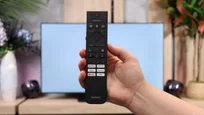
For regular TV watching the OLED811 performs well, although there is no USB recording or picture-in-picture (PiP). You can connect Bluetooth headphones and use them at the same time as the TV speakers. What bothers us most is the aforementioned infrared control. The remote itself is really interestingly designed: it has backlighting and a hybrid keyboard with a numeric section. It's a shame you have to aim it at the TV like with old remotes. For equipment at this level we'd prefer to just press buttons without wondering which way we're holding the remote. Hopefully Philips will fix that in future models.
Sound connection options
HDMI audio:
Other audio outputs:
- Toslink: Yes
- Stereo (Mini-Jack): Yes
Wireless audio:
- Bluetooth: Yes
Supported audio formats (external HDMI eARC audio):
- Dolby Digital Plus 7.1: Yes
- Dolby True HD 7.1: Yes
- Dolby Atmos in Dolby Digital Plus (JOC): Yes
- Dolby Atmos in Dolby True HD: Yes
- DTS:X in DTS-HD MA: Yes
- DTS-HD Master Audio: Yes
Senior accessibility
- Numeric keyboard on TV: Yes
- Font size adjustment: Yes
- Audio description: Yes
PHILIPS OLED811 - Apps
7.7/10






















PHILIPS OLED811 - Playing files from USB
8.6/10
| Maximum photo resolution: | Supported photo formats: |
|---|---|
| 4 Mpix | JPEG |
| 6 Mpix | HEIC |
| 8 Mpix | PNG |
| 10 Mpix | GIF |
| 12 Mpix | WebP |
| 16 Mpix | TIFF |
| 20 Mpix | BMP |
| 24 Mpix | SVG |
| 28 Mpix | |
| 32 Mpix |
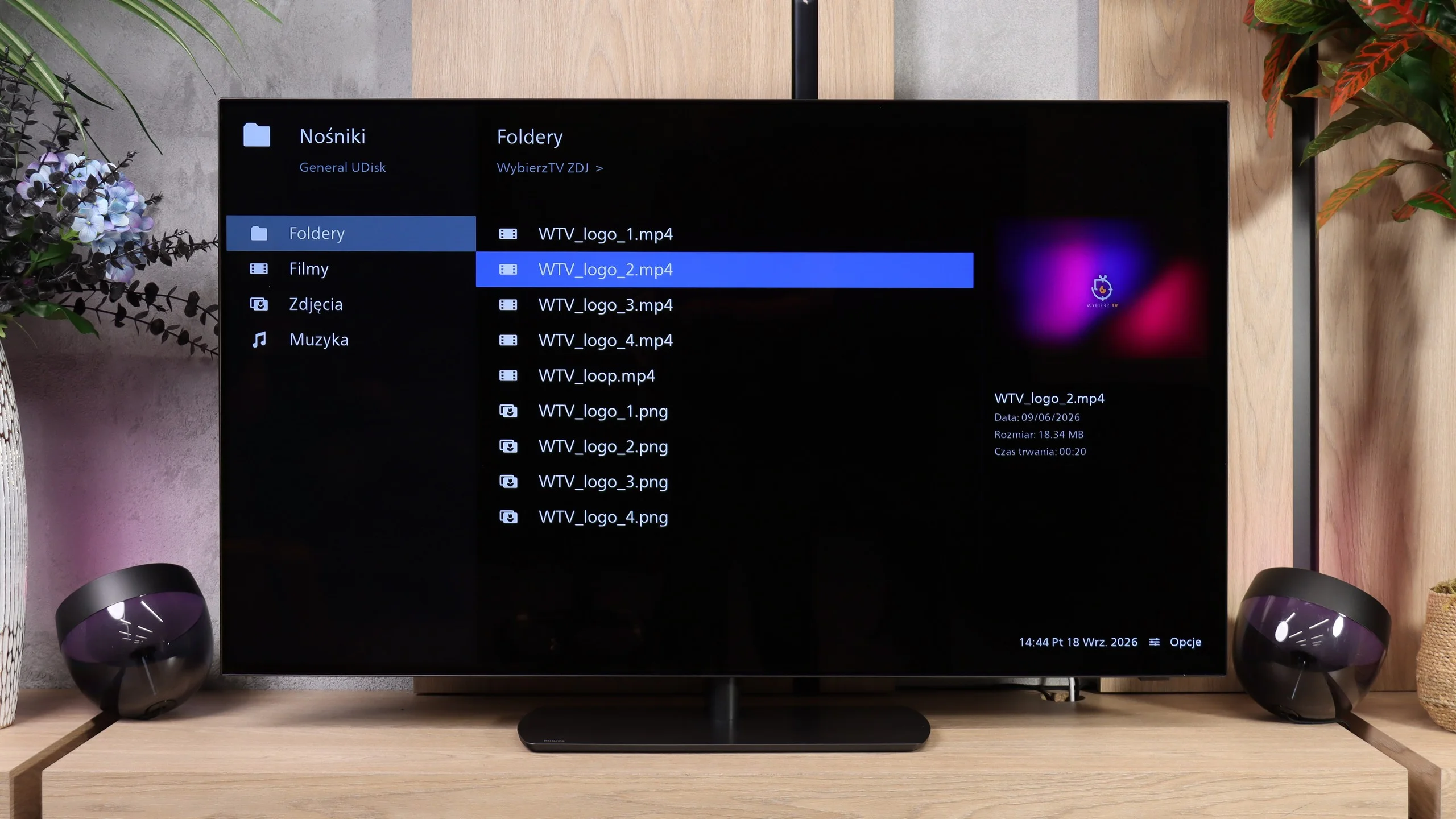
The USB player in the OLED811 handles most of the audio and video formats we test, so it's perfectly adequate for watching a film or playing music from a USB stick. However, our main reservations are about photos, specifically its oddly selective handling of their resolutions. The TV opened 8, 16 and 32MP files but couldn't cope with the rest. It's not that the photos are simply too large. The player can display a higher-resolution image yet refuse to open a smaller one. When browsing holiday snaps this can be simply irritating, because some of them will need to be converted on a computer first... or you could just mirror your screen remotely...😉
PHILIPS OLED811 - Sound
7.6/10
93dB
Maximum volume

Supported codecs (TV speakers)
Dolby Digital Plus 7.1
Dolby True HD 7.1
Dolby Atmos in Dolby Digital Plus (JOC)
Dolby Atmos in Dolby True HD
DTS:X in DTS-HD MA
DTS-HD Master Audio
There have been a few concrete changes to the audio compared with last year’s OLED820. The rear subwoofer is gone, and the 4.1 speaker layout has been replaced by a 2.2 configuration. Despite these changes, the OLED811 still sounds good and fairly balanced. It can play louder, and the sound even seems a little fuller than a year ago. However, the bass has suffered. Although the sound has some weight, the low end lacks the depth of its predecessor. It’s easiest to hear this in films and music, when you’re waiting for a bigger punch. Still, this is well above average for built‑in TV speakers. If you want deeper bass and clearer spatial effects, it’s worth considering a soundbar or a system with an AV receiver. Philips gives plenty of freedom here: it supports both Dolby Atmos and DTS, and can pass Dolby TrueHD tracks over HDMI eARC to compatible equipment. So there are options if we decide to expand the audio setup in future.
Sound Quality Test:
Acoustic Measurements
93dBC (Max)
75dBC
PHILIPS OLED811 - Panel details
Software version during testing: TPM267E_V167.002.054.151
Panel uniformity and thermal imaging:

Backlight Type: WRGB OLED

Founder and originator of the "ChooseTV" portal

Journalist, reviewer, and columnist for the "ChooseTV" portal

michal-woloszyn-title
Reader comments
Comments are provided by the external service Disqus (Zeta Global). Once loaded, Disqus may set cookies and process data about your activity.
We will remember your choice on this device. Provider's privacy policy
See articles related to Philips OLED811:
 10/2/2025

4/3/2025
7/17/2025
9/8/2025