- Matching (Score) |
- Our verdict |
- Competing TVs |
- TV appearance |
- Where to buy |
- Contrast and black detail |
- HDR effect quality |
- Factory color reproduction |
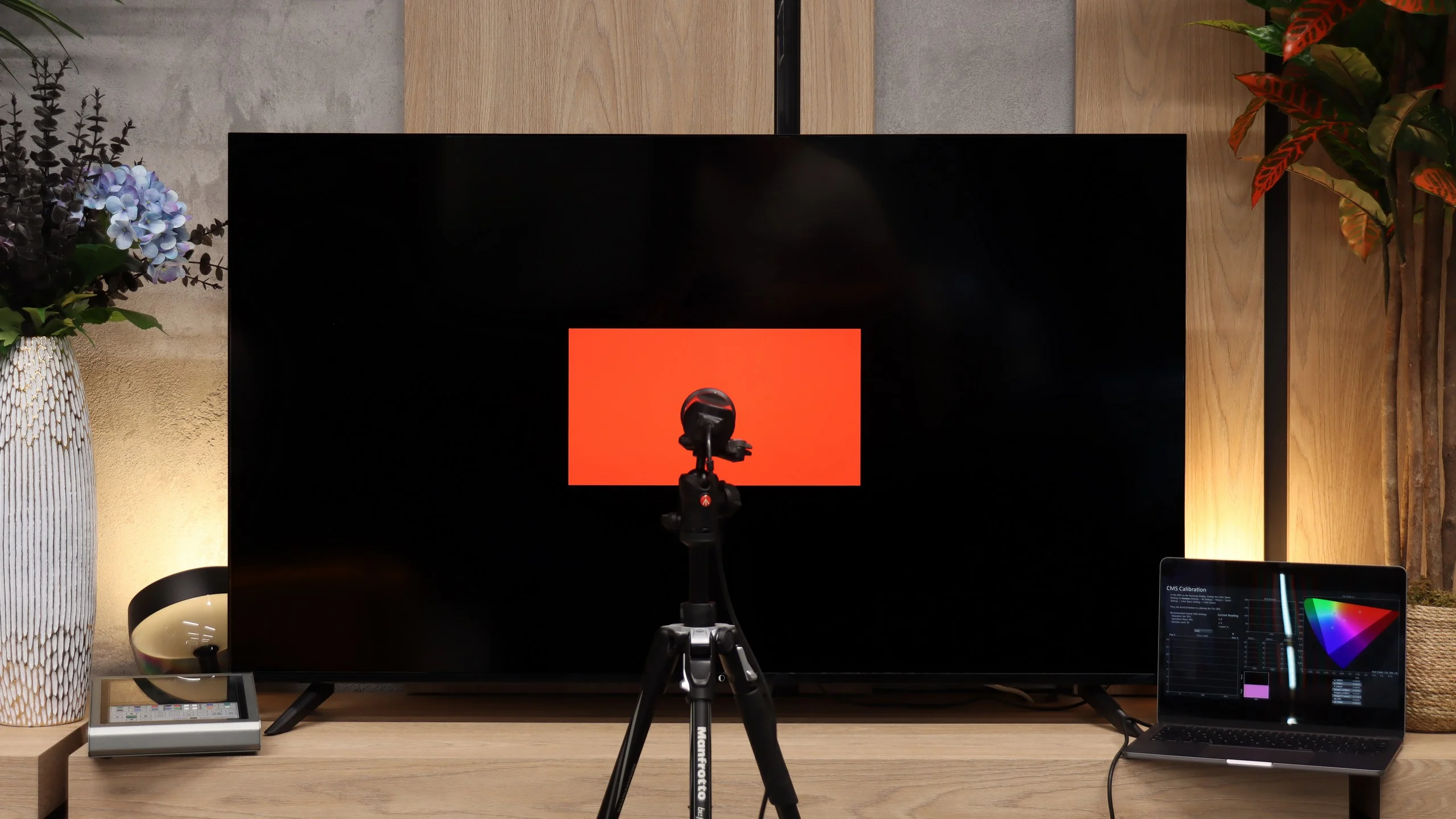
- Color reproduction after calibration |
- Smoothness of tonal transitions |
- Image scaling and smoothness of tonal transitions |
- Blur and motion smoothness |
- Console compatibility and gaming features |
- Input lag |
- Compatibility with PC |
- Viewing angles |
- Daytime performance |
- TV features |
- Apps |
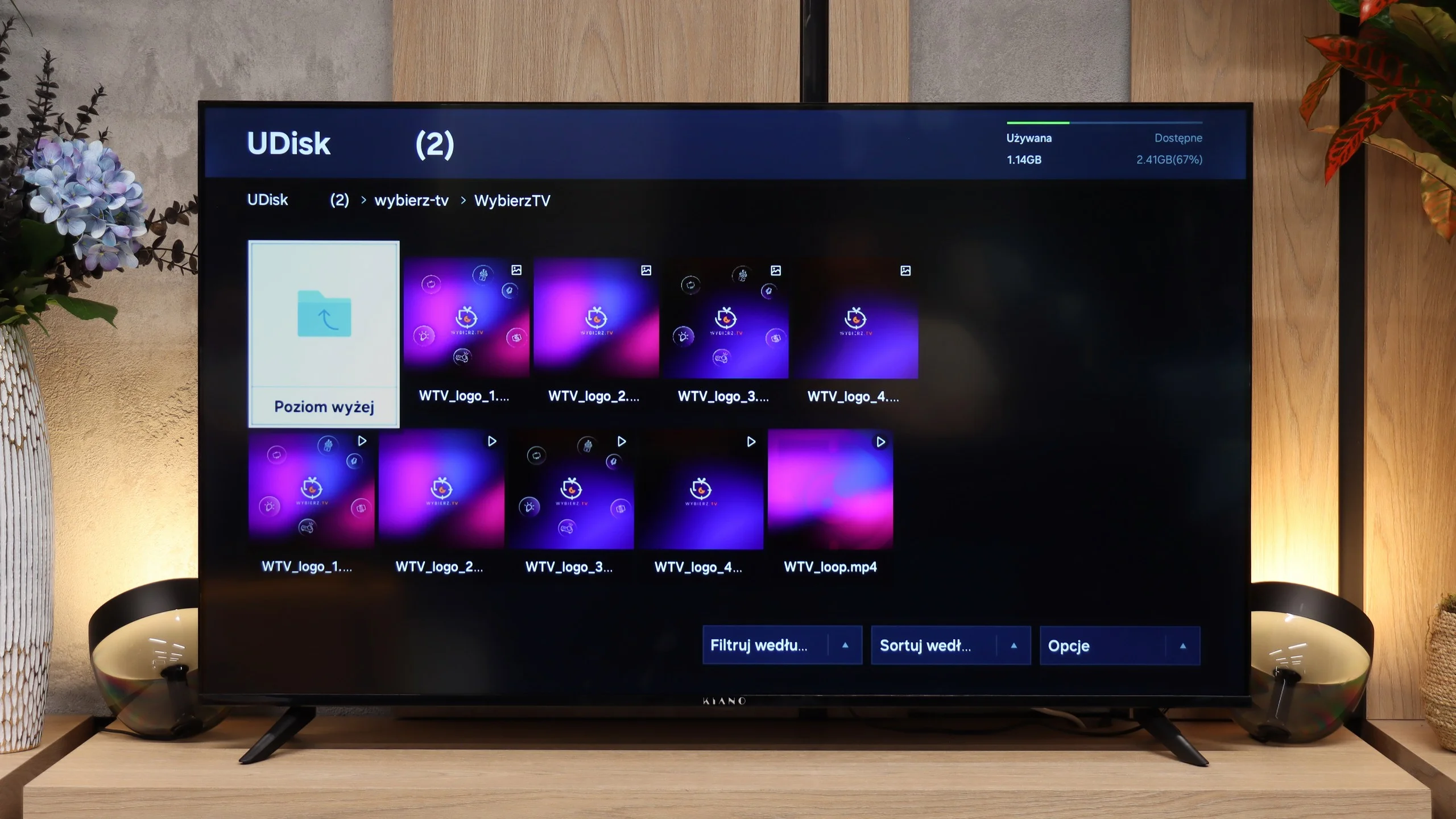
- Playing files from USB |
- Sound |
- Panel details
Kiano Elegance Tizen Review
Available screen sizes:
Complete the survey to find out the result
Panel type: LCD VA Refresh rate: 60Hz Brand: KIANO Resolution: 3840x2160 System: Tizen Model year: 2026
This review is an English translation of the Polish original. Read the original on Wybierz.tv.
Kiano televisions typically bring to mind lower-priced offerings, and the Elegance model is no exception. It's an affordable TV whose main role is to handle the basics and provide access to the most popular Smart TV features. However, there is one thing that strongly sets it apart from most cheap TVs from lesser-known brands. Instead of the Google TV platform popular in this segment, Kiano opted for Tizen OS, the platform well known from Samsung televisions. It's a rather unusual combination, which made us even more curious to see how it performs in practice.
KIANO Elegance - Our verdict
4.9
Overall rating
Kiano Elegance is primarily an option for people who want to spend as little as possible on a TV while still having convenient access to popular apps. The use of Tizen is a big plus here, because you get a system well known from Samsungs and you do not have to immediately buy a streaming stick to watch films or series. At a low enough price this could be a sufficient reason to consider this model. The digital video processing is also worthy of praise; in operation it resembles the solutions found in entry-level Samsungs. Kiano quite effectively smooths unwanted banding between colours in weaker sources, so heavily compressed footage looks better. It is, of course, not perfect, but remember the very low budget we are dealing with. The mere fact that this feature actually helps is commendable. Unfortunately the operating system does not make the Kiano run as smoothly as Samsung TVs. You sometimes have to wait for a response, and the USB player can take a long time to open files. The savings are also visible in the build quality and the screen’s capabilities. Low brightness makes viewing in a sunny room difficult and prevents it from delivering impressive HDR, while motion blur is noticeable during faster movement. Add weak sound to that, and buying separate speakers can quickly become another expense. That is why the Kiano Elegance really makes sense only if it is noticeably cheaper than the competition. It may be enough for everyday programmes or as a second TV in the home, but if you are only a small amount short of the price of a base model from a better-known manufacturer, we think it is worth paying the extra. Tizen and the decent video processing are strengths of this Kiano, but they do not compensate for all the cost-cutting. It is better to compare final prices than to assume that a TV with Samsung’s system will provide the same level of user comfort.
Advantages

Low price
Tizen OS with a wide selection of popular apps
Decent contrast thanks to a VA panel
Effective digital image processing (rarely seen at this price)
Low input lag
Very good text readability when connected to a computer
Supports AirPlay and wireless screen mirroring
Disadvantages

Low brightness
No wide colour gamut (no QLED / PFS)
Poor motion handling: noticeable smearing, a 60 Hz panel and no motion smoothing
No gaming features whatsoever
Slow operation
Very poor audio
Average build quality
 Movies and series in UHD quality
4.8
 Classic TV, YouTube
5.4
 Sports broadcasts (TV and apps)
3.9
 Gaming on console
5.3
 TV as a computer monitor
6.0
 Watching in bright light
3.7
 Utility functions
5.1
 Apps
Apps8.8
 Sound quality
3.6
Complete the survey to find out what fits your preferences
KIANO Elegance - Competing TVs in this price range
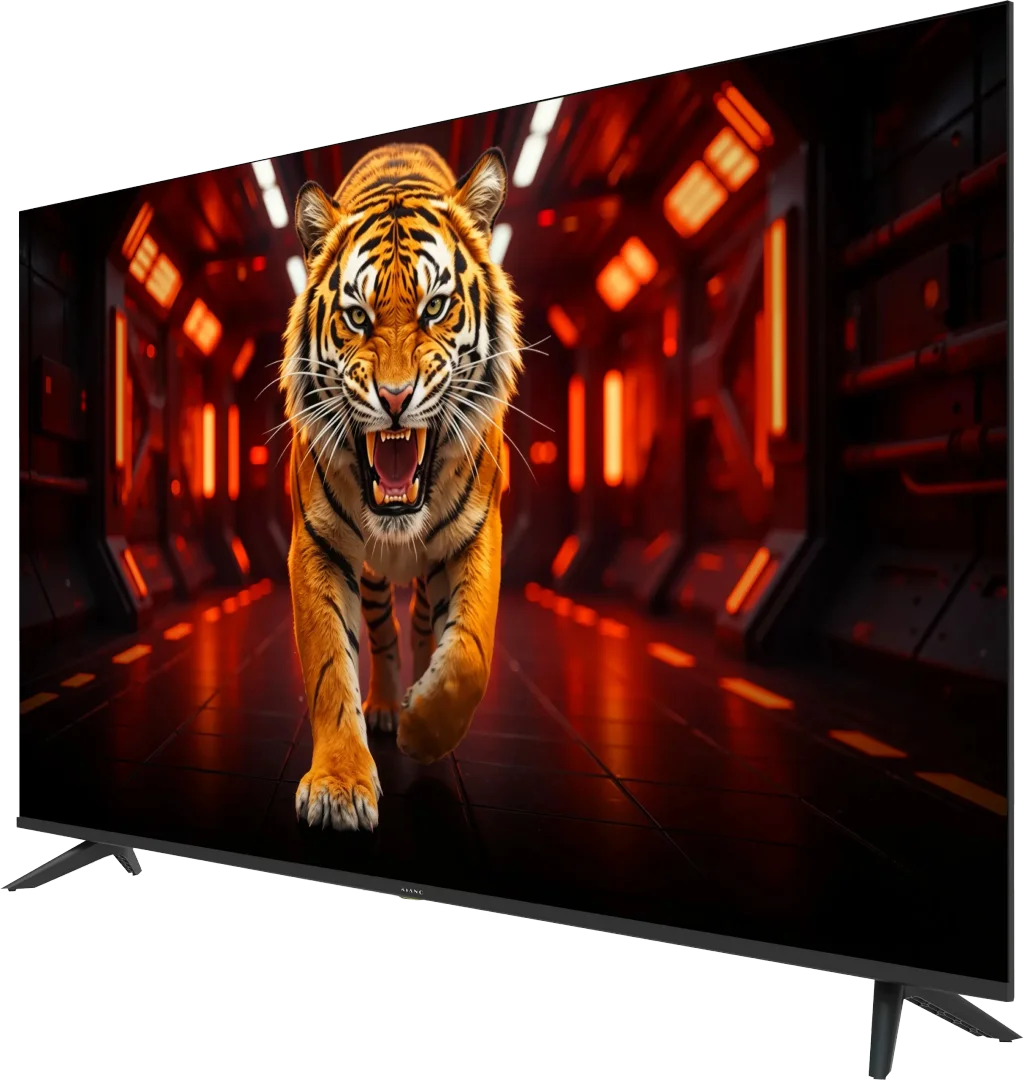
KIANO Elegance - TV appearance
HDMI inputs: 3 x HDMI 2.0, 0 x HDMI 2.1 Other inputs: RCA (Chinch) Outputs: SPDIF (Coaxial audio), eARC (HDMI), ARC (HDMI) Network Interfaces: Wi-Fi 2.4GHz, Wi-Fi 5GHz, Ethernet (LAN) 100Mbps
Build quality: Average
Stand type: Legs
Bezel color: Black

Stand: Fixed
Flat design: No
Accessories: Stand
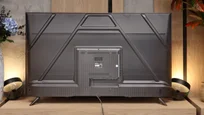
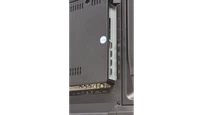
The Kiano Elegance doesn't really stand out compared with other budget TVs. At the front there are fairly slim black bezels surrounding the screen on three sides. As is typical, the bottom edge is slightly thicker and made of rather mediocre plastic. The back of the TV also reveals which price bracket we're dealing with. The casing is relatively thick, largely formed from a single piece of pressed sheet metal, and the electronics sit in a clearly protruding part of the housing. You can also see some shortcomings in the fit of the individual components. The bezels don't sit perfectly everywhere, and the materials used are simply cheap, especially the lower plastic trim, which very easily picks up fine scratches. So it isn't a TV that will impress with its build quality, but it's hardly a surprise. In this price bracket this is the sort of construction quality you can expect.
Buy at the best price
Select size:

KIANO Elegance - Contrast and black detail
4.8/10
Local dimming function: No


Result
3,350:1

Result
3,350:1

Result
2,650:1

Result
3,650:1

Result
2,400:1

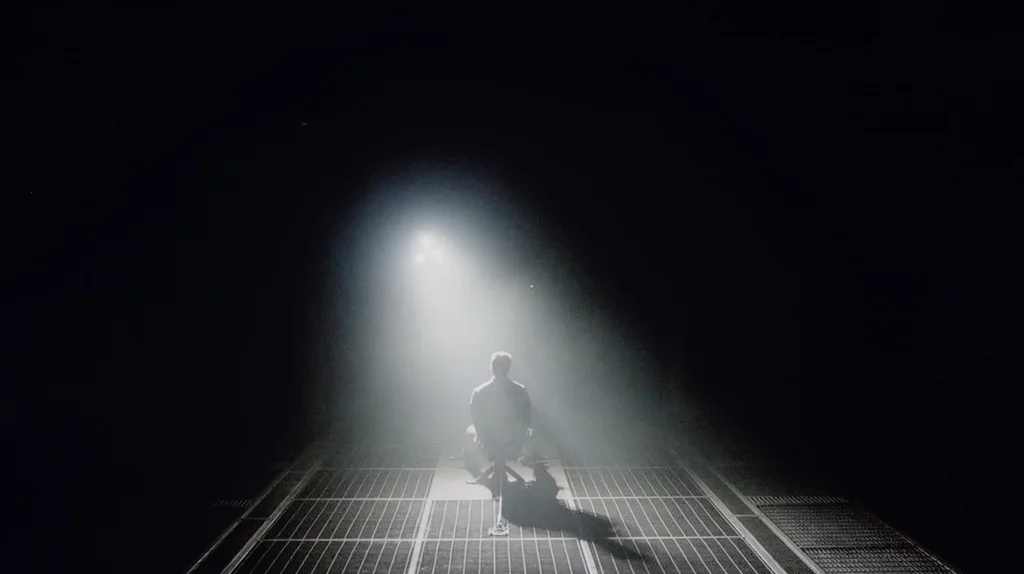
In the 55-inch variant we tested, the Kiano Elegance uses a VA panel, which by itself already provides rather good black levels. The contrast we measured was around 4000:1, which is typical for this kind of panel and clearly better than in TVs using IPS or ADS panels. That gives the picture decent depth in the evening, and blacks are not so heavily brightened. You should bear in mind, however, that the Elegance uses a conventional backlight without local dimming. This means the backlight is on all the time and the TV cannot dim selected parts of the screen. In that respect the difference compared with even basic Mini LED models is obvious. There, individual backlight zones can dim independently, so in dark scenes blacks can be much deeper. Kiano does not have those capabilities, but for a simple LCD TV its native contrast is quite respectable.
Halo effect and black detail visibility:
KIANO Elegance - HDR effect quality
3/10
Supported formats: HDR10, HDR10+, HLG
Luminance measurements in HDR:

Result
158 nit

Result
172 nit

Result
193 nit

Result
180 nit

Result
205 nit
The HDR effect on the Kiano Elegance is practically non-existent. The TV is simply too dim to deliver any noticeable improvement over a standard SDR picture. Our measured peak brightness is around 200 nits, which is definitely too low for bright elements, such as various lighting effects, to actually stand out on screen. HDR content will be reproduced, but without the impact that the format is meant to provide. In addition, the Kiano Elegance does not use any extra wide colour gamut technologies, like quantum dots or even a PFS filter. As a result, some of the vivid colours encoded in HDR films cannot be shown with proper saturation. This is especially apparent in more colourful productions, where the picture simply looks poorer than on TVs with a wide colour gamut. The Kiano Elegance is therefore much better suited to standard SDR material: broadcast TV, YouTube or older films and series. Their demands are much lower and match this TV's capabilities far better.
BT.2020 color gamut coverage and primary color luminance
| Data set | BT.2020 | P3 | R | G | B |
|---|---|---|---|---|---|
| Synthetic patterns | 60.0% | 81.9% | 45% | 48% | 50% |
| Film measurements | 60.1% | 81.9% | 44% | 47% | 50% |
 BT.2020
 BT.2020 and P3 – average color gamut coverage (percent of the target gamut).
R, G, B – average primary color luminance relative to target (percent).
Scene from the movie “Pan” (about 2800 nits)

Scene from the movie “Billy Lynn” (about 1100 nits)

When you compare the Kiano Elegance with a better television, and even more so with a reference monitor, the limitations we wrote about earlier quickly become apparent. The lack of adequate brightness and colour saturation is noticeable in most HDR material, even the less demanding examples. Bright elements lack proper punch, and vivid colours are clearly paler than they should be. On the plus side, Kiano does not try to forcefully mask its limitations. It does not over-process the image and reasonably adapts the content to its capabilities. As a result, the brightest details are not often severely blown out, and the overall picture remains readable. So it looks better than measurements alone might suggest. Still, it is not the kind of image we should associate with a true HDR effect.
HDR luminance chart:
Interestingly, according to the manufacturer, the Kiano Elegance should support neither HDR10+ nor Dolby Vision. In practice, however, we managed to play HDR10+ content and the TV recognised it without any problem. That said, it made little difference. The picture looked practically the same as with standard HDR10. There were still many blown-out highlights, and the TV did not handle adjusting the image to its limited capabilities any noticeably better. It's a shame, because in such a dim TV dynamic metadata could have helped a lot. Dolby Vision, or a properly functioning HDR10+, would allow better adjustment of the brightness of individual scenes and get a bit more out of this screen.
Static HDR10

Dynamic: HDR10+

Factory color reproduction
4.8/10
In Film mode the colours on the Kiano Elegance are quite decent, especially for a TV at this price point. However, that does not mean the picture is properly calibrated straight away. This is most apparent in the white balance, which lacked red. As a result the image had a slightly cooler character and some skin tones and warmer colours did not look as natural as they should. On top of that, both the SDR gamma and the EOTF curve in HDR were driven too high. Put simply, the TV brightened the image more than the source material intended. In SDR this produced a slightly brighter, more 'TV-like' image, but it also robbed it of some depth. In HDR this behaviour compounded the panel's limitations, because at such low brightness the TV had even less headroom to correctly render brighter parts of the image. The biggest limitations, however, appeared in HDR. The colour gamut encoded in such material often exceeds the Kiano Elegance's capabilities, which does not employ any gamut-expanding solution. More saturated reds, greens and blues are therefore rendered much more subdued than they should be. In less demanding scenes this is not yet very noticeable, but with more colourful films the difference compared with TVs that have a wide colour gamut becomes very clear.


Color reproduction after calibration
6.5/10
Contrary to appearances, even an inexpensive TV like the Kiano Elegance offers quite a lot of calibration options. We were particularly successful at improving the white balance. After correction the slightly cool cast of the image disappeared and the colours became noticeably more natural. We also managed to better set the gamma and the overall image characteristics in SDR. Despite our efforts, it quickly became clear that further limitations no longer stem from the settings but from the TV’s own capabilities. In SDR the Kiano can look genuinely good. Broadcast TV, YouTube, sport and older films can have natural colours and a pleasing image. It’s much worse in HDR. Here calibration alone cannot compensate for the lack of brightness and a wide colour gamut. The TV simply cannot reproduce some of the more saturated colours or sufficiently strong highlights. So while you can get a really decent picture from it in SDR, HDR remains clearly beyond its abilities.


KIANO Elegance - Smoothness of tonal transitions
8.5/10
The Kiano Elegance handles colour gradation quite well. In most scenes the transitions between individual shades are smooth and there is no strong banding or distinct bands that can be a problem in the cheapest televisions. The biggest limitations only appear in darker scenes. With very subtle transitions in greys or shadows you can notice slight posterization and colour separation. However, this is not something that will be noticeable all the time. With typical content Kiano fares reasonably well in this respect, especially given its price.








Image scaling and smoothness of tonal transitions
6.5/10
 Smooth transition function
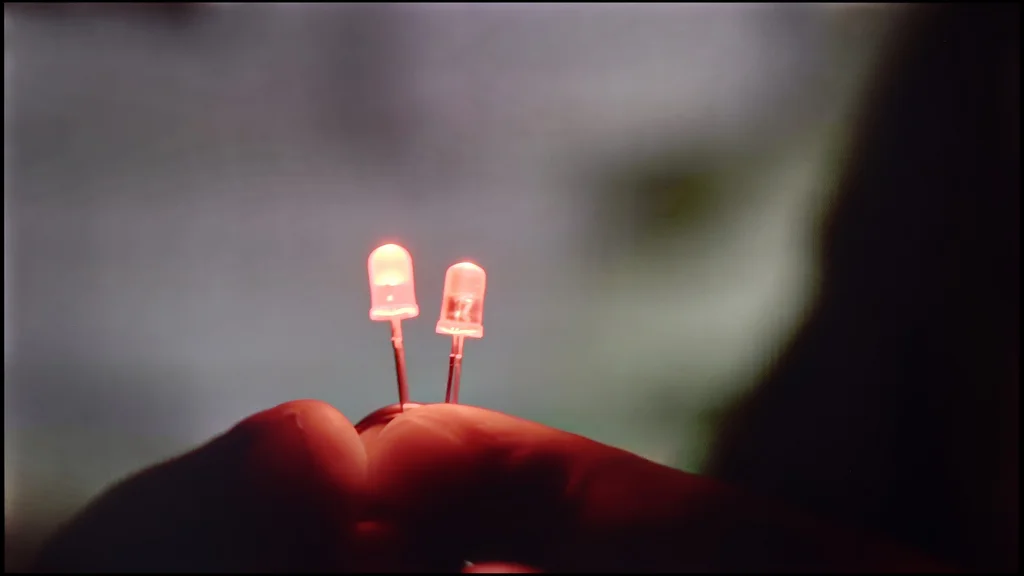
For a relatively inexpensive TV, the upscaling and digital image processing in the Kiano Elegance perform really well. The scaling of lower-resolution content itself is decent. It is not, of course, at the level of the best TVs on the market, but ordinary broadcast television and Full HD content look quite good on a 4K screen. We were much more surprised by its ability to smooth unwanted tonal transitions. Many TVs in this price bracket either do not offer a similar function at all, or its effect is practically invisible. Kiano, using noise reduction known from Samsung TVs, can quite effectively mask heavy compression, colour banding and other imperfections of poorer sources. There is just one catch. The feature works fairly aggressively and, along with the imperfections, can also remove some fine detail or natural film grain. So with high-quality content we would probably leave it off. However, if you are watching older recordings, heavily compressed broadcasts or poor-quality material from the internet, it is worth experimenting with it. In such conditions it can actually improve perceived image quality.
KIANO Elegance - Blur and motion smoothness
2/10
Maximum refresh rate of the panel: 60Hz
Film motion smoothing option: No
Blur reduction option: No
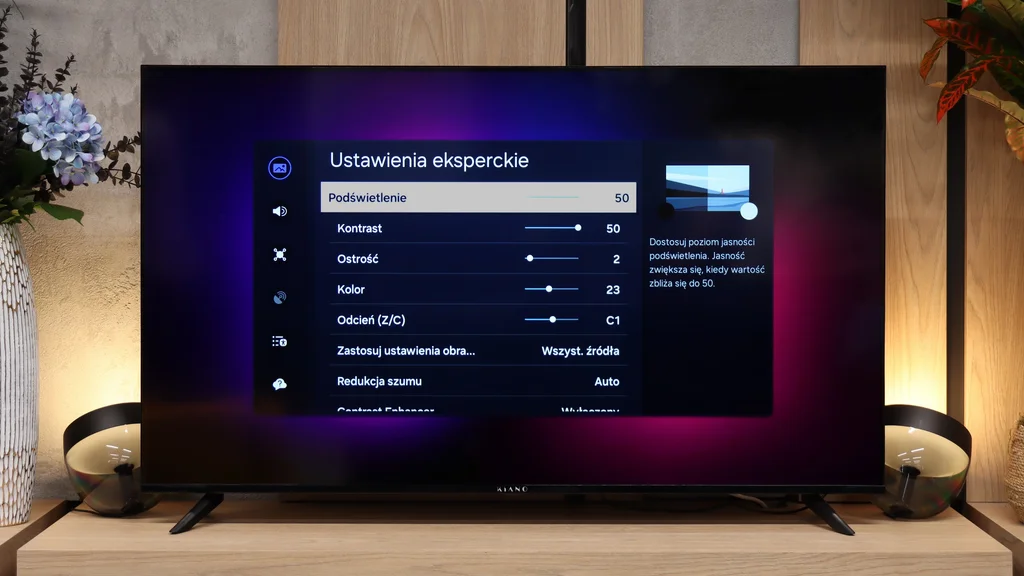
In terms of motion handling the Kiano Elegance performs rather poorly. The TV has a 60 Hz panel, but at this price point that's not surprising. What’s more problematic is the complete lack of any motion interpolation feature. In practice that means the TV displays content at exactly the frame rate at which it was recorded. That isn't a major issue for films, but with sport or fast panning shots you can clearly see that motion isn't particularly smooth.
Blur (native resolution, maximum refresh rate):



Smearing is also evident. The VA panel is not among the fastest here, so moving objects, especially on a dark background, can leave a fairly pronounced 'trail'.
KIANO Elegance - Console compatibility and gaming features
1.6/10
 ALLM:
No
ALLM:
No - VRR:
No
- VRR range:
No
- Dolby Vision Game Mode:
No
- Correct implementation of HGIG:
No
- 1080p@120Hz:
No
- 1440p@120Hz:
No
- 4K@120Hz:
No
- Game bar:
No
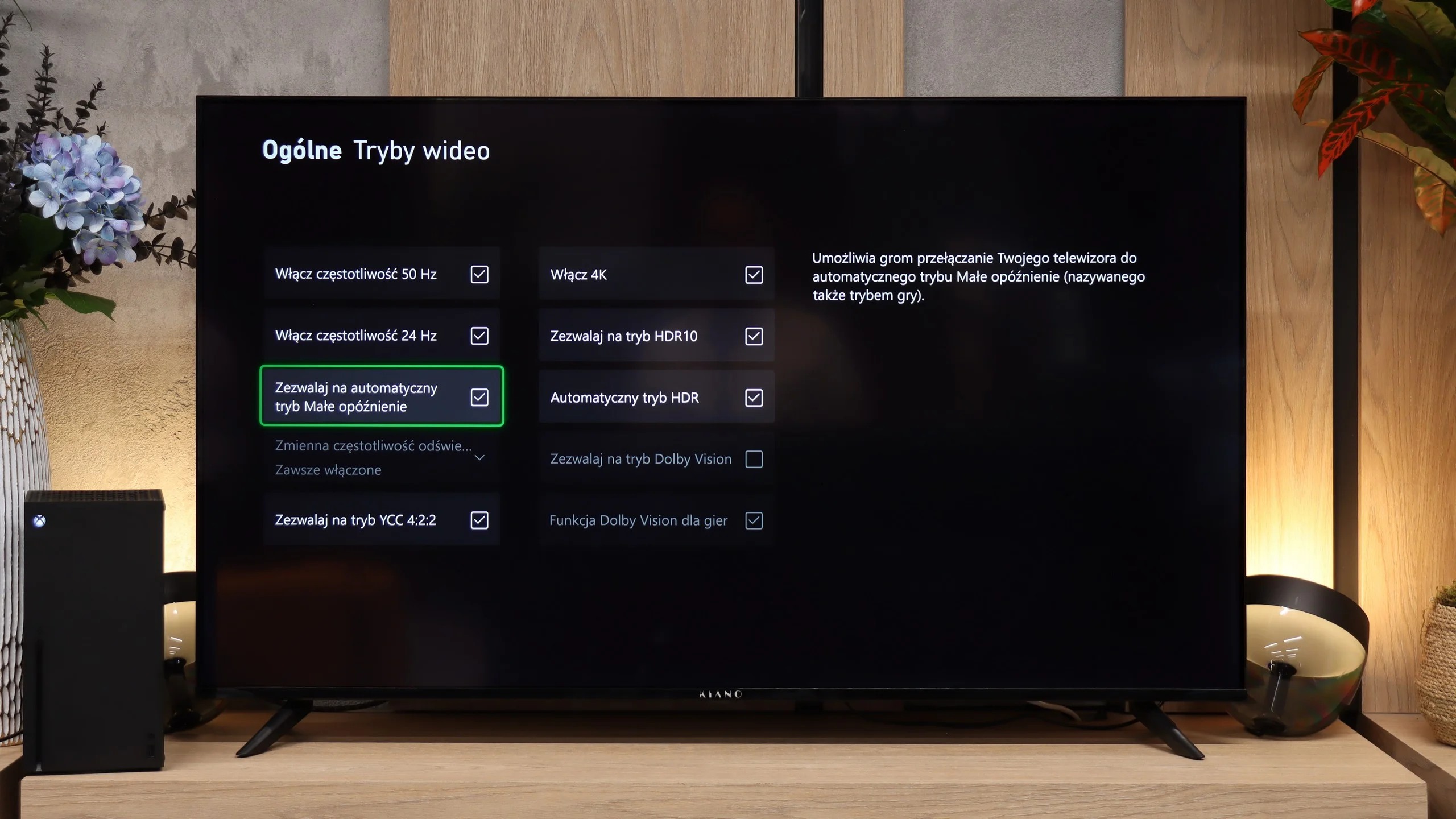
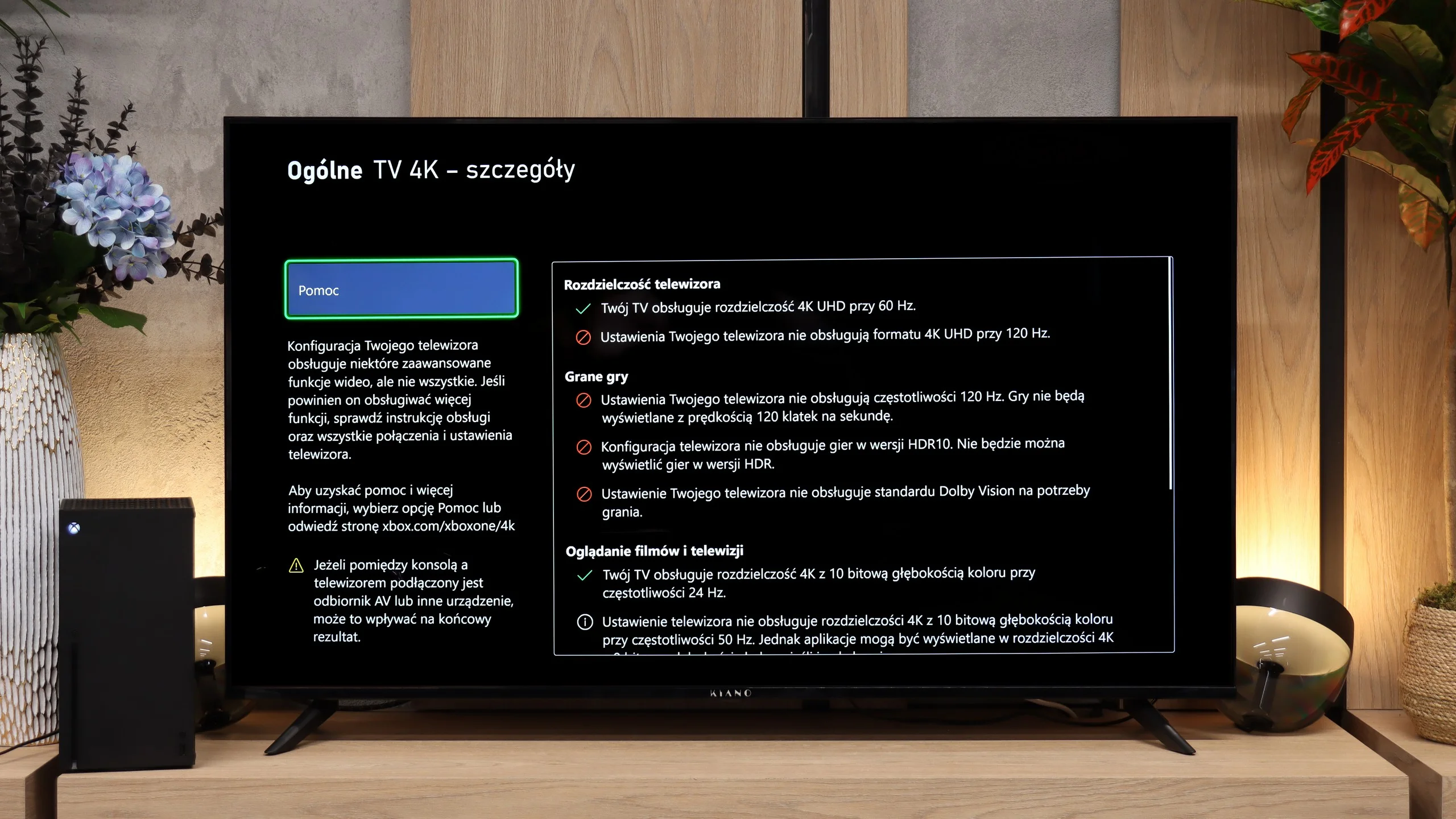
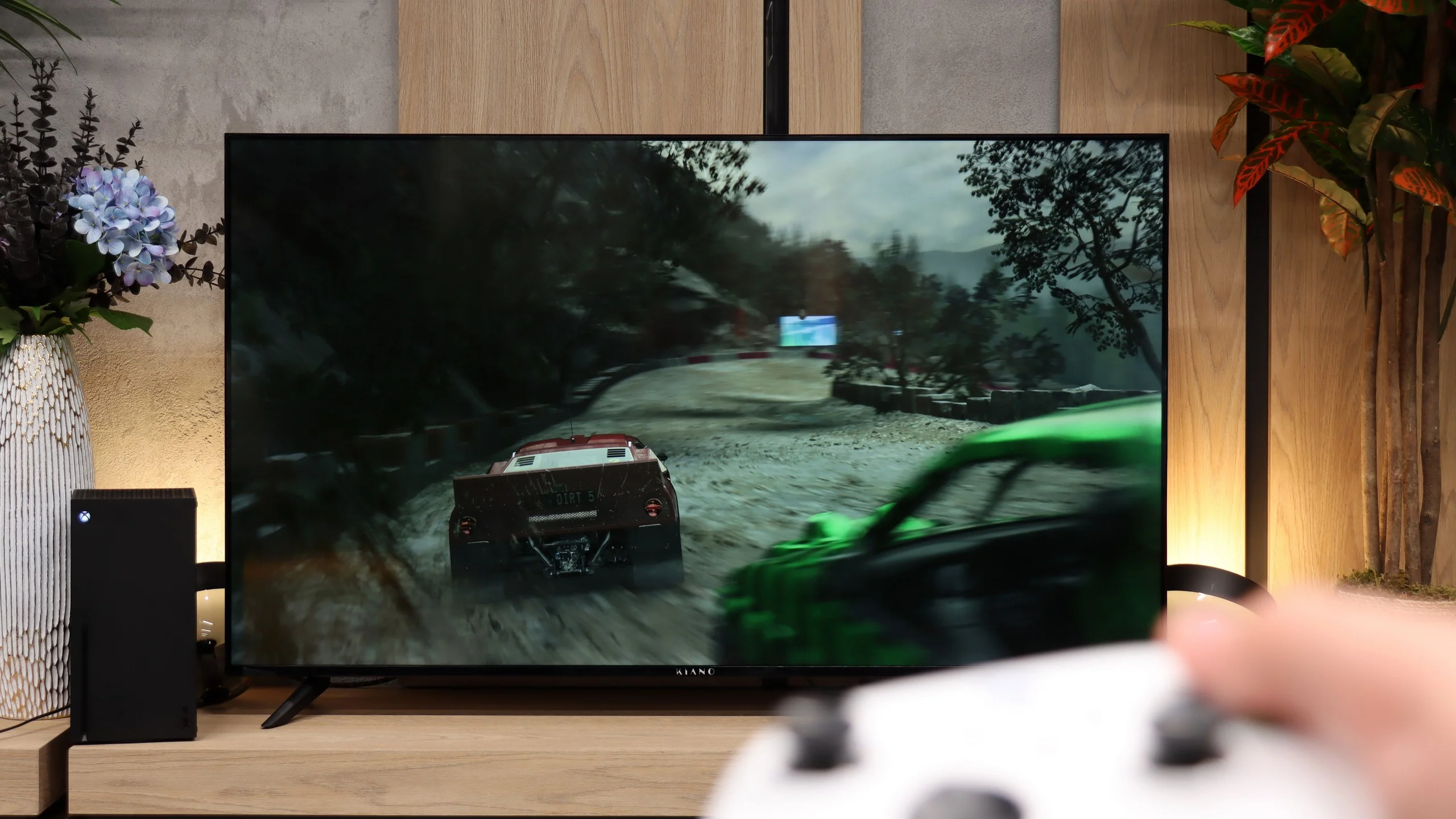
The Kiano Elegance lets you connect a console and play, but its ambitions basically stop there. The panel supports up to 60 Hz and there is no VRR, which helps when frame rates drop. It even lacks ALLM, i.e. automatic switching to a low-latency mode, so you have to take care of the TV’s settings yourself. That’s a pity, especially since input lag is low in the appropriate mode. However, if a console is one of the main reasons you’re buying a TV, it’s worth looking for something with greater capabilities.

KIANO Elegance - Input lag
9.8/10
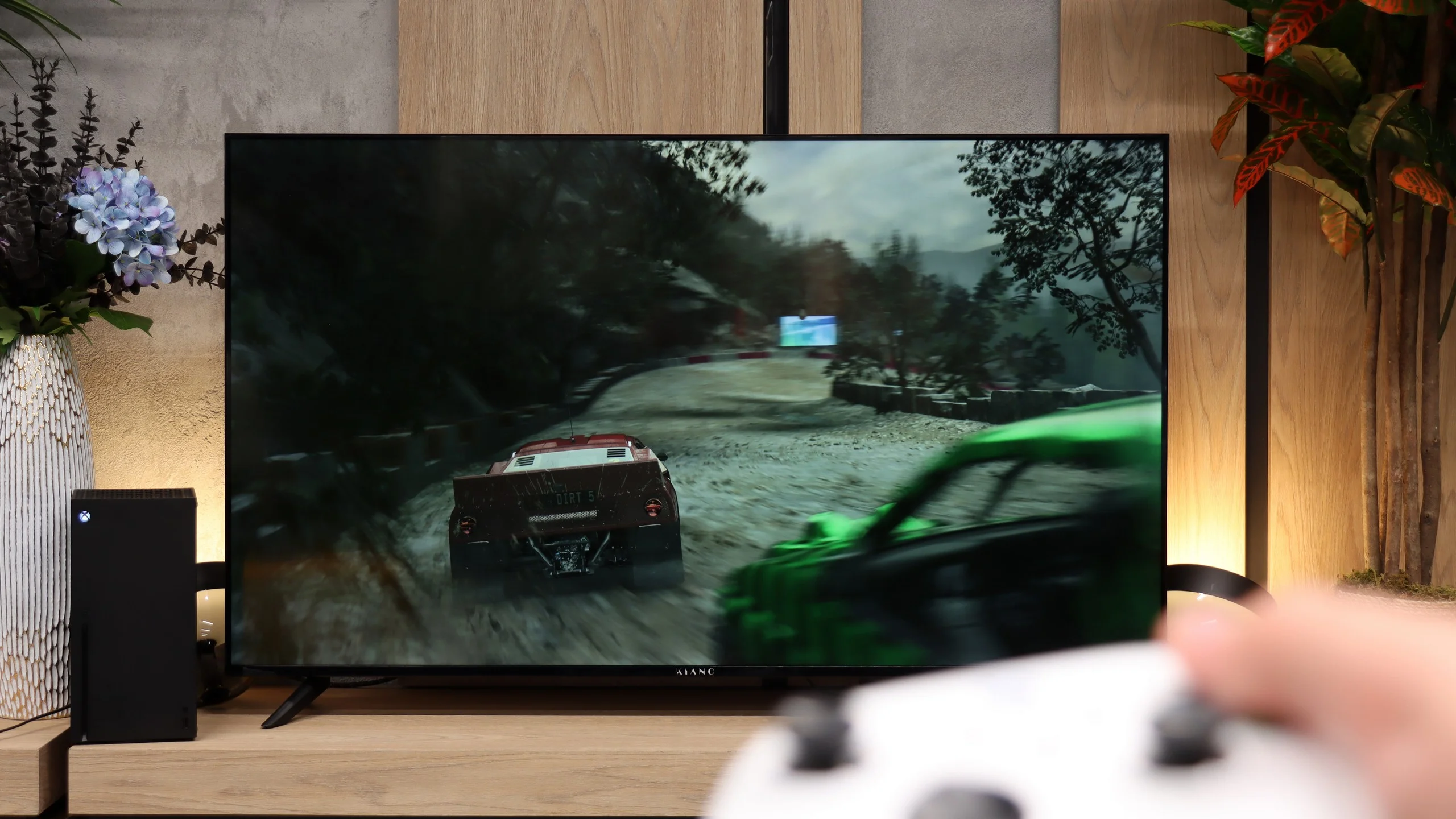
Although it has few features for gamers, the Kiano Elegance performs very well in terms of input lag. We measured around 14 to 15 ms at 60 Hz, both in Full HD and in 4K. Turning on HDR also doesn't increase input lag. Response to controller inputs is therefore quick, and while gaming you don't feel the TV noticeably delaying the controls. This is one of the model's strengths.
| SDR | HDR | Dolby Vision |
|---|---|---|
| 1080p60: 15 ms | 2160p60: 15 ms | |
| 2160p60: 14 ms |

KIANO Elegance - Compatibility with PC
6/10
Chroma 444 (max. resolution and refresh rate): Yes
Font clarity: Very Good
Readability of dark text and shapes: Very Good
Input lag in PC mode (4K, max. refresh rate): 15ms
Matrix subpixel arrangement: BGR
Max refresh rate: 60Hz
G-Sync: No
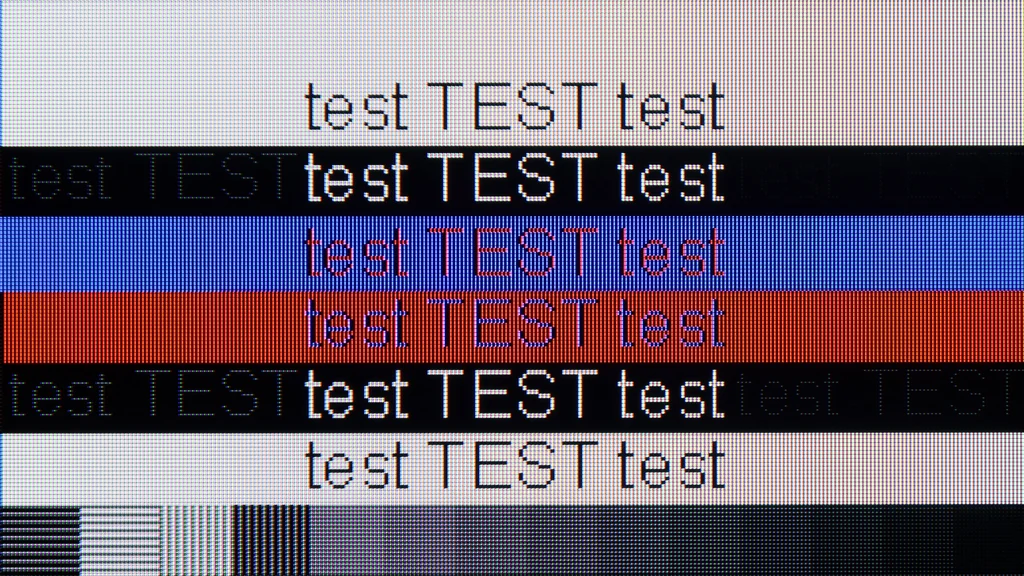
For browsing the internet, reading documents or displaying images from a laptop, the Kiano Elegance performs quite well. It supports 4:4:4 chroma subsampling, so small, colourful letters remain legible. There are also no major issues with rendering dark text. Despite using a BGR subpixel arrangement, font legibility in our tests was very good.
When gaming on a PC, however, the limitations described earlier reappear. The refresh rate maxes out at 60 Hz and G-Sync is not supported. A low input lag of around 15 ms provides responsive control, but it will not improve the clarity of moving objects. As a large screen for basic tasks the Kiano manages well, but there are better options for fast-paced games.
KIANO Elegance - Viewing angles
2.8/10
Brightness drop at an angle of 45 degrees: 63%
The Kiano Elegance is best watched sitting directly in front of the screen. Move to the side and the colours noticeably lose saturation, and the image becomes much less contrasty. At a 45-degree angle we measured a brightness drop of about 63%, so the difference is hard to miss. This is a typical weakness of VA panels and something to bear in mind if the TV will be placed opposite a wide sofa or viewed from different parts of the room.
KIANO Elegance - Daytime performance
3.7/10
Panel finish: Satin
Reflection suppression: Decent
Black levels during daytime: AbsorptiveBlack-Decent
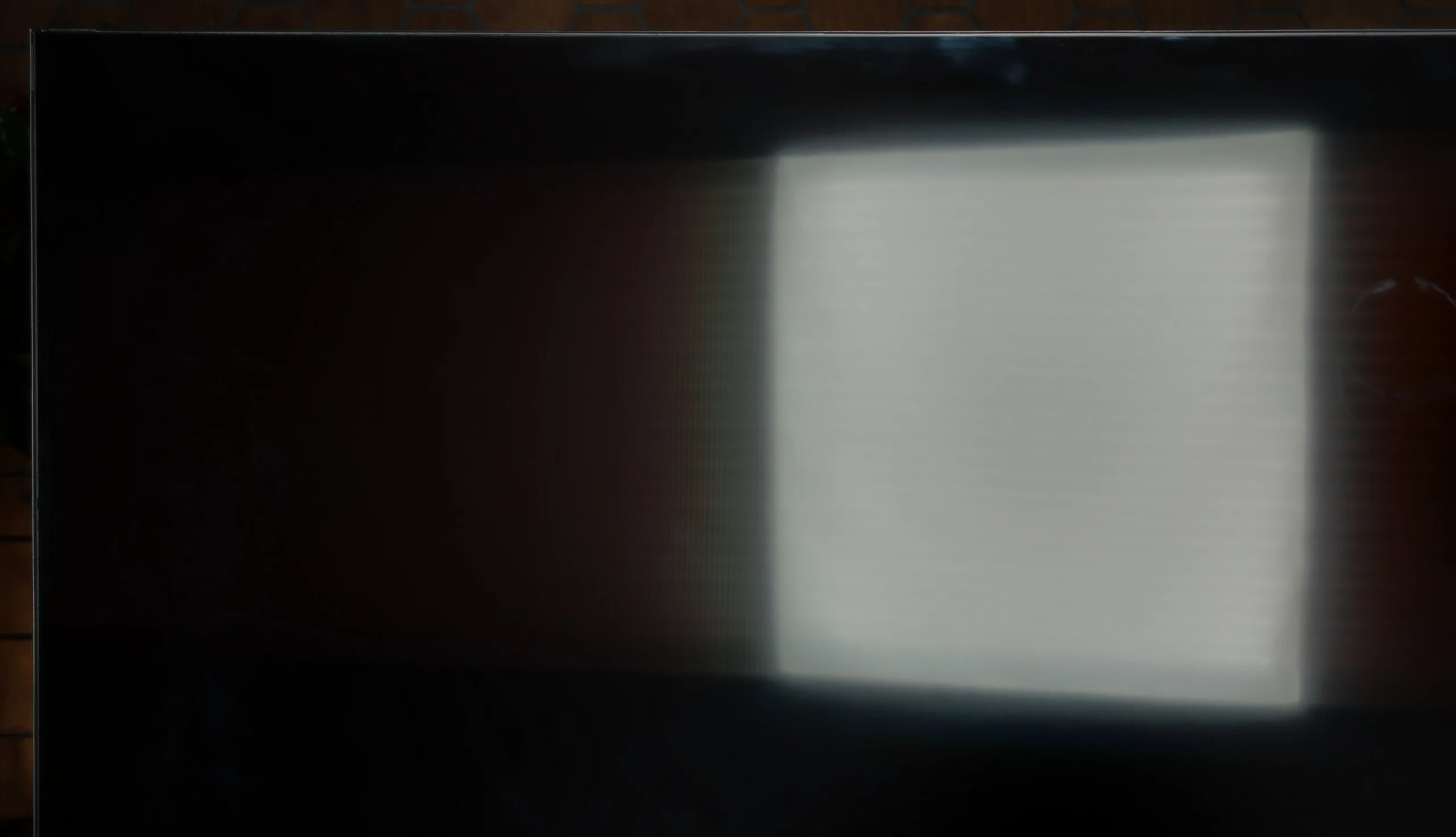
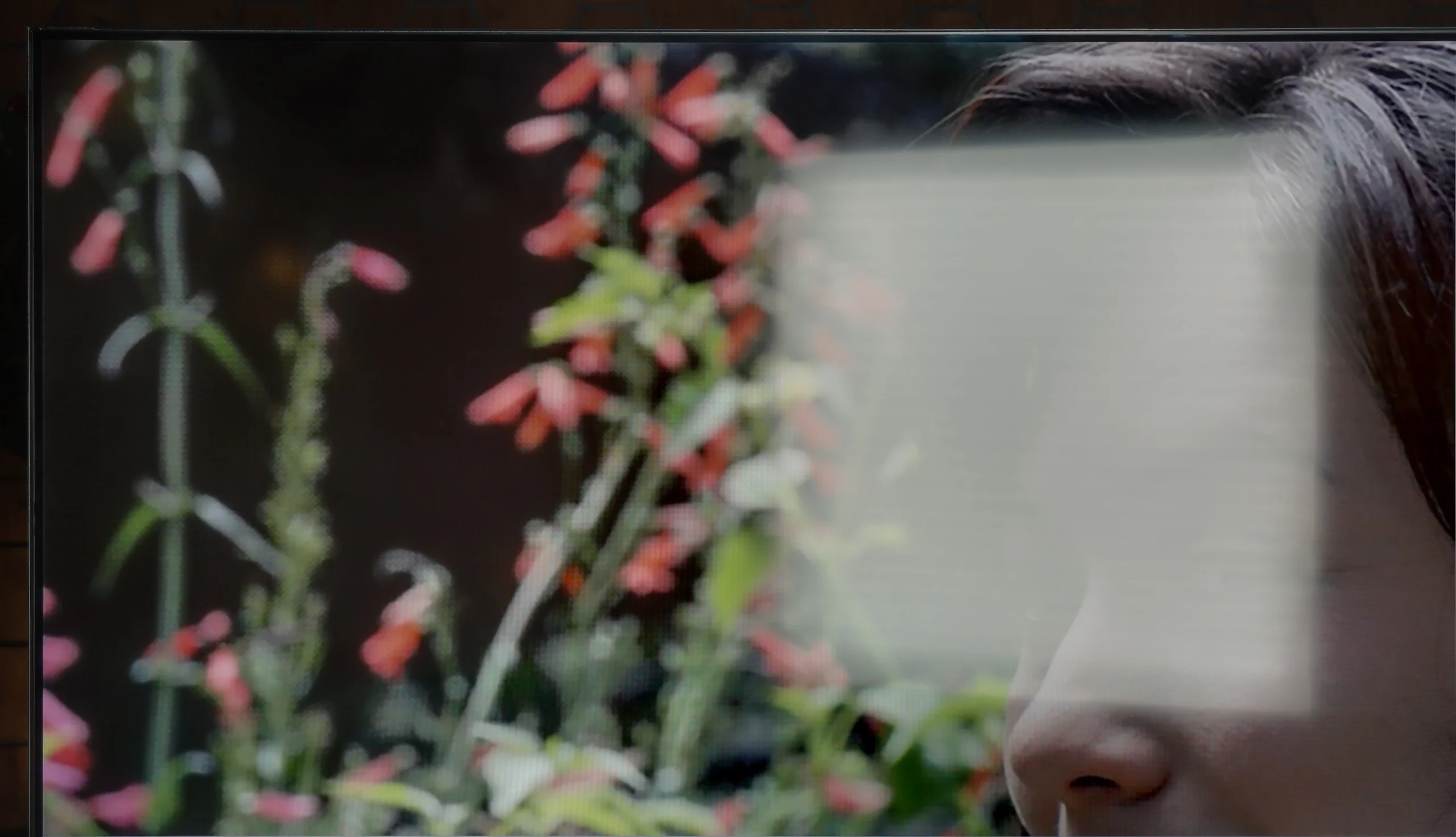
Kiano Elegance will simply be too dim for a very sunlit living room. Average brightness is about 215 nits, so during the day the picture is easily washed out by light coming through the windows. Especially with darker films, you may need to close the blinds. The satin coating does a decent job of reducing reflections, and blacks in a lit room do not look bad, but that is not enough to make up for the low brightness. The TV will be much better suited to a less sunlit room or to evening viewing.
Panel brightness
Kiano Elegance Tizen: 215 cd/m2
KIANO Elegance - TV features
5.1/10
System: Tizen
System performance: Average
- HDMI inputs: 3 x HDMI 2.0, 0 x HDMI 2.1
- Other inputs: RCA (Chinch)
- Outputs: SPDIF (Coaxial audio), eARC (HDMI), ARC (HDMI)
- Network Interfaces: Wi-Fi 2.4GHz, Wi-Fi 5GHz, Ethernet (LAN) 100Mbps
- TV reception: DVB-T, DVB-T2, DVB-S, DVB-S2, DVB-C
Classic features:
- Recording to USB (terrestrial TV): No
- Recording programming: No
- Picture in Picture (PiP): No
- RF remote control (no need to aim): Infrared
- Backlit remote control: No
- Teletext: Yes
- Audio only mode: Yes
- Bluetooth headphones support: Yes
- Simultaneous Bluetooth headphones & TV audio: Yes
Smart features:
- AirPlay: Yes
- Screen mirroring (Windows Miracast): Yes
- Voice search: No
- Voice search in native language: No
- Ability to connect a keyboard and mouse: Yes
Tizen in the Kiano TV
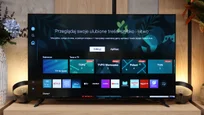
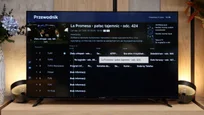
Tizen is one of the main reasons to consider this model. It gives access to many popular apps, so you don't necessarily need an external streaming device to watch series or YouTube. Bear in mind, however, that the same system does not guarantee the same ease of use as in more expensive Samsung models. On the Kiano the responsiveness is average, and you may sometimes have to wait a moment for the menu to react. There is no voice search, so titles must be entered with the remote control. A convenient addition is AirPlay and the ability to wirelessly stream the picture from a computer.
Everyday use
The basic TV functions are in place, but there is no USB programme recording or picture-in-picture. The remote uses infrared, so it must be pointed at the TV, and its buttons are not backlit. It is useful, however, that you can use Bluetooth headphones and the speakers at the same time. This allows one person to listen through headphones (for example an older person) without taking the sound away from others in the household. For connecting devices there are three HDMI 2.0 inputs, which are sufficient for 4K at 60 Hz. A soundbar can be connected via eARC, and an analogue RCA input is provided for older equipment.
Sound connection options
HDMI audio:
Other audio outputs:
- Coaxial: Yes
Wireless audio:
- Bluetooth: Yes
Supported audio formats (external HDMI eARC audio):
- Dolby Digital Plus 7.1: Yes
- Dolby True HD 7.1: No
- Dolby Atmos in Dolby Digital Plus (JOC): Yes
- Dolby Atmos in Dolby True HD: No
- DTS:X in DTS-HD MA: No
- DTS-HD Master Audio: No
Senior accessibility
- Numeric keyboard on TV: Yes
- Font size adjustment: Yes
- Audio description: Yes
KIANO Elegance - Apps
8.8/10






















KIANO Elegance - Playing files from USB
8/10
| Maximum photo resolution: | Supported photo formats: |
|---|---|
| 4 Mpix | JPEG |
| 6 Mpix | HEIC |
| 8 Mpix | PNG |
| 10 Mpix | GIF |
| 12 Mpix | WebP |
| 16 Mpix | TIFF |
| 20 Mpix | BMP |
| 24 Mpix | SVG |
| 28 Mpix | |
| 32 Mpix |
The USB player in the Kiano Elegance supports most popular formats, so opening typical films, photos or music should usually not be a problem. However, actually using it is less satisfactory. During testing it had its 'moments of weakness' and could take a very long time to open individual files. Sometimes it took so long that you could start to wonder whether the TV was still loading something or had already frozen. It's sufficient for occasionally playing something from a USB stick, but browsing a larger collection can require a great deal of patience.
KIANO Elegance - Sound
3.6/10
88dB
Maximum volume

Supported codecs (TV speakers)
Dolby Digital Plus 7.1
Dolby True HD 7.1
Dolby Atmos in Dolby Digital Plus (JOC)
Dolby Atmos in Dolby True HD
DTS:X in DTS-HD MA
DTS-HD Master Audio
Sound is one of the weaker aspects of the Kiano Elegance. The TV can get fairly loud, measuring 88 dB, but loudness alone does not translate to sound quality. For casual viewing you can stick with the built-in speakers, but for films or music it's worth budgeting for a separate sound system. Connecting a soundbar via HDMI eARC should not cause problems. The TV also supports Dolby Atmos over Dolby Digital Plus, but it does not play Dolby TrueHD or DTS-HD tracks.
Sound Quality Test:
Acoustic Measurements
88dBC (Max)
75dBC
KIANO Elegance - Panel details
Software version during testing: T-24RSSFUCVTDEUC-1201.0
Panel uniformity and thermal imaging:

Backlight Type: White LED

Founder and originator of the "ChooseTV" portal

Journalist, reviewer, and columnist for the "ChooseTV" portal

michal-woloszyn-title
Reader comments
Comments are provided by the external service Disqus (Zeta Global). Once loaded, Disqus may set cookies and process data about your activity.
We will remember your choice on this device. Provider's privacy policy