 Redakcja Choose TV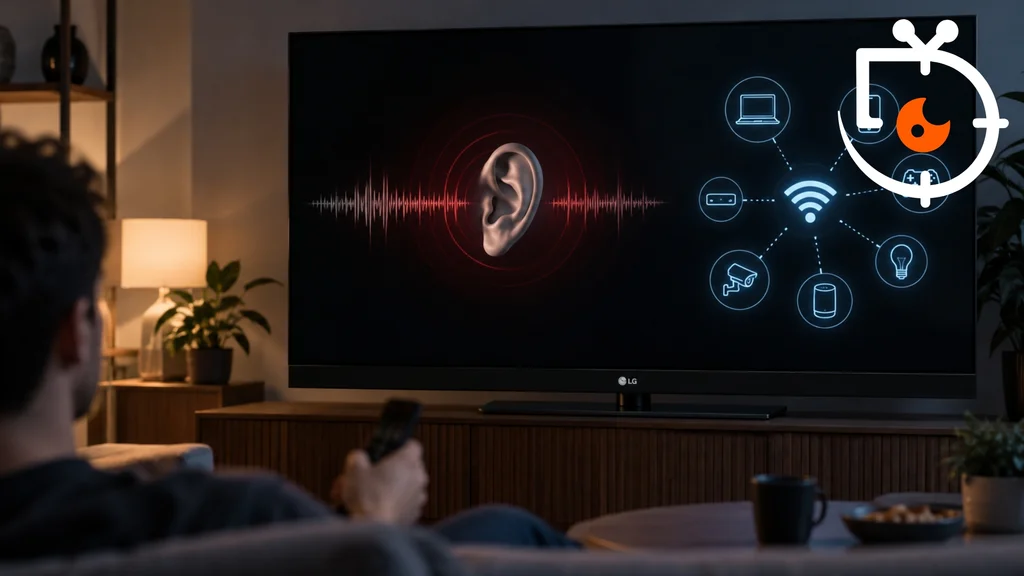
A television is increasingly not just a screen for watching films and series, but a fully fledged device connected to the home network. However, a new investigation by Gamers Nexus and the security researchers working with it shows how broad the range of information collected by modern Smart TVs can be. In the case of LG TVs the researchers detected, among other things, scanning of the local network, identification of devices on it and the collection of information about nearby Wi‑Fi networks. Even greater controversy was caused by microphone tests which, the researchers say, point to the possibility of recording and transcribing conversations even when the TV screen is switched off. LG responds that the findings are false and maintains that voice is processed only in specific situations.
LG TVs can scan the home network
One of the most important elements of the investigation is the analysis of LG TVs' network traffic. Researchers used, among other tools, Wireshark, a tool that lets them monitor a device's network communications. Tests carried out on OLED televisions were intended to show that the devices can scan the local network and detect other kit present in the same environment.
Identified devices may include, for example, smartphones, smartwatches and other devices connected to the home router. According to the researchers, the TV may obtain information about other devices' IP addresses and also analyse nearby wireless networks. Collected data includes the names of nearby Wi-Fi networks, their signal strength and channel numbers.
From the user's point of view, this means the TV may have a far broader awareness of the environment it is in than might be expected. It's not just information about the TV itself or the programmes being watched. The device may also know what other devices are operating on the same network.
LG, however, insists that simply detecting devices on the network is not something unusual. The company says the feature is used, among other things, to provide device connectivity, content sharing and support for smart home functions. According to the manufacturer, this is a standard feature also found in other Smart TV sets and smart home devices.
The biggest controversy concerns the microphone
Tests related to the microphone raised even more questions. Researchers say that once the voice feature is activated the TV can capture ambient sound and convert speech into text. Under normal conditions the feature is activated, among other things, by the voice command "Hi LG" or by using the voice button on the remote control.
According to tests carried out, the so-called listening window can remain active for about 10-15 seconds after the command is given. This means that during that time the device may still process speech within its range. It was this aspect that led researchers to start checking the TV’s behaviour outside normal viewing mode.
Gamers Nexus claims it was possible to record and transcribe conversations even with the TV screen switched off. Even more significantly, according to the tests presented the device could store collected data even without an active internet connection. After reconnecting to the network the saved information could be transmitted.
Such a mechanism is especially relevant from a privacy standpoint. Simply disconnecting the TV from the internet does not necessarily mean the device immediately stops collecting data. If information remains stored locally, it may only be sent once the connection is re-established.
LG denies that televisions are secretly recording conversations
The manufacturer did not leave these allegations unanswered. LG has categorically denied claims that its TVs continuously record users' conversations. The company explains that processing of voice data occurs only when the user holds down the appropriate button on the remote or when the TV recognises a previously activated wake word, such as Hi LG.
According to LG, if the wake word is not recognised, voice data is not transmitted to servers. The manufacturer also says that the wake-word detection itself happens locally on the TV, and any processed data is then immediately deleted. The company therefore describes the conclusions presented in the Gamers Nexus piece as untrue.
That means there are currently two different interpretations of the test results. The researchers say they observed behaviour suggesting audio is being recorded and stored even in standby mode, while LG maintains that the TVs do not record surrounding conversations except in situations where the voice function has been activated. The dispute therefore concerns not only the existence of the feature itself, but also how and when it is triggered.
Your TV may know what you watch
A separate element of the whole issue is Automatic Content Recognition, known as ACR. It is a technology that allows the television to recognise content displayed on the screen. It is not limited to apps run directly on the Smart TV. According to materials on how ACR works, the analysis can also cover content originating from devices connected via HDMI and other inputs.
In practice, this means the television may be able to determine what a user is watching, whether they are using the TV's own apps, a set-top box, a console or another source of video. The collected information can then be used to create a viewing profile and to tailor advertisements.
It should be emphasised, however, that ACR is not a technology developed exclusively by LG. Similar solutions are used by many Smart TV manufacturers and for years have formed part of the business model of modern televisions. The difference in this current investigation is the scale of information researchers attribute to LG's ecosystem. It may include not only knowledge of what is displayed on the screen but also information about devices present in the household.
LG also uses data in advertising
Collecting data has concrete business value for manufacturers. LG runs its own advertising business under the name LG Ad Solutions, which uses data related to Smart TV sets to create and measure advertising campaigns. On the service's official website the company currently states a scale of about 216 million LG Smart TV sets worldwide.
It is precisely the way these data are presented to advertisers that has become one of the points of criticism. Marketing materials from LG Ad Solutions are said to emphasise the ability to link information about TV viewing with other devices in the household. In one of its materials the company's representatives described the system's capabilities with the slogan "we own the glass", referring to the television as a source of user data.
From an advertiser's perspective such data can be very valuable. They not only allow checking which content a user watches but also enable the use of information about their behaviour to target adverts to other devices. That is why the television becomes part of a larger advertising ecosystem rather than just a screen displaying adverts.
LG says ACR is optional
In the case of ACR, LG presents the situation differently than researchers suggest in their materials. The company says the automatic content recognition feature is offered on an opt-in basis. According to the manufacturer, the user can decide whether to share ACR data in order to receive personalised recommendations, services and advertising.
LG also assures that if the user does not accept the relevant optional consent, ACR data will not be used for advertising purposes. This is an important caveat, as it means that some personalisation features can, according to the manufacturer, be turned off during the TV setup.
However, user awareness remains a problem. Smart TV presents many terms and conditions, consents and privacy settings during setup. In practice many people rush through this process to start using the device as quickly as possible. As a result, some users may not realise which information is associated with particular features.
The TV can become the hub of information about the whole home
The most controversial aspect stems from the combination of all these technologies. ACR alone means analysing the content being watched. Scanning the network itself may be necessary for inter-device communication functions. The microphone, meanwhile, may be used to handle voice commands.
The problem arises when all these elements operate simultaneously. The TV can then obtain information about what the user watches, which devices are present in their home and when they use voice features. It is precisely this combination of data that makes a Smart TV potentially a far more valuable source of information for advertisers than a traditional television.
LG Ad Solutions officially emphasises the possibility of using ACR data and combining them with other information for ad targeting and measuring effectiveness. The company promotes its platform as a solution that spans multiple devices and viewing channels.
However, that does not automatically mean that every LG TV owner is constantly and covertly monitored in the way suggested by the most alarmist headlines. Some of Gamers Nexus's allegations are disputed by LG, and ACR and voice features are, according to the manufacturer, intended to operate in line with specified user consents. It is therefore worth separating confirmed functions from interpretations of the results of the tests carried out.
The problem is not limited to LG
There is also a broader context to the whole matter. ACR is not a solution unique to LG. Automatic content recognition technology is used by many Smart TV manufacturers, and its role is, among other things, to identify the content being watched and to use that information to personalise services and advertising.
For that reason, the current investigation can be seen as another example of a wider privacy problem affecting internet-connected devices. Televisions are gaining more features, but at the same time increasingly require access to data that previously was not needed for ordinary TV viewing.
Gamers Nexus also points out that the issue may be broader than a single manufacturer. The fact that other companies also use similar technologies does not, however, mean that they all operate in exactly the same way. They can differ in the scope of information collected, default settings and the method of obtaining user consent.
What to do if you care about privacy?
People who want to limit the amount of data collected by their television should first check the privacy settings and features related to ACR. It is also worth carefully reviewing the consents shown during the device's initial setup and not automatically accepting all optional features.
An even more effective solution is to completely disconnect the television from the internet. Gamers Nexus recommend using an external media player as an alternative to the built-in Smart TV platform. The television can then serve primarily as a screen, while application and streaming functions are handled by the external device.
When it comes to software updates the situation is somewhat more complicated, because disconnecting the television from the internet means you will need an alternative update method. However, not every user has to give up Smart TV features entirely. For most people, a sensible first step is to review privacy settings, disable unnecessary tracking features and check which consents relate to ACR and advertising.
216 million LG TVs in users' homes
The scale of the issue is significant. LG says there are roughly 216 million of the brand's Smart TV sets in use worldwide. That means a potentially huge number of devices could be using features related to content recognition, network communications and advertising services.
Of course, that does not mean all of those TVs are used in the same way. The range of data collected depends, among other things, on the model, software version, device configuration and the consents accepted by the user. However, the Gamers Nexus investigation shows it is worth taking a closer look at what happens inside devices we mostly treat as ordinary TV sets. Today's Smart TV is a computer connected to the internet, equipped with a microphone, an operating system, apps and access to the home network.
Television is no longer just a screen
The whole affair shows how much the role of the television has changed. Just over a decade ago the device was used primarily to receive a television signal. Today it can at the same time analyse the content being watched, communicate with other devices, use the internet, display advertisements and respond to voice commands.
The biggest controversy surrounding LG concerns the scale of that ecosystem. Researchers say televisions may collect information about the surroundings, devices on the network and sounds from the room, while LG denies that its devices secretly record users' conversations. The company also stresses that network scanning is a standard function required for communication between devices, and that ACR is intended to be optional.
For now, the key takeaway for owners of LG televisions is therefore not so much the need to dispose of the device immediately as an awareness of how its Smart TV layer operates. Those particularly concerned about privacy can restrict the television's internet access, disable ACR and carefully review the settings relating to data and voice.
An investigation by Gamers Nexus has revealed a number of controversial behaviours attributed to LG TVs, including scanning the home network, identifying other devices and logging data related to viewed content. The most serious allegations concern the ability to capture and store audio even with the screen switched off, although LG flatly denies that its televisions secretly record conversations. The manufacturer also insists that network scanning serves Smart TV functions, and that ACR is optional and requires the user's consent for the use of data in advertising. At the same time, the scale of LG Ad Solutions' business shows how valuable data from Smart TVs can be to the advertising industry. The case therefore serves as a reminder that a modern television is, in practice, a computer connected to the internet, and that privacy settings matter far more than one might think.
source: Gamers Nexus, flatpanelshd