 Redakcja Choose TV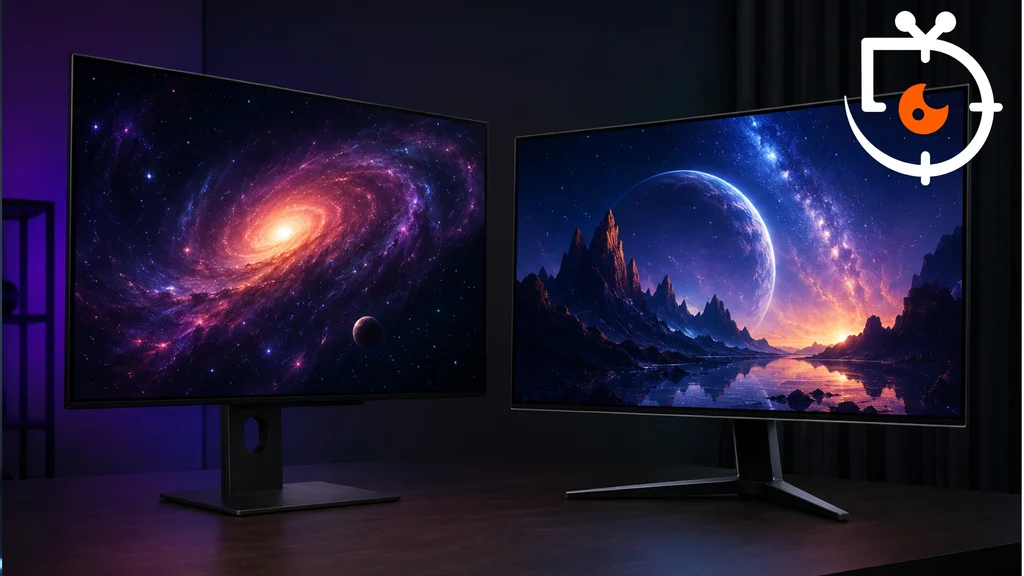
OLED technology has been fascinating for years with its perfect blacks and contrast, but it also had its limitations. One of the most frequently cited problems was the lower full-screen brightness compared to the best LCD panels. Now the situation may change thanks to the new screens presented by LG Display and Samsung Display. Both companies have showcased the first panels that meet the stringent requirements of the DisplayHDR 1000 True Black standard. This is an important step that could significantly impact the future of monitors and laptops equipped with OLED technology.
The new certification signifies a clear increase in the capabilities of OLED screens
The DisplayHDR 1000 True Black standard is currently one of the most demanding certifications available in the monitor market. To achieve it, a screen must reach at least 500 nits of brightness across the entire display area and 1000 nits in selected parts of the image. At the same time, it is necessary to maintain nearly perfect black levels. Such high requirements mean that until now, few panels have been able to meet all the criteria. At the Computex 2026 trade fair, both LG Display and Samsung Display showcased designs that have surpassed this barrier. LG focused on a 27-inch WOLED panel aimed primarily at gamers. The manufacturer claims full-screen brightness of around 540 nits. This is a significant increase compared to most current OLED monitors, which typically offer between 250 and 350 nits in similar scenarios. Additionally, the panel supports a refresh rate of up to 540 Hz. Samsung, on the other hand, concentrated on the premium laptop market. The company prepared an exceptionally thin next-generation AMOLED panel that also meets the True Black 1000 certification requirements. Although the manufacturer did not disclose the exact full-screen brightness values, the mere fact of achieving certification indicates surpassing the 500 nits level. This demonstrates that OLED is progressively eliminating its earlier limitations.
OLED draws ever closer to the best LCD displays
For years, one of the biggest advantages of LCD monitors has been their high brightness. This was particularly evident when working in well-lit environments or when using HDR content. OLED offered significantly better contrast and perfect blacks, but often fell short in terms of maximum brightness. However, new panels may change this power dynamic. Surpassing the barrier of 500 nits for the entire screen means that OLED begins to reach levels comparable to many advanced LCD designs. At the same time, it retains all its previous advantages. Users therefore receive a combination of very high contrast, perfect blacks, and increasingly better visibility in bright surroundings. This is especially important for gamers and content creators, who are increasingly using HDR materials. Additionally, manufacturers are continually improving peak brightness. In the latest OLED televisions, values exceeding several thousand nits can now be found in certain scenes. The development of new panels shows that OLED technology still has significant growth potential. In the coming years, we can expect even higher brightness, better energy efficiency, and further expansion of the applications of this technology. More and more evidence suggests that the differences between OLED and LCD will gradually blur, while the advantage in image quality will remain with OLEDs.
LG Display and Samsung Display have taken another important step in the development of OLED technology. The first panels with DisplayHDR 1000 True Black certification offer over 500 nits of full-screen brightness while maintaining perfect black. This marks a significant improvement in one of the most frequently criticised aspects of OLEDs. If the new solutions go into mass production, users can look forward to even better monitors and laptops designed for both work and entertainment.
source: flatpanelshd