 Redakcja Choose TV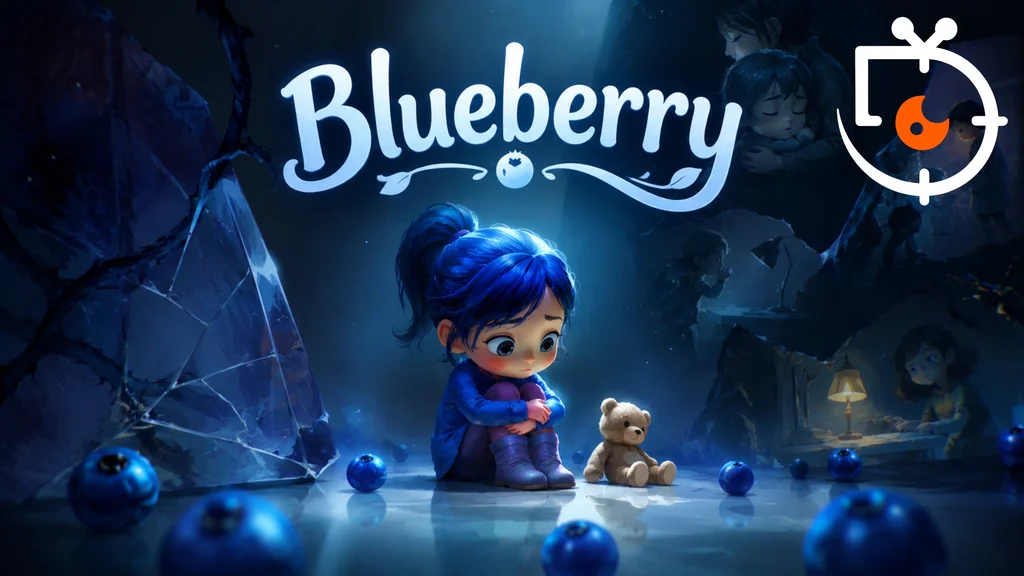
Not all games focus on action or competition. Increasingly, developers are using interactive entertainment to tell stories about mental health and difficult life experiences. One such title is Blueberry, the new work from studio MELLOW Games. The game tells the story of a woman trying to understand her past and come to terms with traumatic childhood memories. The project's creator drew on their own experiences and collaborated with psychologists to portray as faithfully as possible how human memory and emotions work. The result is a title that focuses primarily on emotional storytelling and reflection.
Blueberry portrays childhood from the perspective of someone struggling with trauma
The story begins when the main character, now an older woman, tries to understand why her relationship with her son has deteriorated. Her memories take her back to a childhood depicted as a fairytale world full of talking toys and platforming levels. It soon becomes clear, however, that beneath the colourful facade lie family problems and difficult experiences of growing up in a dysfunctional home. One of the game's key mechanics is an emotion meter called the 'Blues Bar'. The more emotionally overwhelmed the protagonist becomes, the more the surrounding world loses its colour and turns blue. The player must make choices that affect both Blueberry's mental state and that of her parents. Some situations force a decision between one's own wellbeing and trying to help loved ones. Memories also play an important role and change as the protagonist grows up. Returning to past events allows the player to uncover new elements of the story and gradually piece together a picture of the past.
The creators worked with psychologists to faithfully portray the workings of memory
The game's developer emphasises that while creating Blueberry they collaborated with three psychologists specialising in consulting on video games. The experts helped refine the depiction of depression, trauma, addiction and the mechanisms of memory. The creators point out that memories are not fixed and each time we return to them they can be altered. Particularly traumatic events often trigger bodily reactions resembling a re-experiencing of the situation. For this reason, as the protagonist uncovers her most difficult memories she again assumes the form of a child or teenager, regardless of the age she currently occupies in the story. This mechanic is intended to help players better understand how traumatic memories work. The creators also hope the game will help people struggling with similar problems feel less alone, and make it easier for other players to grasp the effects of depression and difficult childhood experiences. Depending on the choices made during gameplay, the story can end in a reconciliation with the past or leave the protagonist with unresolved issues. Blueberry also shows that, thanks to the brain's capacity to adapt, healing and change are possible even after many years.
Blueberry is an unconventional game that uses an interactive format to tell a story about trauma, depression and the process of recovery. With input from psychologists, the developers sought to faithfully portray the workings of memory and the impact of difficult experiences on adult life. This title is aimed primarily at players seeking an emotional, reflective narrative rather than a traditional action game.
source: Xbox