 Redakcja Choose TV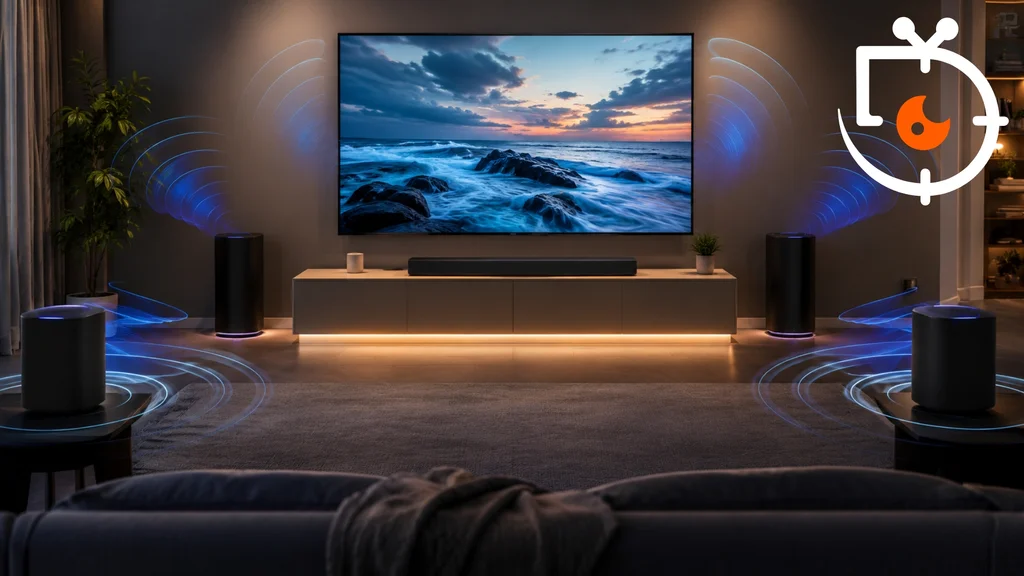
More and more TV makers are developing solutions that let you create a home cinema without running cables across the lounge. Instead of a traditional AV receiver and wired speakers, all you need is a compatible TV and some additional wireless speakers. Several competing technologies are already appearing on the market, including solutions from Samsung, Sony, Apple, Google and Dolby. This could make surround sound much more accessible to everyday users. The biggest problem remains compatibility, however, because some manufacturers restrict their systems to their own speakers.
Wireless audio goes straight to the TV
Wireless rear speakers aren't new, of course, as they've been connectable to soundbars and AV receivers for years. The new trend, however, is moving the entire audio centre of the system directly into the TV, so a soundbar or a separate AV receiver isn't always necessary. Samsung is developing Q-Symphony for this, Sony offers Direct Connect, and LG and Roku, among others, have already created their own solutions. Apple allows you to pair an Apple TV 4K with HomePod speakers, and thanks to AirPlay 2 you can also use compatible devices from other brands, albeit with some limitations. Dolby Atmos FlexConnect could also become increasingly important, as it allows up to four speakers and a subwoofer to be connected wirelessly to the TV. The technology has already been used by LG and TCL, and its advantage is that it lets you position speakers more flexibly around the room.
Dolby could set the direction for the whole market
The development of several different platforms shows that TV manufacturers have spotted the potential in wireless home theatre. With Dolby Atmos FlexConnect the particularly interesting feature is the ability to virtualise some of the audio channels, so speaker placement doesn't have to be perfect. The problem remains that even here compatibility is often limited to devices from the same manufacturer. By contrast, Bluetooth, although available in most modern TVs, isn't a good solution for a full home theatre because of limited bandwidth, latency and the fact it only supports a limited number of connected devices. An interesting alternative is AirPlay 2, because it lets you use speakers from different manufacturers, such as Bose, Bowers & Wilkins or Sonos, although Apple TV 4K currently doesn't allow creating a full surround system that way. So the market doesn't yet have a single ideal standard, but the direction of change is becoming increasingly clear.
TVs are increasingly no longer just screens and are becoming the centrepiece of the home audio system. A wireless connection to rear speakers and a subwoofer could, in the future, make it much easier to set up a home cinema without a tangle of cables. Dolby Atmos FlexConnect currently holds the most promise, although Samsung, Sony, Apple and Google are also developing their own solutions. If manufacturers begin to open their systems more widely to third-party devices, configuring such a setup could become even simpler. For now, though, users need to check TV and speaker compatibility carefully before buying.
source: flatpanelshd