 Redakcja Choose TV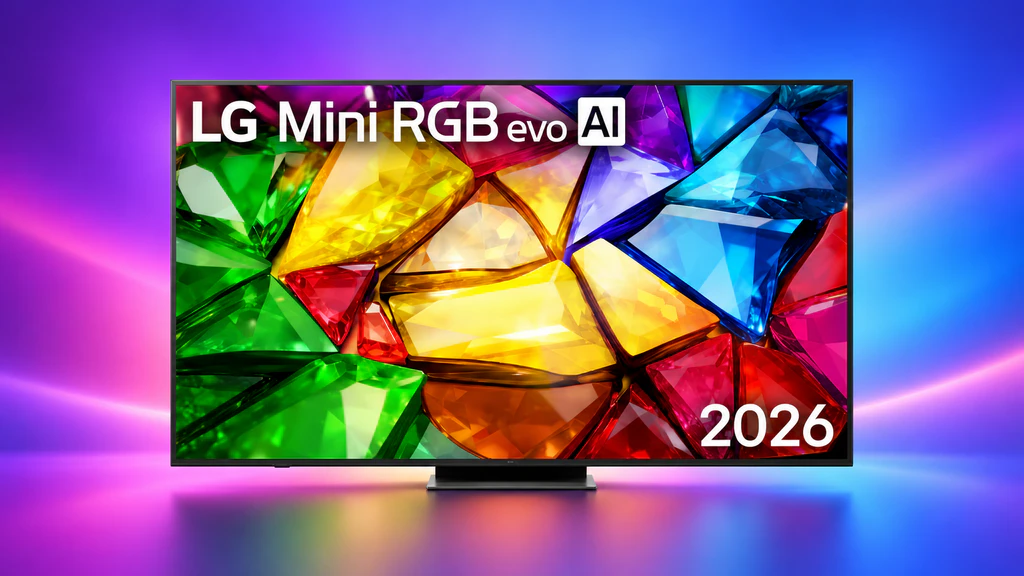
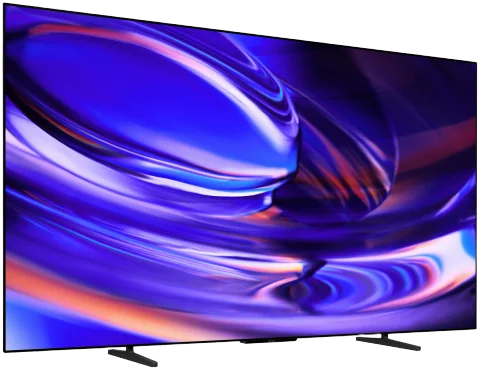
LG has launched a new series of Mini RGB evo TVs, the MRGB86, which uses an unusual backlight design. Instead of three colour LEDs the manufacturer uses only two, creating the third with a special phosphor. The solution could help reduce production costs while maintaining a wide colour gamut. Interestingly, the new models are also available for sale in Poland. The MRGB86 series includes TVs with 55, 65 and 75-inch screens, all with 4K resolution. The biggest new feature is the Mini RGB evo technology, which differs from traditional RGB Mini LED.
Only two LED colours. How does Mini RGB evo work?
In traditional RGB designs, separate red, green and blue LEDs are used. Meanwhile, LG uses blue and green LEDs, while red light is produced using a phosphor. This makes the backlight design less complex. The manufacturer also claims 100% coverage of the DCI-P3 and Adobe RGB colour spaces, which has been confirmed by an Intertek certificate. The TVs also offer local dimming, although the exact number of zones and the maximum HDR brightness remain unknown.
144 Hz, Dolby Vision and AI processor
The new models use panels with a native 120 Hz refresh rate, supporting VRR up to 144 Hz and AMD FreeSync Premium. They include Dolby Vision, HDR10, Dolby Atmos and four HDMI ports supporting 4K at 120 Hz. Image processing is handled by the Alpha 8 AI 4K Gen3 processor, and the TVs run webOS 26 with support for Google Gemini and Microsoft Copilot.
In Poland, sales of the smaller models have already started, and the 75-inch variant should be available shortly. Prices range from 3,899 zł for the 55-inch to 6,699 zł for the largest 75-inch model.
Will the new design actually be able to compete on price with traditional RGB Mini LEDs? We’ll only know after the first independent tests.
Sources: LG, PRAD