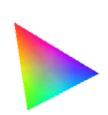
 BT.2020


Although the rear-firing woofer on the U7S looks different than on last year's U7Q, we didn't notice significant changes in the sound. Again, it's a 2.1 system with a total power of 40 W that sounds quite pleasant for this class of TV. The extra bass driver gives the sound a bit more weight, so overall it doesn't sound as flat as basic stereo designs. That said, it's not deep, powerful bass that would replace a separate subwoofer. For everyday viewing this setup is more than sufficient, though you may feel it falls short for action movies and music. A plus is support for Dolby Atmos and DTS formats. It's worth noting that on the built-in speakers Atmos works with Dolby Digital Plus tracks; in our test it did not work with the Dolby TrueHD-based version.
- Matching (Score) |
- Our verdict |
- Competing TVs |
- TV appearance |
- Where to buy |
- Contrast and black detail |
- HDR effect quality |
- Factory color reproduction |
- Color reproduction after calibration |
- Smoothness of tonal transitions |
- Image scaling and smoothness of tonal transitions |
- Blur and motion smoothness |
- Console compatibility and gaming features |
- Input lag |
- Compatibility with PC |
- Viewing angles |
- Daytime performance |
- TV features |
- Apps |
- Playing files from USB |
- Sound |
- Panel details
Hisense U7S / U77SE Review
U7S / U77S

Available screen sizes:
Complete the survey to find out the result
Panel type: LCD VA Refresh rate: 144Hz Brand: HISENSE Resolution: 3840x2160 System: VIDAA Model year: 2026
This review is an English translation of the Polish original. Read the original on Wybierz.tv.
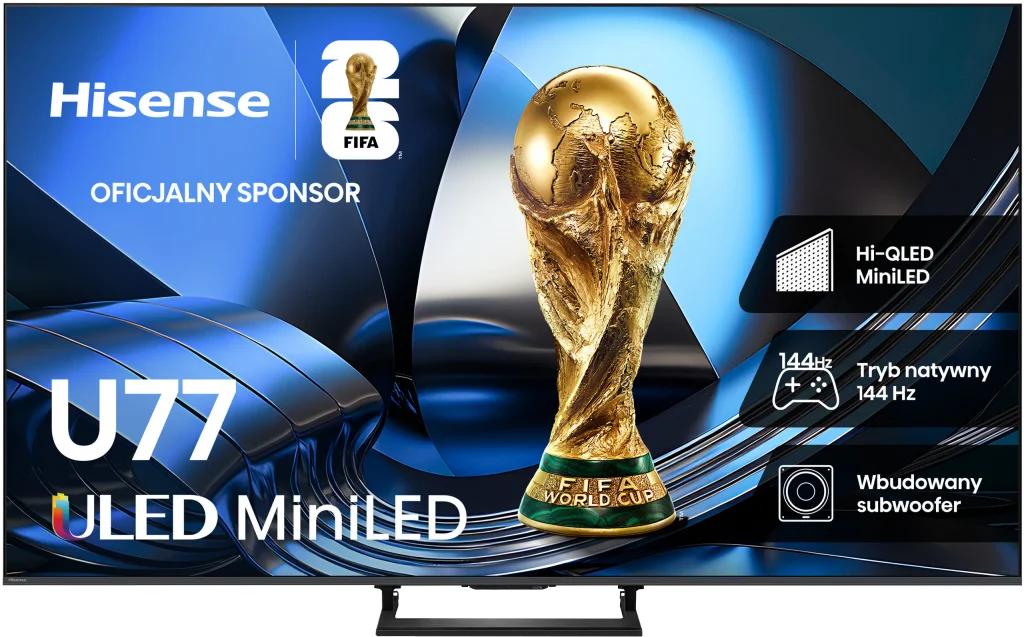
The Hisense U7S is the successor to last year’s U7Q, which, at least on paper, doesn’t introduce major changes. It’s one of the entry-level models with Mini LED backlighting, designed primarily to attract buyers with its attractive price. Despite the modest updates, has the picture quality been improved and does the U7S stand a chance of being one of the best-value TVs in its class? We put it to the test!
HISENSE U7S - Our verdict
7.3
Overall rating
Hisense U7S is the latest iteration of the U7 series, whose biggest advantage remains its price-to-quality ratio. You get a Mini LED TV with local dimming, which really improves black levels and gives the picture depth for evening viewing. During the day, the generous brightness headroom is useful, so you don't have to immediately cover the windows. It's not a device without compromises, but as an everyday TV it makes a lot of sense. Gamers benefit a lot as well. The U7S supports high refresh rates from consoles and PCs, has an extensive set of gaming features, and responds very quickly to controller input. Pleasingly, the low input lag is preserved in Dolby Vision too. Add in the smoothly running VIDAA, which offers both Smart features and handy extras for regular TV, and the package is fairly versatile, though compared with last year's U7Q it's hard to call it a big step forward. Unfortunately there are also things that clearly bother us. The first is motion blur. The panel has a high refresh rate, but its pixels don't always keep up, so visible trails follow moving objects. Fans of sports and fast-paced games will notice this especially. The second issue is HDR, which the TV shows somewhat "its own way." Instead of sticking to the brightness encoded in the content, it strongly brightens parts of the image. That was probably meant to look more impressive, but it often has the opposite effect: the scene becomes over-bright, loses depth, and clearly departs from the creators' intent. It's a shame this behavior can't be effectively corrected even during calibration. Despite these remarks, the U7S remains an interesting choice if you're looking to get as much as possible for a reasonable price. Compared with basic LCDs without local dimming, which you can still find at a similar price, it primarily offers much better blacks. And that's exactly its greatest strength. You don't have to reach for an expensive model to get a Mini LED whose advantages are actually noticeable when watching. If you accept its flaws, the Hisense U7S can above all be a cost-effective purchase.
Advantages

Deep blacks, ideal for evening viewing
Bright, clear picture even during the day
Natural colors after calibration when watching regular TV and SDR movies
Plenty of options for console and PC gamers
Low input lag
Feature-rich VIDAA system
Recording programs to USB and a convenient remote that you don't have to point at the screen
Pleasant sound with light bass
Disadvantages

Pronounced smearing on the VA panel
HDR image is overly bright, clearly at odds with the creators' intent
Incorrect HGiG behavior that makes HDR setup in games difficult
Poor viewing angles\
Some apps missing from the VIDAA system
 Movies and series in UHD quality
6.9
 Classic TV, YouTube
6.9
 Sports broadcasts (TV and apps)
6.4
 Gaming on console
8.2
 TV as a computer monitor
8.2
 Watching in bright light
7.0
 Utility functions
8.9
 Apps
Apps8.3
 Sound quality
7.2
Complete the survey to find out what fits your preferences
HISENSE U7S - Competing TVs in this price range
HISENSE U7S - TV appearance
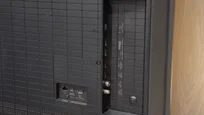
HDMI inputs: 2 x HDMI 2.0, 2 x HDMI 2.1 (48Gbps) Outputs: Toslink (Optical audio), eARC (HDMI), ARC (HDMI) Network Interfaces: Wi-Fi 2.4GHz, Wi-Fi 5GHz, Ethernet (LAN) 100Mbps
Build quality: Good
Stand type: Central
Bezel color: Graphite
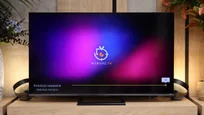
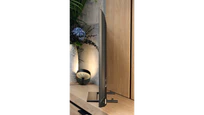
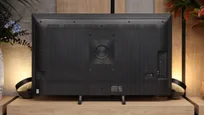
Stand: Fixed
Flat design: No
Accessories: Stand
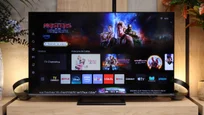
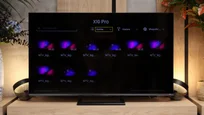
The Hisense U7S is a well-made mid-range TV. It has narrow graphite bezels with a slightly thicker bottom strip, and from the front it looks neat and fairly light. A central stand with a large gap gives it a bit of character. It's plastic, admittedly, but it supports the screen stably and also lets you place it on a narrower cabinet. From the side it's clear that the U7S isn't one of the slimmest TVs. The housing is fairly thick, so when wall-mounted it will protrude noticeably from the wall. Overall it's fine for this class of equipment, without the more refined materials or finish found on pricier models, but also without much to complain about.
Buy at the best price
Select size:
HISENSE U7S - Contrast and black detail
8/10
Local dimming function: Yes, number of zones: 192 (8 x 24)


Result
507,800:1

Result
51,250:1

Result
30,900:1

Result
21,250:1

Result
5,650:1

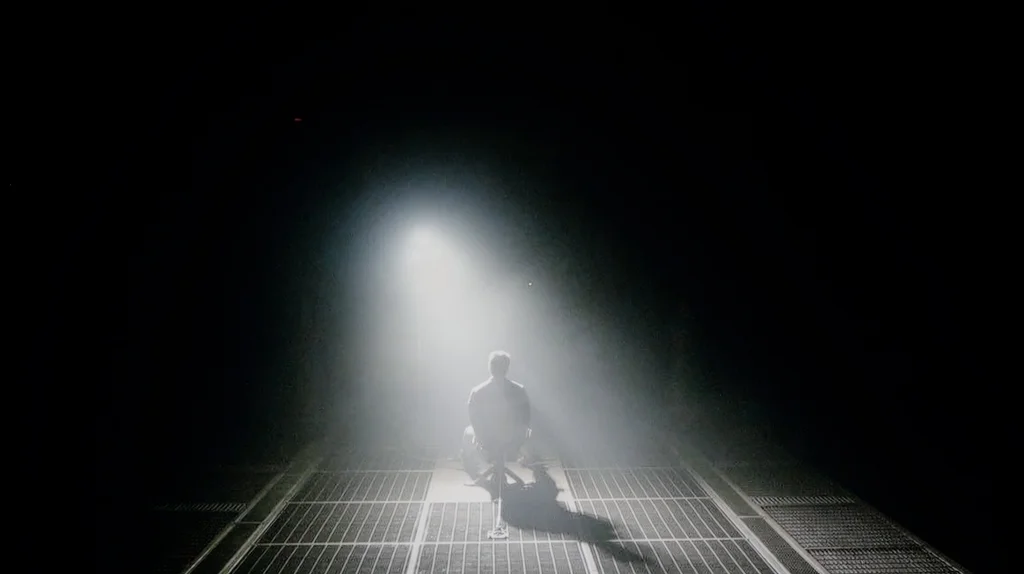
The Hisense U7S shows good black levels, especially for one of the entry-level Mini LED models. The 55-inch unit we tested uses 192 local dimming zones that work well with the VA panel. In most of our scenes contrast ranged from about 21,000:1 to over 51,000:1, and in one it even exceeded 500,000:1. In many films you can see it — dark scenes have depth, and blacks don't glow gray like on many cheaper LCDs without local dimming.
It gets worse when the screen contains a lot of small bright objects on a dark background (for example, in the scene shown below). There aren't enough zones to illuminate each one separately, so you can see a bright halo around the small objects. This so-called halo effect is easiest to notice when watching in a dark room. In the most demanding shot contrast fell to about 5,650:1, and here the backlight limitations are clearly visible. Even so, given the TV's class, it's hard to call this a fault, because many Mini LED TVs in a similar price range will have similar problems.
Halo effect and black detail visibility:
HISENSE U7S - HDR effect quality
5.5/10
Supported formats: HDR10, HDR10+, Dolby Vision, Dolby Vision IQ, HLG
Luminance measurements in HDR:

Result
700 nit

Result
297 nit

Result
640 nit

Result
154 nit

Result
745 nit
The Hisense U7S has considerable HDR potential, but it can't use it in every scene. On a test pattern it reaches around 1,100 nits, so the backlight itself is very strong. In our brighter film scenes we measured about 640 to 745 nits. That's still enough for the sun or bright highlights to have a noticeable glow and to show an advantage over SDR material. When the TV needs to illuminate a larger portion of the image, it does quite well.
The problem appears with small lights on a dark background. Each of the 192 zones covers an area much larger than a tiny point on the screen. If the TV were to strongly light such a zone, it would also brighten the surrounding area along with the light. Hisense tries to avoid that and dims the entire zone. Black levels therefore look better, but a small bright object that should draw the eye also loses intensity. That's why in two tougher scenes we recorded only 297 and 154 nits. The difference is large: in one shot HDR can impress, and in the next small lights are noticeably muted. The U7S therefore prioritizes maintaining deep blacks, even at the expense of bright details. With this number of zones that's an understandable compromise, but it's worth remembering — the 1,100-nit peak tells us about the backlight's capability, not how brightly the TV will render every element of a film.
Colors
Hisense calls the U7S ULED, but that's a marketing name; the wider color gamut here comes from a PFS phosphor backlight. In our measurements the TV covered about 91% of DCI-P3 and 71% of BT.2020. Those are good results, although it falls short of the best screens on the market. The biggest shortfall is in green — the TV doesn't even reach the DCI-P3 target there, so the most saturated shades will be less intense than they should be. Most colors in HDR films and series, however, still look suitably rich. A positive is the repeatability of the results. Gamut coverage on test patterns and in film scenes is practically identical.
BT.2020 color gamut coverage and primary color luminance
| Data set | BT.2020 | P3 | R | G | B |
|---|---|---|---|---|---|
| Synthetic patterns | 70.6% | 90.6% | 71% | 76% | 77% |
| Film measurements | 70.7% | 90.8% | 69% | 70% | 74% |
BT.2020 and P3 – average color gamut coverage (percent of the target gamut).
R, G, B – average primary color luminance relative to target (percent).
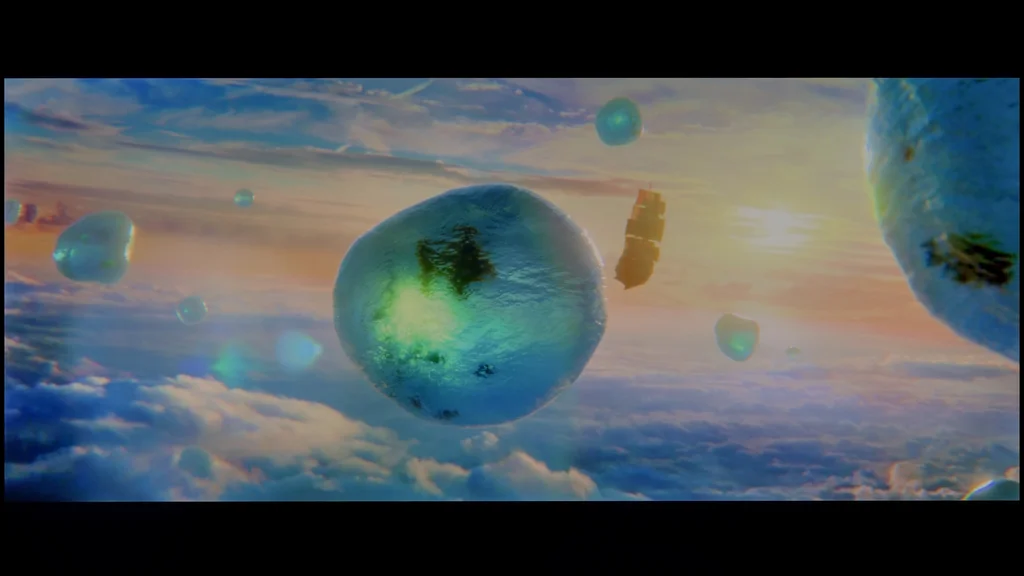
Scene from the movie “Pan” (about 2800 nits)
Scene from the movie “Billy Lynn” (about 1100 nits)
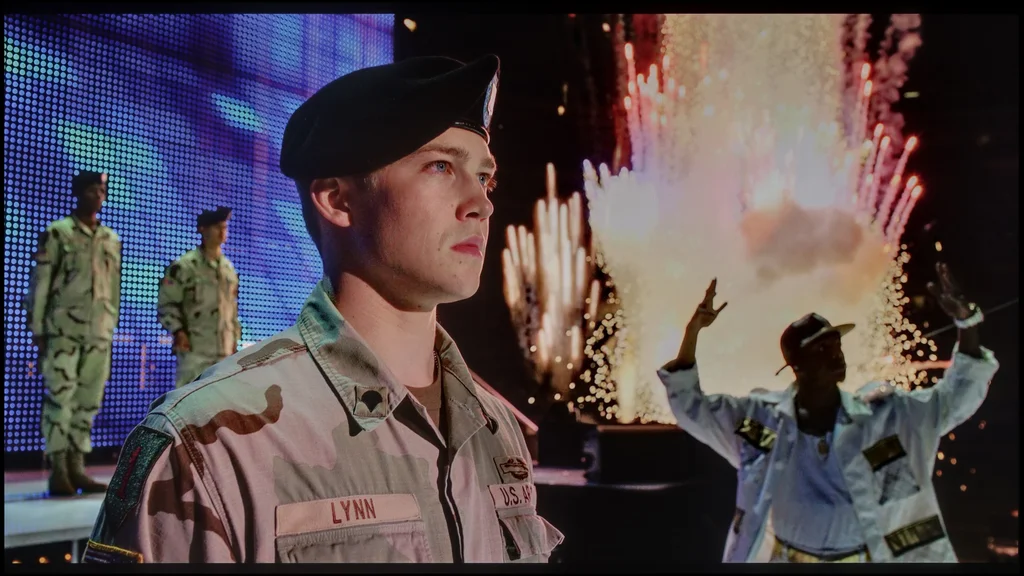
Unfortunately, tone mapping isn't a strong suit for the Hisense U7S. With content mastered to around 1000 nits, the TV can still preserve detail in the brightest whites; in the "Billy Lynn" scene they don't completely wash into a single blotch. The problem, however, is the overall brightness of the scene. The image is pushed too bright, which is also confirmed by EOTF measurements in the films. That strips away some depth, making the scene look flat and bearing little resemblance to how it should. Things are even worse with more demanding content mastered to 4000 nits. In the "Pan" scene, whose brightest parts reach about 2800 nits, the brightening of the image is accompanied by loss of detail in the highlights. Areas around the sun blend together, and subtle transitions between bright tones disappear. So instead of impressive HDR we get an over‑boosted picture that lacks both naturalness and detail. It's a shame, because the U7S has a decent backlight capable of showing something better, but the way it controls brightness seriously ruins the final result.
HDR luminance chart:
The previously described issues with image brightening and loss of detail concerned HDR10 material. Fortunately the Hisense U7S also supports Dolby Vision, and in this case it makes a real difference. Thanks to dynamic metadata the TV gets more precise guidance on how to display individual scenes. The same material then looks much better: the image is less blown-out, it regains depth, and you can see more detail in the highlights. In the shot of the horses it’s easier to make out the texture of the snow and the trees in the distance, which in HDR10 were partly lost in the whites. Dolby Vision doesn’t solve all of the U7S’s problems, but it clearly reduces its tendency to render HDR its own way. If a movie is available in that format, it’s definitely worth selecting it.
Static HDR10

Dynamic: Dolby Vision

Factory color reproduction
5.8/10
The out-of-the-box colors on the Hisense U7S are decent, but there are a few things to improve. In SDR there's a red bias in the white balance, which makes the image too warm and in places slightly pink. You can notice this on faces and on bright, neutral surfaces. Gamma also runs below the reference, so the TV brightens the image, especially in darker areas. That makes shadow details easier to see, but the scene loses some of its depth.
In HDR the white balance is a bit more even, but not completely neutral; midtones lack blue, and the brightest areas lack red. A bigger problem is how brightness is reproduced. The EOTF curve shows that a large portion of midtones is being brightened, so the image looks brighter than the source material intends. Color Checker measurements also perform worse than in SDR: many errors are around 3 to 4, and individual ones reach as high as 8. Colors can therefore look attractive, but they are not always faithful to what we should be seeing. There's room for improvement, and we'll check how much can be corrected with calibration.
Color reproduction after calibration
7.5/10
Calibration of the Hisense U7S helped most with SDR content. We managed to even out the white balance, so the previous warm cast is gone and whites and grays look neutral. Gamma is also now very close to the reference, and the TV no longer brightens the image unnecessarily, so darker scenes have regained depth. Color Checker measurements confirm the improvement: most errors fall below 2. That yields a really well-calibrated picture for regular TV and SDR movies. It didn't go as smoothly in HDR. The TV lacks an effective way to correct the EOTF curve, so Hisense still interprets the content's brightness a bit on its own. It brightens parts of the image and can dim the brightest elements depending on the scene and the local dimming behavior. Calibration couldn't eliminate this. It shows up in the Color Checker results as well, where many errors remain around 3–4 and individual ones exceed 7. So in SDR the result is very good, but in HDR we have to accept that the TV adds its own interpretation of brightness to the image.
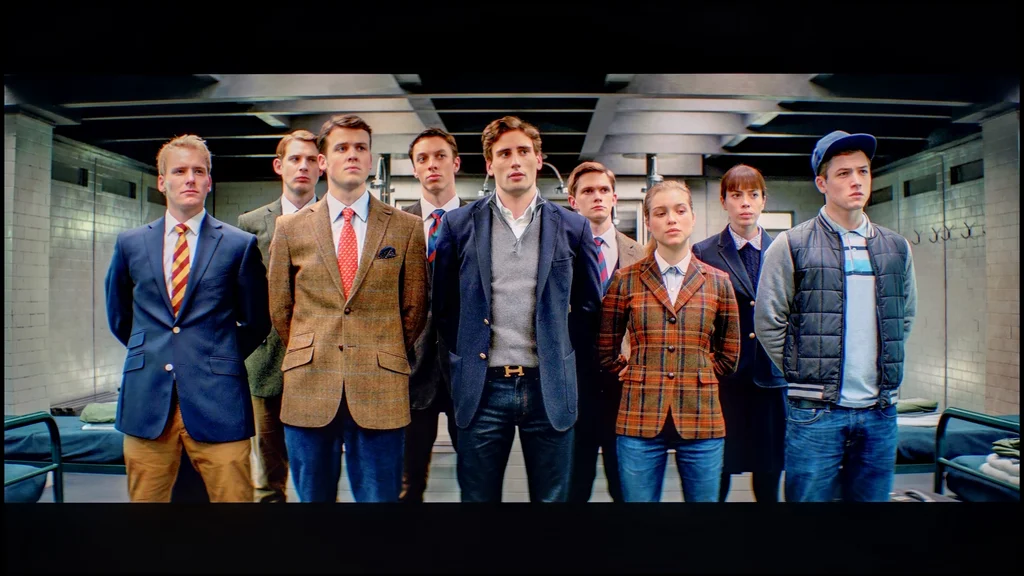

HISENSE U7S - Smoothness of tonal transitions
8.5/10
The smoothness of tonal transitions is one of the Hisense U7S’s stronger points. HDR10 material performs especially well, with colors blending gently into one another without noticeable banding. Even in dark scenes it’s hard to find major issues. Minor color stepping is visible only in brighter shots, but during typical viewing it usually doesn’t attract attention. It looks a bit worse in Dolby Vision, where boundaries between shades can be more apparent. That’s why Hisense loses some points from us, although overall this is still a very good result and one of the better performers in its class.
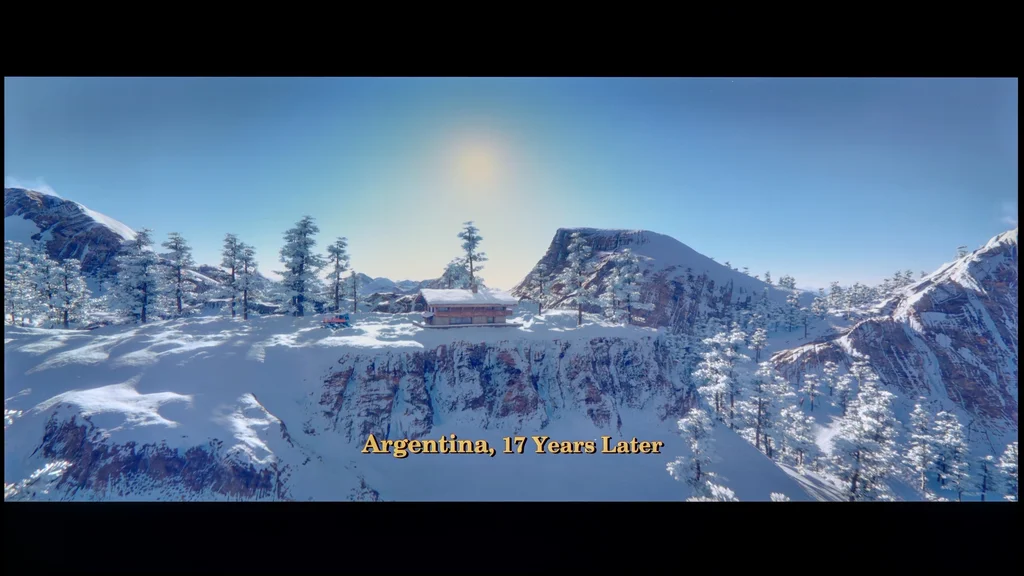
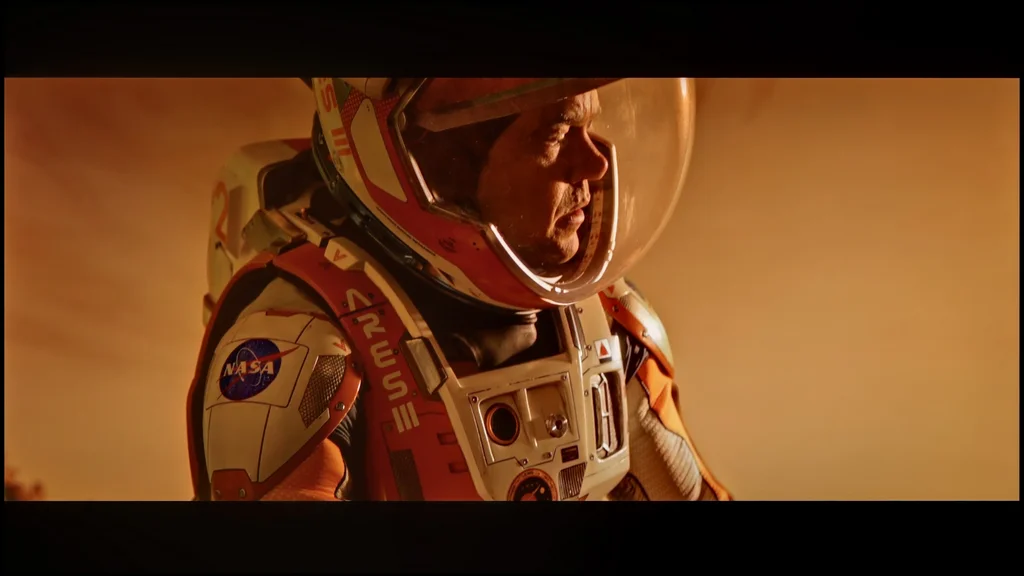
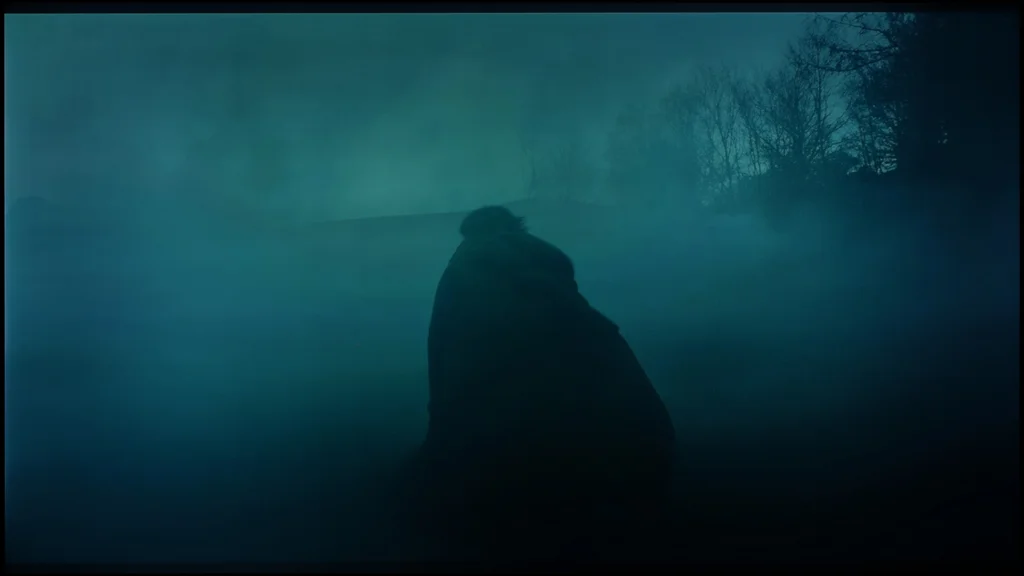
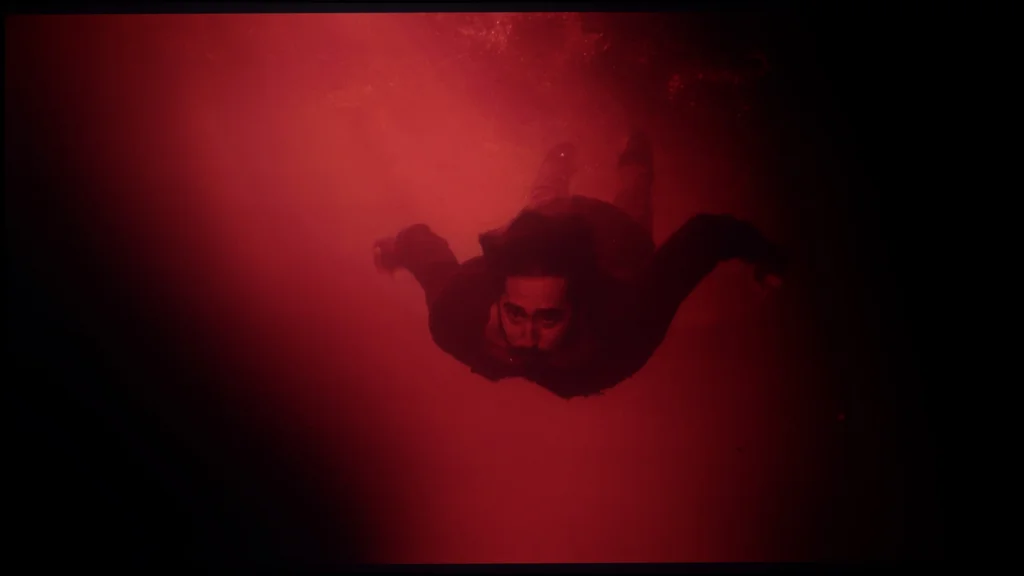
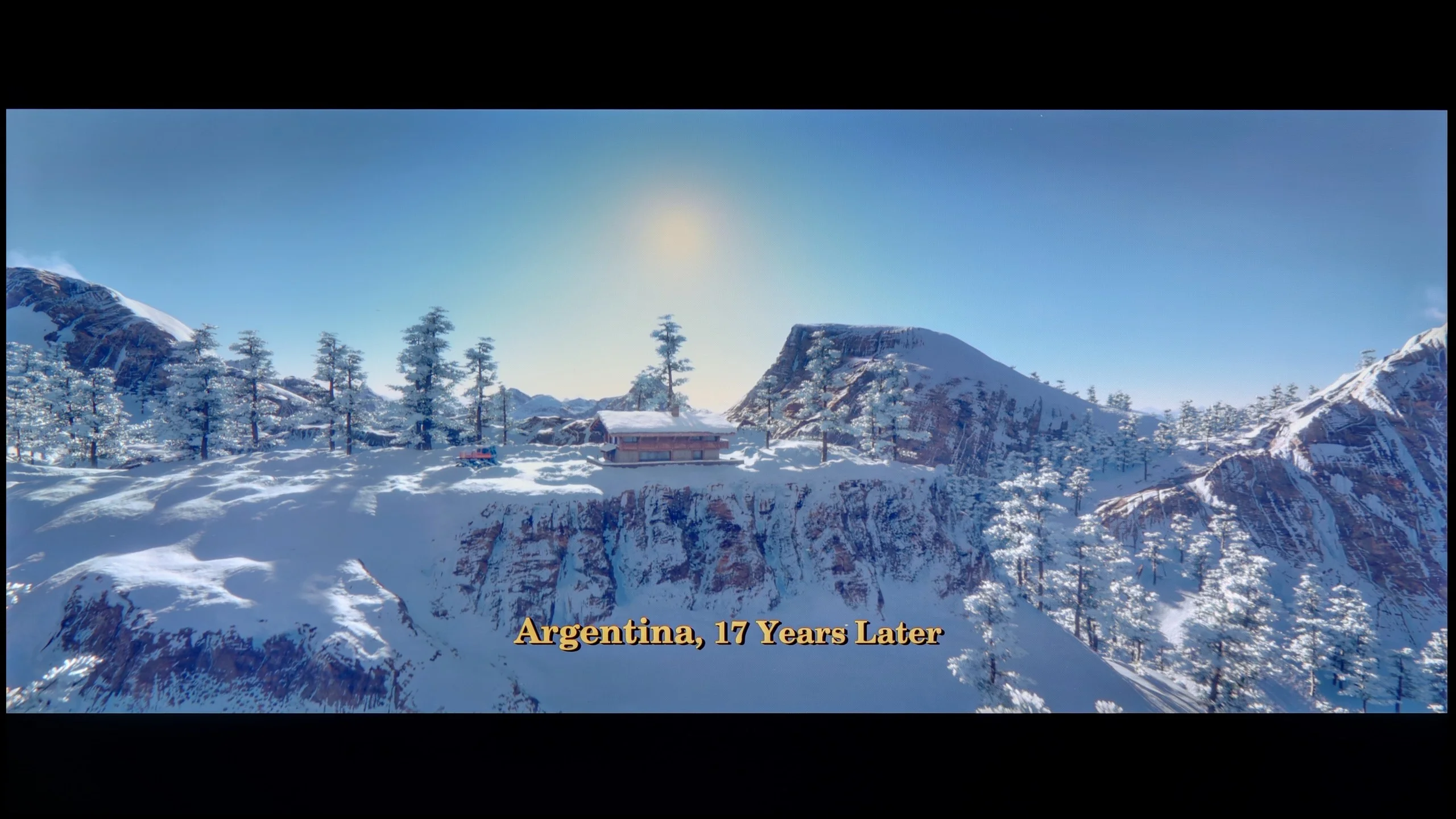

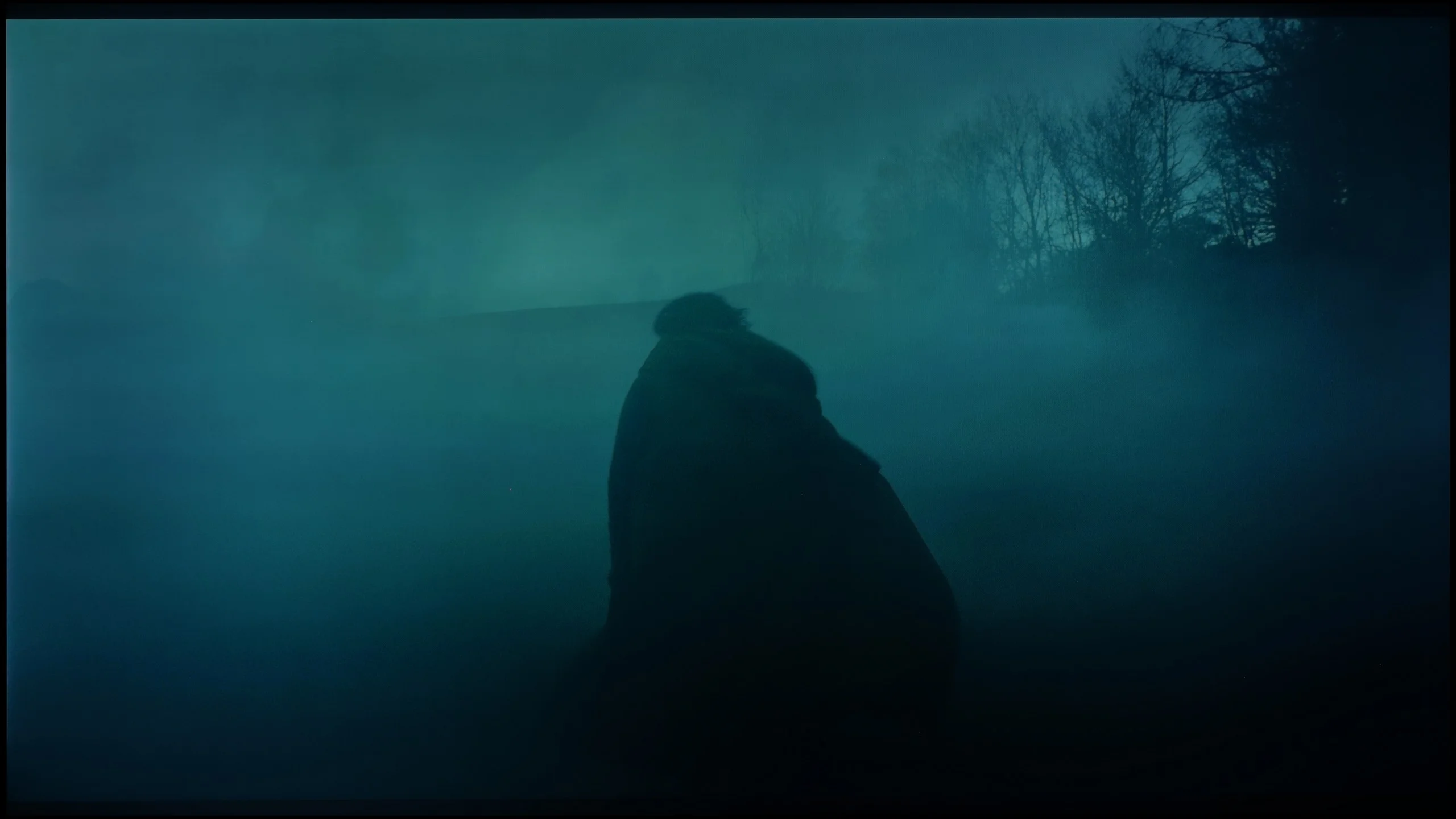
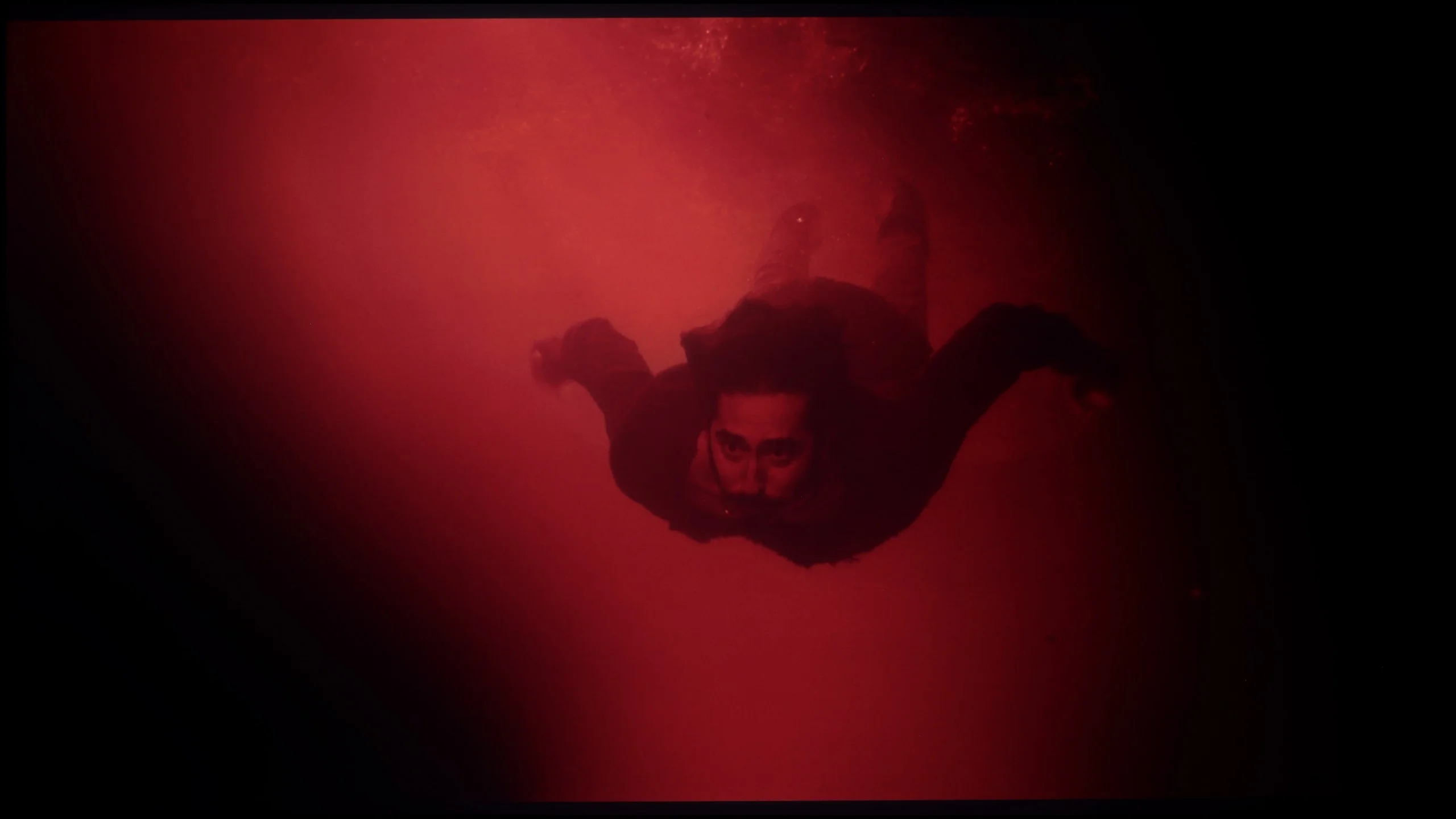
Image scaling and smoothness of tonal transitions
6/10
 Smooth transition function
Image without overscan on the SD signal

The handling of lower-quality material on the Hisense U7S is fairly mediocre. The Pentonic 700 chipset used here doesn't cope well with the effects of heavy compression. The menu includes a "Smooth & Gradient" picture option, but its performance leaves much to be desired. At the low setting it's hard to notice any improvement in tonal transitions, although at least the image isn't degraded. The medium and high settings still don't remove visible banding between shades and begin to smear details; in our test clips even parts of characters' faces disappeared. Interestingly, film grain remains untouched at every level. If you use this feature, we'd stick with the low setting. Its current behavior needs refinement, but that's mainly down to the processor used. Upscaling to 4K performs much better. Lower-resolution footage gains clarity, edges are well reconstructed, and fine elements look crisp. That doesn't mean it can recover details that weren't in the recording, but the TV makes good use of what it gets from the source. Another plus is that it doesn't crop the image edges, even with an SD signal.
HISENSE U7S - Blur and motion smoothness
7/10
Maximum refresh rate of the panel: 144Hz
Film motion smoothing option: Yes
Blur reduction option: Yes
BFI function 60Hz: Yes, 120Hz (double contours)
BFI function 120Hz: Yes, 240Hz (double contours)
Brightness drop with BFI: 55%
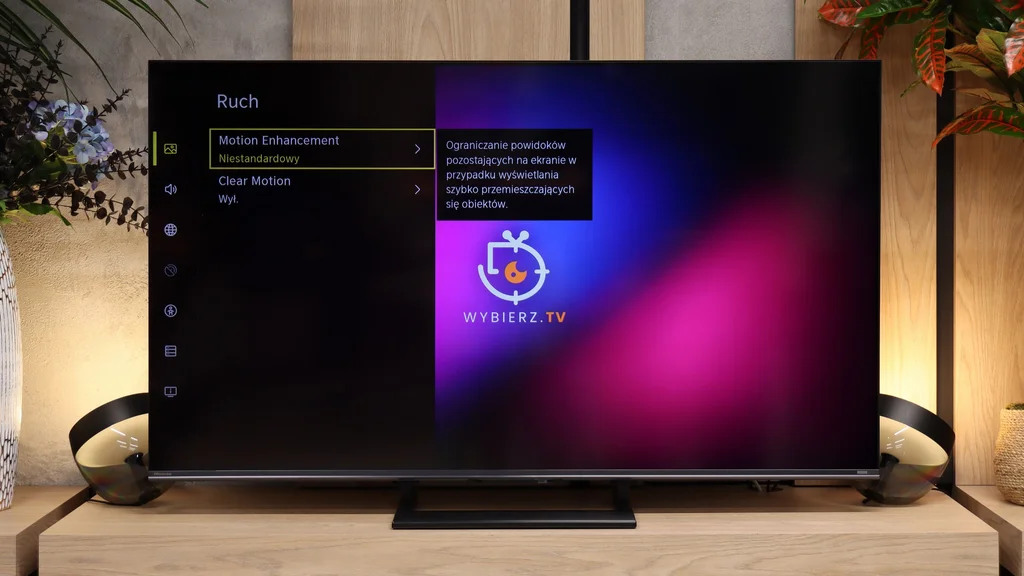
Motion handling on the Hisense U7S is pretty good thanks to the 144 Hz refresh rate. For movies we also have a motion smoothing feature that lets you adjust judder and blur reduction. You can therefore keep a more cinematic motion or increase smoothness if abrupt camera shifts bother you. In sports and games the high refresh rate is also useful, but unfortunately it doesn't solve this panel's biggest problem.
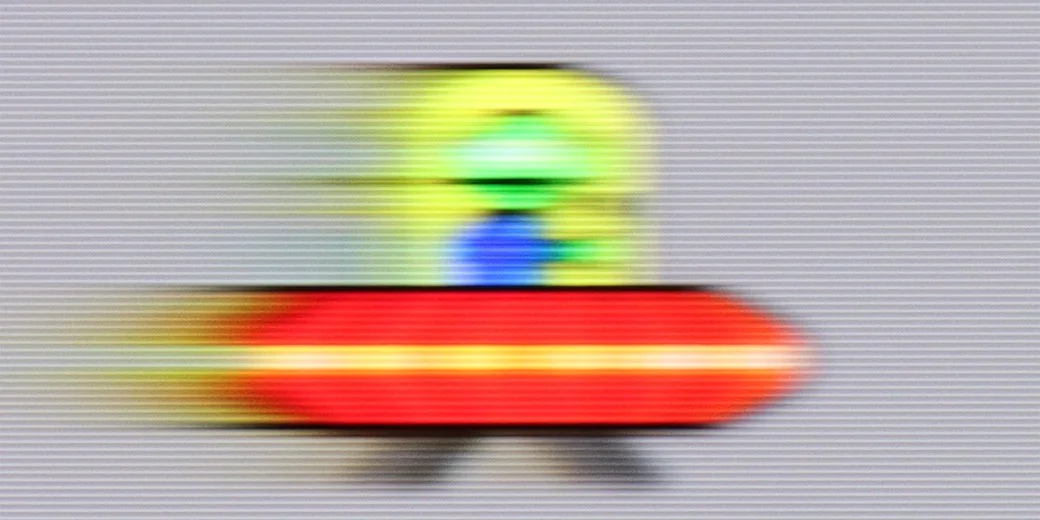
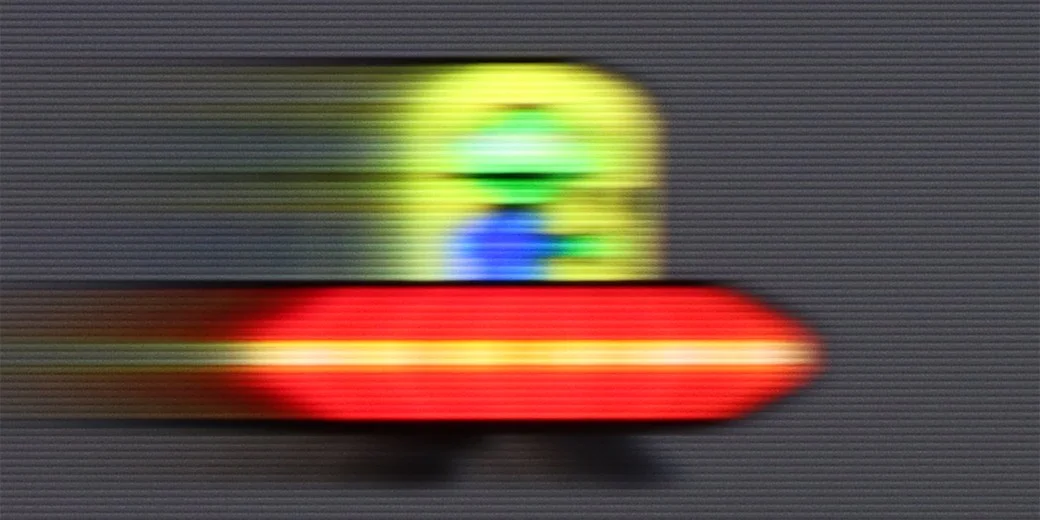
The culprit is pixel response time. Fast-moving objects leave long, noticeable trails, as our UFO test shows. It's worst on dark backgrounds, where the trail behind the object is especially pronounced. So motion can be smooth, but the moving object itself loses sharpness, and that difference on the U7S is fairly easy to notice.
Blur (native resolution, maximum refresh rate):

Blur (BFI function enabled):


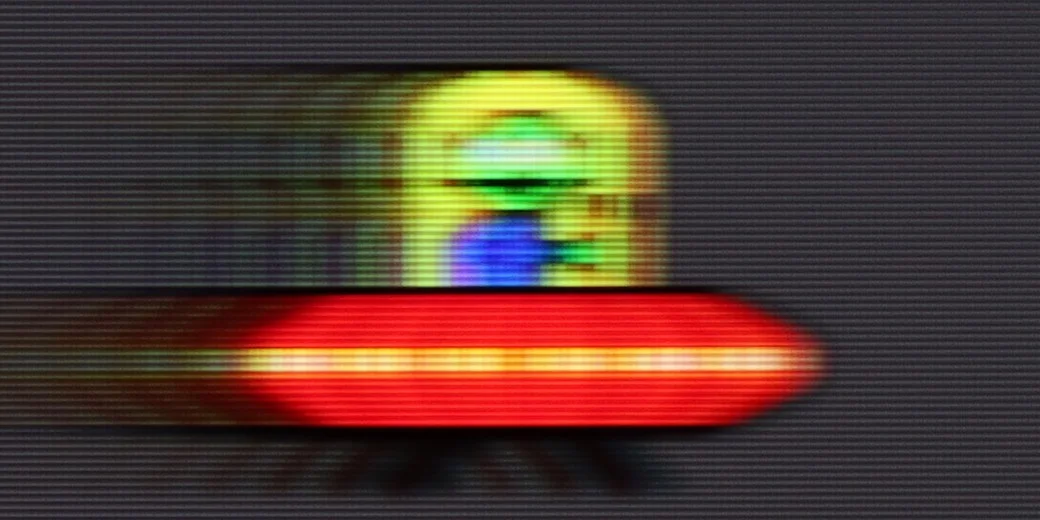
Blur (1080p@240Hz):

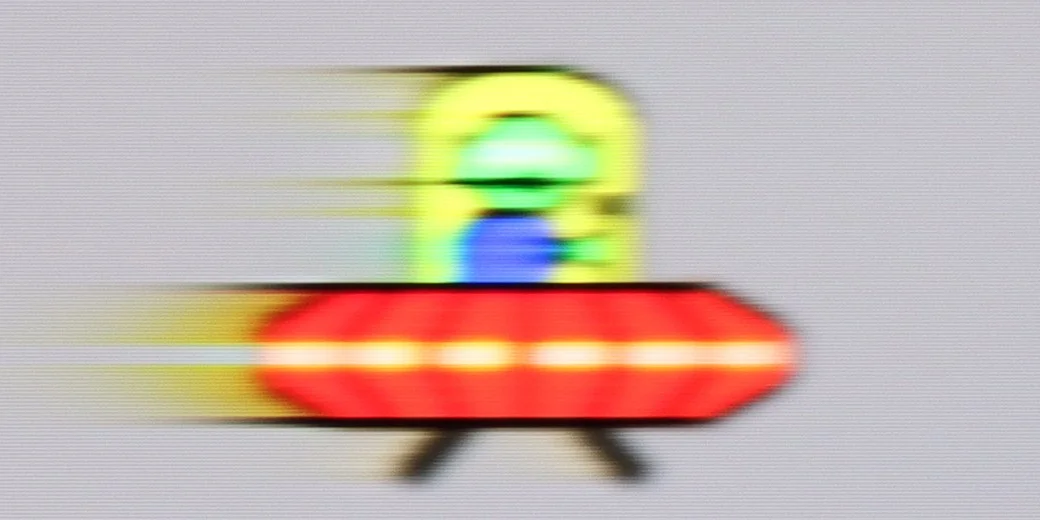
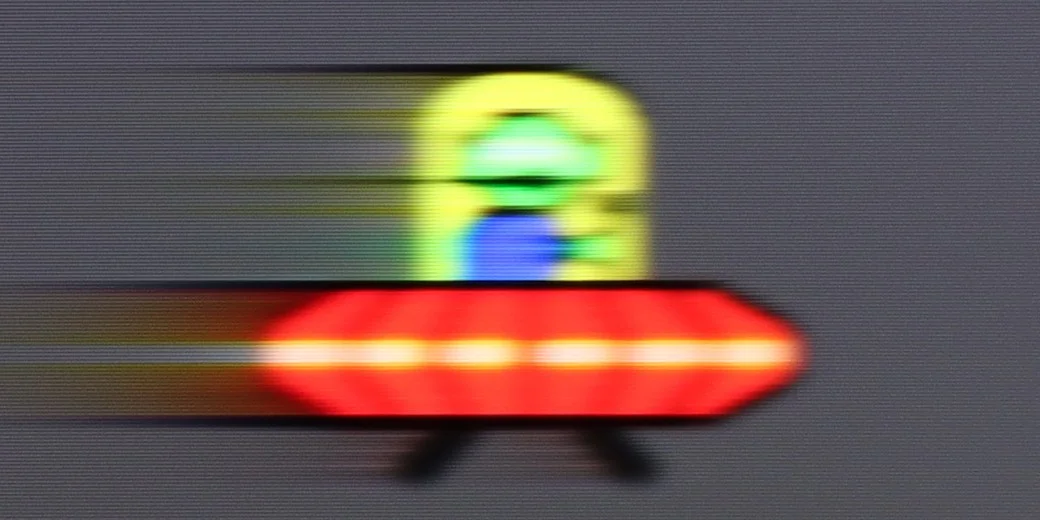
An interesting addition is the 240 Hz mode, which actually improves motion clarity. However, it doesn't eliminate ghosting. Pixels still can't keep up with some transitions, especially in darker shades, so even at higher refresh rates a visible trail remains. It's a useful option for PC gamers, but it can't completely make up for a slow panel response time.
HISENSE U7S - Console compatibility and gaming features
8.5/10
- ALLM:
Yes
- VRR:
Yes
- VRR range:
48 - 240Hz
- Dolby Vision Game Mode:
Yes
 Correct implementation of HGIG:
No
Correct implementation of HGIG:
No - 1080p@120Hz:
Yes
- 1440p@120Hz:
Yes
- 4K@120Hz:
Yes
- Game bar:
Yes
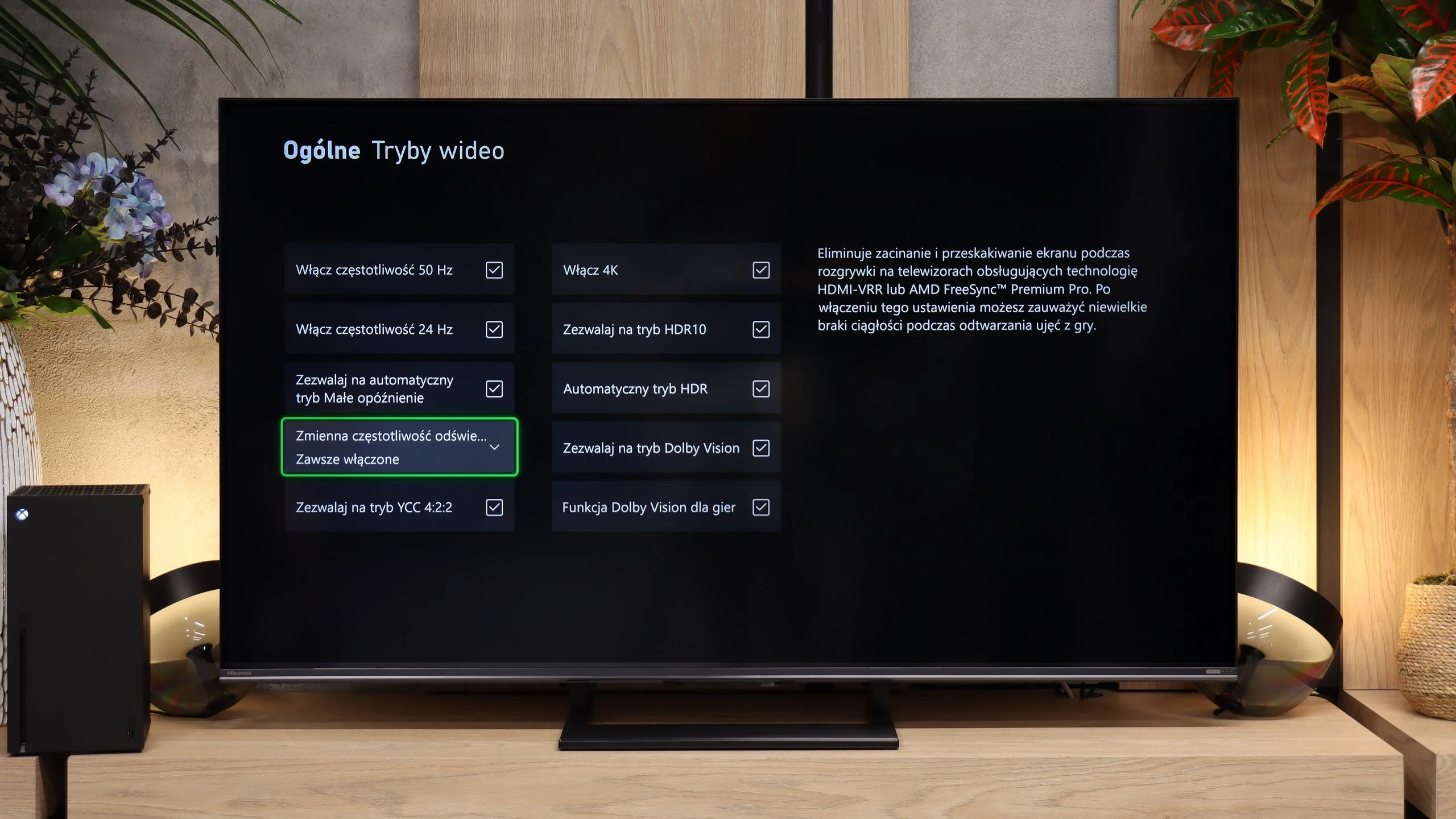
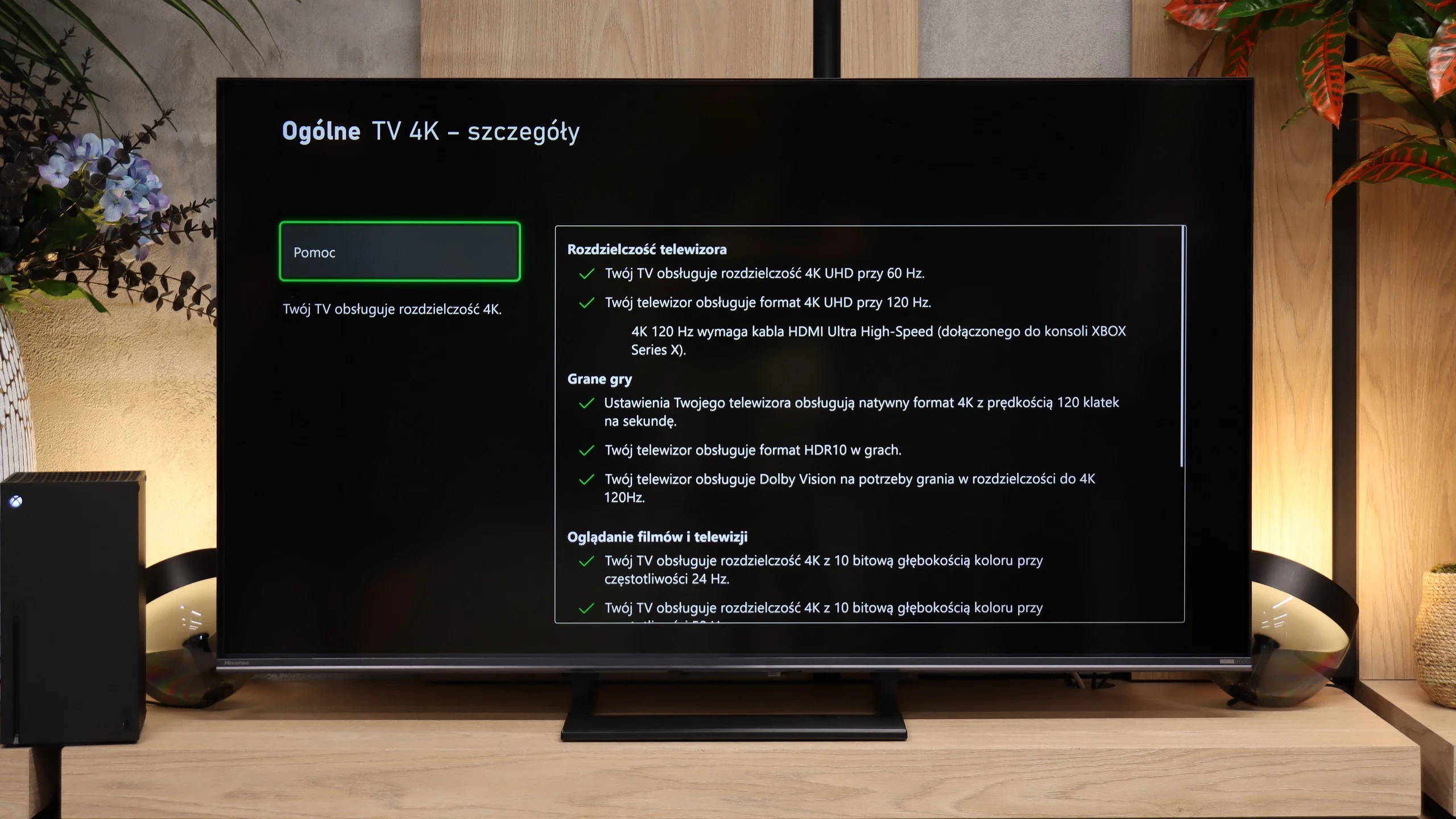
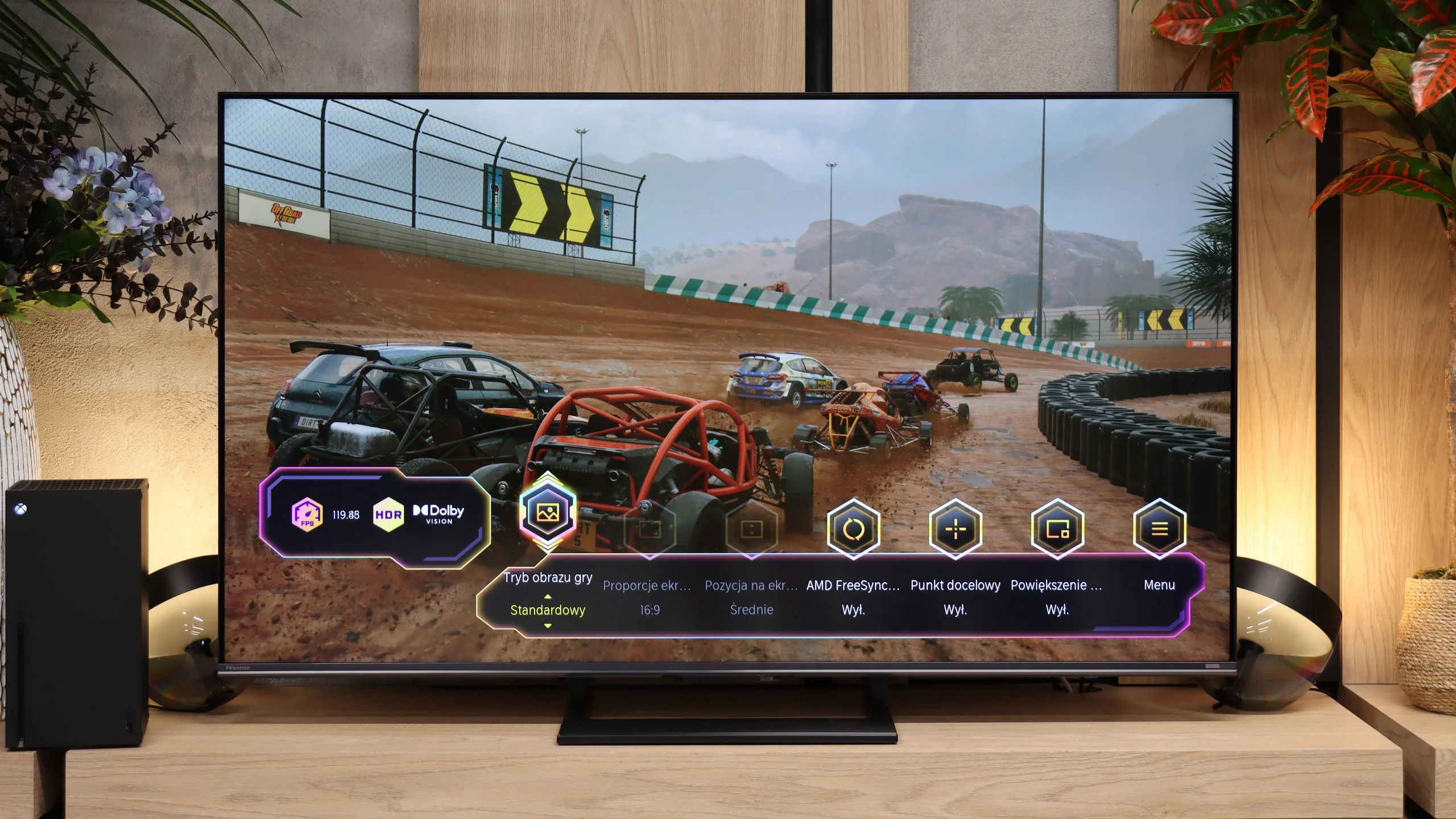
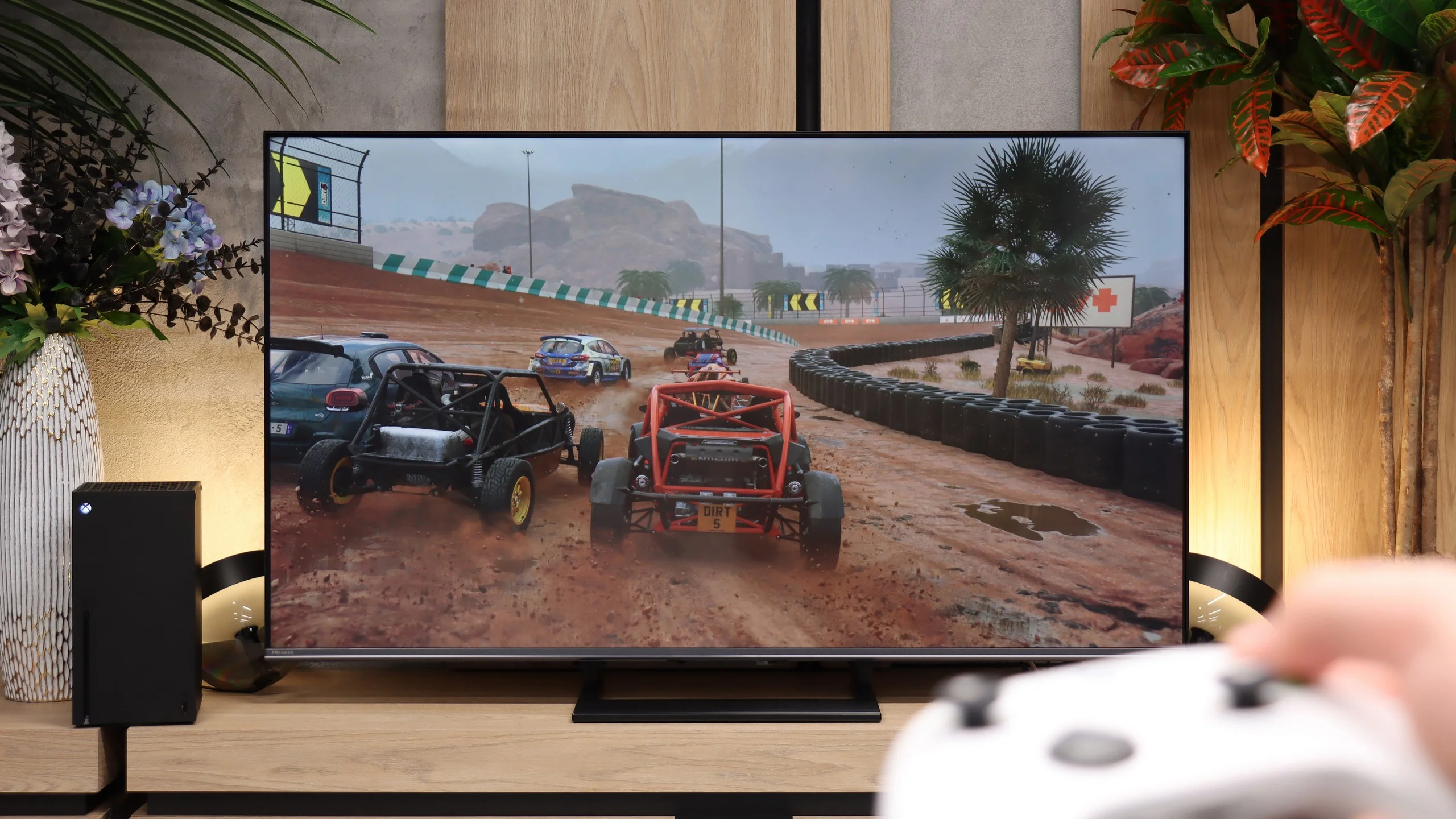
The Hisense U7S has a lot to offer gamers. You get two HDMI 2.1 ports and support for 120 Hz at Full HD, 1440p, and 4K, so modern consoles’ capabilities are well used. When connected to a PC you can use 144 Hz at 4K or switch the resolution to Full HD and run 240 Hz. So there’s a wide choice, although it’s worth remembering the motion smearing mentioned earlier, which the high refresh rate does not eliminate. VRR and ALLM are also present. The first helps prevent tearing when frame rates in a game change. The second automatically switches the TV into game mode, so you don’t have to dig through the menu each time. VRR works from 48 to 240 Hz, with the highest refresh rate available in Full HD. Xbox users can also play in Dolby Vision, including at 120 Hz. Importantly, this format does not introduce significant input lag here. The Game Bar also looks very good. It’s easy to read, visually appealing, and lets you quickly check what signal the TV is receiving. There are also handy gaming settings at your fingertips, including shadow brightening. If it’s hard to spot an opponent in a dark game, you can improve visibility without digging through the entire menu.
Our biggest complaints concern HGiG. Hisense continues to do its own tone mapping, which makes setting HDR on the console confusing. You adjust a checkerboard test pattern and the TV continuously adapts how it looks. As a result, the moment the pattern disappears does not correctly indicate the screen’s brightness limit, and it’s easy to set the value too high. For this model it’s better to set the target HDR peak brightness on the console to about 900 to 1000 nits, rather than relying on the configurator.

HISENSE U7S - Input lag
9.9/10
In terms of input lag the Hisense U7S performs excellently. At 60 Hz we measured 14–16 ms, and at 120 Hz just 9–10 ms. Input is responsive, and even in fast-paced games the TV doesn't introduce any noticeable delay. Importantly, Dolby Vision performs just as well, with 14 ms at 60 Hz and 9 ms at 120 Hz, so you don't have to give up that format for fear of added latency. The motion smearing described earlier is a separate issue: the panel responds quickly to input, but the pixels don't always keep up with color changes.
| SDR | HDR | Dolby Vision |
|---|---|---|
| 1080p60: 16 ms | 2160p60: 14 ms | 2160p60 DV: 14 ms |
| 1080p120: 10 ms | 2160p120: 9 ms | 2160p120 DV: 9 ms |
| 2160p60: 16 ms | ||
| 2160p120: 10 ms |

HISENSE U7S - Compatibility with PC
8.2/10
Chroma 444 (max. resolution and refresh rate): Yes
Font clarity: Good
Readability of dark text and shapes: Average
Input lag in PC mode (4K, max. refresh rate): 10ms
Matrix subpixel arrangement: BGR
Max refresh rate: 144Hz
G-Sync: Yes
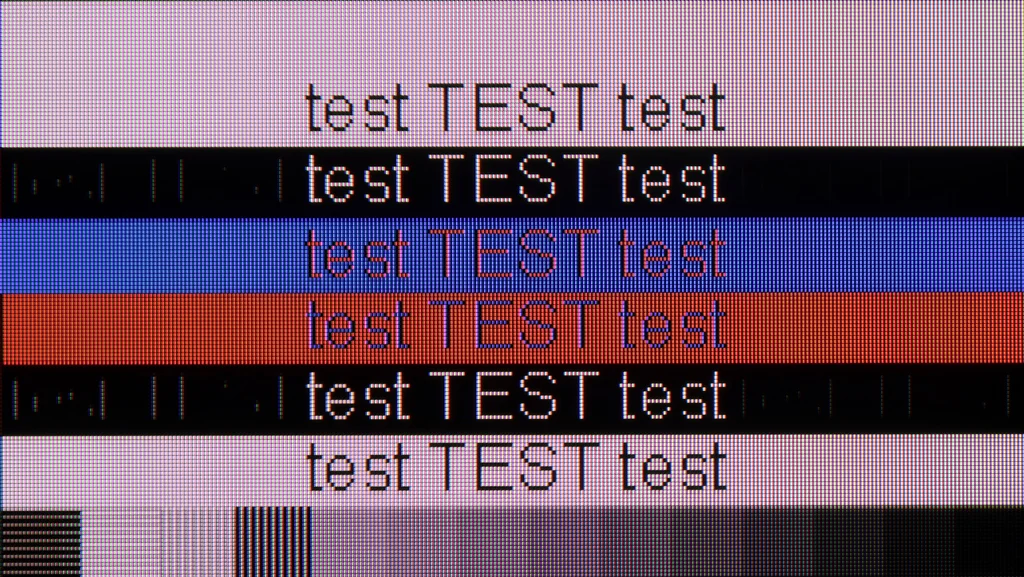
When connected to a PC, you can use 4K at 144 Hz with G-Sync enabled and about 10 ms of input lag. It's a good setup for gaming, although panel smearing is still noticeable in fast-moving scenes. Chroma 4:4:4 also works correctly, even at the maximum refresh rate, so colorful on-screen text and small desktop elements remain legible.
The U7S is quite suitable for web browsing or occasional work, but not all fonts look equally sharp. Our main issue is with small, dark text: thin parts of letters can disappear and characters look uneven. It's hard to notice from the couch, but when working up close, especially with text or spreadsheets, it can be distracting.
HISENSE U7S - Viewing angles
3.1/10
Brightness drop at an angle of 45 degrees: 74%
Viewing angles are unfortunately a weak point of the Hisense U7S. As soon as you move to the side, colors lose saturation, blacks become lighter, and the picture looks washed out. At a 45-degree angle we measured a 74% drop in brightness, so the difference compared with watching head-on is really large. That's a typical limitation of VA panels. When sitting centrally you can appreciate its strong contrast, but people seated at the far ends of a wide couch will see a noticeably weaker picture. The U7S is therefore best suited to setups where viewing positions are as close to directly in front of the screen as possible.
HISENSE U7S - Daytime performance
7/10
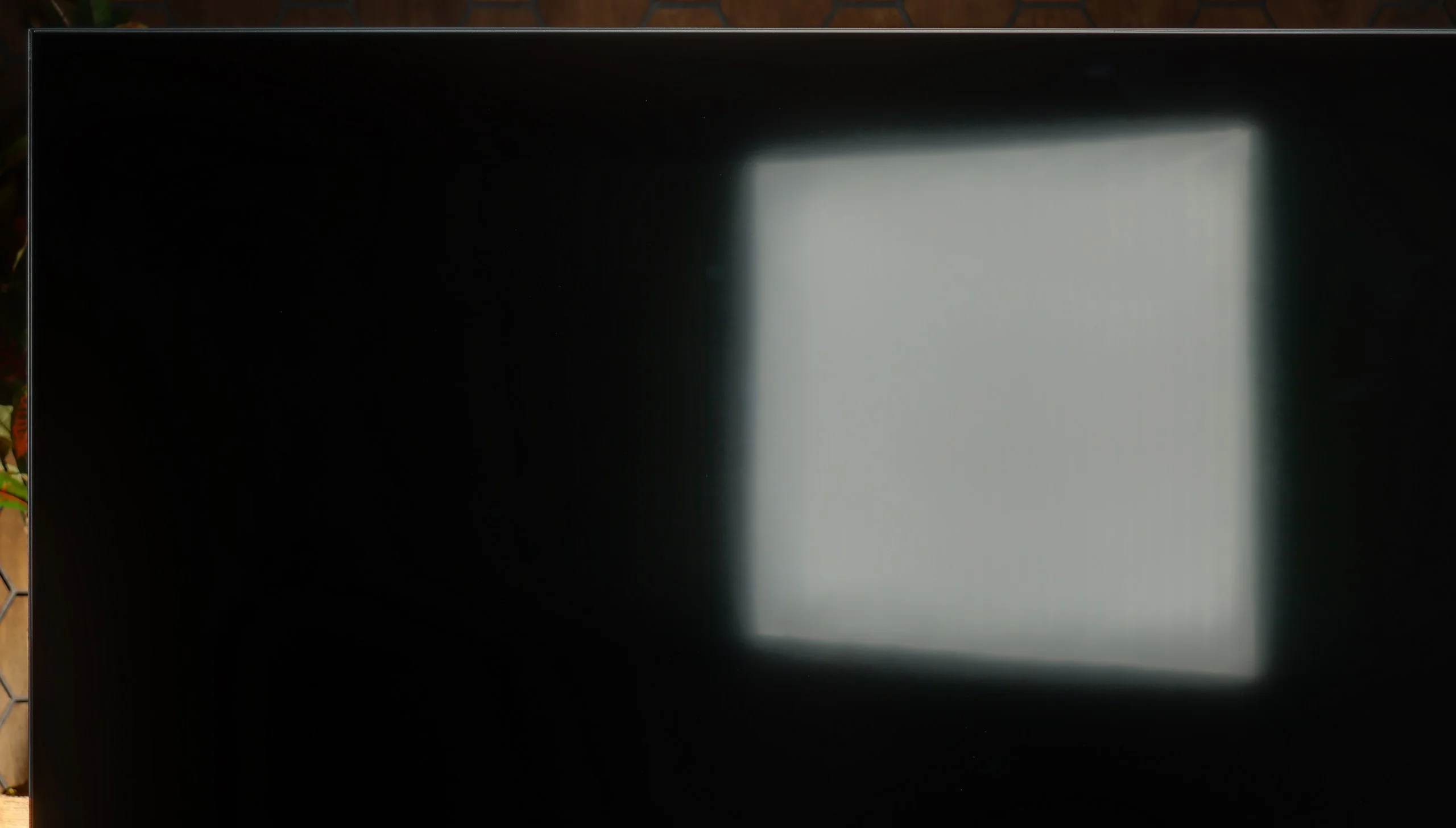
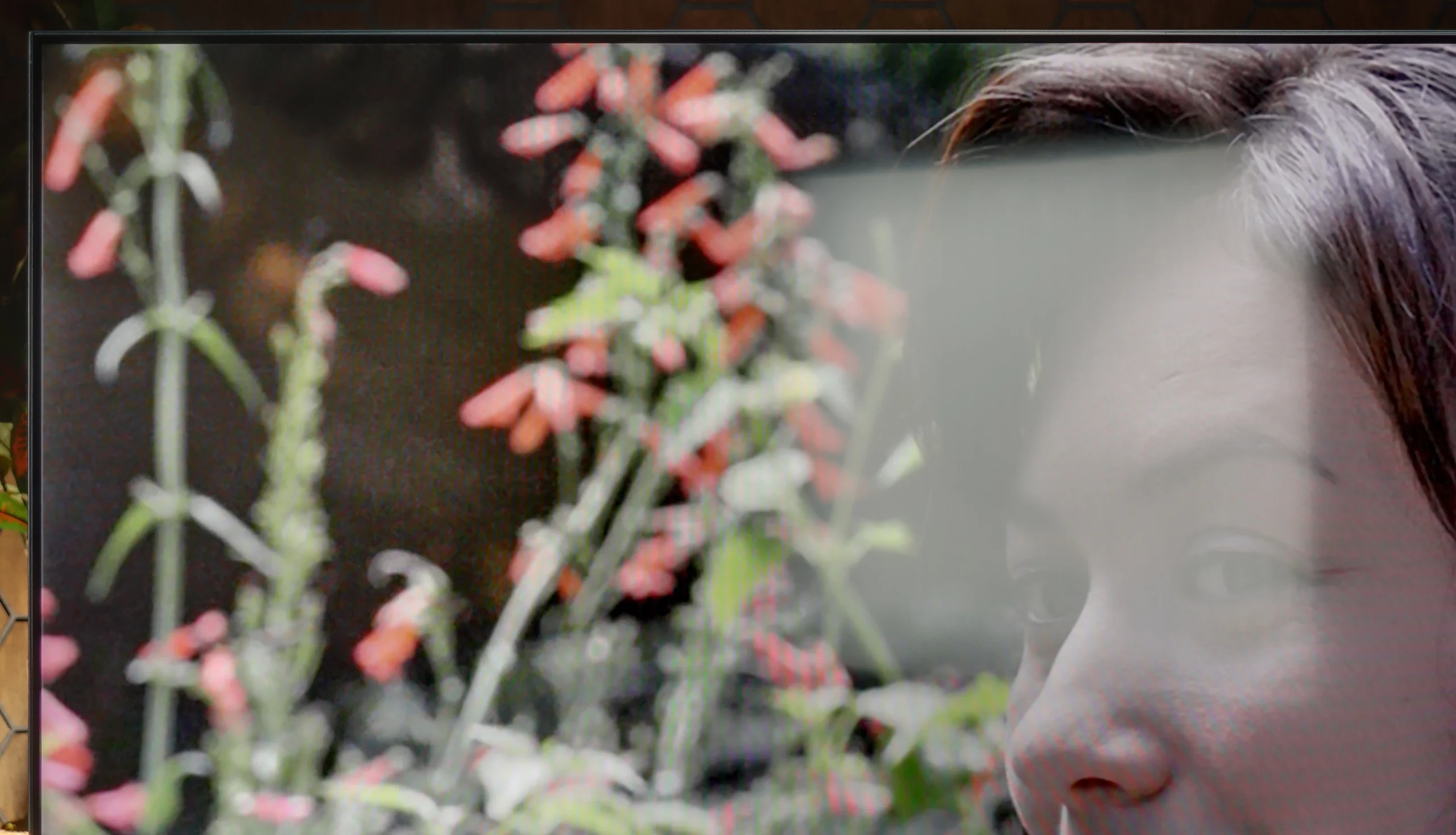
Panel finish: Satin
Reflection suppression: Decent
Black levels during daytime: Good
The Hisense U7S performs well for daytime viewing. In SDR we measured an average of about 664 nits, and depending on the screen content the brightness ranged roughly from 500 to 800 nits. Even with an all-white image it stays above 500 nits, so a sports broadcast or a bright TV program won't suddenly look dim. That's enough headroom for comfortable viewing in most living rooms. The satin finish does a decent job of reducing reflections, but a window opposite the TV will still be visible. In the photo you can clearly see that its reflection can obscure part of the picture, so high brightness alone doesn't solve everything. On the plus side, blacks and colors hold up in daylight and don't become excessively gray. Overall the U7S works well in a bright room, though you should position it to avoid direct window reflections.
Panel brightness
Hisense U7S / U77SE: 664 cd/m2
HISENSE U7S - TV features
8.9/10
System: VIDAA
System performance: Good
- HDMI inputs: 2 x HDMI 2.0, 2 x HDMI 2.1 48Gbps
- Outputs: Toslink (Optical audio), eARC (HDMI), ARC (HDMI)
- Network Interfaces: Wi-Fi 2.4GHz, Wi-Fi 5GHz, Ethernet (LAN) 100Mbps
- TV reception: DVB-T, DVB-T2, DVB-S, DVB-S2, DVB-C
Classic features:
- Recording to USB (terrestrial TV): Yes
- Recording programming: Yes
- Picture in Picture (PiP): No
- RF remote control (no need to aim): RF
- Backlit remote control: No
- Teletext: Yes
- Audio only mode: Yes
- Bluetooth headphones support: Yes
- Simultaneous Bluetooth headphones & TV audio: Yes
Smart features:
- AirPlay: Yes
- Screen mirroring (Windows Miracast): Yes
- Voice search: Yes
- Voice search in native language: Yes
- Ability to connect a keyboard and mouse: Yes
Smart TV: VIDAA
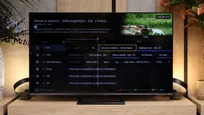
VIDAA HOME OS on the Hisense U7S is feature-rich, runs quickly, and doesn’t complicate everyday use. In addition to apps, it supports AirPlay for streaming from Apple devices and Miracast for mirroring a computer display. Voice search in Polish also works, so instead of typing a movie title with the remote you can just say it. You can also connect a keyboard and mouse. In terms of smart features there’s little to complain about, though before buying it’s worth checking the availability of specific apps you use, as it isn’t as extensive as competing systems.
Classic features and the remote
Hisense hasn’t forgotten viewers who watch regular TV. The U7S lets you record over-the-air programs to a USB drive and schedule recordings for later. There’s teletext, the option to listen to audio with the screen off, and support for Bluetooth headphones. Conveniently, headphones can operate at the same time as the TV speakers, so one person, for example a senior, can use them while others still listen normally. The main notable missing feature is picture-in-picture, or PiP.
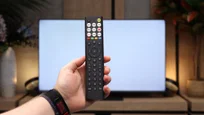
We weren’t fond of the remote itself. It’s very plastic and looks rather "cheap", but it does its job well. It has a full numeric keypad, plenty of shortcuts, and controls the TV via radio, so you don’t have to point it at the screen. It’s only a shame the buttons aren’t backlit. Hisense reserves more elegant remote versions for higher-end models, such as the U7S Pro.
Sound connection options
HDMI audio:
Other audio outputs:
- Toslink: Yes
Wireless audio:
- Bluetooth: Yes
Supported audio formats (external HDMI eARC audio):
- Dolby Digital Plus 7.1: Yes
- Dolby True HD 7.1: Yes
- Dolby Atmos in Dolby Digital Plus (JOC): Yes
- Dolby Atmos in Dolby True HD: Yes
- DTS:X in DTS-HD MA: Yes
- DTS-HD Master Audio: Yes
Senior accessibility
- Numeric keyboard on TV: Yes
- Font size adjustment: Yes
- Audio description: Yes
HISENSE U7S - Apps
8.3/10






















HISENSE U7S - Playing files from USB
8.4/10
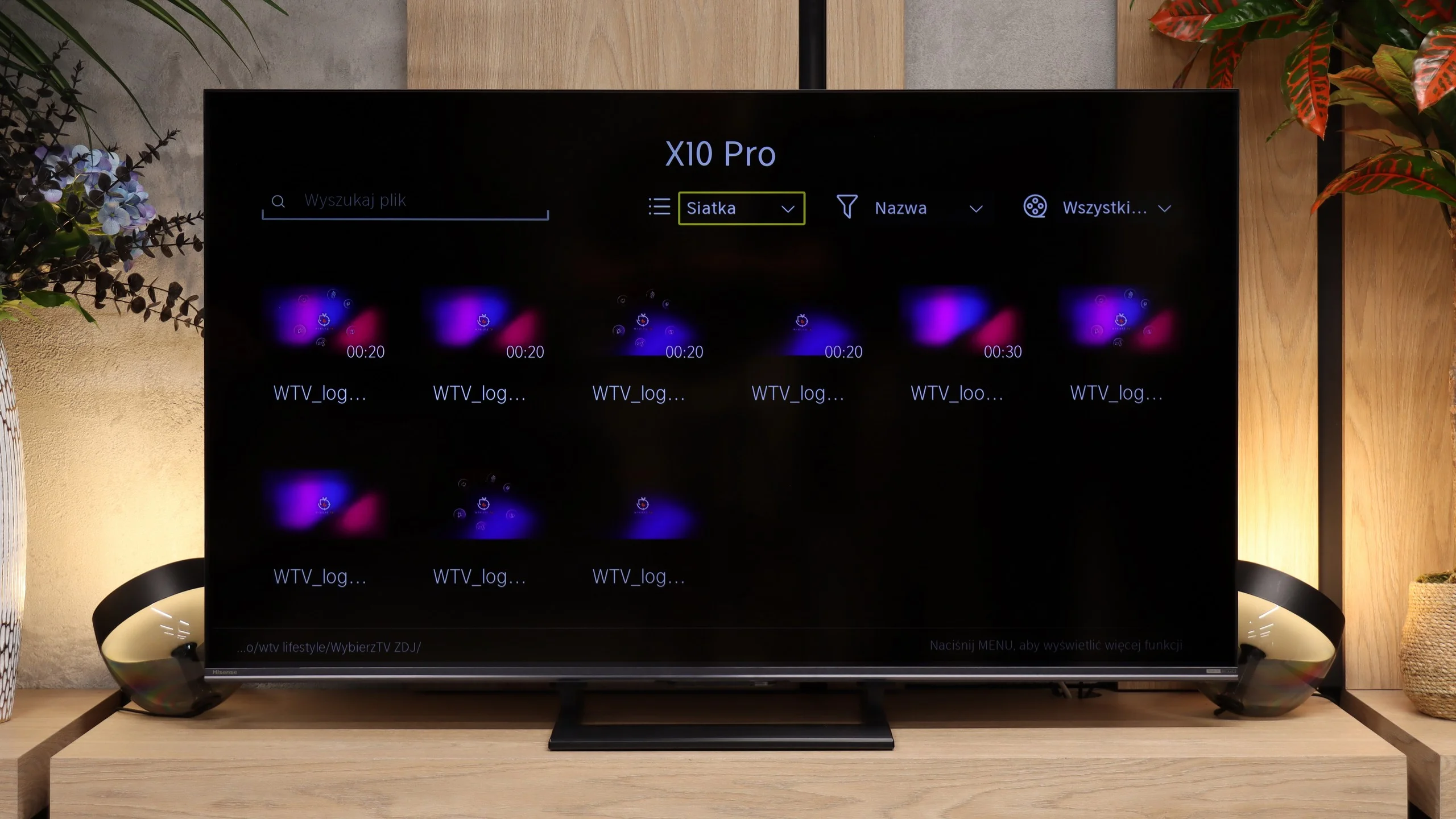
| Maximum photo resolution: | Supported photo formats: |
|---|---|
| 4 Mpix | JPEG |
| 6 Mpix | HEIC |
| 8 Mpix | PNG |
| 10 Mpix | GIF |
| 12 Mpix | WebP |
| 16 Mpix | TIFF |
| 20 Mpix | BMP |
| 24 Mpix | SVG |
| 28 Mpix | |
| 32 Mpix |
The USB player in the Hisense U7S handles most common files. It played our H.264 and H.265 material without issues, including high-bitrate 4K recordings and the test Dolby Vision file. SRT and SUB subtitles work, including Polish characters and font color changes. Not everything worked, however. AV1 and H.266/VVC files did not play, nor did ASS and TXT subtitles. Audio is good, from basic MP3s to FLAC 96 kHz/24-bit, though AIFF and DSD are not supported.
Our biggest issues are with photos. Supported formats are extensive: in addition to JPEG and PNG, WebP and TIFF work as well, but HEIC won't open. Resolution handling is also odd. The TV displayed 4, 6, 8, 16 and 32 MP images, but couldn't handle 10, 12 or 24 MP files. So it's not a straightforward size limit. The player is perfectly fine for videos and music, but when showing vacation photos you may find that some files need to be converted beforehand.
HISENSE U7S - Sound
7.2/10
88dB
Maximum volume
Supported codecs (TV speakers)
Dolby Digital Plus 7.1
Dolby True HD 7.1
Dolby Atmos in Dolby Digital Plus (JOC)
Dolby Atmos in Dolby True HD
DTS:X in DTS-HD MA
DTS-HD Master Audio
The USB player in the Hisense U7S handles most common movies and music well. It supports 4K content, including a Dolby Vision file we tested, and it correctly displays Polish characters in subtitles. It should be sufficient for everyday use with a USB flash drive, although it can have problems with less common formats. Our biggest issue is with photos. The TV handles their resolution rather selectively: it may open a larger photo but refuse to display a smaller one. When browsing a vacation album this can be annoying, because we can't be sure all the photos will display. Some of them will need to be prepared on a computer beforehand.
Sound Quality Test:
Acoustic Measurements
88dBC (Max)
75dBC
HISENSE U7S - Panel details
Software version during testing: v01.09.60c.q0516
Panel uniformity and thermal imaging:

Backlight Type: Mini-LED PFS LED

Founder and originator of the "ChooseTV" portal

Journalist, reviewer, and columnist for the "ChooseTV" portal

michal-woloszyn-title
Reader comments
Comments are provided by the external service Disqus (Zeta Global). Once loaded, Disqus may set cookies and process data about your activity.
We will remember your choice on this device. Provider's privacy policy
See articles related to Hisense U7S / U77SE:
 2/22/2026
1/16/2025

1/16/2025
12/15/2025

1/15/2025
Our YouTube channel
Picture comparison: Sony Bravia 9 II vs TCL X11L vs Hisense ... 7/15/2026