- Matching (Score) |
- Our verdict |
- Competing TVs |
- TV appearance |
- Where to buy |
- Contrast and black detail |
- HDR effect quality |
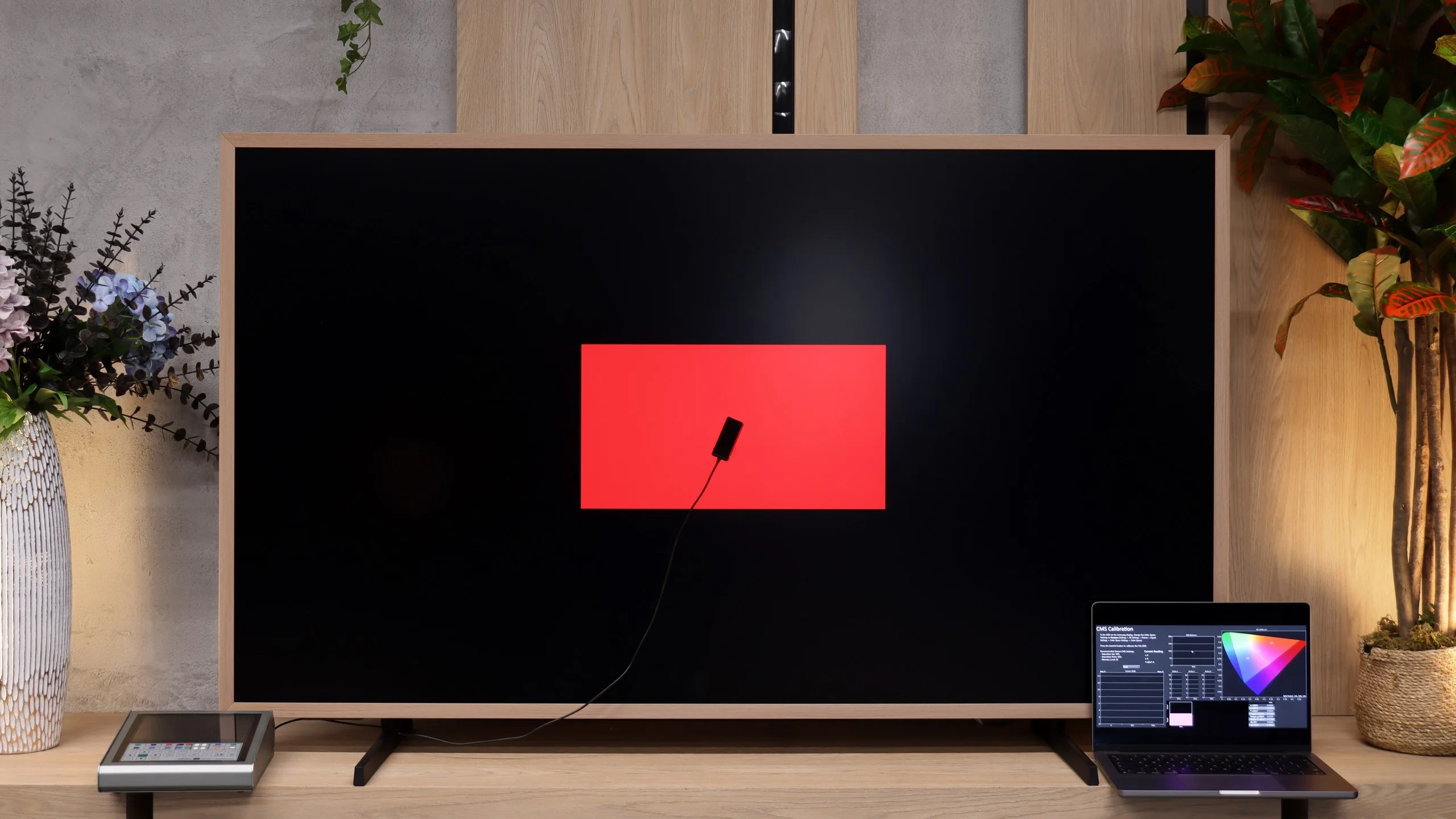
- Factory color reproduction |
- Color reproduction after calibration |
- Smoothness of tonal transitions |
- Image scaling and smoothness of tonal transitions |
- Blur and motion smoothness |
- Console compatibility and gaming features |
- Input lag |
- Compatibility with PC |
- Viewing angles |
- Daytime performance |
- TV features |
- Apps |
- Playing files from USB |
- Sound |
- Panel details
Hisense S7S CanvasTV Review
S7 / CANVAS TV
Available screen sizes:

Complete the survey to find out the result
Panel type: LCD VA Refresh rate: 144Hz Brand: HISENSE Resolution: 3840x2160 System: VIDAA Model year: 2026
This review is an English translation of the Polish original. Read the original on Wybierz.tv.
HISENSE S7S - Our verdict
7.1
Overall rating
The Hisense S7S is a TV that convinces most when you see it on the wall. The matte screen and decorative frame suit a home-gallery concept, and the presence sensor makes the art mode more practical for everyday use. The approach to accessories is also pleasing. The wall mount and an extra frame come in the box, so achieving that look doesn't require more purchases. Compared with its predecessor, more improved than just the extras. Higher brightness makes a clear difference for daytime viewing, and it adds the punch that HDR movies previously lacked. The S7S also handles console gaming with ease, and the VIDAA system runs smoothly. It's simply a fairly versatile TV that doesn't have to remain a black rectangle on the wall when the show is over. The biggest disappointment comes at night, when you turn off the lights and want to focus on the movie. The lack of local dimming shows then. Blacks are lifted, and dark scenes don't have the same depth as on a good Mini LED. It's a shame, because in this respect a further step forward for TVs of this type would be most welcome. So is the S7S worth buying? Yes, if the TV's appearance is as important to you as what it displays. Here you're also paying for the flat design, the art mode, and the way the screen fits into the living room. If evening viewings are the top priority, it's better to look at a model with local dimming. The S7S makes sense as an everyday TV and a design element. You just need to consciously choose that compromise.
Advantages

Matte screen that effectively reduces reflections
Mount and interchangeable frames included
Free art mode
Quite high brightness
144 Hz panel and low input lag
Plenty of features for gamers
Responsive and easy-to-use VIDAA system
Support for multiple HDR formats (Dolby Vision, HDR10+)
Art mode with presence sensor
Backlit remote and USB recording
Disadvantages

No local dimming, which is a drawback at this price.
Narrow viewing angles (a characteristic of VA panels).
Visible motion blur with fast-moving objects.
HGiG not working properly (a feature for gamers).
Flat sound and no Dolby Atmos.
 Movies and series in UHD quality
6.9
 Classic TV, YouTube
6.3
 Sports broadcasts (TV and apps)
6.2
 Gaming on console
8.1
 TV as a computer monitor
8.2
 Watching in bright light
6.9
 Utility functions
9.6
 Apps
8.3
 Sound quality
6.0
Complete the survey to find out what fits your preferences
The Hisense S7S is the latest iteration of the Canvas TV series, TVs designed to also serve as artwork in the living room. In that kind of design, appearance matters, but when you start a movie, you expect more than just a pretty frame. What has changed compared to its predecessor, the S7N? Has Hisense improved picture quality, and does the S7 series perform as well for watching as it does when displaying art? We examine this in our review.
HISENSE S7S - Competing TVs in this price range
HISENSE S7S - TV appearance
HDMI inputs: 2 x HDMI 2.0, 2 x HDMI 2.1 (48Gbps) Outputs: Toslink (Optical audio), eARC (HDMI), ARC (HDMI) Network Interfaces: Wi-Fi 2.4GHz, Wi-Fi 5GHz, Ethernet (LAN) 100Mbps
Build quality: Good
Stand type: Legs
Bezel color: Changeable Frame


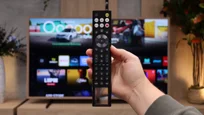
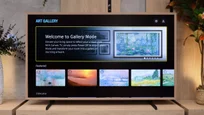
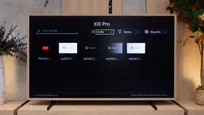
Stand: Fixed
Flat design: Yes
Accessories: Stand, Wall bracket, Changeable frames
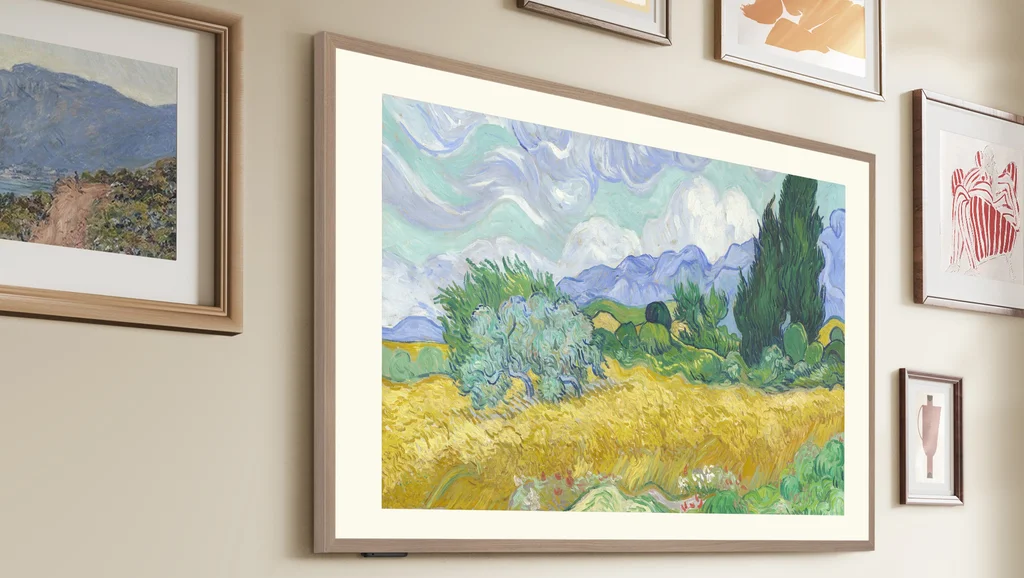
The Hisense S7S was designed from the start to be wall-mounted. It has a flat housing that allows it to be mounted close to the wall surface. Combined with a decorative frame, this creates the Canvas TV series' intended effect: the TV is meant to resemble a framed picture.
The package includes interchangeable metal frames in an oak finish. That finish gives the whole setup a warmer character and pairs well with wooden furniture. It's also nice that a wall mount is included, so you don't have to immediately hunt for additional mounting accessories. If you prefer to place the S7S on a cabinet, the manufacturer also includes a stand. The stand has a fixed position, so before buying it's worth checking whether it will fit on your furniture. However, mounted on the wall the Hisense's design shows its character best.
Buy at the best price
Select size:

HISENSE S7S - Contrast and black detail
6.1/10
Local dimming function: No
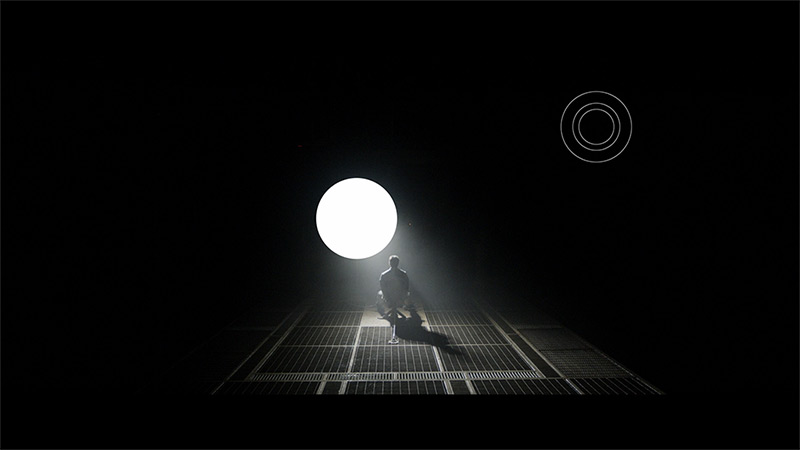

Result
5,400:1
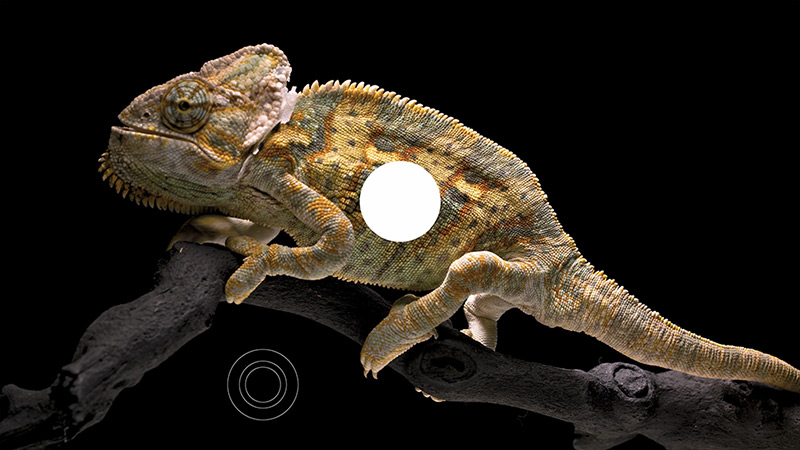
Result
6,800:1
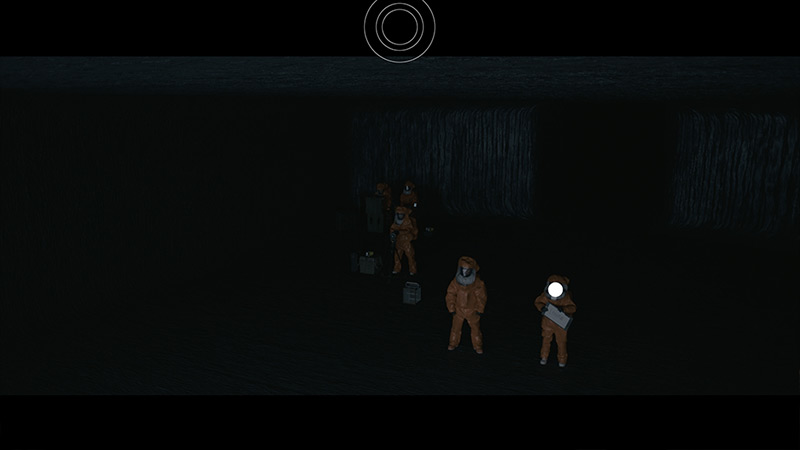
Result
6,400:1
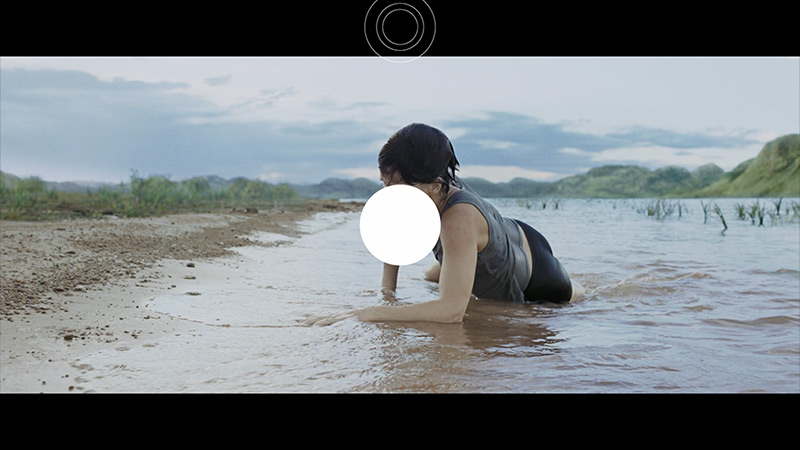
Result
6,200:1
Result
5,900:1

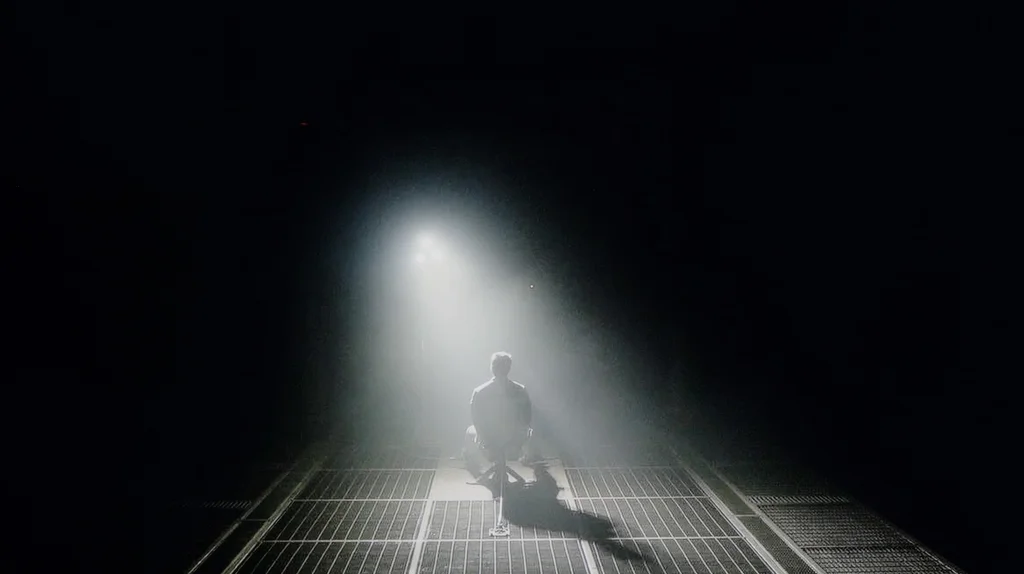
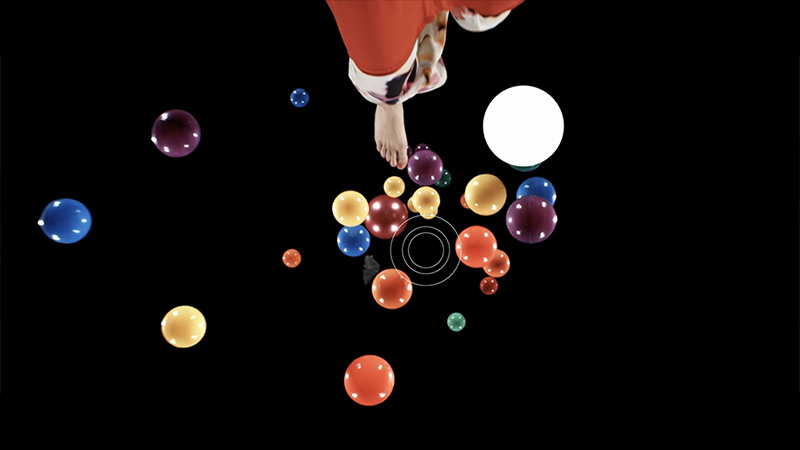
Hisense S7S uses a VA panel, which delivers quite good contrast even without additional support. In mixed scenes, where bright elements sit next to larger shadowed areas, the image retains a pleasant sense of depth. Results are also fairly consistent across all our test shots. When watching in a well-lit living room, blacks should look satisfactory. The biggest limitation, however, is the lack of local dimming. The S7S is not a Mini LED and cannot dim the backlight separately in dark parts of the frame. In a spotlight scene the light looks distinct, but the surrounding blacks remain slightly lifted. Once you turn off the room lights it becomes easier to see that the dark background and the black bars above the picture shift toward gray. The VA panel itself does a good job, but it cannot replace precise backlight control. For regular viewing the S7S performs decently in this regard. During evening sessions, especially in films with many night scenes, the lack of dimming will be noticeable.
HISENSE S7S - HDR effect quality
6.5/10
Supported formats: HDR10, HDR10+, Dolby Vision, Dolby Vision IQ, HLG
Luminance measurements in HDR:

Result
683 nit
Result
665 nit
Result
683 nit

Result
633 nit

Result
712 nit
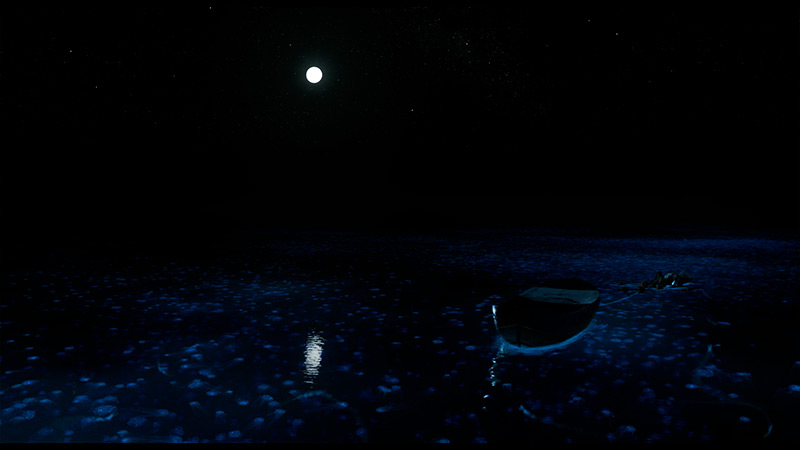
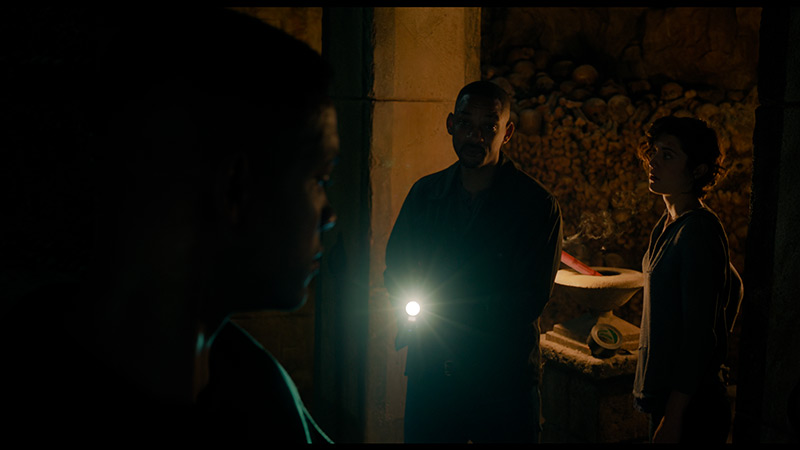
Hisense S7S delivers a big improvement in brightness over last year’s model. The predecessor reached around 350-400 nits, while here we’re already near 700 nits. That increase gives the picture a noticeable kick. Sunlight, reflections on water and highlights have significantly more punch, so HDR starts to look truly convincing. Importantly, brightness is very similar across all the scenes we tested. The S7S handles both small bright details on dark backgrounds and the heavily lit frame from "The Meg" well. It doesn’t dim large bright areas, so sunny shots retain the proper intensity. The previously mentioned limitation in black levels remains, of course. Without local dimming, bright light doesn’t separate from dark backgrounds as dramatically, but the improvement over the predecessor definitely deserves praise. Colors in HDR Colors also perform quite well. A PFS phosphor used in the backlight is responsible for expanding their range. It plays a similar role to quantum dots in QLED displays. As a result, reds and greens can be deeper and more saturated than on a basic LCD panel. Coverage of the DCI-P3 gamut reaches about 95%, and the results seen in movies practically match measurements from test patterns. That’s a good result, which combined with higher brightness allows the S7S to deliver noticeably more impressive HDR than last year’s model.
BT.2020 color gamut coverage and primary color luminance
| Data set | BT.2020 | P3 | R | G | B |
|---|---|---|---|---|---|
| Synthetic patterns | 74.7% | 95.0% | 68% | 71% | 72% |
| Film measurements | 74.5% | 95.1% | 68% | 71% | 72% |
 BT.2020
 BT.2020 and P3 – average color gamut coverage (percent of the target gamut).
R, G, B – average primary color luminance relative to target (percent).
Scene from the movie “Pan” (about 2800 nits)

Scene from the movie “Billy Lynn” (about 1100 nits)

The Hisense S7S does a pretty good job mapping HDR material to the screen’s capabilities, though it drifts a bit from the filmmakers’ intended look. In both test films it boosts the brightness of darker and mid tones. You can see that on the EOTF chart. In practice, faces, clothing and background elements are brighter than they should be. That can make the picture look more striking, but the scene loses some depth and bright highlights stand out less against it. In the shot from Billy Lynn, facial and uniform details remain clearly visible, while the brightest parts of the fireworks begin to blend together. A tougher scene from Pan more strongly reveals the TV’s limitations. The Hisense retains a lot of detail in the clouds, but the area around the sun already becomes a more uniform, bright blotch. Overall it still looks pleasant, but a more restrained approach to brightening and better separation of the very brightest shades would help.
HDR luminance chart:
The issues described are more noticeable with a standard HDR10 signal. Fortunately, the Hisense S7S supports Dolby Vision, which helps it better utilize the screen's capabilities. Thanks to dynamic metadata, the TV receives additional information on how to render each scene. It doesn't have to rely solely on its own tone mapping. In the snow shot the difference is clear. With Dolby Vision it's easier to pick out fine details in the ground, and the horses stand out better against the bright background. The image looks less flat and preserves more subtle transitions in the highlights. That doesn't mean all of the S7S's limitations disappear, of course, but for demanding movies Dolby Vision is a really useful addition here.
Static HDR10

Dynamic: Dolby Vision

Factory color reproduction
5.1/10
The factory color setup in Filmmaker mode on the Hisense S7S leaves a lot to be desired. The most noticeable issue is an excess of blue in the white balance, visible in both ordinary SDR content and HDR. This makes the picture noticeably cooler. Whites have a bluish cast, and faces lose some of their natural, warm tone. The brighter the part of the image, the more pronounced this tendency. So this isn't a minor difference you can only pick up with measurement equipment.
In SDR material there's also a too-low gamma, meaning the image is overly brightened, especially in darker areas. It's easier to see what's in the shadows, but that comes at the cost of depth. Night scenes become too bright and lose some of their atmosphere. Combined with the cool color palette, this produces an image that's less natural than we might expect. Brightness handling is better in HDR. The TV still slightly lifts midtones, but the deviations are smaller than in SDR. The main problem remains the blue cast, which is especially noticeable in bright shots. The S7S is capable of showing attractive colors, but the factory settings don't let it make full use of that potential.


Color reproduction after calibration
7.5/10
After calibration the Hisense S7S looks noticeably better. First of all, the blue cast that made the out-of-the-box image feel too cool has been removed. In SDR content the white balance is now almost ideal. Whites look neutral, and skin tones regain their natural colors. It's a change that's easy to appreciate during normal viewing, especially when compared directly with the factory settings. In HDR the white balance was also greatly improved, though there are small deviations in the brighter areas. Colors are much closer to how they should look. You can still notice the way the TV manages brightness. Measurements in film scenes show the S7S still brightens dark and mid tones. That makes the image a bit less deep, and the transition from shadow to strong highlights lacks the impact it should have.
Calibration therefore removed the biggest problem of the factory settings and clearly improved the image's naturalness. It did not, however, change HDR tone mapping behavior or the limitations that result from the lack of local dimming. Despite these caveats, the difference compared with what you get out of the box is substantial.

HISENSE S7S - Smoothness of tonal transitions
9.2/10
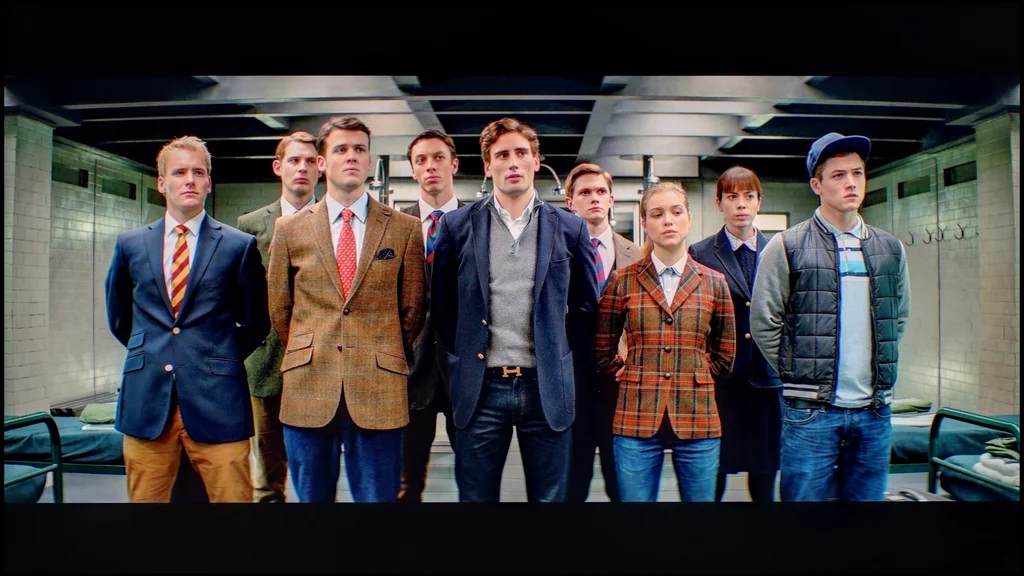
The Hisense S7S handles smoothness of tonal transitions very well. In both bright and darker scenes, colors blend gently into one another. You don't see obvious banding that would distract from viewing. Only in the very darkest tones can you spot minor unevenness, and you really have to look for it.
It looks slightly worse when you switch to Dolby Vision. In that format the boundaries between shades become more noticeable, especially in darker parts of the image. So keep in mind that while Dolby Vision helps this TV show more detail in bright scenes, in terms of smoothness of tonal transitions it performs a bit worse than HDR10.
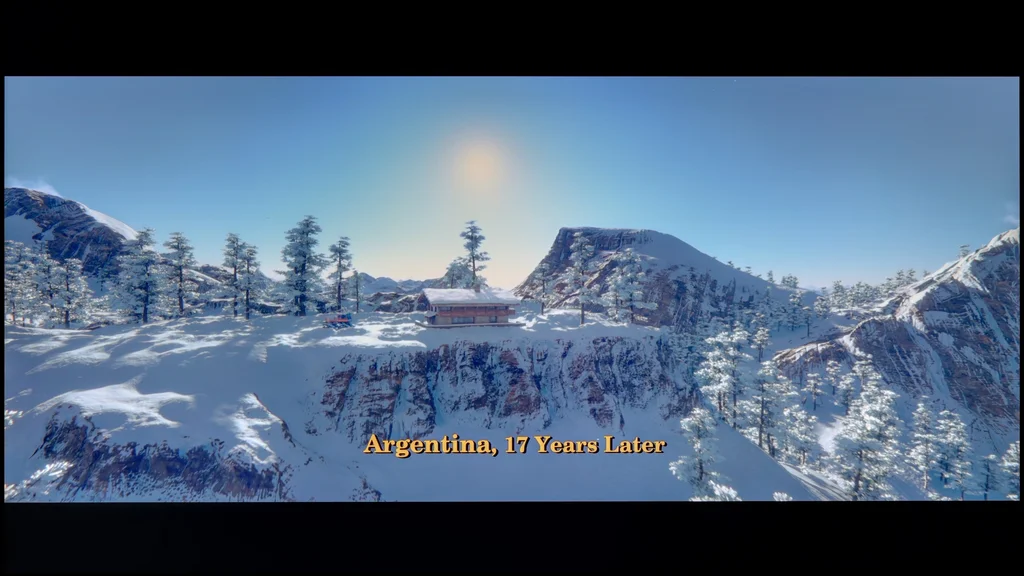

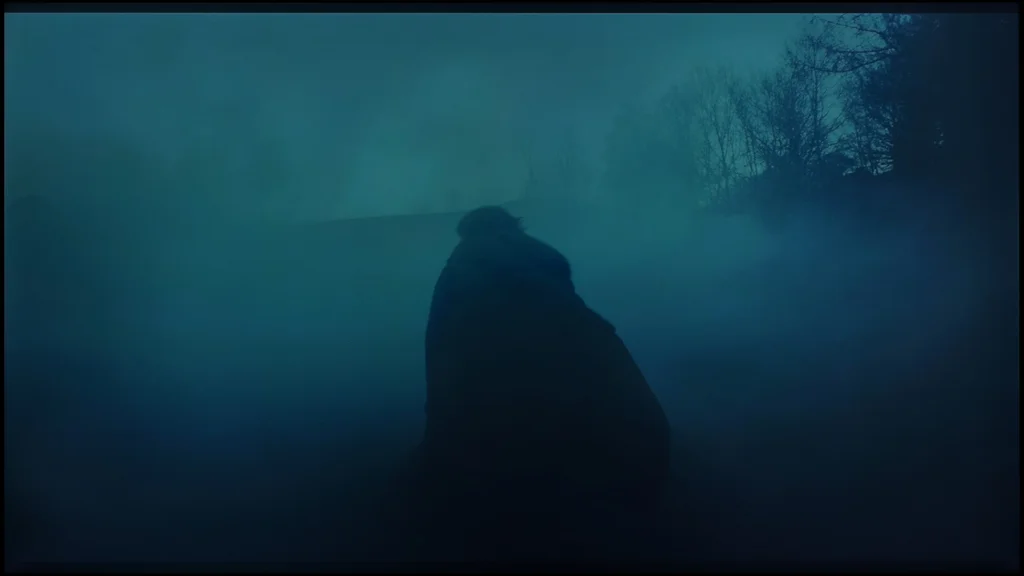
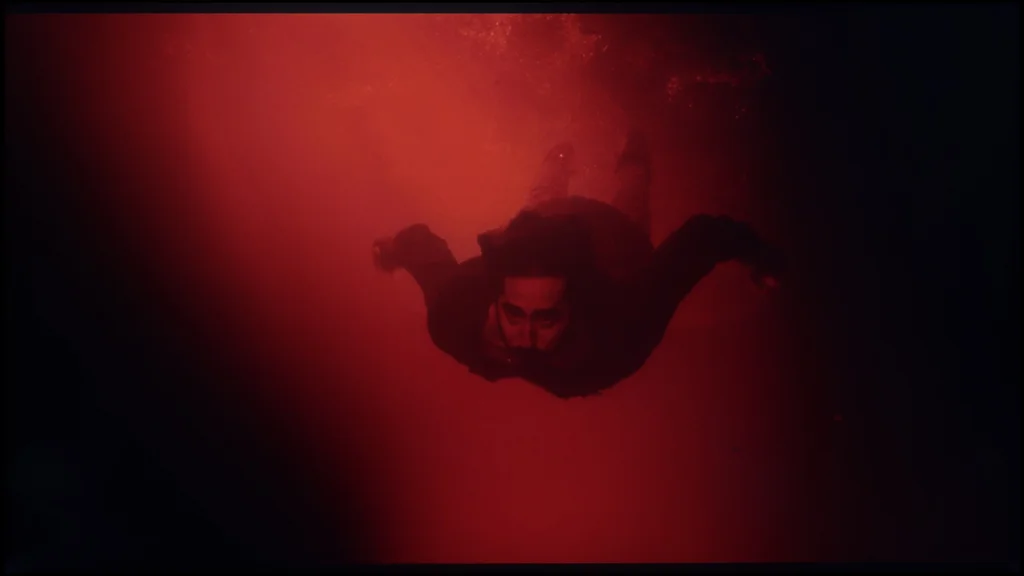
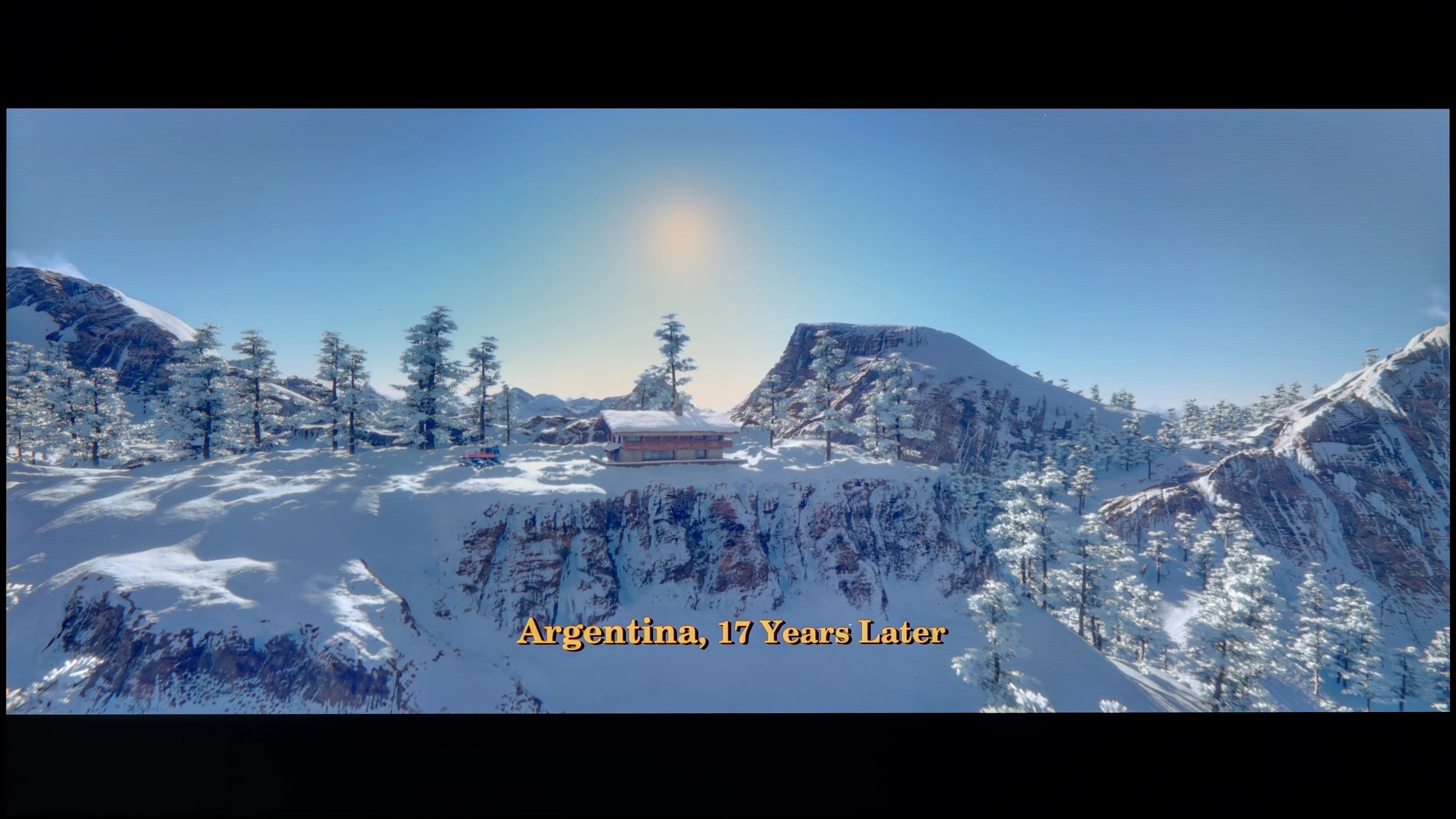

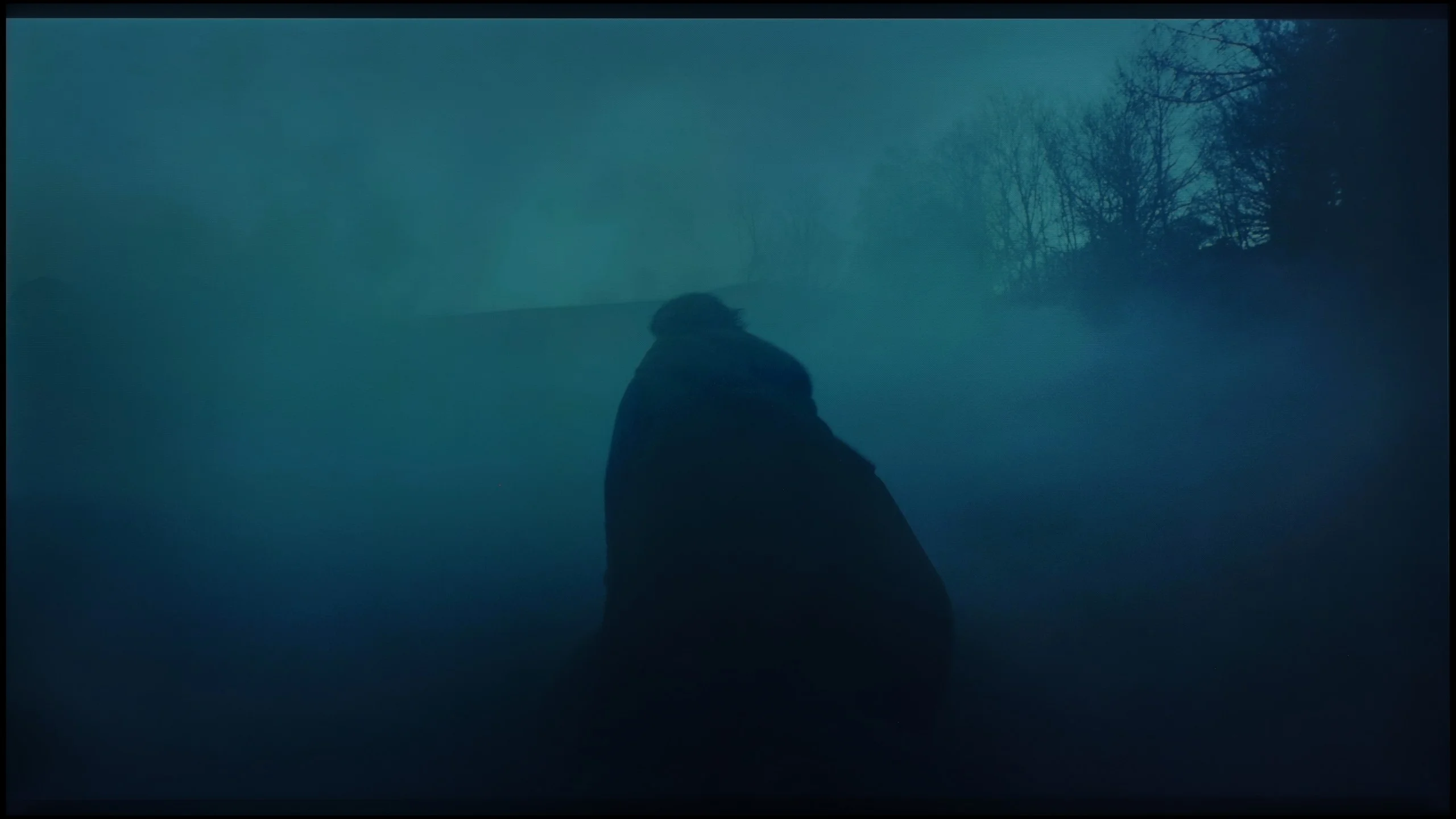
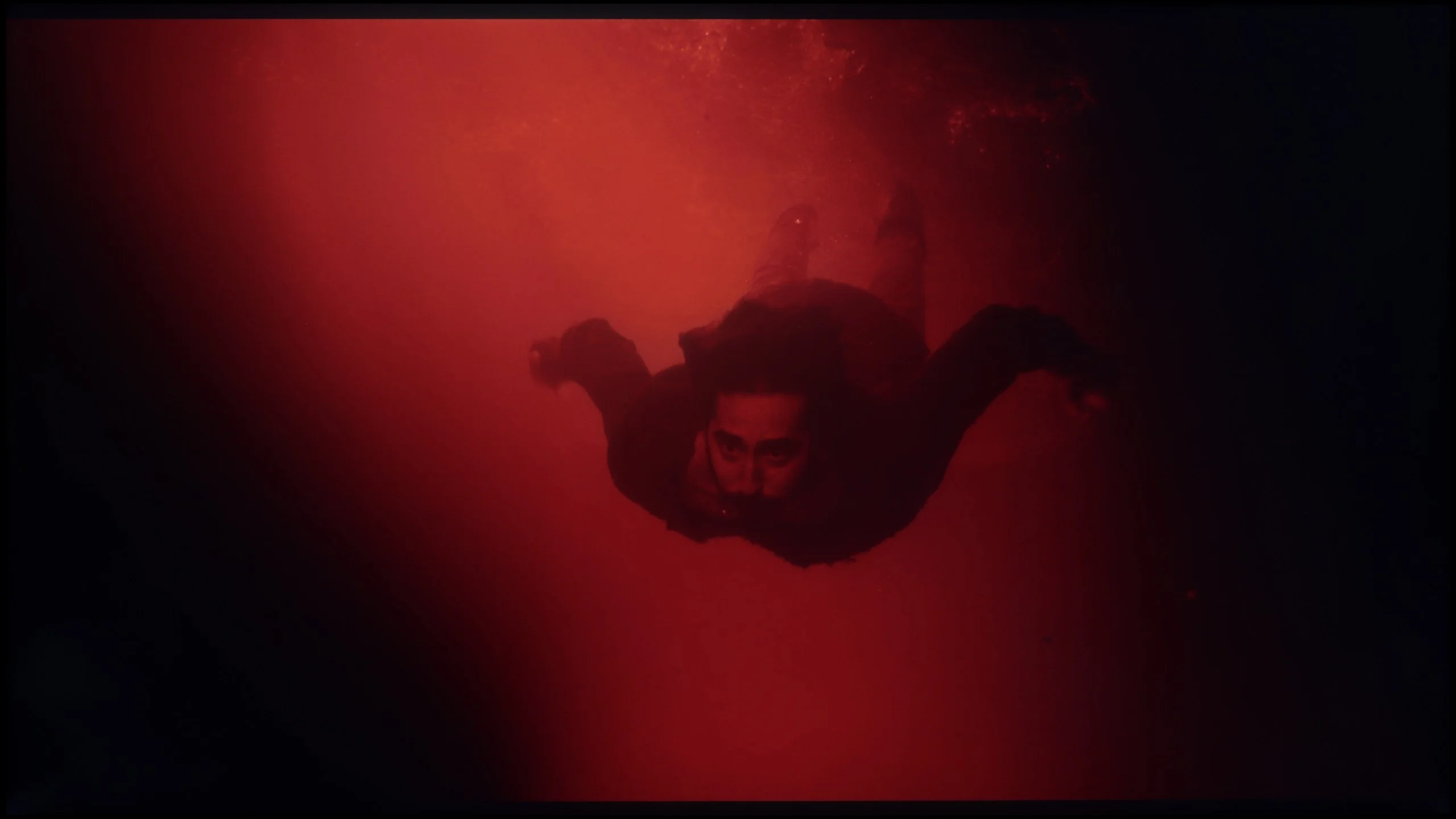
Image scaling and smoothness of tonal transitions
6/10
 Smooth transition function
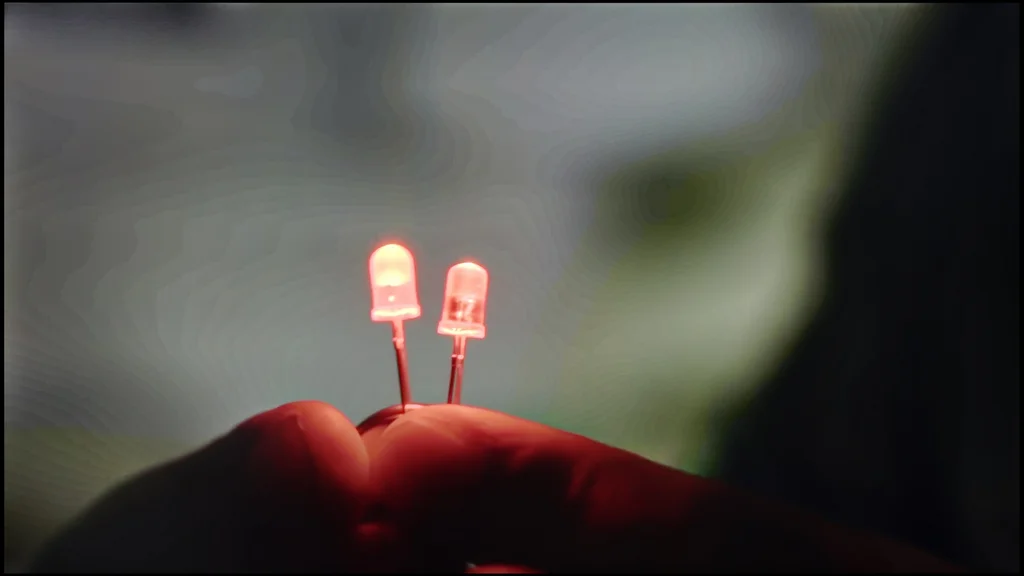
Image without overscan on the SD signal

The Hisense S7S has a "Smooth and Gradient Picture" function that is supposed to improve tonal transitions in poorer source material. In practice, however, it's hard to notice any benefit from turning it on. Visible banding between shades remains in place, while fine details can disappear from the image. So the smoothing operates where we might not want it to. We'd leave this option turned off.
Image scaling itself performs well. Lower-resolution material is clear and maintains pleasing sharpness, so regular TV or older recordings look quite acceptable. There's also no problem with overscan, meaning the cropping of the image edges. On the screen, regardless of resolution, we can see the entire frame.
HISENSE S7S - Blur and motion smoothness
7.1/10
Maximum refresh rate of the panel: 144Hz
Film motion smoothing option: Yes
Blur reduction option: Yes
BFI function 60Hz: No
BFI function 120Hz: No
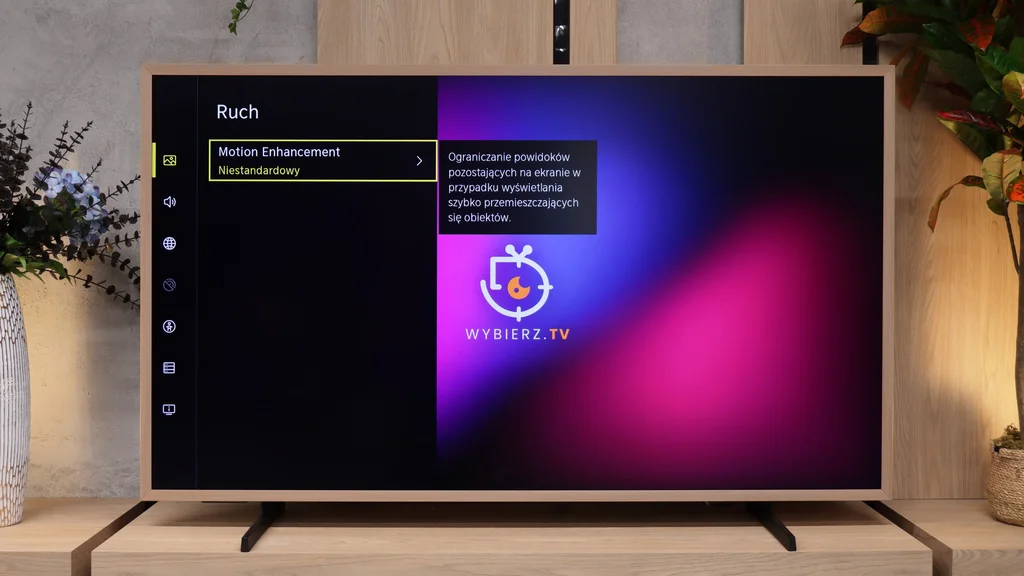
The Hisense S7S has a 144 Hz panel, so despite its "cinematic" character it’s also suitable for sports and gaming. PC gamers will benefit most from the highest refresh rate. Here we focus on performance at 120 Hz, where motion is smooth, but the panel itself isn't among the fastest. You can see trailing behind moving objects, especially against darker backgrounds. That doesn't ruin the viewing experience, though edges lose some sharpness during fast action.
The "Motion Enhancement" motion smoothing is useful for movies. It helps reduce the choppiness of motion that's visible even during slow camera pans. You can use the presets or choose a custom mode and adjust the effect to your liking. That way you don't have to give up the film-like character of the picture just to make motion look a bit steadier.
Blur (native resolution, maximum refresh rate):



Blur (1080p@240Hz):



An interesting addition is support for 240 Hz at Full HD resolution. In our test a moving object appeared sharper than at 120 Hz, though motion blur was still noticeable. It's mainly an option for gamers who prefer to prioritize speed over resolution. A high refresh rate alone, however, does not eliminate the limitations of the panel's response time.
HISENSE S7S - Console compatibility and gaming features
8.5/10
- ALLM:
Yes
- VRR:
Yes
- VRR range:
48 - 288Hz
- Dolby Vision Game Mode:
Yes
 Correct implementation of HGIG:
No
- 1080p@120Hz:
Yes
- 1440p@120Hz:
Yes
- 4K@120Hz:
Yes
- Game bar:
Yes
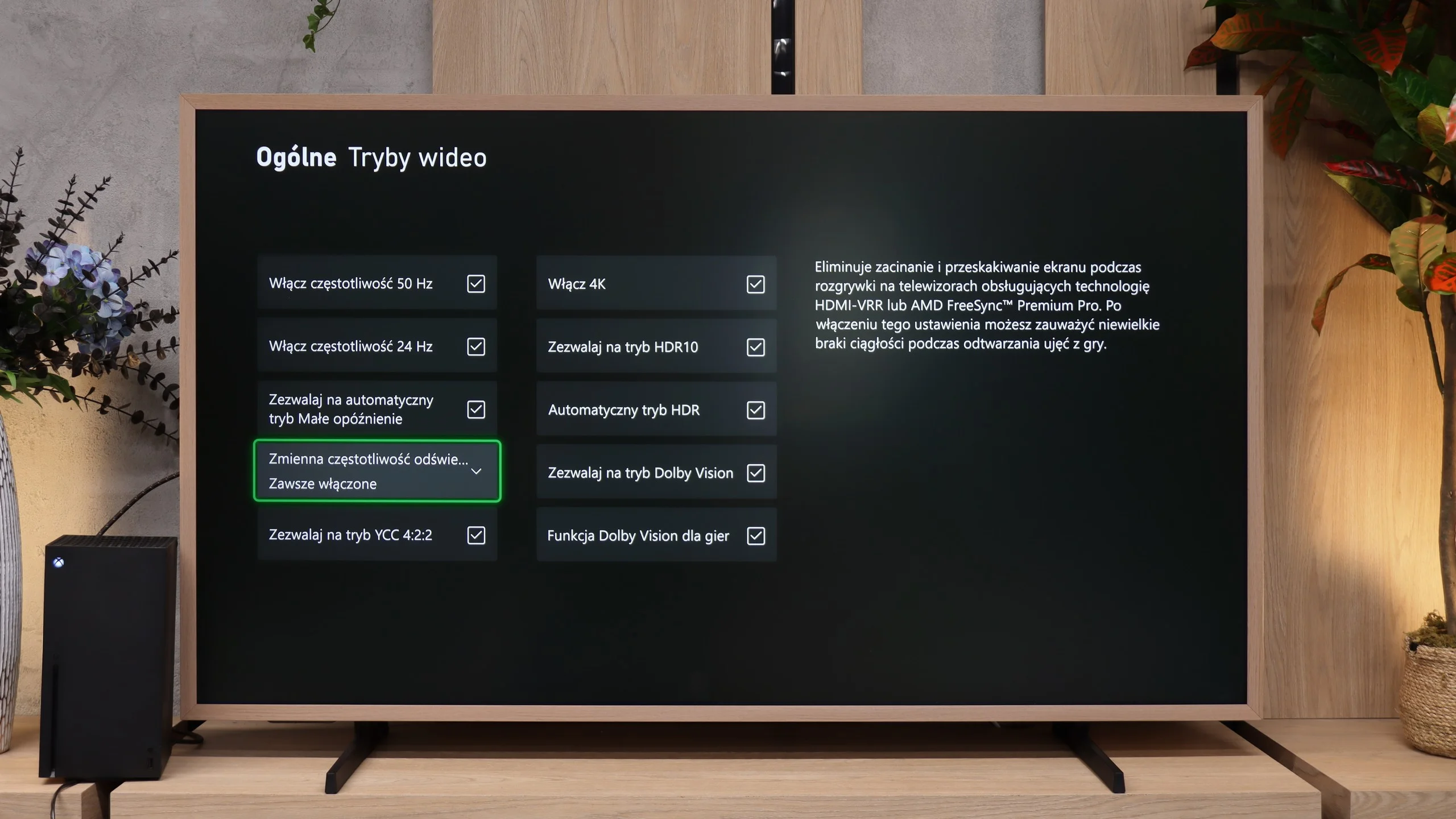
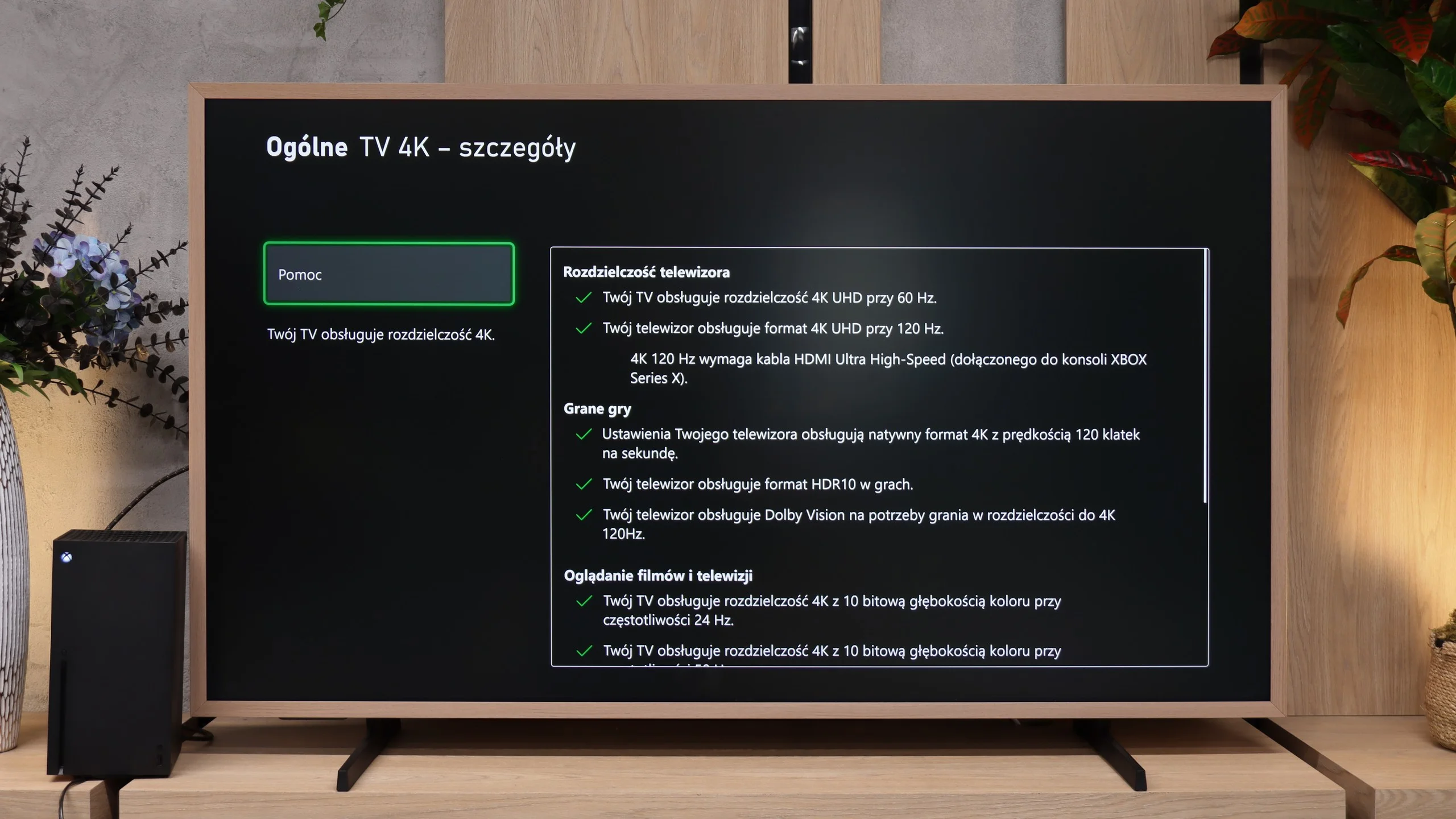
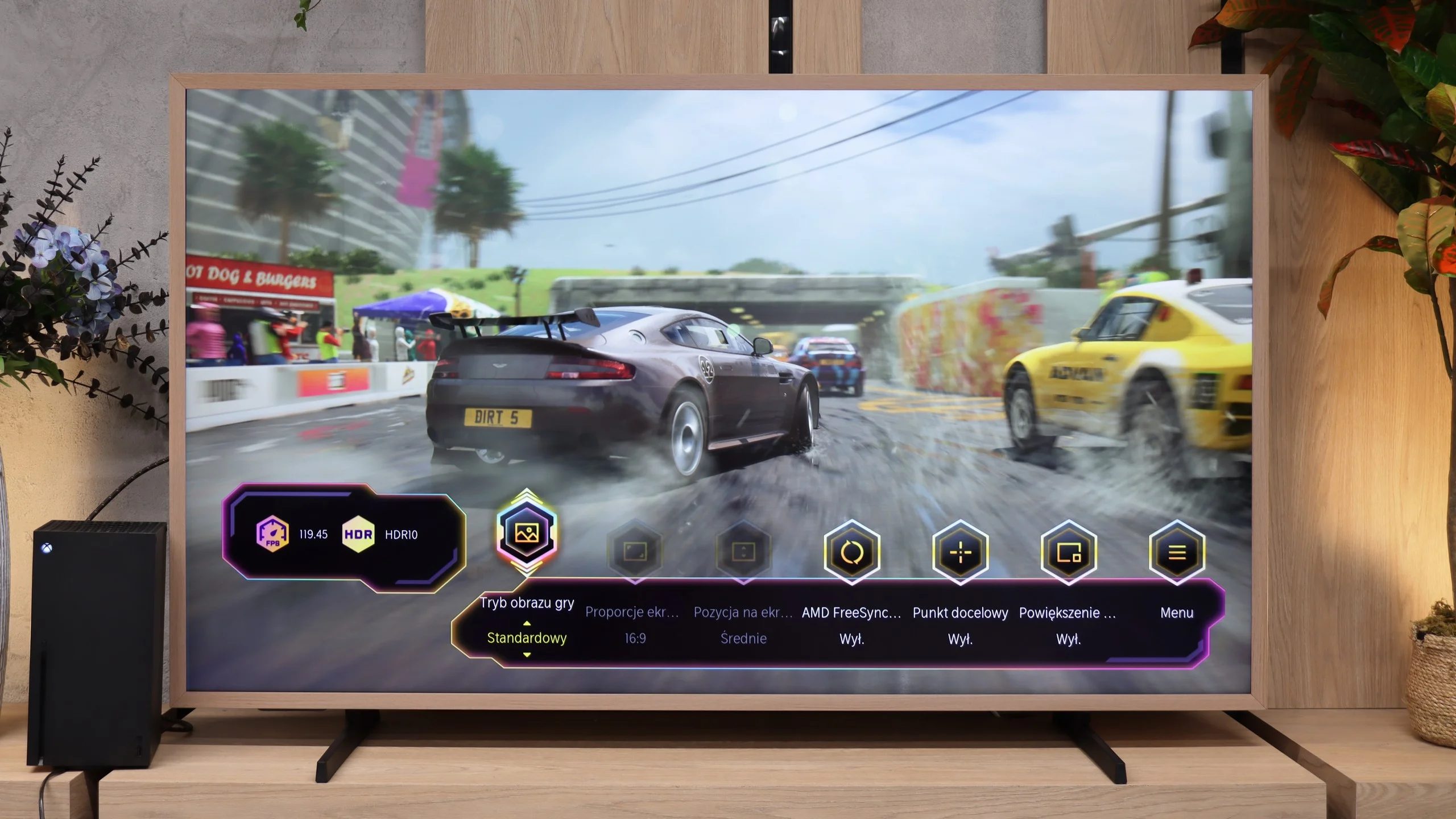
The Hisense S7S has quite a lot to offer gamers. It supports 4K gaming at 120 Hz, and thanks to VRR it helps keep gameplay smooth when the frame rate starts to change. It also has ALLM, so the TV automatically switches to low-latency mode when you start a console. Xbox users can take advantage of Dolby Vision in games, and the handy Game Bar lets you quickly check signal parameters and access settings. For a TV that's primarily meant to mimic an image on the wall, the feature set is actually quite sensible. The biggest drawback is HGiG not working correctly. That makes it hard to match the console's HDR to the actual capabilities of the screen. The TV still processes brightness in its own way, so the in-game result can differ from what we set during console calibration. It's a shame, because otherwise the S7S offers most of the features we expect from a modern gaming TV.
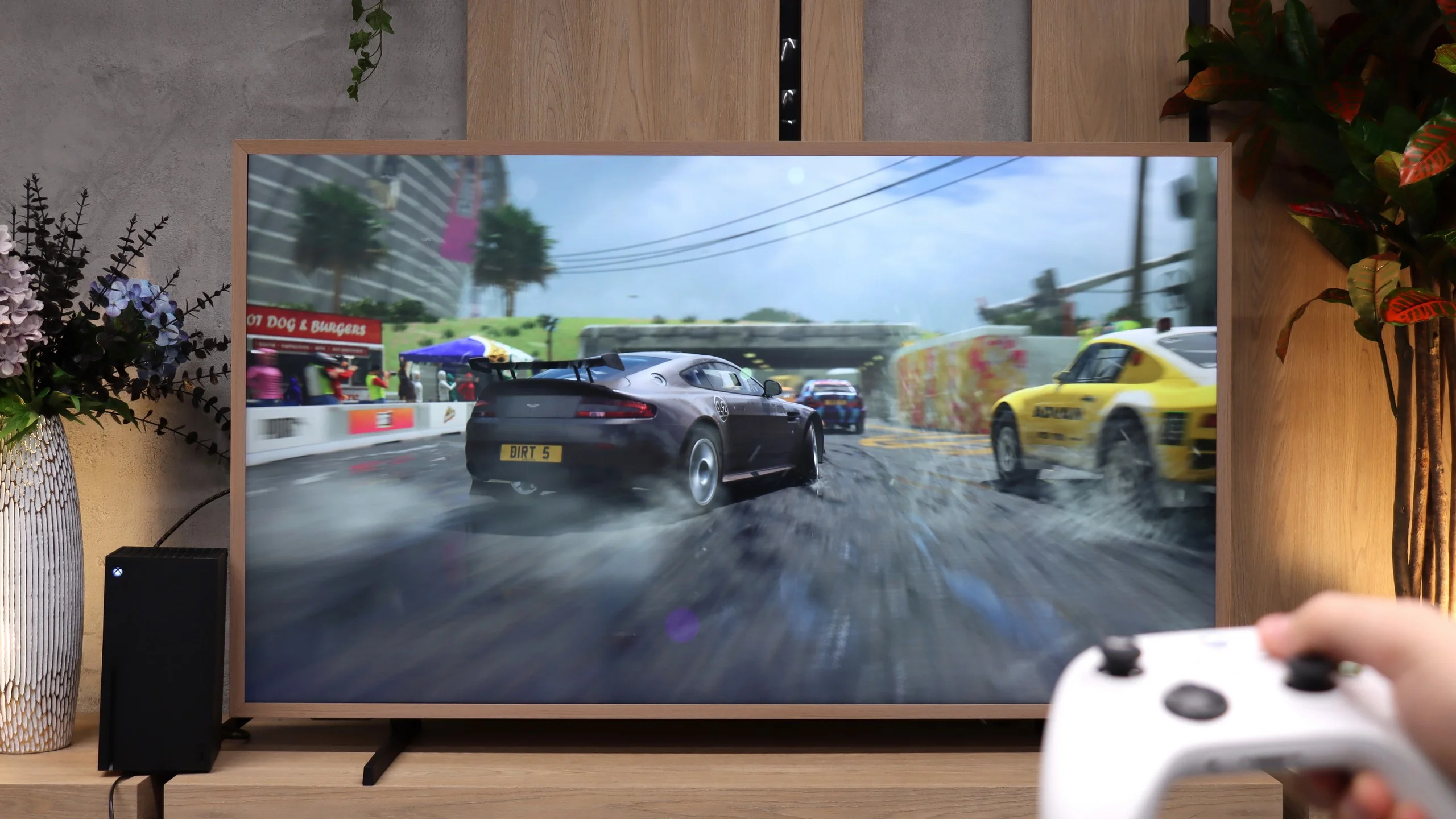

HISENSE S7S - Input lag
9.7/10
In terms of latency, the Hisense S7S performs very well. At a 60 Hz signal, input response is quick, and switching to 120 Hz reduces input lag even further. You’ll especially appreciate this in fast-paced games, where every controller movement should immediately translate to what’s happening on screen. Importantly, turning on HDR or Dolby Vision doesn’t worsen these results. So you can enjoy a more striking picture without worrying about extra input lag. The S7S may look like a picture on the wall, but in this regard it easily keeps up with TVs designed for gaming.
| SDR | HDR | Dolby Vision |
|---|---|---|
| 1080p60: 18 ms | 2160p60: 17 ms | 2160p60 DV: 17 ms |
| 1080p120: 10 ms | 2160p120: 8 ms | 2160p120 DV: 9 ms |
| 2160p60: 18 ms | ||
| 2160p120: 10 ms |

HISENSE S7S - Compatibility with PC
8.2/10
Chroma 444 (max. resolution and refresh rate): Yes
Font clarity: Good
Readability of dark text and shapes: Average
Input lag in PC mode (4K, max. refresh rate): 9ms
Matrix subpixel arrangement: BGR
Max refresh rate: 144Hz
G-Sync: Yes
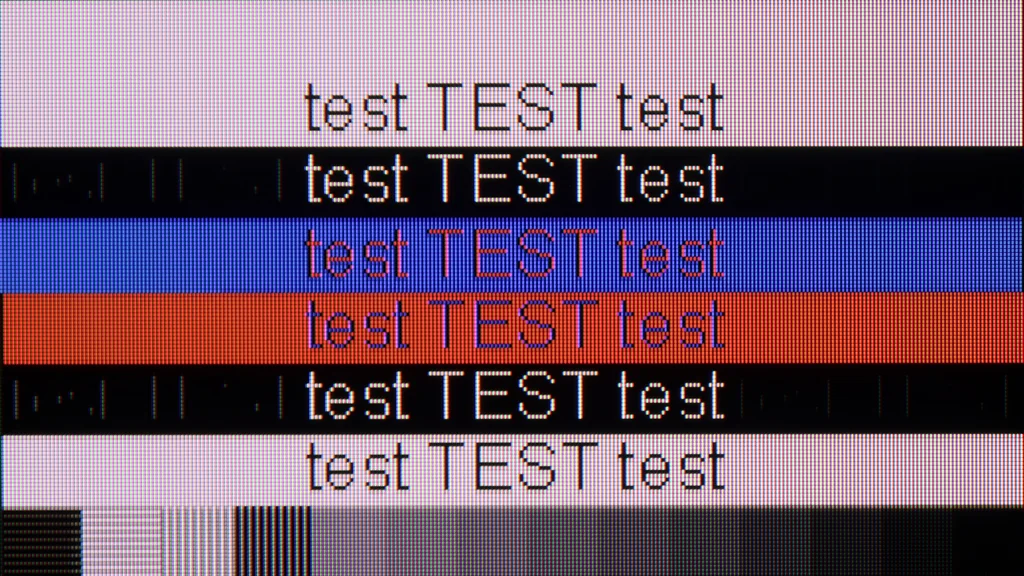
Hisense S7S works well as a large screen for PC gaming. It supports 4K at 144 Hz, responds quickly to input and is compatible with G-Sync, which helps prevent screen tearing when frame rates vary. Just keep in mind the smearing mentioned earlier. Low input lag provides fast response, but that doesn't mean moving objects will be perfectly sharp. You can also comfortably use it for web browsing or working on documents. Support for 4:4:4 chroma preserves the legibility of colored text even at the highest refresh rate. Regular fonts look good, though up close you can see slight irregularities along their edges. Very dark text on a dark background performs worse; its thin strokes can disappear. So it's quite good for occasional work, but with small text the S7S doesn't offer the same precision as a good monitor.
HISENSE S7S - Viewing angles
3.1/10
Brightness drop at an angle of 45 degrees: 73%
Viewing angles on the Hisense S7S are fairly average, which is typical for many TVs with a VA panel. When you move to the side, colors lose saturation and black levels become noticeably brighter. The picture therefore looks best when you’re sitting directly in front of the screen. With a wider couch layout, people in the outer seats will see a less contrasty image. It’s worth keeping this in mind when displaying images in art mode as well — from the side they won’t look as good as they do head-on.
HISENSE S7S - Daytime performance
6.9/10

Panel finish: Matte
Reflection suppression: Very Good
Black levels during daytime: Average
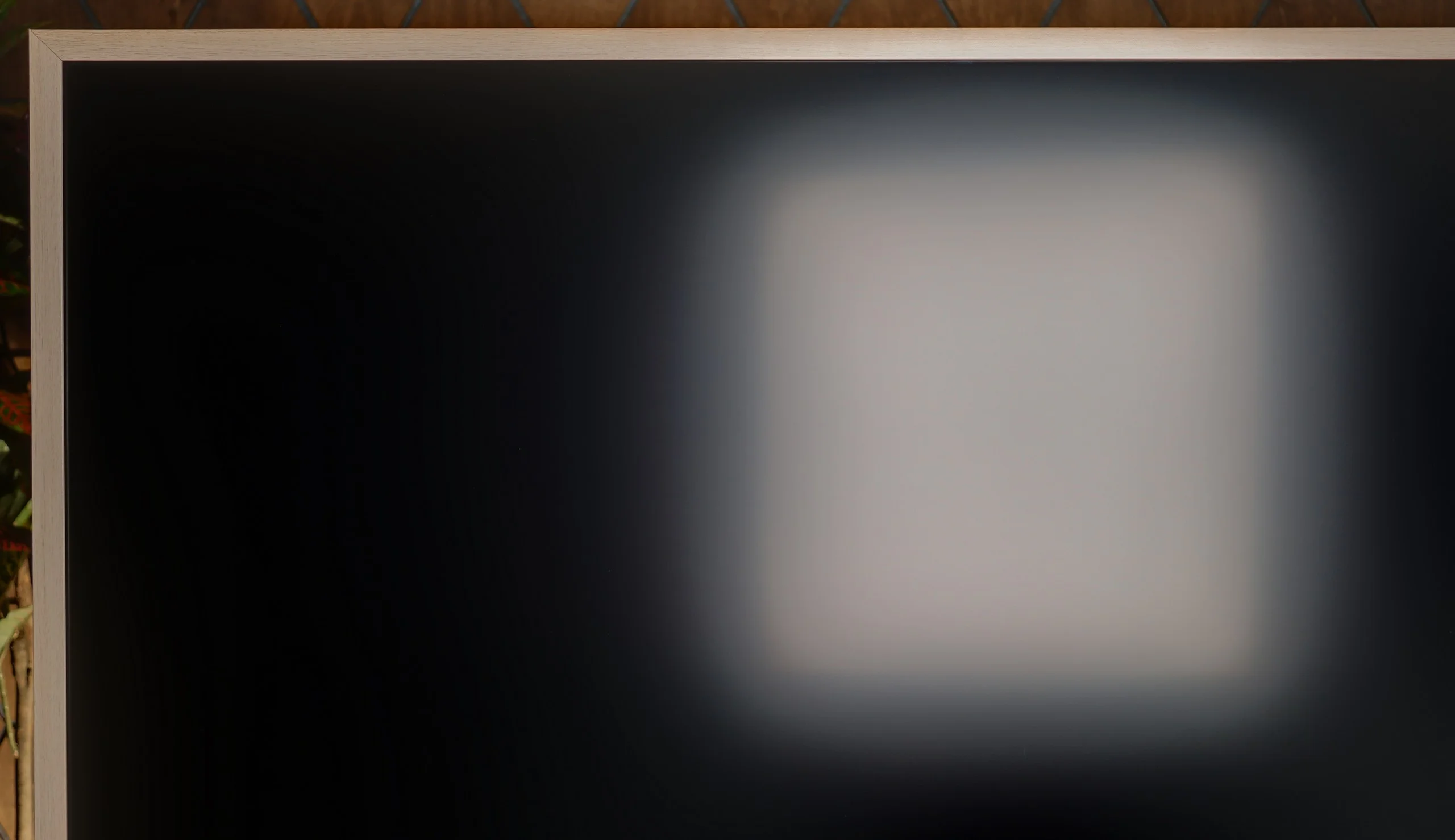
The matte coating is one of the biggest advantages of the Hisense S7S for daytime viewing. It disperses reflections very well, so instead of a distinct reflection of a window or lamp you see a softer glow. That also helps in art mode, because the screen looks less like a mirror and more like a real picture. On top of that, the TV maintains high brightness even when the whole frame is bright. In a typical lit living room you don't have to reach for the blinds right away.
However, this coating has a downside. Light that hits the screen is scattered over a larger area and noticeably degrades blacks. Dark areas become grayish and the image loses contrast. The S7S handles reflections well, but it doesn't make room lighting irrelevant. It's best to position it so bright light doesn't fall directly on the panel.
Panel brightness
Hisense S7S CanvasTV: 669 cd/m2
HISENSE S7S - TV features
9.6/10
System: VIDAA
System performance: Good
- HDMI inputs: 2 x HDMI 2.0, 2 x HDMI 2.1 48Gbps
- Outputs: Toslink (Optical audio), eARC (HDMI), ARC (HDMI)
- Network Interfaces: Wi-Fi 2.4GHz, Wi-Fi 5GHz, Ethernet (LAN) 100Mbps
- TV reception: DVB-T, DVB-T2, DVB-S, DVB-S2, DVB-C
Classic features:
- Recording to USB (terrestrial TV): Yes
- Recording programming: Yes
- Picture in Picture (PiP): No
- RF remote control (no need to aim): RF
- Backlit remote control: Yes
- Teletext: Yes
- Audio only mode: Yes
- Bluetooth headphones support: Yes
- Simultaneous Bluetooth headphones & TV audio: Yes
Smart features:
- AirPlay: Yes
- Screen mirroring (Windows Miracast): Yes
- Voice search: Yes
- Voice search in native language: Yes
- Ability to connect a keyboard and mouse: Yes
VIDAA
The Hisense S7S uses the VIDAA system, which runs smoothly and is easy to use. The menu responds quickly, and switching between apps is fast. There are also useful extras like AirPlay, wireless screen casting from a computer, and voice search in Polish. The biggest limitation remains the app selection. Popular services are available, but for lesser-known providers the offering is more limited than on Google TV.
TV features
In terms of classic TV functions there is little to complain about. You can record programs to USB and schedule recordings, and Bluetooth headphones can play at the same time as the TV speakers. The backlit remote, which you don't have to point at the screen, is also a nice touch. These are small details, but you appreciate them more in daily use than another marketing slogan. The main omission is really picture-in-picture.
Art mode
Most of the character, however, comes from the S7S's Art mode. The matte screen and decorative frame help the displayed images fit well with the room's decor. A motion and presence sensor allows the mode to adjust depending on whether someone is in the room. Another plus is the included accessories: a bracket for flat wall mounting and interchangeable frames come in the box. So you don't need to buy accessories right away to get the picture-on-the-wall effect. For these additional features, as with other TVs of this type, we awarded a small bonus to the features score of 0.2 points.
Sound connection options
HDMI audio:
Other audio outputs:
- Toslink: Yes
Wireless audio:
- Bluetooth: Yes
Supported audio formats (external HDMI eARC audio):
- Dolby Digital Plus 7.1: Yes
- Dolby True HD 7.1: Yes
- Dolby Atmos in Dolby Digital Plus (JOC): Yes
- Dolby Atmos in Dolby True HD: Yes
- DTS:X in DTS-HD MA: Yes
- DTS-HD Master Audio: Yes
Senior accessibility
- Numeric keyboard on TV: Yes
- Font size adjustment: Yes
- Audio description: Yes
HISENSE S7S - Apps
8.3/10






















HISENSE S7S - Playing files from USB
8.5/10
| Maximum photo resolution: | Supported photo formats: |
|---|---|
| 4 Mpix | JPEG |
| 6 Mpix | HEIC |
| 8 Mpix | PNG |
| 10 Mpix | GIF |
| 12 Mpix | WebP |
| 16 Mpix | TIFF |
| 20 Mpix | BMP |
| 24 Mpix | SVG |
| 28 Mpix | |
| 32 Mpix |
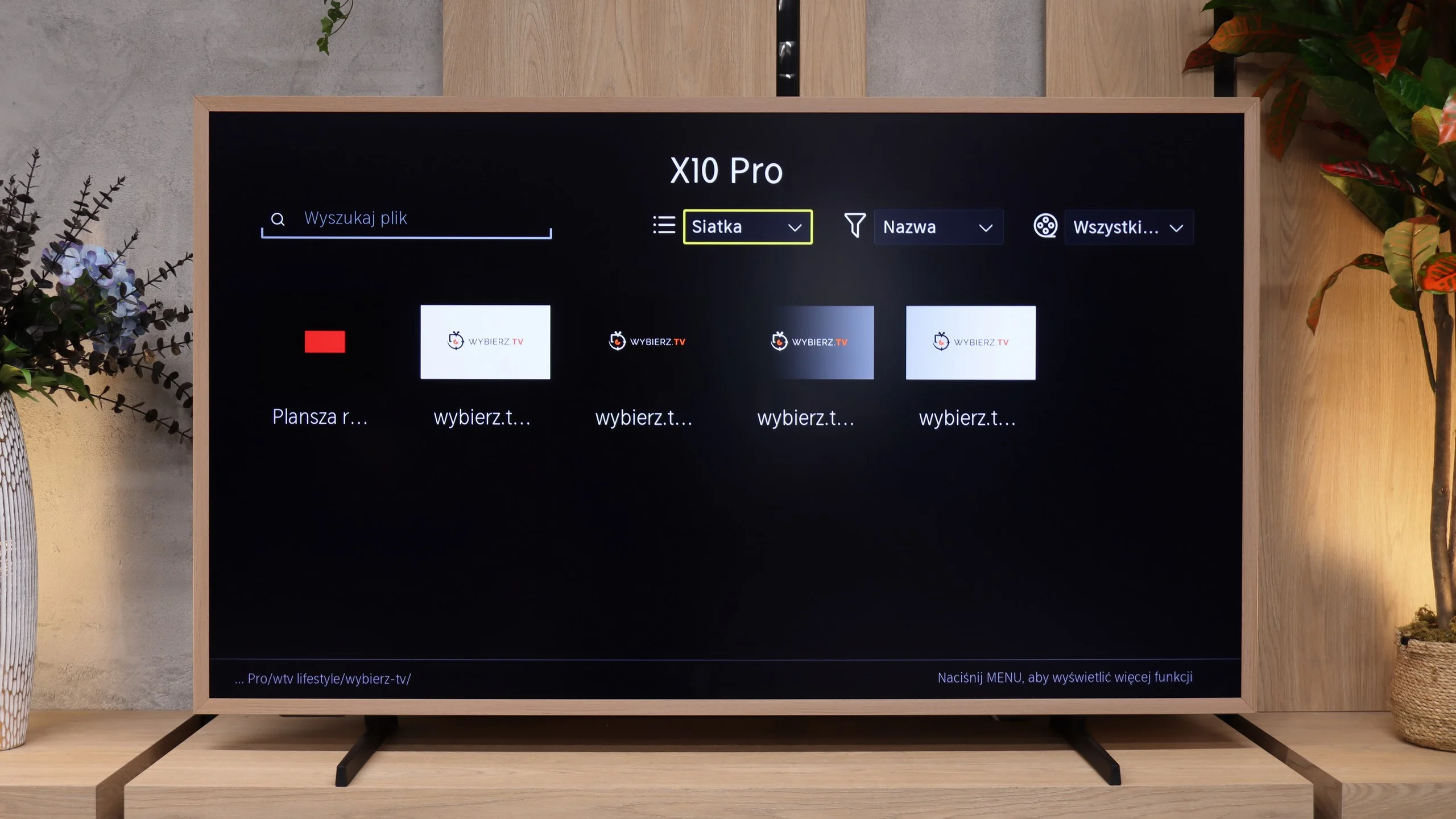
The USB player in the Hisense S7S handles most of the files we tested without major problems. You can play movies and music without connecting additional equipment. What's strangest, though, is its handling of photos. The TV will open some high-resolution photos but refuses to open some smaller files. So it's not a simple image size limit, but rather a fairly selective behavior of the player.
HISENSE S7S - Sound
6/10
78dB
Maximum volume

Supported codecs (TV speakers)
Dolby Digital Plus 7.1
Dolby True HD 7.1
Dolby Atmos in Dolby Digital Plus (JOC)
Dolby Atmos in Dolby True HD
DTS:X in DTS-HD MA
DTS-HD Master Audio
The sound in the Hisense S7S is fairly flat, much like the TV itself. In such a slim design you can't expect strong bass or audio that gives movie scenes the proper punch. It's enough for everyday viewing, but with films or music you'll quickly want more. A soundbar is a good complement, preferably one that matches the Canvas TV look. A plus is support for DTS surround sound. Dolby Atmos is missing, which is disappointing in a TV of this class. Format support aside, the main point remains: if you want fuller sound, additional speakers will be useful here.
Sound Quality Test:
Acoustic Measurements
78dBC (Max)
75dBC
HISENSE S7S - Panel details
Software version during testing: V01.09.60E.Q0516
Panel uniformity and thermal imaging:

Backlight Type: PFS LED

Founder and originator of the "ChooseTV" portal

Journalist, reviewer, and columnist for the "ChooseTV" portal

michal-woloszyn-title
Reader comments
Comments are provided by the external service Disqus (Zeta Global). Once loaded, Disqus may set cookies and process data about your activity.
We will remember your choice on this device. Provider's privacy policy
See articles related to Hisense S7S CanvasTV:
 03/21/2026
Our YouTube channel
Budget OLED vs Mini-LED? Picture comparison: Samsung S85H vs... 10/02/2026

05/29/2026

12/30/2025
10/27/2026
01/16/2025

01/16/2025
02/22/2026