 Redakcja Choose TV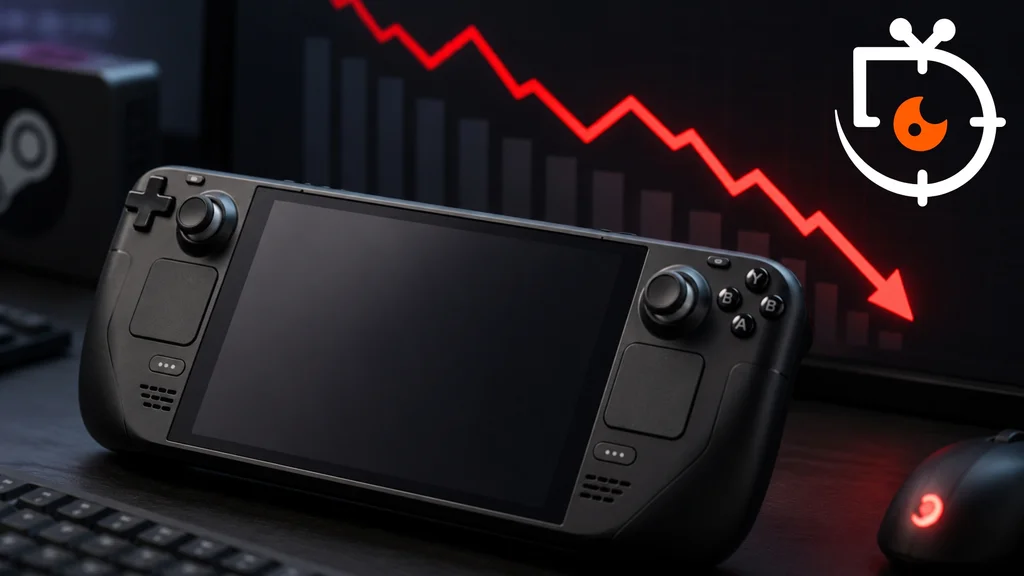
Since its launch, the Steam Deck has become one of the most popular portable devices for PC gamers. In recent months, however, the situation has clearly begun to change. Significant price increases driven by rising memory costs have likely caused interest in the hardware to drop sharply. The latest analyses suggest a very large fall in sales just weeks after the price changes. Valve does not publish official figures, but available estimates show a clear trend. Everything indicates that the Steam Deck is now facing one of the toughest periods since its debut.
Price increases led to a sharp drop in sales
According to an analysis by Boiling Steam, Steam Deck sales fell significantly after the May price increases. The report's authors base their calculations on data from Steam's best-selling products list. Estimates indicate the device dropped from fifth to fourteenth place on the bestseller chart. Such a change could mean up to an 82 percent drop in weekly sales. That would translate to a fall from about 11,000 to 18,000 units per week in 2025 to just 1,400 to 3,000 units in July 2026. Despite higher prices, the manufacturer did not record an increase in revenue. On the contrary, analysts estimate that revenue from Steam Deck sales could have fallen by around 72 percent. This shows how strongly the price increases affected customers' decisions.
Valve may be feeling the effects of competition and the device's approaching end of life
Experts point out that weaker sales results are influenced not only by the device's higher price. The Steam Deck has been on the market for several years, so interest in the hardware may have naturally waned. Many users are also expecting the release of the Steam Deck 2, although Valve has repeatedly stressed that the new generation will appear only when a significant performance increase is feasible. An additional challenge is competition from other handheld gaming PCs, such as the ASUS ROG Ally X. Analysts predict that if competing devices do not get more expensive or Valve does not lower Steam Deck prices, demand may remain at its current low level. It's worth remembering, however, that the figures presented are only estimates based on an analysis of sales on the Steam platform. Valve still has not disclosed official results. The coming months will show whether the manufacturer decides to change its pricing strategy or speeds up work on a successor to its handheld device.
Recent estimates indicate that the price hikes for the Steam Deck may have significantly dampened interest in the device. Falling sales and revenue show that the handheld gaming PC market is becoming increasingly demanding. Valve now faces a decision about whether to stick with its current strategy or try to win back customers by changing prices or launching a new generation of hardware.
source: techpowerup