 Redakcja Choose TV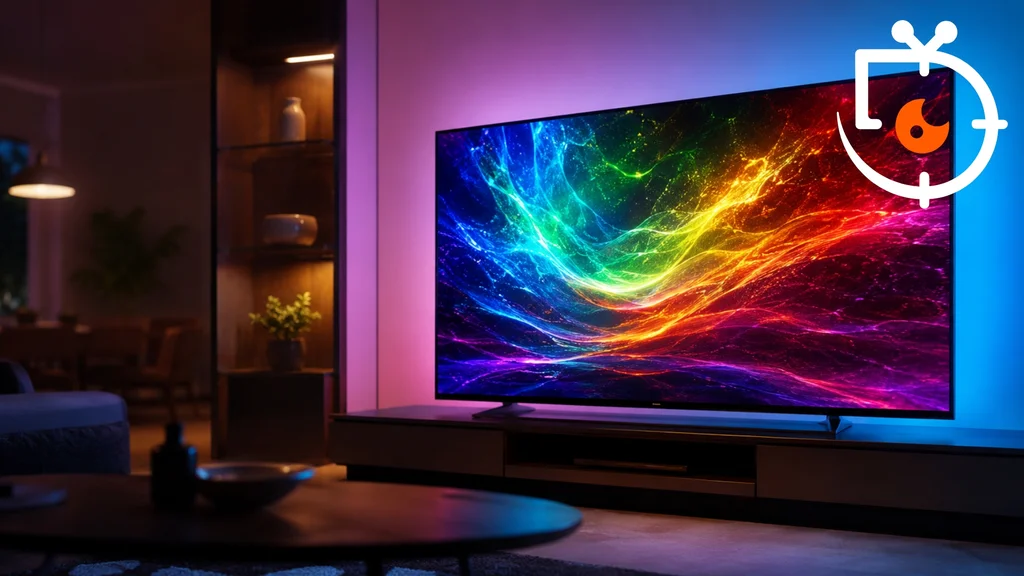
RGB LED is a new form of backlighting for LCD TVs that is increasingly appearing in the offerings of major manufacturers. The technology uses separate red, green, and blue LEDs instead of the traditional backlighting based mainly on blue LEDs. This allows TVs to achieve a wider color gamut and more accurate color reproduction, especially when displaying HDR content. However, RGB LED is not a completely new type of panel, and it is still an LCD TV. It's also worth noting that the mere presence of RGB LED does not automatically guarantee better picture quality than every Mini LED TV.
How RGB LED Works and Why It Improves Color
In traditional LCD TVs, light is produced by a backlight located behind the panel, because the LCD pixels themselves do not emit light. With RGB LED the manufacturer uses red, green, and blue LEDs that can be controlled independently. This approach allows displays to reach colors closer to the BT.2020 color space, which underpins modern HDR standards. In practice, that can mean more natural reds, more accurate shades of sky blue, and more realistic greens. The differences are especially noticeable when watching movies, TV series, sports broadcasts, and playing HDR games. RGB LED can also potentially reduce power consumption, since the individual color channels can be driven independently depending on the scene currently being shown. However, it's important to remember that RGB LED still requires an LCD panel that sits in front of the backlight. The LEDs do not create the image on their own, as is the case with Micro LED technology. The number of local dimming zones also plays an important role, since those zones control the light in different parts of the screen. A higher number of zones usually allows for more precise backlight control and better contrast. Therefore, the number of dimming zones can matter more for image quality than the use of RGB LED alone. Still, combining a high number of zones with colored backlighting can deliver very good results.
RGB LED also has limitations. These TVs use this technology
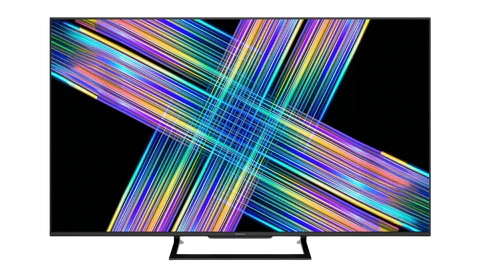
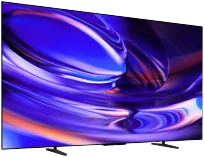
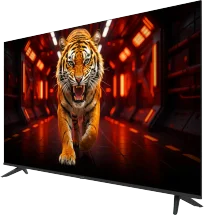
RGB LED is not without drawbacks and currently remains a more expensive solution than classic Mini LED. One potential issue is so-called color crosstalk, meaning light bleeding between adjacent colors. Independent control of the red, green and blue LEDs can also cause shifts in color saturation depending on the content of a particular scene. An additional limitation is that it is harder to increase the number of dimming zones compared with Mini LED. What's more, RGB LED does not necessarily use local dimming. A manufacturer can use edge-lit backlighting, with LEDs placed along the edges of the screen. That approach does not deliver the level of image quality associated with the best LCD TVs, because contrast is then largely limited by the capabilities of the panel itself. RGB LED also does not change the basic characteristics of an LCD panel, such as viewing angles or pixel response time. RGB LED should not be confused with Micro LED, as they are two completely different technologies. In Micro LED the individual red, green and blue LEDs act as independent pixels, whereas RGB LED serves as the backlight for an LCD panel. As of 2026 the RGB LED solution is already used by, among others, Sony, Samsung, LG, TCL, Philips and Hisense. Models include, for example, Sony Bravia 9 II and Bravia 7 II, TCL RM9L and RM7L, Samsung R95H and R85H, LG MRGB95B, MRGB9M and MRGB85B, and Hisense UR9S and UR8S. The technology is therefore becoming more widely available, but before buying it is worth checking not only the type of backlight but also the number of dimming zones and the specific panel used in the TV.
RGB LED is an extension of LCD backlight technology, not a method of image creation that competes with LCD. Its biggest advantage is the ability to achieve a wider palette and more natural colors thanks to independent red, green, and blue diodes. That does not mean, however, that every RGB LED TV will be better than a good Mini LED. The number of local dimming zones, the panel type, and the quality of image processing also remain key factors.
source: flatpanelshd