 Redakcja Choose TV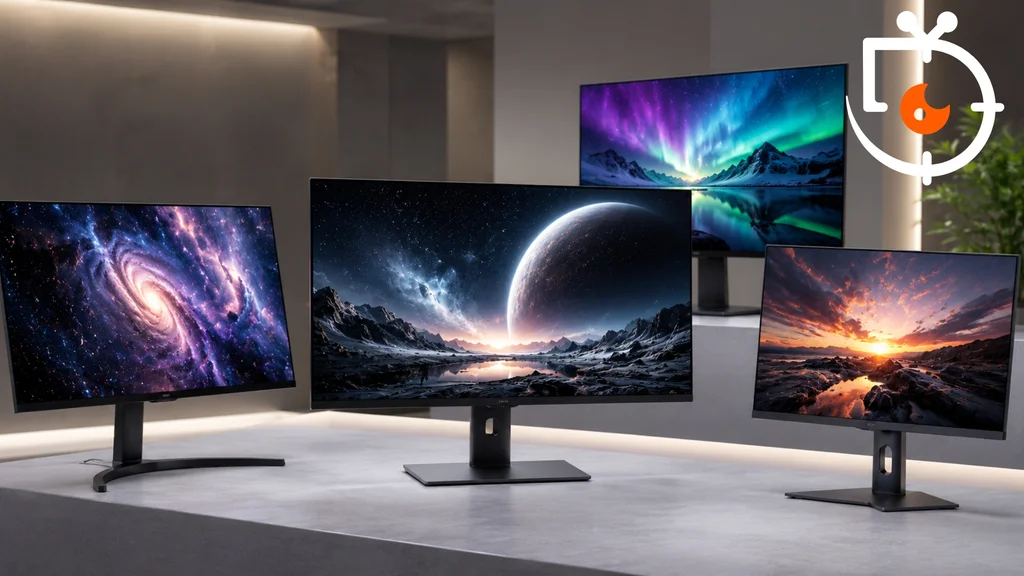
A few years ago, OLED monitors were a niche product primarily available to the most demanding users. Today, the situation looks entirely different. This year's Computex 2026 brought a true avalanche of new devices utilizing this technology. New products were presented by, among others, Asus, MSI, Dell, Acer, Gigabyte, and ASRock. Manufacturers showcased both designs aimed at gamers and models prepared with content creators and professional work in mind. Increasing emphasis is being placed on improving the quality of displayed text through new RGB Stripe subpixel layouts. The OLED monitor market is maturing, and the differences between individual models are becoming more and more apparent. Many indications suggest that the coming years will bring even greater expansion of this technology.
New OLED Monitors Offer Record Parameters
One of the most important trends at this year's trade shows was the continued increase in refresh rates. Manufacturers showcased models achieving up to 540 Hz, and MSI went a step further, presenting a monitor capable of operating at a frequency of up to 680 Hz in the appropriate display mode. There were also designs combining 4K resolution with very high refresh rates. Dual Mode and Triple Mode features, allowing users to switch between different combinations of resolutions and frequencies, are becoming increasingly common. New RGB Stripe panels from LG Display and Samsung Display also generated significant interest. Their main task is to improve text sharpness and eliminate color fringing effects around letters. In the premium segment, monitors with diagonals ranging from 25 to even 39 inches have emerged. Some models offer HDR brightness reaching 1500 nits. Modern DisplayPort 2.1 and HDMI 2.1 connections are also becoming standard. Manufacturers are also increasingly emphasizing burn-in protection, offering multi-year warranties on their devices. All of this demonstrates how quickly the OLED market is evolving. Just recently, such parameters seemed impossible to achieve. Today, they are becoming a new benchmark for the entire industry.
OLED is increasingly boldly entering beyond the gaming segment
Although most new models are still aimed at gamers, manufacturers are increasingly thinking about other user groups as well. At the trade shows, monitors designed for graphics, video editing, or office work have appeared. Asus is expanding the ProArt series, offering models equipped with advanced image calibration features and modern Thunderbolt and USB-C ports. With improved text rendering, OLED is starting to become a real alternative to traditional LCD monitors used in everyday work. Additionally, manufacturers are continuously increasing screen brightness and improving resistance to prolonged display of static elements. According to analyst data, OLED monitor sales increased by over 90 percent in 2025. An even greater growth rate was recorded at the beginning of 2026. Asus remains the market leader, but the competition is quickly closing the gap. The development of new OLED factories is expected to further increase the availability of panels and lower production costs. This could translate into a broader presence of OLEDs not only in monitors but also in laptops and tablets. Manufacturers are increasingly showing that the future of premium displays belongs to this technology. LCD will still remain on the market; however, its advantage is gradually decreasing. The latest premieres from Computex 2026 are the best evidence of this.
Computex 2026 showed that the OLED monitor market is growing faster than ever before. Manufacturers showcased dozens of new models offering higher brightness, record refresh rates, and improved RGB Stripe matrices. An increasing number of devices are also reaching professional users, not just gamers. The dynamic sales growth and new investments in panel production indicate that OLED will be one of the most important technological trends in the coming years.
source: flatpanelshd