 Redakcja Choose TV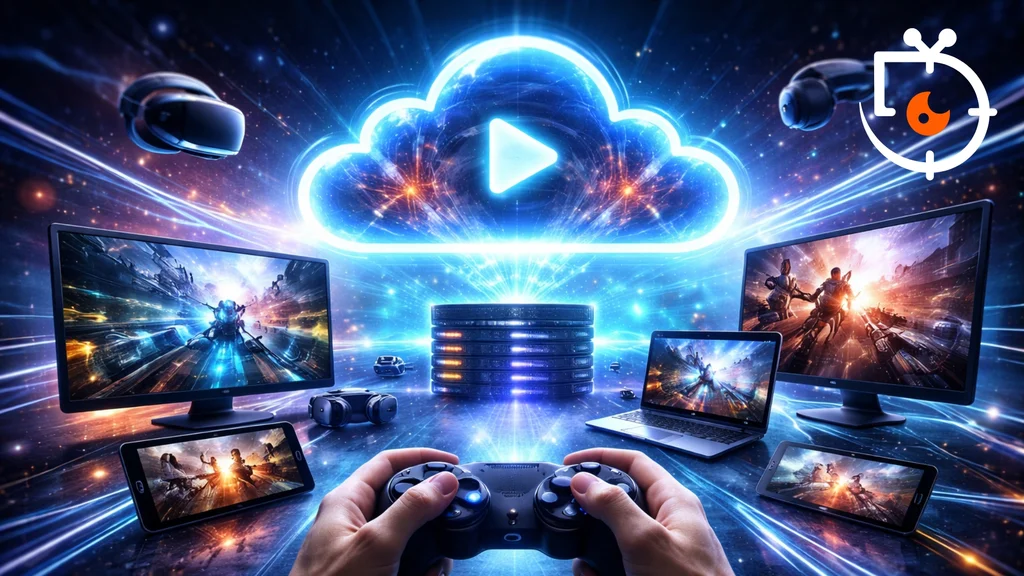
A few years ago, cloud gaming was supposed to be a revolution that would replace consoles and computers. Then came the collision with reality: high latency, unstable connections, and a limited library of games cooled the enthusiasm. Today, the topic is returning with new strength. The biggest tech players are pumping billions back into infrastructure and the development of streaming services. The key change? Data centers located closer to users and the use of edge computing. This is supposed to make cloud gaming no longer a compromise.
Data centers closer to players
The biggest problem with cloud gaming has always been lag. Even a slight delay can ruin dynamic gameplay. The new strategy is based on a distributed infrastructure instead of a few large server rooms; companies are placing smaller computing nodes closer to major user clusters.
This way, the signal doesn’t have to travel hundreds or thousands of kilometers. Shortening the data path means faster response in the game and more predictable service performance. Combined with the development of fiber optic networks and 5G, it creates completely different conditions than just a few years ago.
New Technological Quality
The current wave of development is not just about infrastructure. Image compression has improved, bandwidth requirements have decreased, and high-resolution streaming has been optimized. More and more, we hear about stable 4K with low latency, which was previously difficult to achieve. Additionally, the integration of cloud gaming with subscription ecosystems is growing. Users do not need expensive hardware; a screen and a fast connection are enough. This opens the market to new audiences who previously did not invest in consoles or powerful PCs.
The market has learned that marketing alone is not enough. Users expect quality comparable to local hardware. If the infrastructure can indeed reduce latency to nearly imperceptible levels, the cloud could become a real alternative. At the same time, traditional hardware still has the advantage in stability and control over performance. Therefore, a more likely scenario is the coexistence of both models of local gaming and streaming as a convenient addition.
Cloud gaming didn't die; it just needed time and better technology. Investments in data centers closer to users and the development of edge computing could change the rules of the game. If the promises translate into real experiences without noticeable lag, the cloud will finally stop being a curiosity and will become a legitimate way to play.