 Maciej Koper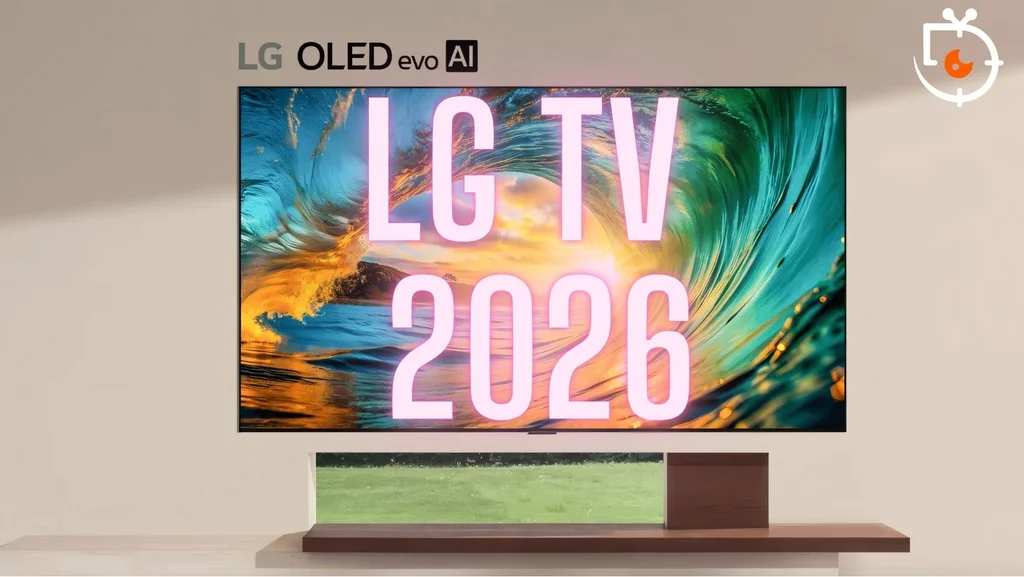
The dust has settled after the CES 2026 trade show in Las Vegas, and we – instead of writing in the heat of the neon lights – waited for the final specifications to come through. Thanks to excellent summaries, including those from the FlatpanelsHD editorial team, as well as our own behind-the-scenes conversations, we now have a complete picture of what LG has prepared for this year. And I’ll tell you one thing: in 2026, LG is taking us on a sentimental journey into the future. The naming is going back to its roots – after a decade, we will once again be buying models like B6 or C6. But don’t worry, aside from the names, it’s a completely new era of picture quality.
Here’s everything you need to know about LG's 2026 lineup.
LG OLED 2026. All OLED models
LG OLED W6 2026 (Tandem OLED)
The heart of this year's flagship models, the W6 and G6, is the completely new second generation of the Tandem OLED panel. LG Display has achieved the impossible – the new panels are 20% brighter than last year's already powerful G5 model. When we compare these numbers to the basic B6 series, the difference becomes almost absurd: the flagship OLED 2026 can be nearly 4 times (exactly 3.9x) brighter than its budget counterpart.
A particular highlight is the return of the W6 series (Wallpaper). LG has completely redesigned this model – forget about the heavy soundbar that ruined the minimalist effect in previous years. Now we only get an ultra-thin screen (0.9cm) and an external Zero Connect Box module that wirelessly transmits a 4K/165Hz signal. Most importantly for the wallet, the W6 is expected to be priced much closer to the G6 series than before, although we will still pay a "luxury tax" with a limited choice of sizes – this model is only available in the massive 77 and 83-inch diagonals.
LG OLED G6 2026 (Tandem OLED)
The LG OLED G6 model is the direct successor of the Gallery series, which this year has received not only a Tandem OLED display but also a new, sensational anti-reflective coating. This coating is designed to more effectively diffuse light in bright living rooms without degrading the blacks, which has been an issue for some of the competitors' matte screens.
We need to pay attention to size labels, though. While the G6 will be available in a wide range from 48 to a massive 97 inches, the "full-blooded" Tandem OLED 2nd gen. panel (which is 20% brighter than the G5) will only be found in models ranging from 55 to 83 inches. The 48-inch variants and the gigantic 97-inch model will stick with the older WOLED architecture, which is worth noting.
LG OLED C6H 2026 (Tandem OLED)
The biggest surprise of this year's lineup is not the most expensive models, but a completely new version of the well-known and loved C series – we are talking about the LG OLED C6H (Hyper). This is a groundbreaking moment: for the first time in its history, LG has decided to bring its absolutely top technology to a mid-range model.
The C6H model is equipped with a Tandem OLED panel with specifications nearly identical to those we admired in last year's flagship, the LG G5. This means that by purchasing the C series, we can expect performance that just a few months ago was reserved exclusively for the premium segment. However, there is one "catch" worth knowing before heading to the store: the "Hyper" variant with this powerful panel will only be available in large sizes – 77 and 83 inches. If you are looking for cinematic experiences in XXL size, the C6H might turn out to be the most cost-effective choice of the year.
LG OLED C6 and C6S (WOLED)
What about smaller spaces? Don't worry, LG hasn't forgotten about users looking for more standard sizes. The C6 and C6S models will be available in sizes ranging from 42 to 65 inches. They are direct successors to the C5 line and although we won't find the Tandem display here, the manufacturer promises a noticeable, although evolutionary, increase in brightness compared to their predecessors.
The biggest surprise is actually hidden inside the casing. This year, LG has blurred the lines of processor performance. Even in the "ordinary" C6 series, we find the most advanced image processor Alpha 11 AI Gen 3 – exactly the same one that powers flagship models like G6 and W6. This is fantastic news because it means that regardless of the model you choose, you get:
The highest precision in upscaling and noise reduction supported by AI
Refresh rate of 165Hz when connected to a PC
The highest fluidity of the webOS system
The choice between C6H and the standard C6 this year comes down to a simple question: do you have room for 77 inches and want the brightness from last year's flagship, or do you prefer a smaller screen but with the same powerful computing power.
LG OLED B6 and B6E
At the very bottom of the OLED TV rankings are the B6 and B6E models. This is a natural evolution of last year's B5 series and the cheapest entry ticket into LG's OLED world for 2026. It will be available in a wide range of screen sizes from 48 to 83 inches. Although the differences between the version with the letter "E" and the standard "six" remain a mystery for now, they will most likely come down to different sales networks and will not affect the quality of the picture itself. However, as noted by FlatpanelsHD, the B series has received significant improvements for gaming – instead of the previous 120 Hz, when connected to a powerful computer, we can now enjoy refresh rates of up to 144 Hz. Aside from this aspect, LG has relied on proven solutions here, introducing no revolutionary changes in the basic model's construction. However, we will have to wait for our first tests to draw such conclusions.
LG OLED TV Comparison 2026
Model | Panel | Processor | Refresh Rate | Sizes (inches) | Key Features |
OLED W6 | Tandem OLED 2.0 | Alpha 11 Gen 3 | 165 Hz | 77, 83 | Zero Connect Box (wireless), Wallpaper design. |
OLED G6 | Tandem OLED 2.0 | Alpha 11 Gen 3 | 165 Hz | 48, 55, 65, 77, 83, 97 | 20% higher brightness than the G5 series |
OLED C6H | Tandem OLED (similar to G5) | Alpha 11 Gen 3 | 165 Hz | 77, 83 | Flagship parameters of the G5 at C series pricing, |
OLED C6 / C6S | OLED evo / WOLED | Alpha 11 Gen 3 | 165 Hz | 42, 48, 55, 65 | Flagship processor in the mid-range, 165 Hz |
OLED B6 / B6E | Standard OLED | Alpha 8 Gen 3 (?) *unknown | 144 Hz | 48, 55, 65, 77, 83 | Unlocked 144 Hz for PC gamers |
*Tandem OLED 2.0 matrix in the G6 series available in sizes 55-83 inches. The 48 and 97-inch models use the WOLED panel. *The G6 97-inch model supports a refresh rate of 120 Hz.
Mini RGB - New MRGB Series
LG is introducing a completely new category of televisions called Mini RGB. These are not ordinary screens with a filter – here, instead of white backlighting, LEDs shine directly in red, green, and blue.
MRGB95B
The MRGB9M model is particularly interesting, as it has received the flagship gadget – the Zero Connect Box – despite being an LCD television. This means we transmit the entire signal to the screen wirelessly, which is an absolute novelty in this class of equipment. So if you're looking for the aesthetics of the "Wallpaper" series, but your budget or preferences steer you towards LCD technology, the MRGB9M could be an interesting option instead of the ChooseTV W6 series.
MRGB9M and MRGB85B
However, the biggest curiosity mentioned by the editorial team at flatpanelsHD is that the MRGB9M and MRGB85B models will be based on edge-lit backlighting. What does this mean in practice? Instead of thousands of LEDs behind the panel, the light flows from the edge of the housing. This is a classic solution that LG has dressed in modern “Mini RGB” attire to highlight the improvement in colour reproduction. However, the main aim of this design is not to break contrast records, but design. Thanks to the edge backlighting, the screens are meant to be exceptionally slim. Though it’s probably little consolation considering the fact that edge backlighting is not the best solution when it comes to image quality.
LG QNED 2026 and Gallery TV
Although all eyes are on OLEDs and mini RGB technology, LG is not letting go of the basic LCD model segment, refreshing its QNED line. In 2026, the QNED90B, QNED85B, and QNED82B models represent a solid continuation of last year's series. Don't expect a revolution here, but rather an evolutionary polish of familiar solutions. Importantly, all three will be powered by the new Alpha 8 Gen 3 processor, which is set to provide even better image processing based on AI algorithms.
LG QNED90B: This is the only full-fledged Mini-LED television in the lineup with a dense local dimming system.
LG QNED85B: Things get interesting here. This model also uses Mini-LED technology and quantum dot filters, but in an edge-lit configuration.
LG QNED80B / QNED82B: These are entry-level models based on 60 Hz panels with Mini-LED edge lighting. They are typical "workhorses" for everyday TV watching, prioritising affordability in 2026.
ChooseTV LX7 Gallery
The biggest novelty in the non-OLED segment is the LX7 model, known as Gallery TV. It's a direct challenge to the popular Samsung The Frame. LG has opted for a specific strategy here: style over parameters. The LX7 is based on a classic LCD panel (possibly QLED) with a refresh rate of 60 Hz, which clearly suggests that it is not equipment for gamers, but for those who want their television to become a decoration of the interior when turned off.
Thanks to the special Gallery+ mode, users will gain access to a massive library of over 4500 artworks in the highest quality. To make the "picture on the wall" effect as convincing as possible, LG has equipped the LX7 model with advanced sensors. The device responds to external light, adjusting the screen brightness to mimic paper or canvas, and motion sensors ensure that the gallery is displayed only when someone is actually in the room. Of course, the LX7 will feature a matte finish.
The year 2026 is shaping up to be one of the most interesting in the history of the Korean giant. With Tandem OLED technology in its flagship series, the unexpected "super mid-ranger" C6H, and an ambitious entry into the world of art with the LX7 model, LG is showing that it has something for everyone. You can find current rankings and news about LG TVs here.
Source: Own study, LG, flatpanelsHD