 Redakcja Choose TV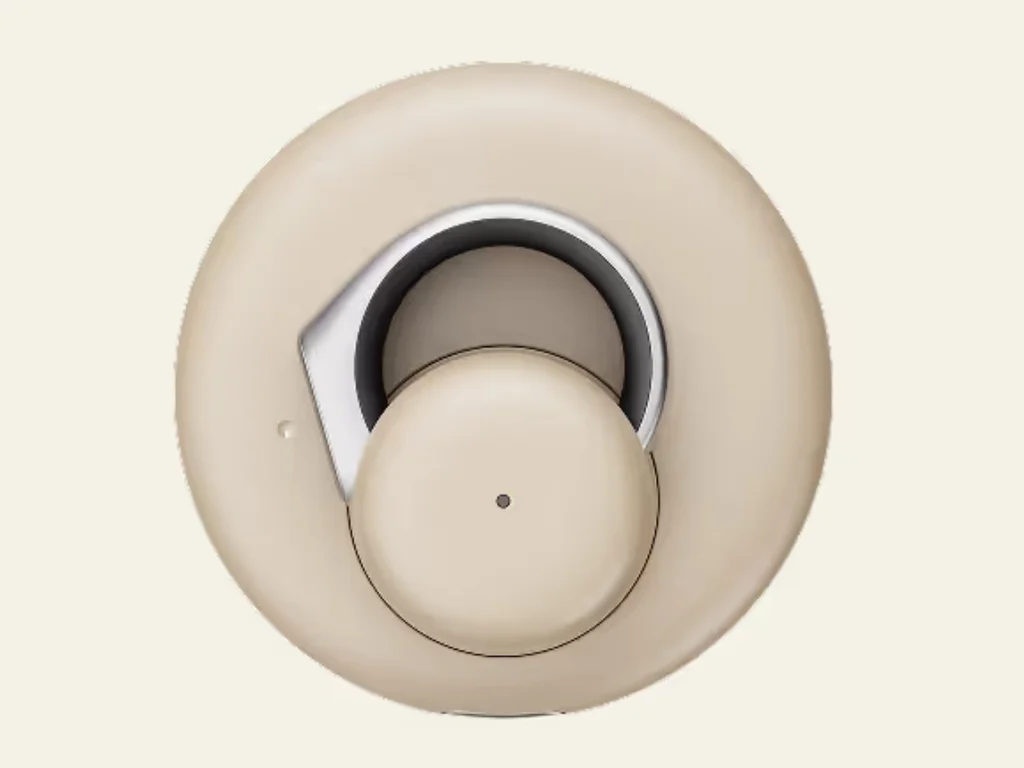
Co-founder of True Ventures Jon Callaghan believes that in five years we will no longer be using smartphones in their current form, and in ten they may completely disappear from our daily lives. This is not a provocative thesis for a podcast clip, but a real investment direction that the fund is putting money into.
True Ventures is not one of the most media-friendly funds from Silicon Valley. However, over 20 years of operation, the company has built an impressive portfolio – from consumer brands like Fitbit, Ring, or Peloton, to enterprise companies such as HashiCorp and Duo Security. True currently manages around $6 billion across 12 seed funds and four select funds, aimed at further financing portfolio companies that are gaining momentum.
The results of this strategy are concrete. As Callaghan reports, True has recorded 63 successful exits and seven IPOs, and its portfolio includes around 300 companies. Importantly, the fund is increasingly working with the same founders again. Three out of four exits for True in the fourth quarter of 2025 involved founders who returned after previous successes.
Smartphone as a Poor Interface
However, the most interesting aspect is not the numbers, but Callaghan's way of thinking about the future of human-technology relationships. In his opinion, a smartphone is a poor interface between people and intelligence. – The way we pull out our phone today to reply to a message, confirm a meeting, or write an email is incredibly inefficient. It's an interface prone to errors and constant disruptions to the rhythm of life – he explains.
That’s why Callaghan doesn't say outright that the iPhone will disappear in five years, but he is convinced that we will use it in a completely different way. And in the decade ahead – perhaps not at all. This belief has led True to study alternative interfaces for years: hardware, software, and hybrid. Just like with Fitbit, Peloton, or Ring before, it’s not about the gadget itself, but about a new, more natural way of interacting with technology.
Ring Instead of a Phone
The most recent example of this thesis is Sandbar – a device that Callaghan refers to as a "companion of thoughts." In practice, it is a voice-controlled ring worn on the index finger. Its sole purpose is to quickly capture and organize thoughts in the form of voice notes. Sandbar does not attempt to be another AI Pin or compete with smart rings that monitor health. – This device does one thing really well. And that one thing addresses a fundamental need that technology does not satisfy today – says Callaghan.
It is not about passively recording the environment, but about the moment when an idea arises. The ring is meant to always be at hand, ready to "talk" to the user. The whole system works in conjunction with an app and AI, but the key is the philosophy – the interaction with the intelligence is intended to be less invasive and more natural. Behind Sandbar are Mina Fahmi and Kirak Hong, previously associated with CTRL-Labs, a company developing neural interfaces that was acquired by Meta in 2019. It was the consistency of the founders' vision with True's long-term thinking that ultimately determined the investment.
– This is not a story about a ring. It is a story about the behavior that this ring enables and without which we will soon not want to live – emphasizes Callaghan.
Not a gadget, but behavior
This approach resembles the narrative that Callaghan built around Peloton years ago. "It's not about the bike," he would repeat. The bike was merely a vehicle for a new model of training and community. The same is to be true with the following interfaces after the smartphone. This focus on behaviors, rather than the devices themselves, allows True to maintain capital discipline. The fund continues to focus on seed rounds – usually from $3 to $6 million for 15–20% equity – instead of chasing billion-dollar valuations for early-stage AI.
– Why raise billions when you don't need to do that today to build something truly groundbreaking – says Callaghan.
Cautious Optimism About AI
While Callaghan acknowledges that OpenAI could soon reach a valuation of around one trillion dollars, he looks at the AI boom with some concern. He points to the enormous investments, reaching $5 trillion, that hyperscalers are making in data centers and computing architectures. – We are in a very capital-intensive phase of the cycle, and that is a cause for concern – he assesses. At the same time, he believes that the greatest value has yet to emerge – not in the layer of infrastructure, but in applications and new interfaces that will enable entirely new ways to use technology.
Phone on the way out?
In the end, Callaghan returns to the investment philosophy that True has been using for years. – If you're doing it right, it should feel a bit scary, lonely, and you should hear that you're crazy. Everything is blurry and ambiguous, but you're working with a team you really believe in – he says. Five or ten years later, it will become clear whether it was a good intuition.
Given the history of True Ventures and their sense of timing with hardware that changed everyday habits, it's worth taking these words seriously. Especially since market data seems to confirm them – the smartphone market has practically saturated and is growing at a rate of about 2 percent per year, while wearables – watches, rings, and voice devices – are seeing double-digit growth. Something is changing in the way we want to interact with technology. And True is already putting its money on that.