 Redakcja Choose TV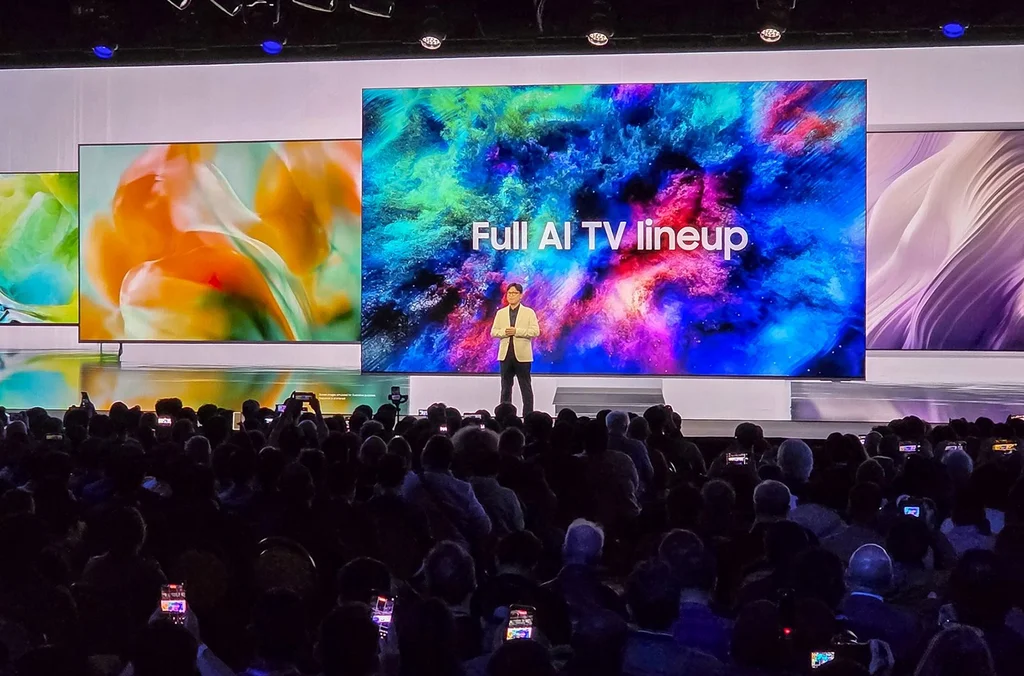
In the premium television market, a battle rages over what is actually behind the name QLED. Samsung, which has been promoting quantum dot technology for years, has gone on the offensive – not only in laboratories but also in courtrooms. The company clearly communicates: the mere presence of nanocrystals in the matrix is not enough to offer top-quality images. The way they are implemented matters, as confirmed by new, stringent certifications.
Court Final of the Dispute with TCL
Recent months have brought a breakthrough in the fight for the reliability of labels on television boxes. Samsung won a high-profile lawsuit against the Chinese giant TCL. A European court sided with the Korean manufacturer, ruling that TCL used the term “QLED” in a way that could mislead customers.
As a result, the Chinese company received a ban on using this name for selected models that did not meet the technological requirements regarding the matrix construction. For Samsung, this is not only a legal victory but also a confirmation of their strategy: QLED is a specific quality standard, not a general advertising slogan for any television with “improved” colors.
"Not every quantum dot works the same way"
Samsung emphasizes that the final visual effect is determined by the panel's construction. In televisions of this brand, the technology is based on a full layer of quantum dots and blue LEDs. This arrangement allows for precise color separation – red, green, and blue do not mix with each other, which is a common issue with cheaper alternatives.
The confirmation of these words is the certificate "Real Quantum Dot Display", awarded by the independent organization TÜV Rheinland. Researchers analyze the spectrum of light emitted by the screen, checking whether the manufacturer's claims are supported by the actual physical properties of the panel. In 2025 and 2026, this certificate was awarded to as many as nine flagship models from Samsung, including the Neo QLED 8K (QN990F, QN950F) series and selected OLED models.
Ecology and Safety: Cadmium-Free Dots
The technology war is also a fight for material safety. Samsung emphasizes in its press release that its quantum dot technology is completely free of cadmium. This is important due to European environmental standards (the RoHS directive), as cadmium is a heavy metal that is sometimes used in cheaper solutions to achieve better color saturation. By choosing certified displays, the user thus receives a guarantee that image quality goes hand in hand with safety for health and the environment, as confirmed by international studies conducted by SGS.
Samsung's message in the latest press release is clear: in 2026, just the name "QLED" won't be enough to ensure the purchase of a top-tier product. The company aims to make the market more transparent, and the difference between the actual technology and the marketing slogan easy for the customer to notice.
Source: Samsung press release