 Michał Wołoszyn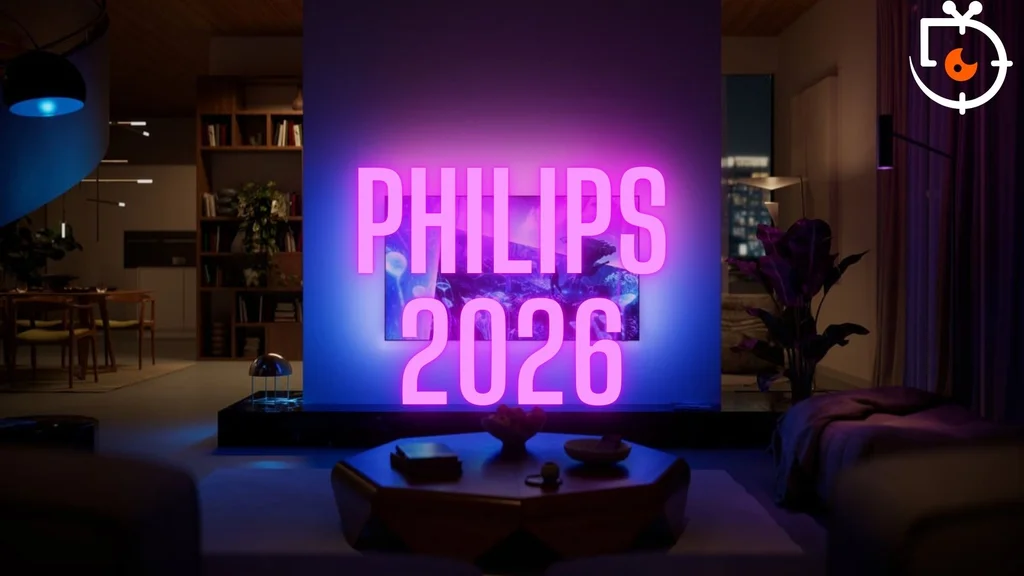
Philips has revealed its cards, presenting the latest offering for the upcoming year. The manufacturer is not only introducing the second generation of Tandem OLED panels, but as (likely) the only player in the market, it is entering the era of Dolby Vision 2 standard in OLED TVs. The biggest surprise, however, is the complete shift in the software strategy – Philips is officially ending its cooperation with Google TV, opting for its proprietary Titan OS in all televisions.
Philips OLED951 – Tandem OLED 2nd Gen
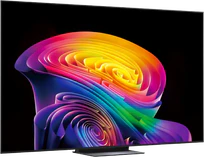
The flagship models for this year are direct successors to last year's 950 and 910 series. At the heart of both televisions is an upgraded Tandem WOLED 2 generation panel (also known by the technical name META 4.0 Primate RGB Tandem). The manufacturer claims that thanks to the double emission layer, these screens will achieve an impressive peak brightness of 4500 nits. However, one should take the brightness announcements with a grain of salt. In Movie mode, both televisions are likely to achieve brightness reaching 3000 nits HDR at a 2% window.
Philips OLED911 – Tandem OLED 2nd gen + audio Bowers & Wilkins
The OLED911 model traditionally features an integrated soundbar from Bowers & Wilkins in a 3.1 configuration and will be available in sizes ranging from 48 to 77 inches. On the other hand, the OLED951, without external audio, will debut in September in 65 and 77 inch versions. Both models support 165 Hz refresh rate and have a 4-sided Ambilight system with the new AmbiScape feature.
Philips OLED811 – Mid-range with brightness of 2500 nits?!
Series 8 has always been the "apple of Philips' eye" due to its price-to-quality ratio and its popularity among customers. In 2026, the OLED811 model has a chance to be that model on the market again. It features an improved OLED EX panel, which according to the manufacturer, is supposed to offer peak brightness of up to 2500 nits. This is almost a doubling compared to last year's model 810. However, once again, we warn that such claims should wait for the first tests. If these announcements are confirmed in reviews, the OLED811 could surpass the picture quality of this year's C6 series from LG, especially in the popular sizes of 55 and 65 inches. Was the same panel used here as in the LG C6H model? Maybe... we will check that for you soon.
The OLED811 is powered by the P5 AI 10th generation processor and, like the flagships from series 9, offers four full HDMI 2.1 ports with support for 165 Hz thanks to the MediaTek Pentonic 800 processor.
Philips OLED761 – Affordable OLED with SE Panel
The OLED761 model is a new addition to the budget segment, replacing the 760/770 series. As highlighted by FlatpanelsHD, this is the first Philips television to use the OLED SE (Special Edition) panel. It is the same technology we mentioned concerning the Panasonic Z85C model – a panel designed to be cheaper to produce while maintaining solid performance. The OLED761 is expected to achieve around 1000 nits of peak brightness. This model features 3-sided Ambilight and a slightly less powerful 7th generation P5 processor.
Philips MLED981 or RGB MiniLED
For fans of LCD technology with local dimming, Philips has prepared the MLED981 model. This is the first television from this brand to use RGB MiniLED backlighting (others use Micro RGB) with an astonishing number of over 11 thousand (11520) dimming zones. The manufacturer emphasized in their presentation that this year they are not vying for nits (stopping at 2500 nits), instead focusing on precise control of the "halo" effect and motion artifacts. As we know from previous mini-LED models from this manufacturer, the control over local dimming has not been top-notch. We hope that these words will prove meaningful in practice.
Is there a catch? Yes. Unfortunately, this television will be available exclusively in the enormous size of 85 inches.
Philips PQS9001 – "The One" Series in 100-inch Size
The popular series "The One" in 2026 is becoming even more versatile. The PQS9001 model is an LCD panel with quantum dot (QLED), which for the first time in the brand's history debuts in a size of 100 inches. The device supports a refresh rate of 144 Hz and offers the new Dolby Vision 2 standard. Unfortunately, the television is not equipped with a local dimming system.
Pentonic 800 is a huge PLUS
The introduction of the MediaTek Pentonic 800 chipset into almost the entire Philips lineup for 2026 is one of the most significant changes under the hood. It is worth recalling that last year, the only models on the European market with this chipset were Hisense U8Q and U7Q Pro. The new processor will not only allow Philips to increase the number of full-fledged HDMI 2.1 ports (from 2 to 4) but has also significantly raised computational capabilities. Our tests show that this translates to a noticeable improvement in the quality of processing older signals (upscaling and noise reduction). You can actually see this already in our comparative tests.
Cancellation of Google TV
The most controversial decision by the manufacturer is the complete withdrawal of the Google TV system from all lines of TVs by 2026. From now on, the Titan OS system will support the entire product range, including the top OLED series (8 and 9).
Is this a positive change? In our opinion, for now: no. It cannot be denied that Philips is making the TitanOS system more efficient year by year; however, what the competition has been working on for 10 or 15 years cannot be accomplished in just 3 to 4 years. Users who decide to purchase flagship models may feel the absence of the application library available in the Google store. And this may be very difficult to accept in the premium segment.
Philips the only OLED manufacturer with Dolby Vision 2?
Philips has become the first (and by 2026 probably the only) manufacturer of OLED TVs to introduce the Dolby Vision 2 standard. This technology is expected to offer even more accurate tone mapping and better dynamics in demanding HDR scenes. The only competitors of Philips with Dolby Vision 2 so far remain TCL and probably Hisense, and as we know, both manufacturers do not produce OLED TVs. We have created a separate piece on Dolby Vision 2, so we won’t dwell on it.
Philips Models 2026
Model | Panel Type / Technology | Available Sizes |
Philips OLED951 | Tandem WOLED 2nd Gen | 65", 77" |
Philips OLED911 | Tandem WOLED 2nd Gen | 48", 55", 65", 77" |
Philips OLED811 | OLED EX | 42", 48", 55", 65", 77" |
Philips OLED761 | OLED SE | 55", 65", 77" |
Philips MLED981 | RGB MiniLED | 85" |
Philips PQS9001 (The One) | LCD QLED | 43" – 100" |