 Redakcja Choose TV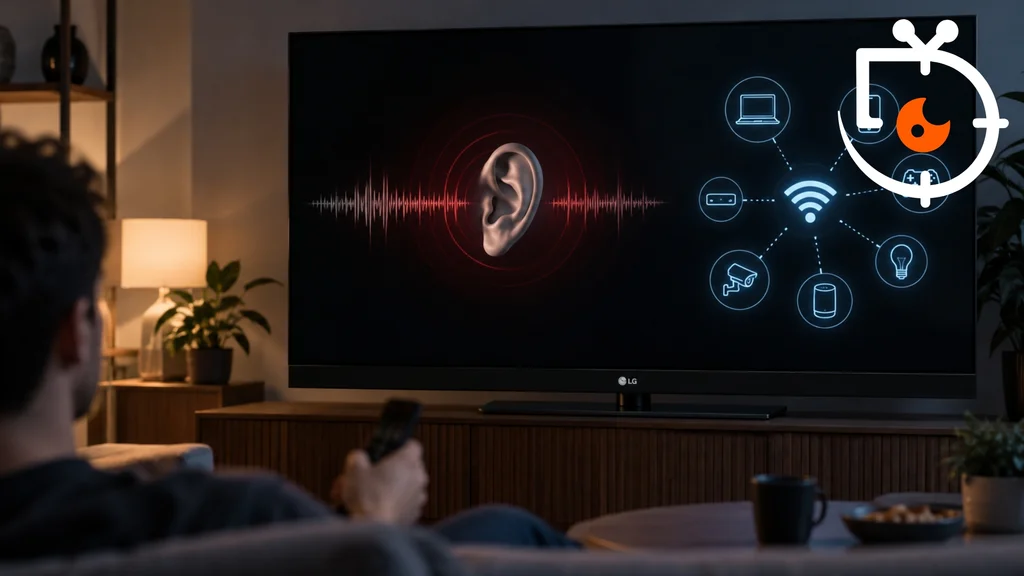
LG's Smart TVs have become the focus of a new investigation into user privacy. Analysis by Gamers Nexus and independent security researchers found that the devices can scan a home Wi‑Fi network and collect information about devices on it. Even more serious is the microphone issue, which can record and transcribe conversations even when the TV screen is turned off. Researchers also point to the widespread use of Automatic Content Recognition technology, which analyzes the content being watched. LG has so far not publicly commented on the findings.
LG TVs collect far more data than you might expect
An investigation by Gamers Nexus shows that LG TVs can continuously scan and map the home Wi-Fi network to identify other connected devices. Collected information may include the IP address, location, and names of nearby wireless networks. This data can then be used to build a profile of the user and their family. Such a profile can be used, among other things, to target ads shown on the TV or other devices. Researchers also examined the microphone located in the TV or its remote. After the voice feature is activated, the device can record words spoken in the room and convert them to text. The microphone must first be woken with the command "Hi LG", but the analysis suggests accidental activation can occur. After detecting silence, the microphone can remain active for about 10-15 seconds. Particularly worrying is that researchers were able to record and transcribe conversations even with the TV screen turned off. Moreover, tests indicated the possibility of storing such data even when the TV was not connected to the internet at that moment. Once a connection is reestablished, the information can be sent to LG. This may happen even when the device connects to the network only to download firmware updates. Gamers Nexus notes that this behavior appears to contradict LG's statements that the company's TVs do not collect, record, or store conversations taking place around the device.
ACR analyzes what you watch
Another key element of the case is Automatic Content Recognition (ACR), the technology that automatically recognizes content. ACR is not new and has been used in Smart TVs from various manufacturers for many years. The technology can regularly analyze the image shown on the screen, including content delivered by external devices connected via HDMI. That means tracking may cover not only apps running directly on the TV. Collected information can then be used, among other things, for advertising and building user profiles. According to FlatpanelsHD, the issue has been known in the industry for a decade or more, so it's not limited to LG. In LG's case, however, particular attention was drawn to statements from LG Ad Solutions about the value of the data collected by the TVs. In materials aimed at partners and advertisers, the company presented the TV as an important source of information about users. The size of that ecosystem is significant, because according to LG's data more than 216 million of the brand's Smart TVs have already been sold. The total number of smart TVs sold by all manufacturers is estimated at between 1.3 and 1.5 billion devices. Gamers Nexus and researchers working with it recommend that people particularly concerned about privacy disconnect their LG TV from the internet. An alternative is to use an external media player that can take over Smart TV functions. The TV can still be operated with the remote, and this is intended to limit the amount of data collected directly by its platform.
Gamers Nexus' investigation points to a number of data-collection mechanisms present in LG Smart TVs. Most controversy surrounds the ability to record and transcribe conversations while the screen is off and to scan devices on the home network. There is also ACR technology, which analyzes viewed content and can be used to profile users. LG has not yet responded to the findings, and privacy-conscious users can reduce the risk by disconnecting the TV from the internet.
source: flatpanelshd