 Redakcja Choose TV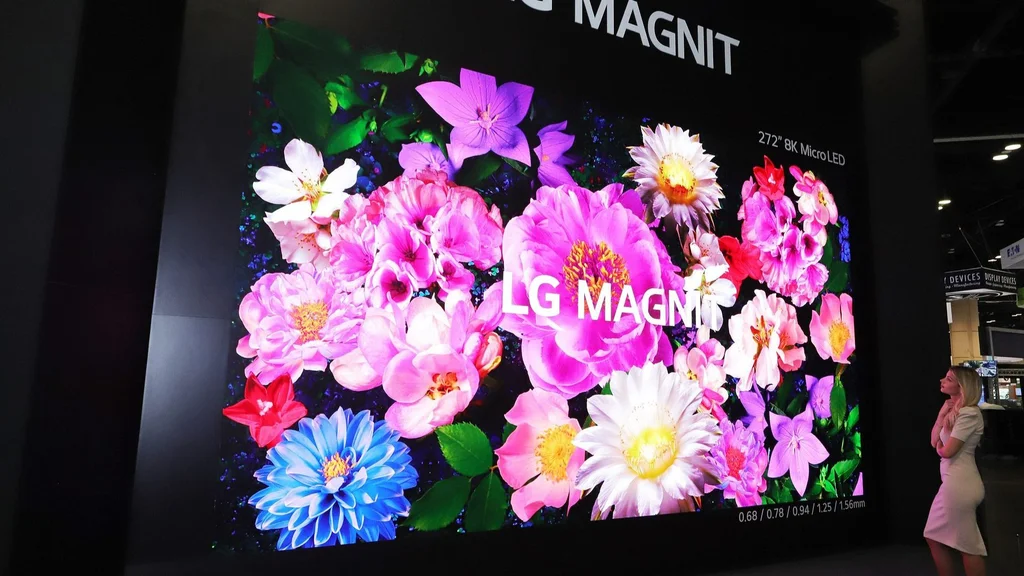
Micro LED screens are the "holy grail" of consumer electronics. They are expected to be brighter than anything we know, not burn out, and consume trace amounts of energy. However, there is one problem: their production is a logistical nightmare. Yet, a light has appeared at the end of the tunnel. LG Display has just taken on the task of solving the biggest pain point of this technology. Will luxury displays finally make it to the masses?
Million Microscopic Blocks
Why is Micro LED so expensive? Imagine that a smartphone or TV screen has to be assembled from millions of diodes the size of a dust particle, or even smaller! If just a few of them don't work, the entire matrix is good for the trash. Even if the factory has a 99.99% effectiveness rate, thousands of "dead" pixels still remain on one screen.
According to information from the portal The Elec, LG Display is participating in a large government project in South Korea aimed at creating machines for the rapid detection and repair of such defects. Instead of discarding a faulty panel, special scanners will find the non-working diode, and robots will replace it with a new one in a fraction of a second.
Cheaper MICRO-LED screens on the horizon?
For the average user, this news is significant because effective repairs at the production level are key to much lower prices. Currently, the production of Micro LED is so risky that the prices of such televisions are counted in hundreds of thousands of zlotys, as we saw at this year's CES2026 trade show.
LG Display, along with research institutions, aims to create a whole ecosystem by 2032 that will allow for the mass production of these panels. If they manage to automate the "healing" of such screens, production costs will drastically decrease. Is this the first real signal heralding a great revolution? We'll have to wait a few more years to find out.
Source: The Elec