 Redakcja Choose TV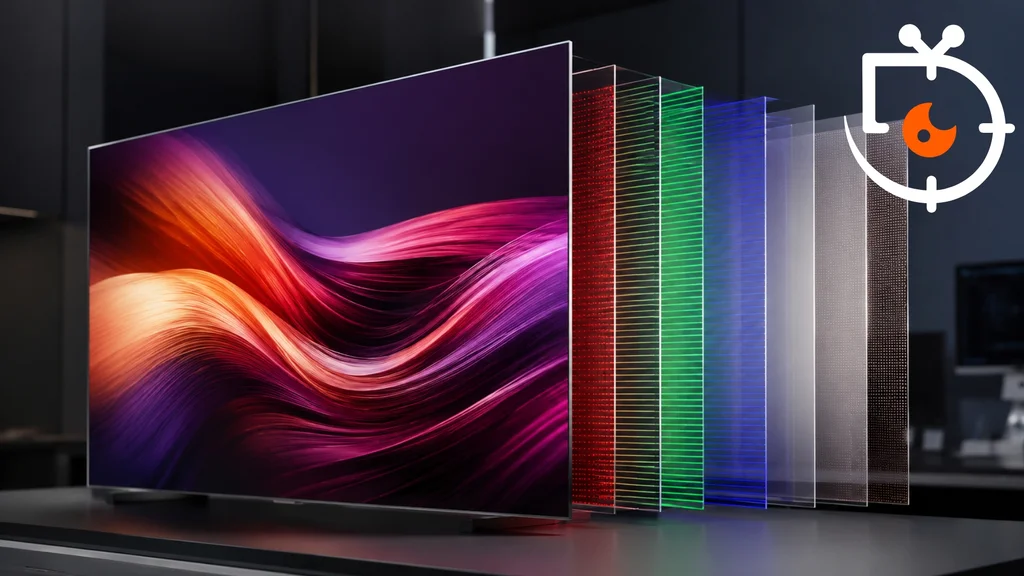
LG Display is reportedly working on the next generation of OLED panels that could bring a noticeable increase in display capabilities. The company is developing a design using as many as five emissive layers, while the most advanced TVs currently use four. The new technology should allow for higher brightness and longer panel lifespan, though it will also be more expensive to manufacture.
Five OLED layers aim to deliver higher brightness and longer screen life
According to the Korean site The Elec, LG Display is developing a 5-layer OLED panel that will be the next step in the evolution of Tandem WOLED technology. LG Display's most advanced panels currently use four emissive layers, while the new design will add an extra blue layer. This should allow the manufacturer to increase the panel's capabilities without giving up the advantages of OLED. A greater number of emissive layers could primarily translate into higher brightness and a longer display lifespan. This is especially important for large TVs and monitors, where users increasingly expect very high HDR brightness. At the same time, a more complex design will be more difficult and more expensive to manufacture. LG Display is therefore also developing solutions that go in the opposite direction. The company reportedly recently developed a 2-layer OLED for lower-cost TVs and monitors, intended to reduce production costs compared with current panels.
New OLED could make its way into Apple's first OLED iMac
One of the most important applications of the new technology could be a future Apple iMac. LG Display is said to have already developed a 27-inch, 5K four-layer OLED panel that’s being considered as the screen for a future Apple computer. The company is reportedly working on an even more advanced design, because Apple expects very high image quality from its first OLED iMac. According to current reports, Apple plans to introduce an OLED iMac only around 2029. Both LG Display and Samsung Display are working on the appropriate panels and are competing to supply Apple. Samsung is also already developing five-layer Penta Tandem QD-OLED panels, so LG Display will need to offer a solution of sufficiently high quality to win the contract. The technology could, however, find uses beyond Apple computers. If production costs can be optimized appropriately, five-layer OLEDs could in the future also appear in premium TVs and monitors.
LG Display is developing a new generation of 5-layer OLED panels that are expected to offer higher brightness and longer lifespan than current Tandem WOLED designs using four emissive layers. The solution could be used in the most advanced TVs and monitors, but the potential link to Apple’s first OLED iMac is particularly interesting, with a launch currently expected around 2029. LG Display is competing in this area with Samsung Display, which is also developing 5-layer OLED technology.
source: flatpanelshd