 Redakcja Choose TV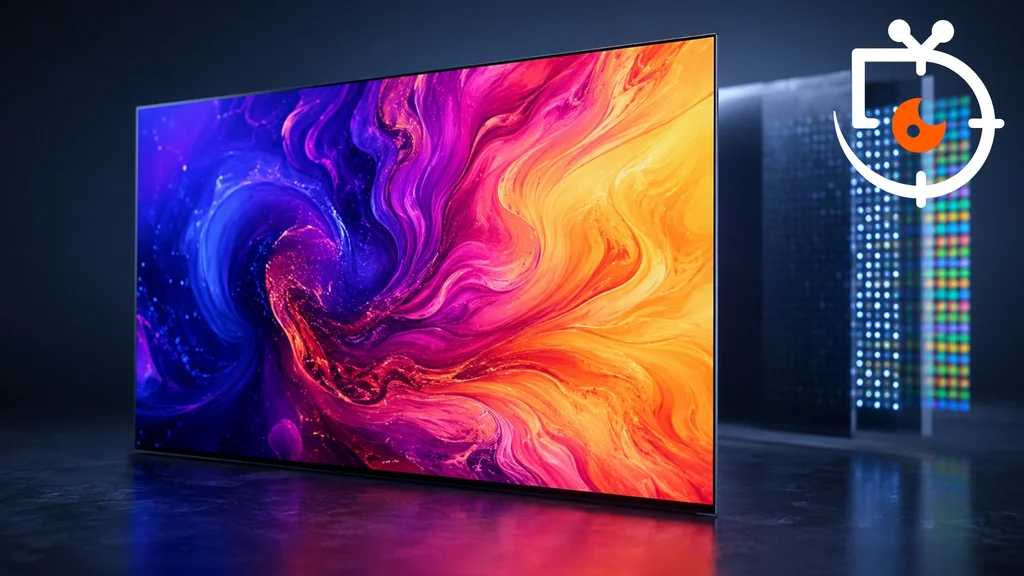
OLED technology has long been regarded as the benchmark for picture quality, but its production still remains significantly more expensive than that of LCD or miniLED TVs. LG Display wants to change this by introducing a new generation of panels intended to lower manufacturing costs without compromising quality. What's more, the manufacturer claims the new solution delivers even better colors and higher energy efficiency, which could open the way to cheaper OLED TVs in the coming years.
New OLED panel uses only two layers
The new design developed by LG Display is based on a two-layer OLED architecture, while current WOLED panels use three layers and the most expensive Tandem WOLED models even four. Reducing the number of layers significantly simplifies the manufacturing process, which directly translates to lower panel production costs. The manufacturer stresses, however, that this does not mean a decline in picture quality. On the contrary, the new panel is said to deliver comparable or even higher brightness while offering better energy efficiency. LG Display also promises even wider viewing angles, so the picture should retain high quality regardless of where you sit in front of the TV. One of the most important changes is the use of a new blue-emitting material and the splitting of the previous yellow-green layer into separate red and green layers. The manufacturer claims this design improves not only panel efficiency but also color reproduction. This is another step in the development of OLED technology, which aims to compete more effectively with increasingly better miniLED TVs. Everything points to this new architecture becoming the basis for the next generation of more affordable displays.
Better colors are meant to help OLEDs compete with miniLED
According to data presented by LG Display, the new panel achieves 82.5% coverage of the BT.2020 color space, while current three-layer WOLED panels offer around 76.5%. That means noticeably better color reproduction, which should be especially apparent when watching HDR movies and modern games. The manufacturer also reports a slightly higher brightness in calibrated picture modes with a color temperature of 6500 K. At higher color temperatures the brightness is said to be a bit lower, though the differences should not be significant during everyday use. The new panels are expected to go primarily to mid-range OLED TVs and monitors, where they will compete with miniLED designs. LG Display has not yet announced a start date for mass production or delivery dates for its partners. Manufacturers that could benefit from the new panels in the future include LG Electronics, Samsung, Sony, Philips, Panasonic, Asus, MSI, and Dell. Market analysts believe the new technology will allow LG Display to maintain a strong position in the premium segment while more effectively competing in lower-priced TV and monitor models. This could mean greater availability of OLED displays for a wider range of customers.
A new two-layer OLED panel from LG Display appears to be an important step in the development of this technology. The manufacturer promises lower production costs, improved color reproduction, higher energy efficiency, and wide viewing angles. Although it's not yet clear when the first TVs and monitors with this solution will reach the market, the new architecture could make OLED more affordable in the future and help it compete even more effectively with miniLED displays.
source: flatpanelshd