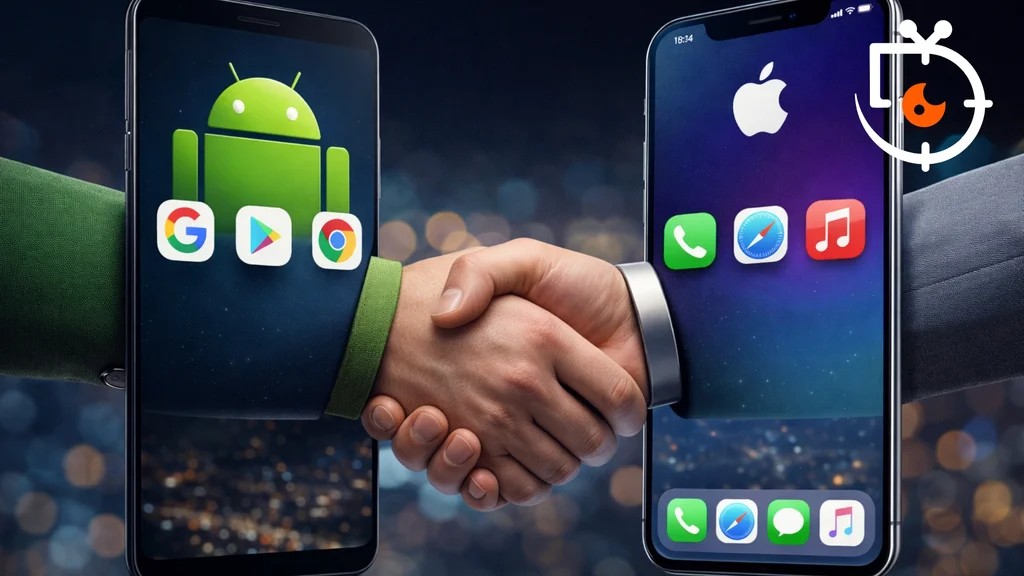
After years of criticism for its closed news ecosystem, Apple is taking an important step. In the beta version of iOS 26.4, support for full end-to-end encryption (E2EE) for RCS in conversations between iPhone and Android has appeared. This is the first clear signal that communication between the two largest mobile platforms is beginning to meet modern security standards.
RCS with real encryption
The new feature is based on the RCS 3.0 standard developed by GSMA. In practice, this means that the message is encrypted on the sender's device and decrypted only on the recipient's device. Operators, manufacturers, and intermediaries do not have access to the content of the conversation. So far, Apple has tested RCS encryption exclusively in communication between iPhones with iMessage turned off. Now Android comes into play, which significantly increases the rationale for the whole solution. On the Android side, using the beta version of the Google Messages app is required. iPhone users, in turn, must install the developer beta of iOS and activate the "End-to-End Encryption (Beta)" option in the RCS settings.
End of the technological division?
The system clearly indicates when a conversation is secured. During the conversation, a label for RCS appears with a padlock icon and information about encryption. This level of security is similar to that offered by messaging apps like Signal or WhatsApp. However, Apple notes that the feature is in testing and will not be included in the stable version of the system with iOS 26.4. Full implementation is expected to occur in one of the upcoming updates of iOS, iPadOS, macOS, and watchOS. This is a real rapprochement of two worlds. For years, communication between iOS and Android has been technologically limited and lacking modern security measures. Encrypted RCS may finally make cross-platform messaging not a compromise. For users, this means fewer reasons to install additional apps just to safely exchange private content.
Apple is testing RCS encryption between iPhone and Android, and this could be one of the most important changes in mobile communication in years. If the feature makes it to the stable version of the system, the divide between "blue" and "green" bubbles will start to lose its significance.
Source: Spider’s Web