- Matching (Score) |
- Our verdict |
- Competing TVs |
- TV appearance |
- Where to buy |
- Contrast and black detail |
- HDR effect quality |
- Factory color reproduction |
- Color reproduction after calibration |
- Smoothness of tonal transitions |
- Image scaling and smoothness of tonal transitions |
- Blur and motion smoothness |
- Console compatibility and gaming features |
- Input lag |
- Compatibility with PC |
- Viewing angles |
- Daytime performance |
- TV features |
- Apps |
- Playing files from USB |
- Sound |
- Panel details
LG MRGB85B Review
MRGB85 / MRGB86 / MRGB87 / MRGB88

Available screen sizes:
Complete the survey to find out the result
Panel type: LCD VA Refresh rate: 144Hz Brand: LG Resolution: 3840x2160 System: WebOS Model year: 2026
This review is an English translation of the Polish original. Read the original on Wybierz.tv.
LG is once again trying to surprise with its lineup of televisions. This year the manufacturer launched a new Mini RGB series, and one of its members is the LG MRGB85. It’s a fairly unusual design, because it uses three-colour RGB backlighting in an edge-lit arrangement rather than the conventional local-dimming backlight. It sounds intriguing, but does such a solution actually translate into better picture quality? We checked that in our review.
LG MRGB85 - Our verdict
6.9
Overall rating
The LG MRGB85 is a television that is best suited to gamers and users who are attached to webOS. In that respect it is hard to fault. It offers plenty of benefits for gamers thanks to a very high panel refresh rate. Add to that the smoothly operating webOS, which stands out above all for the convenient Magic Remote and a full set of features for traditional television. The problem begins when you look at the overall picture quality and compare it with the price the manufacturer is asking for this model. The MRGB85’s launch price is, to say the least, difficult to regard as attractive compared with competing models. For similar money you can find televisions offering much more advanced backlighting and, above all, better black level control. What causes the most controversy, however, is the naming and the way LG positions this model. True, the MRGB85 uses a tri-colour backlight, but it is edge-lit. It is therefore hard to call this a fully fledged RGB Mini-LED in the sense commonly used for TVs that employ a large number of independently controlled zones behind the panel. In practice the limitations of local dimming are very noticeable and they significantly harm the viewing experience in dark scenes. That does not mean the MRGB85 is a bad television. It handles everyday content well, offers decent colours, respectable brightness and a very wide feature set. Picture from a standard SDR source can look really good, and Dolby Vision partly helps to hide weaker brightness handling in HDR. However, it is hard to shake the impression that the biggest problem with this model is not the hardware itself but its price and its overly ambitious positioning in the market. If someone is looking mainly for a gaming TV, values the convenience of webOS and finds it on a large promotion, the MRGB85 can make sense. At its current price, however, it falls behind, because the competition today simply offers more in terms of picture quality.
Advantages

Extensive gaming features
Three full-bandwidth HDMI 2.1 ports
Supports 4K at 144 Hz, VRR, G-Sync and FreeSync
Low input lag
Supports Dolby Vision HDR
Fast and user-friendly webOS
Magic Remote with gyroscope
Decent brightness and a wide colour gamut
Disadvantages

Average black level
Aggressive local dimming control (edge-lit)
Average HDR picture quality
Poor viewing angles and noticeable VA panel smearing
 Movies and series in UHD quality
6.2
 Classic TV, YouTube
6.0
 Sports broadcasts (TV and apps)
6.4
 Gaming on console
8.3
 TV as a computer monitor
8.4
 Watching in bright light
6.1
 Utility functions
7.7
 Apps
Apps9.1
 Sound quality
6.4
Complete the survey to find out what fits your preferences
LG MRGB85 - Competing TVs in this price range
LG MRGB85 - TV appearance
HDMI inputs: 0 x HDMI 2.0, 3 x HDMI 2.1 (48Gbps) Outputs: Toslink (Optical audio), eARC (HDMI), ARC (HDMI) Network Interfaces: Wi-Fi 2.4GHz, Wi-Fi 5GHz, Ethernet (LAN) 100Mbps
Build quality: Good
Stand type: Central
Bezel color: Graphite
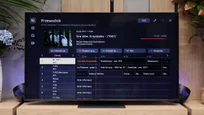
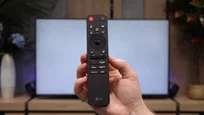
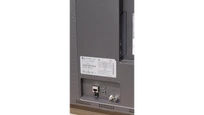
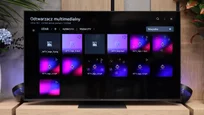
Stand: Height adjustment
Flat design: No
Accessories: Stand
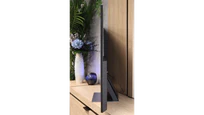
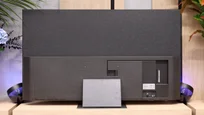
LG MRGB85 looks modern and gives the impression of a higher-end TV. The screen is framed by narrow graphite bezels, and the styling clearly references the OLED B and C series. The lower part of the housing is thicker because it contains the electronics and the backlight system, while the upper section tapers noticeably. The construction is not as slim as in OLED sets, but overall it still looks neat and contemporary. The central stand with height adjustment is noteworthy. Thanks to it you can easily fit a soundbar beneath the screen without obscuring the lower part of the image. It is worth remembering, however, that depending on the market and the model designation, the TV may also be sold with two conventional feet mounted at the sides.
Buy at the best price
Select size:

LG MRGB85 - Contrast and black detail
5/10
Local dimming function: Yes, number of zones: 6 (1 x 6)


Result
12,100:1

Result
6,200:1

Result
15,900:1

Result
6,000:1

Result
4,600:1

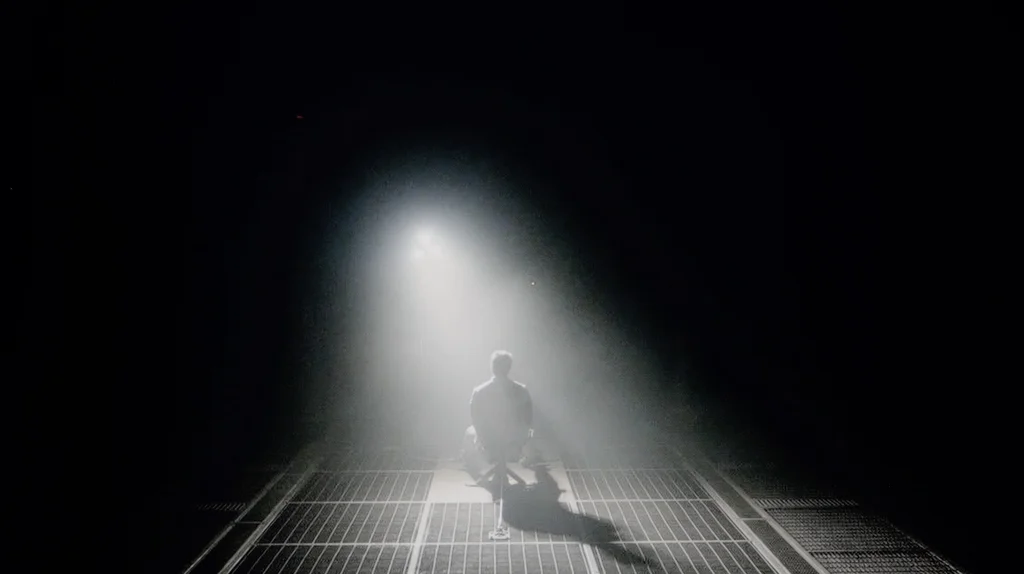
LG MRGB85 uses a VA panel, so even without additional measures it offers better black levels than models based on IPS or ADS panels. In simpler scenes the image has decent depth and can look quite convincing. The biggest limitation appears, however, when local dimming is enabled. The TV uses an edge-lit backlight positioned at the bottom of the screen. As a result it cannot precisely control the brightness of small parts of the picture. When a single bright element appears on a dark background, an entire vertical band often lights up. This is accompanied by a distinct halo, and even more noticeable is the backlight's behaviour itself. When scenes change, brightness can jump up and down sharply, causing the image to noticeably pulse in a dark room. Local dimming can be turned off completely in the TV menu. Contrast then drops noticeably, but the image becomes much more stable and the frequent flicker of the backlight disappears. In practice some users may therefore willingly give up deeper blacks in favour of a calmer, more predictable picture.
Halo effect and black detail visibility:
LG MRGB85 - HDR effect quality
5.7/10
Supported formats: HDR10, Dolby Vision, HLG
Luminance measurements in HDR:

Result
583 nit

Result
401 nit

Result
569 nit

Result
423 nit

Result
455 nit
LG MRGB85 offers moderate brightness. On test patterns it reaches about 700 nits, which by itself is a decent result. In actual movie scenes the values are lower and most often fall between 400 and 600 nits. Bright, expansive shots perform best. In scenes with a lot of black the TV noticeably limits luminance, trying to maintain the highest possible contrast. The HDR effect is therefore visible, but it is far from the level offered by more advanced Mini-LED designs. Especially in darker parts of films the limitations of edge-lit backlighting and imprecise local dimming become noticeable again.
HDR Colors
A much stronger suit of the MRGB85 is its colors. The TV covers about 95% of the DCI-P3 color space and 74% of BT.2020, allowing HDR material to look vivid and striking. Colors are well saturated, and the difference compared with basic LCD TVs is clearly visible. It is worth noting, however, that this is not a classic RGB backlight, where each of the three primary colors is generated by a separate diode. Red is produced by a PFS phosphor, which expands the palette and yields more saturated red shades. This solution works well for color reproduction, but it does not change the limitations of dimming itself. The LEDs are not driven independently in the way the series name might suggest... so it turns out that Mini RGB is not the same as Mini-LED RGB!
BT.2020 color gamut coverage and primary color luminance
| Data set | BT.2020 | P3 | R | G | B |
|---|---|---|---|---|---|
| Synthetic patterns | 74.3% | 95.2% | 63% | 55% | 67% |
| Film measurements | 74.1% | 95.4% | 69% | 66% | 74% |
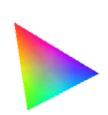 BT.2020
 BT.2020 and P3 – average color gamut coverage (percent of the target gamut).
R, G, B – average primary color luminance relative to target (percent).
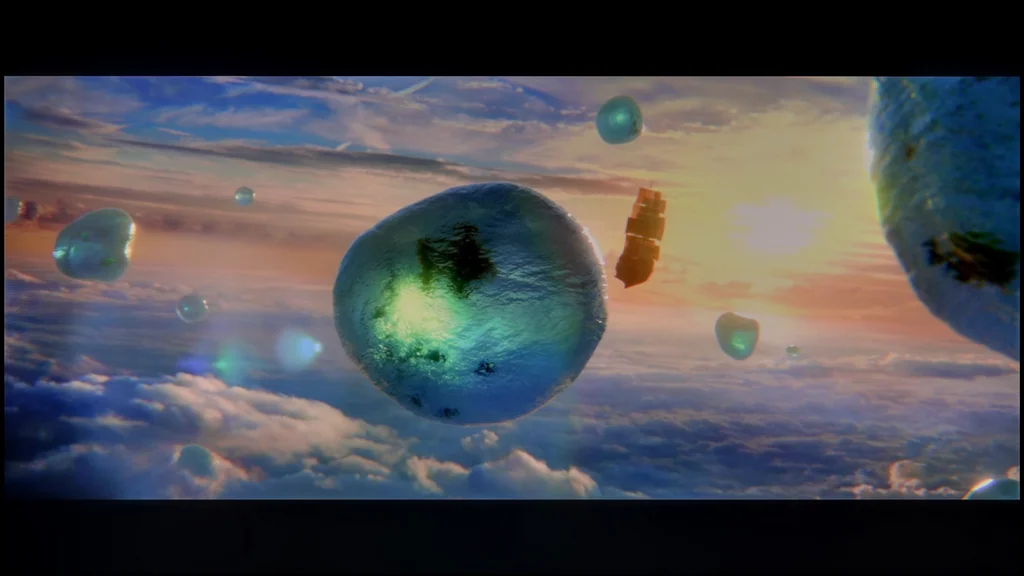
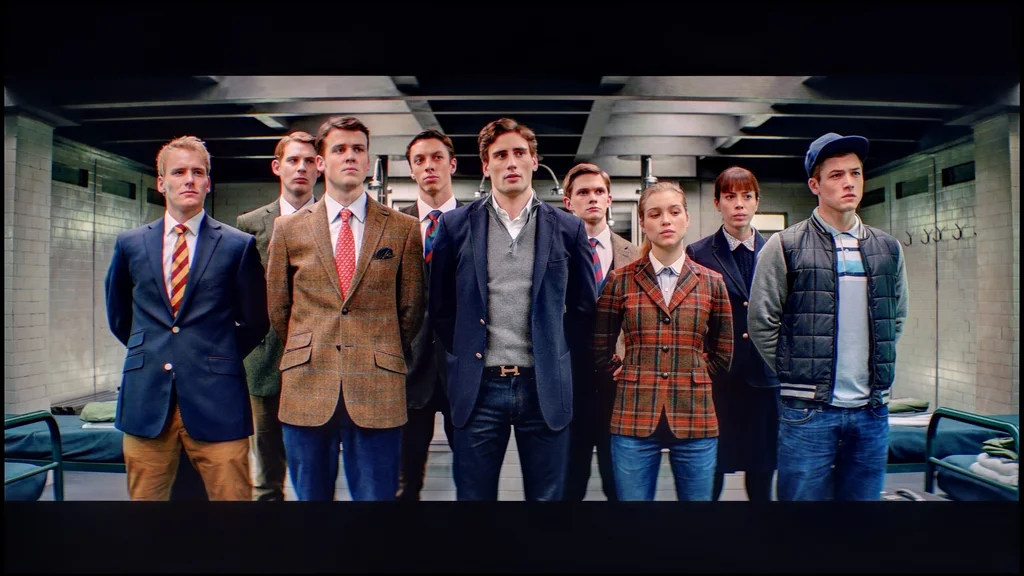
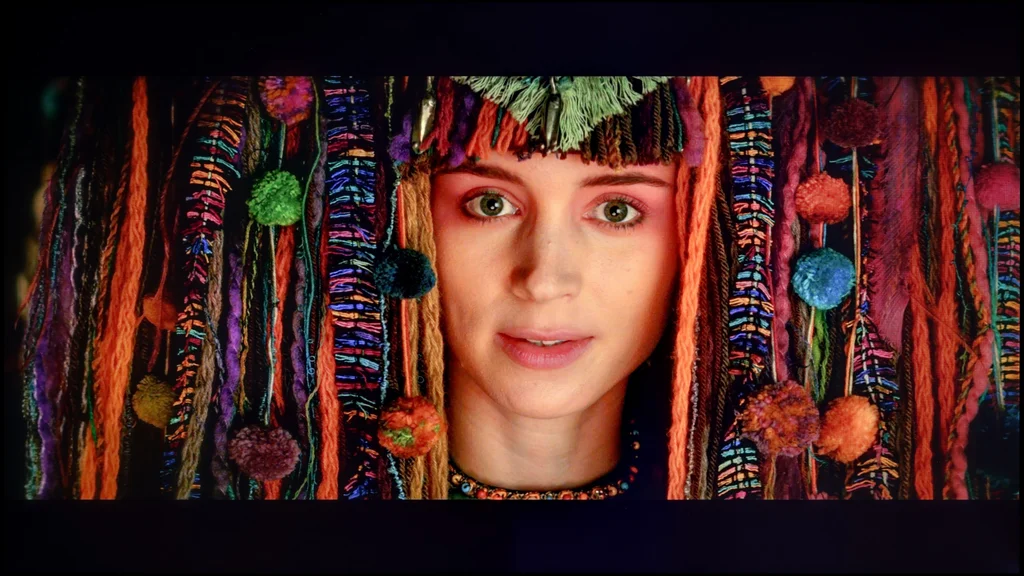
Scene from the movie “Pan” (about 2800 nits)
Scene from the movie “Billy Lynn” (about 1100 nits)
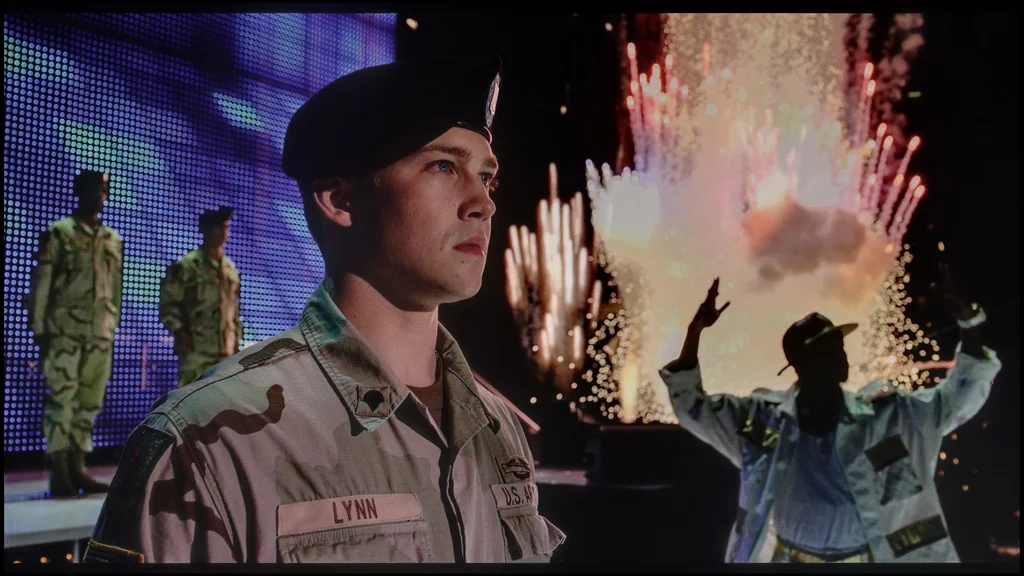
In a direct comparison with the reference monitor, the LG MRGB85 performs averagely. The biggest differences are visible in scenes with large amounts of black, where the TV cannot maintain sufficiently high contrast. In such shots the limitations of edge lighting and local dimming become most apparent. Material graded to around 1000 nits looks much better. In those films and series the MRGB85 can retain a good portion of detail in the bright areas and render the scene reasonably well. It struggles more with demanding HDR productions. In very bright shots some details are lost in uniform blotches, so the image clearly departs from the reference. The MRGB85 will do for occasional film and series viewing, but it is not aimed at viewers who expect the most faithful cinematic picture.
HDR luminance chart:
Fortunately the LG MRGB85 supports the dynamic Dolby Vision format. Thanks to scene-by-scene metadata the TV can better adjust how it displays the picture to its capabilities. In our comparison the difference compared with the same material shown in standard HDR10 speaks for itself. Dolby Vision preserved more detail in the bright areas of the picture and better controlled overall scene brightness. This is important, because a large proportion of films and series available on streaming platforms use Dolby Vision. This format often helps the MRGB85 reproduce the image much more faithfully than is the case with ordinary HDR10.
Static HDR10

Dynamic: Dolby Vision

Factory color reproduction
5.6/10
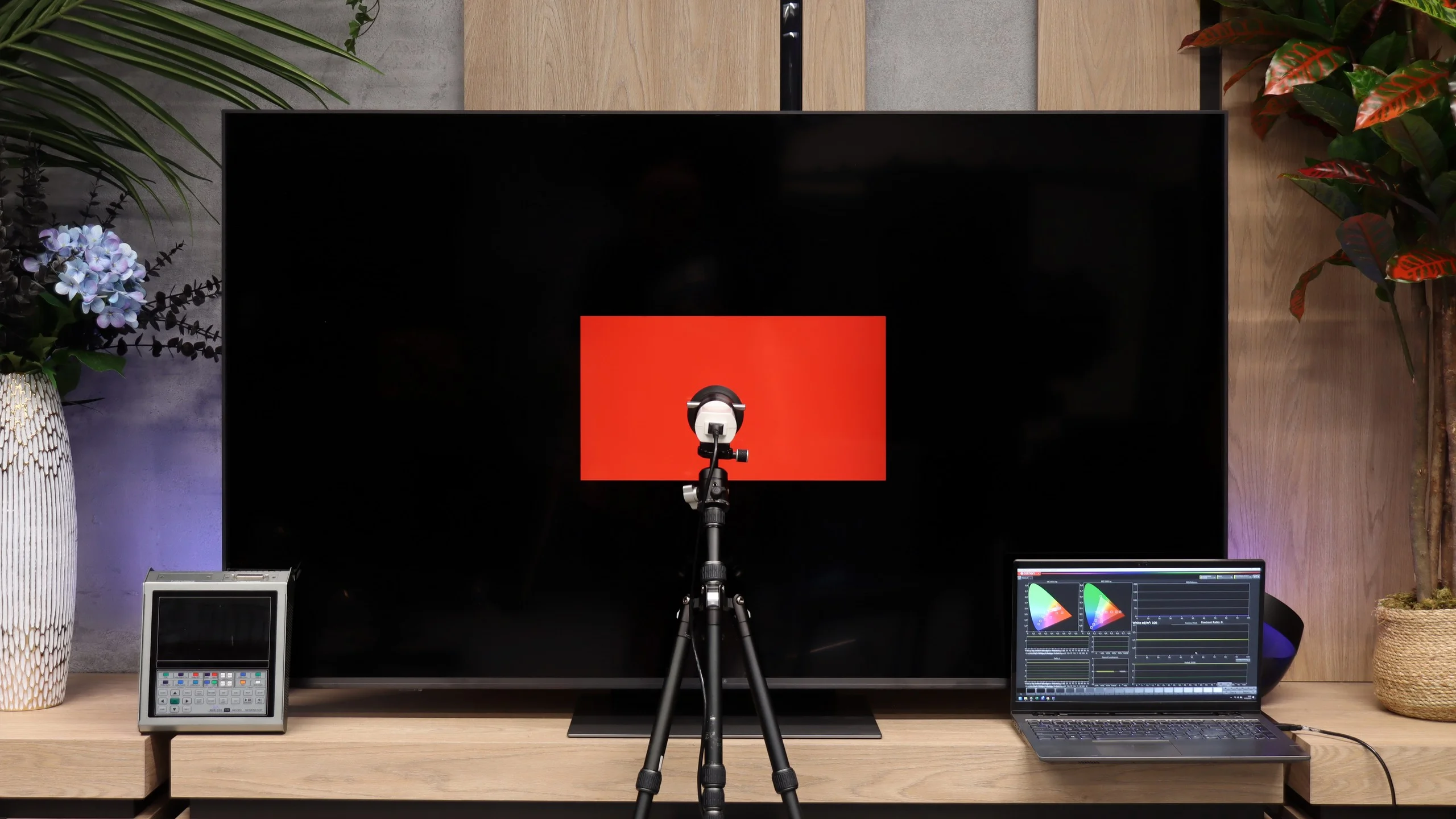
We tested the TV in Filmmaker Mode, because among the available settings it offered the image closest to the reference. However, the out-of-the-box colour reproduction was not perfect. The largest deviations concerned the white balance, with the image showing too much red and not enough blue, which caused the whole picture to shift noticeably towards warmer tones. Whites took on a slightly yellowish tint, and skin tones and bright parts of the image did not always look natural. It was not a fault that completely ruined the viewing experience, but in direct comparison with the same screen after calibration the difference was readily apparent.


Color reproduction after calibration
7/10
Calibration primarily allowed us to correct the white balance and remove the previously noticeable warm tint. After adjustment the whites stopped leaning towards a yellow cast and the colours became more neutral and natural. The biggest improvement was seen in SDR material, where the picture looked even and much closer to reference. A similar effect was achieved in HDR. After calibration the image became more organised, although not all of the TV's limitations could be eliminated. The greatest reservations still concerned intense reds, which were not always reproduced with sufficient precision. In practice the MRGB85 handles everyday SDR content very well, whereas in more demanding HDR material its limitations remain clearly visible.
LG MRGB85 - Smoothness of tonal transitions
8.9/10
LG MRGB85 handles tonal transitions quite well. In bright scenes posterization is least noticeable and the TV has no problem separating individual shades. Tonal transitions fare somewhat worse in dark scenes, where posterization, in the most demanding moments transitioning into dark shades of grey, can be more noticeable. However, this is rather typical for most TVs. It is worth adding that similar behaviour can be observed in Dolby Vision mode, where posterization on the MRGB85 is slightly worse than usual.
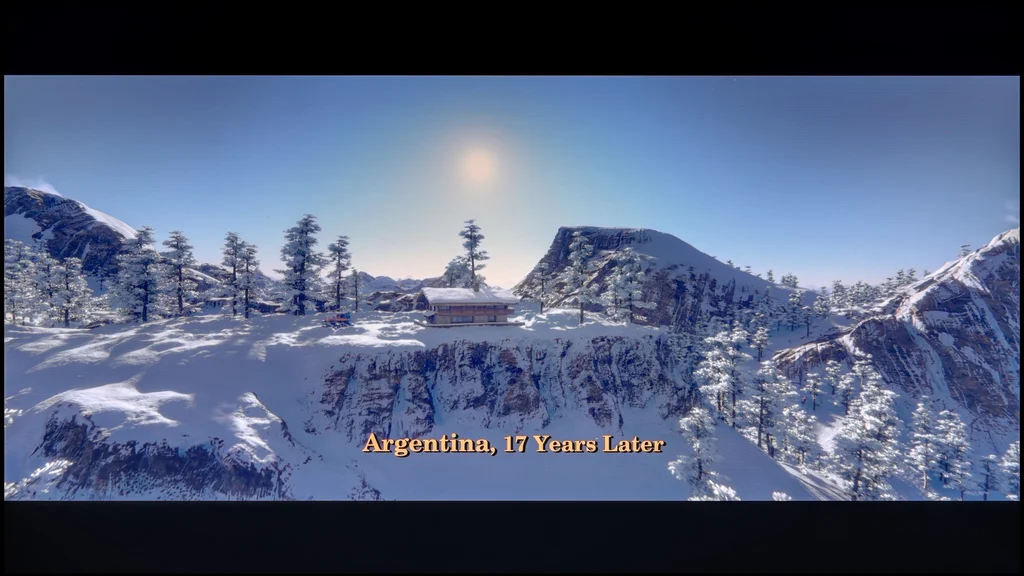
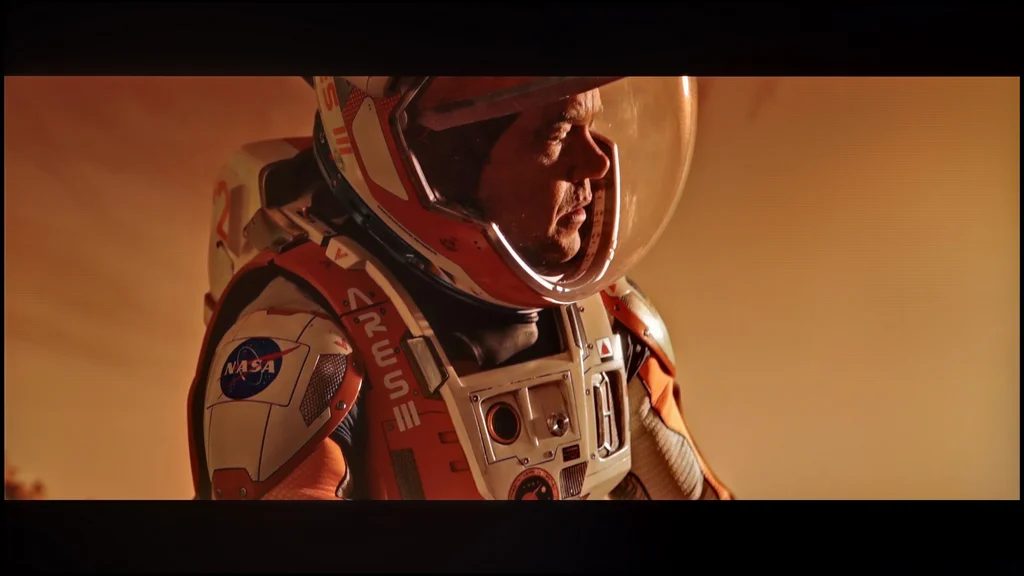
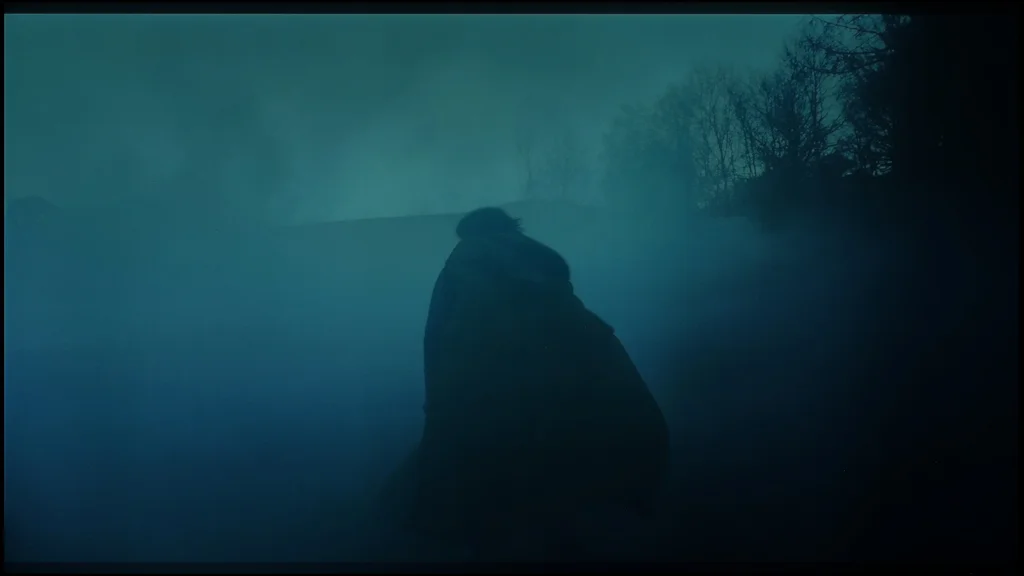
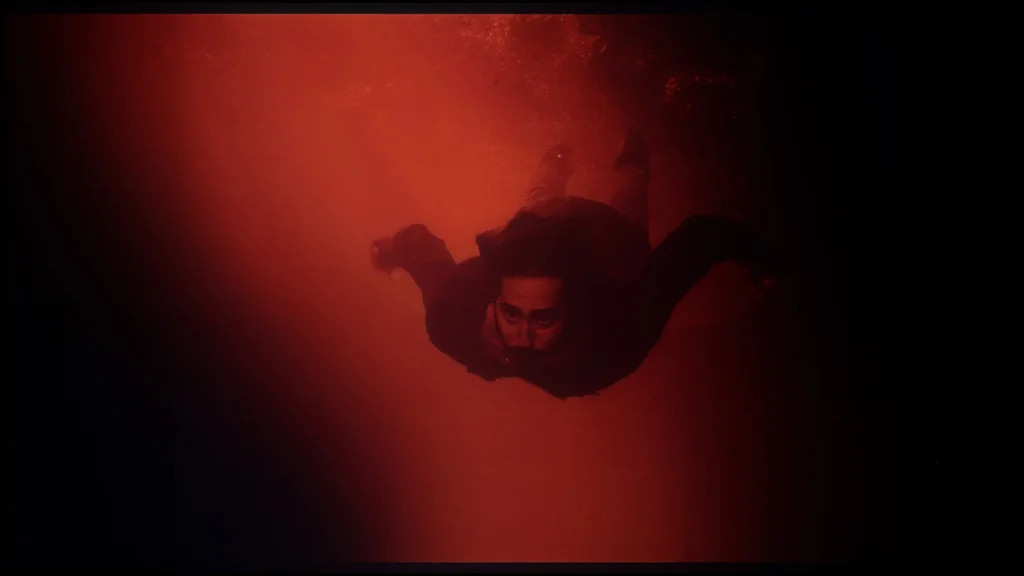
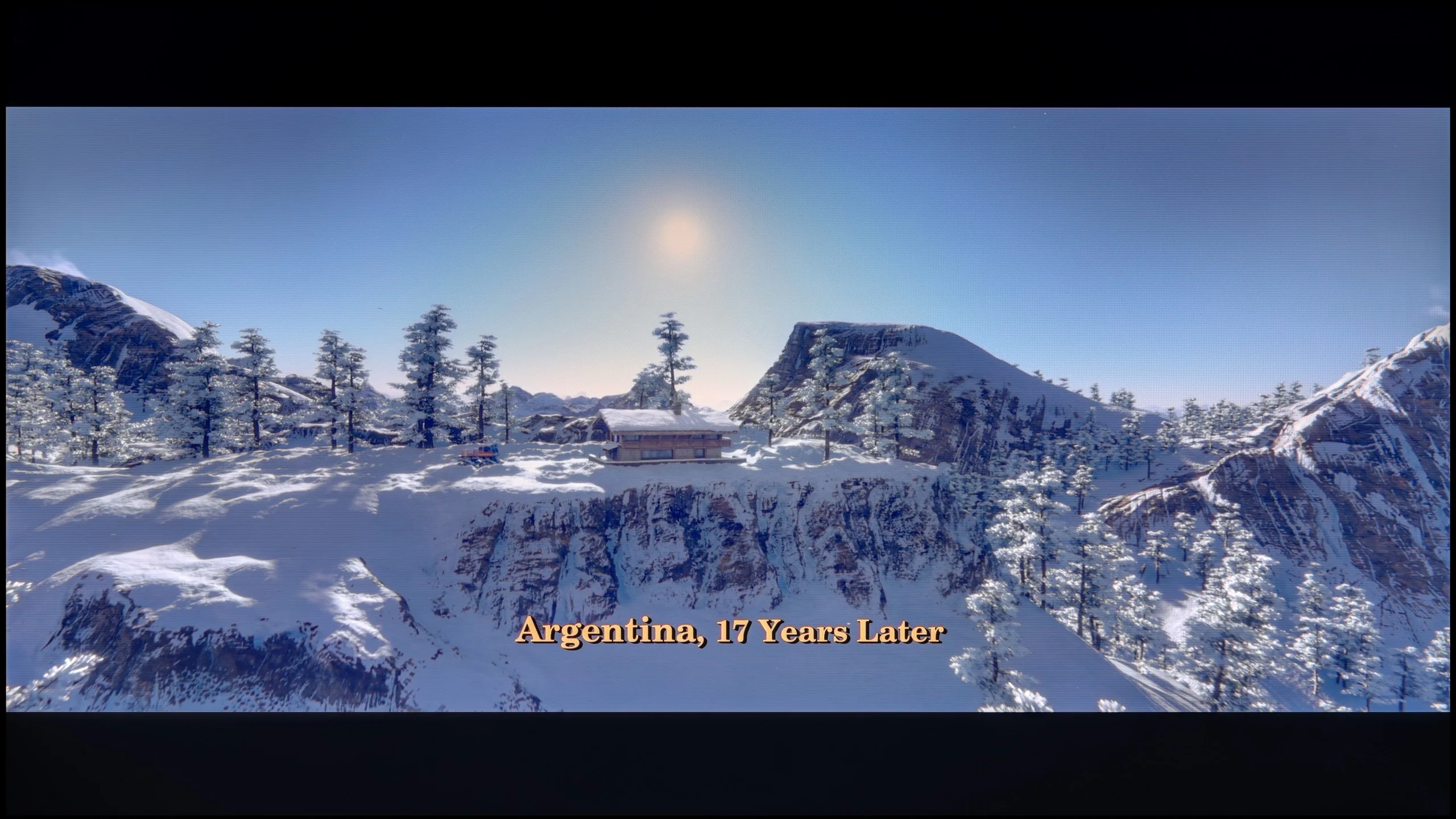
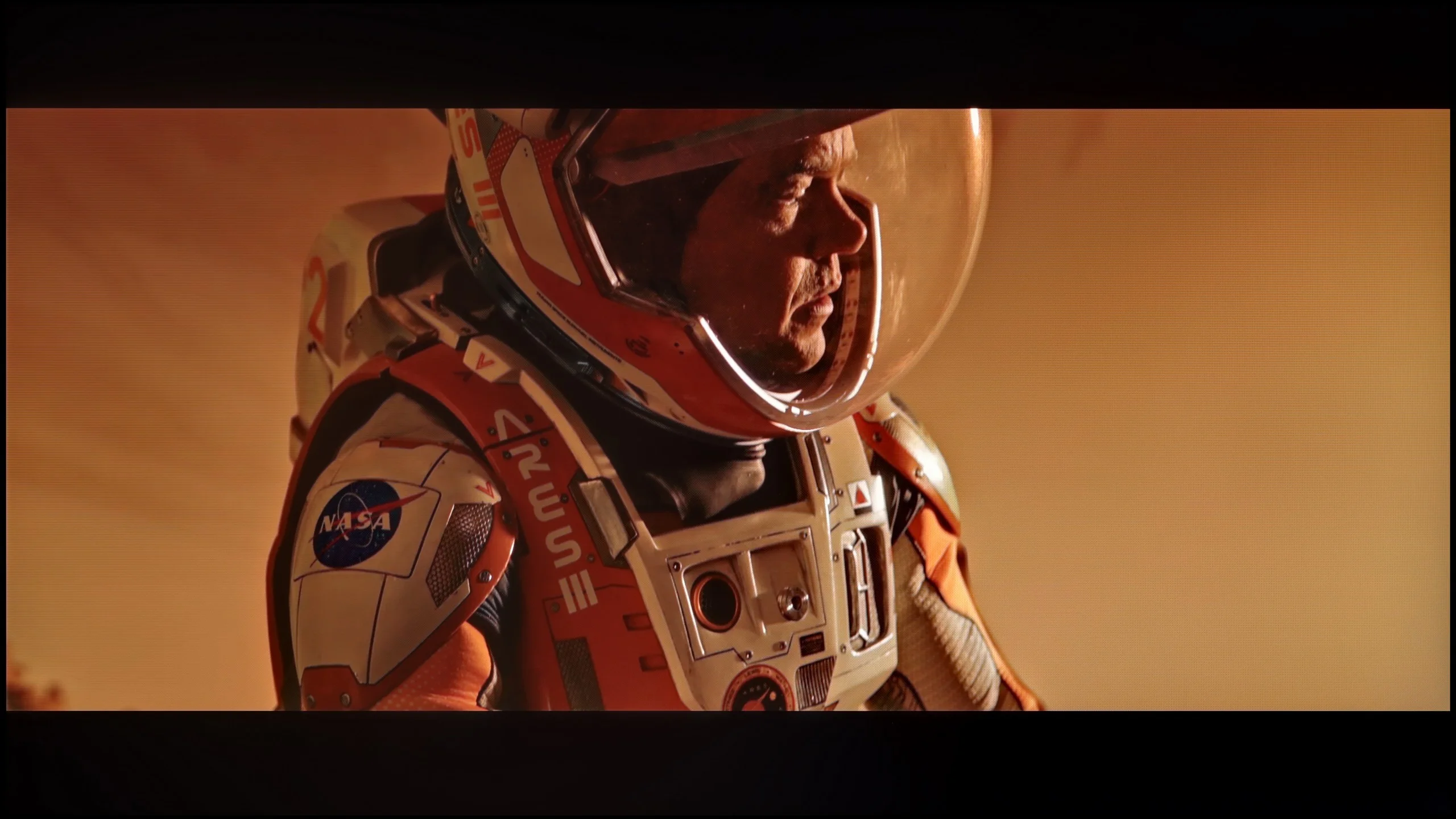
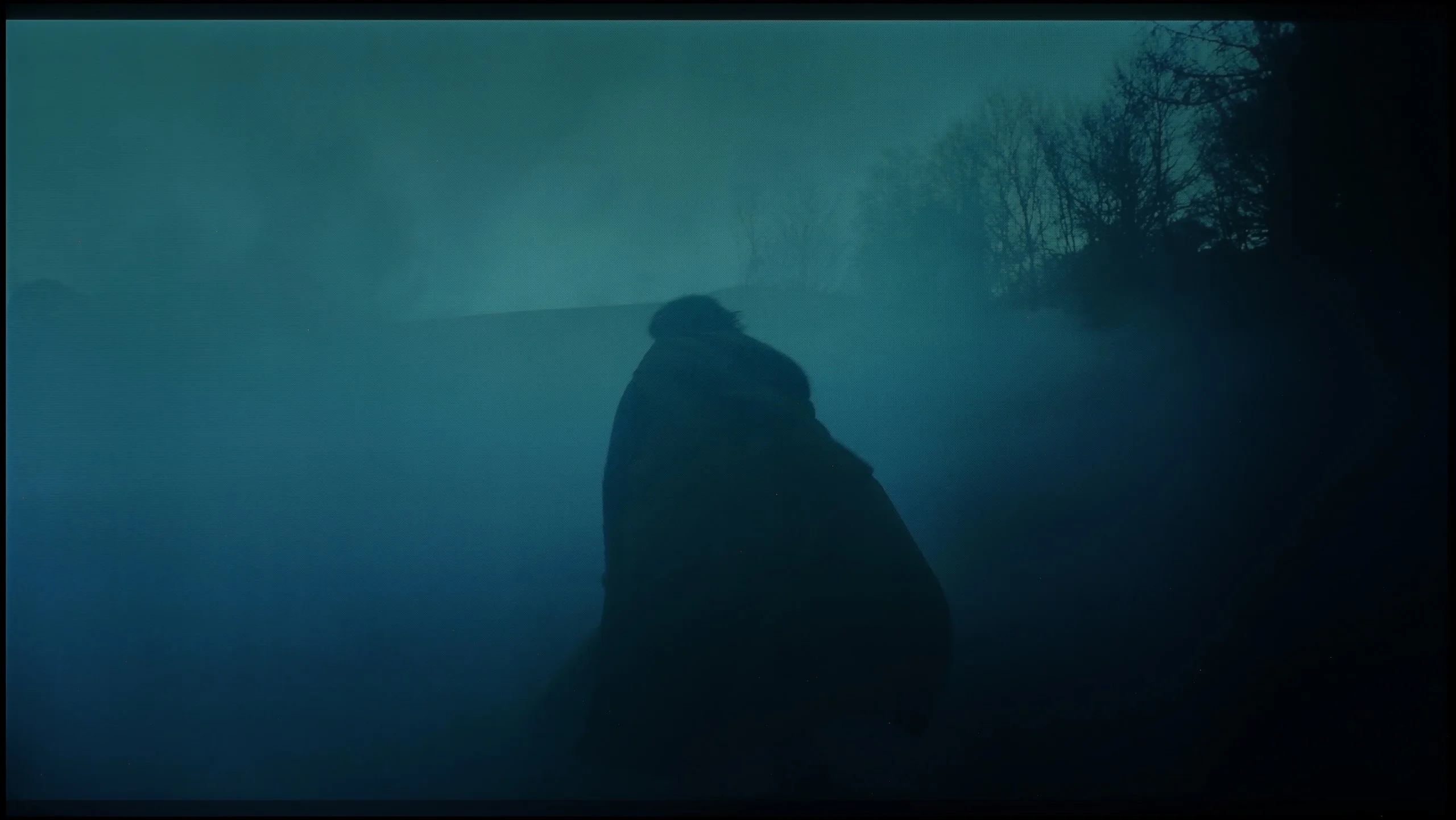
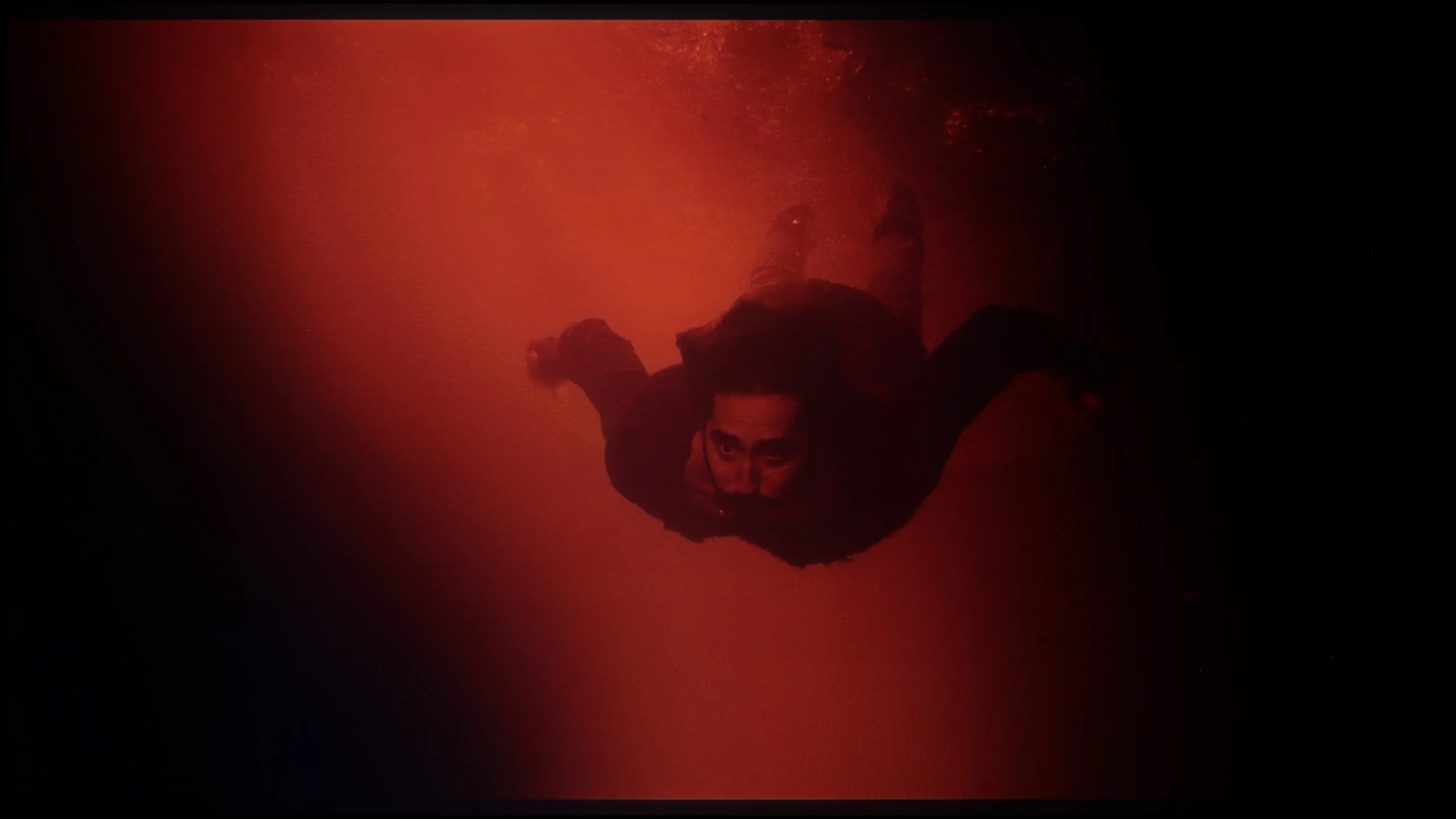
Image scaling and smoothness of tonal transitions
7.8/10
 Smooth transition function
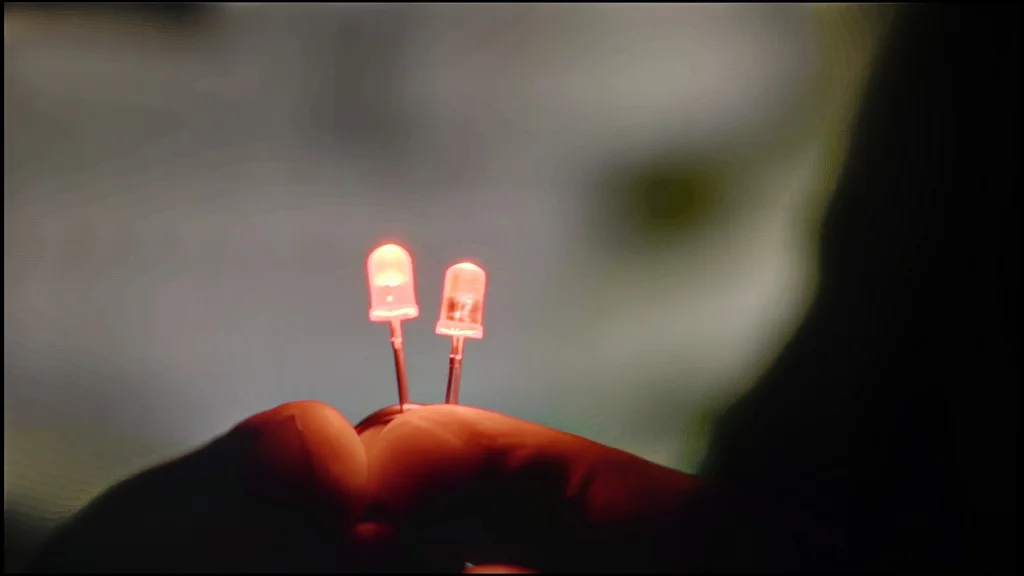
Image without overscan on the SD signal

Upscaling and digital image processing perform quite well on the LG MRGB85. The Alpha 8 AI 4K Gen7 processor efficiently upscales lower-resolution content, and regardless of source you can also easily disable overscan. The TV also copes well with compression artefacts. The "Smooth Gradation" feature can effectively reduce visible banding and tonal unevenness, but it is not always precise. At higher settings it can also smooth out fine details, for example surface textures. On the plus side, it does not remove film grain. It's safest to use the "Low" or "Medium" setting, which gives the best compromise between artefact reduction and preserving detail.
LG MRGB85 - Blur and motion smoothness
7.3/10
Maximum refresh rate of the panel: 144Hz
Film motion smoothing option: Yes
Blur reduction option: Yes
BFI function 60Hz: Yes, 60Hz (image flickers)
BFI function 120Hz: Yes, 240Hz (double contours)
Brightness drop with BFI: 63%
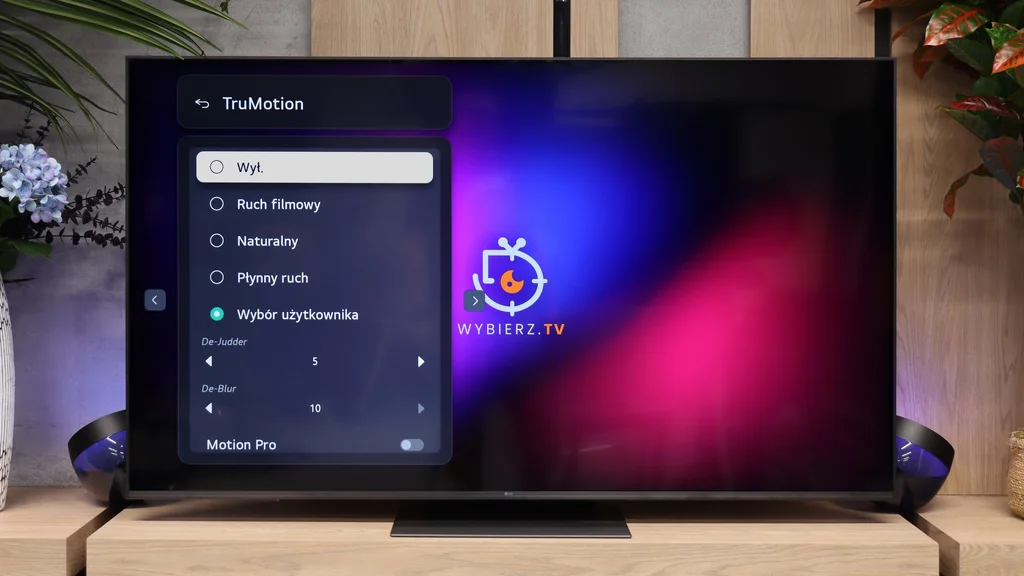
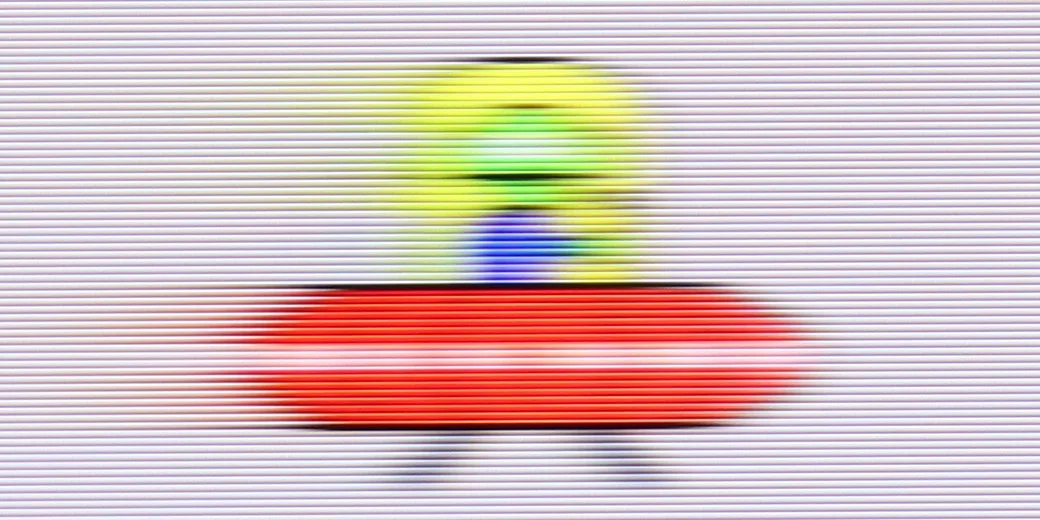
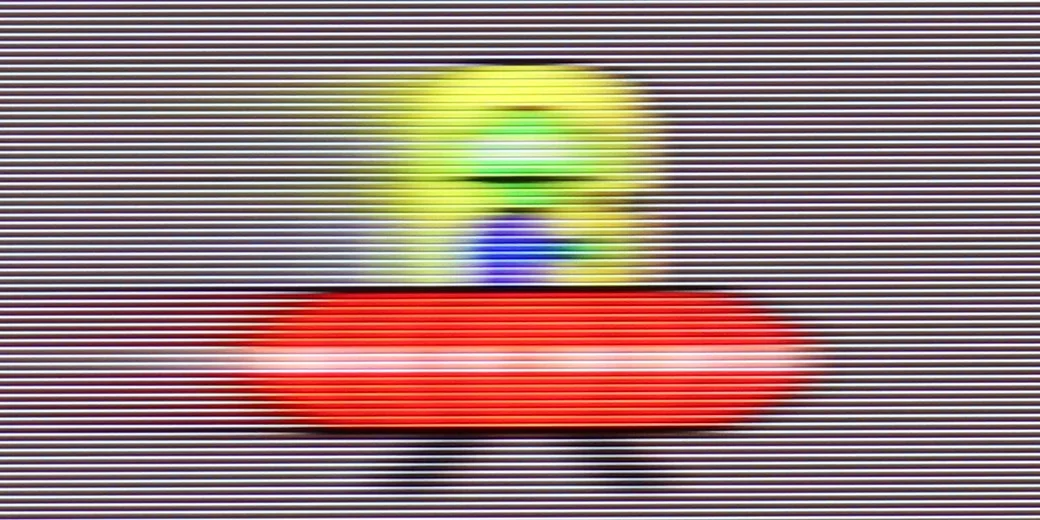
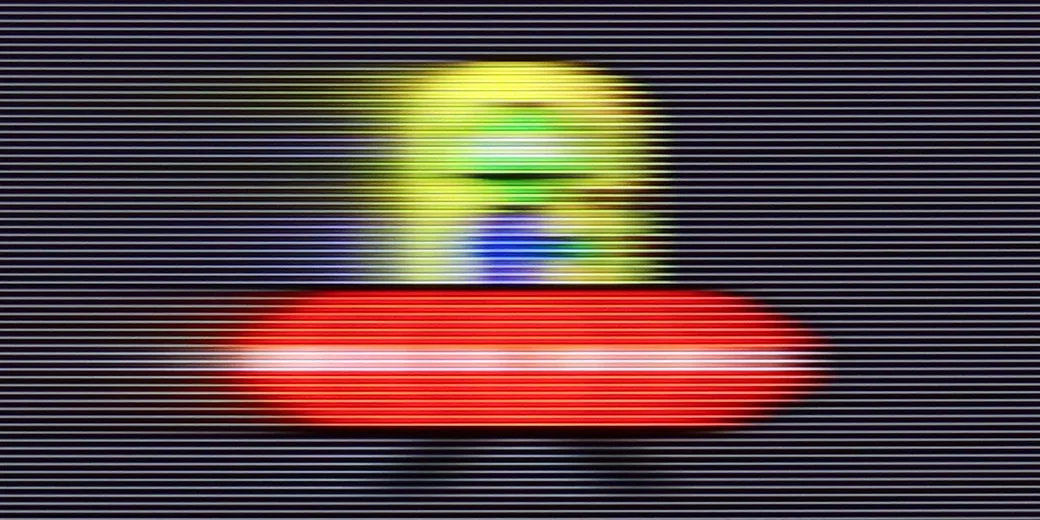
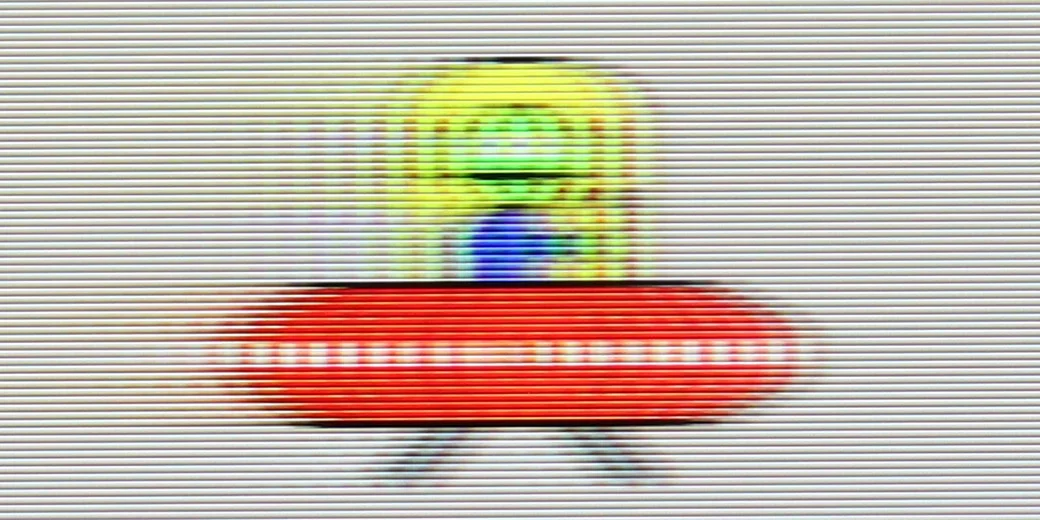
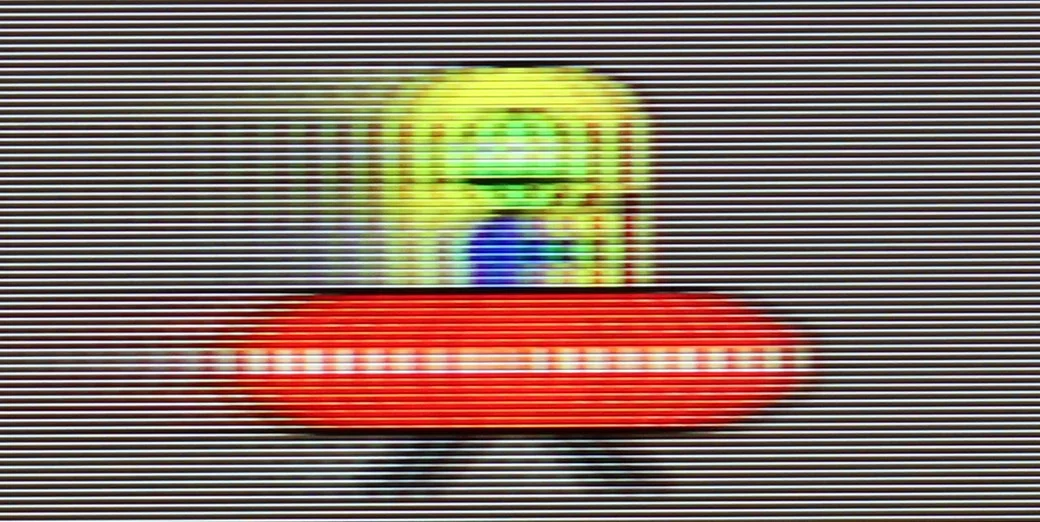
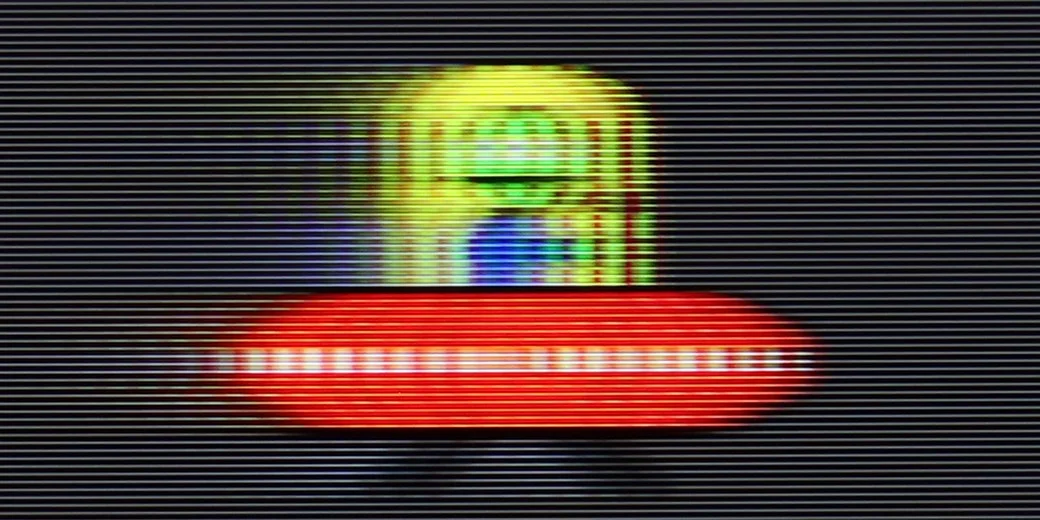
The LG MRGB85 is equipped with a VA panel with a native 144 Hz refresh rate, so it performs very well in terms of motion handling. The TV easily handles 120 Hz content from consoles and higher refresh rates when connected to a PC. That matters not only for gaming but also when watching sport, where camera movement is noticeably smoother than on basic models with 60 Hz panels. We also have TruMotion, which lets you set the level of motion smoothing yourself. You can keep a more cinematic feel to motion or increase smoothness, which works well for sports broadcasts and TV programmes. The adjustment range is wide, so you can easily tailor the smoothing to your own preferences.
Blur (native resolution, maximum refresh rate):
Blur (BFI function enabled):
Blur (4K@144Hz):
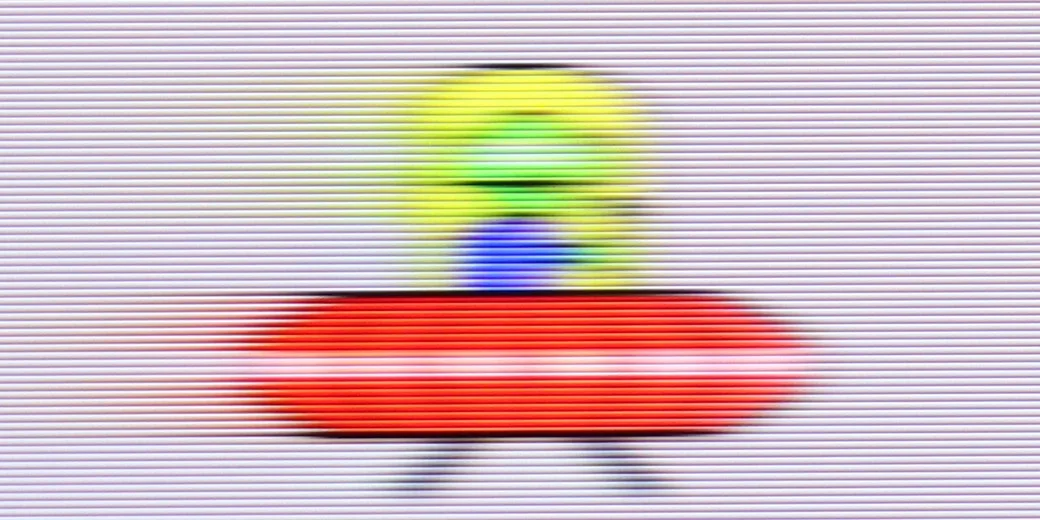
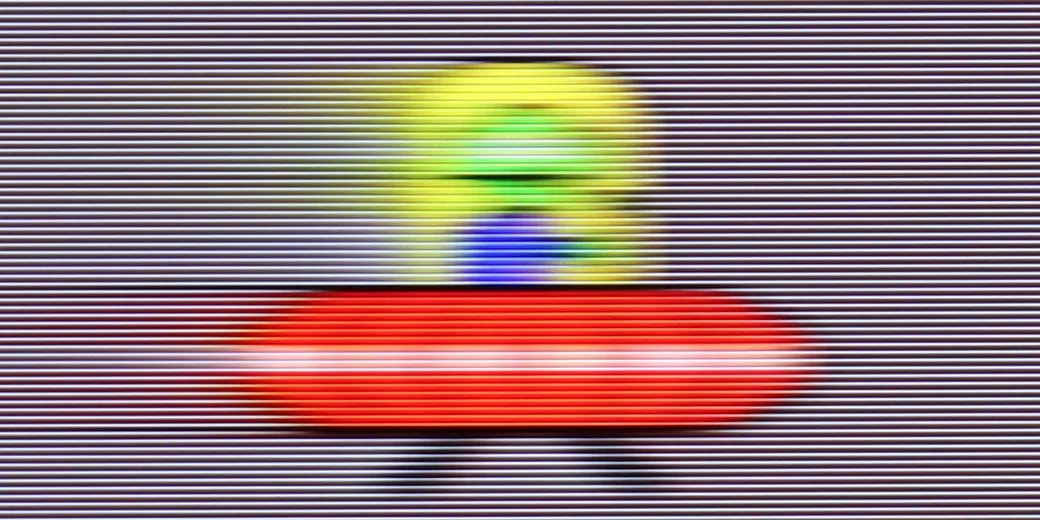
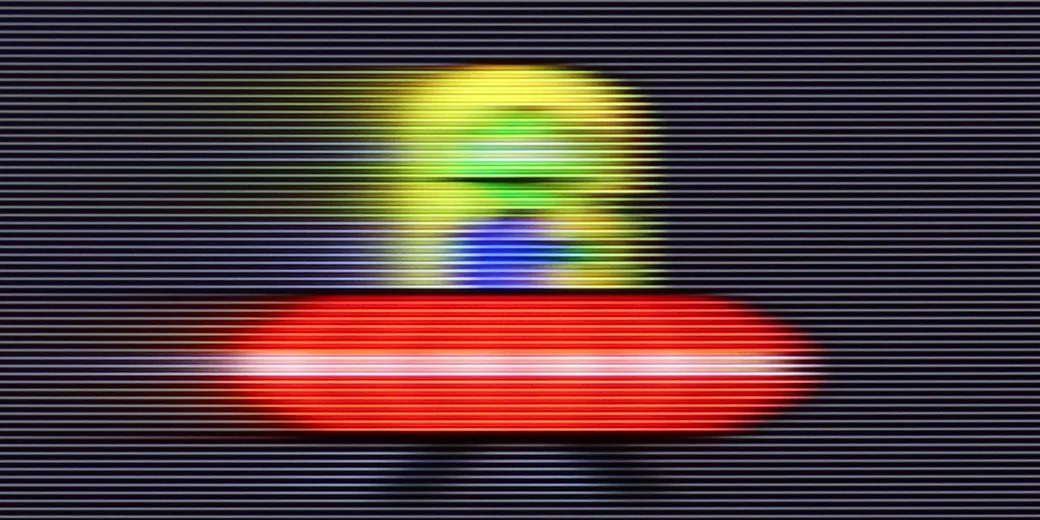
Smoothness alone is only one part of assessing motion. The MRGB85 uses a VA panel, which tends to produce smearing, particularly in darker parts of the image. With fast-moving objects you can notice a faint trail behind them, and this is most visible in transitions between dark shades of grey. This is a typical characteristic of many VA panels and the LG MRGB85 is no exception. Motion looks good in bright scenes, but in darker games or films the sharpness of moving elements can be somewhat weaker. That does not rule the TV out, but people who are particularly sensitive to smearing should bear this in mind.
LG MRGB85 - Console compatibility and gaming features
9.8/10
- ALLM:
Yes
- VRR:
Yes
- VRR range:
48 - 144Hz
- Dolby Vision Game Mode:
Yes
- Correct implementation of HGIG:
Yes
- 1080p@120Hz:
Yes
- 1440p@120Hz:
Yes
- 4K@120Hz:
Yes
- Game bar:
Yes
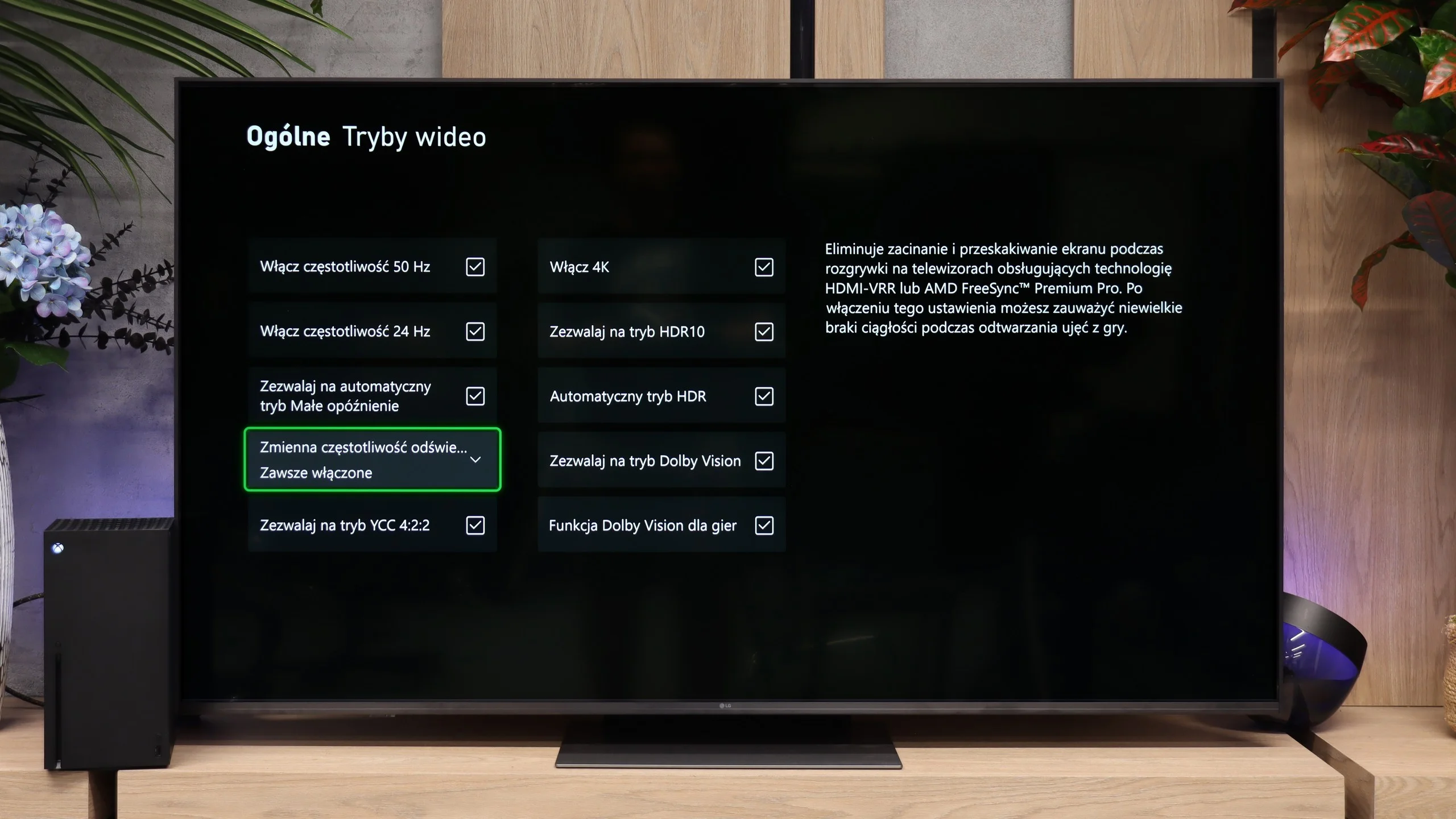
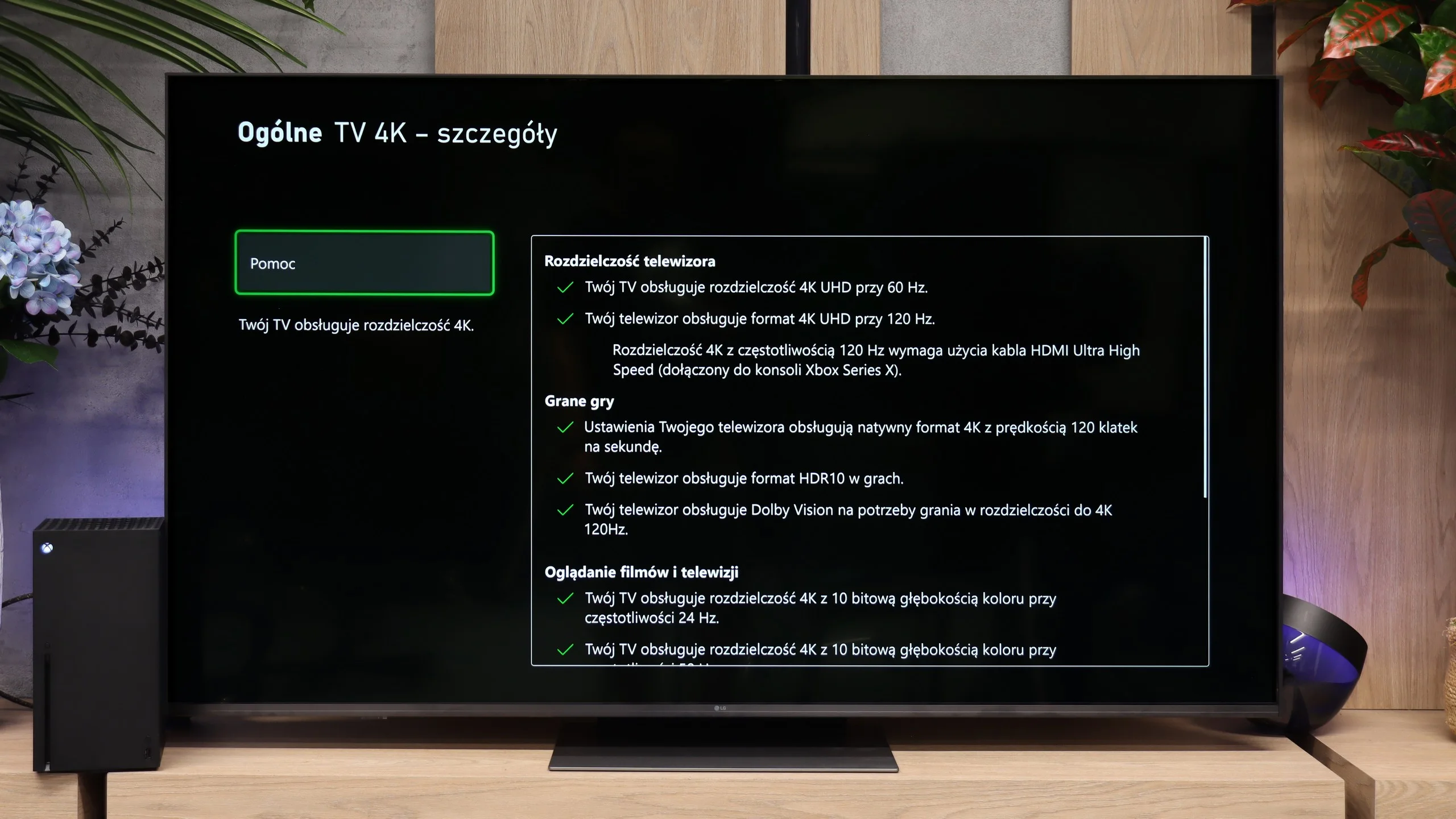
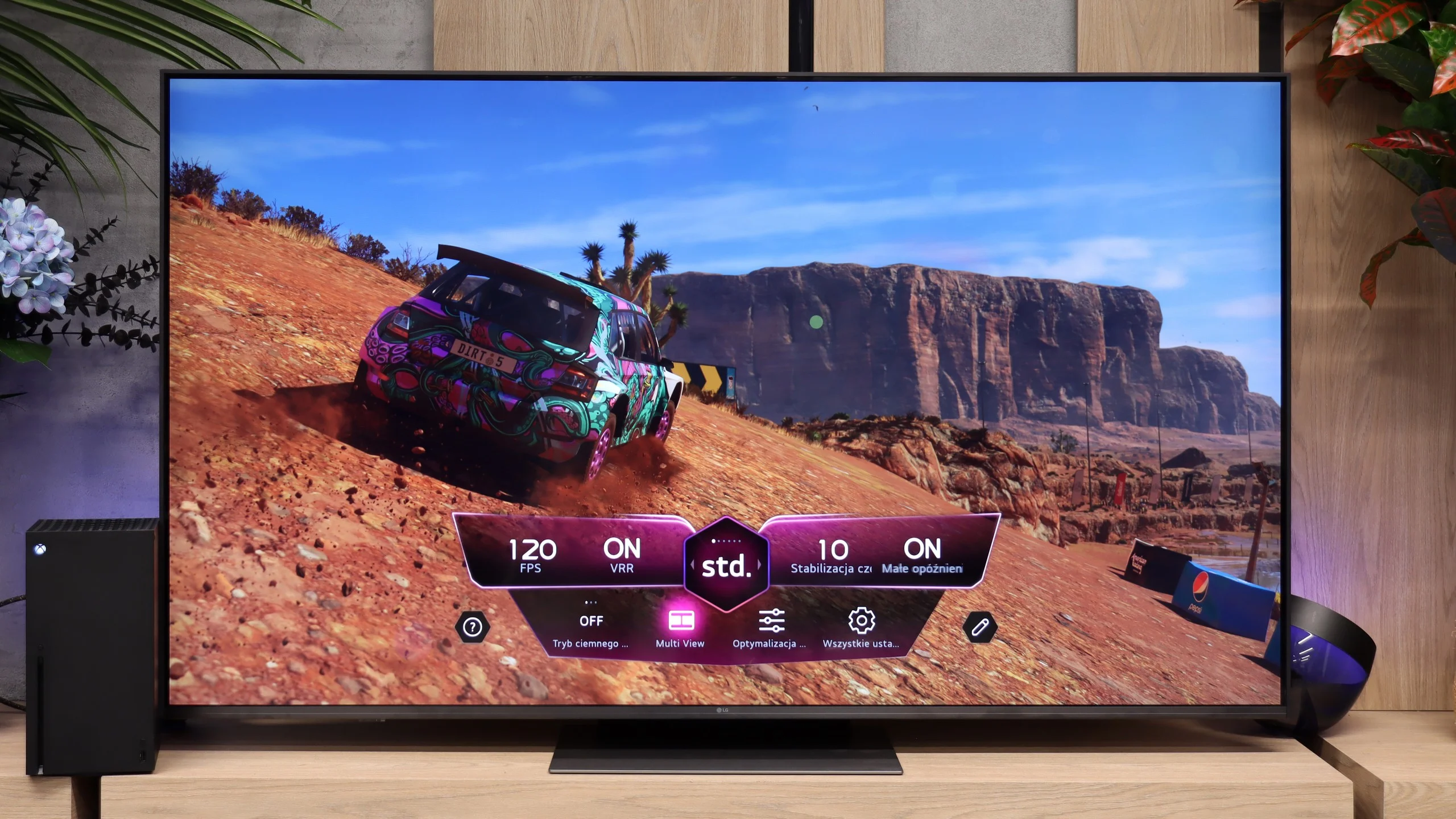
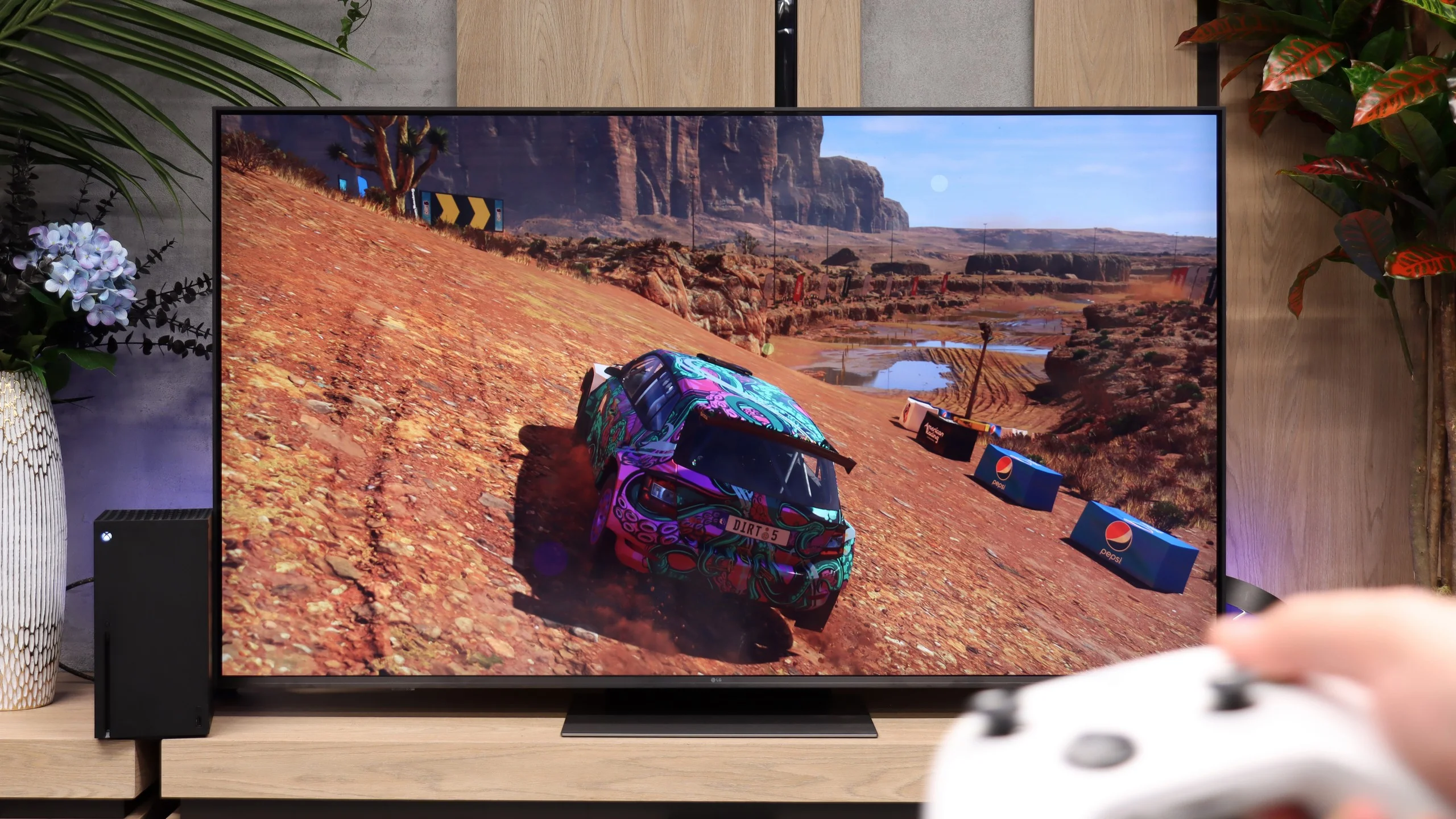
When it comes to gaming, the LG MRGB85 performs by far the best. The manufacturer didn't skimp on features and has essentially brought the full suite of functions from pricier TVs to this model. You get three HDMI 2.1 ports with the full 48 Gbit/s bandwidth. Each supports 4K at 120 Hz from a console, and when connected to a PC also 4K at 144 Hz. So you don't need to worry which port to plug your console or PC into, because they all offer the same capabilities. Also on board are VRR, AMD FreeSync Premium, NVIDIA G-Sync Compatible, ALLM and HGiG. There's also Dolby Vision Gaming, which means in supported games you can use high refresh rates and dynamic HDR simultaneously on Xbox. The package is rounded off by Game Optimizer, a handy in-game menu for gamers. Without leaving the game you can change the picture profile, brighten shadow details or check the current frame rate. In terms of gaming features, the MRGB85 therefore offers almost the same as much more expensive LG models.

LG MRGB85 - Input lag
9.7/10
Input lag in the LG MRGB85 is really low. Our measured value was around 10 ms with a 120 Hz signal and about 20 ms at 60 Hz. Importantly, we obtained similar results in Dolby Vision mode as well. They may not be the absolute best figures on the market, but in practice they are more than enough for comfortable, smooth gameplay. The delay is not noticeable and should not be a problem even in fast-paced action games or online titles.
| SDR | HDR | Dolby Vision |
|---|---|---|
| 1080p60: 19 ms | 2160p60: 18 ms | 2160p60 DV: 21 ms |
| 1080p120: 10 ms | 2160p120: 9 ms | 2160p120 DV: 9 ms |
| 2160p60: 18 ms | ||
| 2160p120: 9 ms |

LG MRGB85 - Compatibility with PC
8.4/10
Chroma 444 (max. resolution and refresh rate): Yes
Font clarity: Good
Readability of dark text and shapes: Good
Input lag in PC mode (4K, max. refresh rate): 9ms
Matrix subpixel arrangement: RGB
Max refresh rate: 144Hz
G-Sync: Yes
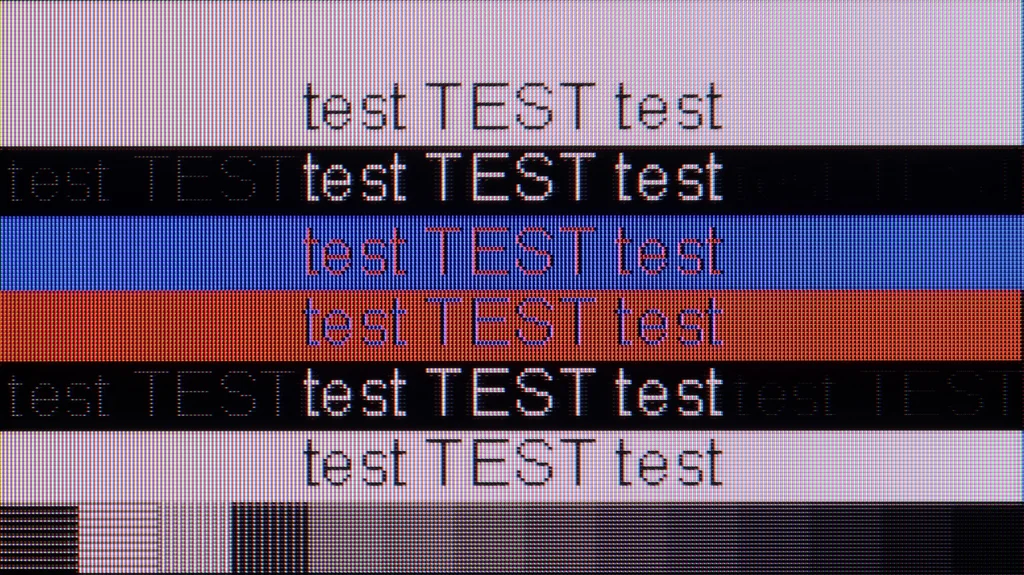
MRGB85 works very well with PCs. Support for 4K at 144 Hz and compatibility with G-Sync Compatible and FreeSync Premium mean it's not just a gaming screen but also a perfectly capable monitor for work. In terms of text readability, it's simply good. The TV properly supports 4:4:4 chroma, so small fonts and system elements remain sharp. Only when viewed from very close can you spot minor artefacts on the edges of letters, but at a normal distance from a 55" screen or larger it makes no difference at all.
LG MRGB85 - Viewing angles
3.4/10
Brightness drop at an angle of 45 degrees: 71%
Viewing angles on the LG MRGB85 are mediocre. Because it uses a VA panel the image loses colour saturation quite quickly, even when viewed from a slight angle. This is a typical trait of this type of panel — in return for high contrast you get poorer viewing angles. IPS panels work the opposite way: they offer lower contrast but retain colours better when the screen is viewed from the side. In theory the MRGB85 belongs to the family of RGB TVs, which can have better viewing angles than models that use additional QLED filters. Here, however, that does not provide much advantage. The modest number of zones located at the edge of the screen and the way they operate mean that, when viewed from an angle, the image quickly loses quality much like on ordinary LCD panels.
LG MRGB85 - Daytime performance
6.1/10
Panel finish: Satin
Reflection suppression: Decent
Black levels during daytime: Good
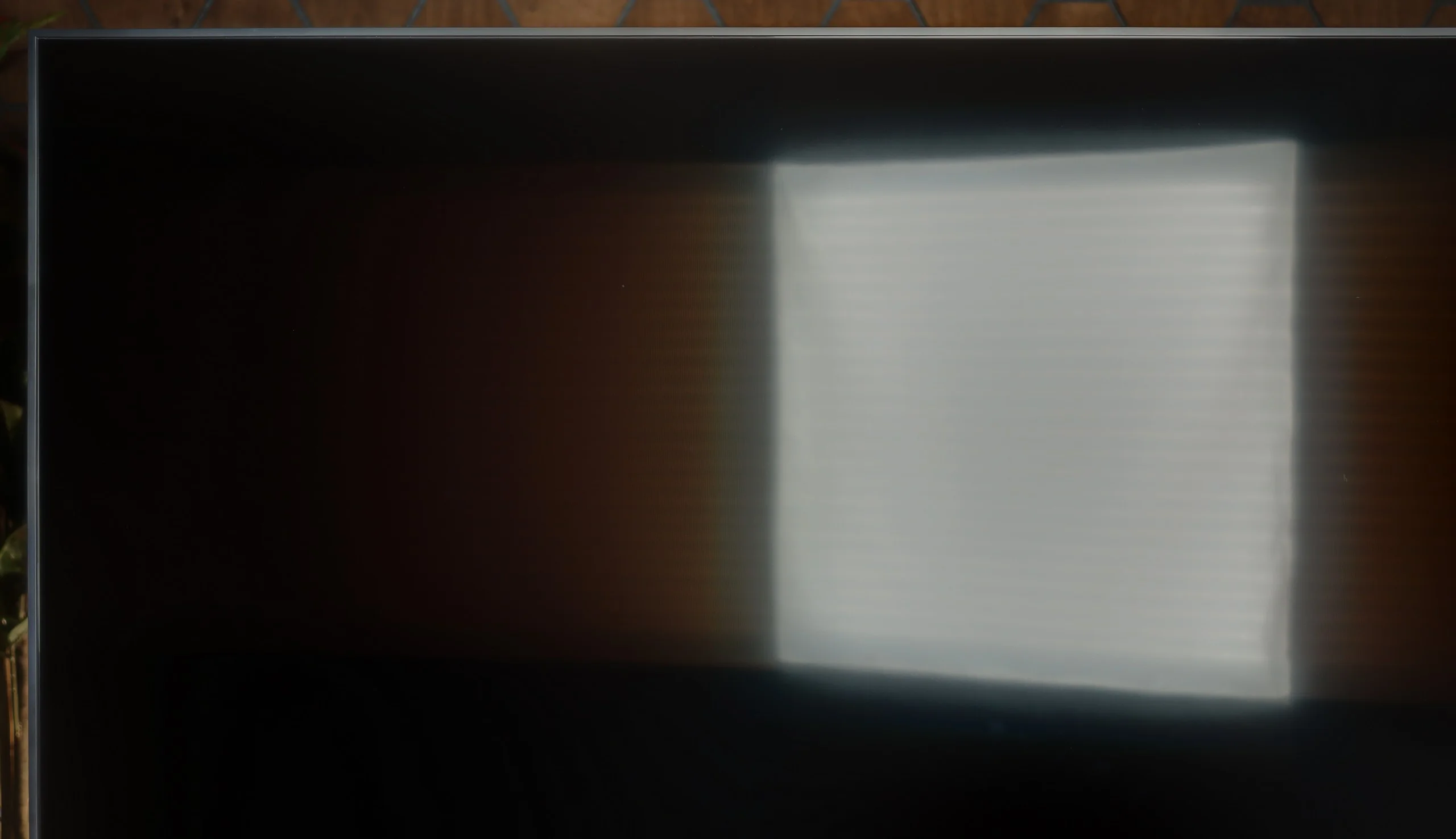
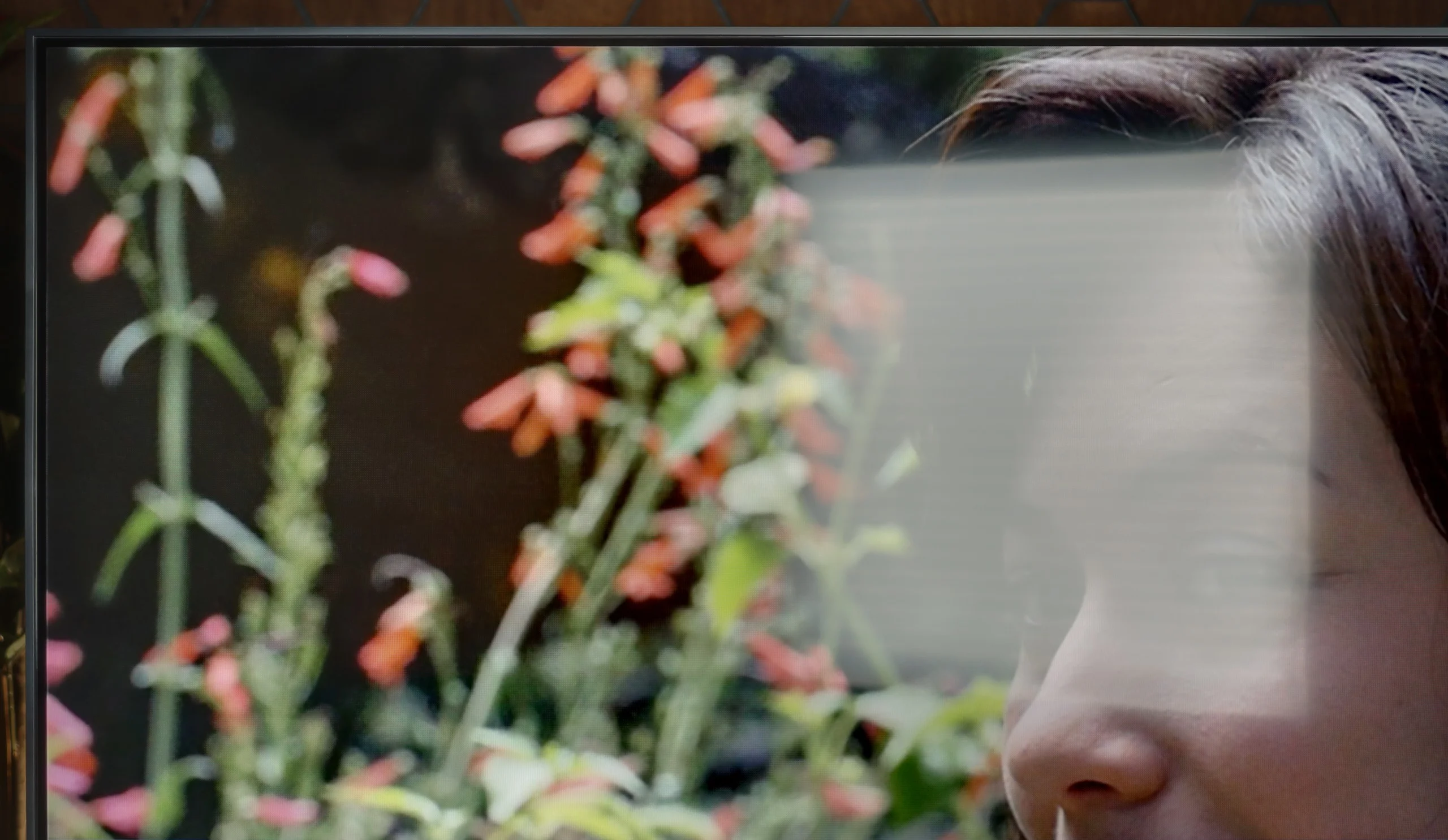
LG MRGB85 copes quite well in a bright room. Its average brightness reaches around 500 nits, noticeably above average. That means in a moderately sunlit living room the picture remains clear and doesn’t look dim. The screen coating is less effective and only average at reducing reflections. Direct reflections from windows or lamps can be clearly visible, so it’s best not to place the TV directly opposite large windows or strong light sources.
Panel brightness
LG MRGB85B: 515 cd/m2
LG MRGB85 - TV features
7.7/10
System: WebOS
System performance: Very good
- HDMI inputs: 0 x HDMI 2.0, 3 x HDMI 2.1 48Gbps
- Outputs: Toslink (Optical audio), eARC (HDMI), ARC (HDMI)
- Network Interfaces: Wi-Fi 2.4GHz, Wi-Fi 5GHz, Ethernet (LAN) 100Mbps
- TV reception: DVB-T, DVB-T2, DVB-S, DVB-S2, DVB-C
Classic features:
- Recording to USB (terrestrial TV): Yes
- Recording programming: Yes
 Picture in Picture (PiP): No
 - RF remote control (no need to aim): RF
- Backlit remote control: No
- Teletext: No
- Audio only mode: Yes
- Bluetooth headphones support: Yes
- Simultaneous Bluetooth headphones & TV audio: Yes
Smart features:
- AirPlay: Yes
- Screen mirroring (Windows Miracast): Yes
- Voice search: Yes
- Voice search in native language: Yes
- Ability to connect a keyboard and mouse: Yes
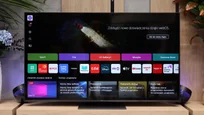
The LG MRGB85 runs webOS, which is fast, clear and provides access to all the major streaming apps. The menu is smooth and navigating it is straightforward. The TV also performs well with conventional broadcast TV. You’ll find features such as Time Shift, HbbTV and a convenient programme guide. The MRGB85 is therefore suitable both for using Netflix or YouTube and for everyday TV viewing.
Control is handled by a newer version of the Magic Remote. Compared with older models it has been noticeably slimmed down and no longer has a conventional numeric keypad, but it fits better in the hand and is more comfortable for daily use. It still retains the distinctive gyroscope, which lets you control the on-screen cursor by moving your hand. Combined with webOS, this works very well.
Sound connection options
HDMI audio:
Other audio outputs:
- Toslink: Yes
Wireless audio:
- Bluetooth: Yes
- Atmos Flex Connect: Yes
Supported audio formats (external HDMI eARC audio):
- Dolby Digital Plus 7.1: Yes
- Dolby True HD 7.1: No
- Dolby Atmos in Dolby Digital Plus (JOC): Yes
- Dolby Atmos in Dolby True HD: No
- DTS:X in DTS-HD MA: No
- DTS-HD Master Audio: No
Senior accessibility
- Numeric keyboard on TV: No
- Font size adjustment: No
- Audio description: Yes
LG MRGB85 - Apps
9.1/10






















LG MRGB85 - Playing files from USB
9/10
| Maximum photo resolution: | Supported photo formats: |
|---|---|
| 4 Mpix | JPEG |
| 6 Mpix | HEIC |
| 8 Mpix | PNG |
| 10 Mpix | GIF |
| 12 Mpix | WebP |
| 16 Mpix | TIFF |
| 20 Mpix | BMP |
| 24 Mpix | SVG |
| 28 Mpix | |
| 32 Mpix |
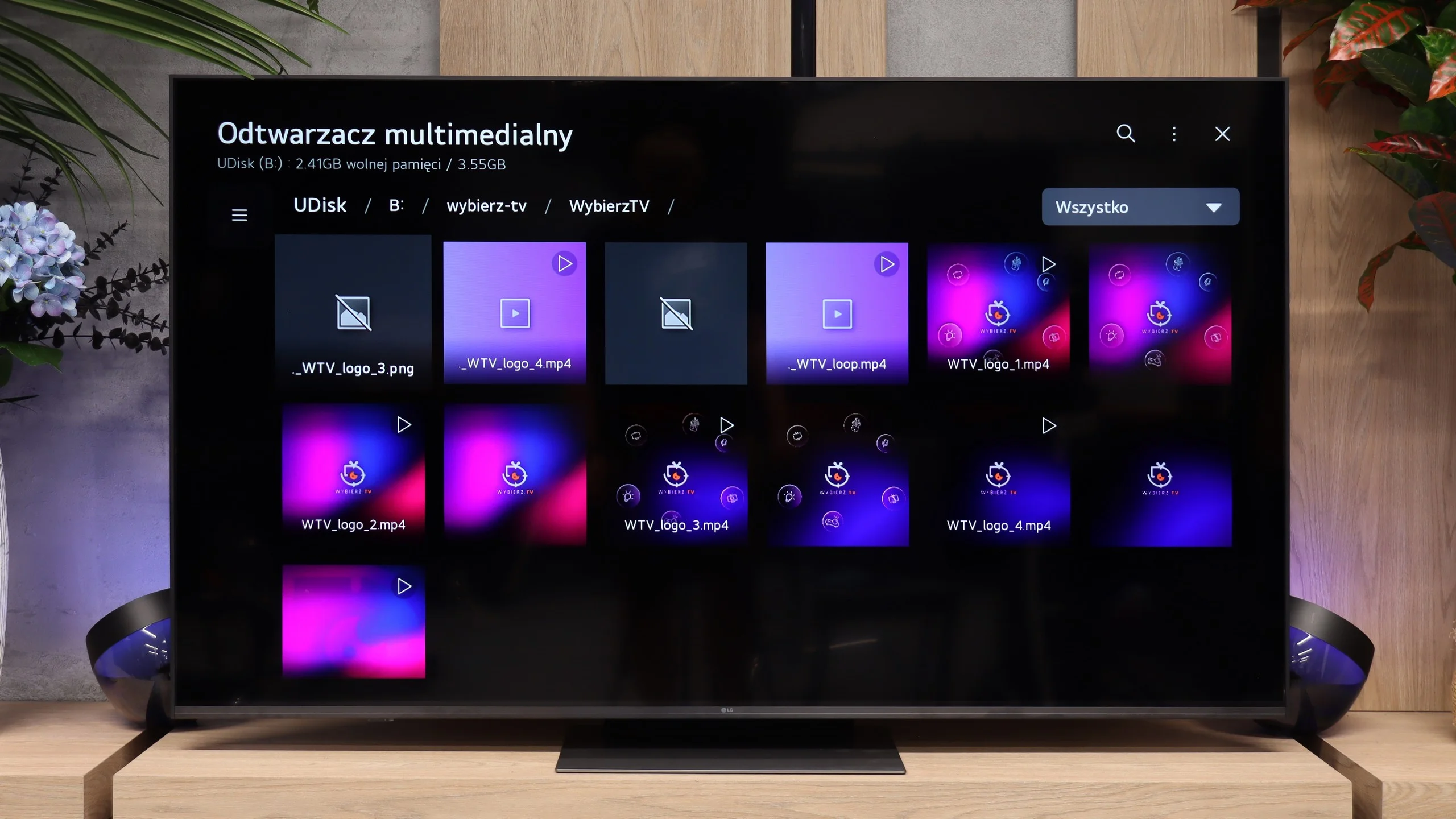
The built-in media player handles most common video, music and photo formats, so for everyday use you shouldn't be missing anything. The only unusual issue occurred with HEIC files. The TV correctly displayed their thumbnails, but when opened it couldn't show the image at full resolution. Aside from that, the player worked without any major issues.
LG MRGB85 - Sound
6.4/10
86dB
Maximum volume

Supported codecs (TV speakers)
Dolby Digital Plus 7.1
Dolby True HD 7.1
Dolby Atmos in Dolby Digital Plus (JOC)
Dolby Atmos in Dolby True HD
DTS:X in DTS-HD MA
DTS-HD Master Audio
The sound in the LG MRGB85 is simply adequate and there’s not much more to say about it. The 2.0 system used here, with a total power of 20 W, performs like most TVs on the market. It lacks pronounced bass and a wider soundstage, although it must be admitted it can get fairly loud. For everyday TV viewing this setup will do. However, those who want fuller, more impressive sound should consider purchasing a soundbar or a home cinema system.
Sound Quality Test:
Acoustic Measurements
86dBC (Max)
75dBC
LG MRGB85 - Panel details
Software version during testing: 43.11.79
Panel uniformity and thermal imaging:
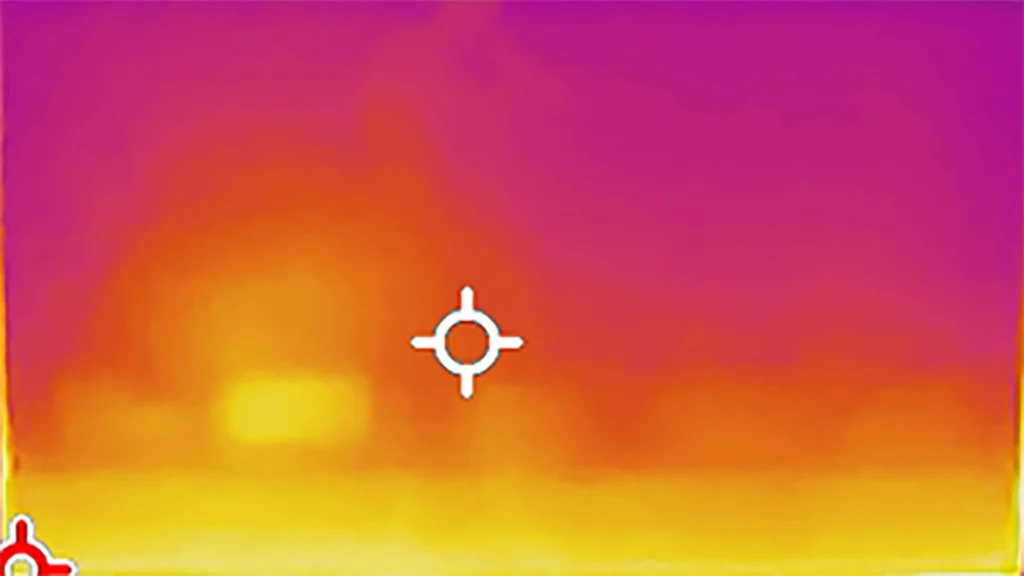
Backlight Type: Mini-LED PFS LED

Founder and originator of the "ChooseTV" portal

Journalist, reviewer, and columnist for the "ChooseTV" portal

michal-woloszyn-title
Reader comments
Comments are provided by the external service Disqus (Zeta Global). Once loaded, Disqus may set cookies and process data about your activity.
We will remember your choice on this device. Provider's privacy policy
See articles related to LG MRGB85B:
Shopping Reviews
The best LG televisions 2024 / 2025! Which LG TV to choose? ... 5/9/2025
Our YouTube channel
LG TVs 2026 – overview of OLED models B6, C6, G6 and W6. LG ... 1/13/2026
7/12/2026
3/13/2026