 Paweł Koper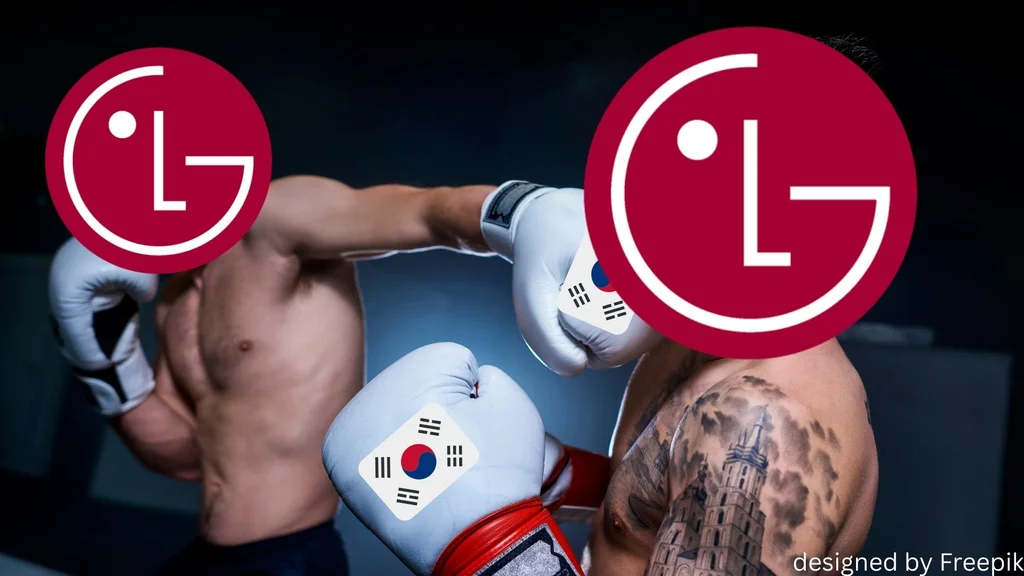
The situation at the CES 2026 exhibition has taken an unexpected turn that can be described as a "civil war" within the Korean giant. As noted in his latest material by Vincent Teoh from the HDTVTest channel, a rare phenomenon has occurred: the division responsible for panel production (LG Display) has openly struck against the technological solutions used by the division dealing with the sale of ready-made televisions (LG Electronics).
LG vs LG? What's it all about?
The main point of contention has become the new series of LCD televisions from LG Electronics, based on Micro RGB Evo technology. While LG Electronics promotes Micro RGB as its new flagship standard for LED screens, LG Display has been running a campaign for several weeks explaining why this class of technology falls short compared to OLED panels. The panel manufacturer argues that Micro RGB, despite its name, remains a transmissive technology (requiring backlighting), which brings inevitable issues with light control at the level of individual pixels.
The Micro RGB technology is, in fact, an evolution of the Mini LED system. Instead of standard white diodes, modules with separate red, green, and blue diodes are placed behind the LCD matrix. In theory, this is supposed to provide purer colours and record brightness, however, LG Display does not hold back in criticising this solution. They argue that only OLED, thanks to self-emissive pixels, can deliver perfect blacks and eliminate the "halo" effect around bright objects. Moreover, they recorded a series of videos about this on their Youtube channel:
The Two Faces of LG
For the uninitiated, it is worth clarifying that LG Display and LG Electronics are in practice two “different” companies that, despite sharing a common logo, have completely different business objectives. LG Display strives to sell OLED panels, which it regards as its most advanced and uncompromising product. Meanwhile, LG Electronics must respond to the real demands of the market. There remains a large group of customers who fear the phenomenon of burn-in or simply seek gigantic screens, for example in sizes of 100 inches. In such cases, LCD technology remains significantly cheaper to produce and more accessible to the mass market.
The introduction of the Micro RGB standard allows LG Electronics to effectively compete against rivals such as Samsung, Sony, and Hisense in the Ultra-Premium segment. Even if a sister company publicly highlights the shortcomings of this solution, for LG Electronics it is an essential tool for maintaining its presence in the traditional LCD display market. This is a classic example of a conflict of interest under one roof: one division asks for trust in the diodes, while the other argues that only self-emissive pixels make sense.
Powerful computing power in the service of Micro RGB
New models, such as the flagship MRGB95, demonstrate that LG Electronics does not intend to compromise on quality. These televisions will be equipped with the most powerful Alpha 11 AI Gen 3 processor, which until now has been reserved exclusively for the best OLED models. The use of such an advanced chip is necessary because precise control of thousands of independent RGB diodes in the backlighting system requires immense computing power to minimise image errors.
We were on-site in Las Vegas and witnessed this technological "grit" with our own eyes. Although LG Display's arguments regarding the technical superiority of OLED are difficult to dispute, the brightness and colour saturation offered by the new Micro RGB from LG Electronics make a colossal impression in trade show conditions. You can already watch our footage from LG's stand at CES 2026.
SOURCES: own elaboration, HDTV Test