 Michał Wołoszyn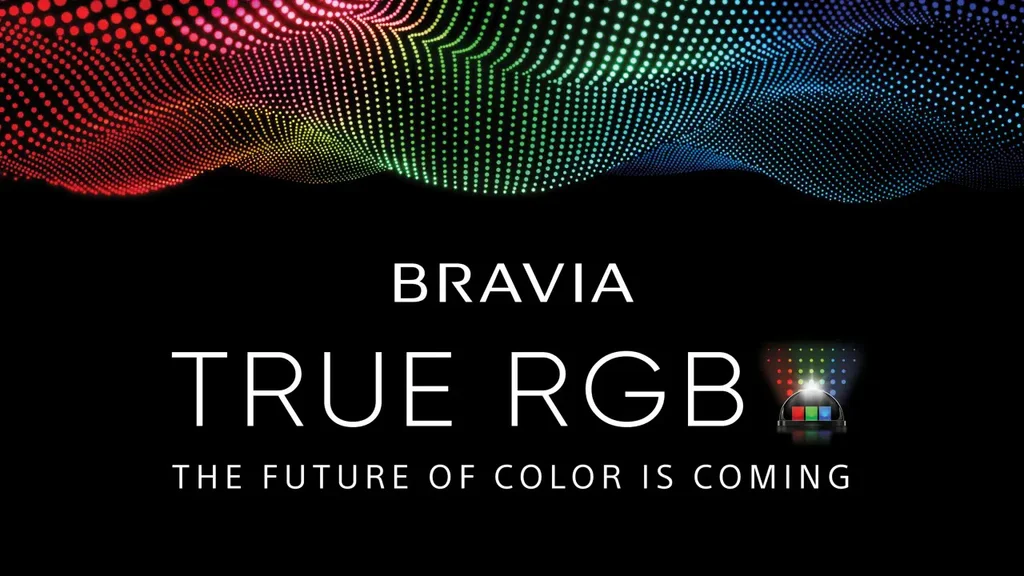
The manufacturer claims that this will be the best RGB Mini-LED television of 2026. And you know what? I'm inclined to believe it. We're talking about True RGB – a new flagship line from Sony. The Japanese invited us behind closed doors for a special presentation in the United Kingdom, from which we brought back some intriguing insights. We checked how these screens perform against the competition and what this "true" RGB is really all about.
What is RGB Mini-LED technology?
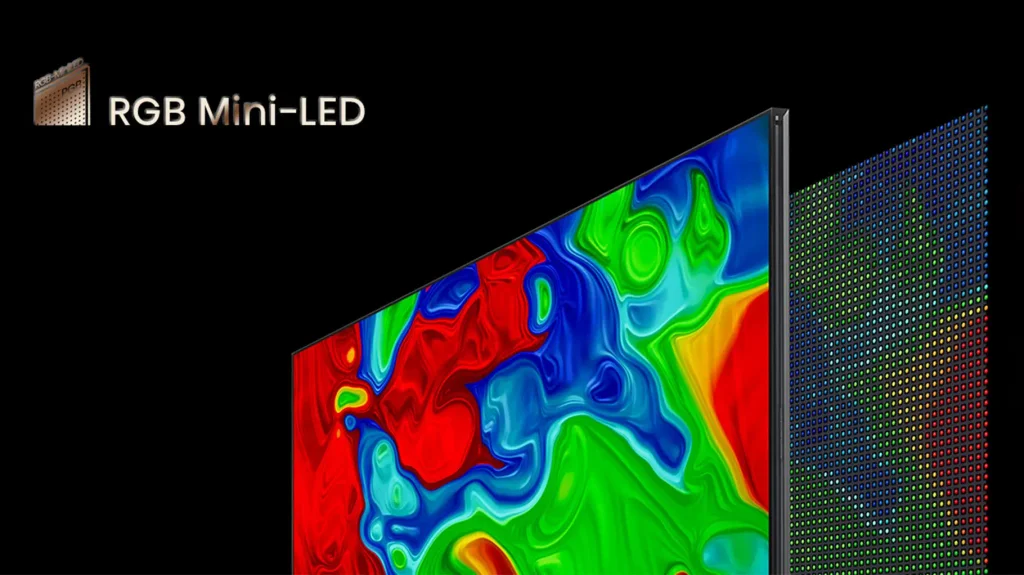
If you haven't been keeping up with the latest news, here’s a quick explanation. In classic Mini-LED, the light-emitting diodes are white. In RGB Mini-LED, the diodes are tricolour, so they create colours at the backlight level, without the need for additional filters or quantum dots (QLED).
In theory, it sounds beautiful: higher brightness, more saturated colours, and better viewing angles. In practice? We have already tested such TVs from other brands, and the results have varied. With a complex image, the backlighting can get lost, the LEDs start to shine white, and the magic of saturated colours simply disappears. Additionally, tri-colour LEDs take up more space, which can affect the number of dimming zones, and consequently, we end up with worse black levels.
“True RGB” according to Sony
Sony approaches this topic as a veteran. The Japanese reminded us at the event that they worked on this solution 20 years ago (with the QUALIA 005 model). For over two decades, engineers have focused on the most challenging task: controlling the diodes. And this is supposed to be their greatest advantage.
Sony uses its own drivers to precisely manage each diode. For the television to receive the label “True RGB”, it must meet two conditions:
Independent control of the three components – the system must constantly control the colour and brightness of the red, green, and blue components, adjusting them to the image. There is no room for switching to the standard "white" Mini-LED mode during challenging scenes.
Physical diodes, not tricks: They must be separate, true light sources. Some competitors in the market cheat even when creating red using phosphor. Although solutions using phosphor are generally not bad, Sony distances itself from “half measures”.
This is important because the terminology of this technology is becoming complicated due to the designations used by the competition (e.g. Micro RGB, RGB MiniLED or Micro RGB evo / Mini RGB). The distinguishing feature “True RGB” is meant to clearly indicate the fulfilment of both of the above assumptions.
Sony Bravia 9 II in action
At the Sony showcase, they were not afraid of direct comparisons. They compared the new model BRAVIA 9 II with the already 2-year-old Bravia 9 and a professional studio monitor costing a mere 170,000 zlotys (BVM-HX3110), which serves as a reference in our editorial office.
Colours and Brightness - Bravia 9 II
The new Bravia 9 II generates a crushing volume of colours. The colours are purer and brighter. Engineers nodded in agreement when the brightness of 4000 nits was mentioned (unofficially) – if this is confirmed, LCD technology will reach an unprecedented level.
OLED versus RGB Mini-LED
Next to it is the flagship OLED (BRAVIA 8 II). OLED still wins with its blacks in dark scenes, but with full, bright images, the new nine simply outclasses it in brightness.
Viewing Angles
The improvement in viewing angles came as a surprise. Despite the use of a VA panel (similar to last year's model), the nature of the RGB backlighting means that the light adjusts its colour to the displayed element. The drops in saturation at an angle are smaller, and the slight glow around objects is perceived by the human eye as more colour-cohesive.
Sony True RGB 2026
This year, Sony is not refreshing the mid-range or OLEDs (the BRAVIA 8 II and BRAVIA 5 models will remain with us for another year). All the work this year has gone into new technology. We will see two RGB Mini-LED models: BRAVIA 9 II and the cheaper BRAVIA 7 II.
Appearance: New central base
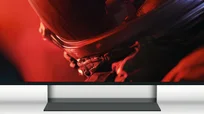
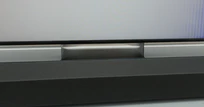
Instead of side legs, we have a central support with an element reminiscent of frosted glass (a nice "floating" effect above the cabinet and diffusing the light). The frames are now slimmer and black, rather than silver.
Sizes and Coatings of the Panels
BRAVIA 9 II features a matte coating that brilliantly suppresses light reflections without distorting the colours. There is also a gigantic size of 115 inches, but note – the coating there is satin, not matte.
BRAVIA 7 II is expected to be the most versatile (sizes from 50 to 98 inches). The finish is somewhat less 'prestigious', and on board, we will probably find fewer RGB diodes than in the flagship nine.
Gaming and... a mishap with ports?
In the specifications of the flagship models BRAVIA 7 II and BRAVIA 9 II, the maximum refresh rate is capped at 120 Hz. At first glance, looking at the specifications of competitors, which are already racing to figures of 144 Hz, 240 Hz, or even 330 Hz, this may seem modest. However, in practice, it is worth remembering that for console gamers (PS5, Xbox Series X) this value is more than sufficient, as the current generation of consoles does not generate more than 120 frames per second anyway. Higher refresh rates are of real significance only when you connect a PC to the television.
However, the issue of connections raises much greater controversy. In the top flagship models we saw at the event, only two out of the four available HDMI ports were designated as standard 2.1. This means that if you simultaneously own two next-gen consoles and, for example, a soundbar that requires connection via the eARC port, you will lack sufficient sockets to support the highest quality signal.
This is all the more absurd because the budget-friendly, significantly lower-positioned BRAVIA 3 II is said to offer a full four connections in HDMI 2.1 standard. It is hard to find a logical explanation for the decision in which a customer paying a considerable amount for a flagship product receives fewer 2.1 ports than someone choosing a basic model. At the actual presentation, Sony engineers were also unable to provide us with a concrete answer as to why such a configuration exists in these models.
Cheap televisions: BRAVIA 3 II and BRAVIA 2 II
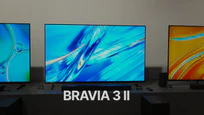
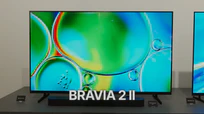
There were also budget models BRAVIA 3 II and BRAVIA 2 II. These are basic screens without local dimming. An interesting fact is that the BRAVIA 3 II is set to be the cheapest 120 Hz television from Sony, tailored for gamers. However, we will see how it performs price-wise against the aggressive Chinese competition with Mini-LEDs.
Audio News: The End of Ready-Made Sets?
Sony showcased a lot of audio equipment at the presentation, where one main trend is visible – the manufacturer is completely shifting to modular systems instead of rigid, ready-made sets. The changes start with the televisions themselves. The BRAVIA 7 II and 9 II models have received a redesigned audio system with additional transducers on the back of the casing, which is intended to provide better space and sound that keeps up with the image.
When it comes to external equipment, the most important novelty is the Trio system. It is a completely new design consisting of a small central speaker (in the form of a mini soundbar) and two side columns. The whole system has been created with expansion in mind – depending on needs and budget, a wireless subwoofer and rear satellite speakers can be purchased at any time.
Similar new releases from the Bar and Theatre series are moving in that direction. Sony is moving away from packaging soundbars and subwoofers in a single box. You buy just the soundbar itself, and you select the rest of the bass or spatial components independently from the manufacturer’s offering. Of course, there are also ready-made sets available, but the vast majority are indeed "modular".
True RGB: the best LCD televisions of the last decade?
If the manufacturer's claims and what we saw at the closed-door presentation (which we cannot discuss at this moment) really materialise in practice, then the new BRAVIA 9 II has a great chance of becoming the best LCD television of recent years. The only question is whether the engineers' announcements and the demonstration conditions will translate into the reality you will encounter in your own homes. Of course, we will verify this in our independent tests, which will be appearing on our website soon.