 Redakcja Choose TV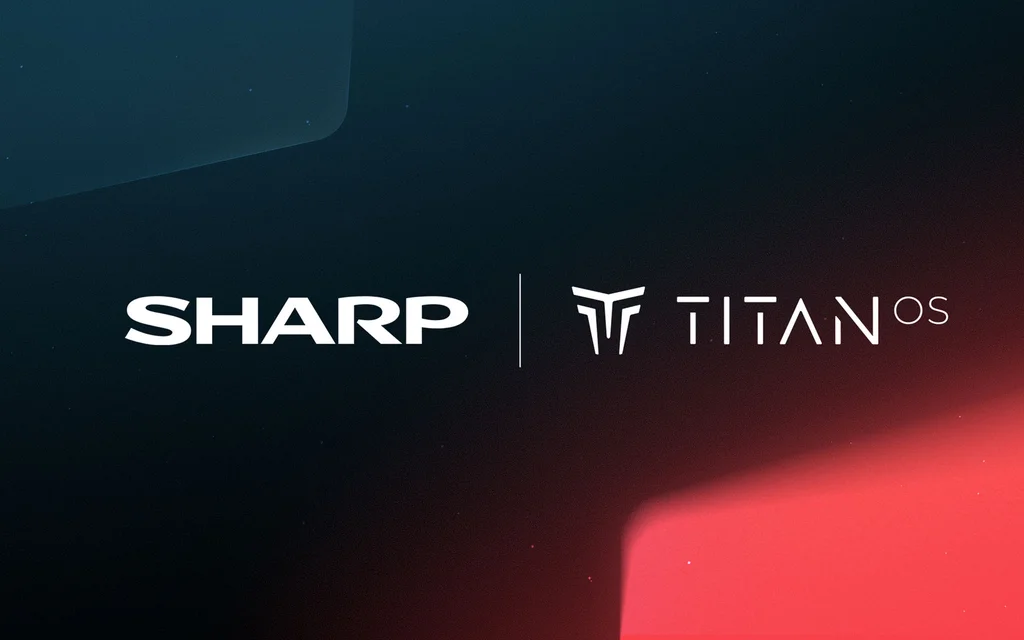
The war over operating systems in our TVs is entering a new phase. Sharp's decision to adopt Titan OS is not just a single change in one manufacturer's portfolio. It is a clear sign that the Smart TV market is rapidly turning towards decentralisation, and the tech giants need to start looking over their shoulders.
The end of the single-system era
For years the scenario in the TV market was predictable. Samsung had Tizen, LG developed webOS, and the rest of the manufacturers, with varying degrees of success, moved under Google's safe wing, Google TV (formerly Android TV). That balance of power is, however, beginning to crack. The best proof of this is Sharp's recently announced decision. The Japanese manufacturer has decided that some of its new TVs for the European market will abandon Google's software in favour of Titan OS. Although Google TV does not disappear entirely from Sharp's range and the two systems will, for now, coexist across different model lines, the move is hugely symbolic.
Why? Because Titan OS is no longer a niche curiosity mainly reserved for certain Philips models. It is becoming a genuine European alternative that is increasingly asserting itself alongside Google.
The stakes are billions in advertising
To understand why hardware makers are so keen to experiment with new systems, you need to stop looking at the TV as just a screen and start seeing it as advertising space. The modern Smart TV market no longer earns solely from selling plastic cases and panels. The real, long-term profits lie in:
FAST channels (free ad-supported streaming TV),
Sponsored recommendations on the home screen,
User behaviour data that can be monetised.
By handing the operating system to Google, manufacturers such as Sharp, and in recent years Philips, have had to share that pie (and in some cases hand over control entirely). Titan OS, developed in Europe, offers brands much greater market autonomy, their own advertising platform and, most importantly, a larger share of the financial market pie to divide.
What does the customer gain, and what do they lose?
For us users, this trend is a double-edged sword. On the one hand, greater competition always drives innovation. Titan OS is evolving at a rapid pace, steadily closing the gaps in availability of key VOD apps and looking after smooth performance, which Google’s systems have sometimes struggled to deliver on cheaper hardware.
On the other hand, market fragmentation brings the risk of chaos. Google TV still remains unrivalled in terms of ecosystem, voice assistant and, above all, its app base. When buying a new TV, the customer will no longer choose only picture quality, but will face the dilemma: which system will guarantee access to their favourite streaming platforms?