 Redakcja Choose TV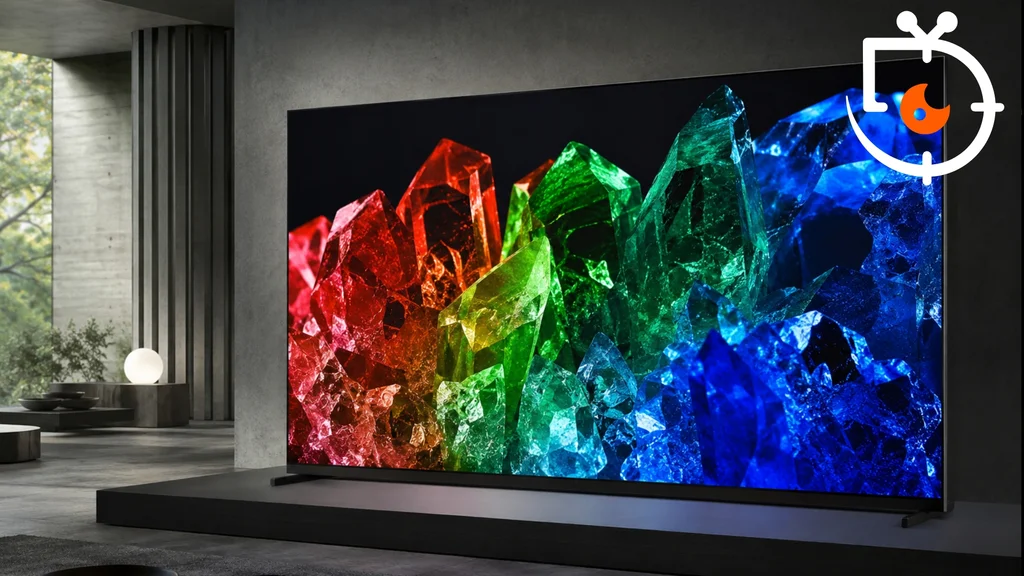
The premium television market has been divided for years between fans of OLEDs and Mini LEDs. The former technology is famous for its perfect black and very wide viewing angles, while the latter provides significantly higher brightness. However, Sony believes that users should not be forced to choose between these advantages. That is exactly why the company has developed a new solution called True RGB. The manufacturer argues that the technology was created with real viewing conditions in mind, in which most people watch television. According to data presented by Sony, only a small portion of users watch televisions in completely dark rooms.
True RGB is set to provide a brighter and more colourful image
The biggest change in True RGB is the way colours are generated. In classic Mini LED or QLED televisions, light passes through successive layers responsible for creating hues. Sony has decided to approach this process differently. In the new technology, independently controlled red, green, and blue LEDs are used right from the backlighting stage. This means that colour is produced directly at the light source, before passing through the LCD layer. According to the manufacturer, this solution allows for a significantly larger colour volume while maintaining high brightness. Sony claims that True RGB offers even twice the colour volume of the BRAVIA 9 model and up to four times that of the BRAVIA 8 OLED television. As a result, intense colours are expected to remain saturated even when displaying very bright HDR scenes. The company also emphasises that the new architecture enables precise control of millions of microscopic LEDs in real-time. This is intended to translate to a more natural image and better detail reproduction. Sony believes that this is the direction in which the premium television segment will evolve. Initial presentations of the technology indicate that the differences compared to existing solutions may be particularly noticeable in demanding HDR materials. However, the final capabilities will only be verified after the launch of the finished devices.
Sony improves viewing angles and combats light reflections
The manufacturer pays attention not only to colours and brightness but also to viewing comfort. One of the greatest advantages of OLED screens has long been wide viewing angles. Sony argues that True RGB can significantly reduce the advantage of this technology. By generating colours through both backlighting and the LCD layer, the image is claimed to maintain greater consistency even when viewed from the side. During the presentation, the company showcased comparisons where the colours remained more stable at large deviations from the screen's axis. Another element is the improvement of the smoothness of tonal transitions. True RGB is intended to limit the effect of visible colour banding, which sometimes appears in the sky, sunsets, or other scenes with delicate gradients. Sony has employed its own solutions related to image processing and RGB backlight control. Additionally, the company announced a new coating, Immersive Black Screen Pro. Its purpose is to reduce light reflections while preserving deep blacks. This solution will be implemented in the flagship BRAVIA 9 II models. The manufacturer hopes that this will enable the televisions to perform better in bright living rooms and rooms with a large number of windows. Such conditions, according to Sony, are now the most commonly found in users' homes.
Sony is betting on True RGB as the successor to the current solutions used in premium televisions. The technology aims to combine the high brightness known from Mini LED with the colour quality and viewing angles associated with OLEDs. The first models featuring the new system will be included in the BRAVIA 9 II and BRAVIA 7 II series. If the manufacturer's announcements are confirmed in tests, True RGB could become one of the most significant innovations in the television market in the coming years.
source: digitaltrends