 Redakcja Choose TV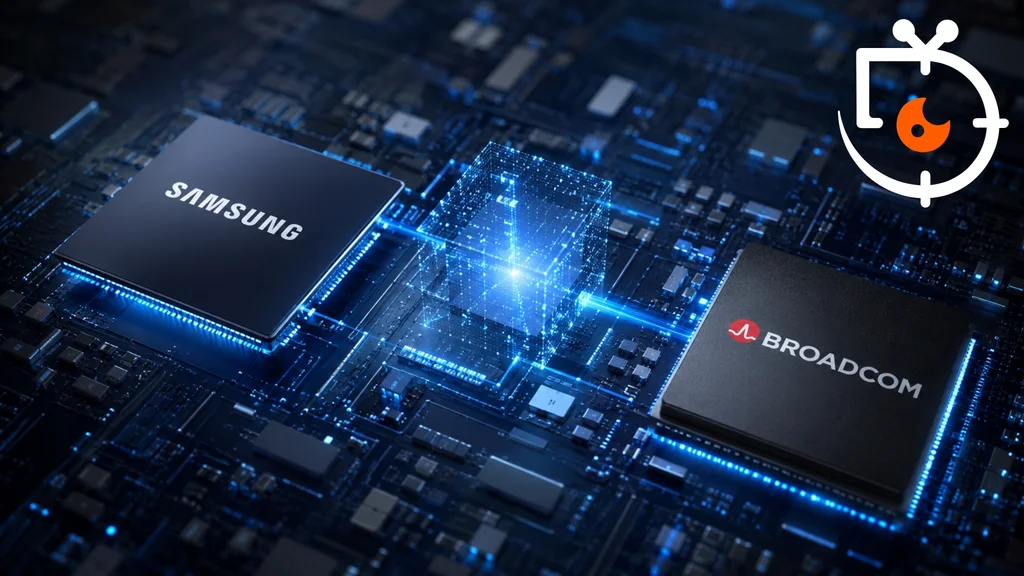
Samsung and TSMC have been competing for years for the leading position in the production of the most advanced integrated circuits. Although the Taiwanese manufacturer still dominates the foundry services market, Samsung can leverage strengths that go beyond lithography alone. According to the latest reports, the Korean company is deepening cooperation with Broadcom on projects related to artificial intelligence infrastructure. Both the 2 nm process technology and modern HBM4 memory are set to play key roles. The collaboration is expected to involve much more than chip manufacturing. If the plans are realised, Samsung could significantly strengthen its position in the AI market.
Samsung aims to offer Broadcom a comprehensive solution for AI chips
According to published reports, Samsung and Broadcom have signed a memorandum of cooperation on the development of artificial intelligence infrastructure. The partnership is to include the use of the 2 nm process technology and HBM4 memory in AI accelerators designed by Broadcom. Samsung is expected to be responsible not only for manufacturing the chips themselves. The company will also take part in design optimisation, chip packaging and preparing them for volume production. That cooperation model should shorten the time needed to develop new designs. In the future Samsung also plans to roll out the next-generation HBM4E memory. The manufacturer hopes this will increase the competitiveness of its solutions for the AI market. The use of the 2 nm process is expected to cover, among other things, Broadcom’s high‑speed communications chips. According to a source, the total value of the cooperation could reach as much as $200 billion over a five-year period. However, it should be noted that the financial details and the scope of the project have not been officially confirmed by either party. At present only the signing of the memorandum is known. Further development of the partnership will depend on the completion of subsequent stages of the project. For now this remains an ambitious plan rather than a final, binding agreement.
Samsung may be able to use an advantage stemming from memory and chip production
The source notes that Samsung's greatest asset is the ability to provide customers with a comprehensive ecosystem. The company manufactures not only the most advanced integrated circuits but also DRAM and HBM memory. This allows it to simultaneously optimise chip design, the power delivery system and the thermal characteristics of the entire design. For TSMC, achieving a similar effect requires working with external memory suppliers. That can lengthen the design process and increase the risk of integration issues between components. Samsung expects this approach to be attractive to companies developing AI accelerators. A smaller number of suppliers may also reduce supply chain problems. At the same time, TSMC remains the leader in the foundry services market and holds a very strong position in producing the most advanced chips. Therefore it's hard to say today whether Samsung will actually manage to close the gap with its largest rival. It's worth remembering that some of the forecasts presented come from industry analyses and do not constitute official statements from either company. The ultimate impact of the collaboration on the market will only be clear after production of the new chips begins. However, the competition between Samsung and TSMC looks set to be extremely interesting in the years ahead.
Samsung could use a combination of a 2 nm process and its own HBM4 memory to attract customers developing AI chips. Although TSMC remains the market leader, the Korean manufacturer's comprehensive offering could prove a key argument in the battle for further multibillion contracts.
source: wccftech