 Michał Wołoszyn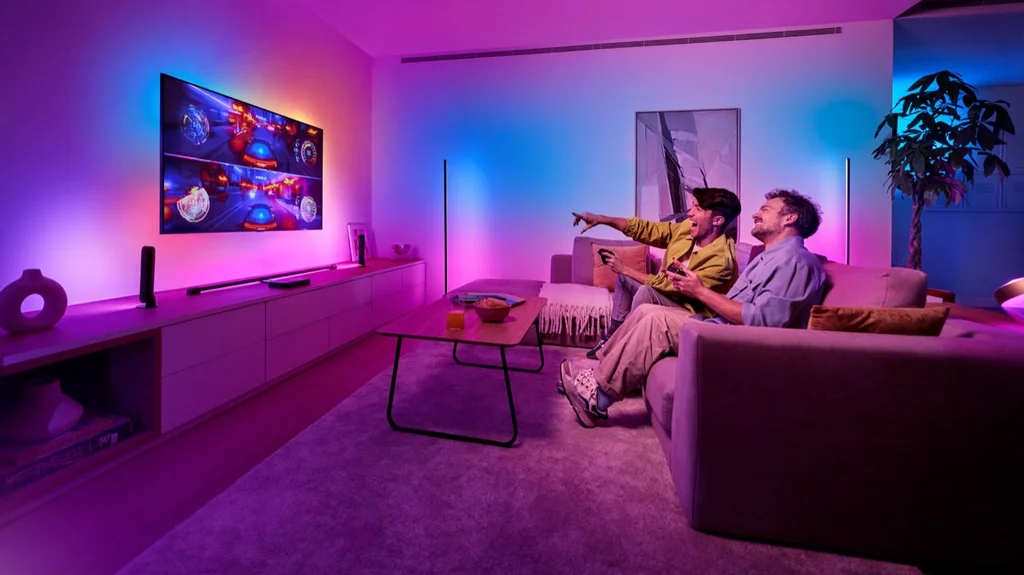
If you are following the television market, you will surely remember the moment a few years ago when Philips (TP Vision) suddenly "parted ways" with the Ambilight+Hue feature. For many brand fans, this was a shock – a feature that allowed the colours from behind the television to be extended into the whole living room using smart bulbs suddenly disappeared from new models. Meanwhile, Samsung and LG made deals with Signify (the manufacturer of Philips Hue) and introduced paid applications for light synchronisation. Philips fell behind, but the year 2026 brings the long-awaited answer. The feature returns under a new name, AmbiScape, and, most importantly, is no longer limited to a single, expensive lighting brand.
The new AmbiScape system is largely the result of the development of the proprietary system TitanOS. Philips needed a moment to recreate what had worked on Android a few years ago after switching to its own software. Instead of locking itself into a single ecosystem, AmbiScape will initially support bulbs from Wiz, NanoLeaf, Ikea (Trådfri), and of course, Philips Hue. This is great news as it allows for the construction of an immersive home cinema without spending a fortune on the most expensive bulbs on the market.
How does it work?
The biggest issue with light synchronisation systems has always been the delay. Philips claims that in the AmbiScape system the delay between what we see on the screen and the response from external light bulbs is about 0.5 seconds. This means that the glow on the wall and the light in the lamp next to the sofa should react almost simultaneously. The system will allow for the connection of four additional light points.
The configuration process is designed to be as straightforward as possible. A QR code is displayed on the television screen, which we scan with our phone, and using a simple wizard, we indicate where the specific lamp is located in the room. We can also select a mode of operation: classic video tracking, music mode (responsive to sound), or set a single, fixed colour for the entire room. Interestingly, this feature will be available not only for televisions but also for monitors from the Philips Evnia series.
Who will receive AmbiScape and when?
In 2026, the AmbiScape feature will be standard across nearly the entire range of the manufacturer. The system will be found in all OLED models from the 2026 lineup, the new flagship Mini-LED 981 (the one with the RGB panel), and in all televisions from the 8000 series and above. If you have a model from the end of 2025, you may have already seen a test version of this feature, as the manufacturer had quietly been testing it.
AmbiScape is a clear signal that Philips has regained its confidence in the face of Samsung and LG. Instead of forcing users to purchase the expensive Hue Sync app or (heaven forbid!) the Hue device, they are providing a free tool that "will communicate" with the most popular and cheapest bulbs on the market. This is a return to the roots of Ambilight, but in an open version. And honestly? This is exactly the kind of decision we had been waiting for from the engineers at TP Vision.