 Redakcja Choose TV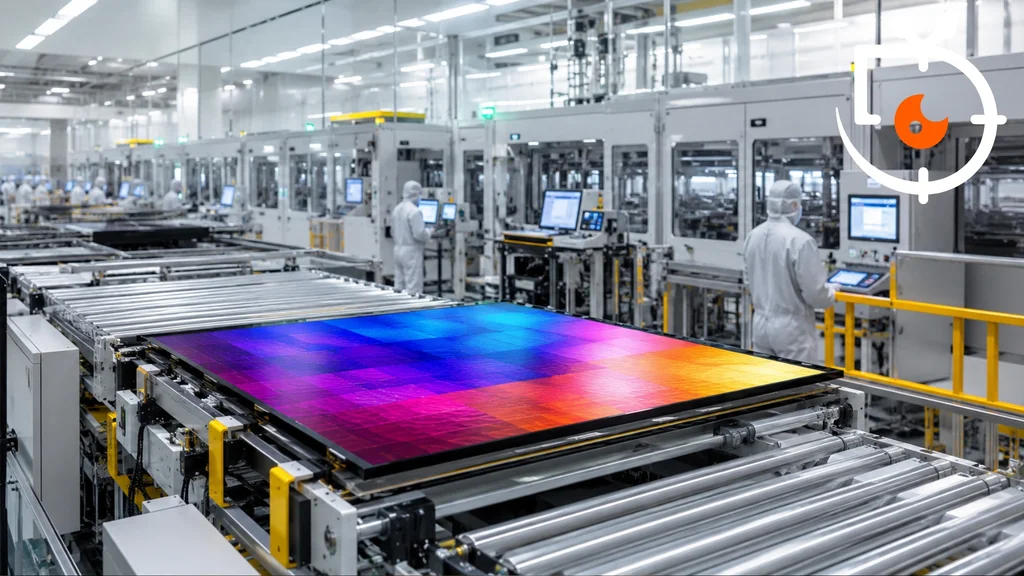
China has taken another important step in the development of OLED technology. BOE has begun mass production of panels at its first factory using an 8.6G production line. The plant will supply advanced displays for mobile devices and computers. Many leading electronics manufacturers from around the world are already among its customers. The investment is intended to strengthen BOE’s position as one of the largest OLED panel manufacturers.
BOE begins production of advanced OLED panels
The B16 factory was built in Chengdu, China, and its construction took just over two years. The official start of mass production took place on 17 June 2026. This year the plant is expected to produce around 10 million OLED panels. In 2027 production capacity is due to be significantly increased. The new production line uses 8.6G OLED technology, which enables the manufacture of larger and cheaper displays than older sixth-generation plants. The panels produced will be intended primarily for laptops, monitors, tablets and smartphones. BOE will deploy modern solutions such as tandem OLED, LTPO technology and refresh rates ranging from 1 to 240 Hz. One of the first products will be a 14-inch OLED panel for laptops from Acer, Asus and Lenovo. Representatives of more than ten electronics manufacturers attended the opening ceremony and confirmed they will use the new panels in their devices. Partners included among others Lenovo, Asus, MSI, Xiaomi, Oppo, Vivo, Honor, ZTE and Nothing. BOE says it will continue to develop the technology and ramp up production in the coming years. The company aims to strengthen its position as one of the world’s leading suppliers of OLED panels. The investment cost about 63 billion yuan and is one of the largest industrial projects in south-west China.
China is increasingly competing with South Korea
BOE's new factory began operations just a few months after Samsung Display started a similar production line in South Korea. The South Korean manufacturer will supply panels to, among others, Apple and Samsung. Meanwhile, other Chinese companies are also investing in 8.6G OLED technology. TCL CSOT is building its own factory, which is due to begin production next year and will be the first to use inkjet printing to manufacture OLED panels. Visionox, meanwhile, is working on a third Chinese factory of this kind, planned to start operations in 2027 to 2028. All the new plants are currently focused on producing small and medium-sized displays for consumer electronics. So far, manufacturers have not revealed plans for OLED panels intended for TVs. However, the growing investments show that China is becoming an increasingly serious competitor to Samsung Display and LG Display. Competition in the modern display market will become even fiercer in the coming years.
BOE has started up China’s first 8.6G OLED fab, beginning production of advanced panels for laptops, monitors and mobile devices. The investment strengthens China’s position in the global technology race with South Korea and heralds further growth in the OLED market.
source: flatpanelshd