 Katarzyna Petru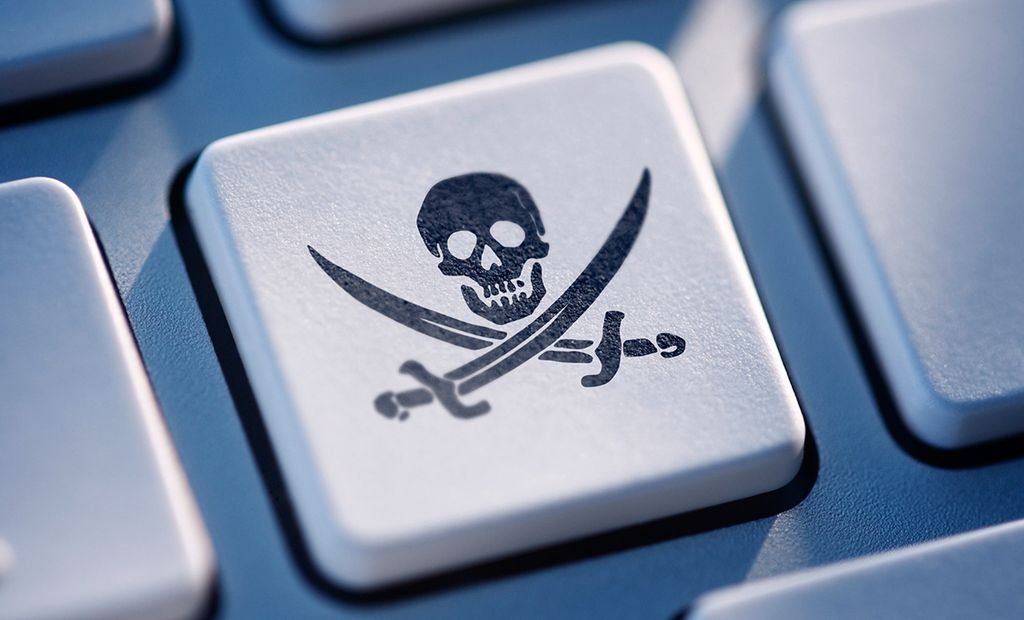
It was supposed to be simple: you pay one subscription and watch what you want. No ads, no waiting, no fiddling with access issues. That was the promise that a decade ago drew the whole world into the streaming revolution. Meanwhile, in 2025, we wake up to a reality where this revolution has started to resemble the junky renaissance of cable TV. More expensive, tighter, less convenient. So it's no surprise that digital piracy is returning not as a whim, but as a defensive reaction by users.
A few years ago, it seemed that piracy would stop being of interest even to the most avid torrenters. Why sift through forums in search of links to the latest episode of “Breaking Bad,” when Netflix offered the same in HD quality for a few dollars a month? Convenience killed the pirate romance. And suddenly… everything turned around.
Pirate flag is flying again
The data leaves no room for doubt. According to MUSO, a company monitoring the global trade in illegal content, in 2020, the number of visits to pirate sites dropped to a record low of around 130 billion. However, by 2024, the figure exploded to 216 billion. This is not a mistake in the statistics. It’s a major comeback. Importantly, piracy itself has changed. No one is downloading folders “WEbrip_RARBG_FINAL” anymore. Ninety-six percent of pirate consumption of films and series in 2023 came from illegal streaming – mainly IPTV. Zero waiting, zero downloading, zero fuss.
In the US, one in three users admits to pirating while simultaneously holding legal subscriptions. That says it all. In Europe, the average internet user visits pirate sites about 10 times a month. In Poland, it’s “only” eight – but on a national scale, that translates to 129 million visits per month. Users want to watch. The only problem is that legal platforms are starting to kick them out the door.
How the industry killed the golden age of streaming
Streaming has become a victim of its own success. When Netflix proved that simple, cheap, and global access works, corporations seized the opportunity. Disney, Warner Bros., Paramount – everyone wanted "their Netflix." The problem was that users don’t need five platforms. They need one. Convenient. As a result, a fragmented landscape emerged, where:
You can watch "Stranger Things" only on Netflix,
"The Mandalorian" – only on Disney+,
"The Sopranos" – exclusively on Max,
and "Severance" – on Apple TV+.
Everything separate. Everything for a separate fee. The full set of subscriptions now costs more than the old cable TV, which streaming was supposed to replace. Instead of order – chaos. Instead of convenience – jumping between apps. Instead of quality – mass production.
Prices, ads, restrictions. The coffin has many nails
The price rollercoaster has only made things worse.
67 zł for Netflix Premium has become the norm if you want to watch in 4K instead of battling pixel soup.
Services have started introducing ads, even in paid plans.
Lowering the bitrate has made pirated Blu-ray rips look better than legal streams.
On top of that, there’s the fight against “account sharing”, a feature that has been part of the unwritten user agreement for years. Netflix was the first to move, Disney+ followed, and the rest are just waiting to do the same. When you’re paying more and more for a worse product, the choice becomes obvious.
You own nothing – and you don’t know when it will disappear
In recent years, platforms have started to remove… their own productions.
Disney+ got rid of the series “Willow” a few months after its premiere.
HBO Max removed “Westworld,” one of the icons of so-called peak TV.
These titles didn’t go to the competition. They simply ceased to exist in legal circulation. Users pay for access that can vanish into thin air overnight. It’s no surprise that the movement of “data hoarders” is growing – people archiving content for fear that it will otherwise be lost forever. Piracy ironically plays the role of… a cultural archive.
Streaming Death Spiral
The streaming market has reached a point where the current model cannot sustain itself financially. Consolidations are accelerating:
Netflix is acquiring Warner Bros. and HBO,
Disney+ is merging with Hulu,
Paramount is seeking salvation,
telcos are building “all-in-one” packages.
In short: we are going back to cable. Only it’s more expensive, more complicated, and less stable.
And no, this is not a manifesto for piracy. Regular users want to pay for content – the proof was the golden decade of streaming. But when the legal path becomes a maze of fees, ads, and disappearing productions, it’s natural for some viewers to start looking for a more convenient way. Not always legal. Gabe Newell, co-founder of Valve, summed it up back in 2011:
“Piracy almost always results from a problem with the service, not from the price.”
In 2025, that sounds more relevant than ever.
Source: NEXTgazeta