 Redakcja Choose TV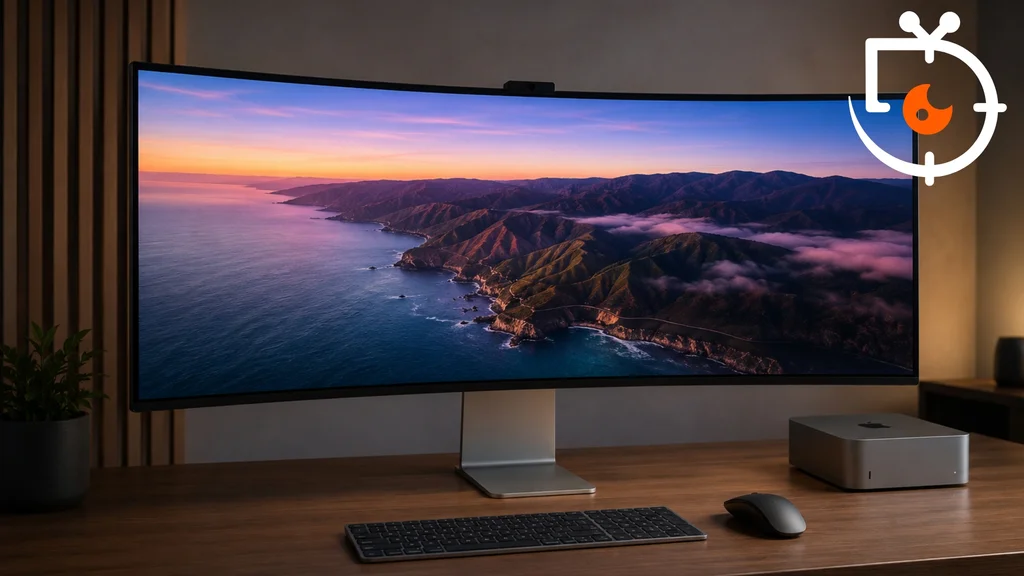
During the WWDC 2026 conference, Apple announced another feature that many Mac users have been waiting for years. The macOS 27 Golden Gate system will bring native support for ultra-wide monitors, offering significantly better integration with screens in a 21:9 aspect ratio. Until now, support for such displays was available, but it did not take full advantage of their capabilities. The new update aims to change that, providing higher resolutions and more convenient management of multiple screen configurations. This is another indication that Apple is taking users with advanced workstations more seriously.
macOS 27 will better utilise the potential of ultrawide monitors
For a long time, Mac users have been able to use ultrawide monitors, but the support has not always been ideal. Some configurations required additional settings, and certain features had limitations. Apple has decided to rectify this situation with the release of macOS 27. The company promises full support for high resolutions available on modern ultrawide monitors. This means, among other things, the ability to work at 5K resolution with a refresh rate of 120 Hz. An important change will also be improved memory for screen layouts. After reconnecting a monitor, the system will automatically restore previous settings without the need for manual configuration. This is particularly useful for people using MacBook laptops connected to external workstations. Apple emphasises that the whole process is intended to be completely seamless and operate automatically. The new feature is primarily aimed at professionals working in large workspaces. It will also benefit users who utilise Mac computers for video editing, graphic design or multitasking with multiple applications. In practice, ultrawide monitors will become a much more natural working environment for Apple computers. This change may encourage some users to invest in larger and more advanced screens.
Apple is increasingly interested in the 21:9 format
Although Apple does not offer its own ultrawide monitors and currently has no information about such plans, the company is clearly increasing its interest in this market segment. The first signs of this strategy appeared at the end of 2024. At that time, support for ultrawide displays was introduced to Apple Vision Pro, enabling the creation of very wide virtual workspaces. Shortly after, similar capabilities were also added to Apple TV 4K, which began to support monitors and projectors with a 21:9 aspect ratio. Now a similar step is being taken with macOS. This shows that Apple is recognising the growing popularity of such displays among both professionals and gamers. The ultrawide monitor market is developing very dynamically, and manufacturers are increasingly introducing new OLED models with diagonals reaching up to 49 inches. Such designs offer a huge workspace without the need to use multiple separate monitors. For many users, this is a more convenient and aesthetically pleasing solution. Apple seems to be preparing its ecosystem for further growth in interest in this segment. This way, Mac computers will be able to compete more effectively with the Windows platform, which has been providing very good support for ultrawide monitors for years. Everything suggests that macOS 27 will be an important step in this direction.
macOS 27 Golden Gate introduces long-awaited native support for ultrawide monitors. Mac users will receive better handling of high resolutions, smoother performance, and more convenient screen configuration management. This change aligns with Apple's growing interest in the 21:9 format, also visible in the company's other products. For those using large monitors for work, this could be one of the most significant new features of this year's system update.
source: flatpanelshd