 Michał Wołoszyn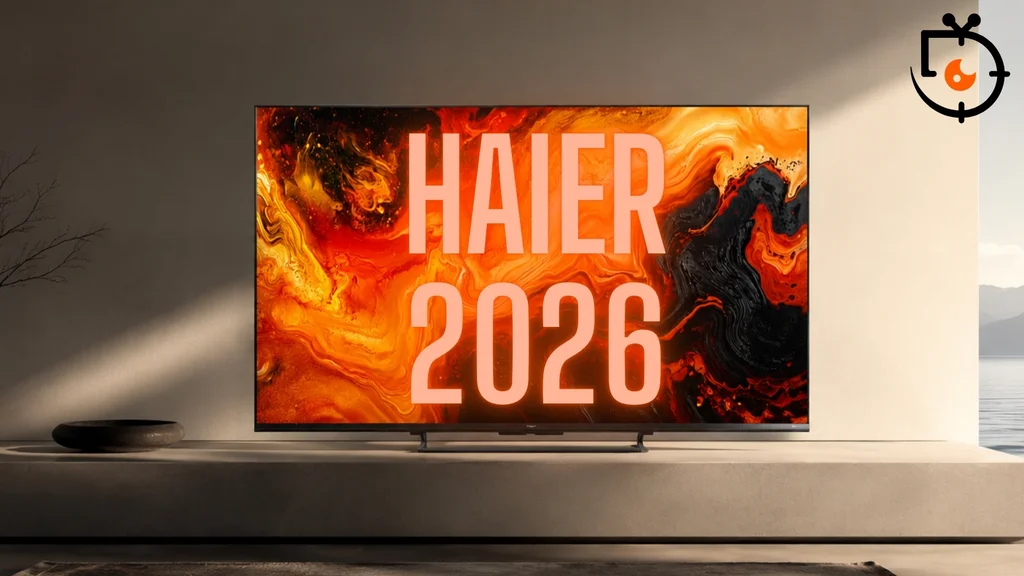
Although most of this year's TV launches are already behind us, Haier decided to surprise us in the second half of the year and unveiled its full 2026 portfolio. Most people associate the brand mainly with household appliances, but its venture into TVs picked up pace in 2025, when several really interesting models appeared on the market; some of them we had the chance to test for you. In 2026 Haier is expanding its range and wants to establish its presence not only in the budget segments. The lineup includes both basic QLED models and much more advanced Mini-LED designs, high refresh rates, and, for the first time in the Polish line-up, a 100-inch Haier screen! So let's take a look at exactly what Haier has prepared for this year and which series look most interesting.
Haier M92F, Mini-LED with KEF sound
At the very top of the new line-up you'll find Haier M92F, available in 65, 75 and 85-inch sizes. It's the manufacturer's most advanced Mini-LED this year, using QLED Mini LED Ultra technology. Haier claims a brightness of up to 1300 nits, and the set is completed by an "Ultra Crystal-Black" panel with an anti-reflective coating, which likely means a matte screen. The manufacturer doesn't, however, provide the exact number of local dimming zones. Fortunately, we won't have to guess for long. The M92F will soon arrive at our lab, so we'll check the number of zones ourselves for you. 🙂
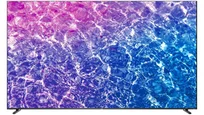
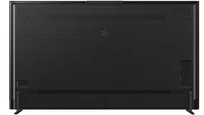
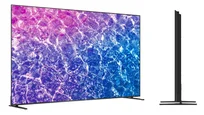
This model has been designed with gamers in mind. The M92F has a 144 Hz panel, supports VRR and ALLM, and in a special DLG mode the refresh rate can increase to as much as 240 Hz. On top of that it includes Dolby Vision IQ and HDR10+, so at least on paper we get a very complete set of features for both gaming and watching films.
The sound is interesting, too. In the M92F Haier has opted for a 50 W 2.1 system the manufacturer calls "KEF Certified Sound Studio", with Dolby Atmos support. The name "KEF" may be less recognisable than Harman Kardon, which you can find, for example, in the M95E, but it’s by no means a random company. It’s a British brand that’s been active in the Hi‑Fi world for years, best known for high‑end loudspeakers (their most expensive speakers cost nearly... 360,000 zł!). However, we wouldn’t treat the M92F as a direct successor to the M95E, which has a built‑in soundbar.
Everything runs, of course, on Google TV, and Haier also adds Wi-Fi 6, Bluetooth 5.2 and as much as 64 GB of internal storage. The M92F therefore looks set to be the most complete TV in Haier's 2026 range. On paper it looks interesting, but the most important thing will, of course, be how it handles picture quality. We'll find out soon in our full test.
Haier S90F: 100-inch with Mini-LED backlight
Haier's new lineup includes something for those who still find 85 inches too small. The S90FUX is Haier's first 100-inch TV in Poland, and importantly the manufacturer didn't go for the simplest LCD design here. It also uses Mini-LED backlighting, with a claimed brightness of up to 1000 nits and a matte screen coating.
Despite its huge screen size, it’s not a model intended solely for films. Haier has used a native 144 Hz panel, which can reach up to 240 Hz in DLG mode, and added a 2.1 KEF Certified Sound Studio audio system with Dolby Atmos. The S90FUX therefore primarily presents itself as an option for people who want to set up a small home cinema without necessarily turning to a projector.
Haier S90G — no Mini-LED but with a fast 144 Hz panel
Further down the range you'll find the Haier S90G, available in sizes from 55 to 75 inches. This model doesn’t use Mini-LED backlighting; it's a conventional QLED LCD TV. Instead of local dimming like in the "F" models, Haier has gone for a fast, native 144 Hz panel. In game mode the refresh rate can additionally rise to 240 Hz with DLG.
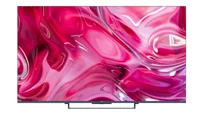
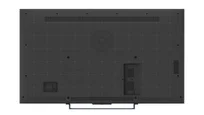
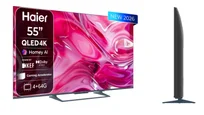
The S90G therefore seems primarily designed with sports and gaming in mind. Alongside a high refresh rate it offers VRR, ALLM and FreeSync Premium, so it should have no trouble working with both consoles and PCs. Interestingly, despite its lower position in the lineup it still retains the 2.1 KEF Certified Sound Studio audio system with Dolby Atmos, with a total output of 50 W, and supports Dolby Vision IQ and HDR10+.
The choice between the M92F and the S90G therefore comes down to a fairly simple compromise. We give up the Mini-LED backlight and the potential for better blacks and brightness it brings, but retain a high refresh rate and most gaming features. If that results in a correspondingly lower price, the S90G could be the model that appeals to people looking for a fast, "affordable" television.
Haier S85G and S80G: the cheapest QLEDs in the range
At the very bottom of the new range are the S85G and S80G models. Both are very similar in terms of capabilities and will be the cheapest way to get into Haier's QLED offering this year. The S85G is available in 55 and 65 inches, while the S80G has a much wider size range, from 43 up to 85 inches.
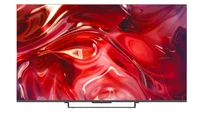
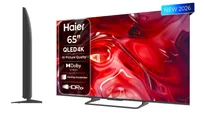
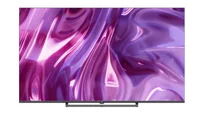
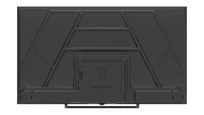
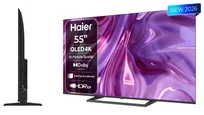
In both cases these are classic LCD QLED TVs running Google TV, with a basic set of features aimed at gamers. The TVs support VRR and ALLM. The S85G and S80G have native 60 Hz panels, while in DLG mode at 2K resolution they can reach 120 Hz. The exception is the 43-inch S80G, which has a native 60 Hz panel and does not offer the 120 Hz DLG mode.
The main difference between these series concerns HDR and appearance. The S85G supports both Dolby Vision and HDR10+, whereas for the S80G the manufacturer lists only HDR10+. The S85G is also slightly brighter, with a rated 350 nits compared with 320 nits for the S80G. In practice the S80G therefore comes across as a more basic and likely cheaper option, while the S85G offers a bit more versatility, mainly thanks to Dolby Vision support. In this part of the range it will all come down to price, because that will decide which of the models makes more sense.
Haier TVs 2026 - comparison of models
Model | Backlight / type | Declared brightness | Native 4K refresh rate | Max refresh | Available screen sizes | Audio | System |
|---|---|---|---|---|---|---|---|
Haier M92F | QLED Mini-LED | 1300 nits | 144 Hz | 240 Hz DLG | 65", 75", 85" | 2.1, 50 W, KEF | Google TV |
Haier S90F | Mini-LED | 1000 nits | 144 Hz | 240 Hz DLG | 100" | 2.1, 55 W, KEF | Google TV |
Haier S90G | QLED / LED | 380 nits | 144 Hz | 240 Hz DLG | 55", 65", 75" | 2.1, 50 W, KEF | Google TV |
Haier S85G | QLED / LED | 350 nits | 60 Hz | 120 Hz DLG | 55", 65" | 2.0, 30 W | Google TV |
Haier S80G | QLED / LED | 320 nits | 60 Hz | 120 Hz DLG* (exception: 43") | 43"* , 50", 55", 65", 75", 85" | 2.0, 30 W | Google TV |
Looking at the whole line-up, Haier has pretty clearly positioned its models. The M92F is the flagship Mini-LED, the S90F tempts with a massive 100‑inch screen, the S90G focuses on high refresh rates, and the S85G and S80G series serve as more affordable QLEDs. The most intriguing is, of course, the top M92F, which the manufacturer promises will deliver the best picture quality. That unit will soon be in our lab, where we'll verify the improvements over last year's models. On paper the line-up looks promising. Now it's time to see how it performs in practice and whether the pricing will let it genuinely shake up the market segments.