 Katarzyna Petru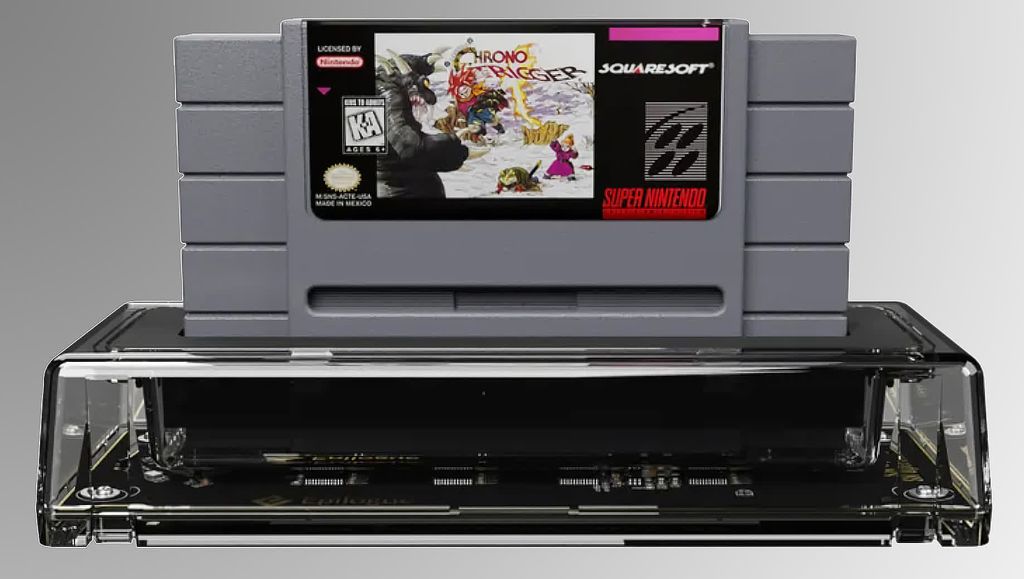
Finally, a simple solution has appeared for people who have a collection of physical games for Super Nintendo but do not have a convenient way to play them. Epilogue – a company known for the popular GB Operator – has announced the SN Operator, a device that allows for the digitization of SNES cartridges and running them on a computer.
The SN Operator is expected to cost $60, with shipments starting in April of next year. Pre-orders began on December 30 at 12:00 PM Eastern Time. However, the manufacturer assures that the device will also be available after the launch and there is no need to place a preorder.
Simple connection and digitization of games
The hardware is compatible with PC, Mac, and Steam Deck. After connecting the cartridge, the user can create a copy of the game on their computer and run it without the need to constantly use the physical media. Everything is managed by the Playback app, which also allows for backing up game save states and smoothly switching between playing on the console and the computer. Cooperative mode is also supported. The app supports RetroAchievements, although there is nothing preventing the use of another emulator – for example, one that offers more advanced shaders or additional visual features.
Support for Mouse and Classic SNES Accessories
Unlike Game Boy games, titles from Super Nintendo offer more possibilities on PC. SN Operator will handle mouse control, including emulation of the Super Nintendo Mouse and SuperScope. This is an interesting alternative to the retro library of the Nintendo Switch and Joy-Con control in mouse mode. Epilogue emphasizes that the device has undergone extensive testing and is designed to maintain data integrity from the original cartridges. Of course – this won’t replace the experience of playing on original hardware connected to a CRT television – but for many gamers, it will be the most practical way to revisit the classics.
This is not an FPGA, but the company has further plans
It is worth noting that the SN Operator is not an FPGA-based solution. The device merely reads data from the cartridge, while the actual emulation of the SNES hardware occurs through software. In comparison, the Analogue Super NT, which used FPGA, is no longer in production, and alternatives remain the MiSTer projects, which require self-assembly. FPGA also remains a form of emulation, so even there, differences from the original hardware from the early '90s may occur.
The Epilogue suggests that they also plan to develop an Operator for the NES in the future. If the announcements are confirmed, the SN Operator could be a good start for those looking to gradually digitize their retro collection. The only question remains, when can we expect a similar solution for the Nintendo 64 or Nintendo DS.