 Katarzyna Petru
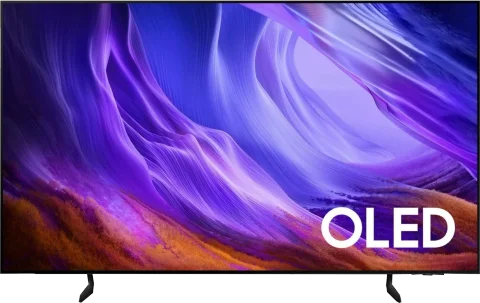
OLED has been under scrutiny for years due to the risk of burn-in, but the latest three-year test conducted by Rtings shows something completely different. Over the long term, it is the OLED TVs that have proven to be the most reliable, clearly outperforming traditional LCDs.
Rtings tested as many as 102 TVs, which operated for 18,000 hours in extreme conditions - non-stop, at maximum brightness, displaying the same 24-hour news channel with an unchanged news ticker at the bottom of the screen. The aim was to check how different technologies cope with long-term loads and static image elements.
Results? Brutal
Out of the entire group, 20 televisions completely refused to function, and another 24 were in critical condition - the image was barely watchable. Interestingly, all models survived the first 10,000 hours without any major issues, which corresponds to about three years of use at eight hours a day.
LCD has its own problems
Although OLED burn-in was noticeable in some cases, the most problems were related to LCD TVs with LED backlighting without local dimming. After 18,000 hours, nearly 60% of such models had noticeable image defects, and in each of them, some LED diodes simply burned out. A good example is the Hisense H8G, which looked far from perfect after the test.
OLED burns out, but rarely and under specific conditions
In the case of OLEDs, failures have been exceptionally rare. Burn-in occurred mainly with static elements, such as an information bar, causing a "ghosting" effect visible after a long time. With dynamic content, the problem was practically nonexistent. This is an important distinction - in normal television usage, where content changes frequently, the risk of burn-in is minimal. Rtings also emphasizes that OLED burn-in is a much bigger issue in gaming monitors than in televisions.
Which brands performed the best?
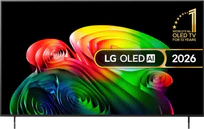
The lowest failure rate was recorded in models from LG Electronics and TCL, although Rtings notes that the number of tested models from each brand was limited, so these results should be taken with caution. One of the more surprising conclusions is the lack of any correlation between the price of the TV and its lifespan. The key factors turned out to be solely the type of panel and the method of backlighting, rather than the price range.
Final Conclusion
According to Rtings, OLED is currently the most durable television technology, even compared to Mini-LED. OLED TVs are less likely to break down and degrade more slowly over time, even under extreme testing conditions that have little to do with everyday use. If you want to see how some TVs looked after three years of abuse, Rtings published a full video summarizing the test.