 Redakcja Choose TV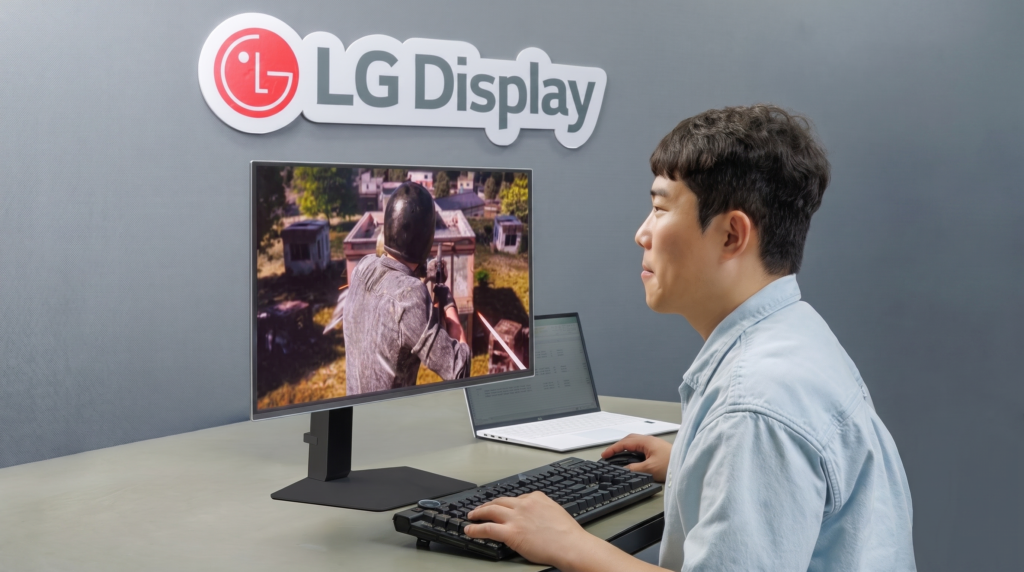
What gamers have intuitively sensed for years has finally received official scientific confirmation. LG Display published a study titled "Analysis of the Impact of Refresh Rate on First-Person Shooting (FPS) Game Performance" at an international academic conference. The conclusions of those tests are clear. Higher refresh rates translate into real, measurable improvements in game performance.
Blind test
The experiment involved 31 adult gamers. Their task was to test gameplay in a first-person shooter (FPS) on monitors with four different refresh rates: 60Hz, 240Hz, 360Hz and 480Hz. The whole thing was conducted as an blind test. Participants did not know which settings they were using at any given time. The results were subjected to rigorous analysis, measuring, among other things, overall accuracy and reaction time from the moment an enemy appeared to their elimination.
Higher Hz = higher win rate
The collected data show that a technological jump drastically affects how we perform on the virtual battlefield:
38% increase: That's how much players' accuracy improved using a 480Hz panel compared with the standard 60Hz.
An extra 10% at 480Hz: Interestingly, although a huge performance jump was already seen when moving to 240Hz, increasing the refresh rate to 480Hz provided an additional 10% accuracy advantage. This shows that the benefits of extremely high refresh rates continue to grow as you add more.
Where does sense end and marketing begin?
The results published by LG Display closely match the conclusions from our tests. In theory, the benefits of reducing motion blur (resulting from the Sample-and-Hold nature of image display) increase without limit, but the human eye has perceptual limits and the curve of benefits eventually flattens.
The jump from 60Hz to 120Hz+ is a powerful and noticeable leap for every user. Above those values we enter diminishing returns. For example, shortening the duration of a single frame between 360Hz and 500Hz is only a 0.8 millisecond difference. For most people it will be just cosmetic.
Based on our analysis, we know that for the vast majority — even very demanding — gamers, the threshold for full satisfaction with smoothness and clarity ends at around 300 Hz. Of course, the key requirement is having a sufficiently powerful PC. If the graphics card doesn't produce as many FPS as the monitor's refresh rate, you're paying extra for a spec you simply don't use. Test data from LG Display, however, show that hardcore esports players, professionals, and people extremely sensitive to motion dynamics can squeeze a real advantage out of 480Hz panels. The perception limit in extreme conditions, such as very fast camera pans or texture details close to the face, can shift toward 600 Hz. Anything above that is increasingly technical one-upmanship among manufacturers and rarely changes anything in real gameplay.