 Katarzyna Petru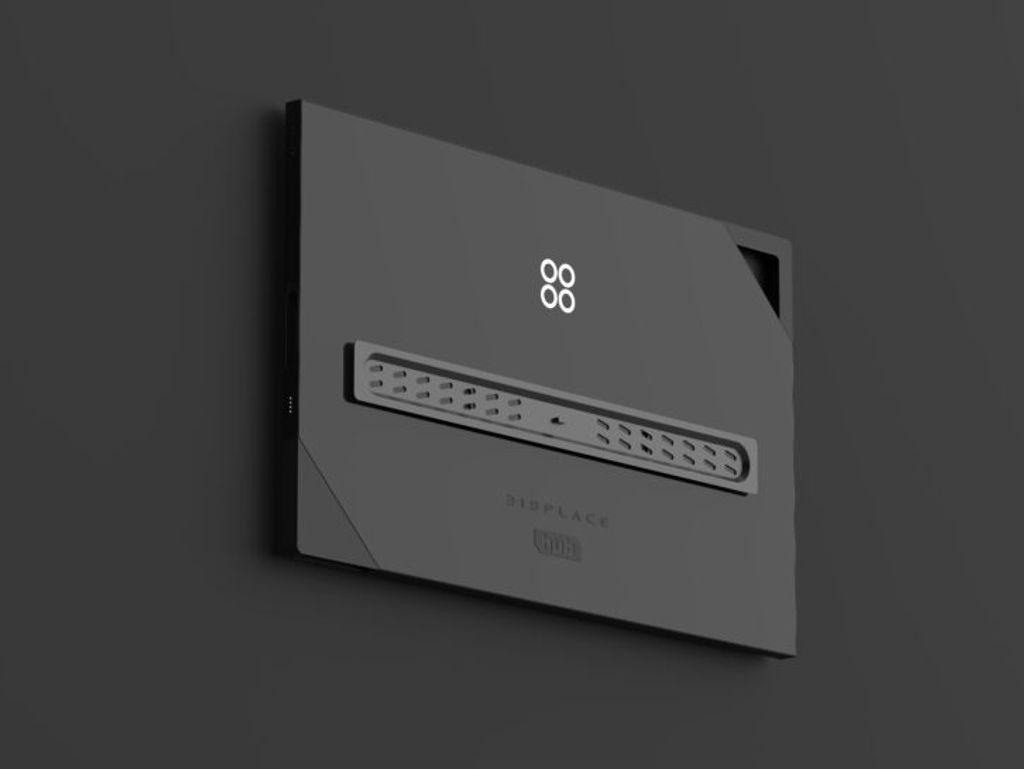
Displace, a company known for its wall-mounted wireless TVs using suction cups, wants to take a step further. The manufacturer has just announced Displace Hub – a new solution that aims to transfer its controversial yet intriguing mounting technology to any TV, regardless of brand. The premiere of Displace Hub is scheduled for CES 2026. The device is designed to turn practically any TV into a wireless screen that can be attached to almost any surface in just a few seconds – without drilling, brackets, or tangled cables.
Vacuum Cups Instead of a Drill
The heart of the entire idea is the "active-loop" technology known from the Displace TV. In practice, this means a system of suction cups that create a vacuum between the wall and the mount. The installation process takes place with the help of a joystick and instructions displayed on the screen. The user adjusts the pressure of each suction cup, and the system confirms within less than 10 seconds that the television is securely mounted.
Importantly, the suction cups operate continuously, constantly monitoring the vacuum level to ensure the screen "sticks" to the surface at all times.– Mounting a television on the wall is a nightmare for most people – says Balaji Krishnan, founder and CEO of Displace. – We want to change that and make it so one person can do it alone in a matter of moments.
From 55 to 100 inches, without a power cable
Once the Displace Hub is mounted on the wall, you simply hang the TV on it. The company claims compatibility with screens ranging from 55 to even 100 inches, weighing up to 150 pounds, or about 68 kilograms. That's quite a lot, especially considering it's a system based solely on vacuum.
The TV is connected directly to the hub and uses its built-in battery, eliminating the visible power cable. Displace clearly targets renters who frequently change their interior layout or those who would like to move a large TV between rooms without the use of tools.
Three ideas in one device
ChooseTV Hub is not just a mounting system. The manufacturer combines three concepts here: quick mounting, battery power, and a software layer based on AI. The device operates under the control of the Displace OS 2.0 system, which aims to offer something the company calls "ambient computing." Accompanying it is the Controller 2.0 module, which acts as a second screen – displaying information about the suction power, as well as data about the currently viewed movie or series.
Onboard, there are two HDMI ports for connecting external sources and a safety system named Landing Gear, which aims to minimize the risk of the screen coming unstuck. In terms of hardware, ChooseTV Hub is based on the Intel N-150 processor (4 cores), 16 GB RAM, and 128 GB of storage.
Sounds great, but will it work?
Although the idea is impressive, it's hard not to have doubts. The slogan “every TV, every surface” sounds striking, but reality may be more complicated. What about a 100-inch panel mounted on a wall with textured wallpaper? How will the system handle dust, heat, natural wear, or months of everyday use?
The suction cups must work continuously, not just during a spectacular demonstration on a perfectly clean wall prepared for the presentation. Questions also arise about power. Displace Hub has a battery with a capacity of 15,000 mAh, which the manufacturer claims lasts for 5 to 10 hours of operation, depending on the TV. Of course, it can be charged while in use, but then the whole idea of a “wireless” TV loses some of its meaning.
Price and Availability
Displace has not yet provided an exact market release date, but it is already known that the Displace Hub will cost $1,900. Pre-orders will start at the official presentation of the device at CES 2026. It is a bold, at times almost futuristic vision of TV installation. Now the most important question remains – will the Displace Hub truly bear the weight of its promises, not just literally.