 Maciej Koper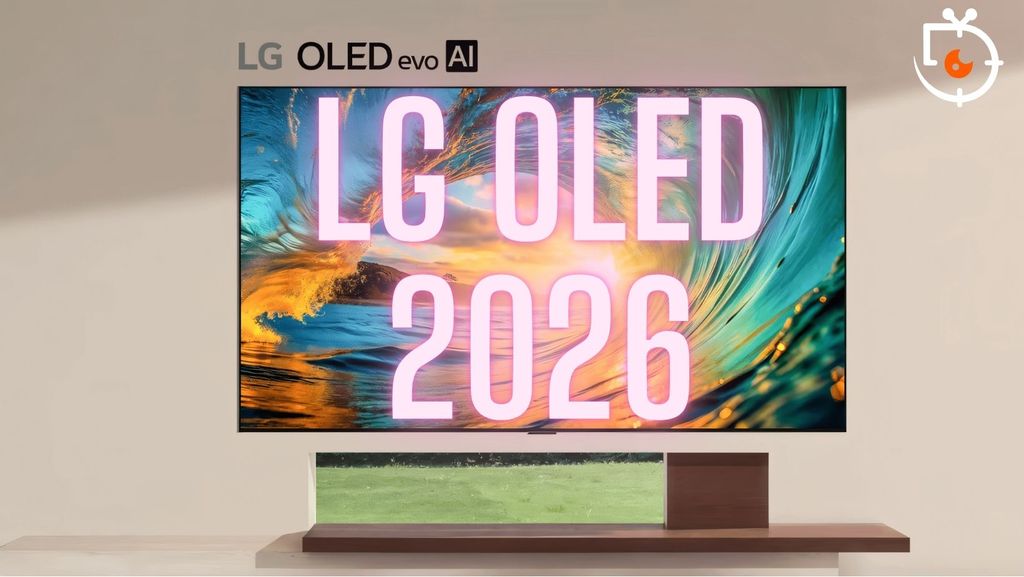
The CES 2026 trade show in Las Vegas has once again become the place where television manufacturers showcase not only new models but also clearly communicate the direction of the entire industry. In the case of LG, this direction is exceptionally clear: even higher brightness of OLEDs, further efforts to combat light reflections, and the gradual transfer of technology from the premium segment to more affordable series.
LG TVs at CES 2026 – from MicroLEDs to next-generation OLEDs
Visiting the LG booth at CES 2026 is worth starting with a technological curiosity, namely the MicroLED screens, which the manufacturer has been offering for several years. This solution is extremely expensive, not available in regular retail sales, but – importantly – actually present in LG's catalog. The exhibited model marked LSAH007 is listed on the manufacturer's website with explicit technical specifications and the possibility of ordering. This is a clear signal that MicroLEDs have ceased to be merely a demonstration of future technology and have become a legitimate, albeit niche, product. The problem remains the same – the price, counted in hundreds of thousands, means we are still talking more about a demonstration of technological capabilities than about a real consumer choice.
New LG LCD Technology – Micro RGB. A preview of changes, but without specifics
At the LG booth, the model MRGB95 also appeared, which is expected to herald a new direction in the development of the manufacturer’s LCD TVs. Unfortunately, at the time of CES 2026, we did not learn any detailed technical parameters – there is a lack of information about brightness, contrast, or the type of backlighting. This is rather a hint of what is yet to come with the full presentation of the new LCD line. The direction is clear, but we still have to wait for specifics.
LG OLEDs 2026 – a lot of changes and even more confusion
The most excitement and simultaneously the greatest chaos arises with new OLED televisions. LG returns to the labeling with the number "6," which may remind one of the models from 2016, although in practice we are dealing with a completely new generation. The greatest interest is certainly drawn to the C series, which is LG's best-selling line of OLEDs. It is precisely here that the manufacturer has introduced the most complex and potentially problematic – division.
LG C6, CS6, and C6H – three versions of one series
In 2026, the C series was divided into three models: C6, CS6, and C6H (Hyper). The first two are evolutionary designs. They offer a slight increase in brightness compared to their predecessors and a new third-generation Alpha 11 processor, which is also included in the G6 and W6 series. This processor introduces native 12-bit color processing, improving the smoothness of tonal transitions, and allows for 4K signal handling at 165 Hz. These are noticeable changes, but rather cosmetic.
LG C6H – Tandem RGB OLED comes to the C series
A true revolution lies in the C6H model. It is this model that will receive the Tandem RGB OLED panel, previously known from flagship designs such as LG G5 or Panasonic Z95B. The four-layer structure of the panel translates to significantly higher brightness and better color gamut coverage. Just a year ago, it was hard to imagine that technology reserved for top models would reach the mid-range. Today, it is evident that manufacturers are engaged in a direct battle for customers who expect premium quality at a reasonable price. The C6H appears to be a very strong response to Samsung S90H (which you can read more about here), especially in the American market, where QD-OLED panels dominate.
C6H limitations – sizes and uncertain availability in Europe
However, enthusiasm is tempered by two significant caveats.
First, the Tandem OLED panel will only be available in 77 and 83-inch diagonals. The popular sizes of 55 and 65 inches will remain with standard panels, unless the user decides to pay extra for the G6 series.
Second, the availability of the C6H version with the Tandem OLED panel in Europe remains unknown. LG does not explicitly communicate the type of panel used, using marketing names like "AI Brightness Booster." Only our tests in the editorial office will show whether we will indeed receive the same technology that we saw in Las Vegas.
LG G6 – even brighter
The G6 series remains LG's flagship line, primarily designed for wall mounting. In 2026, this model receives the second generation of Tandem OLED technology, which is expected to be about 20% brighter than last year’s G5. In practice, this means the ability to display HDR content mastered at up to 3000 nits with precision. Compared to the basic OLED B6, the peak brightness difference is almost fourfold.
New anti-reflective coating – LG's response to Samsung
One of the most interesting features of the G6 is the new “Reflection-free premium” coating. This is a clear response to Samsung's matte screens, such as the S95H. LG promises a reduction in reflections without losing color saturation and black depth, which can be an issue with fully matte panels.
LG W6 – the return of the "Wallpaper OLED" TV
One of the biggest surprises at CES 2026 is the return of the W (Wallpaper) series. The W6 model is only 9.9 mm thick, making it slimmer than most smartphones. This time, LG has replaced the powerful soundbar known from previous generations with a small Zero Connect module, known from the wireless M series. It’s a proposal for those for whom design is as important as picture quality. Importantly, LG announces that the W6 will not repeat the pricing mistake of its predecessor from a few years ago and will be only slightly more expensive than the G series.
What will we not see on LG TVs in 2026?
LG has not decided to introduce HDMI 2.2, even though this standard was announced at CES 2025. With the current capabilities of HDMI 2.1 – 4K up to 165 Hz – the lack of a new connection is hard to consider a real problem. However, the continued absence of DTS and the lack of Dolby Vision 2 is disappointing. Although the real benefits of the new version of Dolby Vision are debated, competitors like TCL and Philips are promising support for this technology through updates.