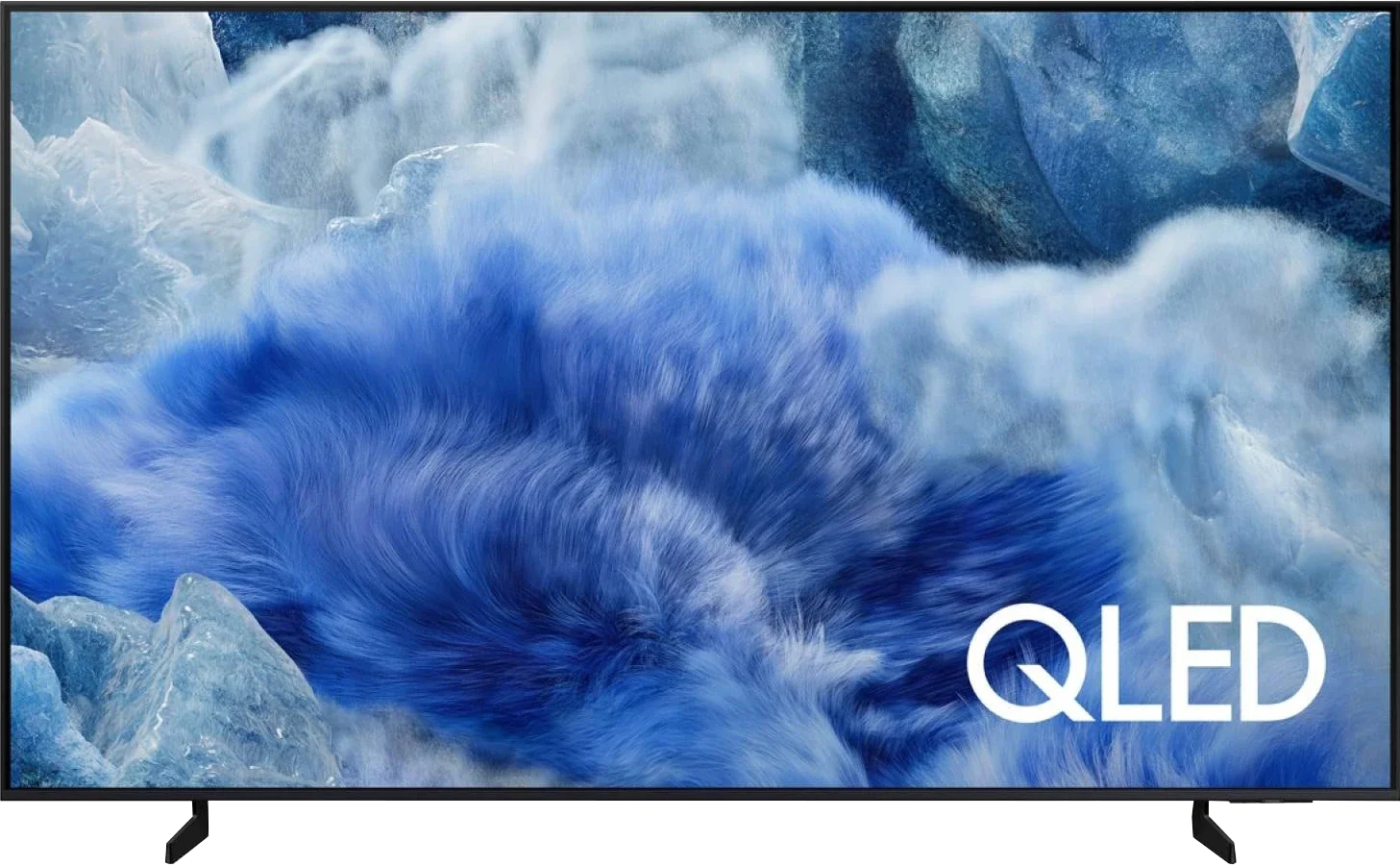
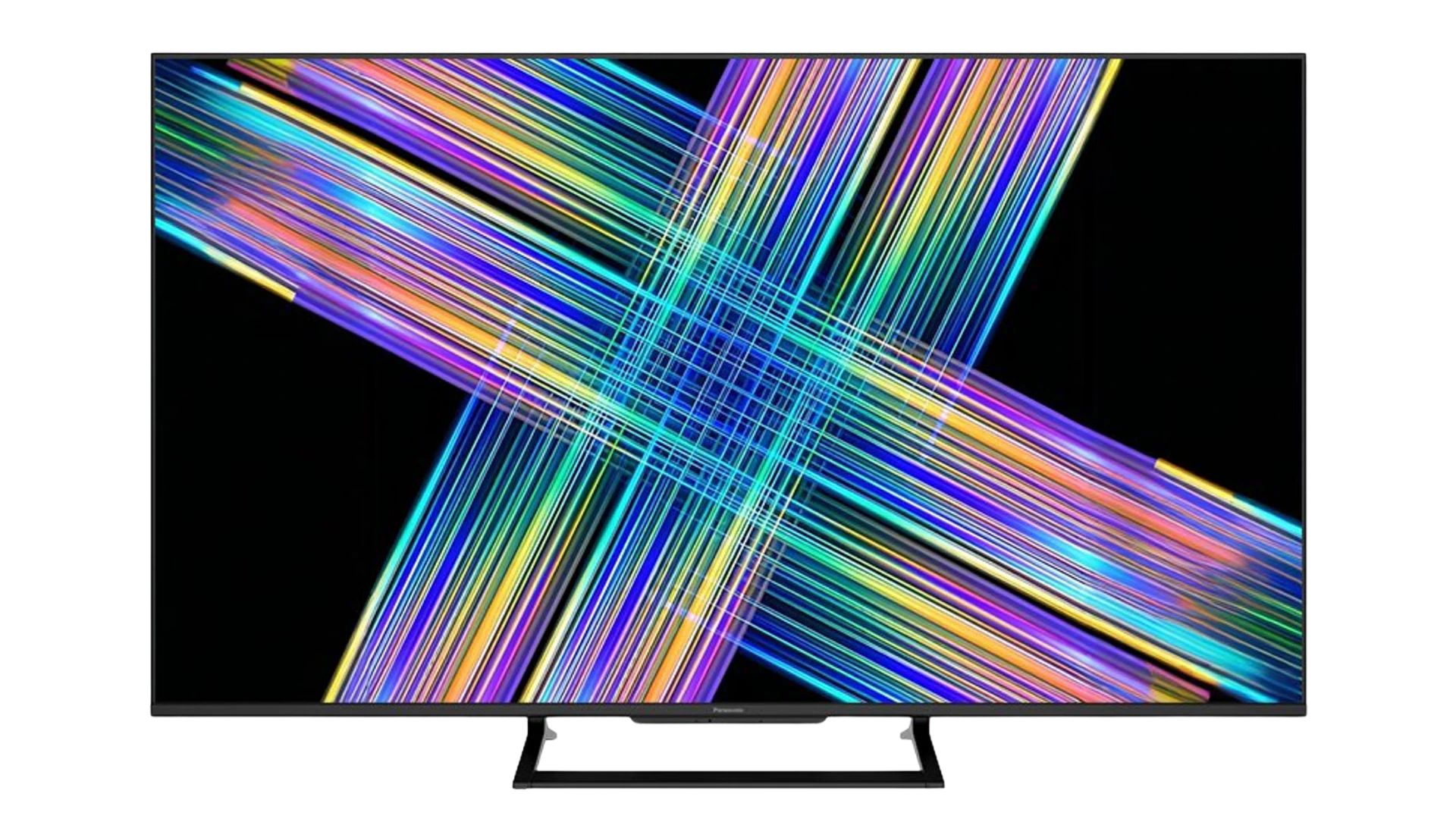
Samsung Q8F vs Panasonic W92C (Google TV)

Direct comparison

W92C / W94C

Info

Available screen sizes: 43”50”55”65”75”85”

Available screen sizes: 55”

Review Samsung Q8F Main photo
Review Panasonic W92C (Google TV) Main photo

Panel type: LCD VA

Resolution: 3840x2160

System: Tizen

Model year: 2025

Complete the survey to find out the result

Panel type: LCD IPS

Resolution: 3840x2160

System: Google TV

Model year: 2026

Complete the survey to find out the result

Overall rating

6.3

7.1

  • Movies and series in UHD quality

    6.3

    6.5

  • Classic TV, YouTube

    6.0

    6.7

  • Sports broadcasts (TV and apps)

    5.1

    6.9

  • Gaming on console

    7.2

    7.8

  • TV as a computer monitor

    6.0

    9.0

  • Watching in bright light

    5.6

    6.8

  • Utility functions

    7.3

    6.6

  • Apps

    9.3

    9.6

  • Sound quality

    6.0

    6.7

Advantages

  • Solid contrast thanks to the VA panel

  • Quite good brightness in SDR and HDR (up to around 500 nits)

  • Satin finish handles reflections well

  • Tizen operating system – fast, intuitive, with a rich selection of applications

  • Solar remote with USB-C charging

  • Integration with the SmartThings ecosystem

  • Excellent input lag

  • Good font readability when working with a PC, suitable as a monitor for text tasks

  • Adjustable stand on multiple planes

  • Matte screen effectively suppresses reflections

  • Fast Google TV system with plenty of apps and features

  • Natural colours after calibration

  • Support for Dolby Vision and HDR10+

  • Very smooth tonal transitions

  • Effective enhancement of weaker content

  • Good choice for gamers: 144 Hz and low input lag, three HDMI 2.1 ports at 48 Gbps

  • Very good readability of text from a computer

Disadvantages

No like
  • Severely limited features for gamers (

  • No USB recording or PiP functionality

  • Average digital image processing

  • Imprecise local dimming (limited number of zones)

  • Poor factory colour accuracy

  • Software bugs

  • Issues with motion handling: motion blur and lack of advanced motion smoothing controls

  • Mediocre audio despite the subwoofer

Our verdict

Samsung Q8F is quite a successful continuation of the Q67D model. It offers similar image quality in HDR content, and with a brightness of around 500 nits, it can create an effect that is hard to call average. The support for the HDR10+ format also helps, as it has been realistically competing with Dolby Vision for some time and delivers comparable experiences in many productions. The contrast is another positive aspect – for a VA panel, it performs solidly and allows for enjoyable blacks in films and series. However, the greatest advantage of the Q8F remains the operating system. Tizen operates quickly, provides access to many applications, and works well with the SmartThings ecosystem, allowing the television to easily integrate into a larger network of home devices. Interestingly, the Q8F also has a niche application – thanks to its very good font readability, it performs excellently as a screen for working with text. Additionally, there is an adjustable stand that allows the television to be set on practically any desk or narrower TV cabinet. The biggest drawback, in our opinion, is not the image quality itself – as it is difficult to expect miracles in this price range – but rather what has happened to the gaming features. Options such as VRR and HGiG have disappeared with updates, which were available even in simpler constructions in previous generations. Indeed! The manufacturer even boasts about the availability of these features in its catalogue. This makes it difficult to recommend the Q8F to anyone today who plans to connect a console and expects full support for new technologies. Thus, the Q8F is a television that can be appealing – primarily for its design, above-average image quality, and efficient Tizen system. But at the same time, one can see a step backward compared to its predecessor. Let us hope that Samsung will manage to quickly rectify these shortcomings, as otherwise even such a successful 'everyday' television may leave some users with a sense of dissatisfaction.

[UPDATE] We have updated our 2025 Samsung TV reviews following the release of firmware version 1131, which officially restores the essential HGiG (HDR Gaming Interest Group) support.

The W92C is the first Panasonic developed in collaboration with Skyworth to reach our tests. And it’s more or less the change we expected: a little less of the old Panasonic, but also a few new elements that do it good. The biggest win is the move to Google TV. The system is fast, gives access to the apps you need and, for everyday use, convinces us more than the previous Fire TV. Combined with a matte screen that handles reflections well, this makes for a convenient living-room TV when you don’t always want to block out the windows for a viewing. The longer we used the W92C, the more we appreciated its versatility. It can quite effectively improve poorer source material, and after calibration the picture gains a naturalness that, sadly, is missing on the factory settings as it was with older Panasonic models. It also works well with a console and a computer. It responds quickly to controls and the high refresh rate gives pleasantly smooth motion. So Panasonic makes sense in a home where one screen is used for TV, films, gaming, and sometimes even for... working with text. 🙂 The limitations become clearer during evening viewings. Black can look good, but a more demanding scene is enough for halos to appear around bright objects and for bright bands above and below the picture to start glowing. The small number of local dimming zones makes it hard to keep both deep blacks and bright detail at the same time. Dolby Vision helps to get more out of this panel, but it doesn’t remove those limits. The out-of-the-box picture tuning is also disappointing, and the automatic brightness changes we encountered during testing further spoil the experience. This is where the lack of refinement we expected from the Panasonic name is most apparent. In the end, the appeal of the W92C will be decided by its price. It’s an entry-level Mini LED and should be priced similarly to competing models with basic local dimming. At that level it will be a sensible option, especially for people upgrading from a regular LCD. They’ll get better blacks, a convenient system and a versatile screen that will work for both TV and gaming. If, however, you have to pay a clear premium for the Panasonic badge, it will be hard to justify that extra cost. The W92C has enough strengths to hold its own as an affordable, all-round TV, but too few advantages to sell itself on the brand alone.

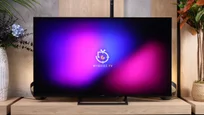
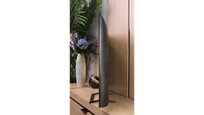
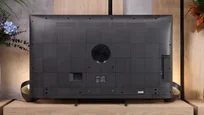
TV appearance

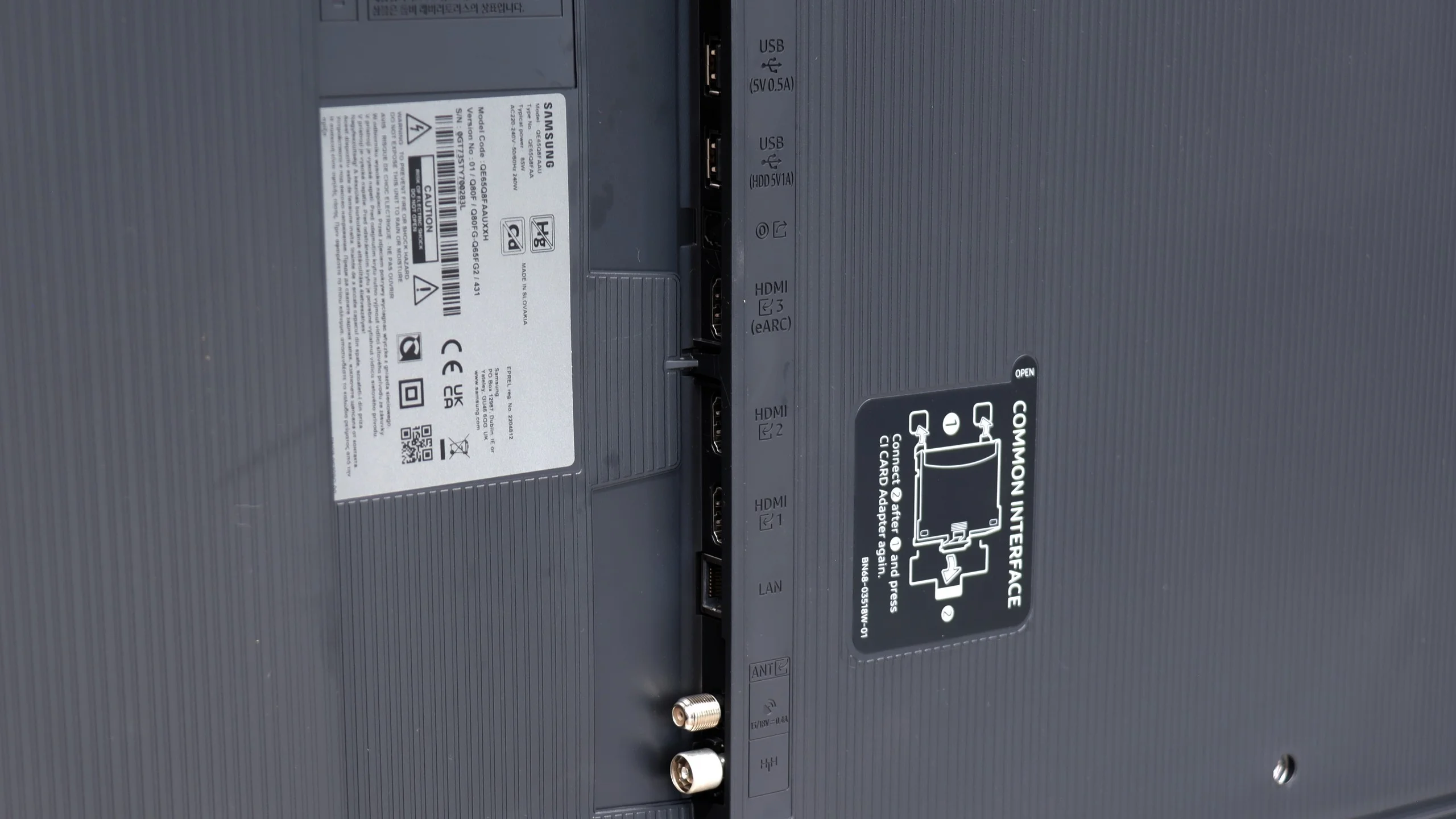
HDMI inputs
3 x HDMI 2.0, 0 x HDMI 2.1
0 x HDMI 2.0, 3 x HDMI 2.1 (48Gbps)
Other inputs
Outputs
Toslink (Optical audio), eARC (HDMI), ARC (HDMI)
Toslink (Optical audio), eARC (HDMI), ARC (HDMI), Mini-Jack (Headphones)
Network Interfaces
Wi-Fi 2.4GHz, Wi-Fi 5GHz, Ethernet (LAN) 100Mbps
Build quality
Good
Good
Stand type
Legs
Central
Bezel color
Graphite
Graphite
Stand
Height adjustment, Base adjustment
Fixed
Flat design
Yes
No
Accessories
Stand
Stand

Contrast and black detail

5.5/10

5.2/10

Local dimming function: No

Local dimming function: Yes, number of zones: 91 (7 x 13)

Contrast:

Review Samsung Q8F Contrast and black detail

Result

5,200:1

Review Samsung Q8F Contrast and black detail

Result

4,650:1

Review Samsung Q8F Contrast and black detail

Result

3,650:1

Review Samsung Q8F Contrast and black detail

Result

4,100:1

Review Samsung Q8F Contrast and black detail

Result

4,150:1

Review Panasonic W92C (Google TV) Contrast and black detail

Result

24,900:1

Review Panasonic W92C (Google TV) Contrast and black detail

Result

5,050:1

Review Panasonic W92C (Google TV) Contrast and black detail

Result

9,150:1

Review Panasonic W92C (Google TV) Contrast and black detail

Result

2,000:1

Review Panasonic W92C (Google TV) Contrast and black detail

Result

900:1

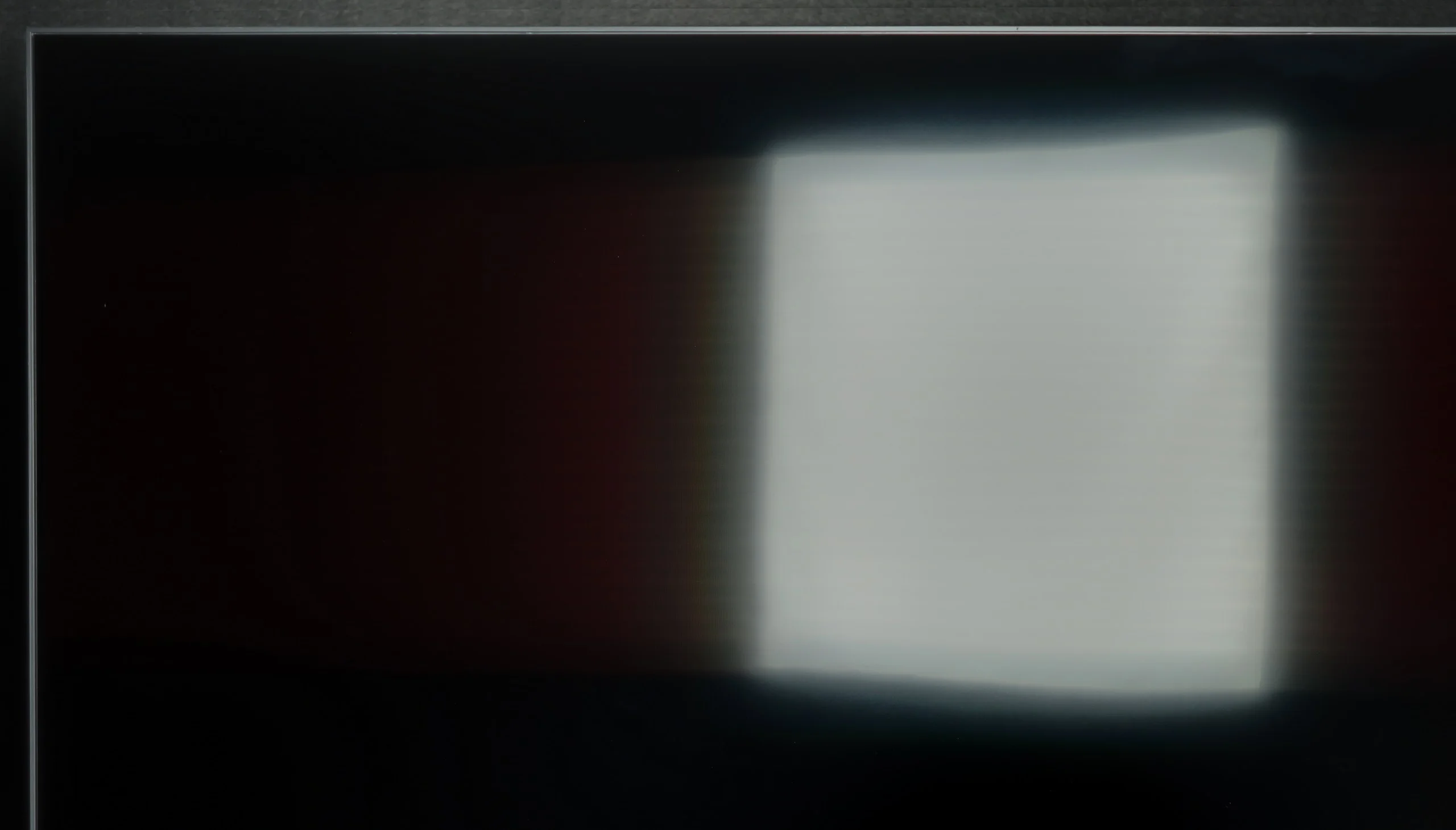
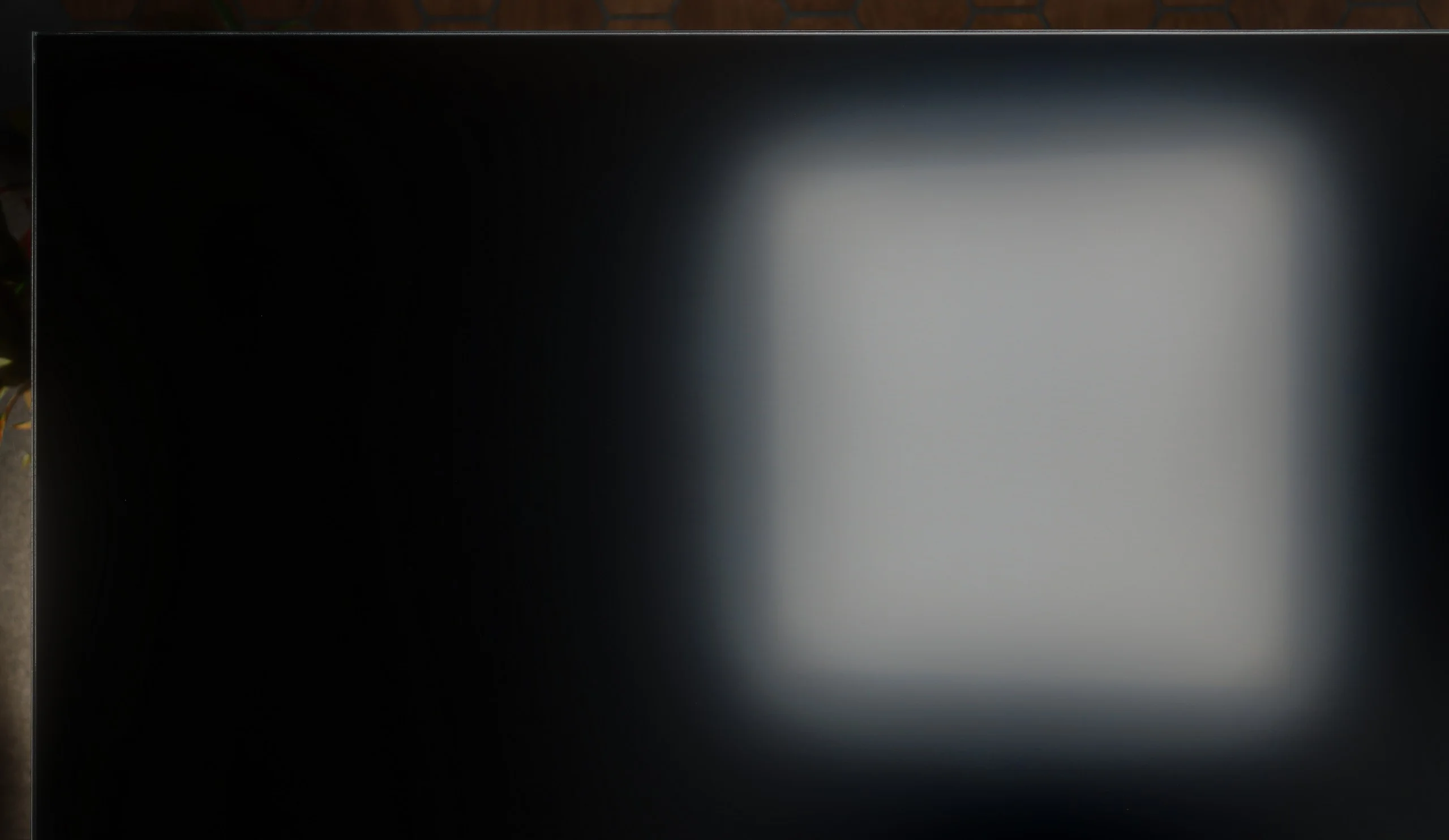
Halo effect and black detail visibility:

Check the visibility of bright lights on a dark background. Mini-LEDs often struggle with this. The photo does not compare black levels – that’s what the video below is for.

The video accurately shows differences in contrast and black levels between TVs, as well as potential issues: halo around bright objects or Mini-LED zone operation visible as brightness jumps.

Samsung Q8F uses a VA LCD panel, which immediately puts it in a good position when it comes to contrast. By nature, such panels offer deeper blacks than IPS displays, and this effect is indeed noticeable here. In the test patterns, the contrast maintained itself in the range of around 4000:1 to even 6000:1, which in practice results in a surprisingly engaging image, especially in a slightly dimmed living room. Of course, it does not reach the level of LCD screens with local dimming, let alone OLED — sometimes the black can shift to a shade of blue, making the overall image appear flattened. However, Samsung employs a simple trick: so-called global dimming, which dims the entire screen when a lot of dark areas appear. The effect can be impressive, but it comes at the cost of losing some detail, which may not appeal to everyone. Despite this, the Q8F still presents itself significantly better than televisions with IPS panels, offering solid contrast and blacks that can draw you into the cinematic atmosphere.

Black on the Panasonic W92C generally looks quite good. That's down to the local dimming, which in the 55-inch unit we tested uses 91 zones. In simpler scenes the TV can effectively darken the background, and in our easiest test it produced a contrast of almost 25,000:1. To achieve that black, however, you need to set local dimming to high. Lower settings leave the backlight too bright.

This comes at a price in bright parts of the image. The separation of individual lights remains visible, though you have to look closely to notice them. A lower dimming level lets those details appear more clearly, but the degradation of black is too great to consider it a better compromise.

Even on the high setting you can see the limits of the relatively small number of zones. What bothered us most were the bright bands above and below the film, which in HDR material at times became almost navy. Bright outlines, the so-called halo effect, also appear around small bright objects. On the plus side, the backlight is stable: in the helicopter scene we did not notice any nervous brightening and dimming of successive zones. More zones would be welcome, and the control itself needs refining. Switching from a basic LCD without dimming can still bring a noticeable improvement, but for a Mini LED the result leaves a fair amount to be desired.

HDR effect quality

5.2/10

4.8/10

Supported formats
HDR10, HDR10+, HLG
HDR10, HDR10+, Dolby Vision, HLG
Color gamut coverage
DCI P3: 90.7%, BT.2020: 66.2%
DCI P3: 94.3%, BT.2020: 73.5%

Luminance measurements in HDR:

Review Samsung Q8F Brightness measurement

Result

473 nit

Review Samsung Q8F Brightness measurement

Result

417 nit

Review Samsung Q8F Brightness measurement

Result

457 nit

Review Samsung Q8F Brightness measurement

Result

210 nit

Review Samsung Q8F Brightness measurement

Result

471 nit

Review Panasonic W92C (Google TV) Brightness measurement

Result

508 nit

Review Panasonic W92C (Google TV) Brightness measurement

Result

175 nit

Review Panasonic W92C (Google TV) Brightness measurement

Result

348 nit

Review Panasonic W92C (Google TV) Brightness measurement

Result

169 nit

Review Panasonic W92C (Google TV) Brightness measurement

Result

428 nit

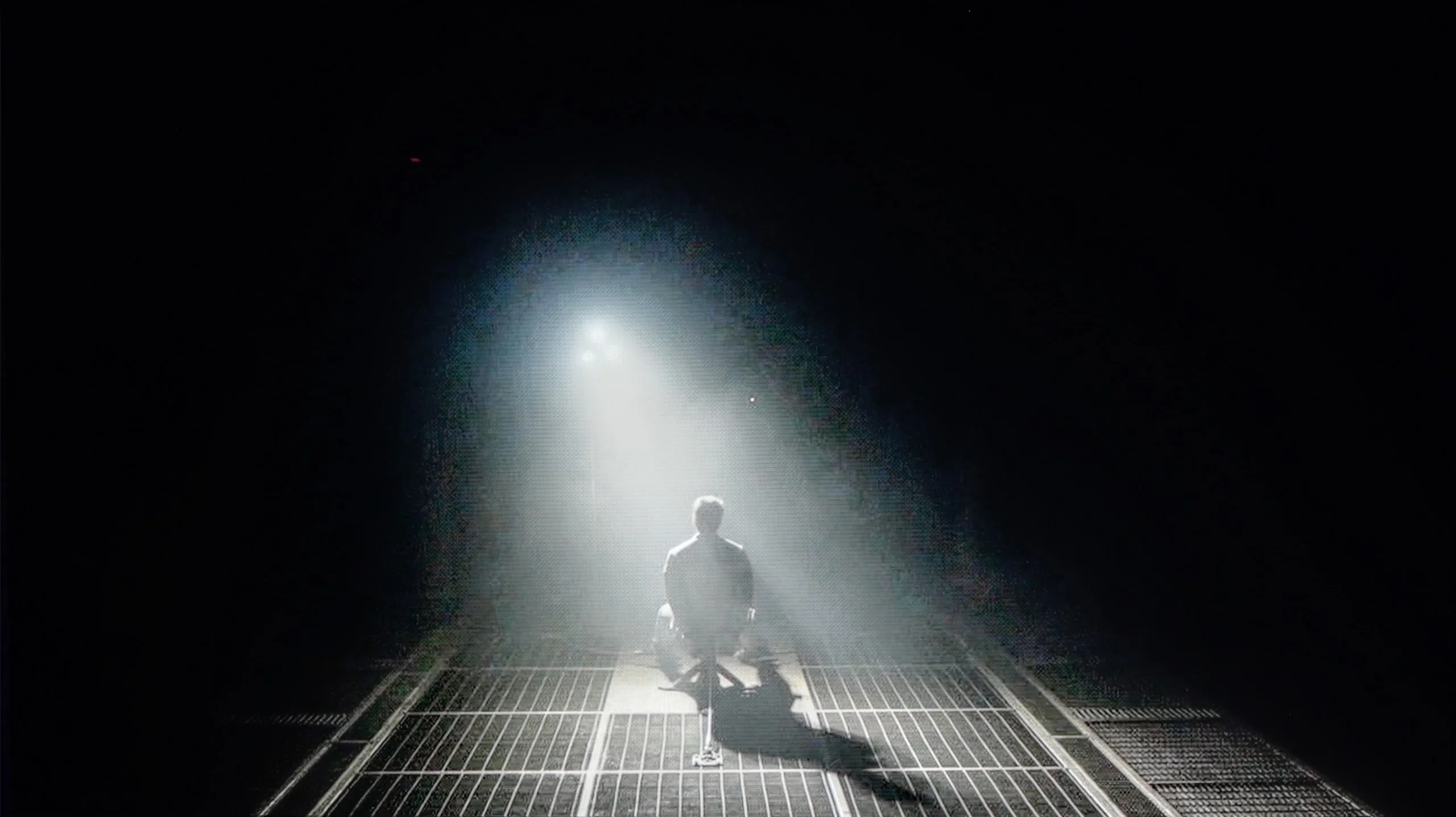
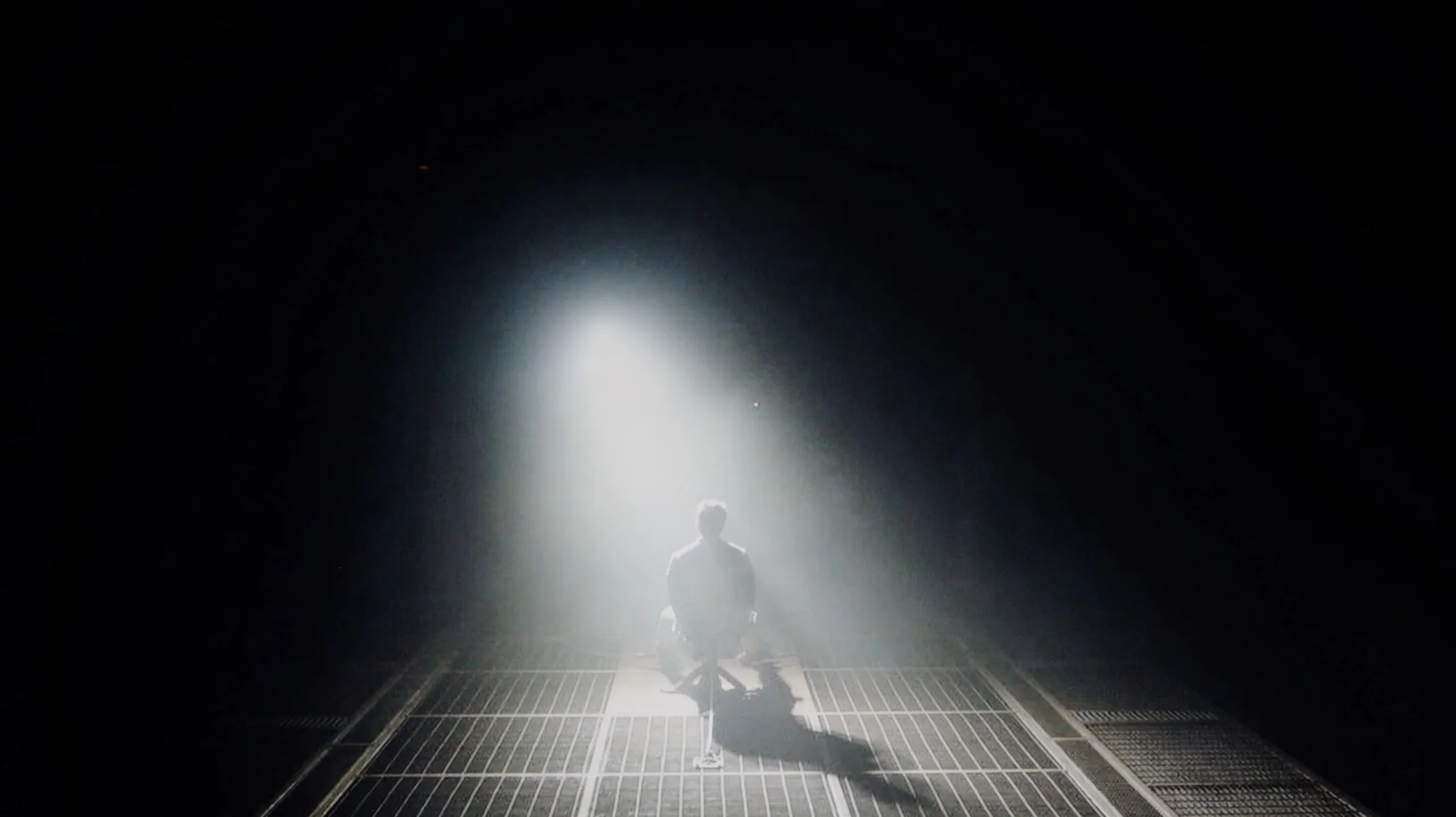
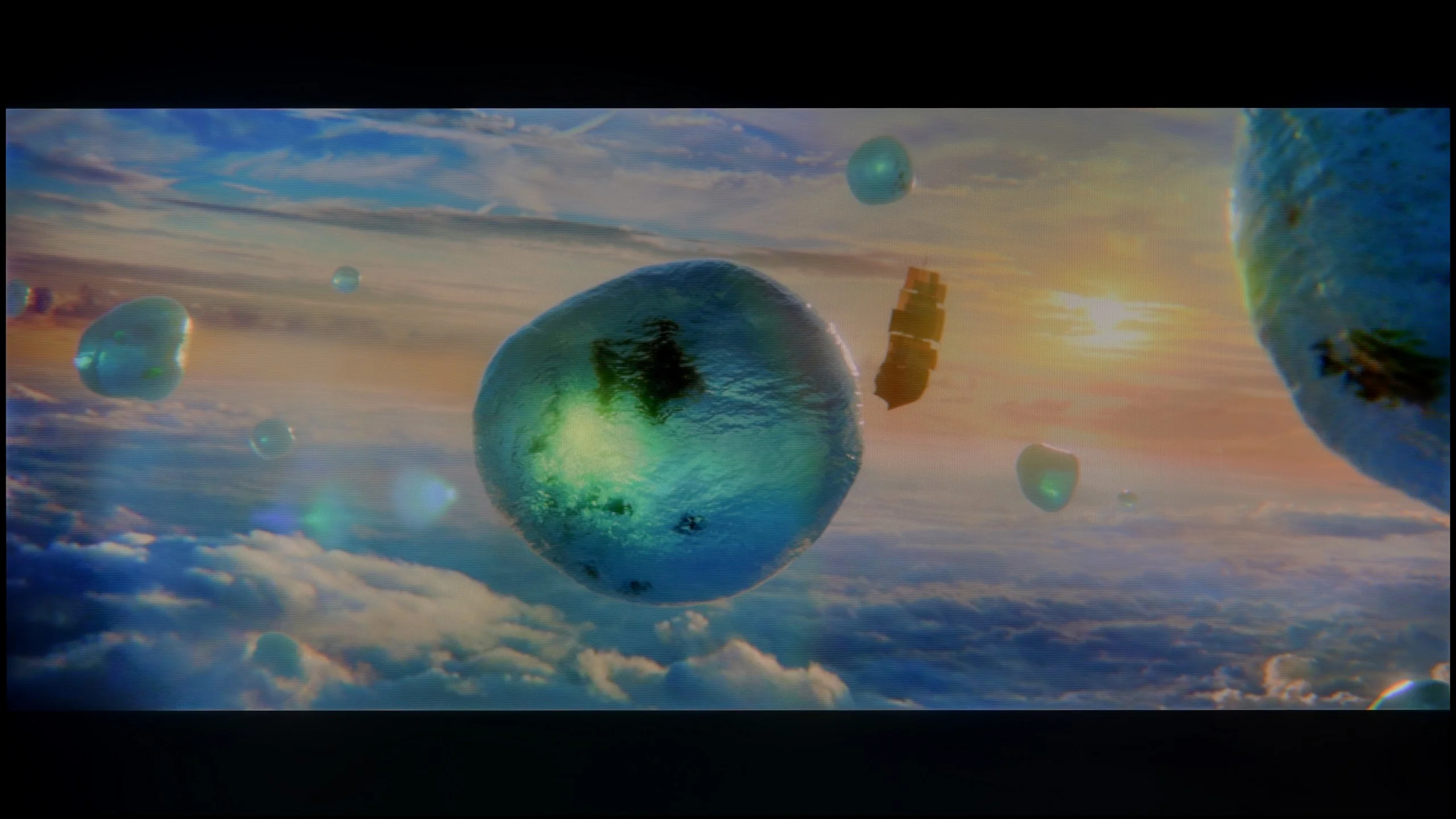
Scene from the movie “Pan” (about 2800 nits)

Scene from the movie “Billy Lynn” (about 1100 nits)

The photos show two HDR10 movies. 'Pan' is one of the brightest productions ever made, while 'Billy Lynn' (soldier) has brightness typical of streaming (Netflix, Prime, HBO MAX). Notice the intensity of effects and detail in whites.

Static HDR10

The photos present the visibility of white details in various HDR formats. They do not show brightness differences between TVs (these can be compared in the previous gallery).

Dynamic: HDR10+

Dynamic: Dolby Vision

The photos present the visibility of white details in various HDR formats. They do not show brightness differences between TVs (these can be compared in the previous gallery).

HDR luminance chart:

Panasonic W92C (Google TV)

Samsung Q8F

In terms of brightness, the Samsung Q8F performs surprisingly well for a television without local dimming. In measurements, it reaches up to 500 nits, which in practice means that most movie and series scenes look pleasing, and it cannot be accused of lacking the 'HDR effect'. In films such as Life of Pi or The Meg, the screen was able to burst with brightness and deliver a light effect at a satisfying level. It struggles more in difficult moments — during dark scenes with individual bright points. The global dimming used causes the television to dim the image to maintain deep blacks, but at the expense of detail brightness. This is clearly visible in the scene from Sicario 2, where the helicopter lights dropped to around 200 nits. This is a conscious design decision that gives the impression of deeper blacks, but somewhat takes away the brightness from individual elements, and one must simply keep this in mind. In terms of colour reproduction, the Q8F uses quantum dot technology, which widens the colour gamut. A coverage of the DCI-P3 palette at 91% can be considered a decent result, although it is not a record-breaking figure compared to other QLEDs.

The Panasonic W92C reaches a peak of around 750 nits with local dimming set to High. That brightness is enough to show a clear HDR effect, but in films the TV does not always make full use of it. In brighter scenes we get about 500 nits, while small highlights on a dark background can fall to just 160 to 250 nits. In practice this means the sun in a bright shot looks fairly convincing, but a torch or small flares in a night scene lose punch. This is a further cost of local dimming, which with a limited number of zones also dims bright elements to preserve the black around them.

During testing we also noticed a strange software bug. When switching to HDR the TV would automatically change the backlight level, setting it for example to 53 or 81 instead of the maximum. This made the picture darker than the panel is capable of. All measurements presented were made after manually restoring the backlight to maximum.

Colours

The wide colour gamut in the Panasonic W92C is due to a PFS phosphor, which produces an effect similar to the quantum dots used in QLED screens. We measured DCI-P3 coverage at around 94% and 74% of the wider BT.2020 gamut. Importantly, results on film material were practically identical to those on test charts. That's a good result, enabling HDR films to show richer, more saturated colours than on a standard LCD panel.

The brightness of the colours themselves is slightly weaker. In our measurements red reached about 58% of the target value, while green and blue were around 66 to 67%. So the TV can display a wide range of colours, but the brightest, highly saturated parts of the image do not have the same punch as on RGB-based screens.

Factory color reproduction

4.6/10

4.1/10

This gallery shows how colors change after professional TV calibration. If you notice the difference, we recommend ordering this service at SkalibrujTV.com.

Factory Mode

After calibration

This gallery shows how colors change after professional TV calibration. If you notice the difference, we recommend ordering this service at SkalibrujTV.com.

Factory Mode

After calibration

We decided to check out the Filmmaker mode, as it provided us with the best image straight out of the box. However, this does not mean it was perfect. The white balance had too much blue and red, resulting in the white taking on a slight mauve-pink hue. Such an imbalance affected the visibility of practically all colours, as can be seen in the comparison photo below. The brightness characteristics in SDR content were quite well adjusted, though in HDR material we noticed that the television did not always manage its global dimming effectively — at times the screen was too dim, while at other moments it could suddenly brighten. Fortunately, issues related to colours can be effectively corrected with calibration tools, so we decided to get to work.

We measured the factory colours in Film mode. The W92C also has a "Filmmaker" mode, but it locked practically all picture settings, so for further testing and calibration we chose the film mode closest to it. It is better than the other available presets, but unfortunately that does not mean it is well tuned. It is one of the weaker film modes we have tested this year. A shame, as Panasonic has accustomed us to far better factory settings. In SDR content the image immediately shows a cool tint. The white balance contains too much blue, and an excess of red relative to green gives whites a slightly pink cast. This is also visible on faces, which do not look as natural as they should. An even bigger problem is the markedly low gamma. Instead of the target 2.4 it stays around 1.9 to 2.0 across most of the scale. In practice the image is too bright, shadows lose depth and almost every scene looks a bit flat. In HDR there is even more blue, particularly in the bright parts of the image. Here the TV also lifts the brightness of darker and midtone areas, which is shown by the EOTF curve rising above the reference. That can make some shadow detail easier to see, but the scene loses its intended atmosphere. So we have a similar problem to SDR: colours are too cool and the image is too bright. For a Panasonic, the W92C's factory settings are simply... disappointing.

Color reproduction after calibration

7.8/10

7.7/10

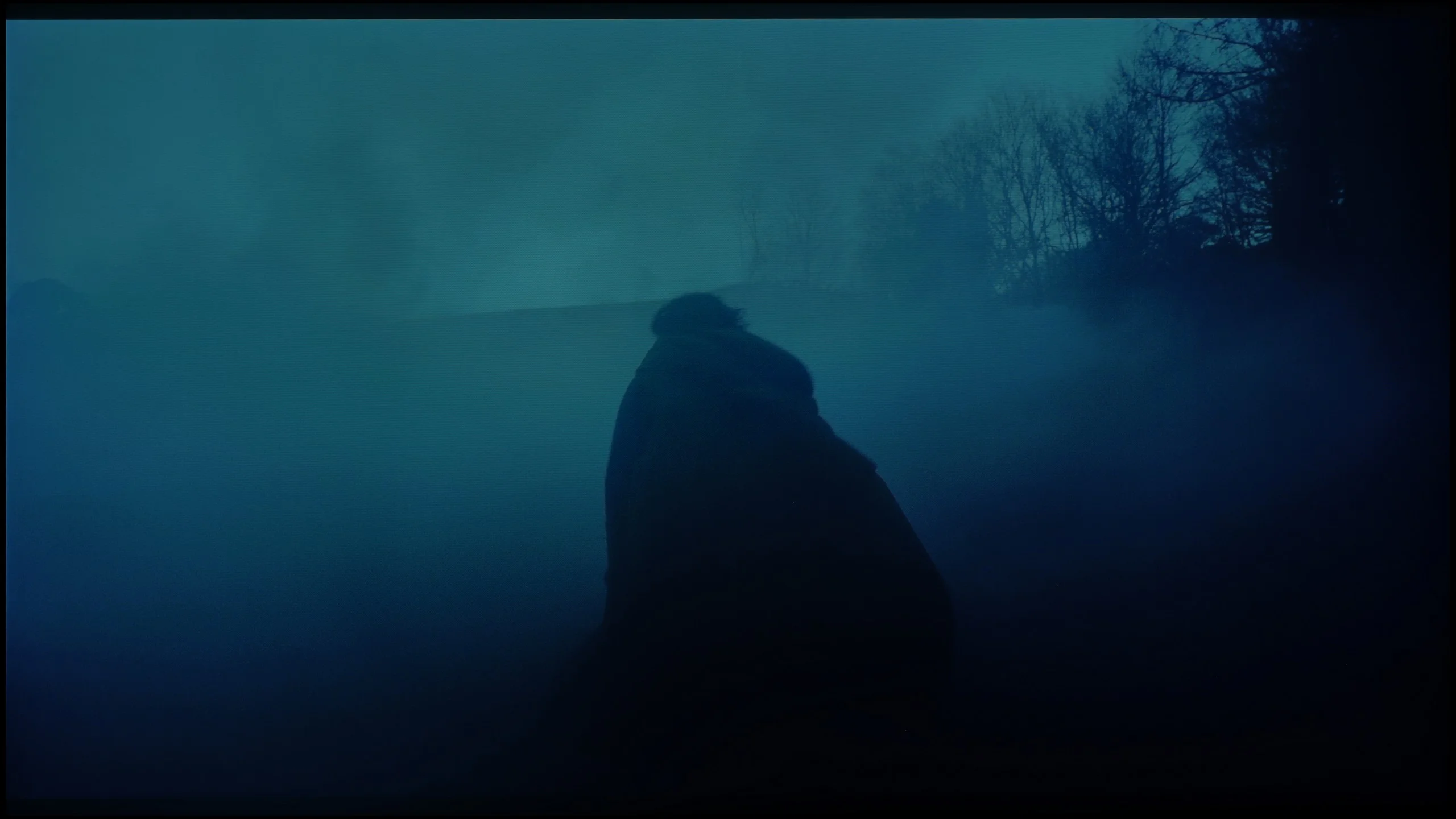
The photos show how movies look on the TV. Pay attention to black detail visibility, colors, and shadow tint.

The photos show how movies look on the TV. Pay attention to black detail visibility, colors, and shadow tint.

After calibration, we managed to correct the white balance to near perfection. Older SDR content looks fantastic — most errors fall within a value range of 2, which is well below the threshold of perceivability for the human eye. In HDR, we also brought the white balance to an acceptable level, but another issue arises here. So why are there still relatively large errors in colour reproduction? This mainly stems from the limited colour palette and the way the television manages brightness. The global dimming technique used does not give the user control in the settings, so when analysing the EOTF curve in HDR films, it is apparent that the Q8F can modify luminance independently. This can be regarded as a certain limitation, but despite this, the picture after calibration is still much more pleasant to view than in the factory version.

After calibration the W92C looks decidedly better, especially with SDR material. We managed to even out the white balance and remove the cool tint that had been spoiling practically every scene. Whites are now neutral and skin tones appear much more natural. We also improved the gamma, which now stays much closer to the target value of 2.4. The picture has regained depth and no longer looks so overly bright. Colour measurements confirm the improvement. Errors are small and in SDR it is hard to have major complaints. In HDR we also reduced the excess blue, although some imperfections remain in the very brightest shades. A bigger problem is how the television manages brightness. Shadows and midtones are lifted, while the brightest highlights appear darker than they should. As a result the image loses some of the contrast between a dark background and strong highlights, which is an important part of the HDR effect. Unfortunately we do not have enough control over this behaviour in the settings. Calibration improves the colours, but it will not fix the tone mapping and backlight control. That is a behaviour of the W92C that Panasonic needs to refine.

Smoothness of tonal transitions

9/10

9.7/10

These are selected scenes that show smooth tonal transitions from one color to another. If you see distinct banding, it’s the TV panel’s fault.

These are selected scenes that show smooth tonal transitions from one color to another. If you see distinct banding, it’s the TV panel’s fault.

These are selected scenes that show smooth tonal transitions from one color to another. If you see distinct banding, it’s the TV panel’s fault.

These are selected scenes that show smooth tonal transitions from one color to another. If you see distinct banding, it’s the TV panel’s fault.

The fluidity of tonal transitions in the Q8F performs really very well. The television beautifully blends colours, both in bright patches of sky and in darker scenes, where it is easy to spot visible "steps" in colours. Admittedly, there are occasional errors, but you have to look closely to catch them. In practice, when watching films or series, the image appears cohesive and does not distract with any artefacts. Therefore, the rating in this category had to be high. 😉

The smoothness of tonal transitions on the W92C is outstanding. It's one of the best results we've seen this year. Regardless of the scene, colours transition smoothly from one to another and there is practically no visible banding separating individual shades. Panasonic handles both bright skies and darker, more demanding parts of the image well. There's really little to criticise here.

Image scaling and smoothness of tonal transitions

5/10

7.8/10

Image without overscan on the SD signal
No
No
Smooth transition function
OK
OK

Smooth transition function

The match photo shows how the TV smooths weak tonal transitions in low-quality video.

Image scaling SD (576i)

The model photo shows how it handles upscaling of SD material.

Let’s check how the Q8F performs with older content, which often has poor quality. Let's start with the positives: the upscaling, or raising the image to a higher resolution, works really well. The television handles both traditional television and YouTube material quite competently, without giving the impression that we are dealing with something completely unattractive. It performs less well with very low resolutions, such as 576p — the image can be cropped, and unfortunately, the overscan issue cannot be turned off. Moreover, the digital processing itself appears less effective. The noise reduction feature, instead of eliminating unwanted disturbances, smooths out almost everything: film grain (which is desirable for many viewers) disappears along with the texture of the image, and the faces of the actors start to resemble characters from cheap Turkish soap operas. Therefore, it’s hard to consider this option useful — it’s best to leave it completely turned off. Perhaps Samsung will refine the operation of this function in future updates, but for now, it’s difficult to view it as anything other than an unnecessary addition.

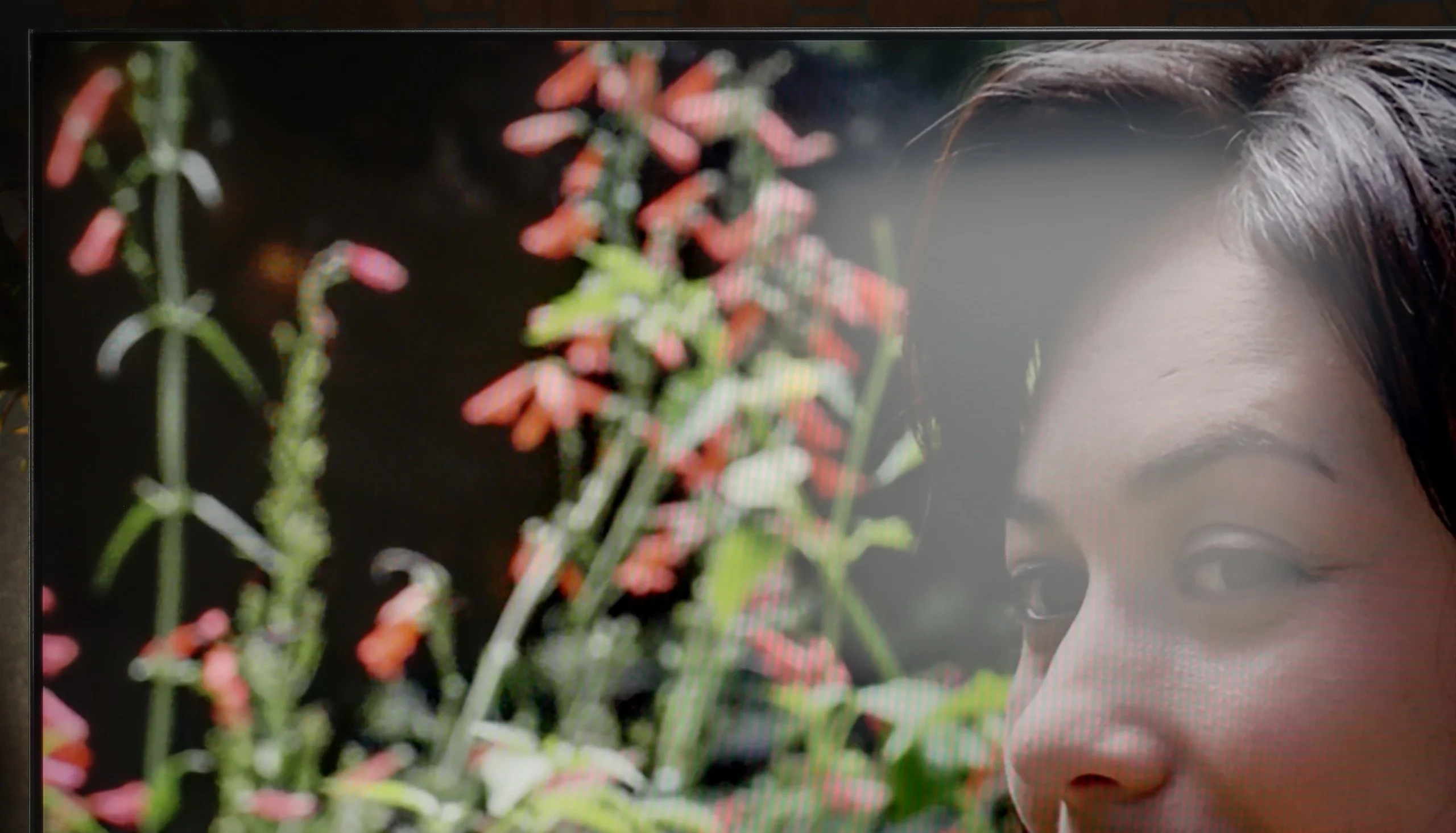
The 'Contour Smoothing' function is used to improve tonal transitions in poorer-quality material. At the medium setting it works very effectively and removes visible banding between shades. Occasionally it will lose some small details, but these are not things that stand out noticeably. The low setting is more cautious and does not affect other elements of the image, but the smoothing itself is much weaker. We would stick with the medium setting. Another plus is that the function leaves noise and film grain untouched. Upscaling itself also performs quite well. In our shot with the model, the details of her clothing and the tree remain clear, so lower-resolution content looks decent on a large screen. However, there is one drawback: with an SD signal the TV crops the edges of the image, that is, it applies so-called overscan. As a result we lose a small part of the frame.

Blur and motion smoothness

4.5/10

7/10

Maximum refresh rate of the panel
60Hz
144Hz
Film motion smoothing option
OK
OK
Blur reduction option
No
OK
BFI function 60Hz
Yes, 120Hz (double contours)
No
BFI function 120Hz
-
No
Brightness drop with BFI
50%
-%

Blur (native resolution, maximum refresh rate):

Blur (BFI function enabled):

Blur ():

Blur (4K@144Hz):

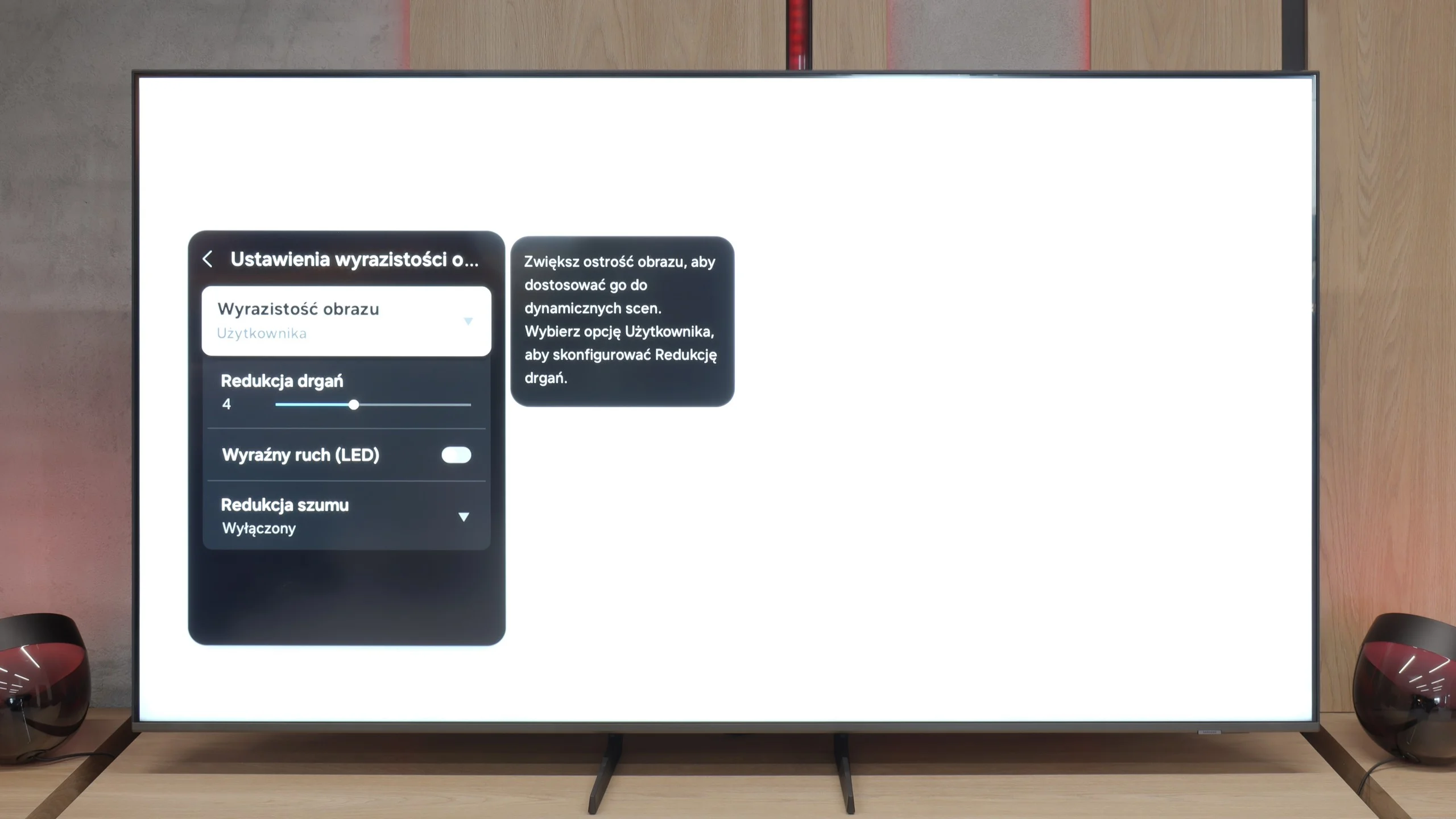
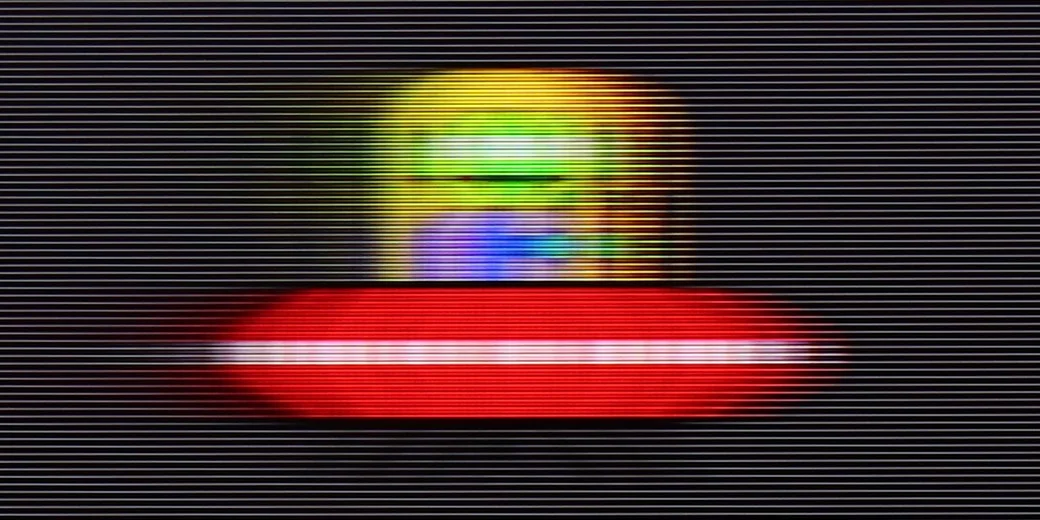
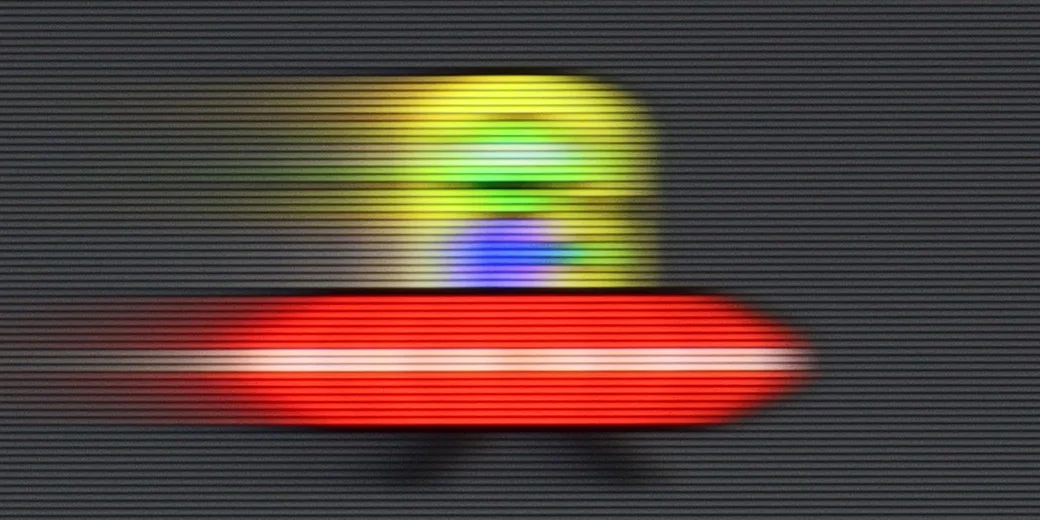
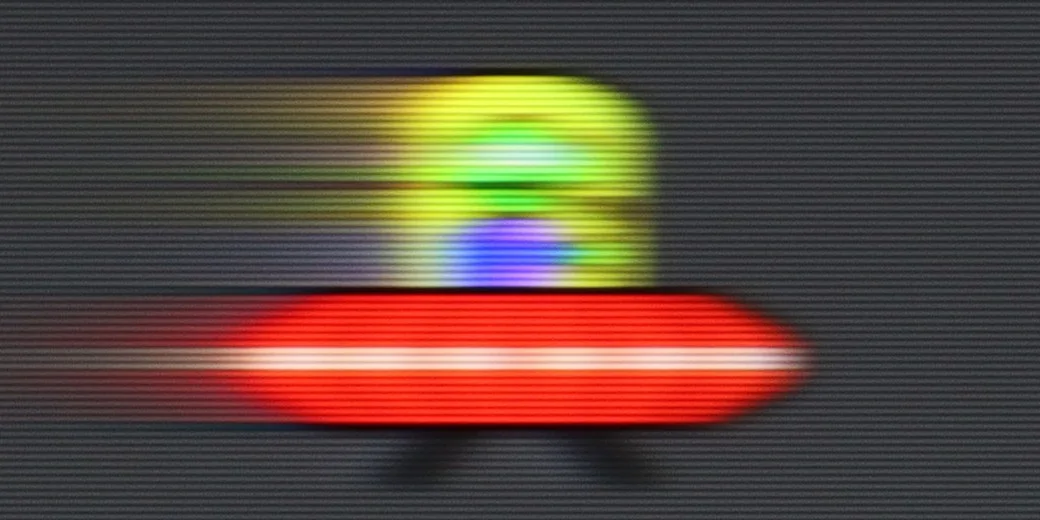
Due to the applied 60 Hz matrix, it is difficult to call the Q8F a television designed for gaming or watching sports. The panel is not particularly fast, which makes motion blur noticeably visible. If you were hoping for spectacular, even 'stadium-like' experiences during broadcasts, you may feel slightly disappointed. Fortunately, in the case of films and series, Samsung has not abandoned the motion blur reduction feature. This is nothing but a motion smoother that allows you to improve the fluidity of productions recorded at 24 or 30 frames per second. This way, you can decide for yourself whether you prefer a smoother, 'television' image or to maintain a cinematic character. It all depends on the viewer's preferences, and the ability to adjust this parameter is undoubtedly a plus.

The Panasonic W92C has a 144 Hz panel, which is mainly useful for PC gaming. For consoles and sport, however, how the screen handles 120 Hz is more important. Motion is smooth, though moving objects are not perfectly sharp. In our saucer test you can see a clear trail behind it, especially on dark backgrounds. Even so, the W92C is still a better choice for dynamic content than a typical 60 Hz screen. The higher refresh rate gives a noticeable improvement in smoothness, but the panel itself could react faster to colour changes.

Console compatibility and gaming features

5/10

8.1/10

  • ALLM
    Yes
    Yes
  • VRR
    No
    Yes
  • VRR range
    No
    48 - 144Hz
  • Dolby Vision Game Mode
    No
    Yes
  • Correct implementation of HGIG
    Yes
    No
  • 1080p@120Hz
    No
    Yes
  • 1440p@120Hz
    No
    No
  • 4K@120Hz
    No
    Yes
  • Game bar
    Yes
    Yes

[UPDATE] We have updated our 2025 Samsung TV reviews following the release of firmware version 1131, which officially restores the essential HGiG (HDR Gaming Interest Group) support.
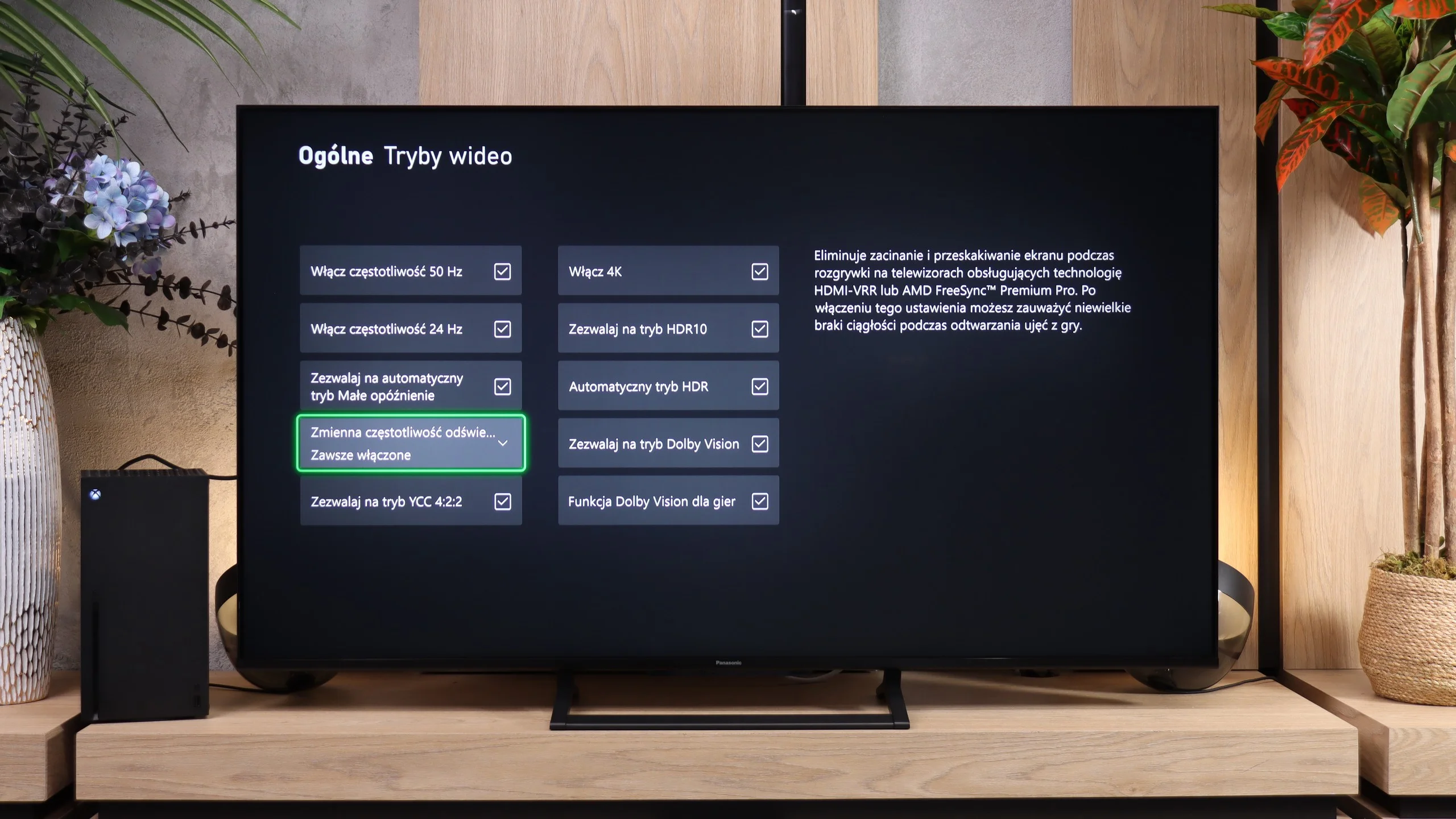
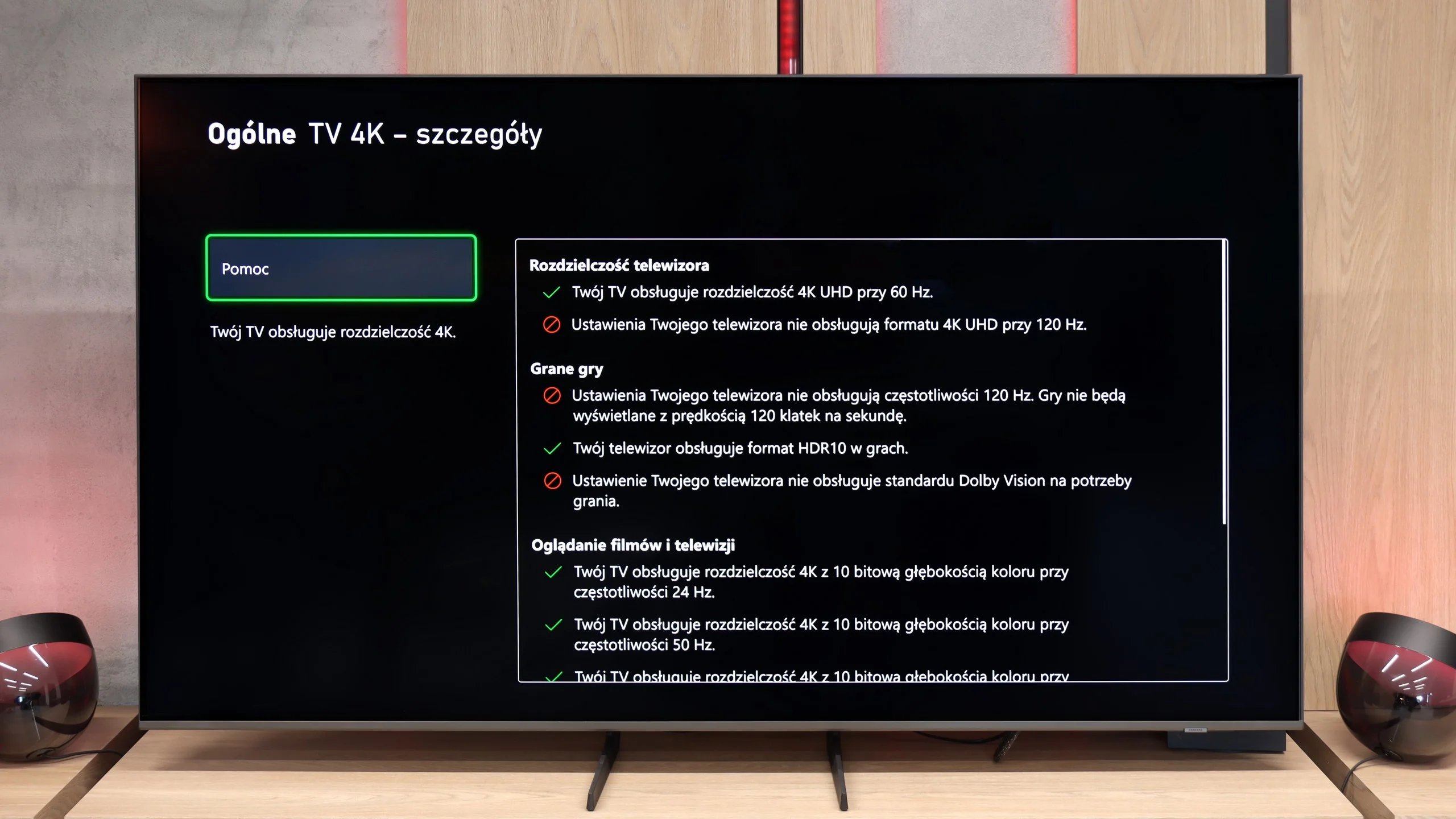
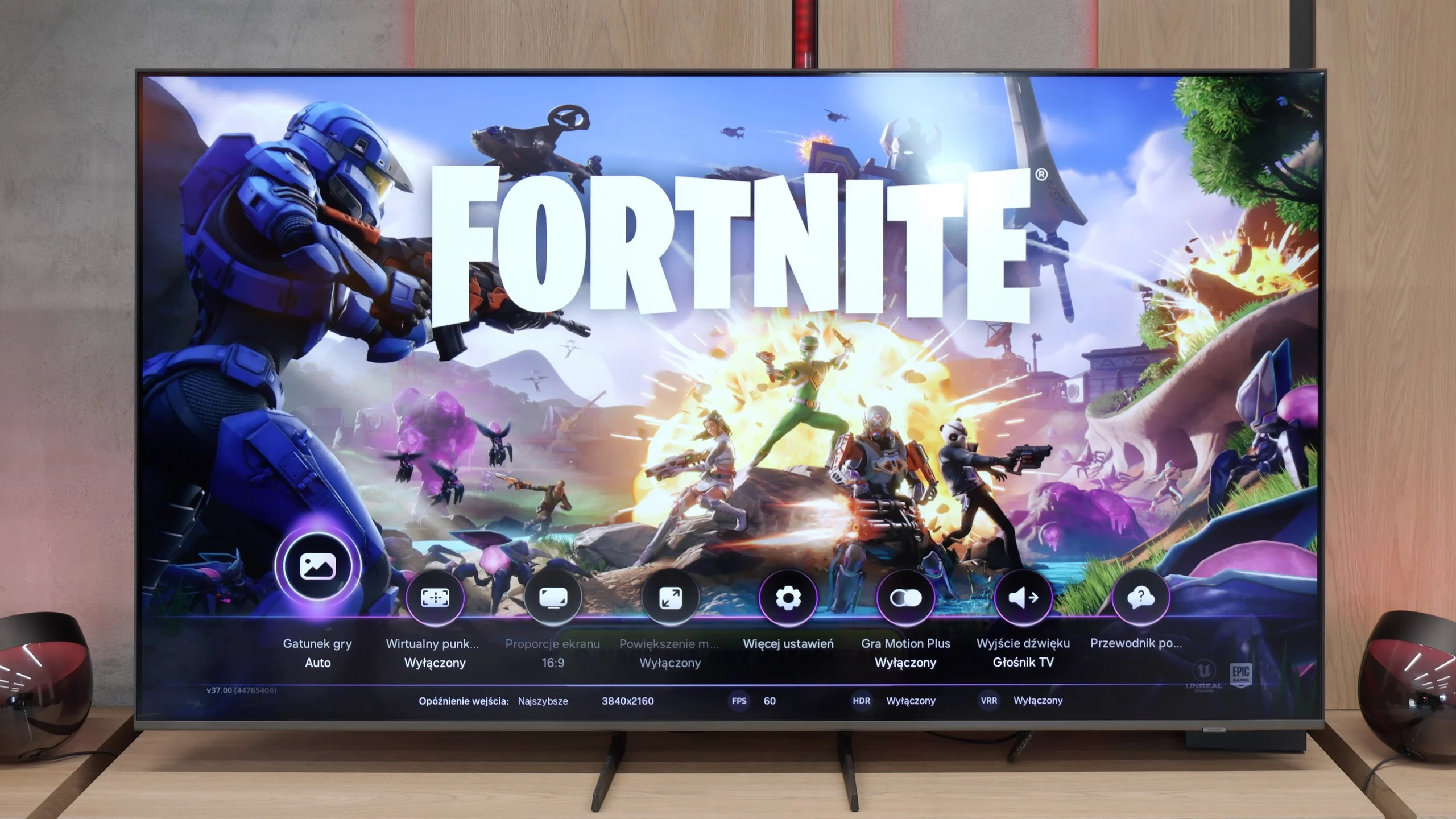
It is not entirely clear what Samsung has meddled with this year regarding its televisions, but the Q8F is not free from all the confusion surrounding updates and shortcomings. While its older cousin, the Q67D, could still be recommended to casual gamers with a clear conscience, it is difficult to find a reason to do so here. Apart from the automatic game mode and the attractively designed Game Bar, we receive practically nothing that could attract gaming enthusiasts. The lack of proper HGiG implementation is a significant issue, especially since after the 1126 update, the feature simply disappeared. The situation regarding VRR is even worse. Although it is listed in the manufacturer's brochures and appears in the Game Bar, we were unable to activate it. The Xbox Series X console did not allow activation at all, and the option remained greyed out and inactive. It is hard to praise such a television even to casual gamers, which is a pity, as Samsung had a strong bargaining chip in the gaming segment for years.

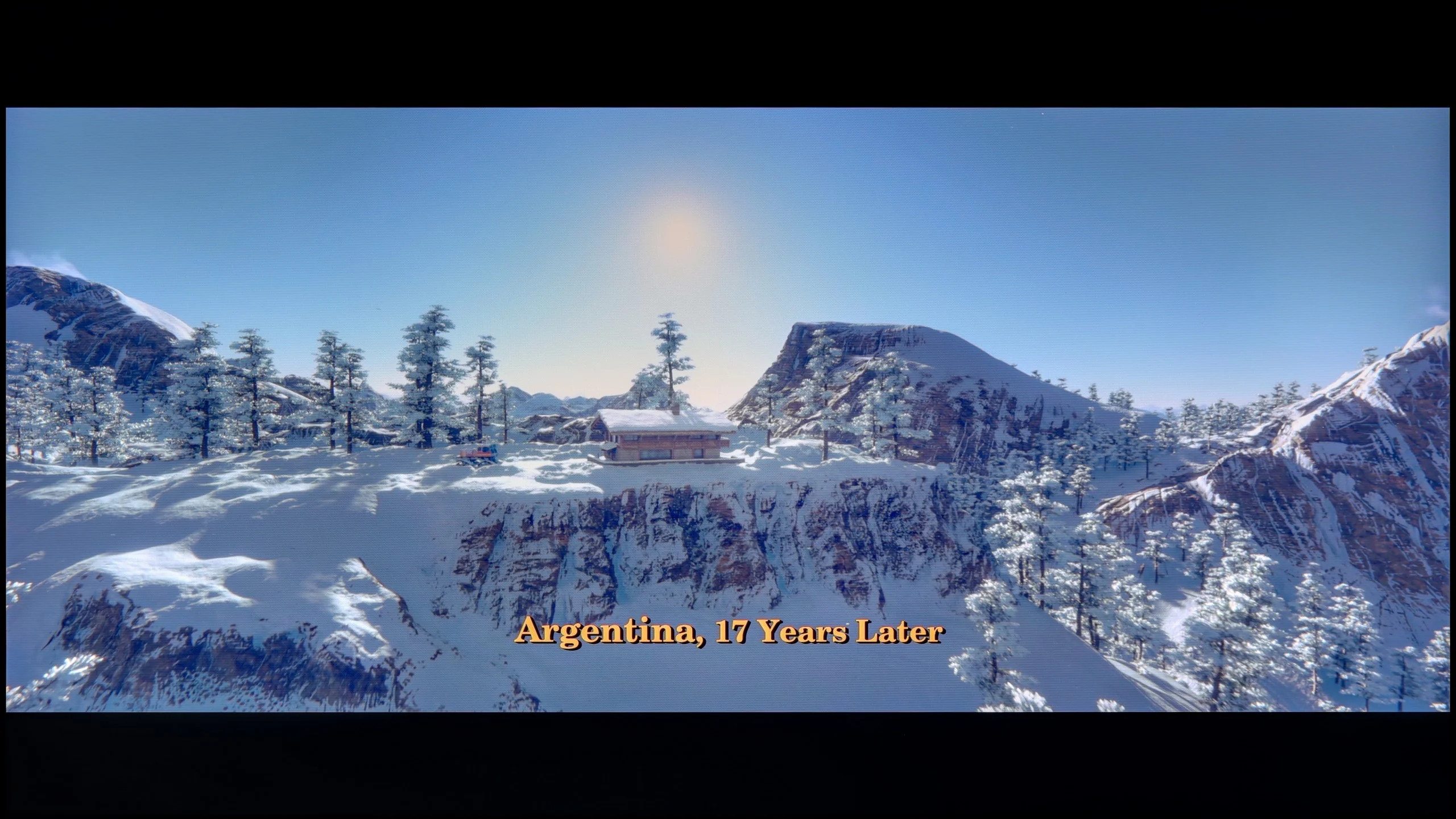
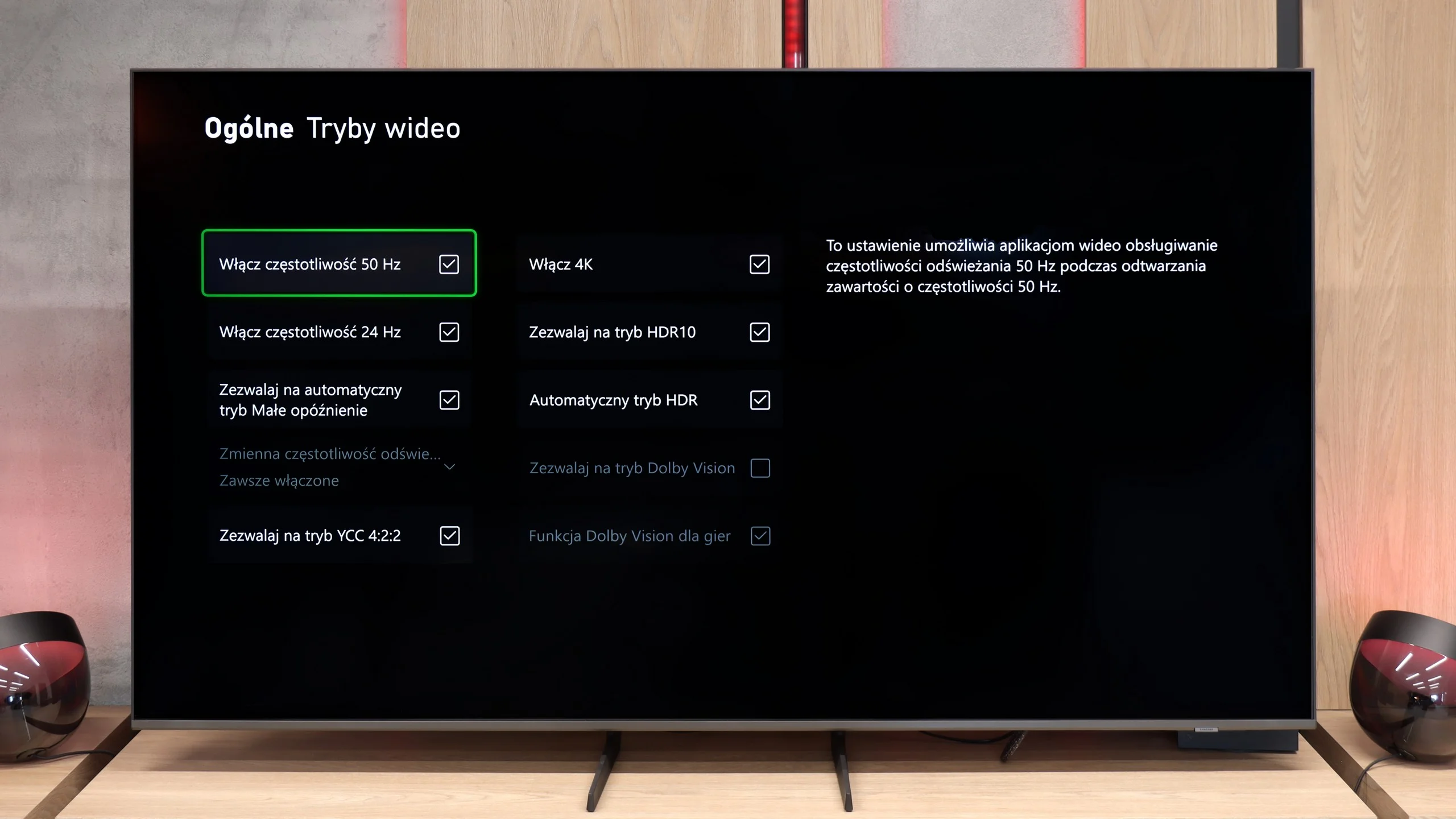
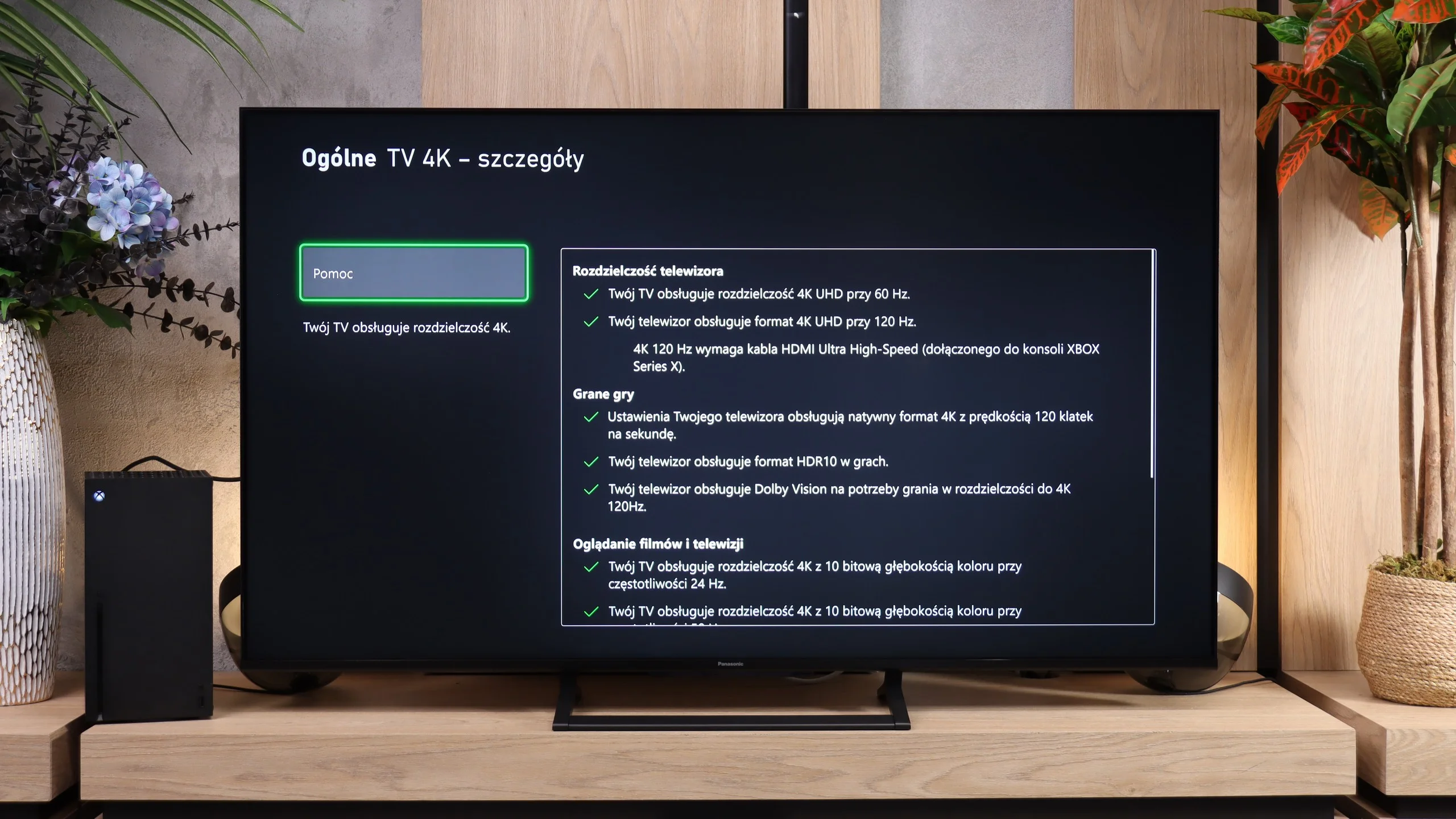
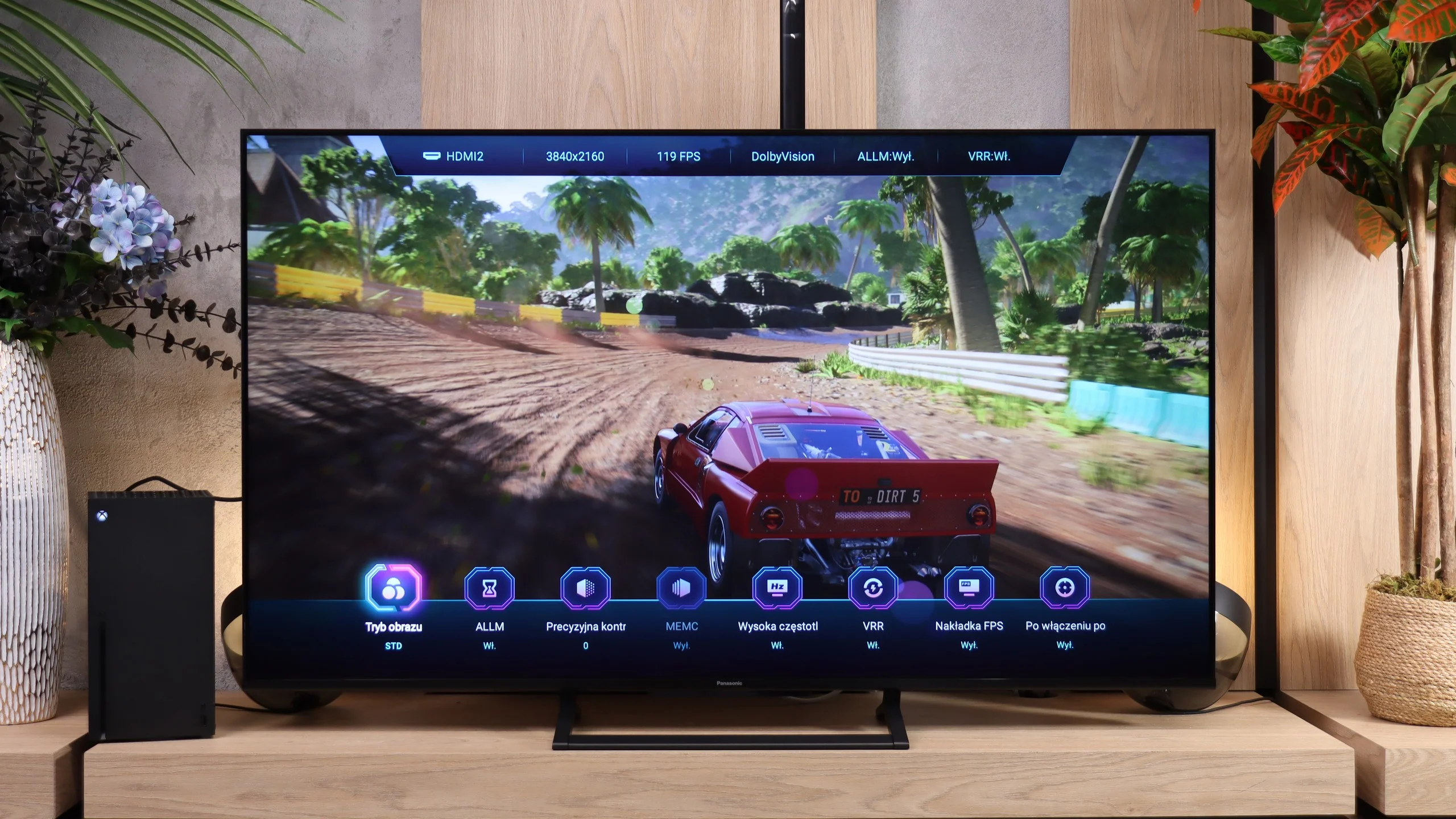
The Panasonic W92C has quite a lot to offer gamers. It has three HDMI 2.1 ports with the full 48 Gbps bandwidth, supports 4K gaming at 120 Hz, and when connected to a PC it can even run at 144 Hz. There is also VRR from 48 to 144 Hz, which helps keep the image smooth when the frame rate varies, and ALLM that automatically enables a low-latency mode. On top of that, it supports Dolby Vision for games.

The new Game Bar deserves special praise. The large circles familiar from Panasonic sets with Fire TV have been replaced by a much more organised panel. At the top you can see the most important signal information, and at the bottom there are shortcuts to gamer settings. It looks more modern and is much closer to what the biggest competitors offer. Definitely a change for the better.

Not everything is perfect, however. A properly functioning HGiG is missing, which helps match HDR in games to the screen’s capabilities. The W92C also does not support 1440p at 120 Hz. That’s a shame, because that mode is particularly useful on a PC when you want higher frame rates than in 4K but better detail than in Full HD.

Input lag

9.9/10

9.9/10

SDR

1080p60
14 ms
16 ms
1080p120
7 ms
2160p60
14 ms
16 ms
2160p120
7 ms

HDR

2160p60
12 ms
15 ms
2160p120
7 ms
4320p60

Dolby Vision

2160p60 DV
17 ms
2160p120 DV
9 ms

Fortunately, in terms of gaming, Samsung did not attempt to 'enhance' anything and the input lag remained at an excellent level. Results hovering around 10–15 ms mean that delays are practically imperceptible. The controls are instant, and the responses from the console or computer appear on the screen with no noticeable delay. In this respect, the Q8F performs excellently and it is difficult to fault it in any way.

Input lag on the Panasonic W92C is very low. At 60 Hz we measured about 15 to 16 ms, and at 120 Hz just 7 ms. Response to the controller is therefore quick, and even in fast-paced games there is little to criticise. Dolby Vision also performs well: 17 ms at 60 Hz and 9 ms at 120 Hz. You can safely use any format without worrying that controls will become noticeably slower.

Compatibility with PC

6/10

9/10

Chroma 444 (max. resolution and refresh rate)
Yes
Yes
Font clarity
Very Good
Very Good
Readability of dark text and shapes
Good
Very Good
Input lag in PC mode (4K, max. refresh rate)
14ms
7ms
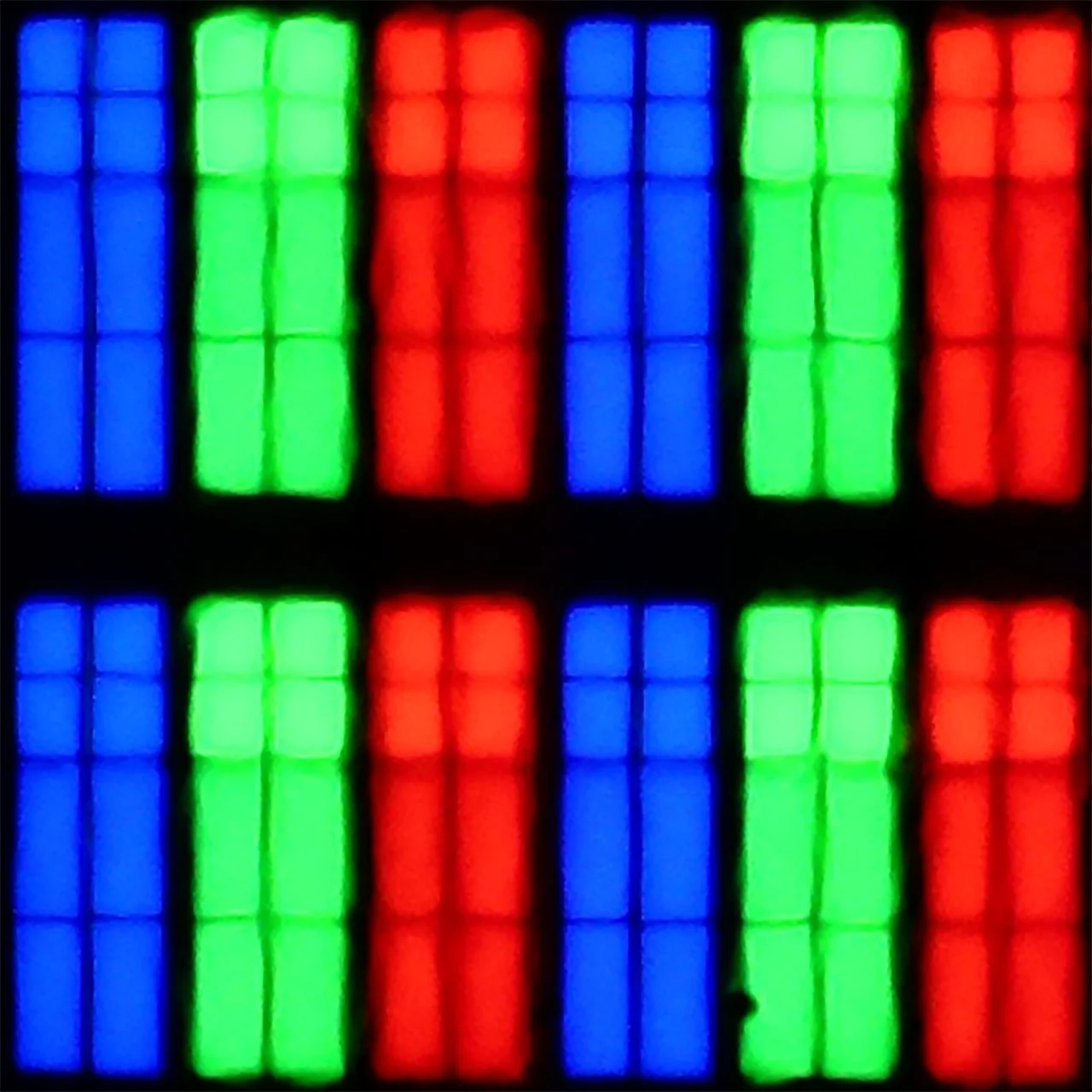
Matrix subpixel arrangement
BGR
RGB
Max refresh rate
60Hz
144Hz
G-Sync
No
Yes

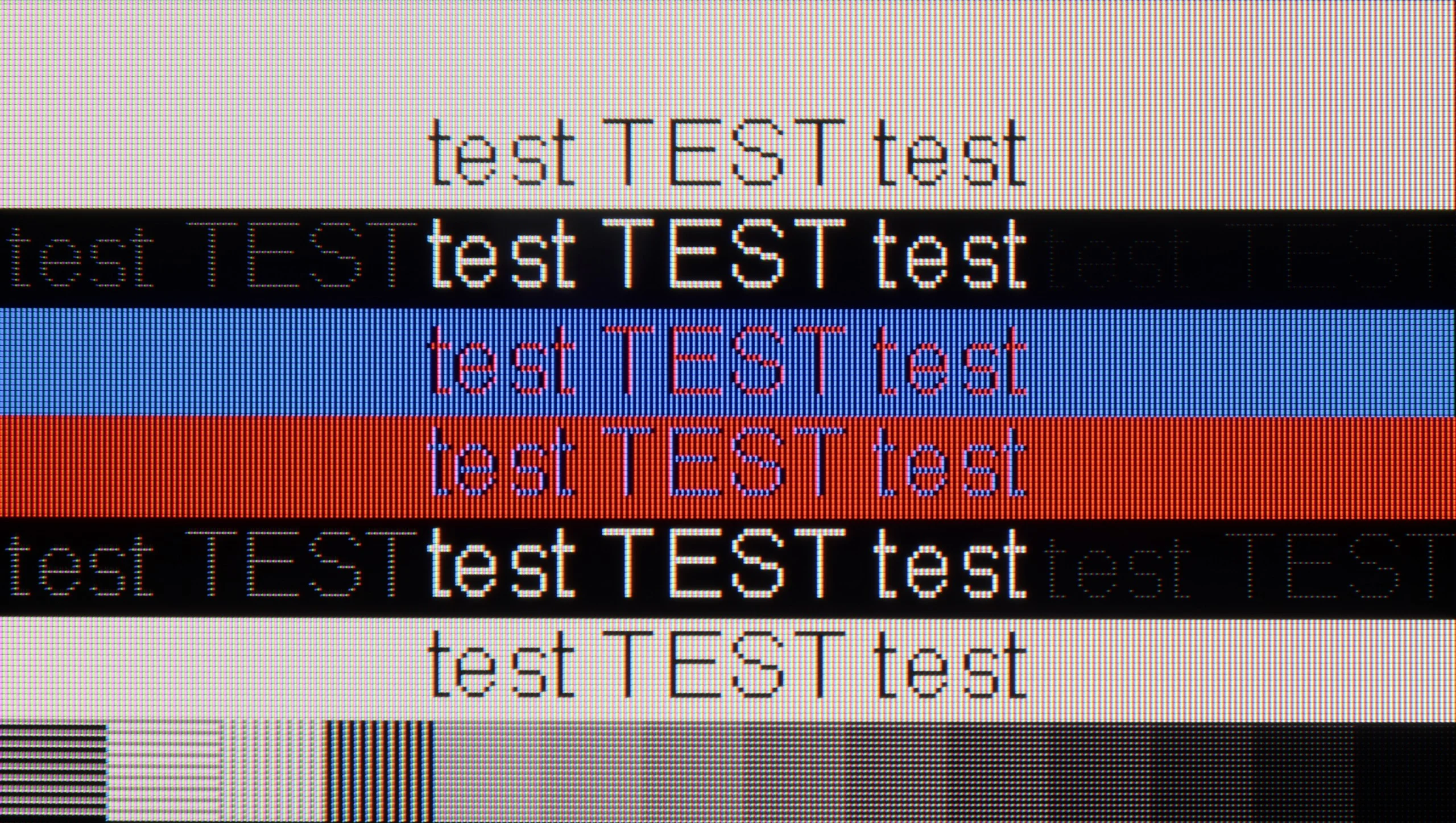
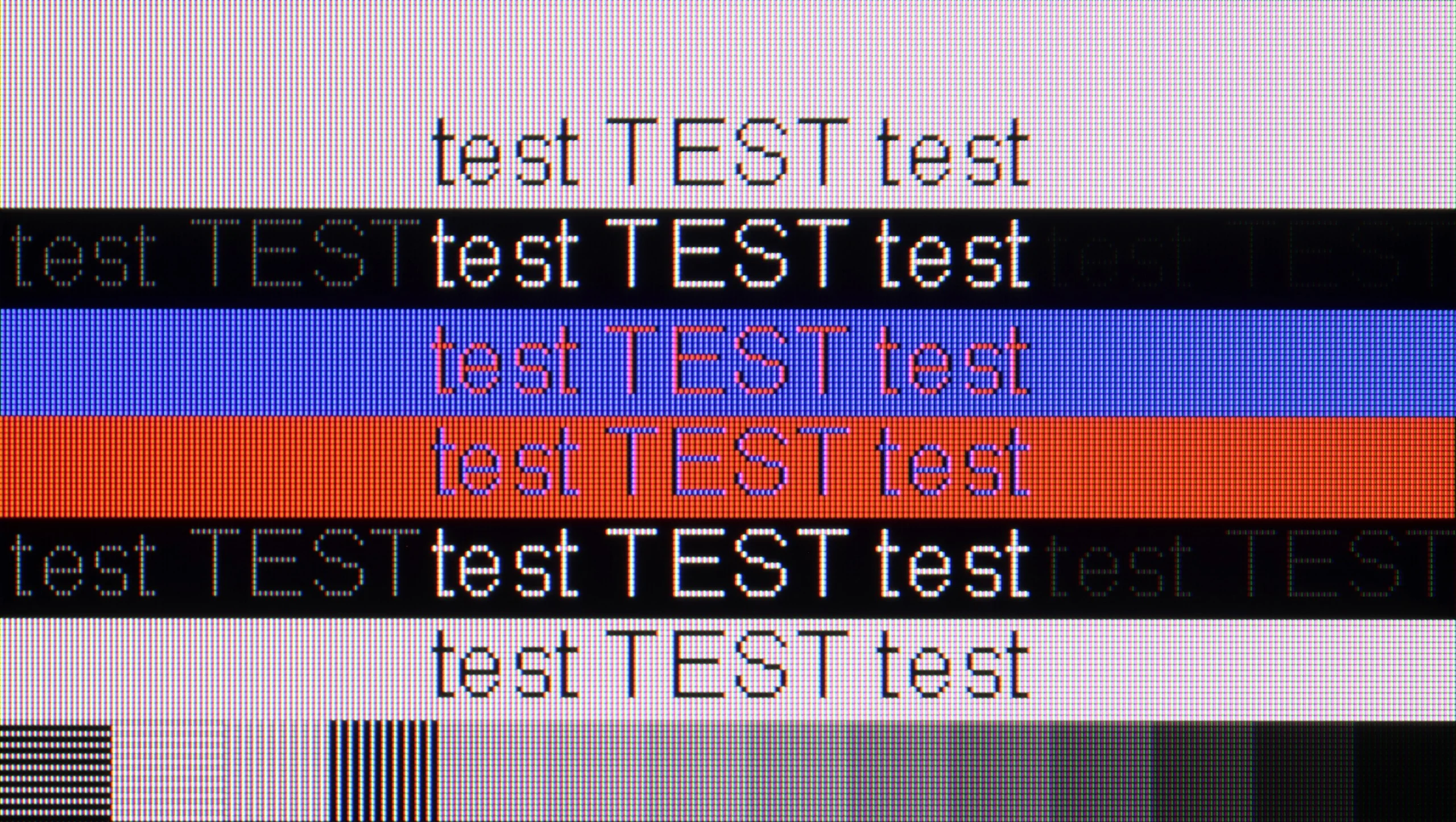
The photo shows the legibility of small fonts. Ideally, lines should be the same thickness on both light and dark text, with minimal pixel gaps.

Although gaming on the Q8F is not particularly attractive — there are no modes with lower resolution and higher refresh rates, and it also has issues with VRR (G-Sync) as well as a limitation of the panel to 60 Hz — it performs excellently as a work monitor. The readability of the fonts is very high, so working with text or Excel spreadsheets is a pure pleasure. In this regard, the Q8F can be a real alternative to a large office monitor.

Working with a PC is one of the W92C's stronger suits. Fonts look really great. They're sharp, legible and don't lose fine details. That also applies to dark text on a dark background, which some TVs struggle with. It's one of the few panels that handled our font test so well. The RGB subpixel layout and proper support for chroma 4:4:4 help here, including at maximum resolution and refresh rate. There are also plenty of options for gamers. You get 4K at 144 Hz, working G-Sync and an input lag of 7 ms. The Panasonic therefore performs well both for working with text and for gaming. You just need to remember the smearing mentioned earlier and the lack of support for 1440p at 120 Hz. Overall, the legibility of the PC image is excellent.

Viewing angles

3.4/10

6/10

Brightness drop at an angle of 45 degrees
79%
80%

The viewing angles on the Q8F can be described as average, which is due to the use of a VA panel. When watching the television straight on, the picture looks very good, but just moving slightly to the side causes it to start fading and losing contrast. Colours gradually lose their saturation, and black takes on a shade of grey. This is a typical limitation of this type of panel, and one cannot expect miracles here. Compared to IPS panels, the difference is clear — although they are weaker in contrast, they hold colour better at an angle. The Q8F will perform best in a classic setup, where viewers are seated centrally in front of the screen. If you plan to watch with a larger group, with people spread out across the living room, the effect may not be as satisfying.

The 55-inch Panasonic W92C offers good viewing angles, primarily thanks to its IPS panel. Because of this, images viewed from the side retain colour and contrast better than on many LCD TVs with Mini LED backlighting that use VA panels.

Daytime performance

5.6/10

6.8/10

Panel finish
Satin
Matte
Reflection suppression
Good
Very Good
Black levels during daytime
Good
AbsorptiveBlack-Decent

Panel brightness

Panasonic W92C (Google TV): 555 cd/m2

Samsung Q8F: 430 cd/m2

The Q8F performs quite well during the day. Its brightness hovers around 450 nits, which proves to be a sufficient level for moderately bright living rooms. It is not a television that will win a battle against sunlight streaming directly through the window, but under typical home conditions, the picture remains clear and appealing. A significant advantage is the satin finish of the panel, which effectively reduces reflections and helps maintain colour saturation even when the room is bright. As a result, watching series during the day or evening sports broadcasts with the lights on poses no problems. The Q8F does not aspire to be a cinema television in full sunlight, but as an everyday screen in normal home conditions, it performs really well.

A matte panel is a big plus for the W92C when watching in daylight. It disperses reflections very well, so instead of a distinct reflection of a window or lamp we see a more diffuse glow. Add to that an average brightness of around 555 nits, which is more than enough for watching TV in a typical bright living room. That doesn't mean light striking the screen stops being an issue. The matte coating spreads it over a larger area, which makes blacks look greyer and the image lose some contrast. It's easiest to notice this in dark scenes. Nonetheless, the combination of decent brightness and effective reflection suppression means the Panasonic is quite suitable for everyday viewing without having to draw the curtains.

Panel details

Backlight Type
QLED
Mini-LED PFS LED
Software version during testing
T-RSLFDEUC-0090-1126.0, E2540300, BT-S
UKN6.260116.086
Image processor

Subpixel Structure:

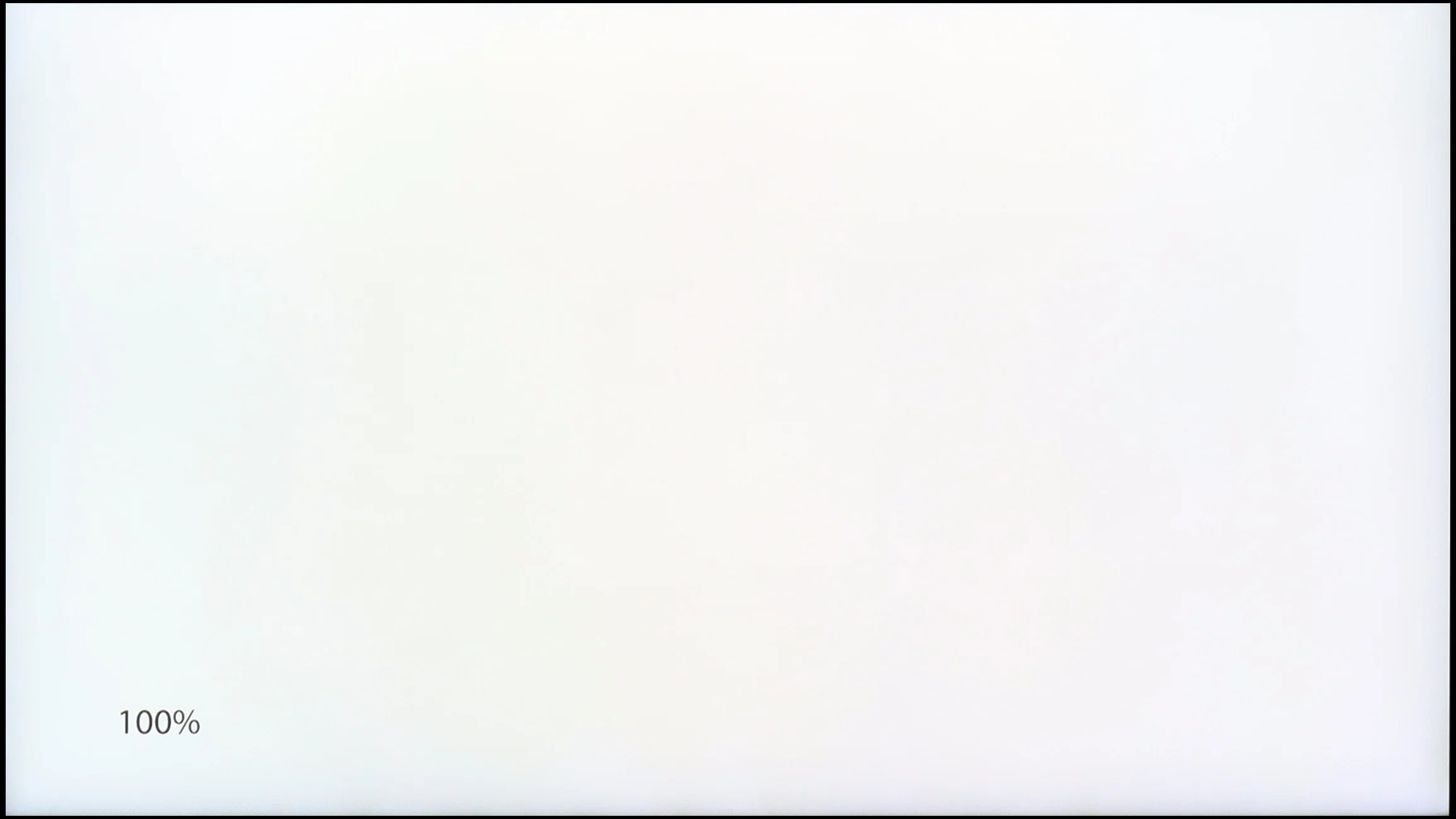
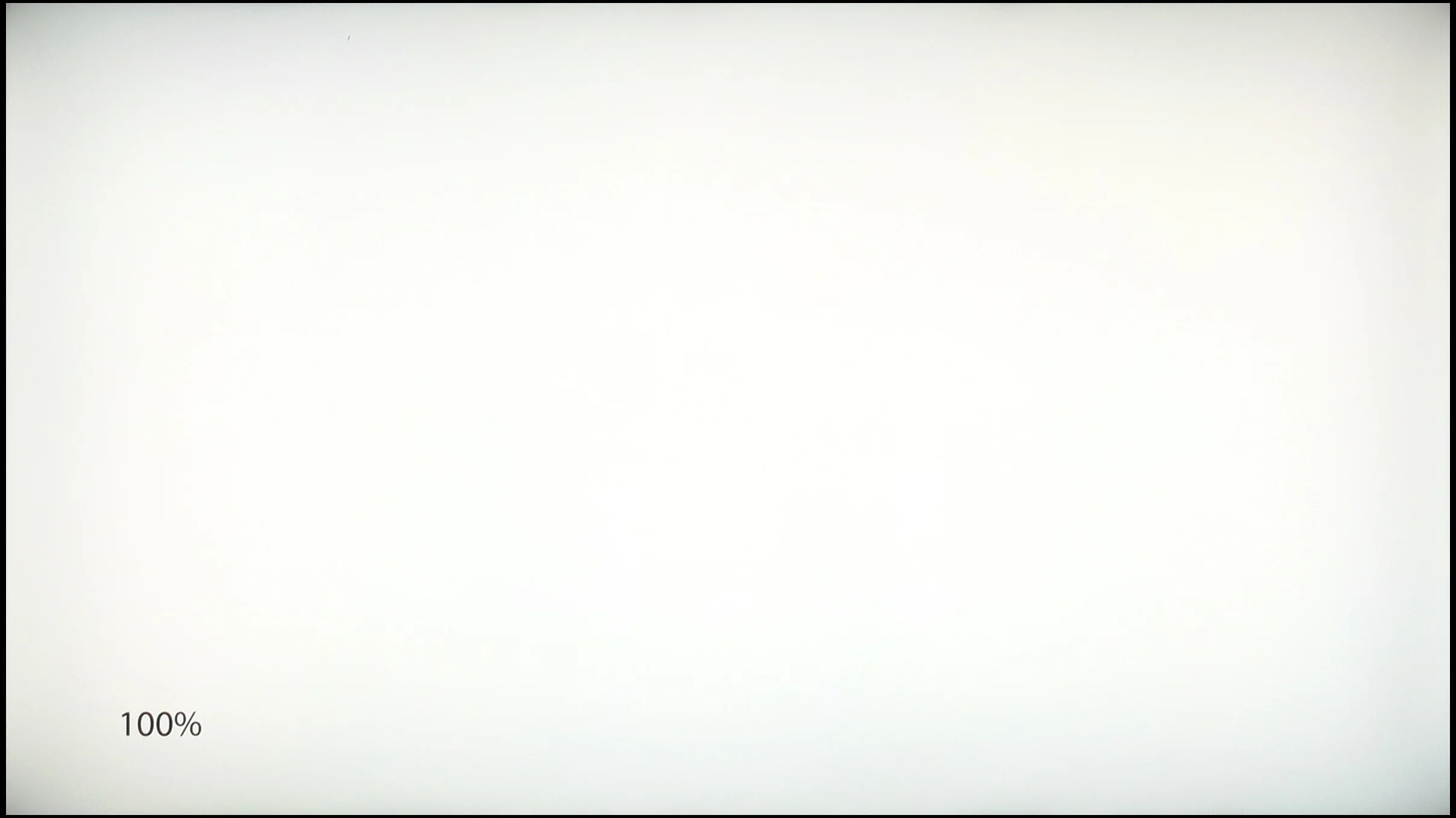
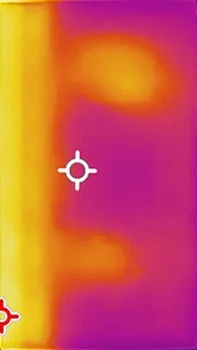
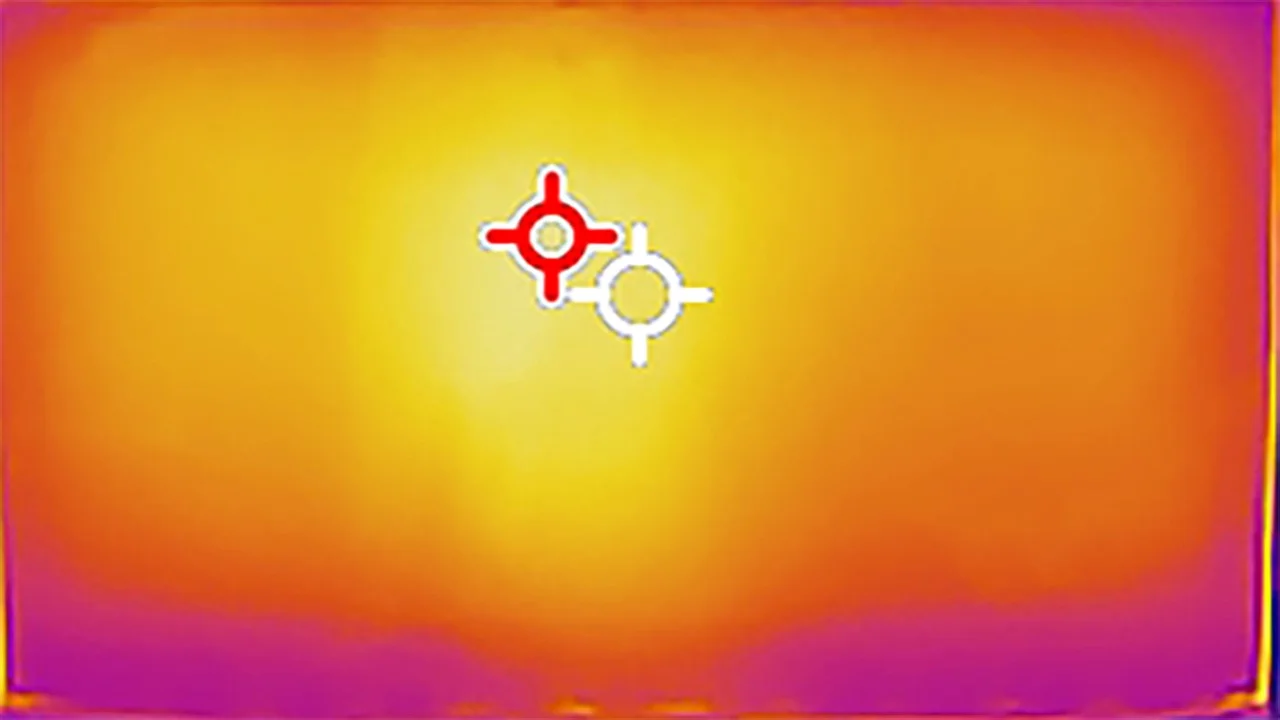
Panel uniformity and thermal imaging:

Review Samsung Q8F TV Panel details
Review Panasonic W92C (Google TV) TV Panel details
Review Samsung Q8F TV Panel details
Review Panasonic W92C (Google TV) TV Panel details

Samsung Q8F

Panasonic W92C (Google TV)

TV features

7.3/10

6.6/10

  • System
    Tizen
    Google TV
  • System performance
    Good
    Good
  • HDMI inputs
    3 x HDMI 2.0, 0 x HDMI 2.1
    0 x HDMI 2.0, 3 x HDMI 2.1 48Gbps
  • Outputs
    Toslink (Optical audio), eARC (HDMI), ARC (HDMI)
    Toslink (Optical audio), eARC (HDMI), ARC (HDMI), Mini-Jack (Headphones)
  • Network Interfaces
    Wi-Fi 2.4GHz, Wi-Fi 5GHz, Ethernet (LAN) 100Mbps
    Wi-Fi 2.4GHz, Wi-Fi 5GHz, Ethernet (LAN) 100Mbps
  • TV reception
    DVB-T, DVB-T2, DVB-S, DVB-S2, DVB-C
    DVB-T, DVB-T2, DVB-S, DVB-S2, DVB-C

Classic features:

  • Recording to USB (terrestrial TV)
    No
    No
  • Recording programming
    No
    No
  • Picture in Picture (PiP)
    No
    No
  • RF remote control (no need to aim)
    Yes
    Yes
  • Backlit remote control
    No
    No
  • Teletext
    Yes
    Yes
  • Audio only mode
    Yes
    Yes
  • Bluetooth headphones support
    Yes
    Yes
  • Simultaneous Bluetooth headphones & TV audio
    Yes
    Yes

Smart features:

  • AirPlay
    Yes
    No
  • Screen mirroring (Windows Miracast)
    Yes
    Yes
  • Voice search
    Yes
    Yes
  • Voice search in native language
    Yes
    Yes
  • Ability to connect a keyboard and mouse
    Yes
    Yes
Review Samsung Q8F TV features
Review Panasonic W92C (Google TV) TV features

Sound connection options

  • HDMI audio
    eARC (HDMI), ARC (HDMI)
    eARC (HDMI), ARC (HDMI)
  • Other audio outputs
    Toslink (Optical audio)
    Toslink (Optical audio), Mini-Jack (Headphones)
  • Wireless audio
    Bluetooth, Samsung Q-Symphony (Speaker extension)
    Bluetooth, Samsung Q-Symphony (Speaker extension)

Supported audio formats (external HDMI eARC audio):

  • Dolby Digital Plus 7.1
    Yes
    Yes
  • Dolby True HD 7.1
    Yes
    Yes
  • Dolby Atmos in Dolby Digital Plus (JOC)
    Yes
    Yes
  • Dolby Atmos in Dolby True HD
    Yes
    Yes
  • DTS:X in DTS-HD MA
    No
    No
  • DTS-HD Master Audio
    No
    No

Senior accessibility

  • Numeric keyboard on TV
    No
    Yes
  • Font size adjustment
    Yes
    Yes
  • Audio description
    Yes
    Yes

SmartTV Features: Tizen

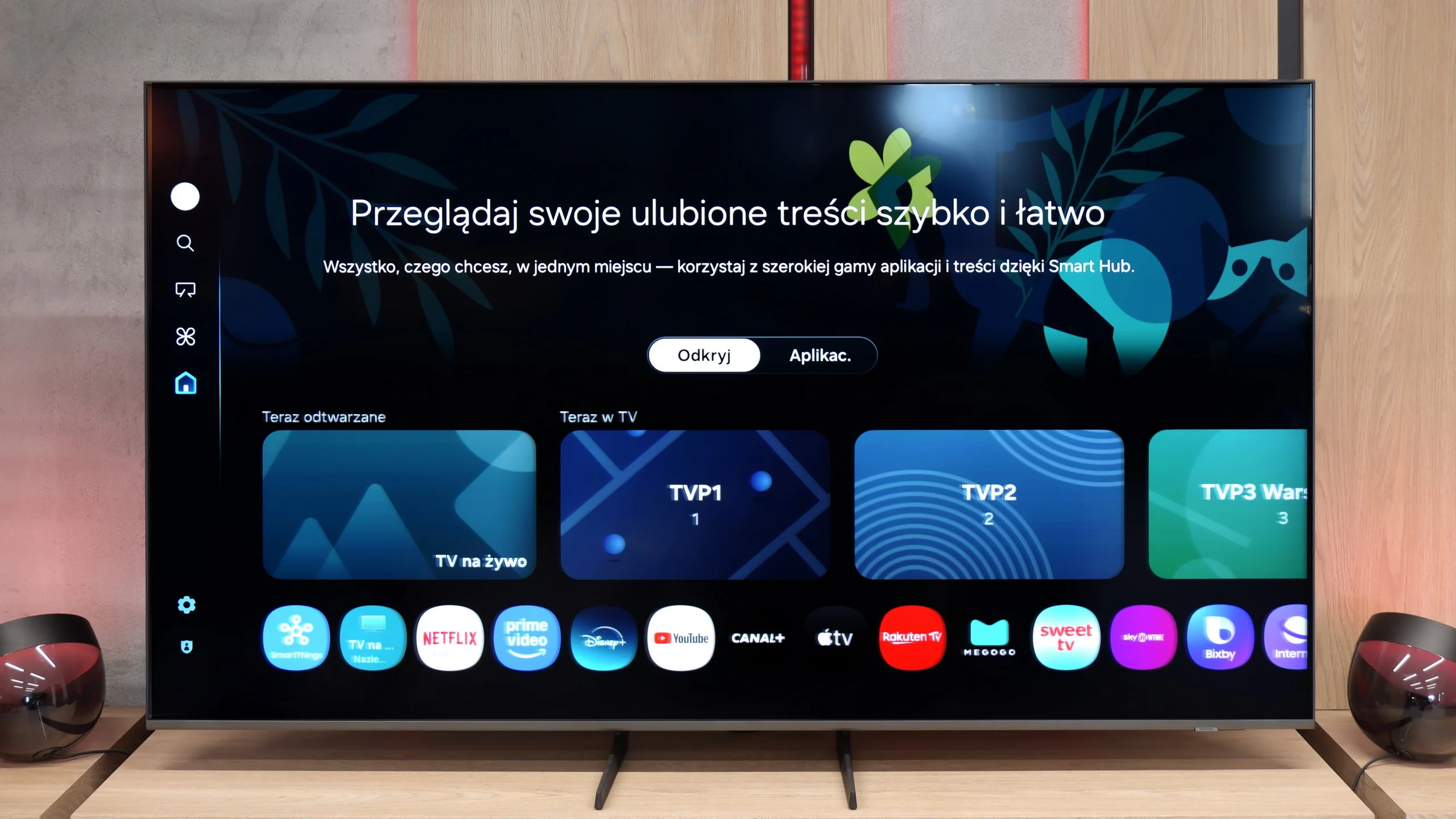
In terms of smart features, the Q8F does not lag behind what Samsung has accustomed us to. On board, we have the Tizen system – fast, intuitive, and well integrated with other devices. AirPlay, screen mirroring, and simple voice commands work seamlessly, so the basics are checked off perfectly. Additionally, there is SmartThings, an app that turns the television into the centre of a home ecosystem. You can connect a washing machine, vacuum cleaner, light bulbs, or speakers and control everything from one place, including the television. There is also no shortage of apps within Tizen for watching films or series – Netflix, YouTube, Disney+, and Prime Video are readily available. However, it is worth noting that Tizen is a closed system, so anyone hoping to install less popular programmes may be disappointed.

Traditional Television

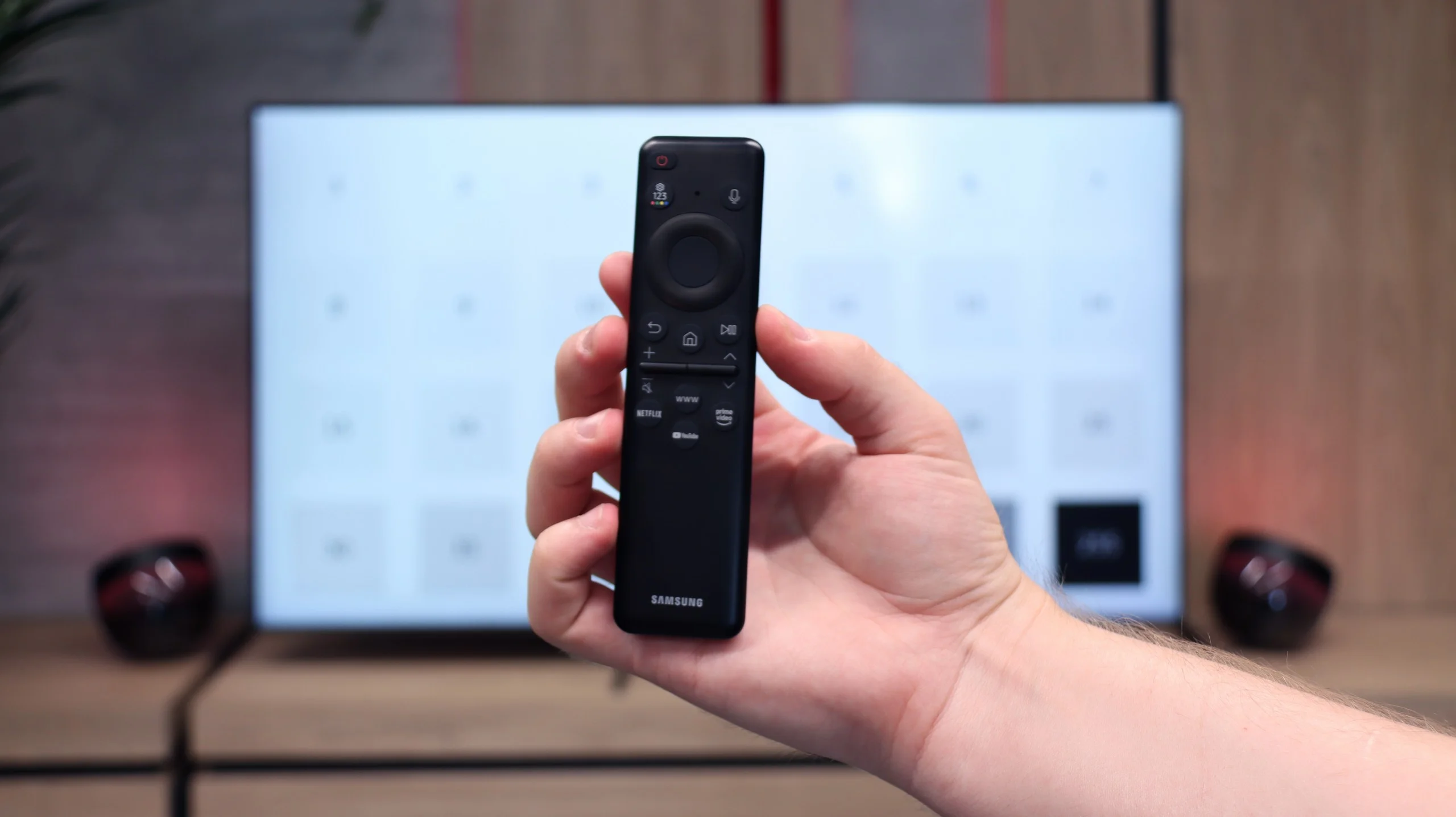
Traditional television fares worse. The Q8F will simply act as a screen here – it will display the image, but we won't find additional functions such as USB recording or PiP mode. The remote is small and strongly minimalist. It looks modern and can be charged with solar batteries on the back cover or via USB-C, but it must be recognized that it may not appeal to everyone – particularly older users may miss traditional buttons. However, it must be noted honestly that Samsung has been consistently steering its televisions (as has the competition, which copies some of their ideas) towards the smart home, rather than towards equipment "for grandparents." Considering the tremendous popularity of the brand, it can be assumed that most users, even the older ones, have already got used to the fact that the era of remotes with a full array of rubber buttons is slowly coming to an end.

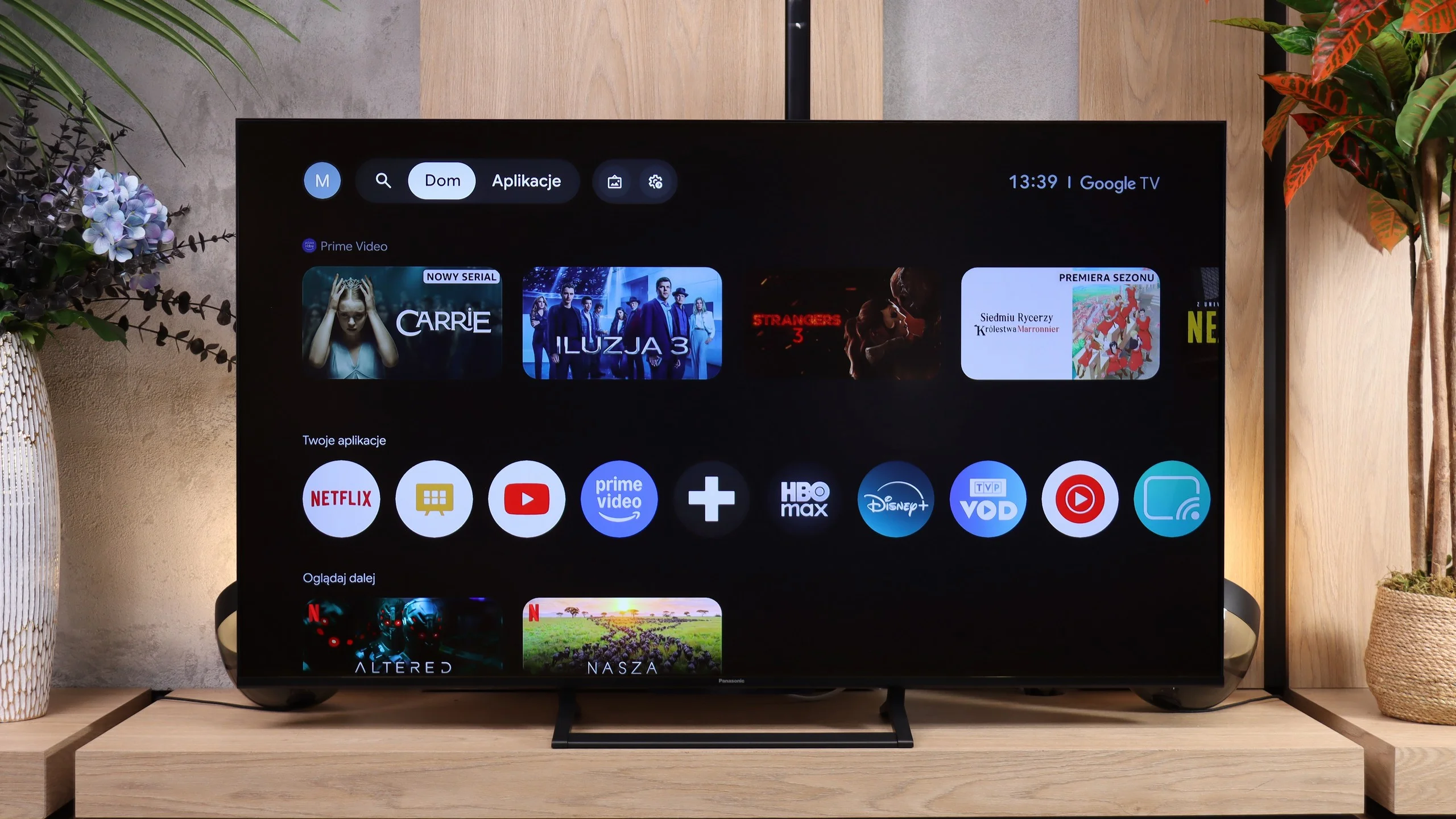
Google TV

Google TV is a big step forward compared with Panasonic's older systems, and also compared with the newer Fire TV, which didn't entirely convince us. On the W92C everything runs very smoothly. We move through the menus quickly, apps launch without long waits, and among the available services we found all the ones we were interested in. There is also voice search in Polish and Chromecast, which makes it easier to cast content from a phone. It's a pity there's no working AirPlay; we couldn't use it with our newer iPhone.

However, there were a few minor hiccups. Some of the Polish translations in the menu sound rather clumsy, and the aforementioned automatic backlight adjustments show the software still needs some fixes. Despite this, everyday use is good and we definitely count the choice of Google TV among this model's strengths.

Classic features

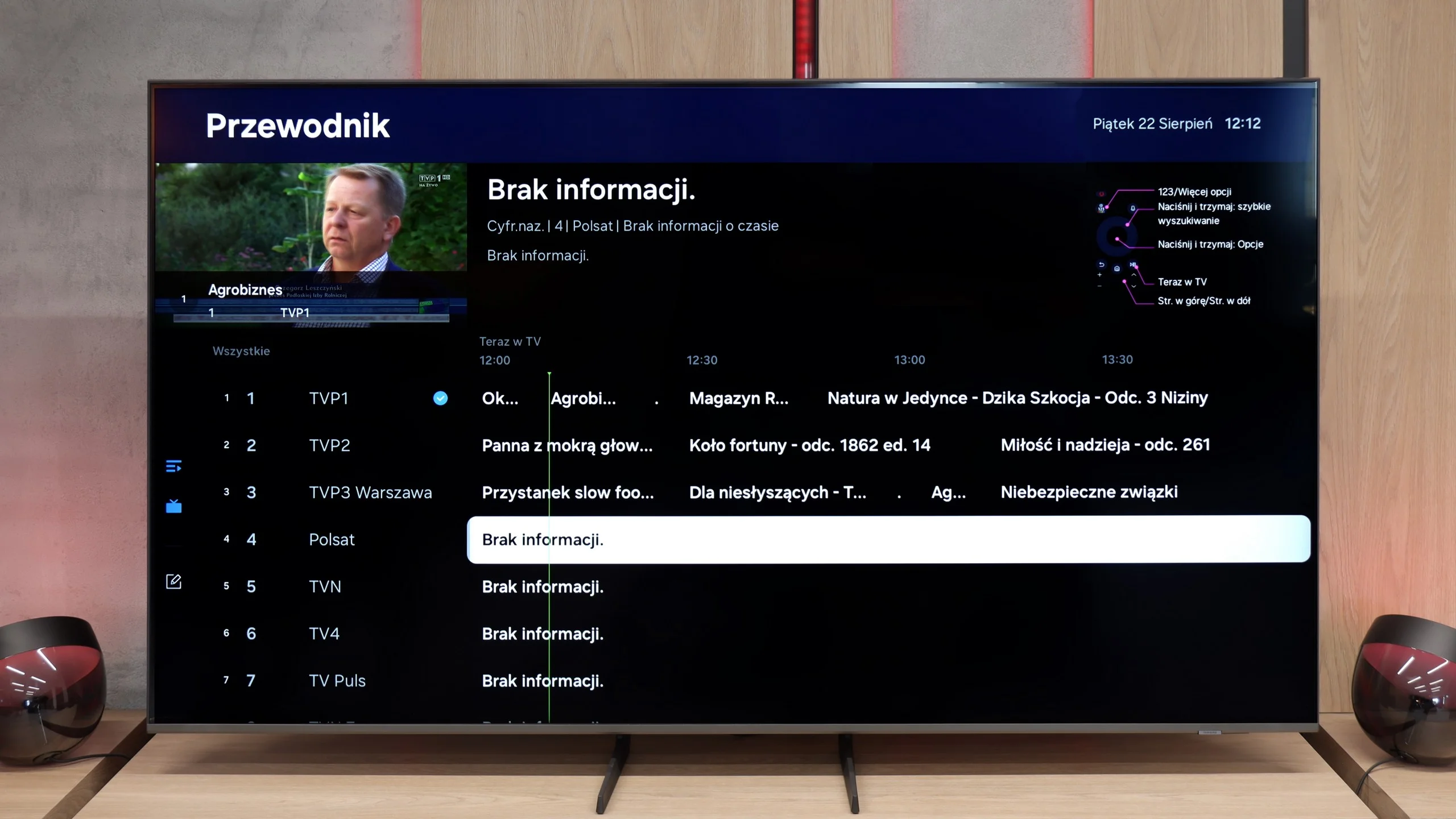
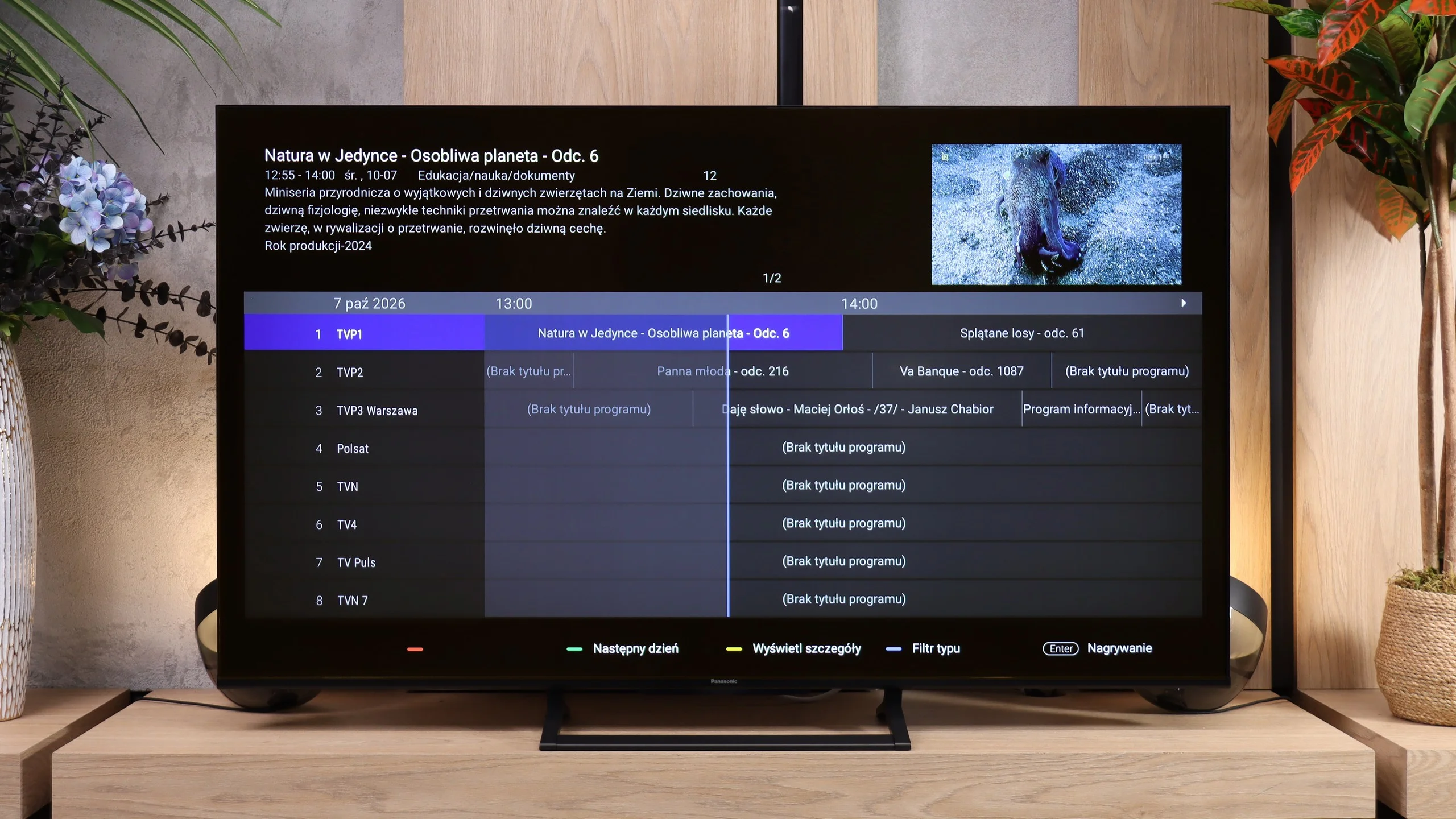
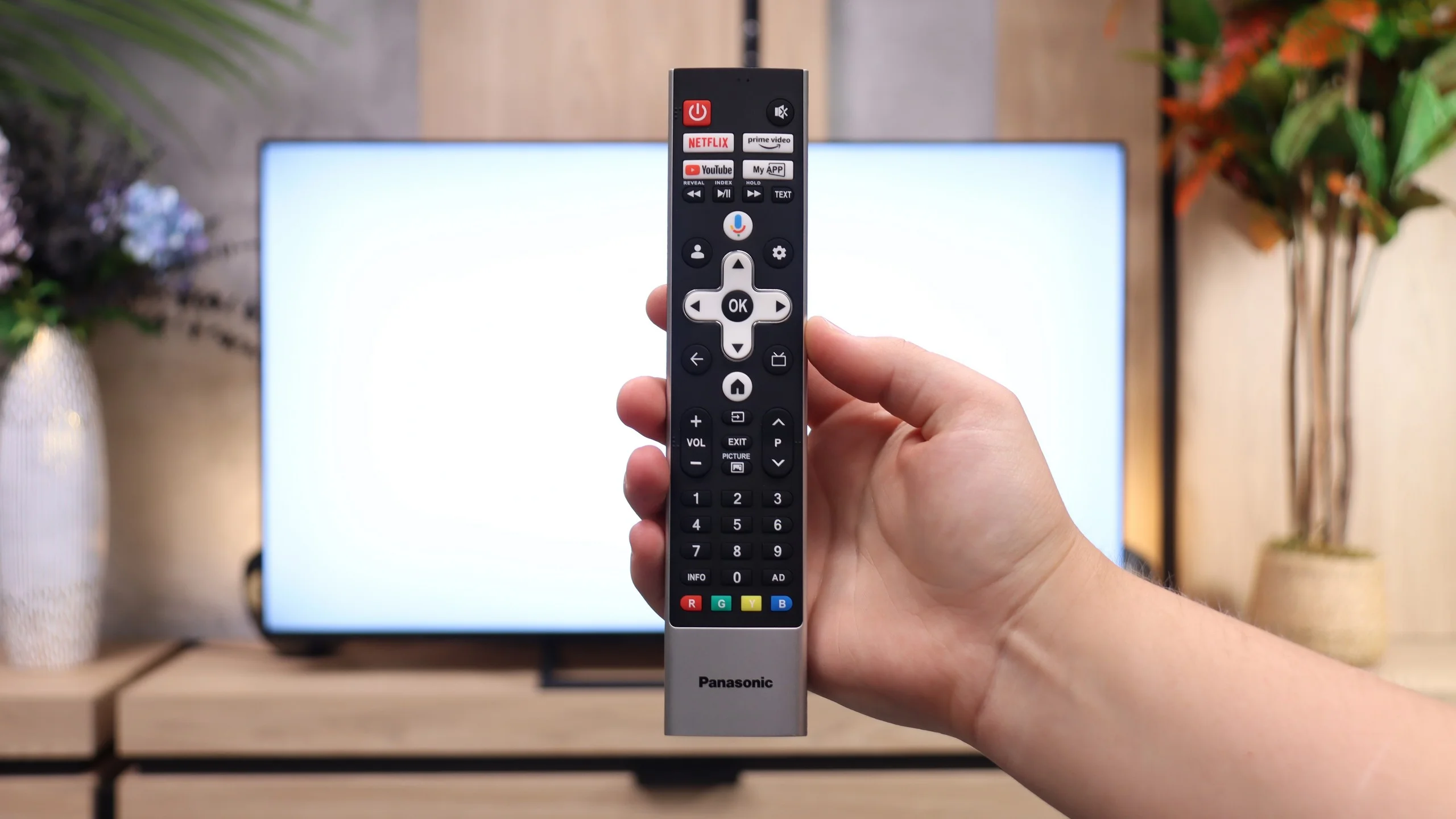
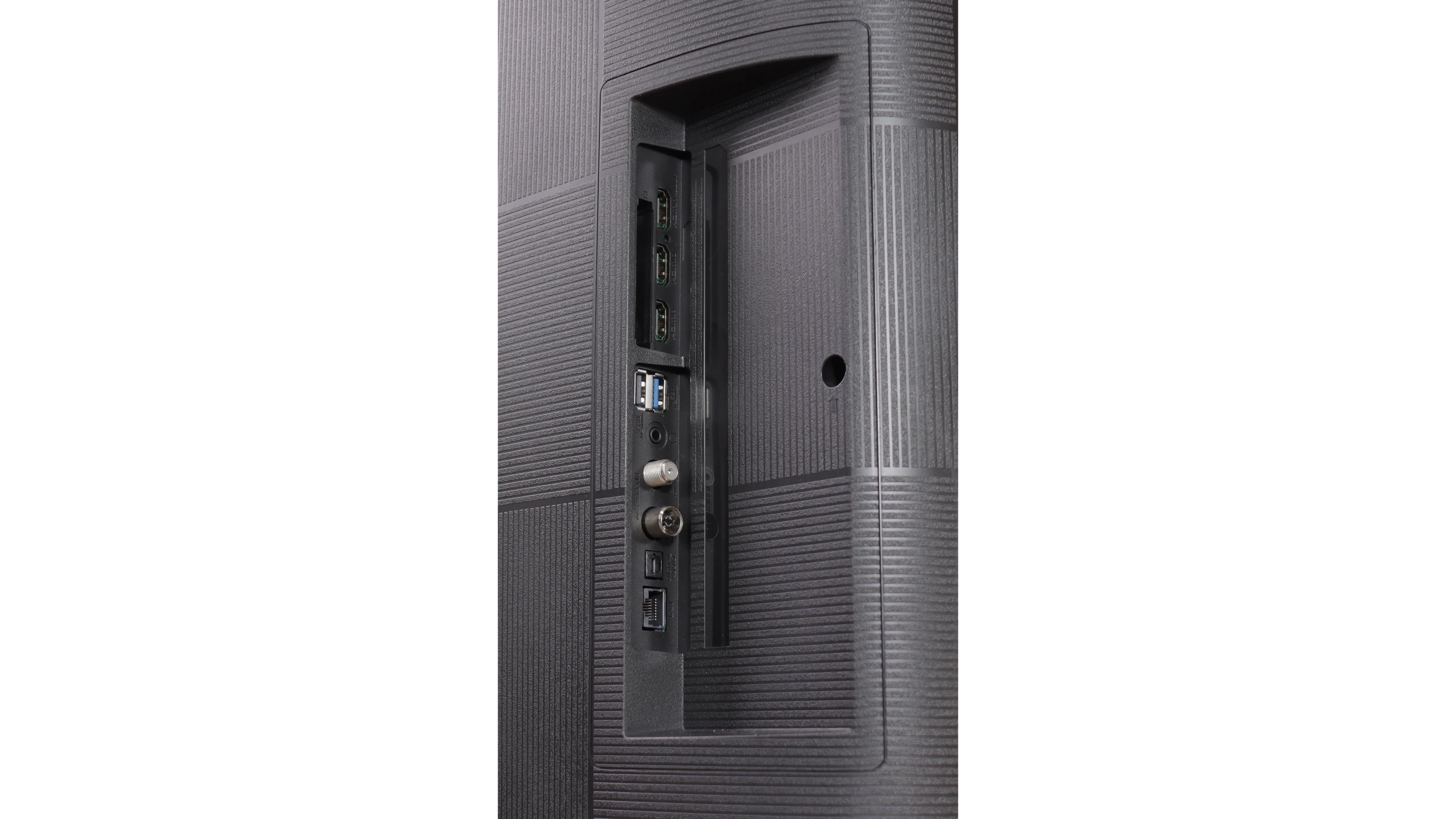
Among the classic features we have EPG, teletext and the ability to listen to audio simultaneously through Bluetooth headphones and the TV speakers. Missing, however, are USB recording and picture-in-picture. The remote is simple, it has a numeric keypad and you don't need to point it at the screen. It's a pity it's not backlit, and the build quality could be a bit better. For connecting devices there are three HDMI 2.1 ports with 48 Gbit/s bandwidth. There is also an optical output and eARC, but it's worth noting the standard 3.5 mm headphone jack. That's an increasingly rare extra and it's useful for wired headphones or an older audio system with an analogue input.

Apps

9.3/10

9.6/10

OK
Disney_Plus
OK
Amazon_Prime_Video
OK
Player_TVN
OK
Polsat_Box_Go
OK
Canal_Plus_Online
OK
TVP_VOD
OK
Apple_TV_Plus
OK
SkyShowtime
OK
Rakuten
OK
CDA_Premium_Browser
OK
Spotify
No
Tidal
OK
Netflix
OK
YouTube
OK
HBO_MAX
No
Kodi
OK
Apple_music
OK
Eleven_sports
OK
Xbox Game Pass
OK
GeForce NOW
OK
Amazon Luna
OK
Boosteroid
No
Steam Link
OK
Disney_Plus
OK
Amazon_Prime_Video
OK
Player_TVN
OK
Polsat_Box_Go
OK
Canal_Plus_Online
OK
TVP_VOD
OK
Apple_TV_Plus
OK
SkyShowtime
OK
Rakuten
OK
CDA_Premium_Browser
OK
Spotify
OK
Tidal
OK
Netflix
OK
YouTube
OK
HBO_MAX
OK
Kodi
No
Apple_music
OK
Eleven_sports
No
Xbox Game Pass
OK
GeForce NOW
No
Amazon Luna
OK
Boosteroid
OK
Steam Link

Playing files from USB

9.1/10

8.7/10

Supported photo formats:

JPEG
Yes
Yes
HEIC
No
No
PNG
Yes
Yes
GIF
No
Yes
WebP
No
No
TIFF
No
No
BMP
Yes
Yes
SVG
No
No

Maximum photo resolution:

4 Mpix
Yes
Yes
6 Mpix
Yes
Yes
8 Mpix
Yes
Yes
10 Mpix
Yes
Yes
12 Mpix
Yes
Yes
16 Mpix
Yes
Yes
20 Mpix
Yes
Yes
24 Mpix
Yes
Yes
28 Mpix
Yes
Yes
32 Mpix
Yes
Yes

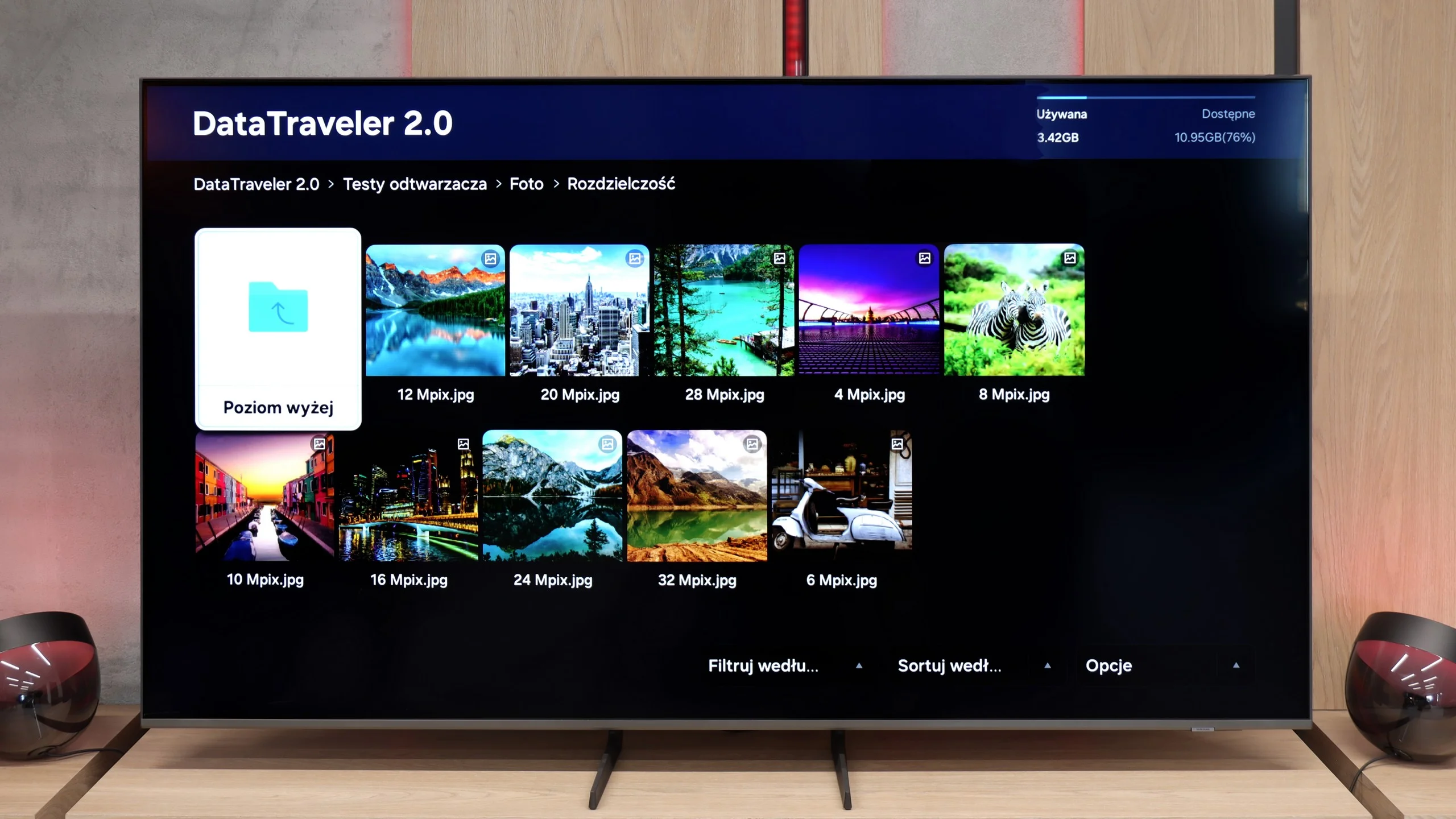
Samsung Q8F handles playing files from USB quite efficiently. It supports virtually all popular video formats as well as photos, so you can easily load a holiday video or a family album. There are occasional exceptions with less common photo formats, but the most important JPEG works perfectly, which will be crucial for the majority of users. It's just a pity that Tizen does not allow for the installation of alternative players, such as VLC. Even then, less popular formats would not pose any problem.

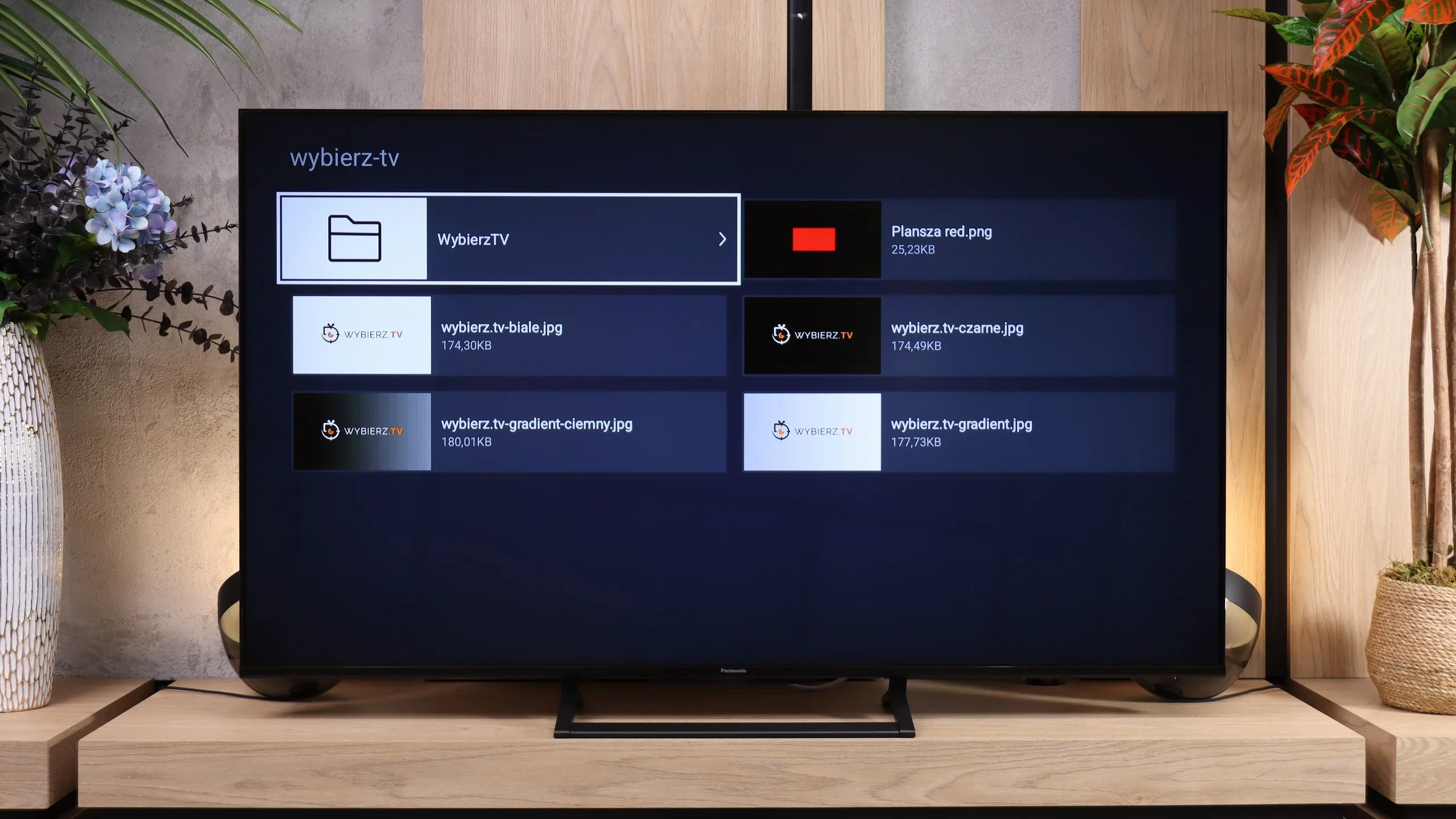
Playback of files from USB works smoothly on the W92C. Files load quickly, operation is simple, and the built-in player handles most common video, photo and music files. It’s perfectly adequate for the occasional film or for browsing photos from a USB stick. Just be careful with subtitles. In our tests the TV would not read .sub and .txt files. It’s best to convert them beforehand to .srt format, which worked correctly, including Polish characters.

Sound

6/10

6.7/10

  • Maximum volume
    84dB
    94dB
  • Dolby Digital Plus 7.1
    Yes
    Yes
  • Dolby True HD 7.1
    No
    Yes
  • Dolby Atmos in Dolby Digital Plus (JOC)
    No
    Yes
  • Dolby Atmos in Dolby True HD
    No
    No
  • DTS:X in DTS-HD MA
    No
    No
  • DTS-HD Master Audio
    No
    No

The sound on the Q8F can be described as acceptable. A slightly defined bass can be heard, but it is really minimal – the slim design of the television simply does not provide space for the pair of 2 × 10 W speakers to spread their wings. This is a typical scenario for most televisions: if someone cares about truly cinematic experiences, it is worth considering a soundbar. Samsung has a really wide range in this category across various budgets, so it's easy to find something suitable. The television itself will work for watching classic TV and series from time to time, but for greater sound excitement, one should not expect much.

Sound on the Panasonic W92C is fairly average. Given the additional rear-mounted woofer, we had expected a slightly fuller sound. Instead, bass is still lacking, which is especially noticeable in music and in more powerful film scenes. The subwoofer itself therefore doesn't deliver as much as one might expect. On the plus side, volume is good. In our measurements the W92C reached around 94 dB, so there is plenty of headroom. For everyday TV viewing that setup is adequate, but simply turning up the volume won't replace the missing low end.

Sound Quality Test

No sound test video

Acoustic Measurements

84dBC (Max)

75dBC

94dBC (Max)

75dBC

Reader comments

Comments are provided by the external service Disqus (Zeta Global). Once loaded, Disqus may set cookies and process data about your activity.

We will remember your choice on this device. Provider's privacy policy