 Direct comparison
The Panasonic W85B is a television that aims to prove that the Japanese brand can make not only high-end equipment but also something more "for the people." And indeed — on paper, it looks quite decent: a VA panel with solid contrast, high refresh rates of 120/144 Hz, two full HDMI 2.1 ports, and low input lag. It sounds like a great set for a gamer or someone who just wants an affordable TV with good fundamentals. However, the reality is a bit more complicated. The W85B performs well mainly with the SDR format, especially after calibration, and is suitable for typical daily use. But when we start demanding more from it — for example, expecting strong HDR effects or greater immersion in games with that mode turned on — the TV quickly reveals its limitations. Its brightness is low and the lack of local dimming really stands out during evening viewing. Therefore, we see the W85B more as a "daily" television — ideal for someone who watches terrestrial television, YouTube, or streaming in SDR, and wants to connect a console or PC at 120/144 Hz (but without HDR). In this role, it performs very well. Is it a television for everyone? Definitely not. But if we accept its limitations and approach it without high expectations, the W85B can provide a lot of enjoyment for relatively reasonable money.
- Matching (Score) |
- Our verdict |
- TV appearance |
- Where to buy |
- Contrast and black detail |
- HDR effect quality |
- Factory color reproduction |
- Color reproduction after calibration |
- Smoothness of tonal transitions |
- Image scaling and smoothness of tonal transitions |
- Blur and motion smoothness |
- Console compatibility and gaming features |
- Input lag |
- Compatibility with PC |
- Viewing angles |
- Daytime performance |
- Panel details |
- TV features |
- Apps |
- Playing files from USB |
- Sound
W92C / W94C

Available screen sizes: 55”
Panel type: LCD VA
Resolution: 3840x2160
System: Amazon FireTV
Model year: 2025
Complete the survey to find out the result
Panel type: LCD IPS
Resolution: 3840x2160
System: Google TV
Model year: 2026
Complete the survey to find out the result
Overall rating
6.1
7.1
 Movies and series in UHD quality
5.5
6.5
 Classic TV, YouTube
5.8
6.7
 Sports broadcasts (TV and apps)
5.8
6.9
 Gaming on console
7.7
7.8
 TV as a computer monitor
8.6
9.0
 Watching in bright light
4.2
6.8
 Utility functions
6.8
6.6
 Apps
7.6
9.6
 Sound quality
5.8
6.7
Complete the survey to find out what fits your preferences
Advantages

VA matrix with high native contrast
High refresh rate of 120/144 Hz
Two HDMI 2.1 ports with support for ALLM, VRR, and Dolby Vision in games
Very low input lag
Fairly good colour gamut coverage thanks to the QLED filter
Support for multiple HDR formats including Dolby Vision and HDR10+
Sturdy central stand
Great compatibility with PC – full chroma 4:4:4, clear fonts
Matte screen effectively suppresses reflections
Fast Google TV system with plenty of apps and features
Natural colours after calibration
Support for Dolby Vision and HDR10+
Very smooth tonal transitions
Effective enhancement of weaker content
Good choice for gamers: 144 Hz and low input lag, three HDMI 2.1 ports at 48 Gbps
Very good readability of text from a computer
Disadvantages

Low brightness (below 270 nits) – no real HDR
HDR mode in games is poorly developed, with incorrect HGiG implementation
Poor media file player
The FireTV system in Europe is poorly developed: there are micro stutters and awkward translations, and many applications are missing
Average sound quality, lacking depth
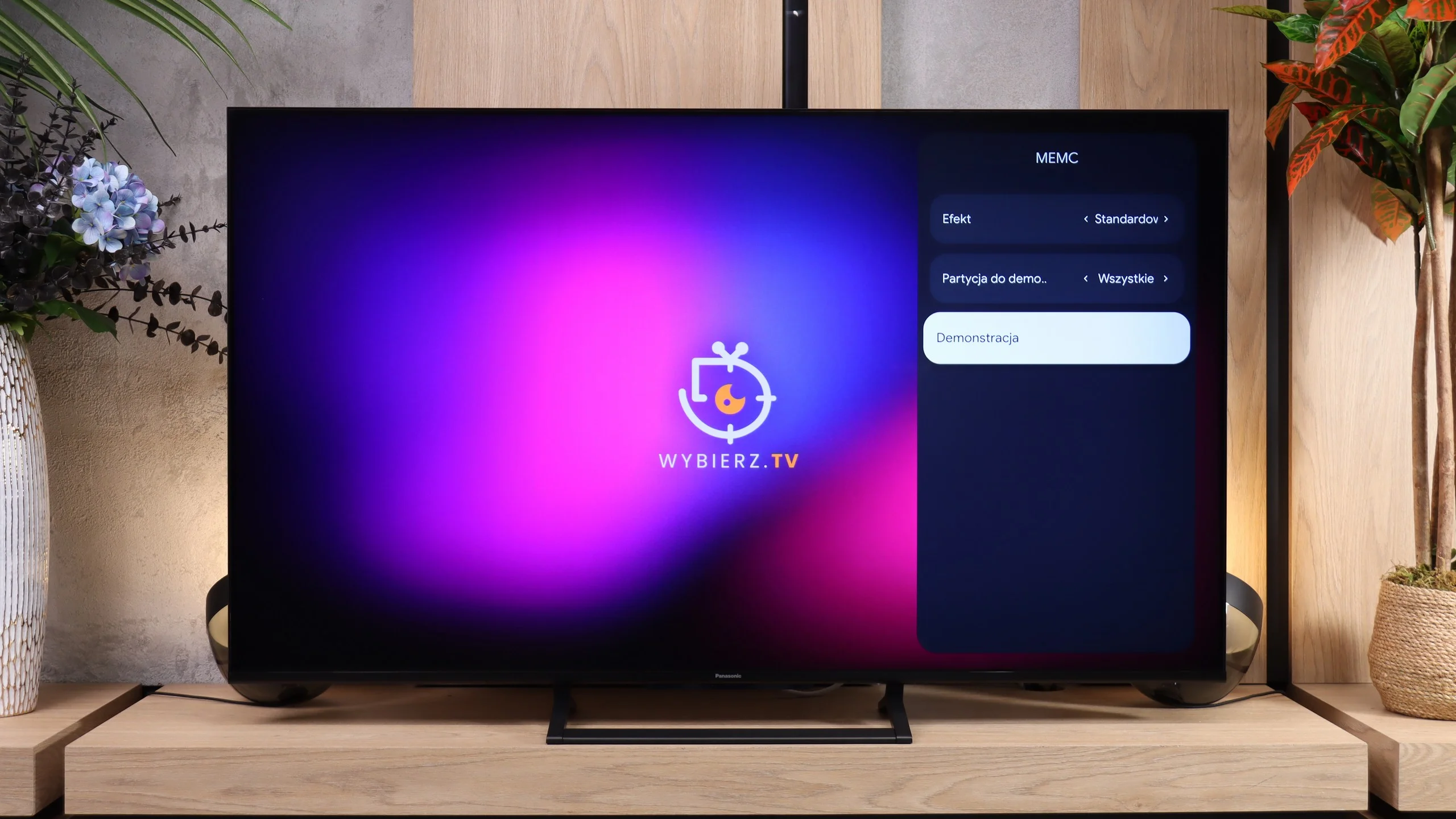
The motion smoother does not want to work
Imprecise local dimming (limited number of zones)
Poor factory colour accuracy
Software bugs
Issues with motion handling: motion blur and lack of advanced motion smoothing controls
Mediocre audio despite the subwoofer
Our verdict
The W92C is the first Panasonic developed in collaboration with Skyworth to reach our tests. And it’s more or less the change we expected: a little less of the old Panasonic, but also a few new elements that do it good. The biggest win is the move to Google TV. The system is fast, gives access to the apps you need and, for everyday use, convinces us more than the previous Fire TV. Combined with a matte screen that handles reflections well, this makes for a convenient living-room TV when you don’t always want to block out the windows for a viewing. The longer we used the W92C, the more we appreciated its versatility. It can quite effectively improve poorer source material, and after calibration the picture gains a naturalness that, sadly, is missing on the factory settings as it was with older Panasonic models. It also works well with a console and a computer. It responds quickly to controls and the high refresh rate gives pleasantly smooth motion. So Panasonic makes sense in a home where one screen is used for TV, films, gaming, and sometimes even for... working with text. 🙂 The limitations become clearer during evening viewings. Black can look good, but a more demanding scene is enough for halos to appear around bright objects and for bright bands above and below the picture to start glowing. The small number of local dimming zones makes it hard to keep both deep blacks and bright detail at the same time. Dolby Vision helps to get more out of this panel, but it doesn’t remove those limits. The out-of-the-box picture tuning is also disappointing, and the automatic brightness changes we encountered during testing further spoil the experience. This is where the lack of refinement we expected from the Panasonic name is most apparent. In the end, the appeal of the W92C will be decided by its price. It’s an entry-level Mini LED and should be priced similarly to competing models with basic local dimming. At that level it will be a sensible option, especially for people upgrading from a regular LCD. They’ll get better blacks, a convenient system and a versatile screen that will work for both TV and gaming. If, however, you have to pay a clear premium for the Panasonic badge, it will be hard to justify that extra cost. The W92C has enough strengths to hold its own as an affordable, all-round TV, but too few advantages to sell itself on the brand alone.
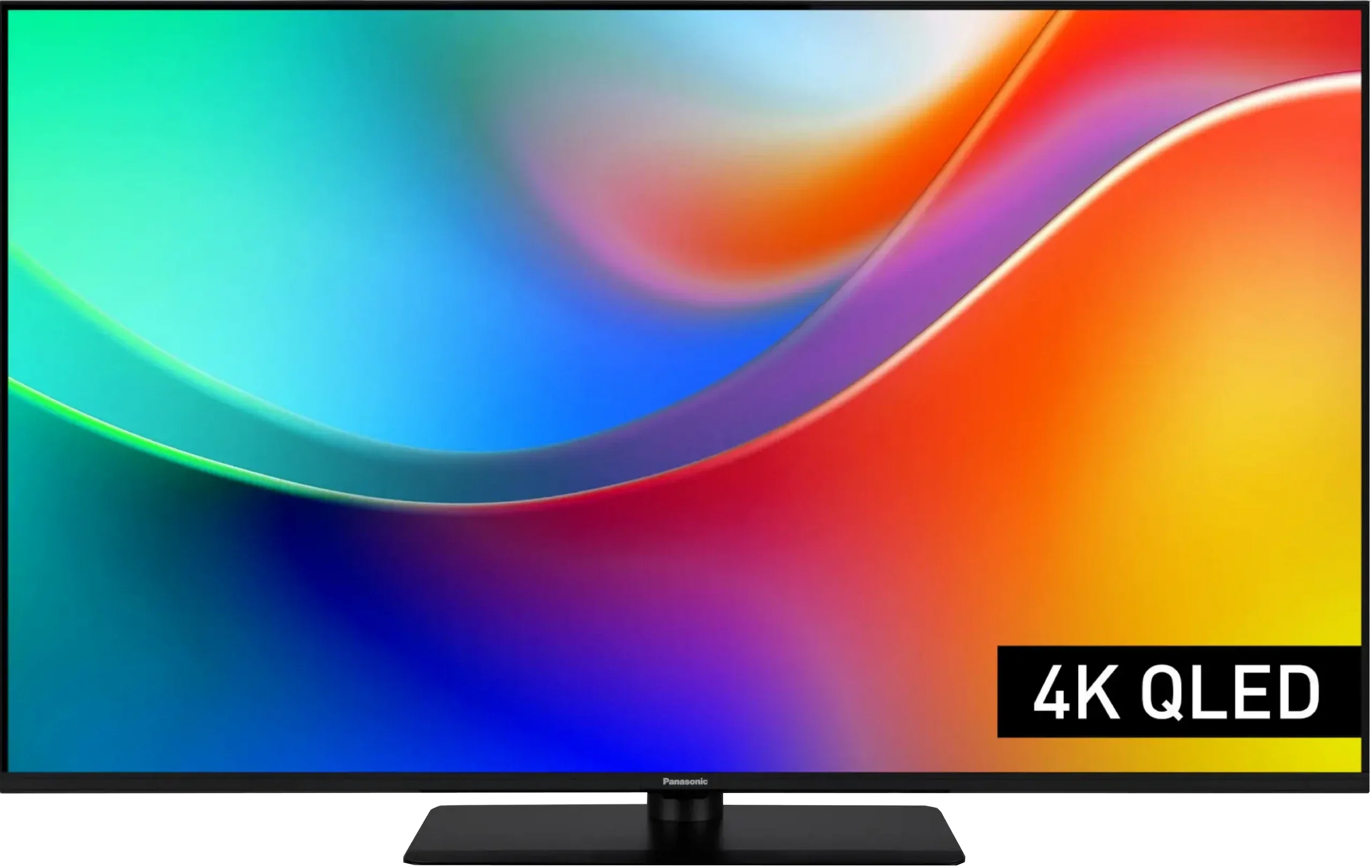
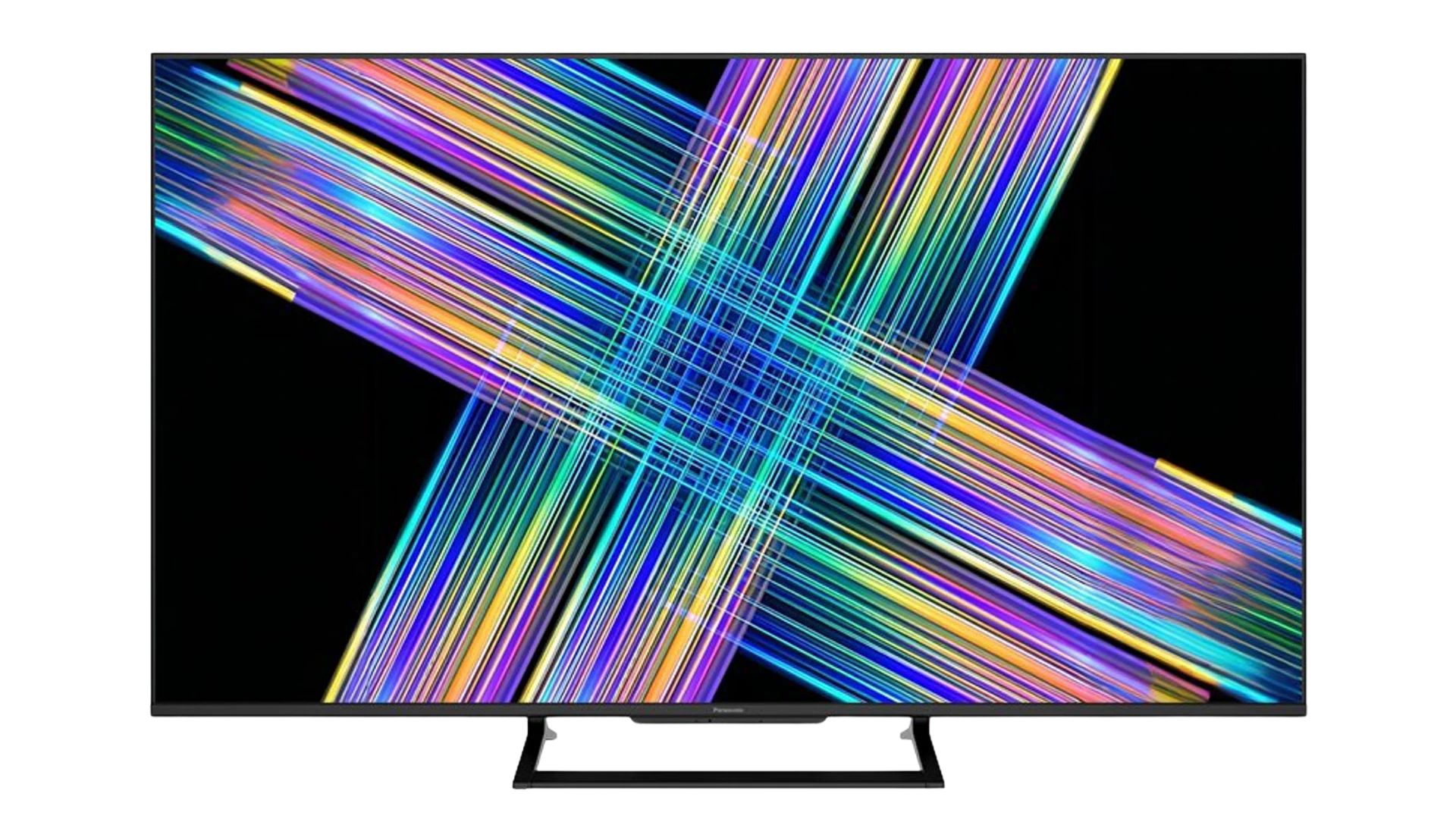
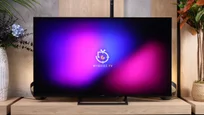
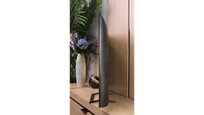
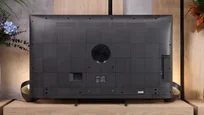
TV appearance



Contrast and black detail
5.3/10
5.2/10
Local dimming function: No
Local dimming function: Yes, number of zones: 91 (7 x 13)
Contrast:


Result
4,300:1

Result
4,250:1

Result
4,200:1

Result
4,400:1

Result
3,150:1
Result
24,900:1
Result
5,050:1
Result
9,150:1
Result
2,000:1
Result
900:1
Halo effect and black detail visibility:
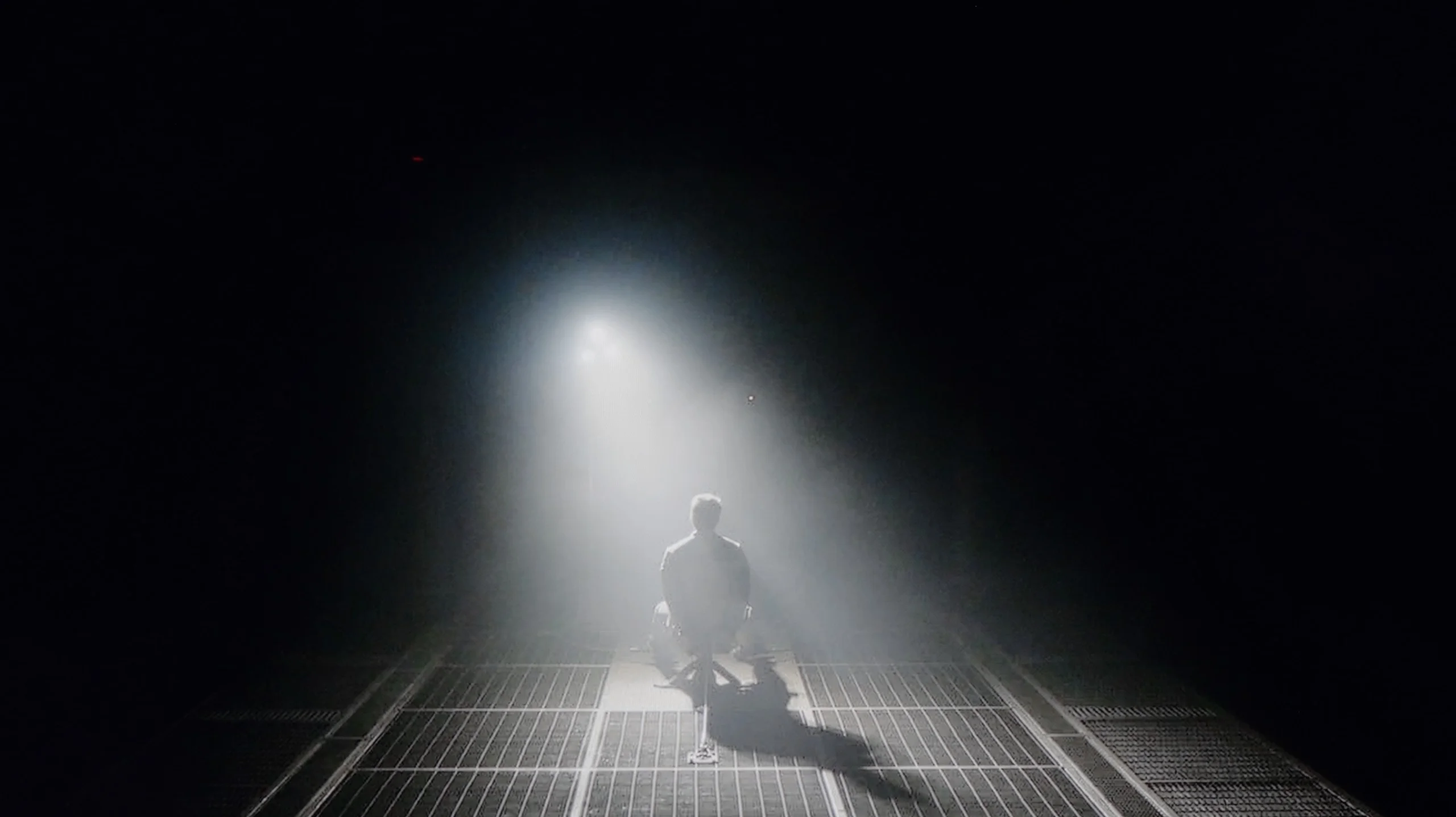
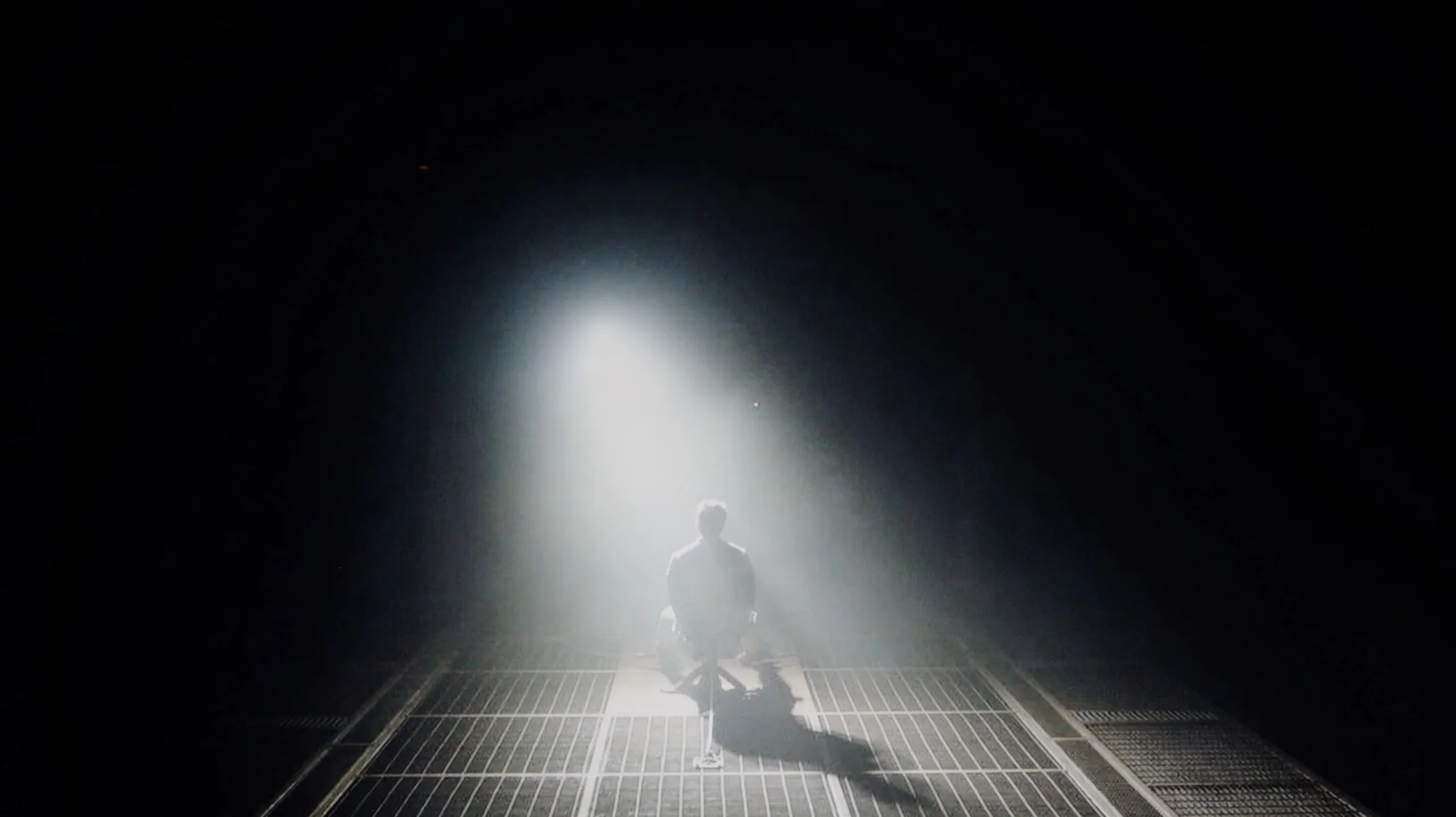
Check the visibility of bright lights on a dark background. Mini-LEDs often struggle with this. The photo does not compare black levels – that’s what the video below is for.
The video accurately shows differences in contrast and black levels between TVs, as well as potential issues: halo around bright objects or Mini-LED zone operation visible as brightness jumps.
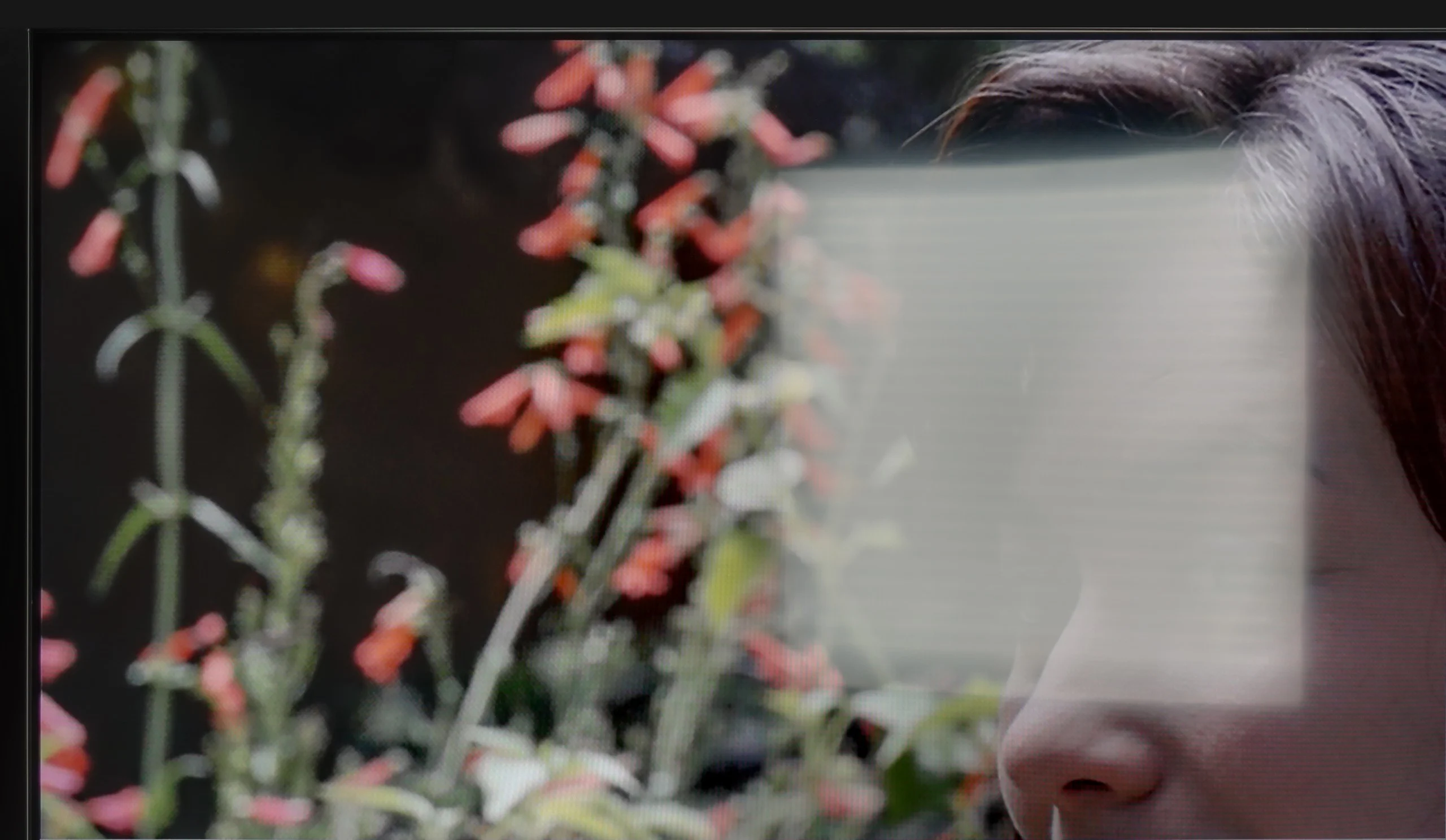
The W85B is Panasonic's basic LCD, so one shouldn't expect miracles in this category, but… the VA panel does a really good job here. Its biggest advantage is simply better contrast than in popular IPS panels – there, blacks often look like grey, whereas here you can actually see deeper tones. In the scenes we tested, the contrast held around 4000:1, which translates to roughly four times better performance than in IPS. Of course, there's no local dimming, so in challenging conditions, when it gets really dark in the room, black can resemble navy more than absolute pitch black. This is exactly the difference you notice when comparing it to OLEDs or Mini-LEDs. But for everyday viewing – series, matches, films in the evening in the living room – this contrast is more than sufficient. The picture has the appropriate depth, and the W85B does not give the impression of a "faded" television.
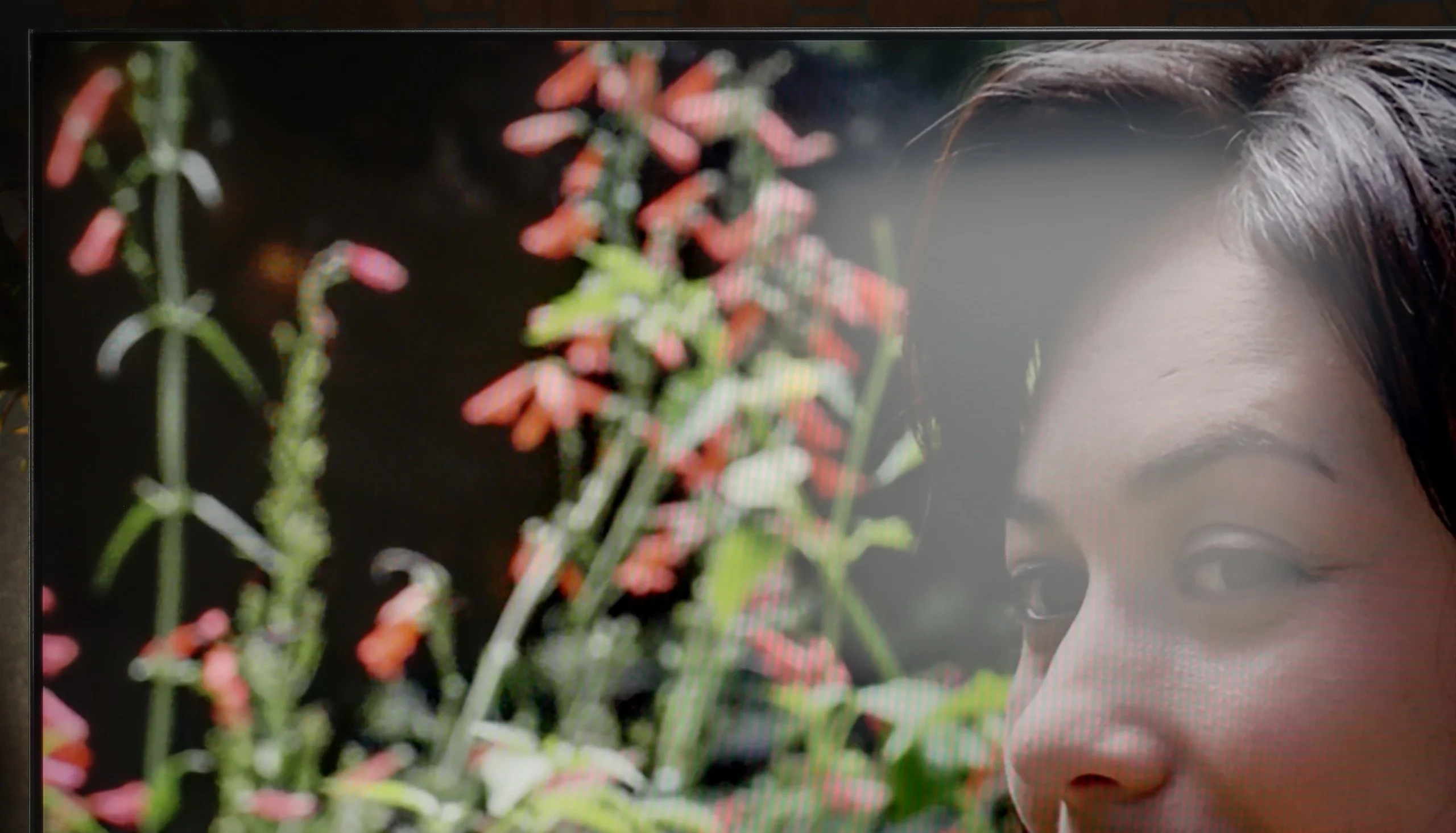
Black on the Panasonic W92C generally looks quite good. That's down to the local dimming, which in the 55-inch unit we tested uses 91 zones. In simpler scenes the TV can effectively darken the background, and in our easiest test it produced a contrast of almost 25,000:1. To achieve that black, however, you need to set local dimming to high. Lower settings leave the backlight too bright.
This comes at a price in bright parts of the image. The separation of individual lights remains visible, though you have to look closely to notice them. A lower dimming level lets those details appear more clearly, but the degradation of black is too great to consider it a better compromise.
Even on the high setting you can see the limits of the relatively small number of zones. What bothered us most were the bright bands above and below the film, which in HDR material at times became almost navy. Bright outlines, the so-called halo effect, also appear around small bright objects. On the plus side, the backlight is stable: in the helicopter scene we did not notice any nervous brightening and dimming of successive zones. More zones would be welcome, and the control itself needs refining. Switching from a basic LCD without dimming can still bring a noticeable improvement, but for a Mini LED the result leaves a fair amount to be desired.
HDR effect quality
4.2/10
4.8/10
Luminance measurements in HDR:

Result
228 nit

Result
249 nit

Result
283 nit

Result
282 nit

Result
297 nit
Result
508 nit
Result
175 nit
Result
348 nit
Result
169 nit
Result
428 nit
Scene from the movie “Pan” (about 2800 nits)


Scene from the movie “Billy Lynn” (about 1100 nits)
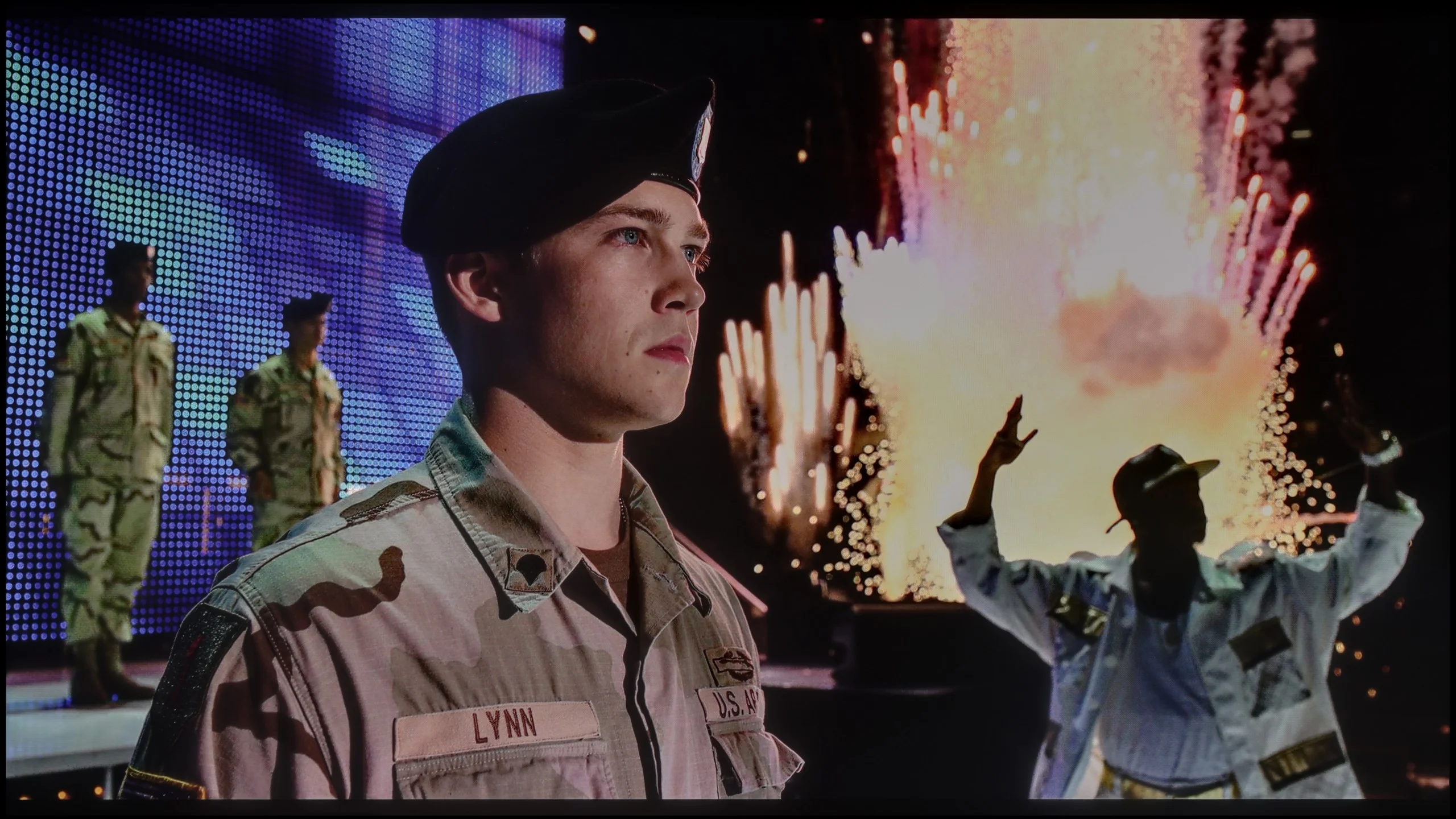
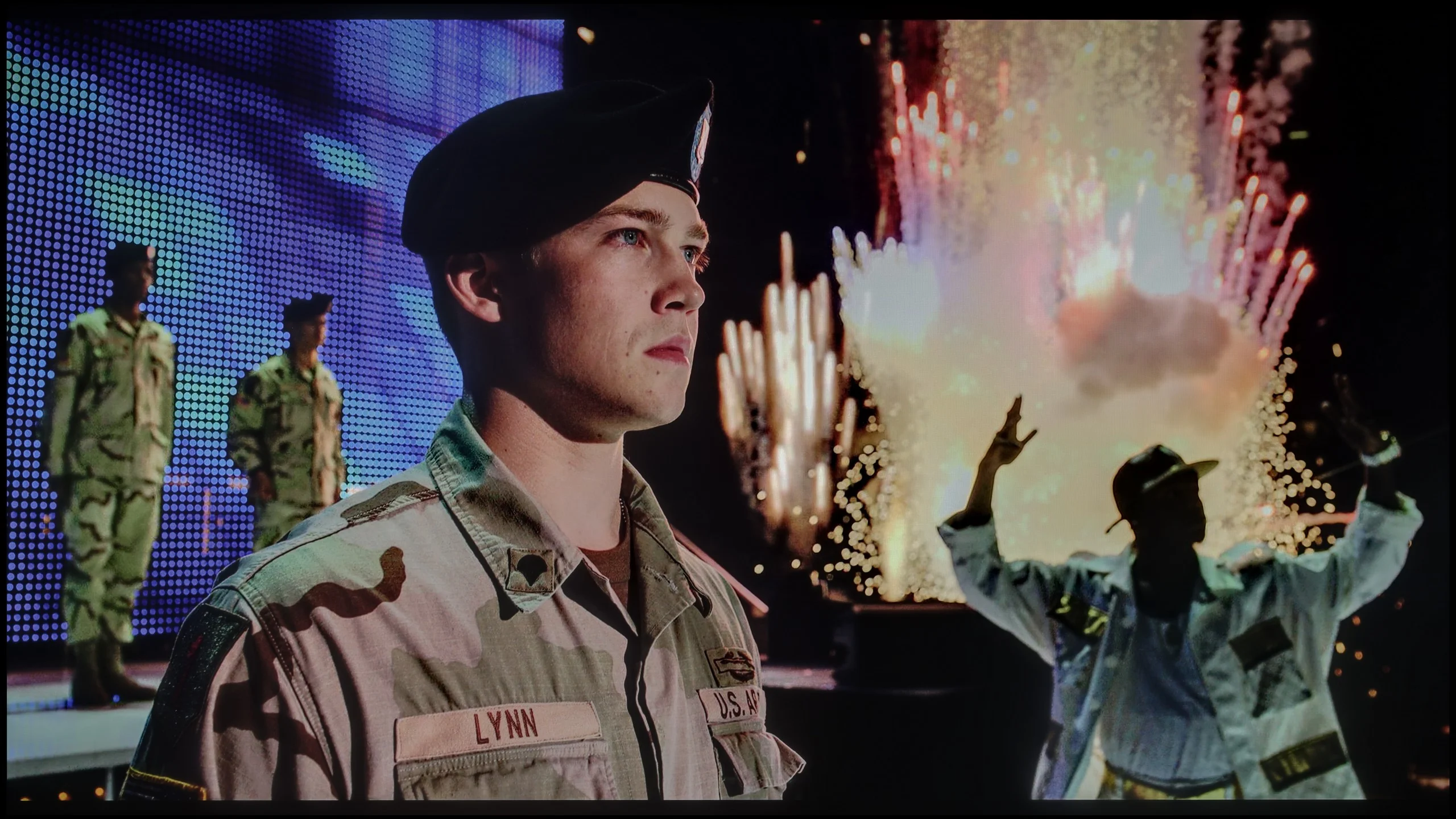
The photos show two HDR10 movies. 'Pan' is one of the brightest productions ever made, while 'Billy Lynn' (soldier) has brightness typical of streaming (Netflix, Prime, HBO MAX). Notice the intensity of effects and detail in whites.
Static HDR10


The photos present the visibility of white details in various HDR formats. They do not show brightness differences between TVs (these can be compared in the previous gallery).
Dynamic: Dolby Vision
Dynamic: Dolby Vision


The photos present the visibility of white details in various HDR formats. They do not show brightness differences between TVs (these can be compared in the previous gallery).
HDR luminance chart:
Panasonic W92C (Google TV)
Panasonic W85
Unfortunately, we do not have good news here. The Panasonic W85B is rather dim – its peak brightness does not exceed 300 nits, so it’s hard to talk about any true HDR effect. In practice, this means that scenes which can “shine” and make an impression on other screens simply look like ordinary SDR with a slight boost in colours here. Our measurements and film tests confirmed this – regardless of the content, the W85B will not extract anything more from HDR. Therefore, if someone is looking for a television specifically for HDR, it is better to look towards other models. As consolation, the fact remains that in terms of colours, the W85B performs quite well. It is a QLED television, so its colour gamut coverage is wide, and most films and series look natural, without a distinct “washed-out” effect. The colours are saturated, so in everyday viewing, there is no sense that something is strongly amiss.
The Panasonic W92C reaches a peak of around 750 nits with local dimming set to High. That brightness is enough to show a clear HDR effect, but in films the TV does not always make full use of it. In brighter scenes we get about 500 nits, while small highlights on a dark background can fall to just 160 to 250 nits. In practice this means the sun in a bright shot looks fairly convincing, but a torch or small flares in a night scene lose punch. This is a further cost of local dimming, which with a limited number of zones also dims bright elements to preserve the black around them.
During testing we also noticed a strange software bug. When switching to HDR the TV would automatically change the backlight level, setting it for example to 53 or 81 instead of the maximum. This made the picture darker than the panel is capable of. All measurements presented were made after manually restoring the backlight to maximum.
Colours
The wide colour gamut in the Panasonic W92C is due to a PFS phosphor, which produces an effect similar to the quantum dots used in QLED screens. We measured DCI-P3 coverage at around 94% and 74% of the wider BT.2020 gamut. Importantly, results on film material were practically identical to those on test charts. That's a good result, enabling HDR films to show richer, more saturated colours than on a standard LCD panel.
The brightness of the colours themselves is slightly weaker. In our measurements red reached about 58% of the target value, while green and blue were around 66 to 67%. So the TV can display a wide range of colours, but the brightest, highly saturated parts of the image do not have the same punch as on RGB-based screens.
Factory color reproduction
4.2/10
4.1/10


This gallery shows how colors change after professional TV calibration. If you notice the difference, we recommend ordering this service at SkalibrujTV.com.
Factory Mode
After calibration


This gallery shows how colors change after professional TV calibration. If you notice the difference, we recommend ordering this service at SkalibrujTV.com.
Factory Mode
After calibration
When testing the Panasonic W85B, we obviously started with Filmmaker mode, as this is today’s gold standard when it comes to watching content “as the director intended.” The problem is that this television is quite far from those intentions. The biggest issue turned out to be an excess of red – both in SDR and HDR. The image often appeared too warm because of this, and in some scenes, it was almost “blazing.” Additionally, there is the issue of brightness management. When we looked at the gamma or EOTF charts, it was clear as day that in most scenes, the television brightens the image more than it should. The effect was simply predictable. Details can get lost, there is flattening, and highlights are blown out across the entire screen. We know, of course, how to correct this, but it must be said honestly that it requires a lot of work during calibration. Out of the box, the W85B does not provide a picture close to reference – it is rather a television that will always interpret colours and brightness a little “in its own way” without professional adjustments. Unfortunately, this is to the viewer’s detriment.
We measured the factory colours in Film mode. The W92C also has a "Filmmaker" mode, but it locked practically all picture settings, so for further testing and calibration we chose the film mode closest to it. It is better than the other available presets, but unfortunately that does not mean it is well tuned. It is one of the weaker film modes we have tested this year. A shame, as Panasonic has accustomed us to far better factory settings. In SDR content the image immediately shows a cool tint. The white balance contains too much blue, and an excess of red relative to green gives whites a slightly pink cast. This is also visible on faces, which do not look as natural as they should. An even bigger problem is the markedly low gamma. Instead of the target 2.4 it stays around 1.9 to 2.0 across most of the scale. In practice the image is too bright, shadows lose depth and almost every scene looks a bit flat. In HDR there is even more blue, particularly in the bright parts of the image. Here the TV also lifts the brightness of darker and midtone areas, which is shown by the EOTF curve rising above the reference. That can make some shadow detail easier to see, but the scene loses its intended atmosphere. So we have a similar problem to SDR: colours are too cool and the image is too bright. For a Panasonic, the W92C's factory settings are simply... disappointing.
Color reproduction after calibration
6.9/10
7.7/10


The photos show how movies look on the TV. Pay attention to black detail visibility, colors, and shadow tint.


The photos show how movies look on the TV. Pay attention to black detail visibility, colors, and shadow tint.
Fortunately, calibration made a significant difference for the Panasonic W85B, particularly in SDR content. Here, the improvement was really noticeable – we managed to balance the whites and somewhat tame the tendency of the television to excessively brighten the entire image. The picture became more coherent, and the colours gained a naturalness that was lacking in the factory settings. Admittedly, the results from the Color Checker are not perfect, as the W85B has visible issues with green saturation, but overall, we evaluate the post-calibration effect in SDR very positively. The situation is a bit different with HDR. Here too, we managed to reduce the tendency to warm up the entire scene, so the image performed significantly better than in the factory settings. However, the same issue we mentioned earlier is still evident – the television interprets the image too much "on its own" and brightens the entire screen. The lack of local dimming only exacerbates this effect. In summary, briefly in SDR content, the W85B performs really well after calibration and is more than suitable for daily viewing. However, in HDR, even after adjustments, it remains difficult to unequivocally recommend it for serious viewing sessions.
After calibration the W92C looks decidedly better, especially with SDR material. We managed to even out the white balance and remove the cool tint that had been spoiling practically every scene. Whites are now neutral and skin tones appear much more natural. We also improved the gamma, which now stays much closer to the target value of 2.4. The picture has regained depth and no longer looks so overly bright. Colour measurements confirm the improvement. Errors are small and in SDR it is hard to have major complaints. In HDR we also reduced the excess blue, although some imperfections remain in the very brightest shades. A bigger problem is how the television manages brightness. Shadows and midtones are lifted, while the brightest highlights appear darker than they should. As a result the image loses some of the contrast between a dark background and strong highlights, which is an important part of the HDR effect. Unfortunately we do not have enough control over this behaviour in the settings. Calibration improves the colours, but it will not fix the tone mapping and backlight control. That is a behaviour of the W92C that Panasonic needs to refine.
Smoothness of tonal transitions
9.1/10
9.7/10
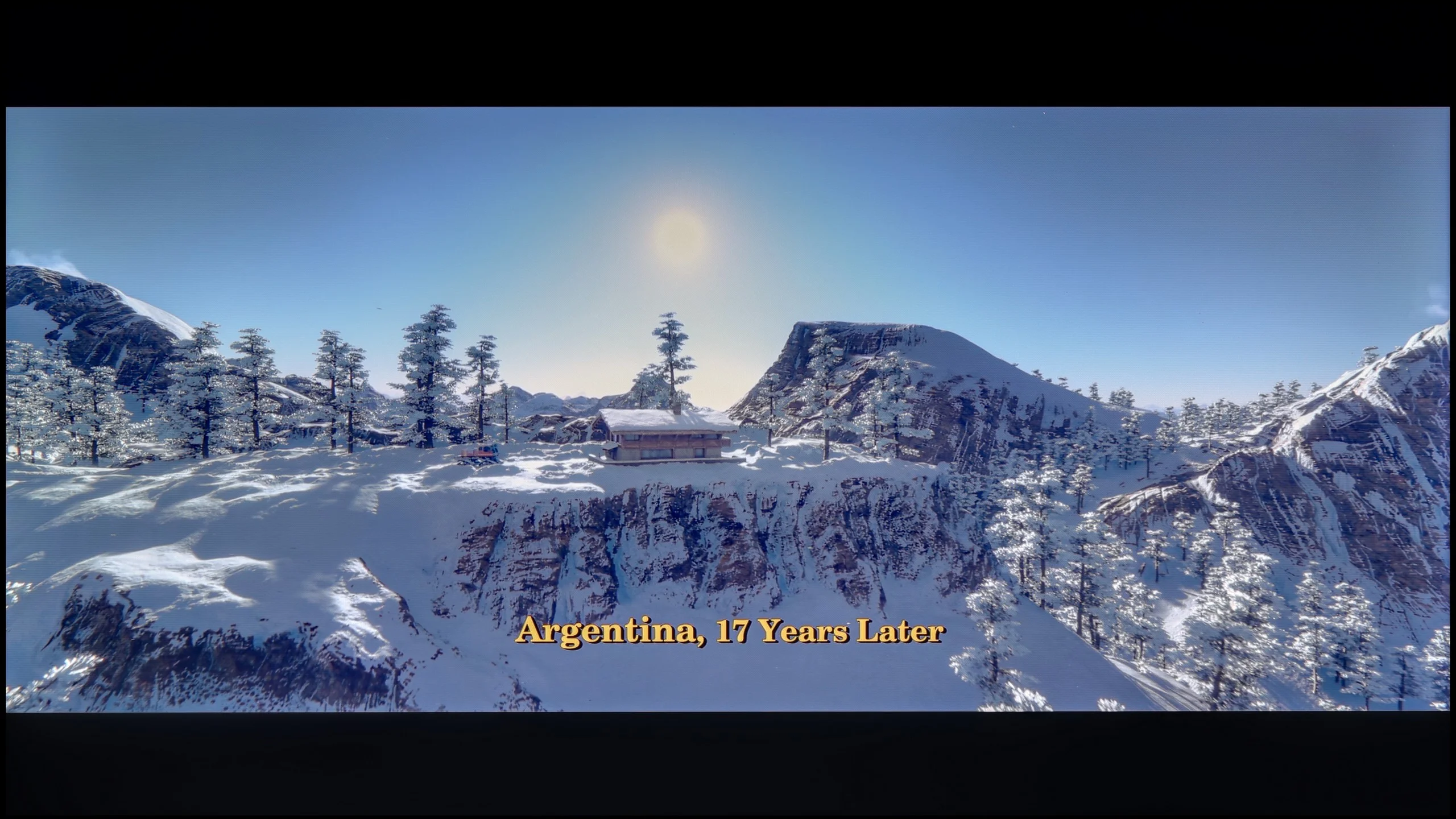

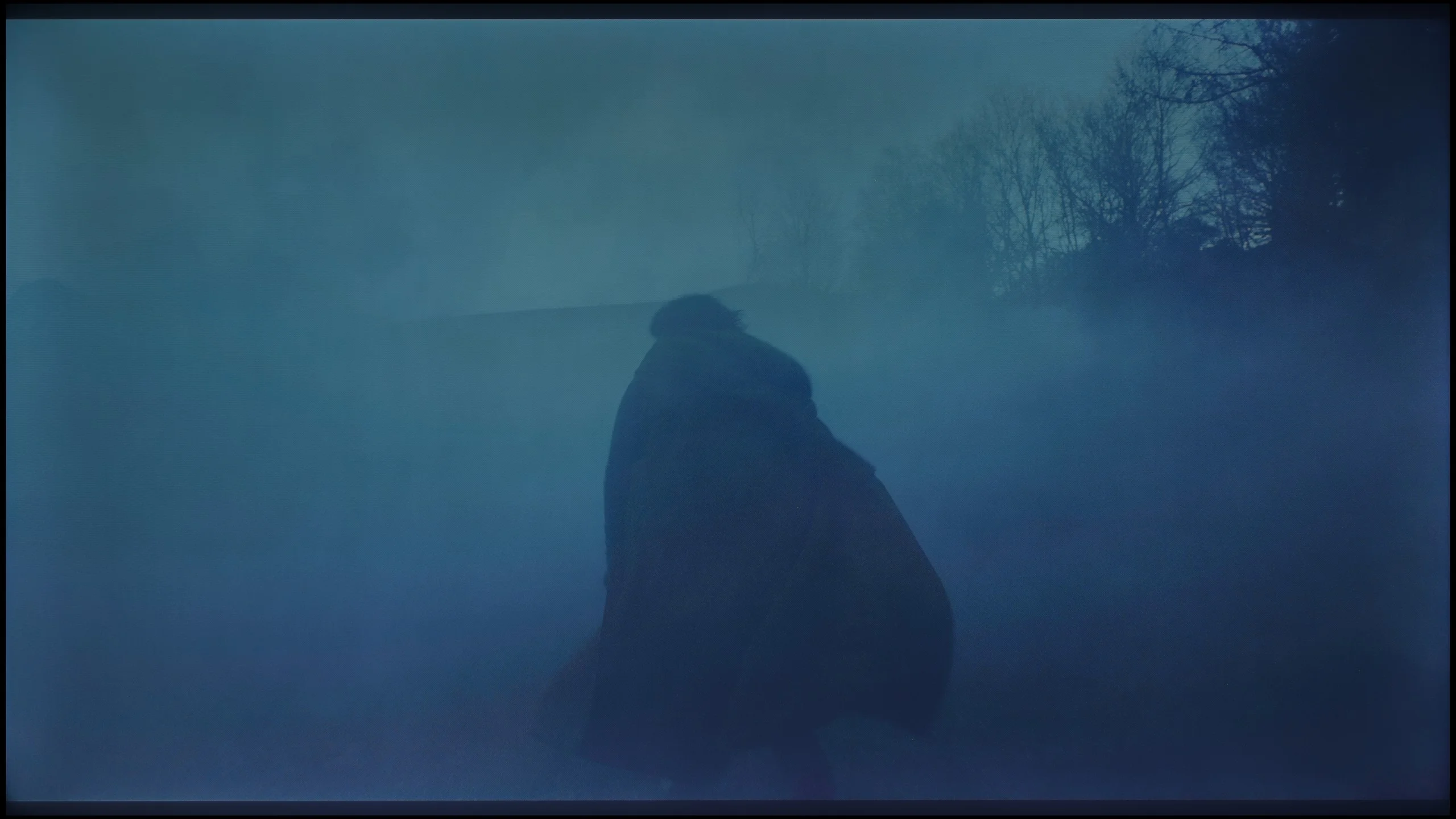
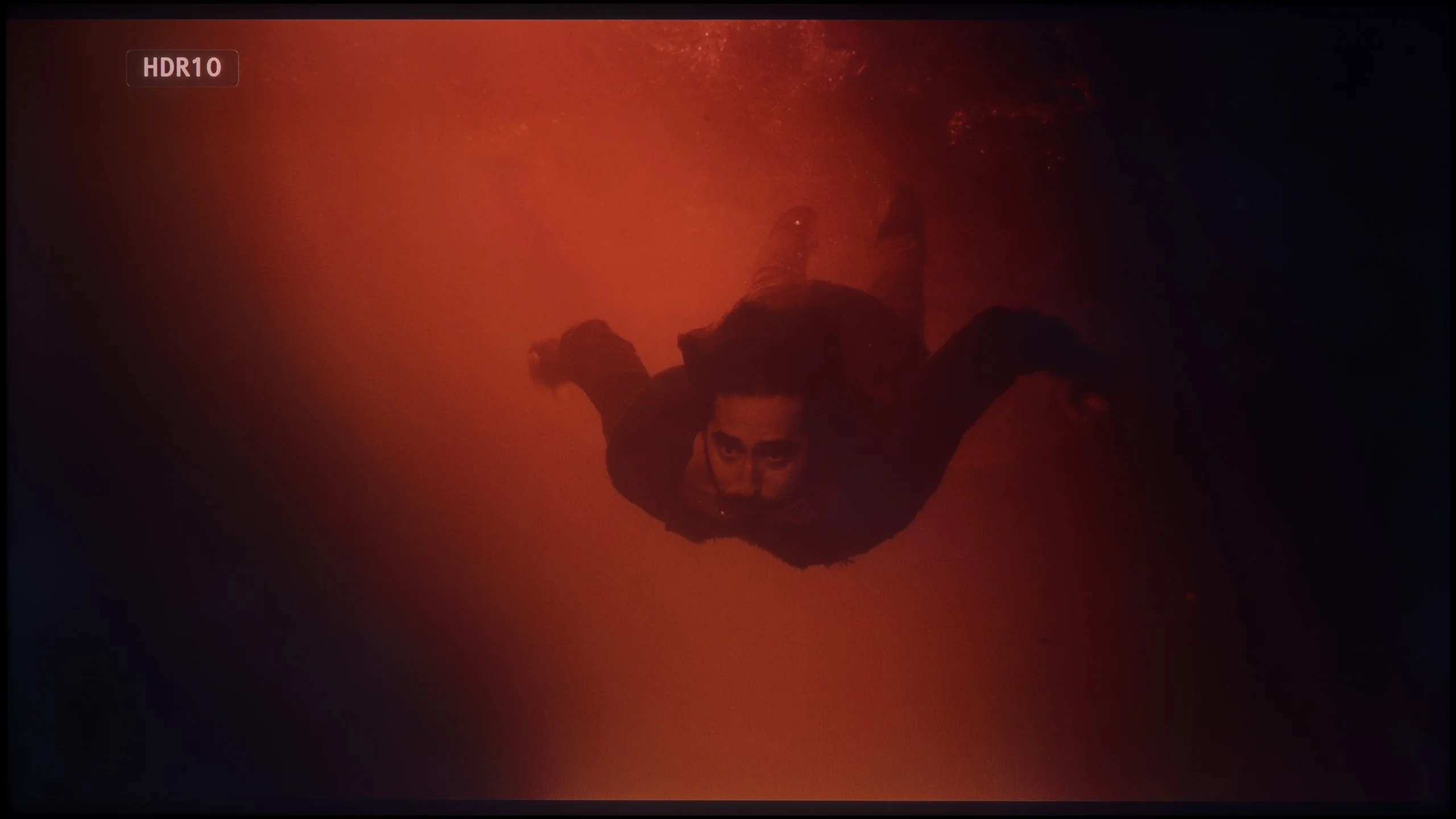
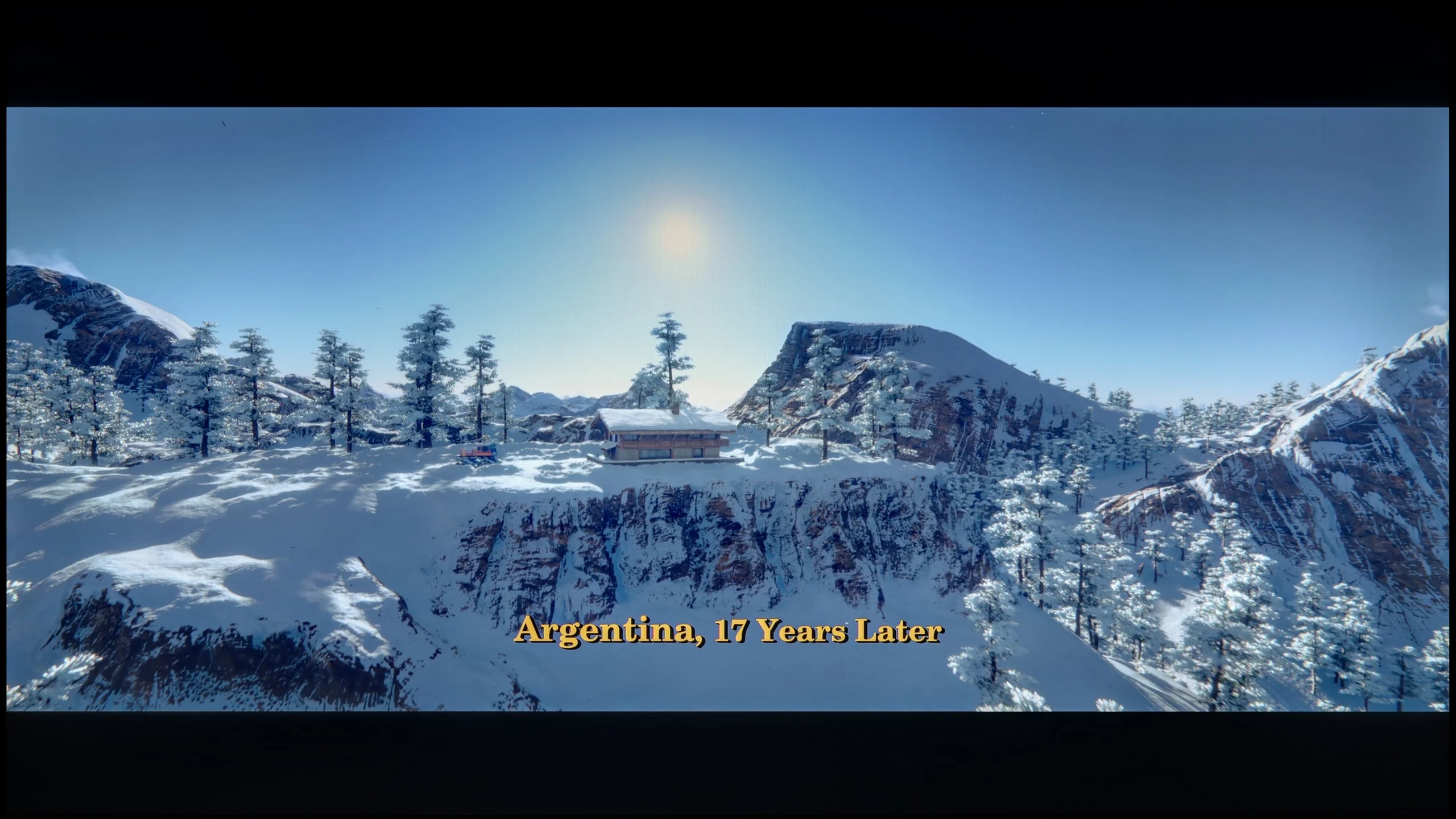
These are selected scenes that show smooth tonal transitions from one color to another. If you see distinct banding, it’s the TV panel’s fault.

These are selected scenes that show smooth tonal transitions from one color to another. If you see distinct banding, it’s the TV panel’s fault.
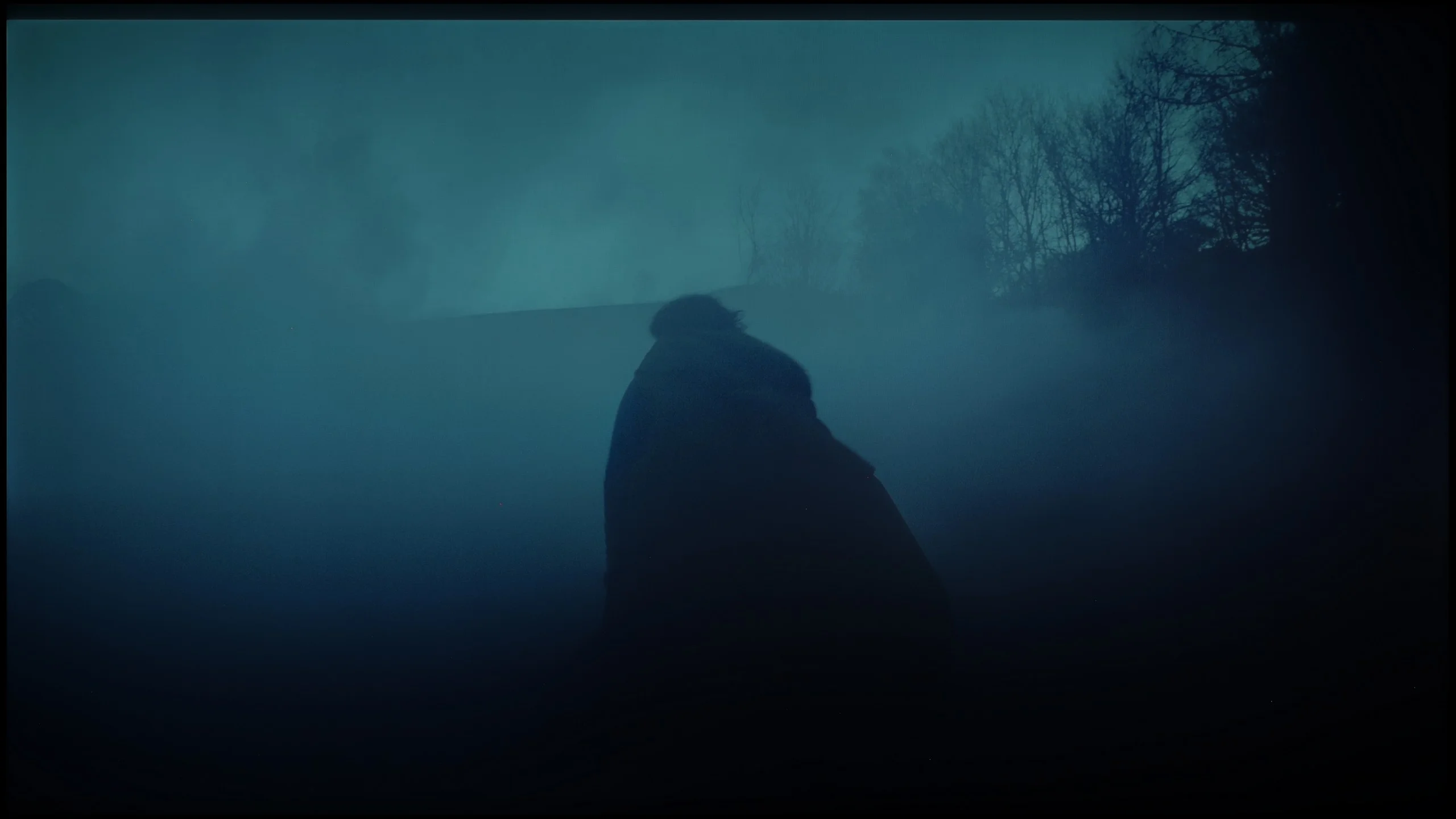
These are selected scenes that show smooth tonal transitions from one color to another. If you see distinct banding, it’s the TV panel’s fault.

These are selected scenes that show smooth tonal transitions from one color to another. If you see distinct banding, it’s the TV panel’s fault.
Here we can comfortably praise the Panasonic W85B. The television handles colour matching and tonal transitions remarkably well. Gradients appear smooth, without visible bands or artificial contours. As a result, the image gains a natural quality, and sequences with a large number of subtle shades – such as the sky or blurred backgrounds – look exceptionally good for this class of equipment.
The smoothness of tonal transitions on the W92C is outstanding. It's one of the best results we've seen this year. Regardless of the scene, colours transition smoothly from one to another and there is practically no visible banding separating individual shades. Panasonic handles both bright skies and darker, more demanding parts of the image well. There's really little to criticise here.
Image scaling and smoothness of tonal transitions
6/10
7.8/10


Smooth transition function
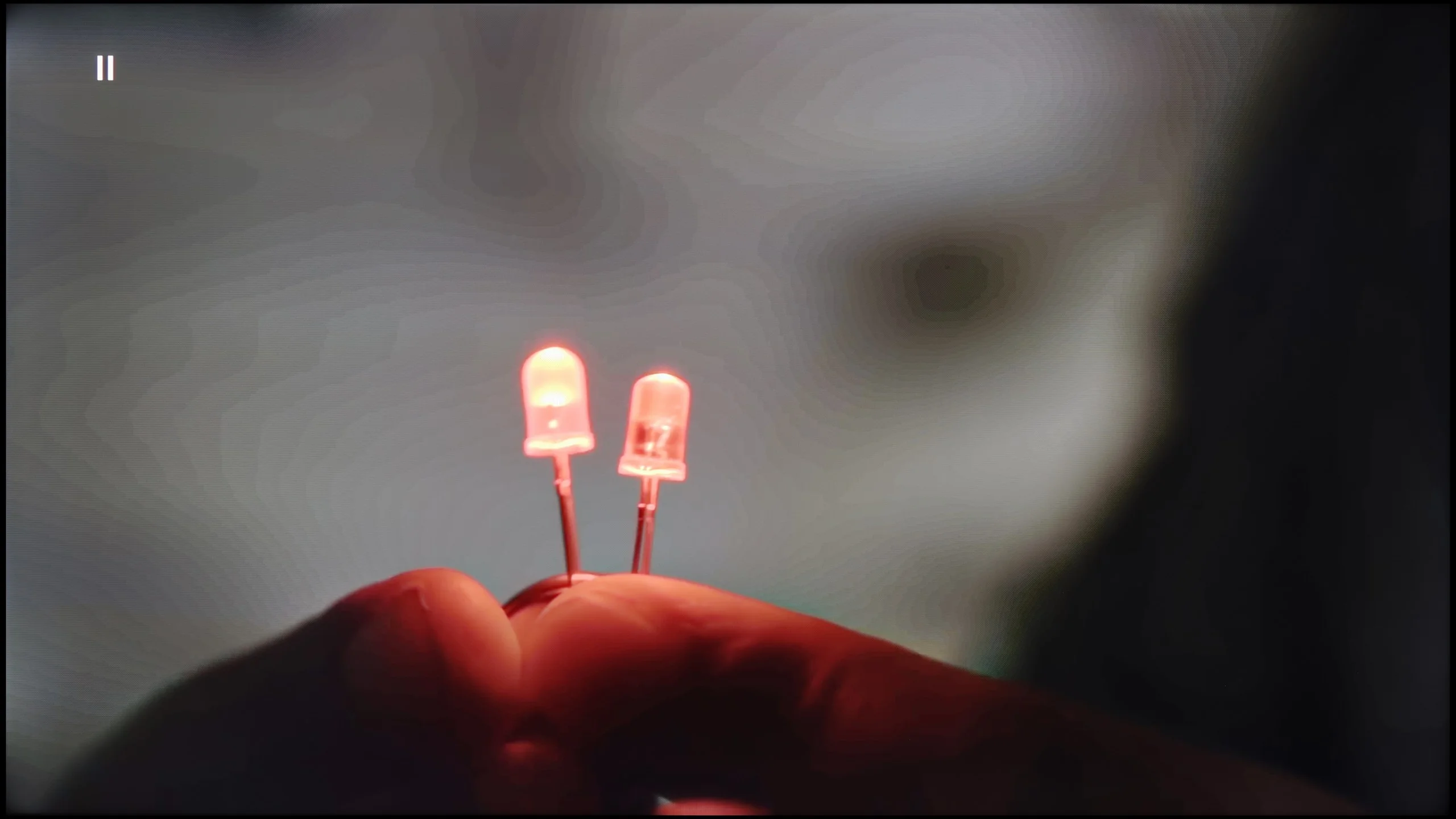
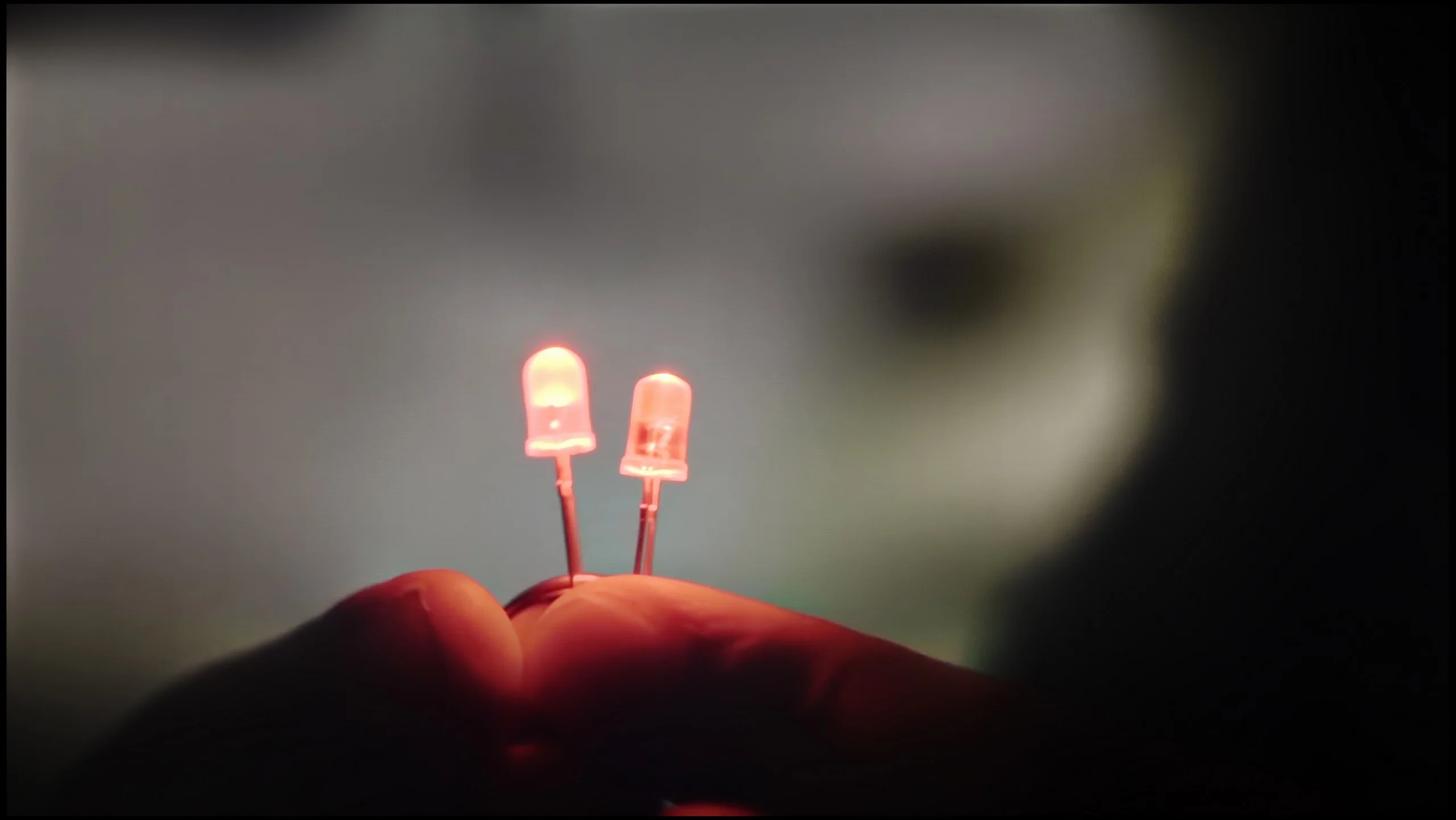
The match photo shows how the TV smooths weak tonal transitions in low-quality video.
Image scaling SD (576i)


The model photo shows how it handles upscaling of SD material.
With native SDR content, the Panasonic W85B performs very well – tonal transitions are smooth and natural, without artificial bands or prominent contours. However, the situation is worse when it comes to lower resolution materials. It is precisely there that the television has the most difficulty with "enhancing" the image. The lack of any option in the menu that would allow for improving gradation means that with older films or materials from YouTube, one can sometimes notice slight issues with colour blending.
Fortunately, upscaling, or raising the quality of lower resolution content, performs much better. This is definitely a strong point of this model – the image is scaled cleanly and in detail, and the television handles this better than one might expect from such an inexpensive piece of equipment. This is thanks to the HCX processor, which Panasonic has been developing for years, and it is noticeable that even in the lower series it can do a good job.
The 'Contour Smoothing' function is used to improve tonal transitions in poorer-quality material. At the medium setting it works very effectively and removes visible banding between shades. Occasionally it will lose some small details, but these are not things that stand out noticeably. The low setting is more cautious and does not affect other elements of the image, but the smoothing itself is much weaker. We would stick with the medium setting. Another plus is that the function leaves noise and film grain untouched. Upscaling itself also performs quite well. In our shot with the model, the details of her clothing and the tree remain clear, so lower-resolution content looks decent on a large screen. However, there is one drawback: with an SD signal the TV crops the edges of the image, that is, it applies so-called overscan. As a result we lose a small part of the frame.
Blur and motion smoothness
6.5/10
7/10
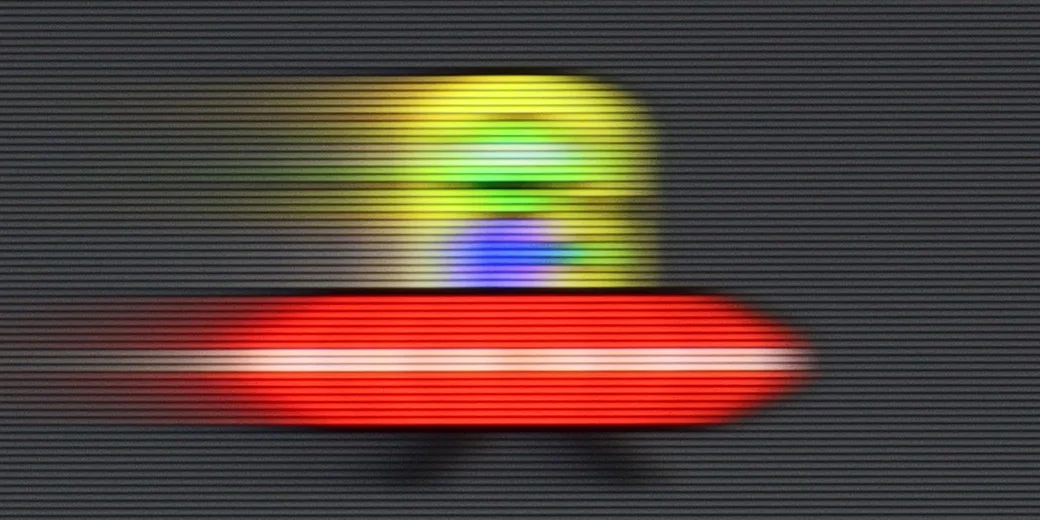
Blur (native resolution, maximum refresh rate):





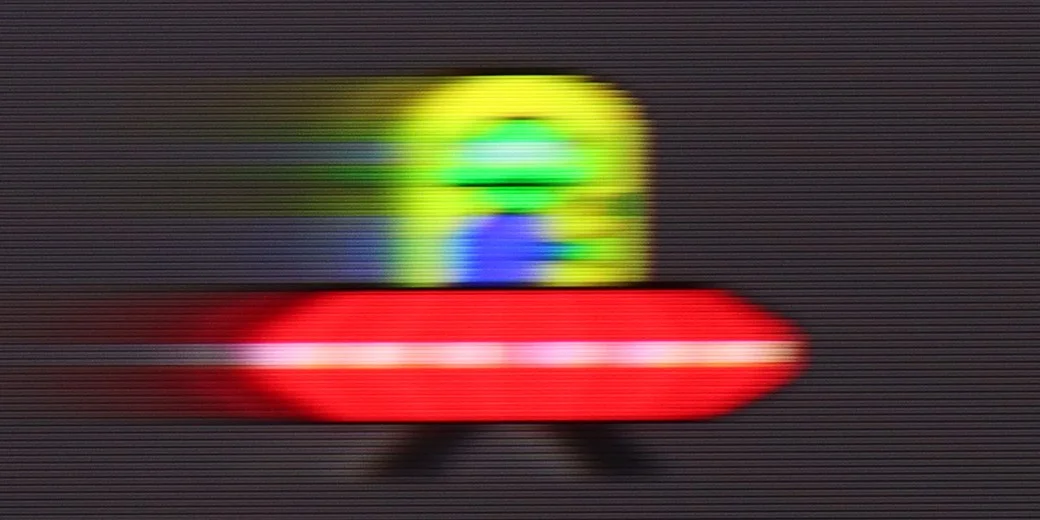
Blur (4K@144Hz):


Blur (4K@144Hz):


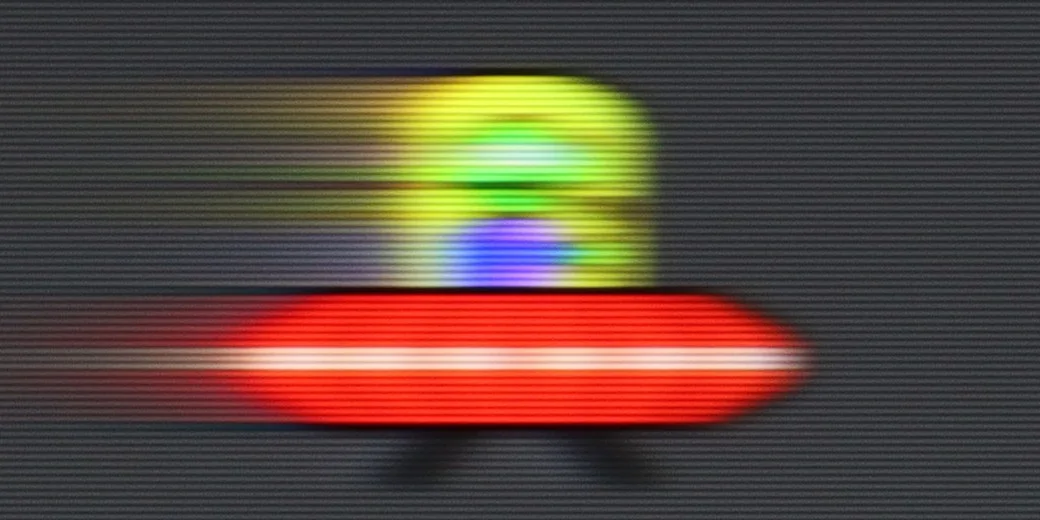
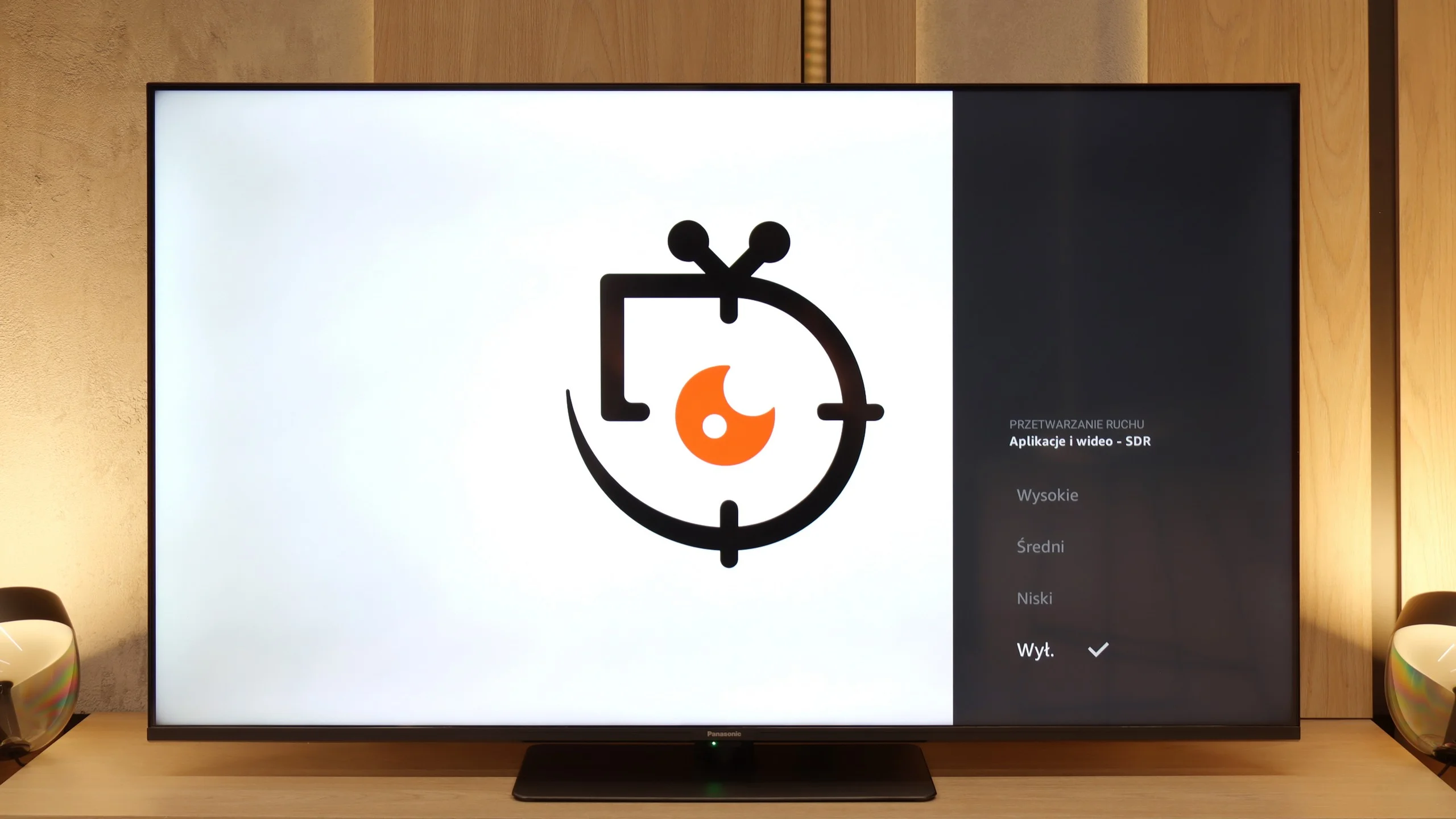
At first glance, everything looks good – the Panasonic W85B has a 120 Hz panel and even a 144 Hz mode, so it seems that it should cope well with smooth motion. The problem arises when we look into the settings. The options for improving fluidity are supposedly present in the menu, but in practice… they don't change anything. No matter what we choose, the image looks the same. On top of that, there is a lack of BFI, or the black frame insertion mode, which on many televisions helps sharpen motion. And suddenly it turns out that despite the strong panel, the W85B offers us no real tools to adjust motion according to our needs. It’s only good when the source itself operates at a higher frequency – for example, games at 120 Hz. But when it comes to films or sports, we simply have to accept what the television shows us, because nothing more can be done about it.
The Panasonic W92C has a 144 Hz panel, which is mainly useful for PC gaming. For consoles and sport, however, how the screen handles 120 Hz is more important. Motion is smooth, though moving objects are not perfectly sharp. In our saucer test you can see a clear trail behind it, especially on dark backgrounds. Even so, the W92C is still a better choice for dynamic content than a typical 60 Hz screen. The higher refresh rate gives a noticeable improvement in smoothness, but the panel itself could react faster to colour changes.
Console compatibility and gaming features
8.5/10
8.1/10
- ALLM
- VRR
- VRR range48 - 144Hz48 - 144Hz
- Dolby Vision Game Mode
- Correct implementation of HGIG
- 1080p@120Hz
- 1440p@120Hz
- 4K@120Hz
- Game bar
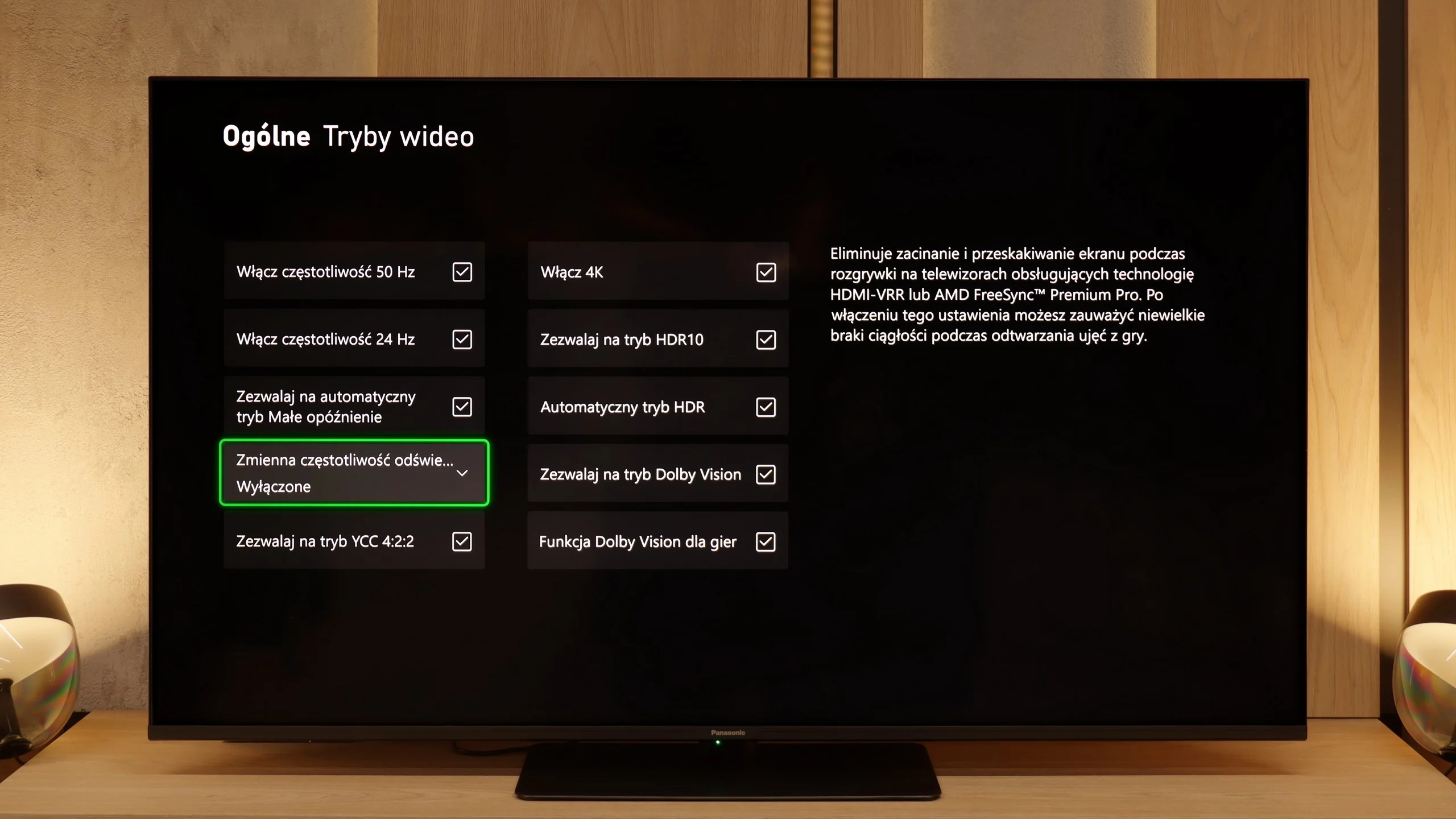
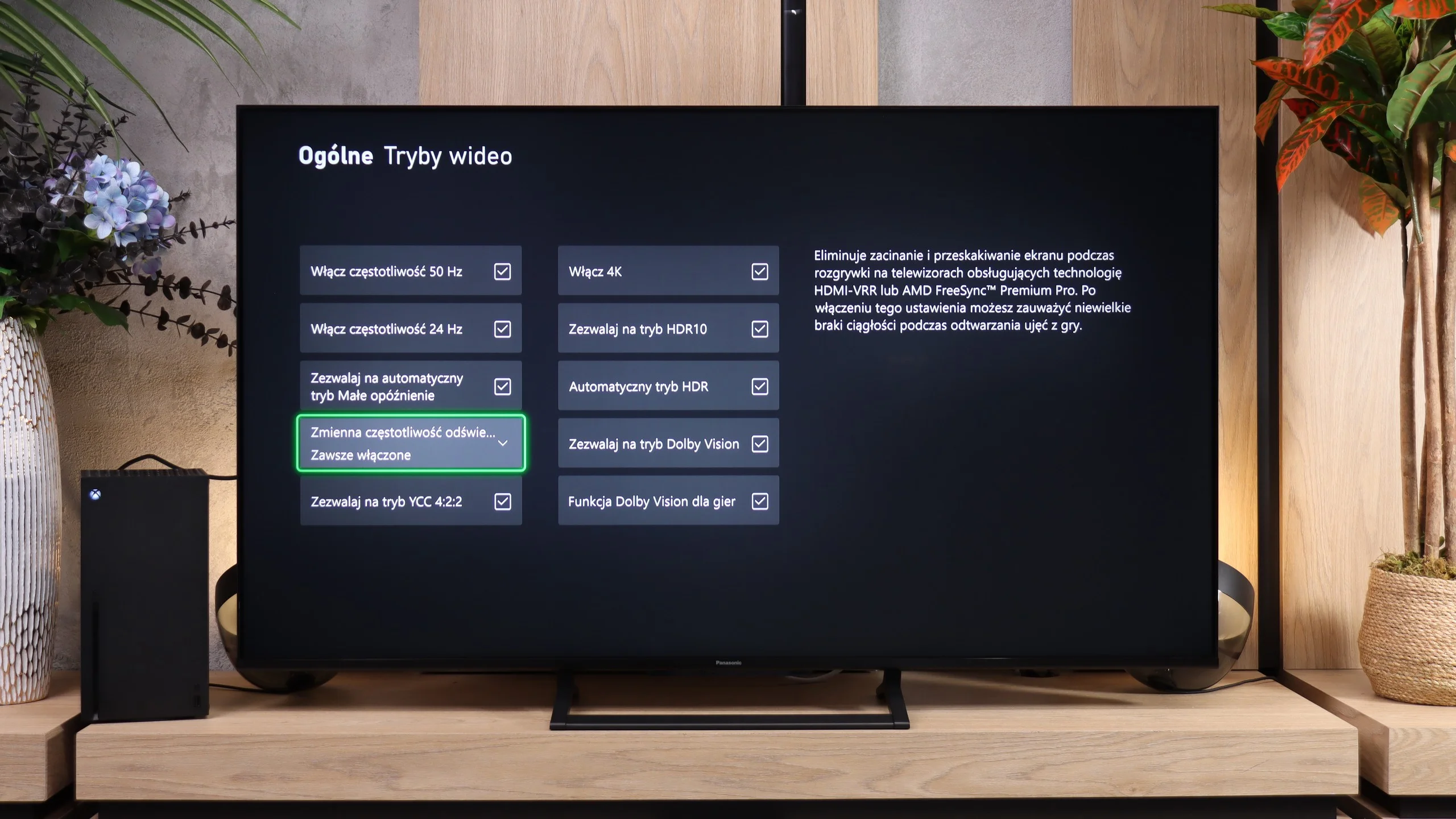
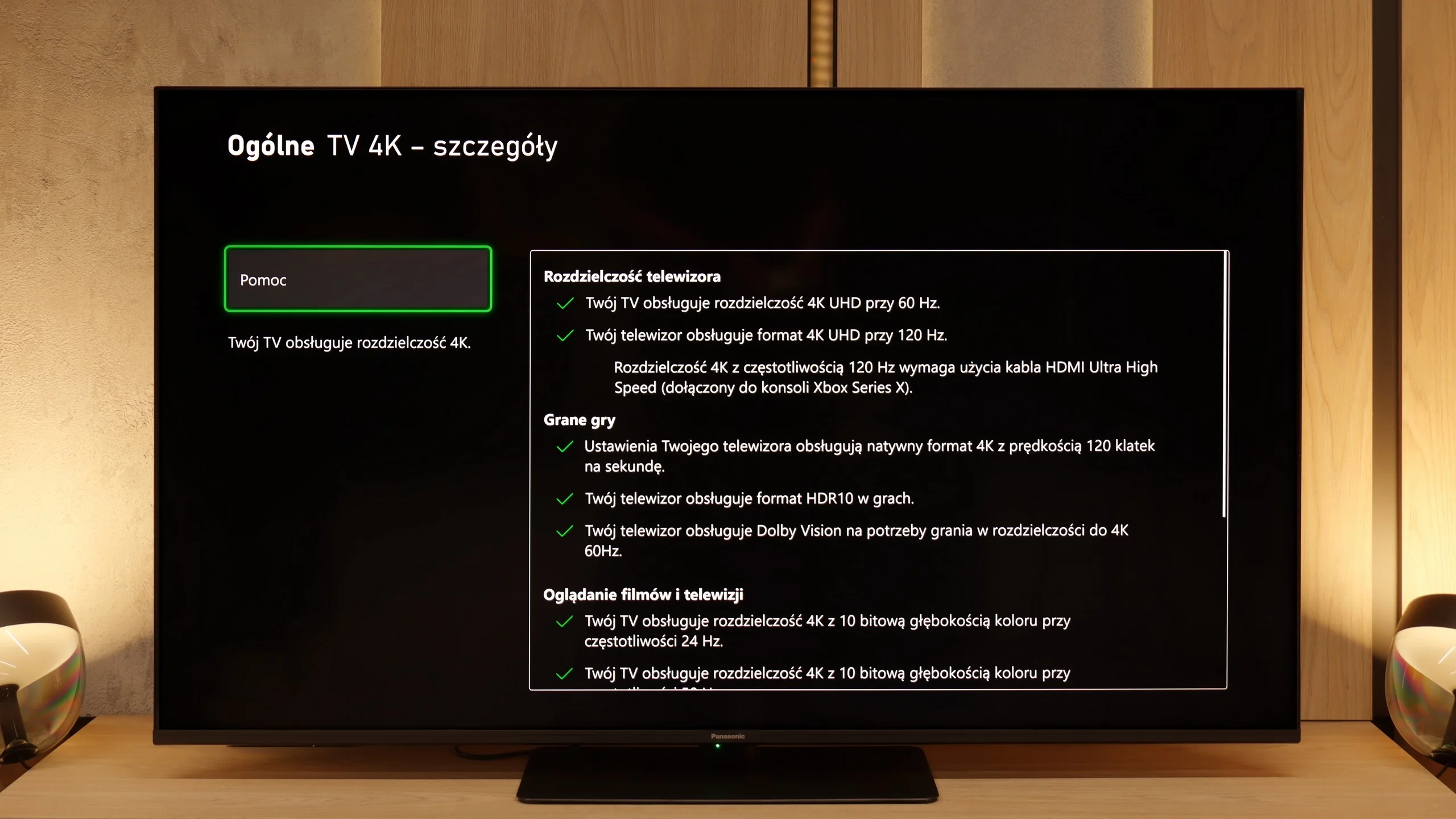
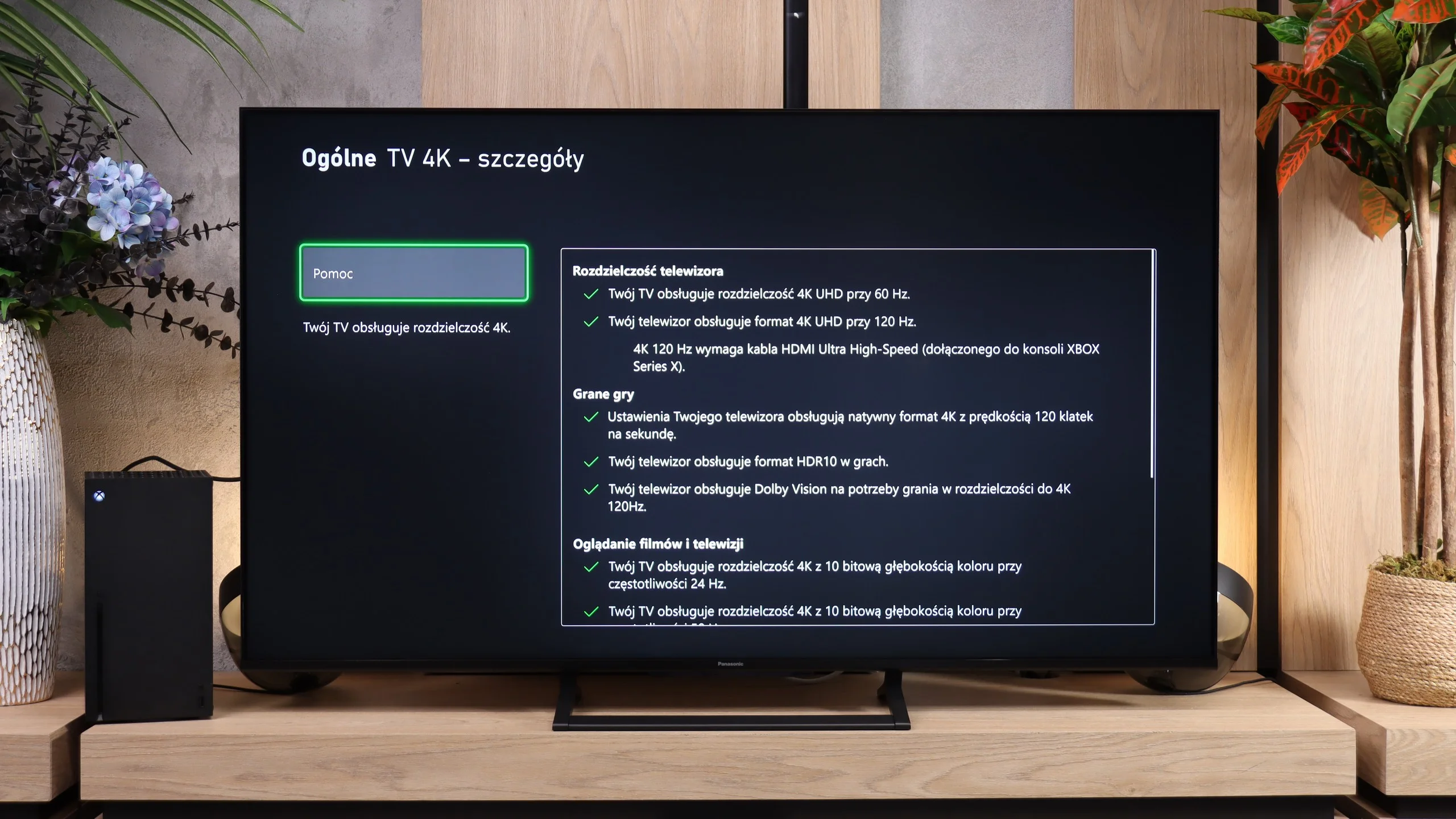
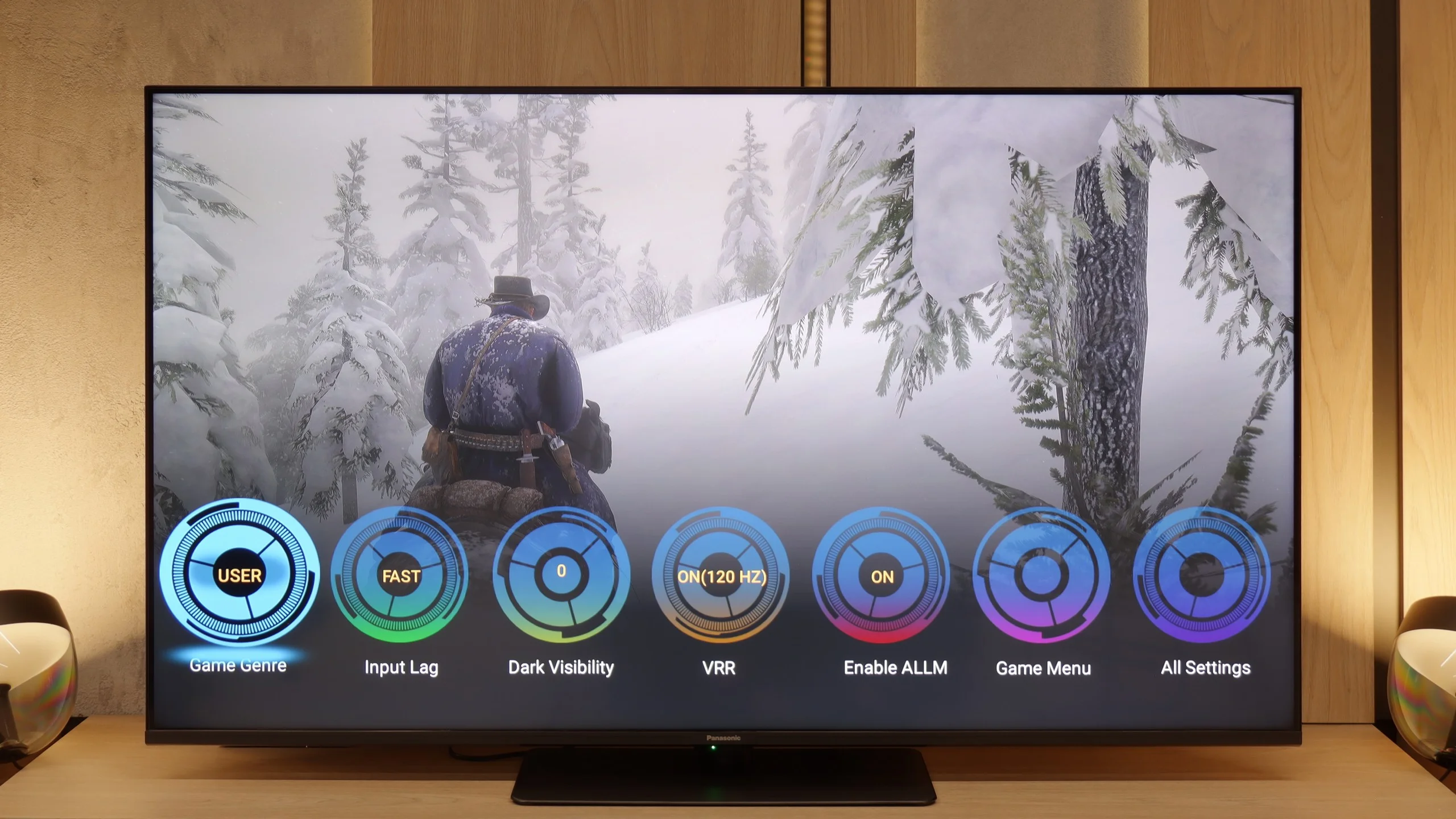
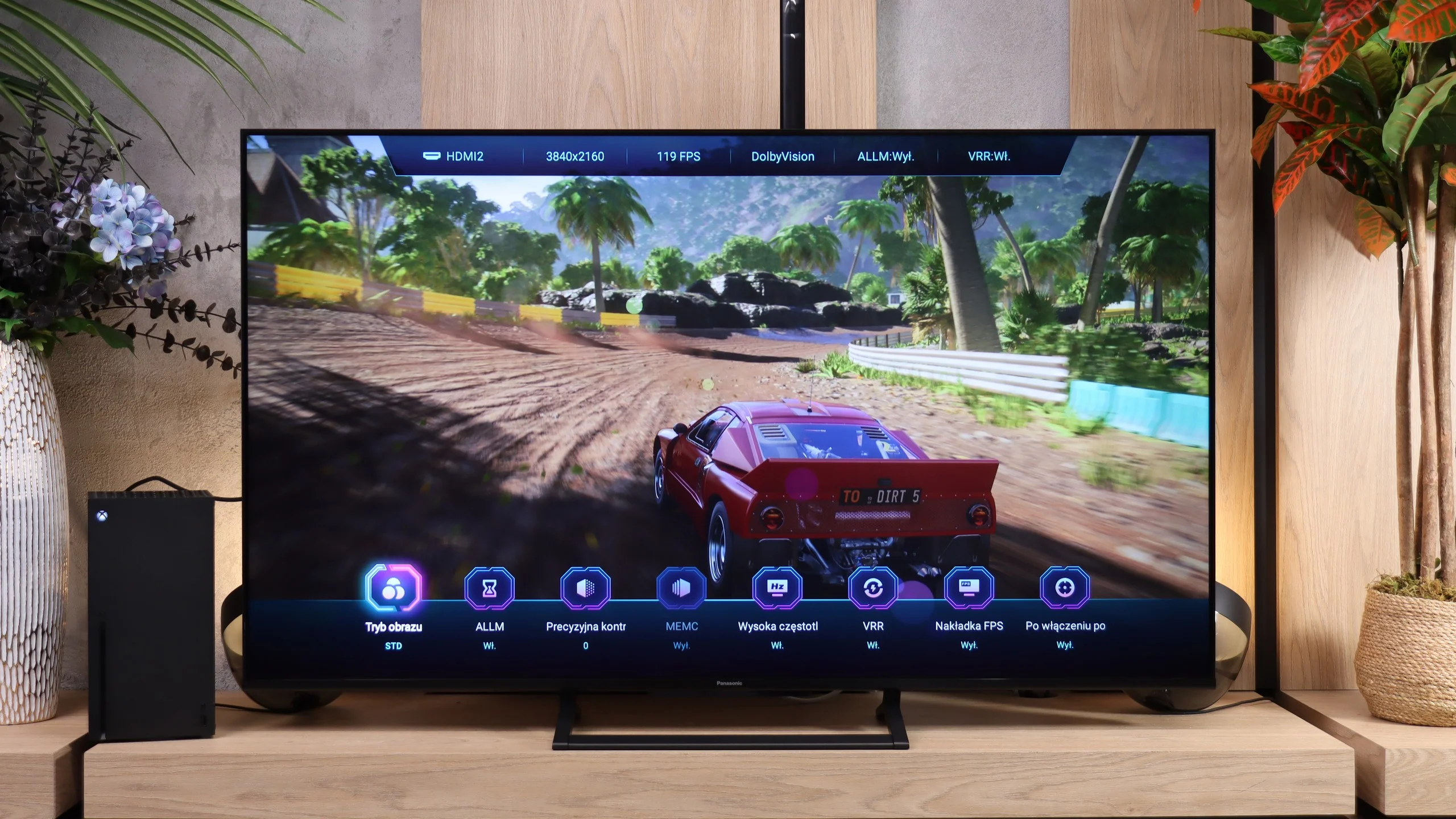
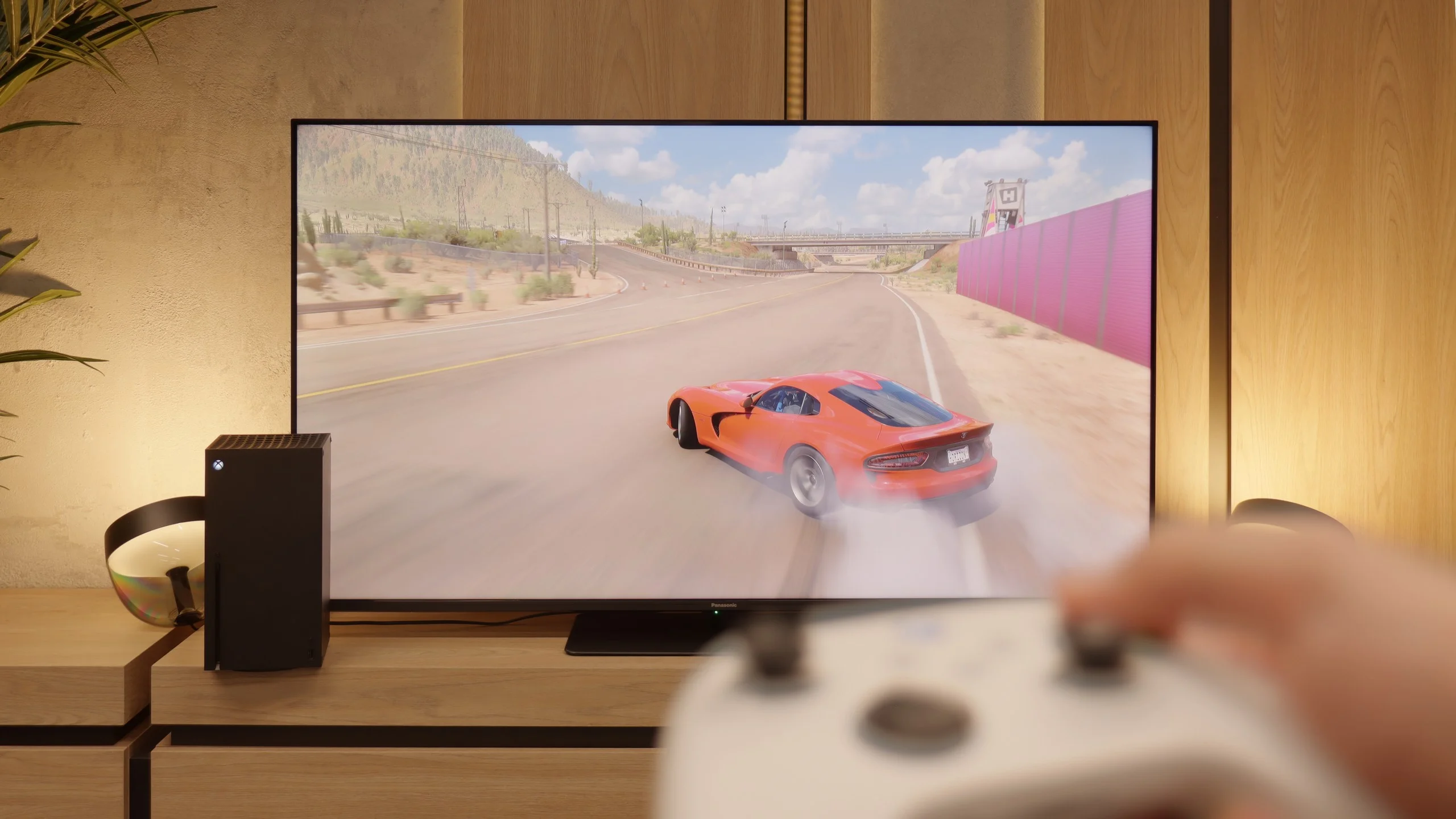
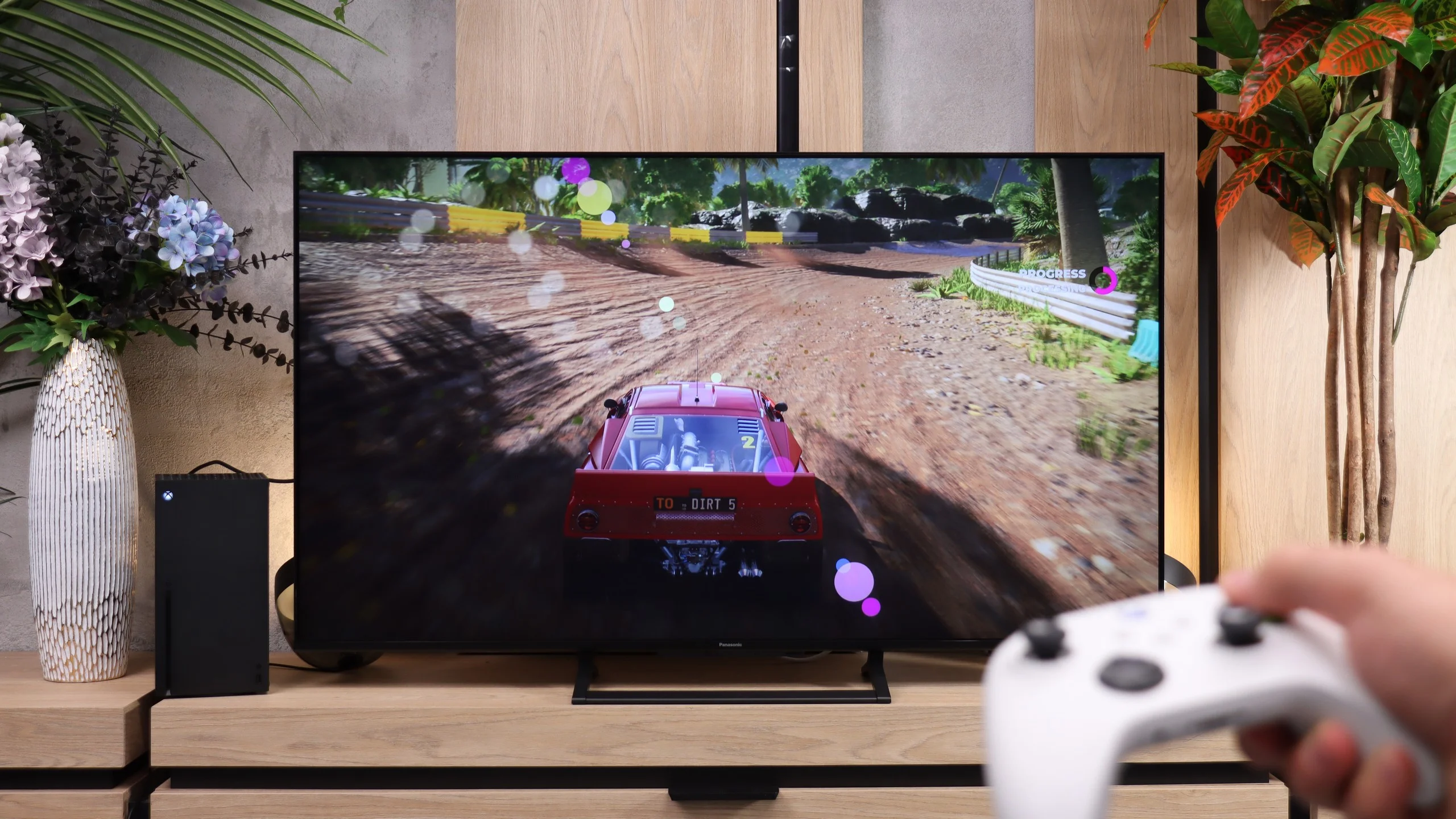
On paper, the Panasonic W85B looks really solid. It has two full HDMI 2.1 ports, support for ALLM, variable refresh rates, Dolby Vision in games, and of course, a high refresh rate of the panel itself. Additionally, it features Panasonic's characteristic game tools bar – a "game bar" that allows you to preview key parameters and quickly change them if needed with a single click. This sounds great, but the problem arises when we turn on HDR. Here, the W85B suffers significantly, as there is practically no HGiG implementation – the television poorly manages brightness, and instead of an accurate picture, we get scenes that are too bright, sometimes even blown out. The solution? The simplest one – turn off HDR in the console settings and leave everything in SDR. And this is where it gets really interesting, as in this scenario, the W85B shows its better side. Low input lag, high fluidity thanks to 120 Hz – all of this makes gaming look phenomenal. Indeed, HDR can be forgone, but if the priority is responsiveness and smooth gameplay, the W85B offers a lot of fun.
The Panasonic W92C has quite a lot to offer gamers. It has three HDMI 2.1 ports with the full 48 Gbps bandwidth, supports 4K gaming at 120 Hz, and when connected to a PC it can even run at 144 Hz. There is also VRR from 48 to 144 Hz, which helps keep the image smooth when the frame rate varies, and ALLM that automatically enables a low-latency mode. On top of that, it supports Dolby Vision for games.
The new Game Bar deserves special praise. The large circles familiar from Panasonic sets with Fire TV have been replaced by a much more organised panel. At the top you can see the most important signal information, and at the bottom there are shortcuts to gamer settings. It looks more modern and is much closer to what the biggest competitors offer. Definitely a change for the better.
Not everything is perfect, however. A properly functioning HGiG is missing, which helps match HDR in games to the screen’s capabilities. The W92C also does not support 1440p at 120 Hz. That’s a shame, because that mode is particularly useful on a PC when you want higher frame rates than in 4K but better detail than in Full HD.
Input lag
9.8/10
9.9/10
SDR
HDR
Dolby Vision
There is really nothing to worry about here. The Panasonic W85B responds instantly to our movements, and the values measured in tests can comfortably compete with monitors for gamers. At a 120 Hz signal, the input lag is around 8–10 ms, while at 60 Hz it hovers around 17–20 ms. In practice, this means one thing – no delays, no frustration! You press the button, and the action happens on the screen straight away.
Input lag on the Panasonic W92C is very low. At 60 Hz we measured about 15 to 16 ms, and at 120 Hz just 7 ms. Response to the controller is therefore quick, and even in fast-paced games there is little to criticise. Dolby Vision also performs well: 17 ms at 60 Hz and 9 ms at 120 Hz. You can safely use any format without worrying that controls will become noticeably slower.
Compatibility with PC
8.6/10
9/10
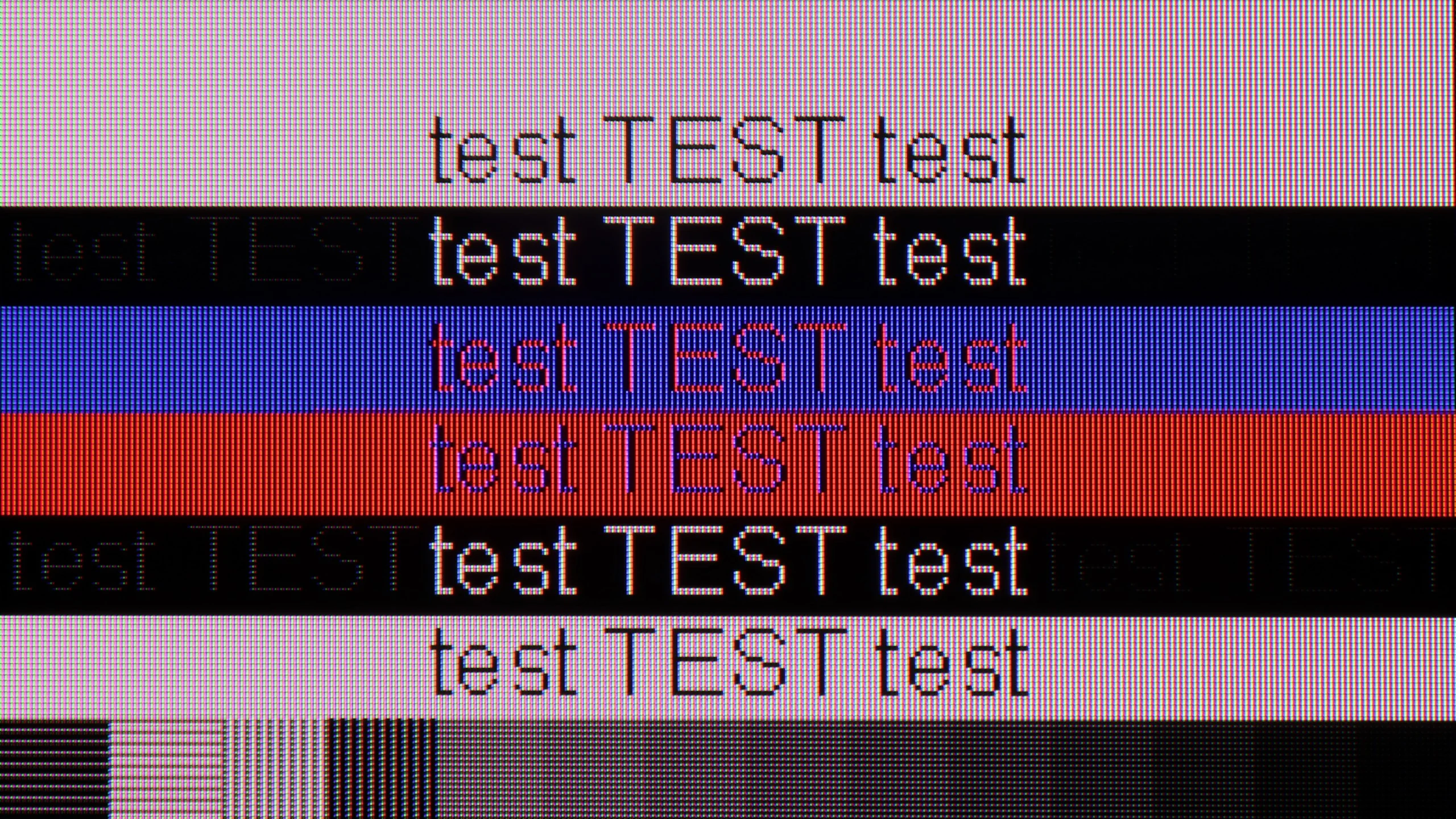
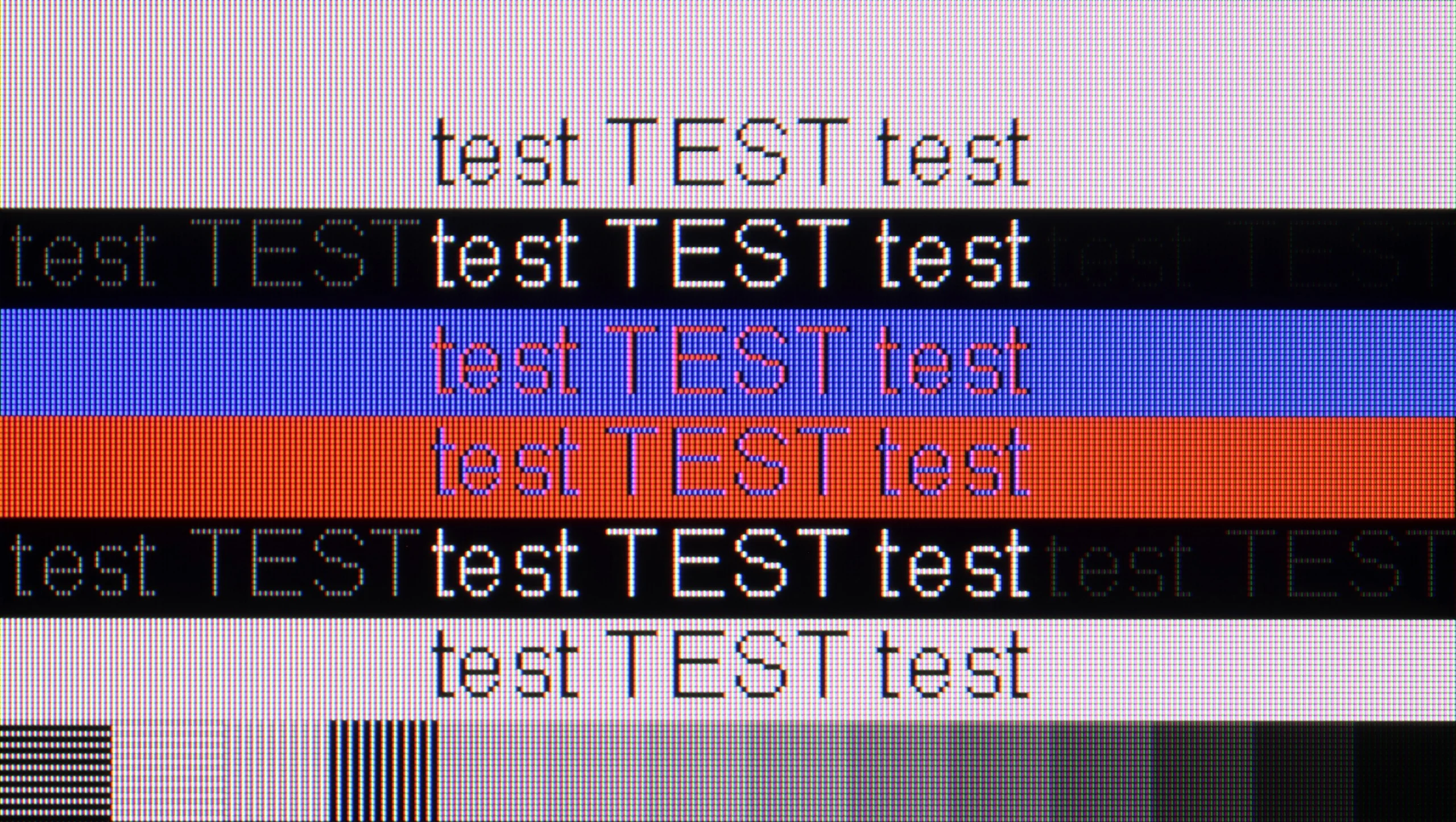
The photo shows the legibility of small fonts. Ideally, lines should be the same thickness on both light and dark text, with minimal pixel gaps.
The Panasonic W85B performs surprisingly well as a computer monitor. It is perfectly suited for office work – the fonts are sharp and very readable thanks to full chroma 4:4:4 support, so you can easily write, browse pages, or work on spreadsheets. But the real fun begins when gaming. The television handles refresh rates of up to 144 Hz for PC without any issues, and it also supports popular image synchronisation technologies such as NVIDIA G-Sync and AMD FreeSync. This means we don't have to worry about screen tearing or stuttering – gameplay is smooth and looks simply fantastic.
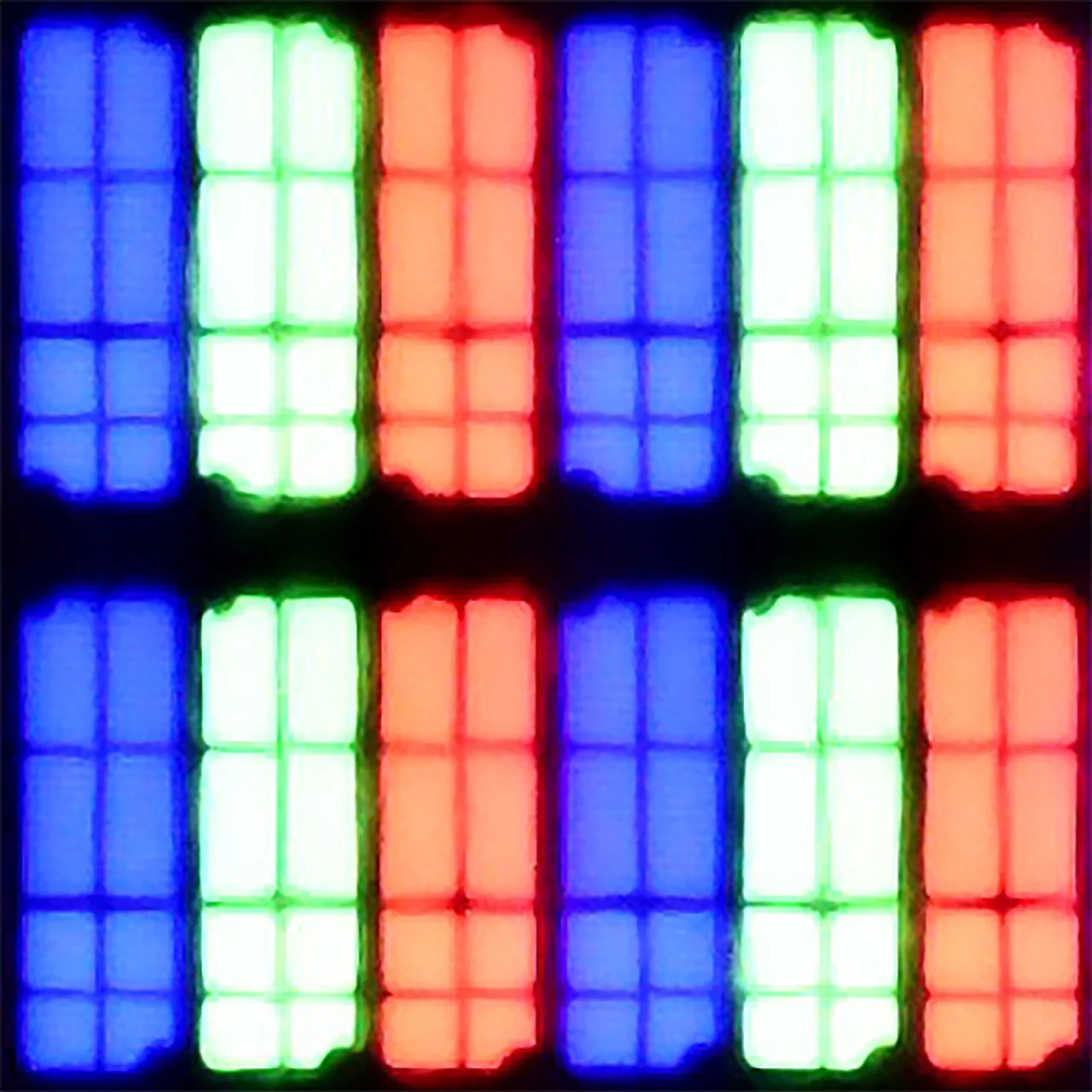
Working with a PC is one of the W92C's stronger suits. Fonts look really great. They're sharp, legible and don't lose fine details. That also applies to dark text on a dark background, which some TVs struggle with. It's one of the few panels that handled our font test so well. The RGB subpixel layout and proper support for chroma 4:4:4 help here, including at maximum resolution and refresh rate. There are also plenty of options for gamers. You get 4K at 144 Hz, working G-Sync and an input lag of 7 ms. The Panasonic therefore performs well both for working with text and for gaming. You just need to remember the smearing mentioned earlier and the lack of support for 1440p at 120 Hz. Overall, the legibility of the PC image is excellent.
Viewing angles
3.2/10
6/10
Here you can see the biggest price we pay for the high quality of the VA matrix contrast. The W85B, like most televisions with this type of panel, does not perform very well when viewed from a wider angle. Colours lose intensity and the image begins to fade as soon as we move away from the screen's axis. This is not a flaw of Panasonic itself, but rather a characteristic of VA technology – excellent contrast in exchange for poorer viewing angles. So if you plan to watch films with a larger group and often sit "off to the side," you need to keep this in mind.
The 55-inch Panasonic W92C offers good viewing angles, primarily thanks to its IPS panel. Because of this, images viewed from the side retain colour and contrast better than on many LCD TVs with Mini LED backlighting that use VA panels.
Daytime performance
4.2/10
6.8/10
Panel brightness
Panasonic W92C (Google TV): 555 cd/m2
Panasonic W85: 263 cd/m2
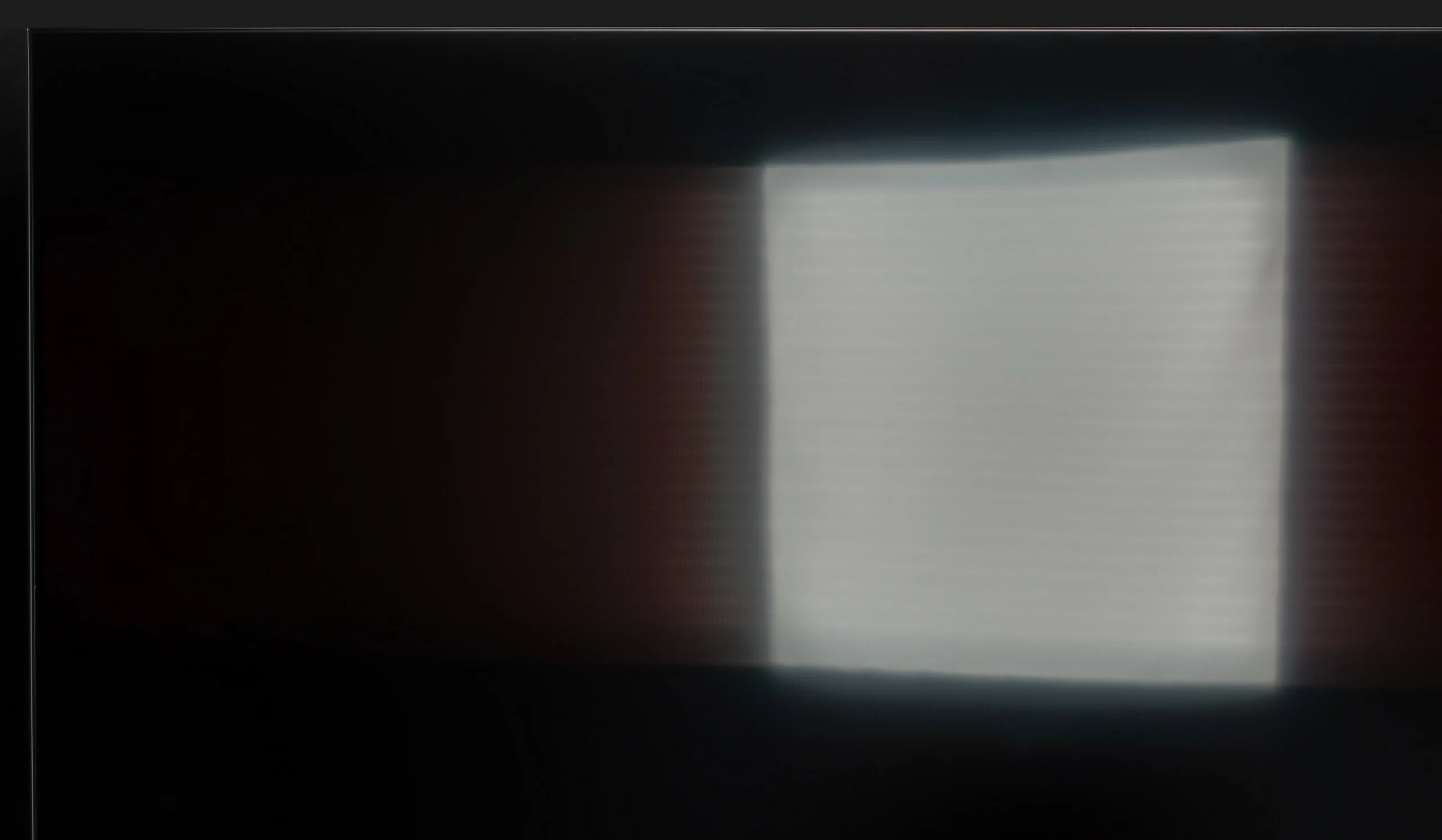
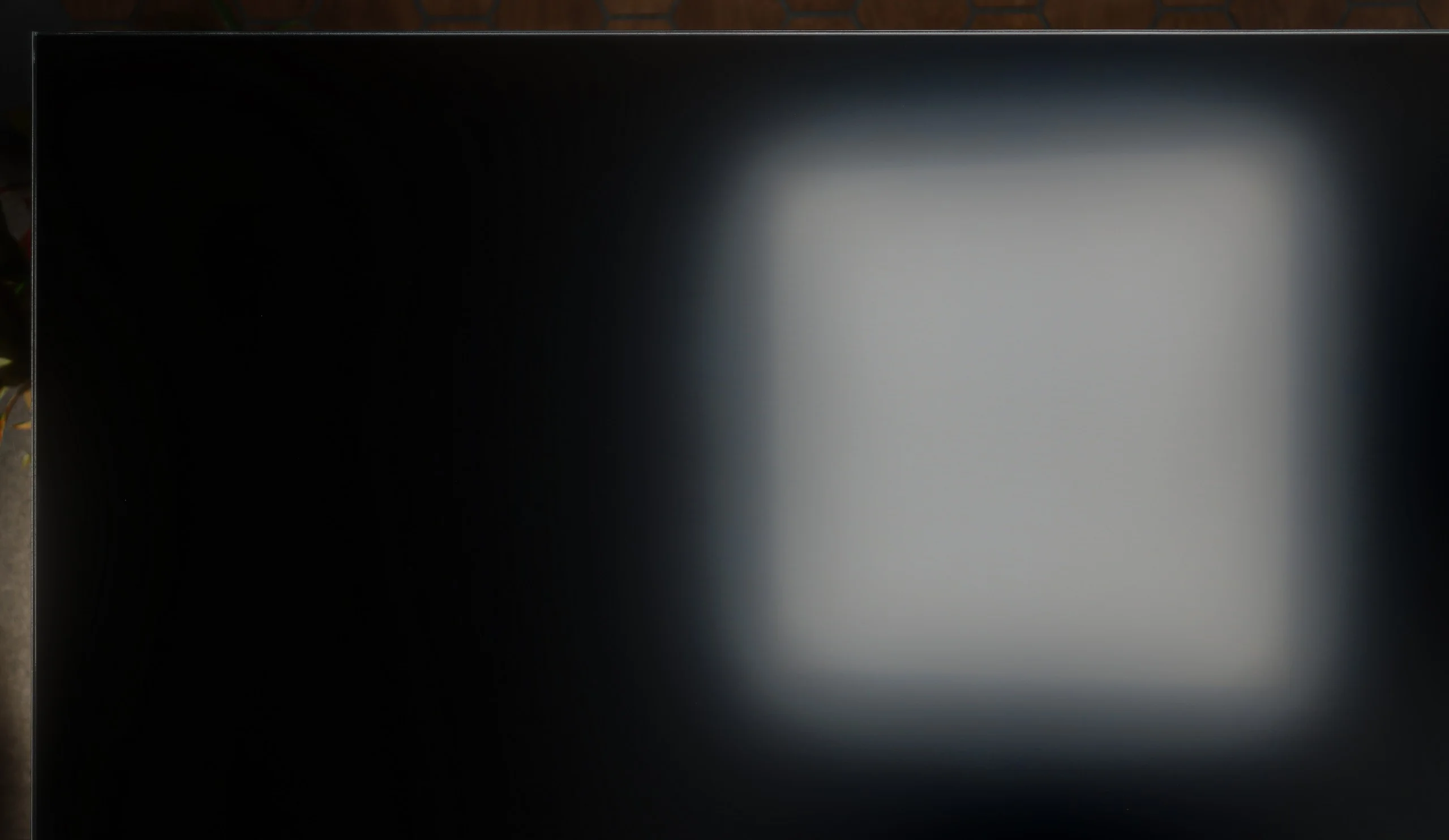
The Panasonic W85B features a satin-finish panel that performs quite well in reducing reflections and maintaining colours even under strong light from windows or lamps. There is no "mirror" effect here, so watching television in a typical living room during the day is comfortable. However, the problem arises in really bright rooms – the television does not have high brightness, so it cannot compete with very strong sunlight. It is simply a screen that performs best in controlled conditions.
A matte panel is a big plus for the W92C when watching in daylight. It disperses reflections very well, so instead of a distinct reflection of a window or lamp we see a more diffuse glow. Add to that an average brightness of around 555 nits, which is more than enough for watching TV in a typical bright living room. That doesn't mean light striking the screen stops being an issue. The matte coating spreads it over a larger area, which makes blacks look greyer and the image lose some contrast. It's easiest to notice this in dark scenes. Nonetheless, the combination of decent brightness and effective reflection suppression means the Panasonic is quite suitable for everyday viewing without having to draw the curtains.
Panel details
Subpixel Structure:
Panel uniformity and thermal imaging:


Panasonic W85
Panasonic W92C (Google TV)
TV features
6.8/10
6.6/10
- SystemAmazon FireTVGoogle TV
- System performanceAverageGood
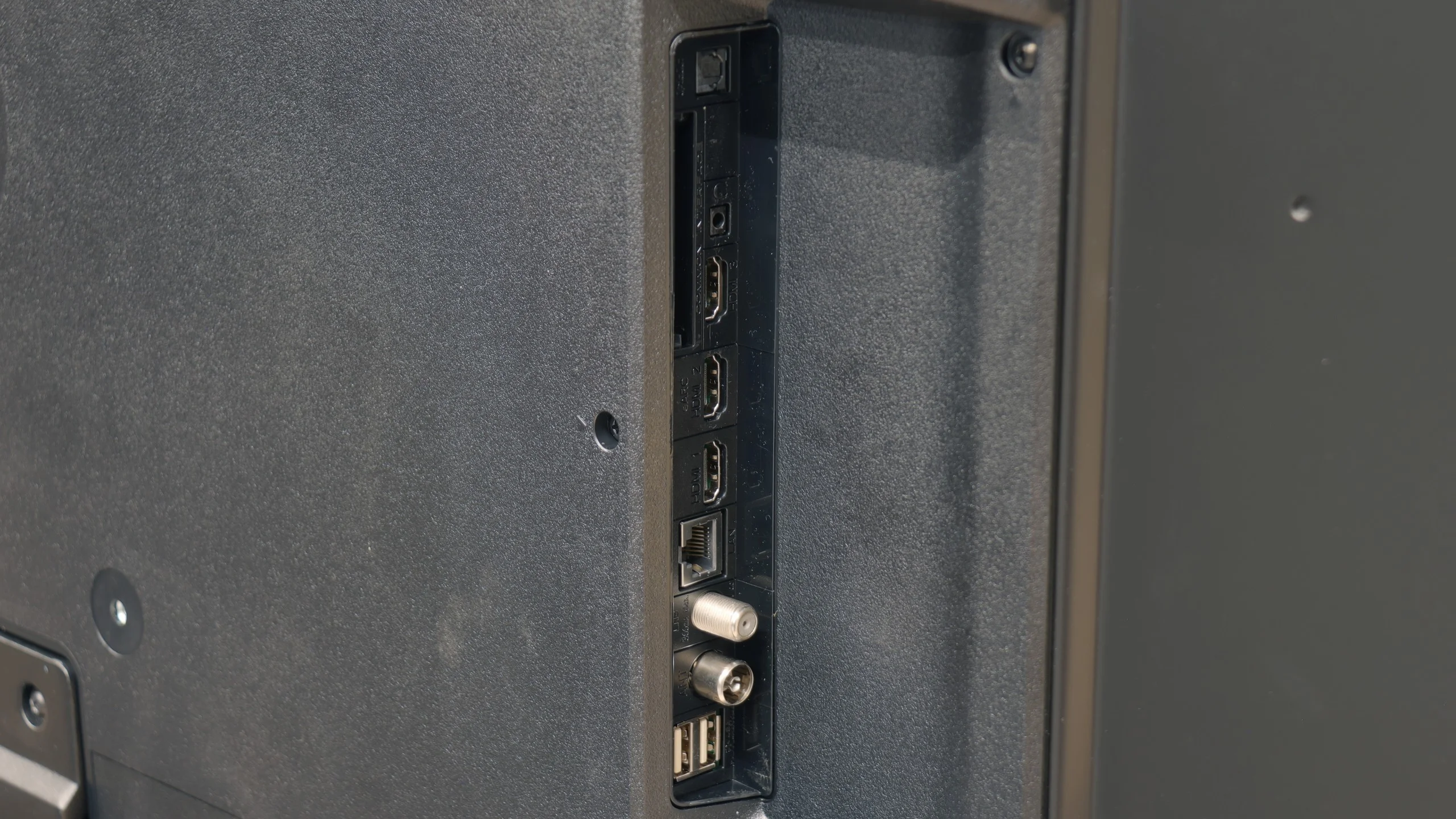
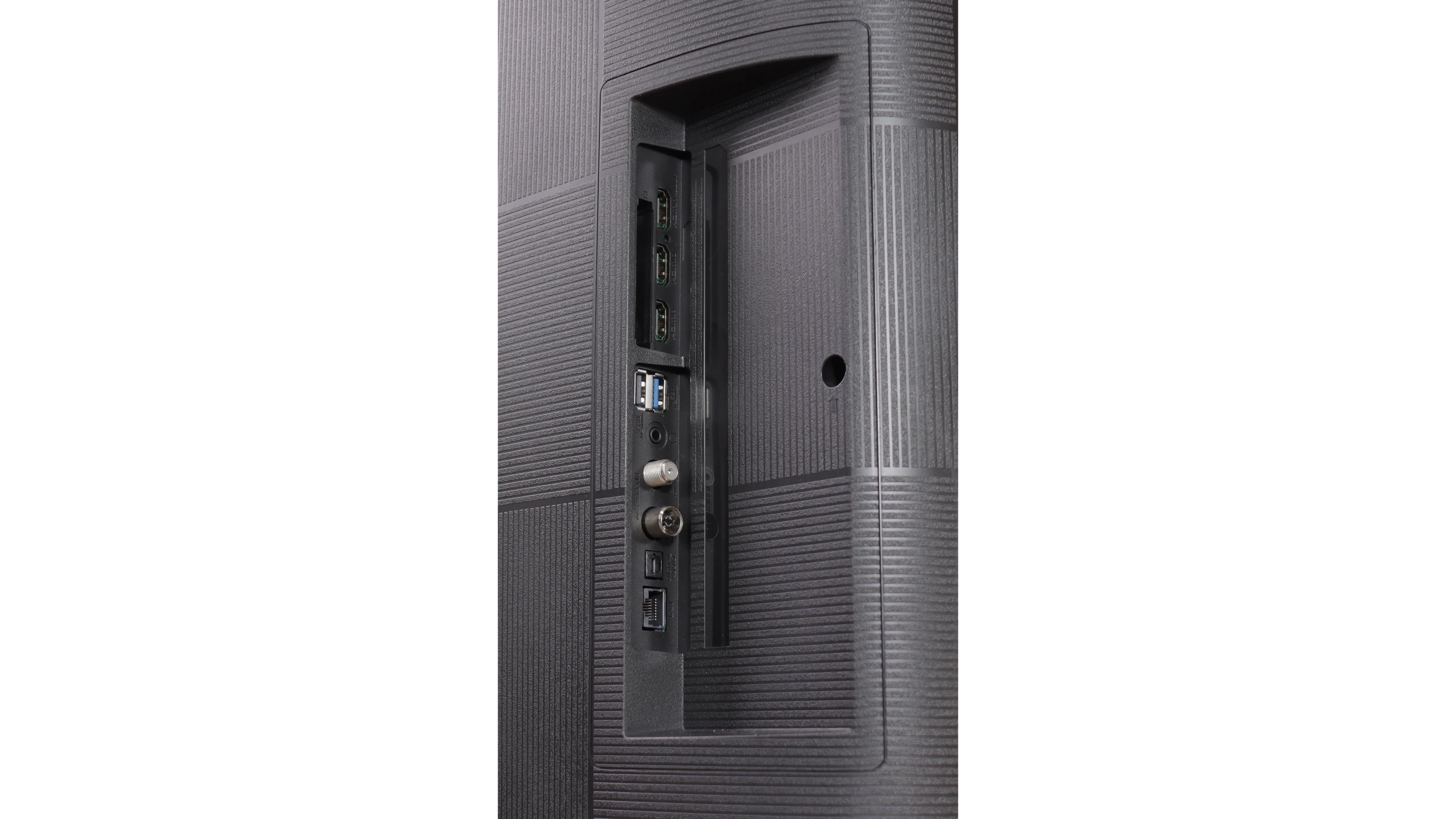
- HDMI inputs1 x HDMI 2.0, 2 x HDMI 2.1 48Gbps0 x HDMI 2.0, 3 x HDMI 2.1 48Gbps
- OutputsToslink (Optical audio), eARC (HDMI), ARC (HDMI), Mini-Jack (Headphones)Toslink (Optical audio), eARC (HDMI), ARC (HDMI), Mini-Jack (Headphones)
- Network InterfacesWi-Fi 2.4GHz, Wi-Fi 5GHz, Ethernet (LAN) 100MbpsWi-Fi 2.4GHz, Wi-Fi 5GHz, Ethernet (LAN) 100Mbps
- TV receptionDVB-T, DVB-T2, DVB-S, DVB-S2DVB-T, DVB-T2, DVB-S, DVB-S2, DVB-C
Classic features:
- Recording to USB (terrestrial TV)
- Recording programming
- Picture in Picture (PiP)
- RF remote control (no need to aim)
- Backlit remote control
- Teletext
- Audio only mode
- Bluetooth headphones support
- Simultaneous Bluetooth headphones & TV audio
Smart features:
- AirPlay
- Screen mirroring (Windows Miracast)
- Voice search
- Voice search in native language
- Ability to connect a keyboard and mouse
Sound connection options
- HDMI audioeARC (HDMI), ARC (HDMI)eARC (HDMI), ARC (HDMI)
- Other audio outputsToslink (Optical audio), Mini-Jack (Headphones)Toslink (Optical audio), Mini-Jack (Headphones)
- Wireless audioBluetoothBluetooth
Supported audio formats (external HDMI eARC audio):
- Dolby Digital Plus 7.1
- Dolby True HD 7.1
- Dolby Atmos in Dolby Digital Plus (JOC)
- Dolby Atmos in Dolby True HD
- DTS:X in DTS-HD MA
- DTS-HD Master Audio
Senior accessibility
- Numeric keyboard on TV
- Font size adjustment
- Audio description
SmartTV: FireTV
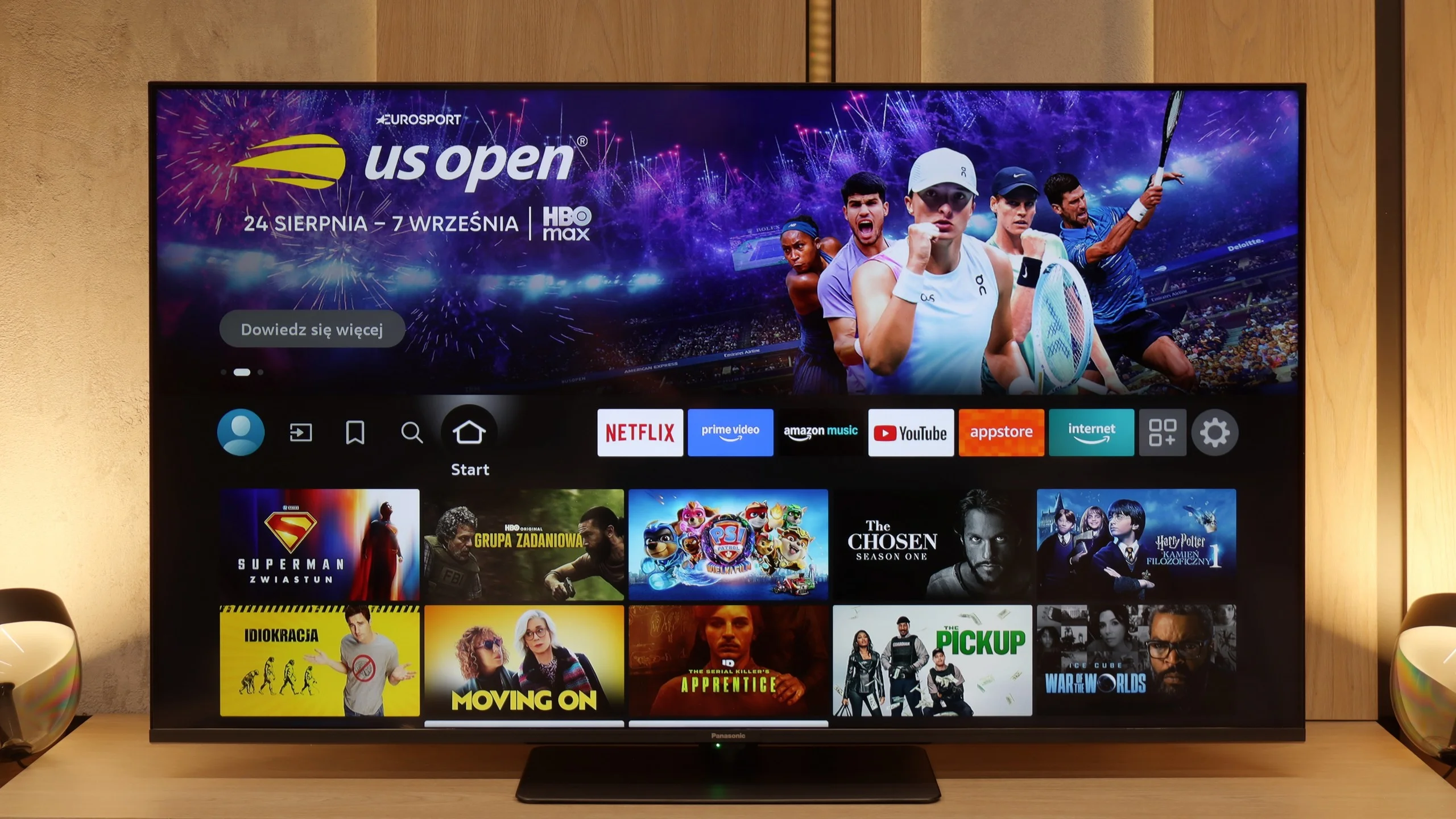
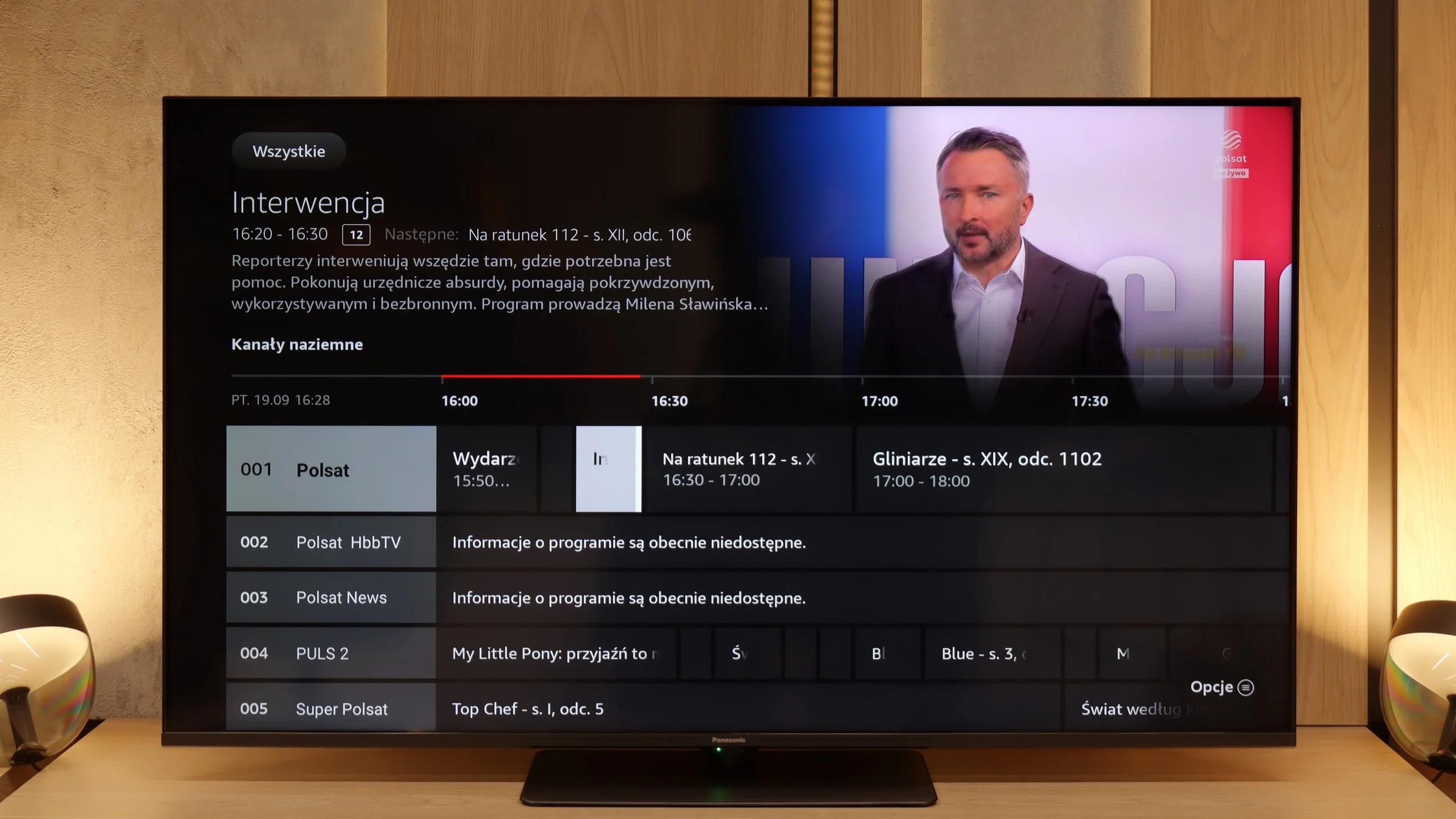
The W85B runs on the Fire TV system, and it must be said – it is a significant step forward compared to Panasonic's previous proprietary solutions. Here, we have support for AirPlay, screen mirroring, and even voice control through Alexa. It sounds modern, and in practice, it does provide a lot of capabilities. The problem is that in Europe, Fire TV still looks a bit like a “guest with luggage.” It works decently, but there are occasional micro-hiccups, the interface doesn't always respond as smoothly as we would like, and in the menu, one can encounter awkward translations. This is not yet at the level of the big players like Google TV or even Tizen, but it is still an improvement compared to what Panasonic had previously. The worst part, however, is that the Fire TV application library is quite modest, and this is its biggest drawback.
Classic Television Functions
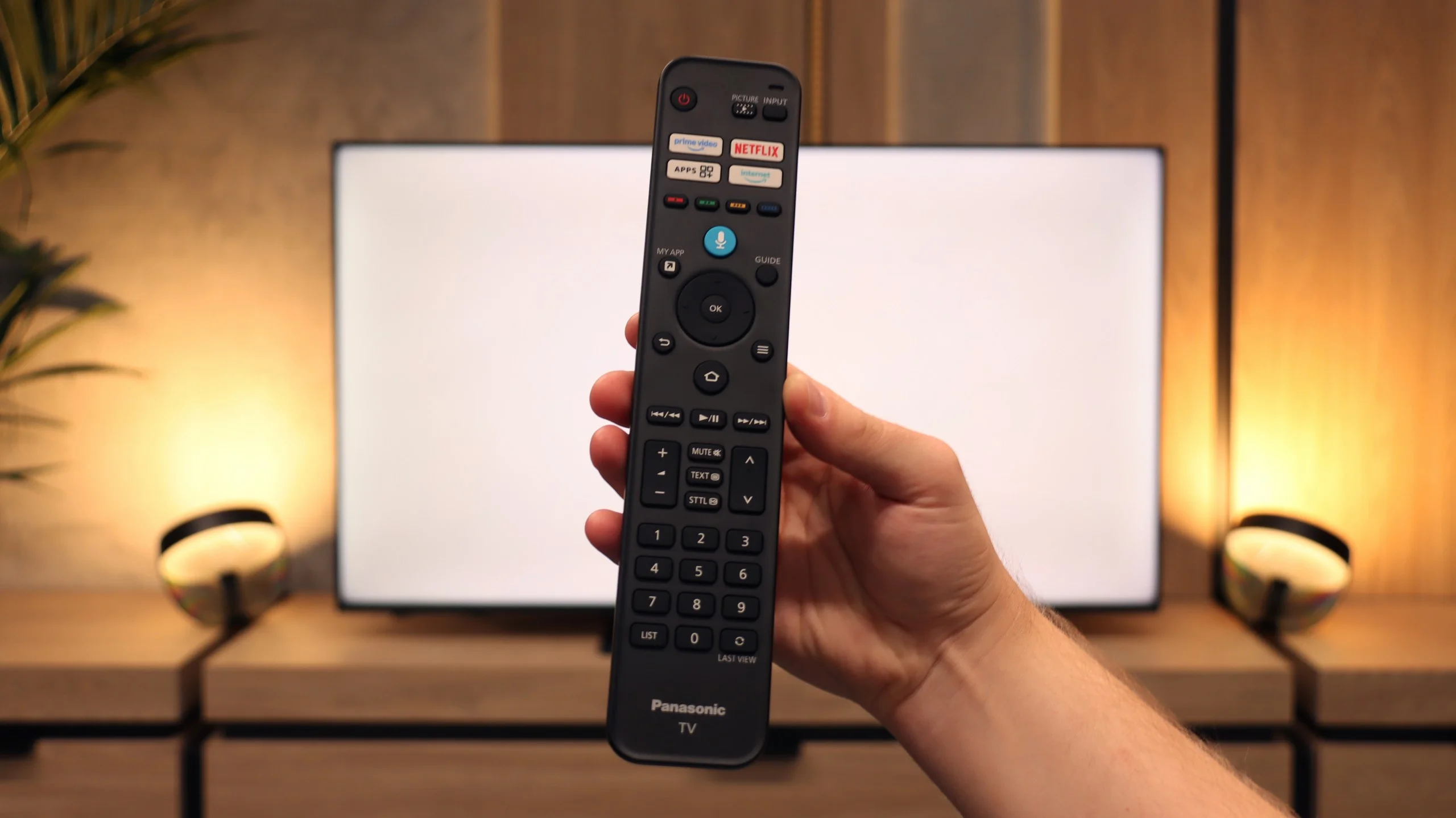
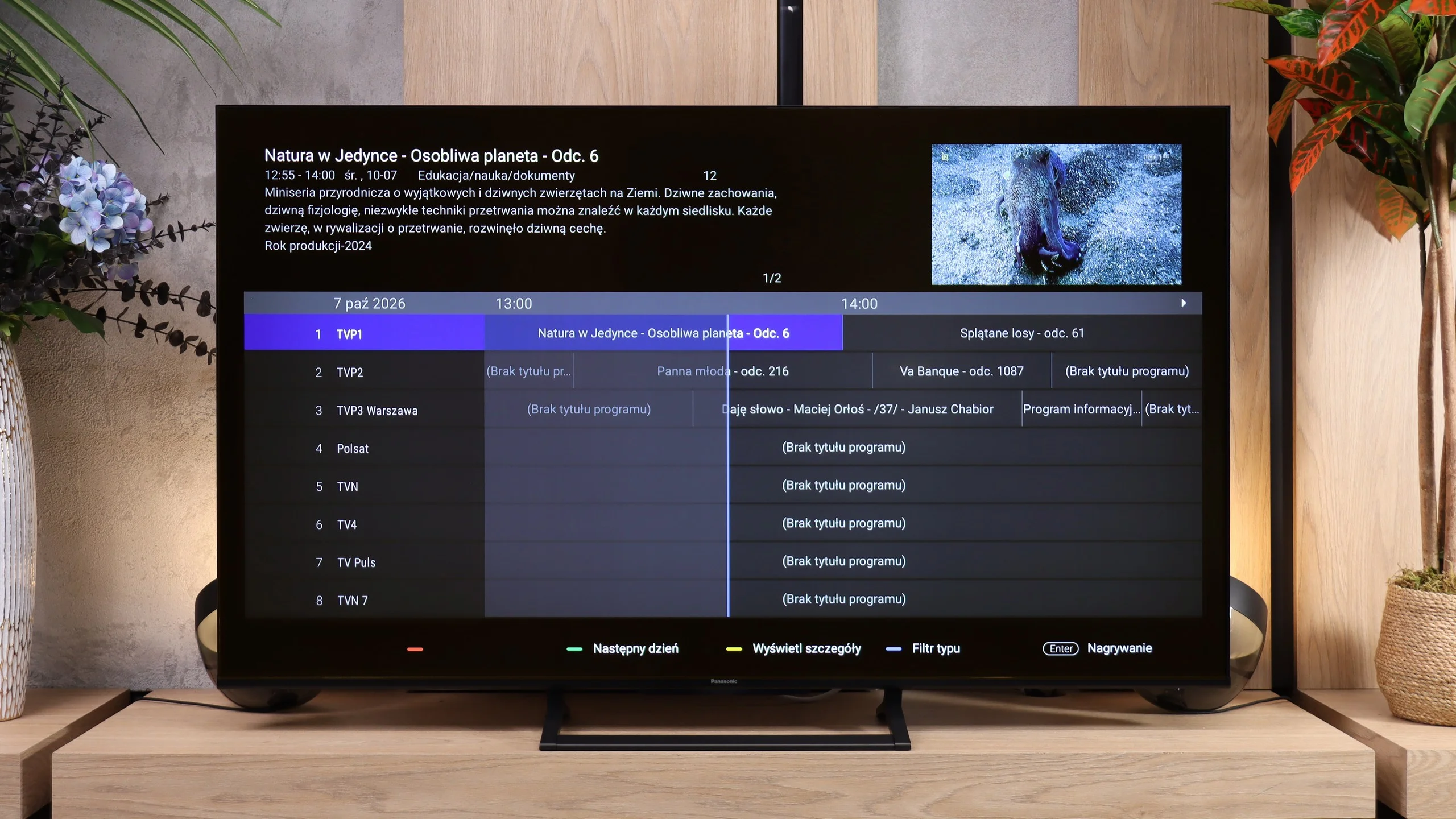
In terms of typical television functionalities, it is quite good – we have a classic remote control with a full numeric keypad, a clear EPG guide, and the possibility to record programmes from the built-in tuner to an external USB drive (e.g. a flash drive). The downside is the lack of the option to schedule recordings in advance – you can only record “here and now,” but not set recordings for later.
Google TV
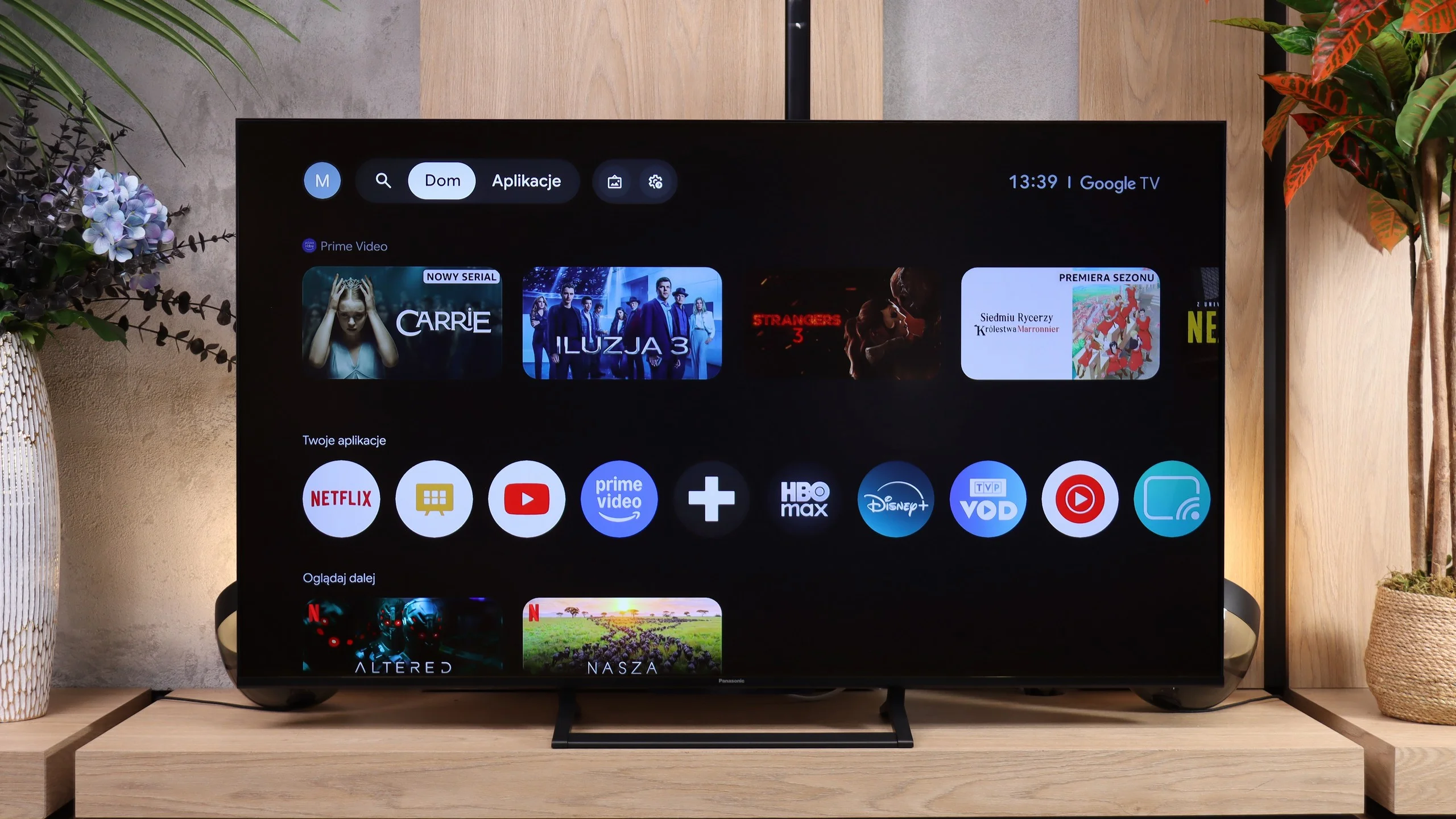
Google TV is a big step forward compared with Panasonic's older systems, and also compared with the newer Fire TV, which didn't entirely convince us. On the W92C everything runs very smoothly. We move through the menus quickly, apps launch without long waits, and among the available services we found all the ones we were interested in. There is also voice search in Polish and Chromecast, which makes it easier to cast content from a phone. It's a pity there's no working AirPlay; we couldn't use it with our newer iPhone.
However, there were a few minor hiccups. Some of the Polish translations in the menu sound rather clumsy, and the aforementioned automatic backlight adjustments show the software still needs some fixes. Despite this, everyday use is good and we definitely count the choice of Google TV among this model's strengths.
Classic features
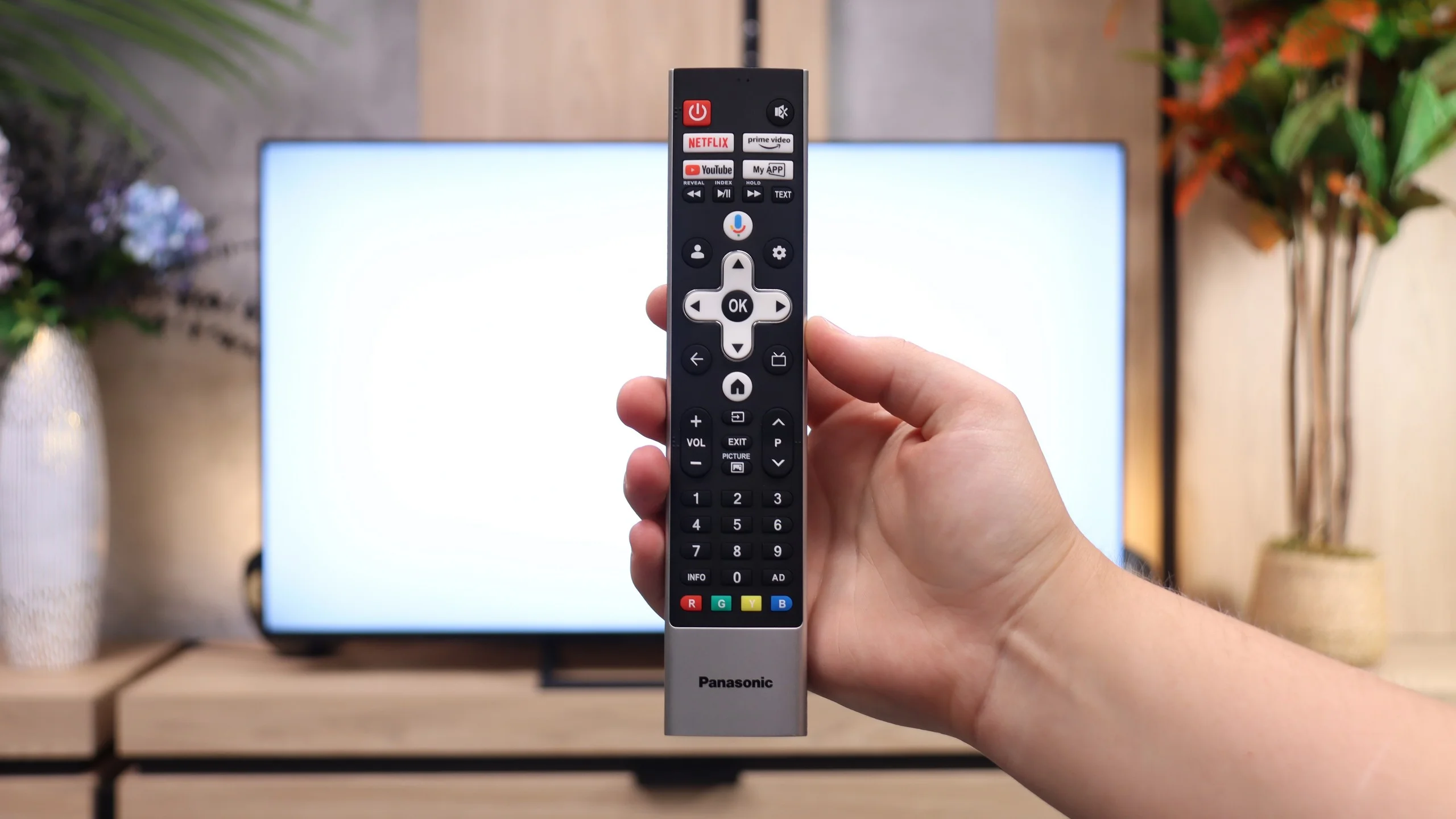
Among the classic features we have EPG, teletext and the ability to listen to audio simultaneously through Bluetooth headphones and the TV speakers. Missing, however, are USB recording and picture-in-picture. The remote is simple, it has a numeric keypad and you don't need to point it at the screen. It's a pity it's not backlit, and the build quality could be a bit better. For connecting devices there are three HDMI 2.1 ports with 48 Gbit/s bandwidth. There is also an optical output and eARC, but it's worth noting the standard 3.5 mm headphone jack. That's an increasingly rare extra and it's useful for wired headphones or an older audio system with an analogue input.
Apps
7.6/10
9.6/10






















Playing files from USB
3.1/10
8.7/10
Supported photo formats:
Maximum photo resolution:
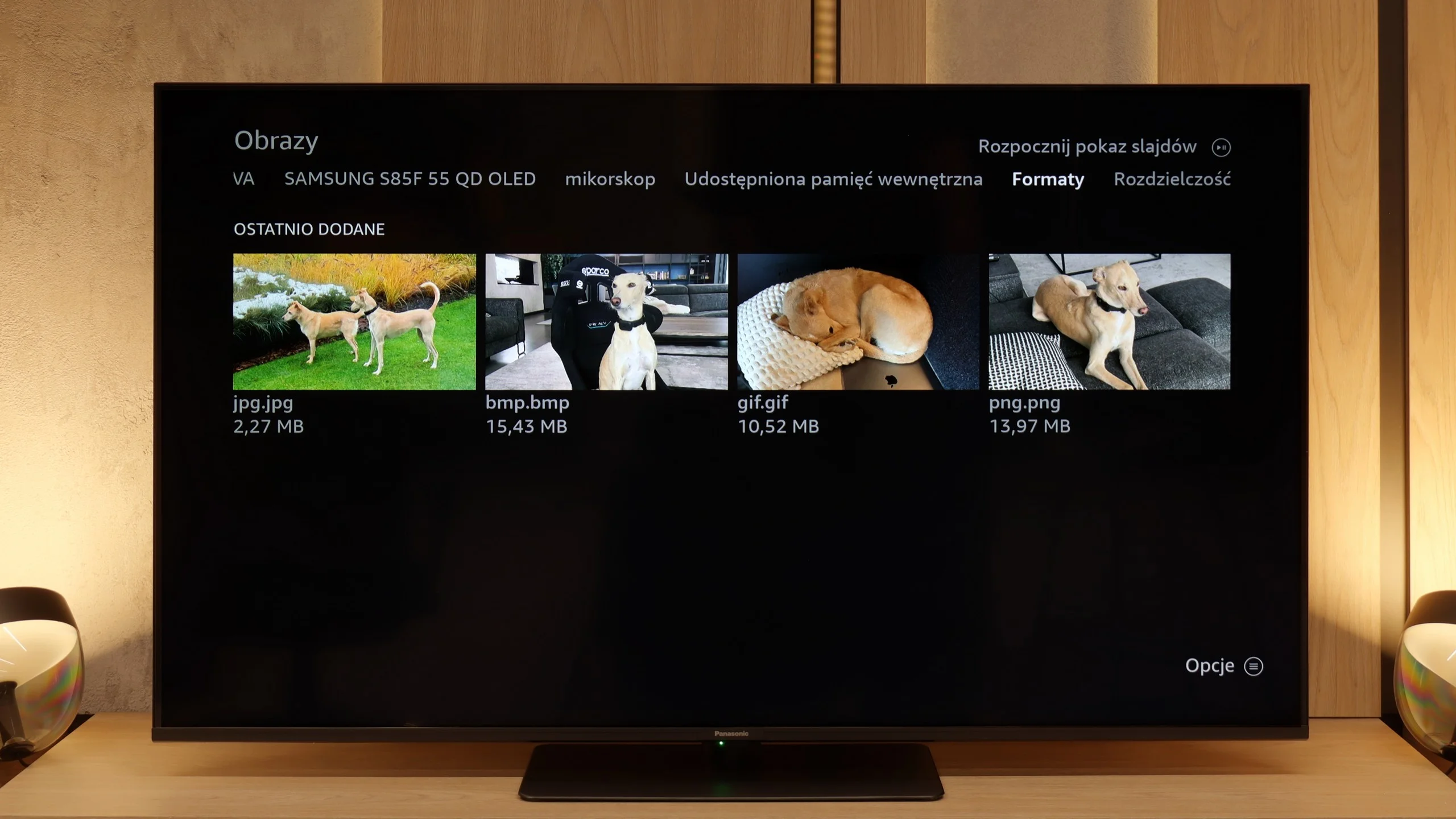
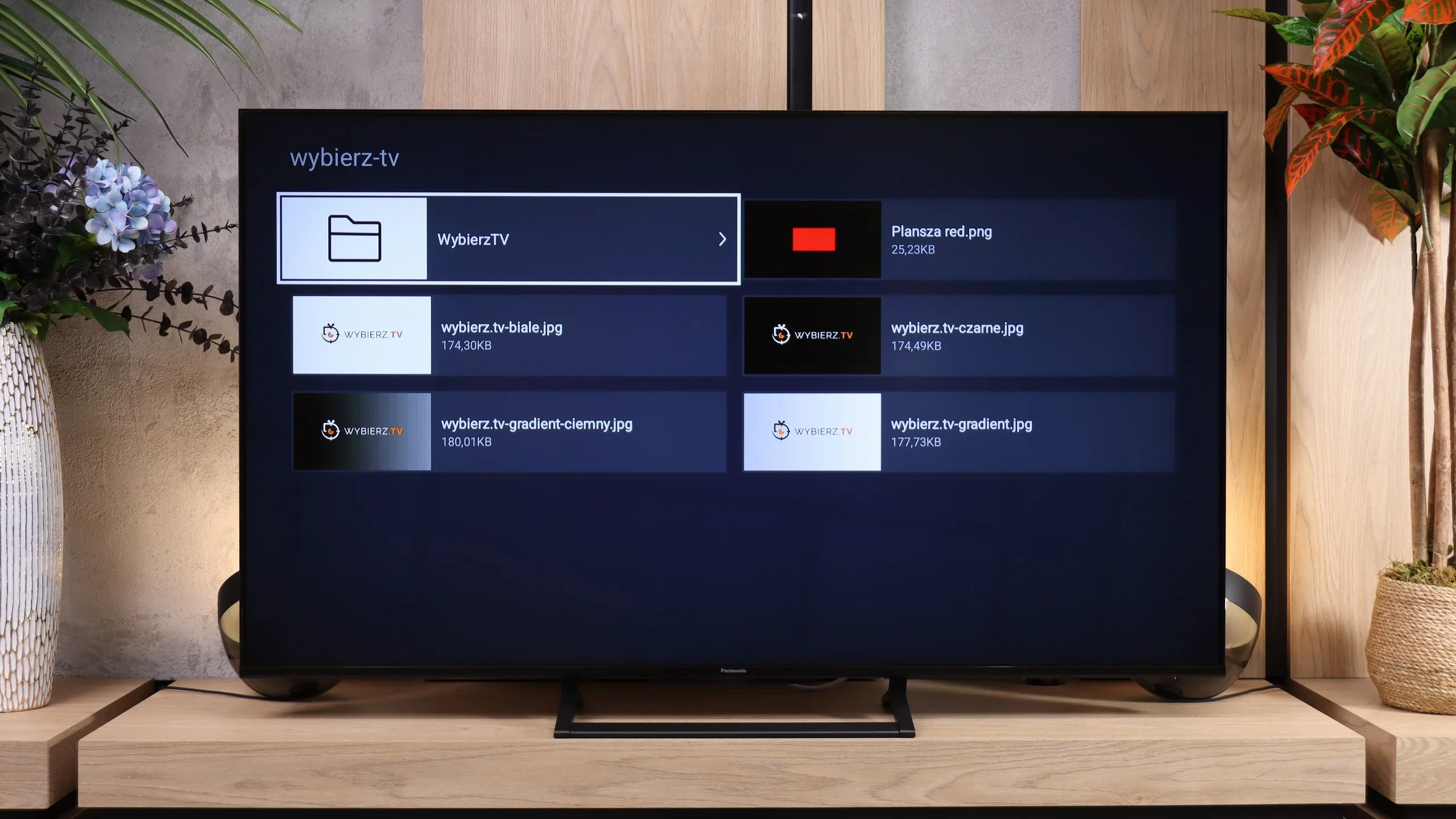
The biggest downside of the built-in player with Fire TV is the lack of support for external text subtitles. If you have your own film library and use text files, you simply won't be able to display them on this television. The player itself handles basic video formats, but if someone wants to fully utilise files from USB, they will likely end up installing an additional application from the store (e.g. VLC).
Playback of files from USB works smoothly on the W92C. Files load quickly, operation is simple, and the built-in player handles most common video, photo and music files. It’s perfectly adequate for the occasional film or for browsing photos from a USB stick. Just be careful with subtitles. In our tests the TV would not read .sub and .txt files. It’s best to convert them beforehand to .srt format, which worked correctly, including Polish characters.
Sound
5.8/10
6.7/10
- Maximum volume87dB94dB
- Dolby Digital Plus 7.1
- Dolby True HD 7.1
- Dolby Atmos in Dolby Digital Plus (JOC)
- Dolby Atmos in Dolby True HD
- DTS:X in DTS-HD MA
- DTS-HD Master Audio
Here, the Panasonic W85B unfortunately has nothing to boast about. The speakers sound flat and rather “plastic”, so there’s definitely no talk of cinema experiences here. There’s no depth, there’s no clear bass – just basic sound that’s merely meant to “exist”. It’s a shame because we thought that the external subwoofer used here would actually make a difference. Unfortunately, we were mistaken. The only advantage is that the television can play really loudly. This may appeal to older users who often need higher volumes to comfortably watch programmes or news. It’s sufficient for everyday TV watching, but if someone is thinking about films and games – an additional soundbar or audio system is practically a must.
Sound on the Panasonic W92C is fairly average. Given the additional rear-mounted woofer, we had expected a slightly fuller sound. Instead, bass is still lacking, which is especially noticeable in music and in more powerful film scenes. The subwoofer itself therefore doesn't deliver as much as one might expect. On the plus side, volume is good. In our measurements the W92C reached around 94 dB, so there is plenty of headroom. For everyday TV viewing that setup is adequate, but simply turning up the volume won't replace the missing low end.
Sound Quality Test
Acoustic Measurements
87dBC (Max)
75dBC
94dBC (Max)
75dBC
Reader comments
Comments are provided by the external service Disqus (Zeta Global). Once loaded, Disqus may set cookies and process data about your activity.
We will remember your choice on this device. Provider's privacy policy