 Michał Wołoszyn
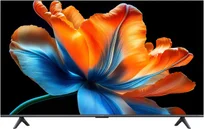
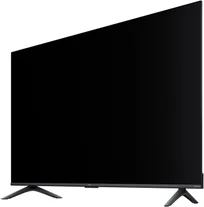
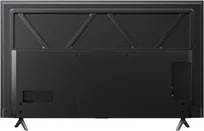
Xiaomi has been consistently changing its image in the TV market for several seasons, focusing on Mini-LED technology. The brand's strategy remains unchanged: to offer specifications reserved for flagship models at a significantly lower price. The latest S Mini LED series for the 2026 model year, now available for sale, is a direct continuation of the line that gained popularity in previous years due to its high brightness and dense dimming grid. In the new generation, the manufacturer claims even higher backlighting performance and better black control. However, with such aggressive pricing and tightening specifications, compromises are inevitable. The question is: if so, where has cost-cutting been applied this time?
Specification of the Xiaomi S Mini-LED 2026. Brightness, backlighting and colours
As the name suggests, the heart of the new series from Xiaomi is the Mini-LED backlighting. However, it is worth remembering that in this technology, the number of local dimming zones is key, which in the S Mini-LED 2026 model changes depending on the chosen diagonal. Naturally, larger screens have received a proportionally denser grid of diodes, yet their distribution in each variant seems to be well thought out enough that it shouldn't negatively impact the quality of black compared to other sizes. A technical curiosity is the fact that Xiaomi is boasting this year about a redesigned Mini-LED diode module. The new lens shape is designed to disperse light even more precisely, which in theory should reduce the blooming effect around bright objects on a dark background. You can find the exact number of zones for each size in the table below.
Screen diagonal of the Xiaomi S Mini-LED 2026 | Number of local dimming zones |
55 inches | 308 zones |
65 inches | 384 zones |
75 inches | 512 zones |
85 inches | 640 zones |
98 inches | 880 zones |
Peak Brightness: Is Xiaomi Telling the Truth?
The manufacturer claims that this model has a brightness level of 1200 nits. Considering last year's trends and marketing data from models like Xiaomi S Mini-LED 2025 and Xiaomi S Pro Mini-LED 2026, it must be acknowledged that the claims from the Chinese company have usually aligned with the actual capabilities of the hardware. This is evidenced by all our tests. If Xiaomi maintains this reliability in the 2026 model, we will have a very bright television that will easily handle HDR effects and watching content in a sunlit living room. However, it is worth remembering that this brightness is not constant and will likely pertain to full-screen bright scenes.
Colours. QLED Technology in Question
In promotional brochures, there was no shortage of loud slogans about "vivid and saturated colours." Xiaomi states here that the colour gamut coverage is DCI-P3 at 94%. This result sounds very credible, especially since the promotional materials feature the term "QLED", suggesting the use of a quantum dot layer. However, we believe it’s worth keeping a certain distance from this terminology. There is a high likelihood that instead of traditional quantum dots, Xiaomi has used a cheaper, yet equally effective phosphor-based filter (PFS). This has been the case for a year or two now. Although for the end user, the difference in colour saturation may be hard to catch with the naked eye, technically, these are two different approaches. The final verification of these claims will be conducted in our full laboratory test, which will be published on the website soon.
Refresh Rate and Gaming. Watch Out for Screen Size!
In the case of the Xiaomi TV S Mini LED 2026 series, the issue of image fluidity is complex and depends on which diagonal you choose. This is where the biggest "trap" of this offer lies, and it's worth knowing before making a purchase.
55-75 inches: Native 60 Hz and DLG technology
Analysing the table below, it’s easy to notice that Xiaomi has adopted quite a specific strategy this year. Models in the most popular sizes, namely 55, 65 and 75 inches, have been equipped with panels featuring a native refresh rate of 60 Hz. This represents a significant downgrade compared to the S Mini LED 2025 model. For sports fans, this is crucial information and, unfortunately, not very optimistic. With native 60 Hz, motion smoothing systems have very limited room for manoeuvre, which may be noticeable during fast camera movements in matches. Although the manufacturer has implemented the DLG (Dual Line Gate) technology that allows the panel to “trick” itself into achieving 120 Hz, this is only possible when reducing the resolution to Full HD or 1440p. From the perspective of a console gamer (PS5 / Xbox Series X), however, the situation isn’t that bad. Most demanding games in “Performance” mode (120 FPS) are rendered in lower resolutions anyway, so the DLG mode in the smaller models will still be useful.
Size | Native refresh rate | DLG Mode (Gaming) | HDMI Ports |
55" | 60 Hz | 120 Hz (Full HD / 1440p) | HDMI 2.0 |
65" | 60 Hz | 120 Hz (Full HD / 1440p) | HDMI 2.0 |
75" | 60 Hz | 120 Hz (Full HD / 1440p) | HDMI 2.0 |
85" | 144 Hz | Up to 288 Hz (Full HD / 1440p) | HDMI 2.1 |
98" | 144 Hz | Up to 288 Hz (Full HD / 1440p) | HDMI 2.1 |
85-98 inches: True 144 Hz and HDMI 2.1
However, if you are aiming for native 4K at 120 frames, your gaze must turn towards the 85 and 98 inch models. Here, Xiaomi doesn’t do things by halves, as we get true 144 Hz panels and full-fledged HDMI 2.1 ports that will support the 4K/144Hz signal without any fiddling with the resolution.
Google TV system and format support. Where has Dolby Vision gone?
Televisions from the S Mini LED 2026 series continue to rely on the Google TV operating system. This is good news for users – we gain access to a vast library of apps, a familiar interface, and support for the voice assistant (now enhanced by the Gemini model). In terms of sound, the manufacturer declares support for Dolby Atmos, which, with 30W speakers, provides a solid audio foundation.
However, the real issues start when we look deeper into the technical specifications. It turns out that depending on the selected size, we will find completely different components under the hood.
Processor: Two Different Worlds
In the 55, 65, and 75-inch variants, Xiaomi opted for a fairly basic setup based on the processor: Cortex-A55 along with GPU Mali-G52 (2EE) MC1 and 2 GB of RAM. This combination will ensure stable system performance, but may struggle with more demanding tasks. It looks completely different in the 85 and 98-inch models. There we find a more powerful processor with Cortex-A73 cores and an increased amount of RAM (3 GB). This difference in computing power is significant, as the larger models need to support HDMI 2.1 connections. However, it also means that the interface on the TV will not only operate more quickly, but will likely also handle image processing better.
No Dolby Vision in smaller models
While smaller sizes support HDR10 and HDR10+, they have been deprived of support for the Dolby Vision standard. This format only appears in models with screen sizes of 85 and 98 inches.
Considering these fluctuations in specifications: from native refresh rates, to processor performance, to supported HDR formats – we believe it would be fairer if these TVs were separate products. Undoubtedly, it is an interesting product and above all, very inexpensive given the offered specifications. However, it is worth being aware that a seemingly identical screen can vary significantly depending on the selected size.