 Redakcja Choose TV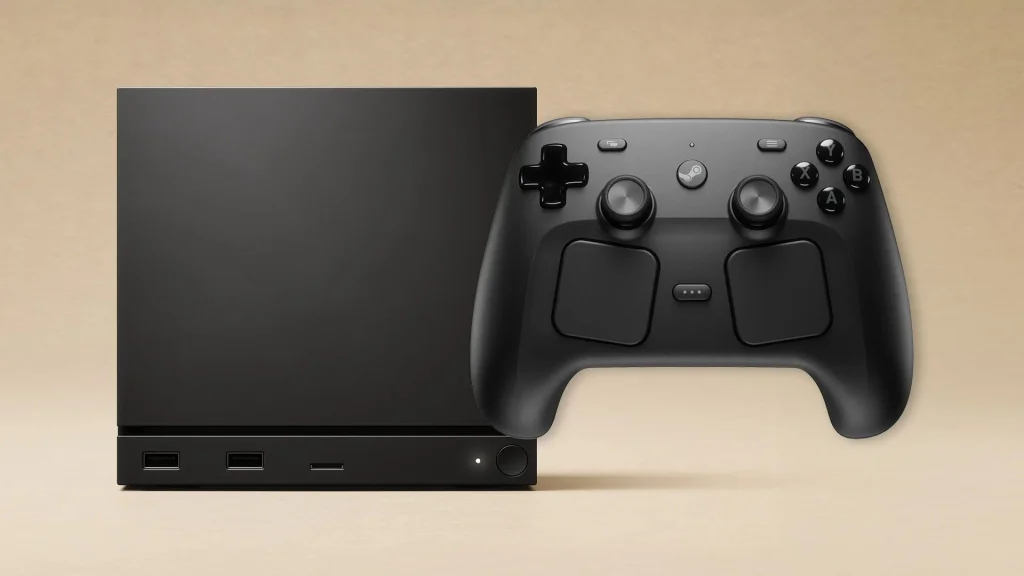
Valve intends to challenge PlayStation and Xbox with its own Steam Machine console, but one thing immediately stands out in the specifications: no HDMI 2.1 in 2026, five years after the launch of the PS5 and Xbox Series X. Why is there such a crucial port missing for gamers? It turns out that the issue lies not in the hardware, but in… licenses and software.
The equipment has HDMI 2.1. The problem lies with the drivers and… HDMI Forum
In a conversation with Ars Technica, Valve explained: “The hardware does indeed support HDMI 2.1, but the Linux drivers are still a work in progress.”
And here we get to the crux of the matter. According to Valve, the HDMI Forum is blocking any open-source implementations of HDMI 2.1 features, such as 4K120 HDR, VRR, or ALLM. This means that even if the console has the appropriate controller, the company cannot provide the full functionality without closed, licensed code – which clashes with the philosophy of SteamOS. Valve assures that “it is working on unlocking this issue,” but for now, it seems there are no signs of a quick breakthrough.
4K 120 Hz works, but… only as SDR 8-bit 4:2:0
Valve boasts that the Steam Machine will support 4K at 120 Hz, despite the lack of HDMI 2.1. And that's true – but only in SDR mode, with 8-bit depth and 4:2:0 compression. It's worth adding some context that Valve doesn't emphasize:
4K120 SDR can also be transmitted via the old HDMI 2.0, as the bandwidth has allowed for this for years. This is not an HDMI 2.1 feature, but a clever use of the limitations of HDMI 2.0 at the expense of quality. HDR? Forget it. For owners of new televisions, this is quite a disappointment.
DisplayPort 1.4 isn't a remedy either
Valve reminds us that the Steam Machine also has DisplayPort 1.4. Yes, this port has higher bandwidth, but:
it's a standard from 2016,
DisplayPort 2.0 was announced in 2019,
almost no TVs support it.
In practice, this means one thing: console gamers will receive lower picture quality and lack HDMI VRR. The Steam Machine only supports AMD FreeSync, which limits compatibility with many Premium TVs.
Weaker hardware, no HDMI 2.1, and high price. Tough competition against PS5 and PS6
On paper, the Steam Machine is meant to look like a “PC in a console”. In reality, however:
it lacks HDMI 2.1,
it lacks DisplayPort 2.0,
it has less graphical power than the PS5,
it doesn’t utilise the full capabilities of modern TVs,
it runs on SteamOS with significant game fragmentation (many run poorly or have controller issues),
it is expected to cost “like a PC”.
In this comparison, with the growing popularity of the PlayStation 5 and the impending launch of the PlayStation 6 and the new Xbox (around 2027), the Steam Machine enters the market with a considerable weight disadvantage.
Premiere in 2026 – but will gamers buy it?
Steam Machine will debut in 2026, but if Valve doesn't resolve the issues with HDMI 2.1, it will be hard to convince users of modern TVs that it's worth investing in hardware lacking key image features that the competition has had for years.