 Redakcja Choose TV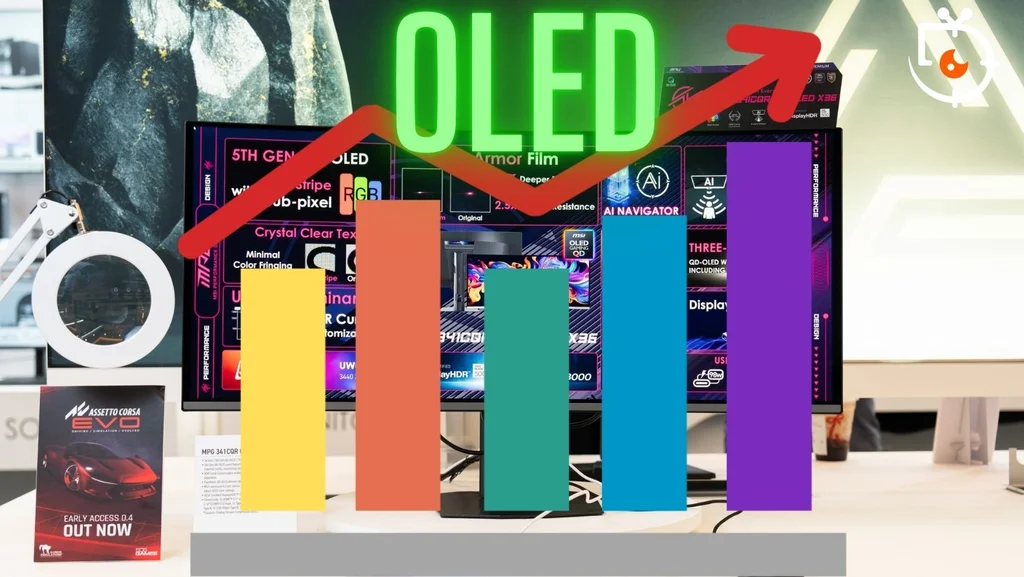
The medium and large OLED display sector is currently undergoing the most dynamic transformation in its history. According to the latest report developed by UBI Research, the year 2026 is expected to continue the rapid growth that has made monitors the fastest-growing segment in the entire display industry.
Following the breakthrough year of 2025, in which global OLED monitor shipments rose by 64% (reaching around 3.2 million units), forecasts for 2026 predict maintaining momentum above 50%. This scale of expansion confirms that monitors have ceased to be merely an addition to the offering and have become a priority for the largest global companies.
New priority hierarchy for Samsung and LG Display
Both Korean giants have revised their strategies, shifting production capacities from the TV segment towards monitors:
Samsung Display: Focuses on mass production of QD-OLED panels. The company is deliberately increasing the share of monitors in its portfolio, as they offer higher unit prices and better margins than TV panels. This is especially visible in the premium gaming segment. This, in turn, would explain the absence of an 83" QD-OLED panel in their offering.
LG Display: After systematically scaling up supply – from 100,000 units in 2023 to an estimated 400,000 in 2025 – the company plans further expansion in 2026. This growth is expected to be driven by acquiring new OEM customers and maximizing the utilization of existing TANDEM WOLED and OLED SE panel production lines.
If you're interested in TVs from these two manufacturers, be sure to check out our list of recommended models
Samsung TVs
LG TVs
The key to the dominance of monitors over televisions lies in the techno-economic aspects. The use of "glass substrates" is significantly more cost-effective in this case. While the production yield for TV panels hovers around 60–80%, for monitors (sizes 27 and 34 inches), it exceeds 90%. The second aspect is profitability itself. Monitor panels offer higher profitability per screen area, which, given the high efficiency of production lines, makes them the most attractive product for sale.
Offensive from Chinese Manufacturers
In 2026, competition intensifies due to the activity of players from the Middle Kingdom. BOE is systematically increasing the supply of IT OLED panels, while TCL CSOT is implementing its own inkjet printing technology. The entry of these entities into the market not only increases product diversity but will also lead to greater affordability in the long term.
This trend is expected to continue in the coming years, and OLED technology will become the standard in the premium IT segment, which includes devices for gamers, professionals, and demanding home users.