 Redakcja Choose TV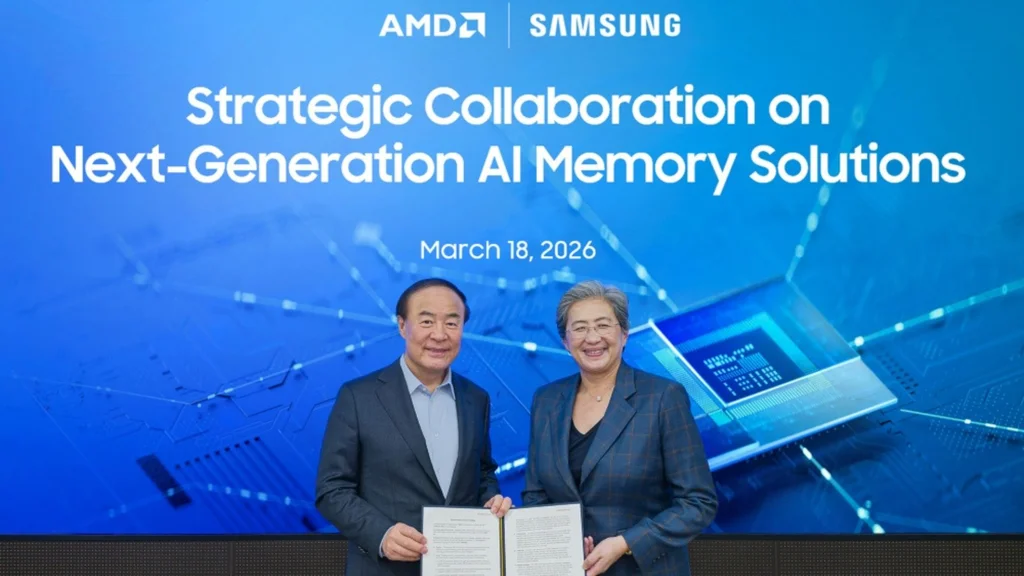
The arms race in the world of artificial intelligence has just reached a new level. AMD's CEO, Lisa Su, flew to Korea to personally negotiate with Samsung. The result is... an official partnership that aims to give AMD access to the fastest memory in the world. While the press release is optimistic... industry observers believe that AMD must work hard to catch up with Nvidia, which has already secured a lion's share of production.
Fight for AI "fuel": HBM4 Memory
For artificial intelligence to "think" quickly, it requires gigantic data bandwidth. This is where Samsung's new memory HBM4 comes into play. It's a technology that can transfer data at a speed of 3.3 terabytes per second. For the average person, this is almost inconceivable. It's like sending thousands of 4K quality movies in the blink of an eye.
AMD needs these chips for its upcoming graphics processors Instinct MI455X, which will power the supercomputers of the future. The problem is that Nvidia (AMD's main rival) was first in line and had already secured HBM4 supplies for its own chips. So AMD had to react quickly to avoid being left empty-handed at a time when the AI market is simply consuming every available amount of memory.
Samsung may start making chips for AMD
The most interesting aspect of this agreement lies between the lines. As suggested by technology outlets such as the Korean site Chosun Biz, the deal may extend far beyond just memory chips. Samsung likely used its strong negotiating position to persuade AMD to... manufacture processors in its factories.
Up until now, AMD has mainly relied on Taiwanese TSMC, but as their production lines are booked for years by other partners, collaborating with Samsung Foundry may be AMD's only chance to meet release deadlines. For Samsung, this is a huge success – after contracts with Nvidia, Tesla, and Apple, securing AMD as a client cements their position as a viable alternative to Taiwanese TSMC.