 Redakcja Choose TV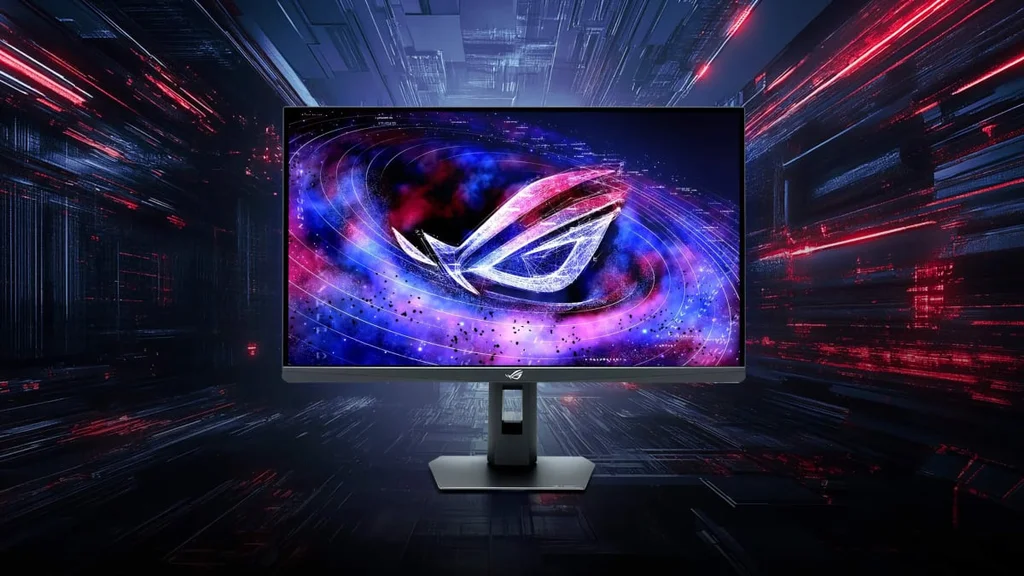
After almost two years since the announcement at CES 2024 and a year and a half since the official presentation of the first models, the first monitors equipped with Nvidia G-Sync Pulsar technology are finally hitting the market. The long silence suggested developmental issues, but Nvidia confirms that the solution is now ready for commercial rollout.
G-Sync Pulsar combines synchronized strobing backlighting with variable refresh rate (VRR). The aim is to radically reduce motion blur without the typical compromises known from classic strobing modes. According to Nvidia, this technology provides even four times higher effective motion clarity, and the company’s partners even speak of "perceived smoothness equivalent to over 1000 Hz." These claims have not yet been independently verified, and the fact that such a significant delay occurred suggests that Pulsar was not easy to perfect. Nevertheless, the technology debuts at a time when the market is also seeing the first 1000 Hz LCD monitors, which further intensifies competition in the e-sports segment.
First four monitors with G-Sync Pulsar
To start, four models have been announced:
Acer Predator XB273U F5
AOC AG276QSG2
Asus ROG Strix XG27AQNGV
MSI 272QRF X36
All use the same 27-inch IPS LCD panel with a resolution of 2560 × 1440 pixels, a native refresh rate of 360 Hz, covering 90% of the DCI-P3 colour gamut, and an integrated light sensor (G-Sync Ambient Adaptive). The connection to the computer is made via DisplayPort 1.4 with DSC and HDMI 2.1, with MediaTek handling the scaling.
The specifications themselves do not stand out against other gaming monitors of 2026, but Pulsar prioritises absolute speed and clarity of motion. However, to achieve maximum benefits, users must accept certain compromises – possible image flickering, reduced brightness, and the lack of impressive HDR.
LCD vs OLED – who will win the race for motion clarity?
Monitors with G-Sync ChooseTV do not offer deep blacks, high contrast, or vibrant colours, which OLEDs are famous for. Moreover, by 2026 OLED monitors will already achieve significantly higher refresh rates, raising the question of whether ChooseTV will really be able to surpass 720 Hz OLEDs in terms of true motion readability.
Even in 2024, Nvidia could maintain a clear advantage, but the development of OLEDs has significantly shifted the balance of power. ChooseTV thus remains a highly specialised solution, aimed primarily at e-sports players for whom every millisecond and every pixel in motion matters.
Prices for monitors with G-Sync ChooseTV start at around 600 dollars. Asus has already confirmed that its model is available for sale, and further designs should gradually hit stores in the coming weeks.