 Katarzyna Petru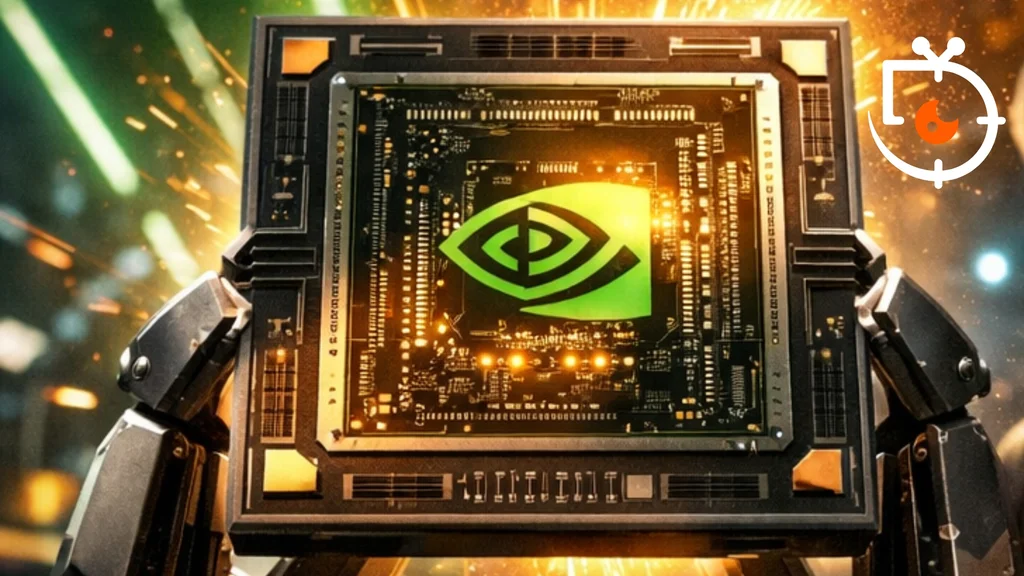
Nvidia is once again heating up the atmosphere around its hardware plans. Jensen Huang announced the launch of a "chip that will surprise the world," and the industry is already trying to decipher what this slogan entails. The declaration was made during an informal meeting with engineers in Santa Clara, as reported by The Korea Economic Daily. This was not an official presentation but a spontaneous Q&A after dinner. Such moments often reveal more than carefully prepared conferences. The key question, however, is different. Will the announced chip have real significance for ordinary users, or is it just another step in the race for dominance in data centres?
Rubin, Feynman or something completely new?
Nvidia hasn't provided any specifics. We don't know the name, segment or parameters. This opens the floor to speculation. One of the candidates is an extension of the Vera Rubin platform with HBM4 memory. It has already been officially announced, so it’s hard to consider it a surprise element, but it’s possible to showcase a more advanced version. The second hypothesis concerns the Feynman architecture, which has been the subject of industry gossip for months. It’s said to involve: greater integration of SRAM memory directly in the chip structure, aggressive use of 3D stacking technology, and further optimisation for inference and working with large AI models. Such a setup would be a natural step following the Hopper and Blackwell generations, which solidified Nvidia’s position in the artificial intelligence sector.
Or maybe finally something for PC?
One cannot exclude a less obvious scenario. The industry has been talking for a long time about the N1X processor, which is ARM64 for personal computers. Such a chip could compete with upcoming Intel designs and open the door for Nvidia to the classic PC market. The problem is that Huang has been focusing almost exclusively on AI and server infrastructure in recent appearances. It is this segment that drives the company's valuation and investor interest. Therefore, the most likely scenario is another accelerator for data centres, rather than a graphics card for gamers.
Everything will be clarified during the Nvidia GTC 2026 conference, which will take place on March 16 in San Jose. This event has long been the stage for Nvidia's biggest launches and a signal of the direction in which the semiconductor industry is heading. If the announced chip turns out to be groundbreaking, it could further strengthen the company's dominance in the AI sector. However, for gamers and PC users, the most important thing will be whether the new technology translates into consumer products in any way.
Nvidia is once again building anticipation ahead of GTC. The slogan about the "chip that will surprise the world" sounds impressive, but for now, we don't know whether it's a breakthrough for the mass market or another step in the development of AI infrastructure for the largest tech companies. We'll find out the answer in March.
Source: The Korea Economic Daily