 Redakcja Choose TV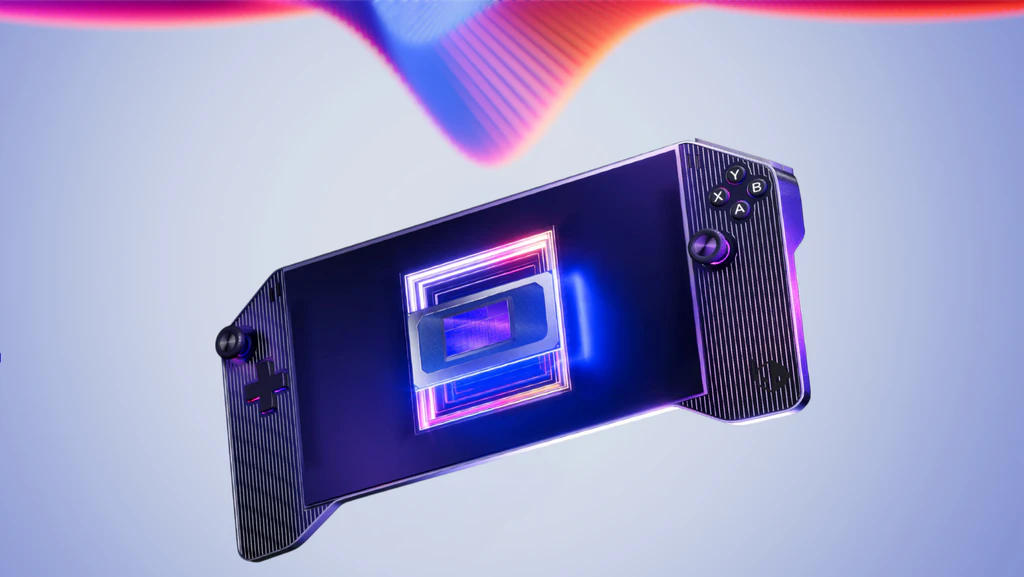
Intel is gearing up for a serious comeback in the handheld gaming market. During CES, the company confirmed that the upcoming Panther Lake chips are set to play a key role in the portable PC console segment, and interestingly – it’s Intel, not AMD, who is being pointed out as the main competitor for the portable version of PlayStation 6, known by the codename Canis.
Panther Lake – Intel's New Strategy for Handhelds
Previous attempts by Intel in this segment – Meteor Lake and Lunar Lake – have had limited success. While devices like the MSI Claw have emerged, it is AMD with its Z1 and Z1 Extreme chips that has dominated the PC handheld market. Panther Lake aims to change that. Intel plans to clearly streamline the architecture of the chip, focusing solely on key elements for gaming:
higher number of Xe3 GPU cores
sufficient number of CPU cores
possible complete removal of the NPU
The goal is to maximise the energy budget for gaming performance, without unnecessary processing blocks designated for AI.
Panther Lake vs PS6 Canis – similar performance, but not for free
Meanwhile, AMD does not plan any major changes in 2026. The Gorgon Point (Ryzen AI 400) chips are more of a refresh of the current offering, while the true new generation – Medusa Point – will only arrive later. This opens a window of opportunity for Intel to take the initiative in the handheld segment. According to well-known leaker Kepler_L2, handhelds based on Intel Panther Lake will be able to achieve similar performance to the portable console PS6, but with a significant difference in power consumption.
Intel Panther Lake – around 30 W TDP
PS6 Canis – around 15 W TDP
This means that Sony achieves a similar level of performance with half the power consumption. A key role is played by the closed ecosystem:
proprietary operating system
hardware designed solely for gaming
full control over engine and API optimisation
no Windows overhead
Optimisation Will Be Key
In Intel's case, a lot depends on collaboration with Microsoft and hardware manufacturers. Long-term optimisations of Windows for handhelds and GPU drivers can significantly improve performance scaling at lower TDP, but this takes time. If Intel hones the platform, Panther Lake could become the strongest alternative to Sony's handheld console, especially for PC gamers looking for more flexibility than the closed ecosystem of PlayStation offers.
Premiere in 2026
The first handhelds featuring Intel Panther Lake chips are set to hit the market in mid-2026. This promises to be a uniquely interesting competition:
Sony – maximum efficiency and low power consumption
Intel – high performance and an open PC ecosystem
The portable console market is entering a new, much more balanced phase. If you'd like, I can also prepare SEO descriptions in Polish, English, and German or a shortened version for the main page.